Tag: PHEV

  • BYD Teases Shark Pickup China Launch After Selling 29,997 Units Overseas

    BYD Teases Shark Pickup China Launch After Selling 29,997 Units Overseas

    BYD began promoting the domestic launch of its Shark plug-in hybrid pickup truck on September 24, after selling 29,997 units across international markets in the first eight months of 2026.

    The carmaker released official promotional images across its social media channels under the slogan “The overseas champion returns,” assigning the model to its specialized Fang Cheng Bao sub-brand. The campaign follows two years of sales abroad, reversing the standard practice among Chinese vehicle manufacturers of establishing domestic volume before attempting foreign distribution.

    Export track record and platform specifications

    Overseas deliveries of the Shark reached 4,300 units in August alone. BYD first introduced the pickup in Mexico in May 2024, followed by rollouts in Australia, Brazil, Cambodia and Pakistan.

    Built on the company’s off-road dual-mode platform, the truck pairs a 1.5-litre turbocharged petrol engine with two electric motors. Regulatory filings published by the Ministry of Industry and Information Technology in July show peak motor outputs of 170 kW at the front axle and 150 kW at the rear. The vehicle uses lithium iron phosphate packs produced by BYD’s battery manufacturing division, FinDreams Battery.

    Dimensions submitted to regulators match the export specification. The body measures 5,457 mm in length, 1,971 mm in width and 1,925 mm in height, riding on a 3,260 mm wheelbase.

    The domestic utility vehicle landscape

    Entering the domestic pickup segment pits BYD directly against Great Wall Motor, the long-standing market leader in Chinese commercial haulers, and Geely Auto’s electric utility brand Radar. Retail buyers in China have historically treated pickups as commercial workhorses rather than lifestyle vehicles, constrained by municipal traffic bans that restrict light trucks from entering major downtown cores.

    Those regulatory limits keep the overall category small relative to passenger cars. Chinese buyers purchased 455,000 pickup trucks between January and August 2026, according to figures from the China Passenger Car Association. By comparison, total retail passenger car volume reached 11.7 million units over the same eight months, of which 7.78 million were plug-in hybrids or pure battery-electric models.

    Electrification trends in commercial light trucks

    New energy pickups remain a small slice of commercial sales, but demand is expanding faster than the wider commercial truck market. Electrified pickup sales climbed 18 per cent year on year to 62,000 units through August. Commercial fleet buyers and municipal contractors in regional provinces have adopted plug-in models to cut operational fuel costs and comply with local emissions caps.

    Assigning the Shark to Fang Cheng Bao indicates BYD intends to market the truck to private off-road enthusiasts rather than commercial fleet buyers alone. Fang Cheng Bao general manager Xiong Tianbo confirmed the model’s inclusion in the brand portfolio earlier this year, aiming to broaden a lineup that previously focused on rugged sport utility vehicles.

    Regulatory steps and launch timeline

    The consumer promotional push marks the final marketing stage before open sales begin. Li Yunfei, general manager of branding and public relations at BYD, first outlined plans for a Chinese release in October 2025, followed by the formal MIIT filing three months ago.

    Dealership distribution timelines and domestic retail pricing remain unannounced. The Ministry of Industry and Information Technology has yet to release battery capacity and pure electric driving range figures for the localized configuration.
  • Volvo Unveils XC60 Plug-In Hybrid with 200 Km Electric Range

    Volvo Unveils XC60 Plug-In Hybrid with 200 Km Electric Range

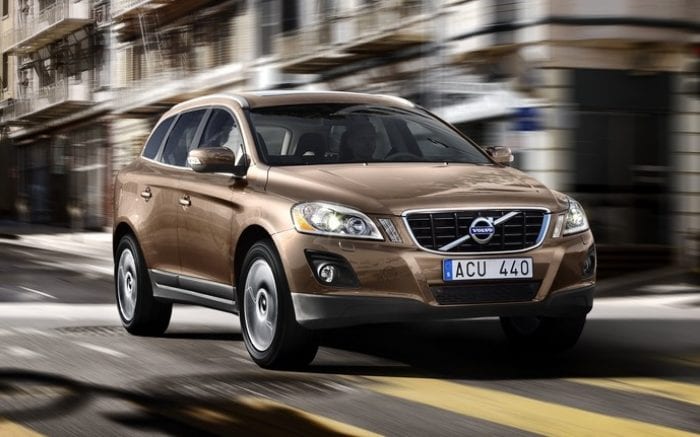
    Volvo Cars, a subsidiary of China’s Geely Group, has unveiled its model year 2027 XC60 and XC90 plug-in hybrids offering an electric range of up to 200 km.

    The updated Volvo XC60 Plug-in Hybrid starts at €69,990 and delivers more than two and a half times the electric range of its predecessor. It features a 41.2 kWh battery floor pack, an increase from the previous 18.8 kWh capacity.

    Volvo combined the larger battery with a 130 kW electric motor alongside a petrol combustion engine. Under the same setup, the larger XC90 Plug-in Hybrid achieves up to 163 km of purely electric range per charge.

    Hardware Parity With Pure Electric City Cars

    That 41.2 kWh capacity exceeds the battery size in several dedicated electric city cars entering production. Volkswagen equipped the entry-level ID. Polo with a 37 kWh pack, while Renault fitted the Twingo Electric with 27.5 kWh. Volvo uses full-sized electric car energy reserves solely to cover daily commuting without burning petrol.

    Drivers get pure electric power for city trips alongside combustion backup for highway travel. The Swedish brand already sells all-electric models including the EX30, EX40, and EX90. Customer demand for flexible powertrains prompted this hybrid refresh.

    Now, as long-range plug-in hybrids, they build on those legacies and, together with the all-electric EX60, give us our strongest-ever electrified offering in the mid-size SUV segment.

    Platform Sharing Across the Geely Portfolio

    Under the skin, the configuration mirrors powertrains across parent company Zhejiang Geely Holding Group. Geely’s Lynk & Co brand launched the 08 crossover with a 39.6 kWh battery pack. That model logged 176 kilometres of real-world electric range in testing by German motoring club ADAC. Group-level component sharing lowers cell procurement costs and accelerates engineering for European and Asian assembly lines.

    German rivals trail the benchmark. Volkswagen Group offers up to 143 kilometres of electric range in the VW Golf eHybrid and Audi A3 Sportback TFSI e. Mercedes-Benz and BMW have kept plug-in hybrid battery sizes closer to 20 to 25 kWh in comparable luxury segments.

    Regulatory Pressure on Real-World Emissions

    European regulators are tightening emissions calculations for plug-in hybrids. European Union field data from 320,000 vehicles showed real-world carbon dioxide output was 3.5 times higher than lab approval figures because owners failed to charge regularly. Regulators adjusted the official utility factor downward in 2025 to reflect actual charging habits.

    Another regulatory tightening in 2027 will increase fleet emissions penalties unless hybrid models cover higher electric mileage. Installing larger batteries insulates automakers from sudden compliance penalties as policy shifts across export destinations.

    Production Timeline and Model Rollout

    These long-range powertrains serve as an interim bridge while Volvo prepares its purpose-built EX60 electric architecture. The XC60 remains Volvo’s best-selling model globally. Steady hybrid sales protect cash flow during capital-intensive EV plant conversions.

    Order books opened in Europe for the 2027 model-year XC60 and XC90. Core export markets will receive customer deliveries first, followed by a rollout to American dealerships.

  • SAIC Volkswagen Cuts Starting Price on ID. ERA 5S Sedan to 89,900 Yuan

    SAIC Volkswagen Cuts Starting Price on ID. ERA 5S Sedan to 89,900 Yuan

    SAIC Volkswagen launched its ID. ERA 5S plug-in hybrid sedan at the Chengdu Auto Show on Friday. Introductory incentives lower the base price to 89,900 yuan ($13,260).

    A 30,000-yuan discount brings the car below its 115,900-yuan pre-sale baseline and undercuts the official 119,900-yuan sticker price. Five variants run up to an official 149,900 yuan. Initial trade-in subsidies and deposit promotions reduce that top price to 119,900 yuan.

    Powertrain and Localized Driver Assistance

    This sedan is the second entry in the ID. ERA series following the ID. ERA 9X SUV. Power comes from a 1.5-litre plug-in hybrid setup pairing an 80 kW engine with a 130 kW drive motor. The configuration yields 160 kilometres of electric range under CLTC testing and more than 2,000 kilometres of total range. Depleted-battery fuel consumption is rated at 2.82 litres per 100 kilometres.

    Volkswagen fitted the model with its Xingyun assisted-driving software, built on Horizon Robotics’ HSD algorithm. The system supports urban navigation on autopilot, highway cruising, automated valet parking and multi-level memory parking. Inside, the cabin carries an 8.8-inch digital cluster and a 15.6-inch central touchscreen. Voice software was developed alongside iFlytek.

    Foreign Carmakers Defend Mass Market Share

    Joint ventures across China continue shifting product pipelines toward hybrid powertrains and domestic tech suppliers to defend market share against local price leaders. SAIC Volkswagen delivered more than 10,000 units of the ID. ERA 9X within two months of its April launch. That performance validated an extended-range strategy tailored to Chinese buyer preferences.

    At the show, the carmaker displayed the ID. ERA 8X and the ID. ERA 5X, an upcoming pure electric model engineered on the China Main Platform. SAIC Volkswagen plans to introduce seven new energy vehicle models before the end of the year.

  • Kia Partners With Amazon To Sell Charging Stations For Electric Vehicles

    Kia Partners With Amazon To Sell Charging Stations For Electric Vehicles

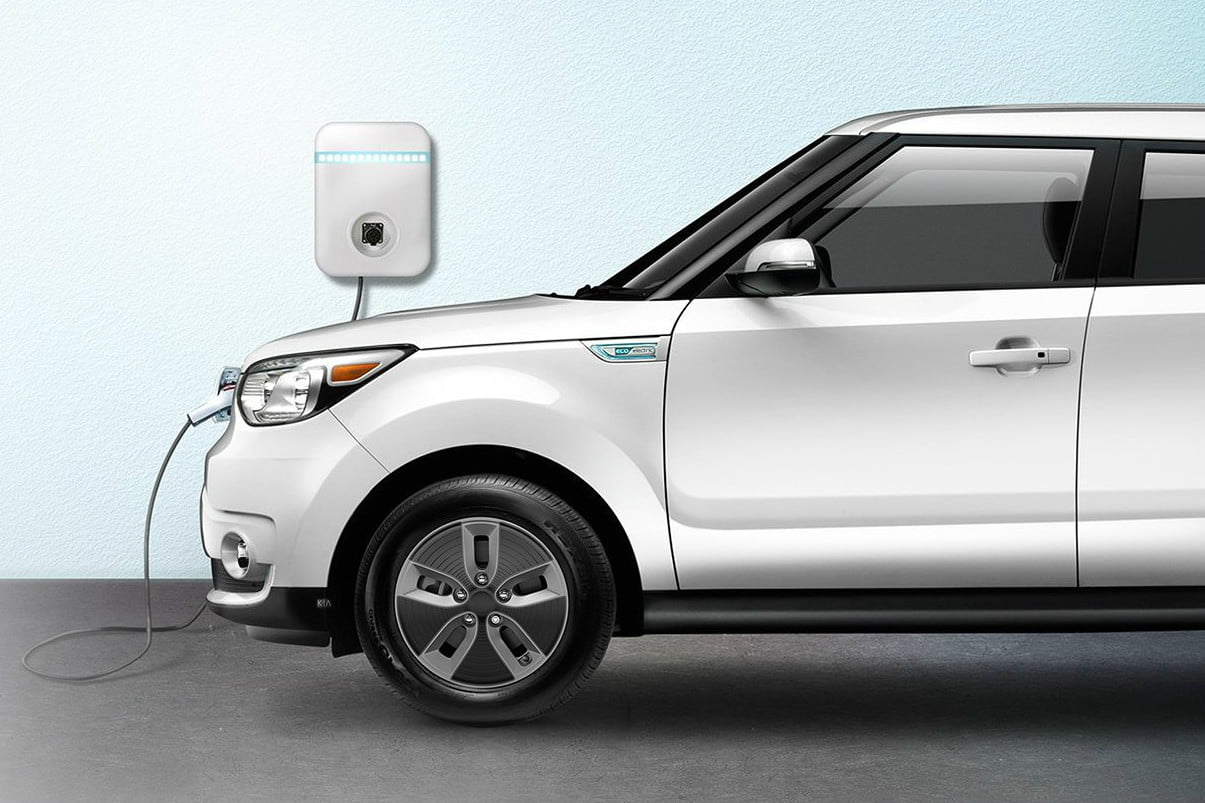
    Kia Motors America (KMA) in partnership with Amazon Home Services has announced a new program for its plug-in vehicle customers. The program will see Amazon sell and install electric vehicle charging stations at the customers house or office. The tie-up makes Kia, the second automaker after Tesla in America to offer the service online with the electric charging network. The manufacturer says the process of purchasing and installing a charging station will be as easy as buying other products on Amazon.

    Speaking about the new initiative, KMA – Car Planning and Telematics, Executive Director, Orth Hedrick said, “Home-charging can’t get any easier than this. Being able to order a Level 2 charger and installation through Amazon further demystifies and simplifies the experience for new Kia EV and PHEV owners. It’s just another example of how we’re constantly striving to provide the very best vehicles and customer experience.”

    Kia Motors has been actively working on improving its charging infrastructure in the US as it adds more electric cars to its portfolio. The company currently retails the Soul EV, Niro EV1, Niro PHEV and Optima PHEV, among other models in the country. Customers will find recommended Level 2 or 240-volt charging units selected by Kia on Amazon, along with information about home charging installation and customer reviews. The site also gives customers the cost for the installation and will schedule a licensed electrician for the same, if needed. The charging stations are backed by Amazon’s Happiness Guarantee plan. Kia’s vehicles in the US are offered with a 10 year/160,000 km warranty cover and roadside assistance.

    Kia and Amazon have set up a new ‘Charge my Kia’ portal for the sale of the electric charging stations. While buyers can purchase the Bosch 40-amp station that is available in partnership with the manufacturer, there are other charging stations available as well from companies like Chargepoint and Juicebox.