Tag: Pico

  • UOB Kay Hian Partners Pico

    UOB Kay Hian Partners Pico

    The bank’s securities brokerage is working with the financial markets technology services provider, which will provide managed services and support for its new trading platform.

    Pico rapidly deployed a tailored platform for trading execution in the heart of Singapore’s liquidity hub that is engineered for seamless coordination of trading and risk strategies, it said in an announcement on Wednesday.

    UOB Kay Hian is one of Asia’s largest securities trading and investment firms. Headquartered in Singapore, it has offices in Hong Kong, Thailand, Malaysia, London, Shanghai, and New York.

    Working with Pico has helped UOB Kay Hian lower its OpEx, while freeing it to focus on optimizing its trading strategies and business operations, said director Desmond Yeo.

    Pico works with firms as a specialist partner to design, build, host and manage their electronic trading infrastructure. It connects to liquidity providers via PicoNet, a private ultra-low latency, resilient and comprehensive proprietary network mesh with the fastest path connections between on-net co-location sites.

    Pico opened offices in Singapore and Tokyo in mid-2018, and a year later announced its continued expansion in Asia with new hires, additional offices, and an increased data center presence in the region.

    The firm said it has plans to add 20 more data centers by 2021, including in China, Australia, South Korea, and India, to complement its existing 30+ global locations.

  • FPT Vietnam to sell stake

    FPT Vietnam to sell stake

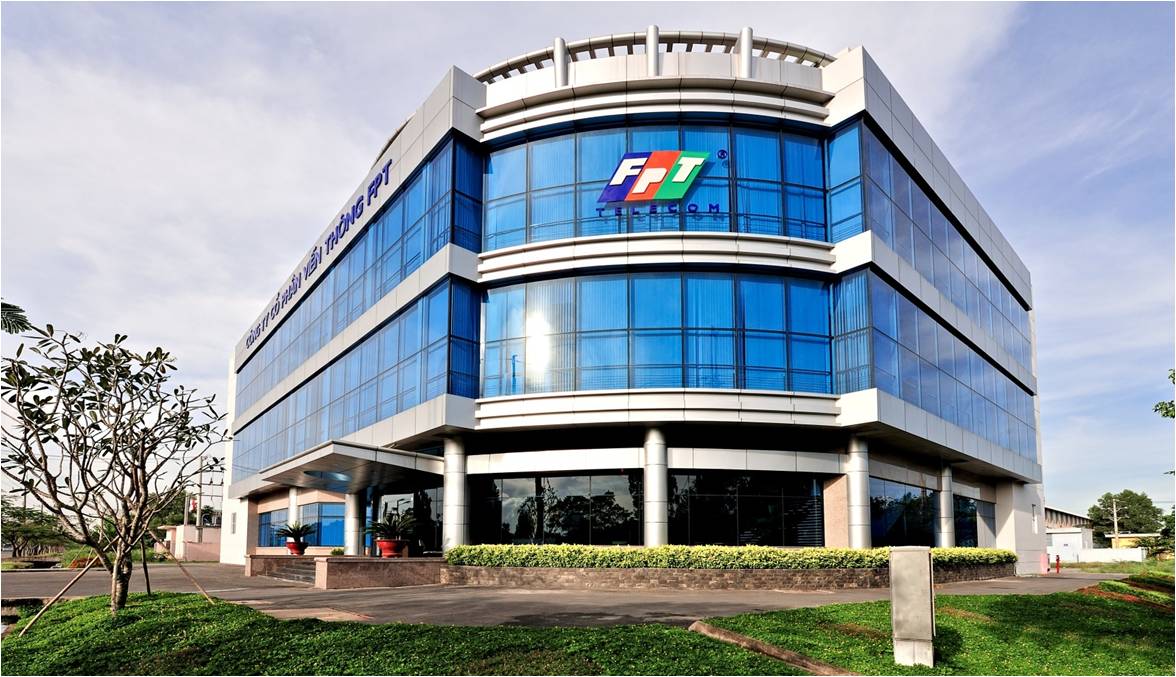
    One of Vietnam’s largest private tech firms, FPT Corporation is planning to sell a large stake in its retail and distribution units, providing an opportunity for regional players to buy into the fast-growing Vietnamese market.

    Funds from the sale will be used to help with mergers and acquisitions (M&A) in the information technology area.

    At a shareholder meeting, the company said it will reduce its holdings in FPT Shop, a mobile device retailer, and FPT Trading, which makes, imports and sells telecommunications and electronic products.

    FPT Shop has reached its target of having 250 outlets by this year, and the distribution arm’s profit margins are steady 46 per cent, the meeting was told. FPT still expects the major part of its revenue to come from retail and distribution, estimated at VND28.58 trillion (US$1.27 billion) – about 63 per cent of turnover.

    “The IT industry has a lot of potentials, and the opportunities are universal,” says deputy-CEO Nguyen The Phuong.

    He says some of the money raised will be used to increase the company’s stake in FPT Telecom.

    FPT chairman Truong Gia Binh last year unveiled his goal to invest US$50 million through M&A every year, in both local and international companies. The targeted markets include the US, Japan, Singapore and Europe. Two years ago, the company acquired RWE IT Slovakia for an undisclosed amount and rebranded it to FPT Slovakia.

    One of the main competitors of FPT Shop, Mobile World, has expressed an interest in buying the retail unit. Another candidate could be Thailand’s Central Group, which bought 49 per cent of Vietnamese electronics retailer Nguyen Kim early last year and reportedly wants to also acquire Pico, another local electronics store.

    FPT Vietnam has retained VietCapital Securities and Japan’s Nomura Securities for advisory services on the sale.

  • Market for Pico Projectors in South Korea Projected to Grow at a CAGR

    Market for Pico Projectors in South Korea Projected to Grow at a CAGR

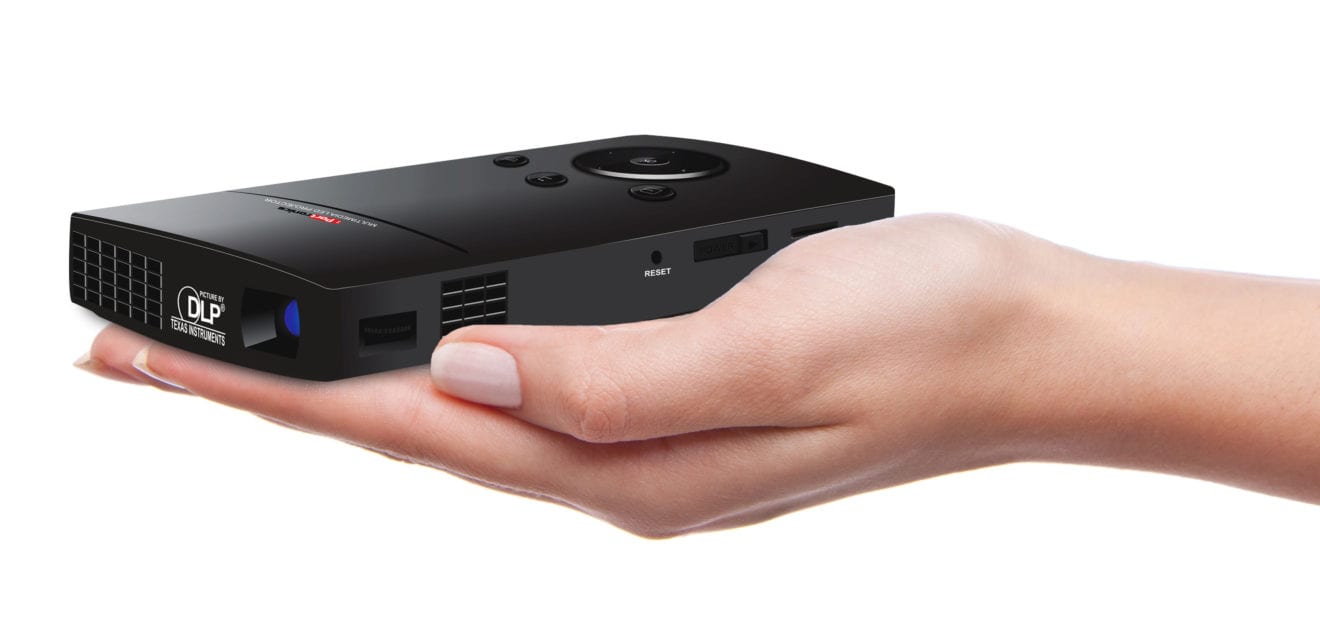
    The market for pico projectors in South Korea is projected to grow at a CAGR of over 24% during 2016 – 2021. LCoS (Liquid Crystal on Silicon) technology garnered the highest share in South Korea pico projectors market in 2015, due to better image quality, high resolution and efficiency, less power consumption, etc., as compared to other display technologies.

    South Korea pico projectors market witnessed rapid growth over the past few years on account of their growing acceptability and rising usage in various end user segments such as consumer electronics, defense & aerospace, automotive, etc. Rising demand for pico projector integrated devices, growing IT investments and increasing mobile workforce is projected to propel growth in the country’s pico projectors market in the coming years.

    Additionally, growing penetration of various compact and small projection display technologies along with increasing demand for handheld and portable devices is projected to drive growth in South Korea pico projectors market during 2016 – 2021.

    Due to these advantages, LCoS technology is being increasingly used in smartphones, tablets, televisions, head up displays, etc. In 2015, the country’s southern region was the largest market for pico projectors, on account of the region’s high per capita GDP and high level of industrialization. Few of the leading companies operating in South Korea pico projectors market include SK Telecom and LG Electronics, among others.

  • Fung Group tests future retail concepts

    Fung Group tests future retail concepts

    Hong Kong’s Fung Group has unveiled a large-scale ‘lab’ in Shanghai where it is testing a raft of high tech concepts which could shape the future of retailing.

    Named Explorium, the laboratory is an omnichannel platform and exhibition operated by the Fung Group in partnership with data and analytics technology leader IBM, and brand activation company Pico. It is located within more than 23,000 sqm of trade exhibition space at LiFung Plaza, where it provides a controlled setting for businesses to observe and explore in real time how consumers interact with new technologies, products and environments.

    Among technologies in the laboratory, which has been functioning on a soft-opening basis for three months, are virtual-reality fitting rooms, magic mirrors that bring images to life and 3D printing for creating customised products. Brands are also using Explorium to understand opportunities in China for their products and services, based on consumer feedback collected and analysed at the laboratory. Retailers are using it to test different store concepts.

    Unveiling Explorium, Fung Group chairman Dr Victor K Fung said the initiative was sparked by challenges occurring in retail across the world, especially in China.

    “Everything we thought we knew about how consumers decide upon what they buy, where they buy, when they buy, how they buy and how they pay is changing,” he said.

    “Technology is the catalyst empowering consumers. The internet and mobile communications are disrupting the way consumers behave and, in so doing, providing unique opportunities for retailing to come up with new business models. Nowhere is this more evident than in China, one of the world’s most exciting, challenging retail markets.”

    Fung added that he believed the future for retail in China and globally is omnichannel, which is, online-to-offline (O2O) or a combination of “bricks and clicks”.

    “Chinese consumers are setting shopping trends globally, especially with their avid use of social media. And Shanghai is home, arguably, to China’s most vibrant, tech-savvy consumers. That is why we chose Shanghai as the launch pad for this major Fung Group initiative.”

    Fung added that there were no preconceived ideas about which omnichannel business models would emerge from Explorium.

    “As with most experiments of any lasting value, the greatest measure of success may simply be how much we learn from the results,” he said. “A key advantage for participating brands and retailers is that, with Explorium, they can experiment, incubate and iterate at high speed while minimising their cost and risk.”

    IBM global retail industry leader Stephen Laughlin said IBM is gathering data in the Explorium and analysing it for insights.

    “With analytics, IBM can help retailers in the Explorium deliver personalised, relevant marketing interactions to consumers in real-time, delighting them and differentiating the retailer from the competition. Consumers will be able to opt-in to receive offers and rewards from their favorite brands via social media and their mobile device – all tailored to their location and unique preferences.”

    Lawrence Chia, group chairman of Pico Far East Holdings added: “As a state-of-the art omnichannel marketing research laboratory, Explorium delivers substantial value within the omnichannel universe. We are extremely pleased that our unique 360-degree integrated marketing capabilities have played a significant role throughout the planning and implementation of Explorium.

    “Working with leaders from the retail and data technology industries, our strong project team has played a vital part in the strategy, planning and execution of Explorium in areas related to branding, experiential marketing and digital media.”

    Explorium’s Shanghai-based director, Simeon Piasecki, said it is a laboratory for rapidly testing omnichannel business strategies in a realistic environment.

    “We identify and systematically track the changing preferences of consumers. Based on what we learn from each experiment, we move quickly to the next iteration. Explorium is doing all this on a scale and intensity that we believe is unmatched.”

    Already, Explorium, which is membership based, has close to 12,000 active participants registered from among employees and family members of the Fung Group and its business partners IBM and Pico. Typically, members spend over three hours there per visit.

    “Children are among Explorium’s biggest fans,” said Piasecki. “We believe that creating a space where parents and children can bond through learning together and teaching each other will help drive purchases of higher-margin electronic toys, such as drones.”

    He added that while children’s products are a special focus during Explorium’s first phase, it will go on to feature women’s and men’s apparel, and home products.

    “Explorium’s priority in coming months is to design, build, run and measure a greater number and variety of experiments to produce a pool of data that will enable participating brands and retailers to obtain unique insights for their individual businesses,” said Piasecki.