Tag: pin

  • Startups pin high hopes on blockchain, NFT technologies

    Startups pin high hopes on blockchain, NFT technologies

    Vietnamese startups have great expectations of the blockchain technology, envisaging practical e-commerce and entertainment impacts as the country pursues digital transformation.

    “We dream of becoming a billion-dollar company,” said Nguyen Tuan Quynh, chairman of book distributor Saigon Books, as he talked about a new project which uses blockchain in podcast and audiobook production.

    He said he wanted to create a blockchain-based platform for users, including celebrities, to produce audio content and make money. The audios will be distributed as non-fungible tokens (NFT), which are digital assets that represent objects like art, music, in-game items and videos, and have unique identifying codes. They are bought and sold online, frequently with cryptocurrency.

    “It will be a long run but we have taken the first steps. We also aim to have foreign-language to take this platform overseas,” Quynh said.

    Nguyen Tran Phi Yen, communications director of online event hosting platform Fan8.Club, is working on a project in collaboration with a hospitality partner that will create one million booking NFTs at premium hotels in Vietnam.

    “Blockchain is no longer something of the future. It has real products now.”

    Vietnamese startups have made headlines since last year with their use of the blockchain technology. Blockchain games like Axie Infinity and finance apps like Coin98 Finance have raised millions of dollars.

    Vietnam’s blockchain market is set to enjoy double-digit growth in the 2023-2027 period as 5G development across the country facilitates the formation of smart cities, according to a report by TechSci Research.

    Nguyen Thanh Nam, chairman of blockchain solutions provider OneBlock Labs, said that the technology could be used to trace origins of agriculture products, develop web browsers with better privacy protection and facilitate e-governance.

    “The government has made many efforts to create a national database using technology. With blockchain, more potentials can be reached,” he said.

    In 2020, the Vietnamese government listed blockchain a top tech research priority for application in the Fourth Industrial Revolution era.

    The Ministry of Science and Technology plans to let some blockchain companies to use the technology to try out some of their ideas for social benefits this year. Startups say they are aware of the challenges in developing the blockchain technology, high programmer salaries being one of them.

    “Hiring programmers to build a blockchain app costs four to five times that of a normal app,” said Quynh of Saigon Books said.

    Finding a team of experienced blockchain techies who understand the market is very difficult, said Nam of OneBlock Labs.

    “It is therefore crucial to start developing blockchain human resources.”

    Yen of Fan8.Club said that the world will soon have pre-established blockchain platforms for businesses to use and create their own products, and Vietnamese firms can take advantage of these instead of building everything from scratch.

    Some industry insiders have also warned about the potential to misuse blockchain.

    Pham Phuoc Nguyen, digital operations head at Coin98 Finance, said: “Not everything needs blockchain. Some can be done the traditional way.”
  • You might soon unlock your BMW with your iPhone

    You might soon unlock your BMW with your iPhone

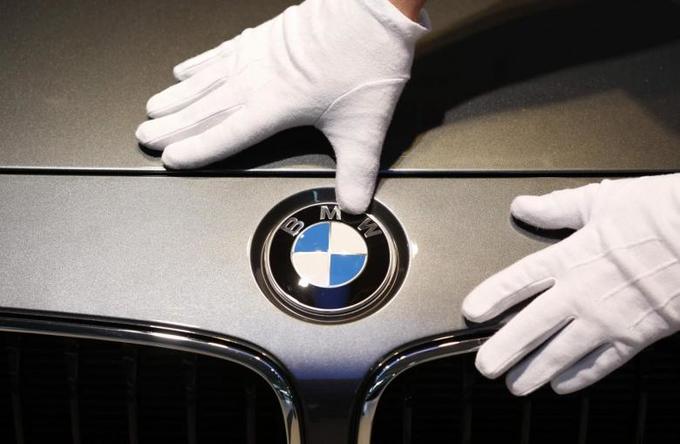
    Apple and premium German car manufacturer BMW are seemingly collaborating to bring the CarKey iPhone feature to eligible vehicles of the carmaker. Evidence for this was unraveled in the iOS 14 code, hinting that iPhone users might soon be able to unlock their BMW cars with their iPhones thanks to the CarKey feature. As a reminder, the existence of CarKey itself was revealed in the iOS 13.4 beta back in February.

    Given that BMW was among the very first automakers to adopt Apple’s CarPlay feature a few years back, it would make sense to assume that CarKey could be adopted on upcoming beemers as well.

    It seems that CarKeys could be stored inside the ubiquitous Wallet app and even be shared with other people through iMessage. “Yo, mom, shared me the keys for the car” would sound a whole lot cooler! Code strings suggest that you will not only be able to lock and unlock your vehicle with your device, but also start it remotely. This is already available through the BMW Connected app, but native iOS support would definitely be great. There would seemingly be two ways to unlock the car – either by holding your phone near the NFC-enabled door handle or just having your iPhone in your pocket.

    Apple could use NFC, UWB (ultra-wide band) chip, or a combination of the two. The UWB chip debuted with the iPhone 11-series but has been pretty underused when it comes to features, as it’s currently only used to aid AirDrop discovery.

    On the topic of anti-theft countermeasures, CarKey will enjoy the same level of biometric security that the sensitive data on your iPhone enjoys, but there would seemingly be an option to use CarKey without having to authenticate yourself with a Face ID scan or a PIN code for an even faster experience.

    BMW itself neither denied or acknowledged the rumored functionality. When asked, the company replied rather nonchalantly with “Please understand that at this point we cannot confirm your request nor give you further details. We would like to refer you to our press release, ” which suggests that we could be in for news on the matter very soon.

  • HKT Payment adds marketplace to mobile wallet

    HKT Payment adds marketplace to mobile wallet

    HKT Payment has launched a new virtual store within its Tap & Go mobile wallet to allow customers to purchase online game virtual gift cards.

    The new Tap & Go Marketplace will offer a wide range of gift cards including Google Pay Gift Codes, PlayStation Network, Xbox and hvmod cards.

    Once payment is complete, a PIN will be instantly installed within the Tap & Go marketplace that can be easily redeemed on the respective online marketplace.

    “We are excited to launch the Tap & Go Marketplace and extend the service to better meet the needs of the game-savvy segment,” HKT Financial Services head Monita Leung said.

    “Not only does online purchase via Tap & Go Marketplace give customers full control over their spending and peace of mind with secure payments, but it also offers gamers greater convenience and a seamless experience.”

    The launch follows the introduction of the Faster Payment System in September that allows customers to instantly top up their mobile wallet.

    Leung said HKT Payment plans to continuously expand the gift card categories available over Marketplace to cover music, videos and software.

    HKT Payment secured Hong Kong’s second ever stored value facilities license in 2016.

  • Australians prefer biometrics to PINs for payments

    Australians prefer biometrics to PINs for payments

    More than half of Australians prefer fingerprints, voice or retina scans in place of PINs when authorizing, according to research commissioned by Visa.

    The research also indicates that 29% of Australians are ready to use an internet-connected device, like a smart home virtual assistant or connected fridge to make payments on their behalf.

    “Australian shoppers are at the forefront of the global evolution of commerce, providing a big opportunity to merchants and financial services providers to similarly lead their international counterparts in innovation,” Visa group country manager for  Australia, New Zealand and the South Pacific Stephen Karpin said.

    “As the Internet of Things and biometric capabilities become integrated into our everyday experiences, we’ll experience a significant shift in how payments are made. In our lifetime, we will see infinitely more choice in how Australians pay, from watches, fridges and mobile phones, to eyes and fingers. And we’ll experience personalization that we never thought possible, powered by artificial intelligence.”

    Visa estimates over three billion of its cards are circulating globally with about 44 million merchants accepting the Visa card as payment. The card company predicts that with the introduction of connected devices and the continued growth of digital commerce, those numbers will expand 30 billion different ways of paying and 400 million physical and digital acceptance points.

    According to Futurist Anders Sorman-Nilsson, ease of use will drive consumers to adopt new patment and commerce experiences. “Connected, AI enabled devices ready to pay will only be pervasive if the experience is easy, seamless and secure,” he added.

    Many of the new payment methods currently using smartphones rely on biometrics for authentication. More than half of respondents surveyed by YouGov (56%) said they are comfortable using their thumbprint, voice or retina for payment. According to the research, the appeal of biometrics is that it is more secure (45%) and the need to not have to remember a pin/password (40%) is driving consumer adoption and readiness.

    But while consumers are keen to embrace biometric authentication, less than half (39%) of respondents were willing to share their personal information in exchange for convenience in payments.

    Karpin attributes this hesitation to prevailing privacy concerns.