Retail News CRM

Tag: Pinduoduo

  • Pinduoduo Surpasses Revenue Expectations But Faces Profit Decline Amid Aggressive Market Competition

    Pinduoduo Surpasses Revenue Expectations But Faces Profit Decline Amid Aggressive Market Competition

    Pinduoduo (PDD Holdings), a prominent e-commerce firm operating economical platforms in China and internationally, surpassed quarterly revenue expectations. However, its net income plummeted as a result of investments made to compete in an increasingly aggressive market.

    Share Performance and Economic Climate

    Shares of PDD Holdings, listed in the US, rose by 1%, with an 11% surge in premarket trading. This was spurred by the company executives’ remarks about escalated investments leading to fluctuations in its short-term financial performance. Concurrently, the Chinese government is implementing strategies to stimulate domestic consumer spending, aiming to rejuvenate a sluggish economy grappling with multiple challenges. These include a languid property sector and ongoing international trade issues resulting from US policies.

    In an effort to invigorate demand, e-commerce giants such as Pinduoduo, JD.com, and Alibaba have turned to deep discounts and promotional offers, inadvertently triggering a price war. Alongside the obligation to maintain low prices in China, PDD’s profit margins have recently suffered due to a multibillion-dollar investment in merchant support programs and elevated costs related to international shipping driven by US tariffs.

    Increased Spending and Intensified Competition

    PDD’s second-quarter earnings revealed an upsurge in spending on various fronts, from server costs to sales and marketing expenditures. This is part of the firm’s strategy to enhance its ecosystem for both merchants and consumers. Jiazhen Zhao, co-CEO of PDD, noted that the recent spike in industry competition has decelerated their revenue growth and substantially reduced operating profit.

    The company expects profit levels from this quarter to be unsustainable, anticipating irregularities in future quarters’ profits. To ameliorate these pressures, PDD’s international platform, Temu, has been promoting products situated in US warehouses and is striving to engage more local sellers. However, it continues to face stiff competition from Amazon, which leverages its extensive scale to secure advantageous pricing from suppliers.

    Changing Business Model and Consumer Perception

    In response to these challenges, Temu is transitioning to a “fully-managed” model, allowing it to exercise greater control over product selection, pricing, and logistics. The platform aims to utilize its substantial supply-chain network to maintain competitive prices. However, a recent survey by an online marketing firm revealed that 30% of American shoppers have noticed price increases on Temu.

    Despite these obstacles, PDD’s revenue experienced a 7% increase, reaching 103.98 billion yuan ($14.53 billion) for the quarter ending in June, surpassing analysts’ predictions. Meanwhile, its operating profit dropped by 21%. Adjusted earnings per American depository share stood at 22.07 yuan, exceeding the projected 15.74 yuan.

    Questions & Answers

    How did PDD’s shares perform recently?
    PDD’s US-listed shares witnessed a 1% increase, driven by an 11% surge in premarket trading triggered by company executives’ comments on future investments.

    What impacts did increased spending have on PDD’s second-quarter earnings?
    PDD’s second-quarter earnings showcased a rise in expenditures across various areas, leading to a slowdown in revenue growth and a significant reduction in operating profit.

    How is PDD’s international platform, Temu, responding to market pressures?
    Temu is transitioning to a “fully-managed” model to exert more control over product selection, pricing, and logistics. The platform aims to use its large supply-chain network to keep prices low, despite facing competition from global e-commerce giant Amazon.

  • Google suspends China’s Pinduoduo app on security concerns

    Google suspends China’s Pinduoduo app on security concerns

    Google has suspended the Play version of Chinese eCommerce app Pinduoduo after security issues were discovered in app versions outside Google’s app store. 

    Off-Play versions of the app that have been found to contain malware have been enforced on via Google Play Protect, and the Play version of the app has been suspended for security concerns.

    Meanwhile, Pinduoduo has also confirmed to Reuters that the app has been temporarily suspended as the current version is not compliant with Google’s Policy. No further details were shared, according to the report.

    The Pinduoduo app no longer appears in Google Play. Meanwhile, both shoppers and sellers versions of Pinduoduo App are still available to download on Apple’s iOS store. It was unclear if there are similar security concerns around the Pinduoduo app for Apple users.

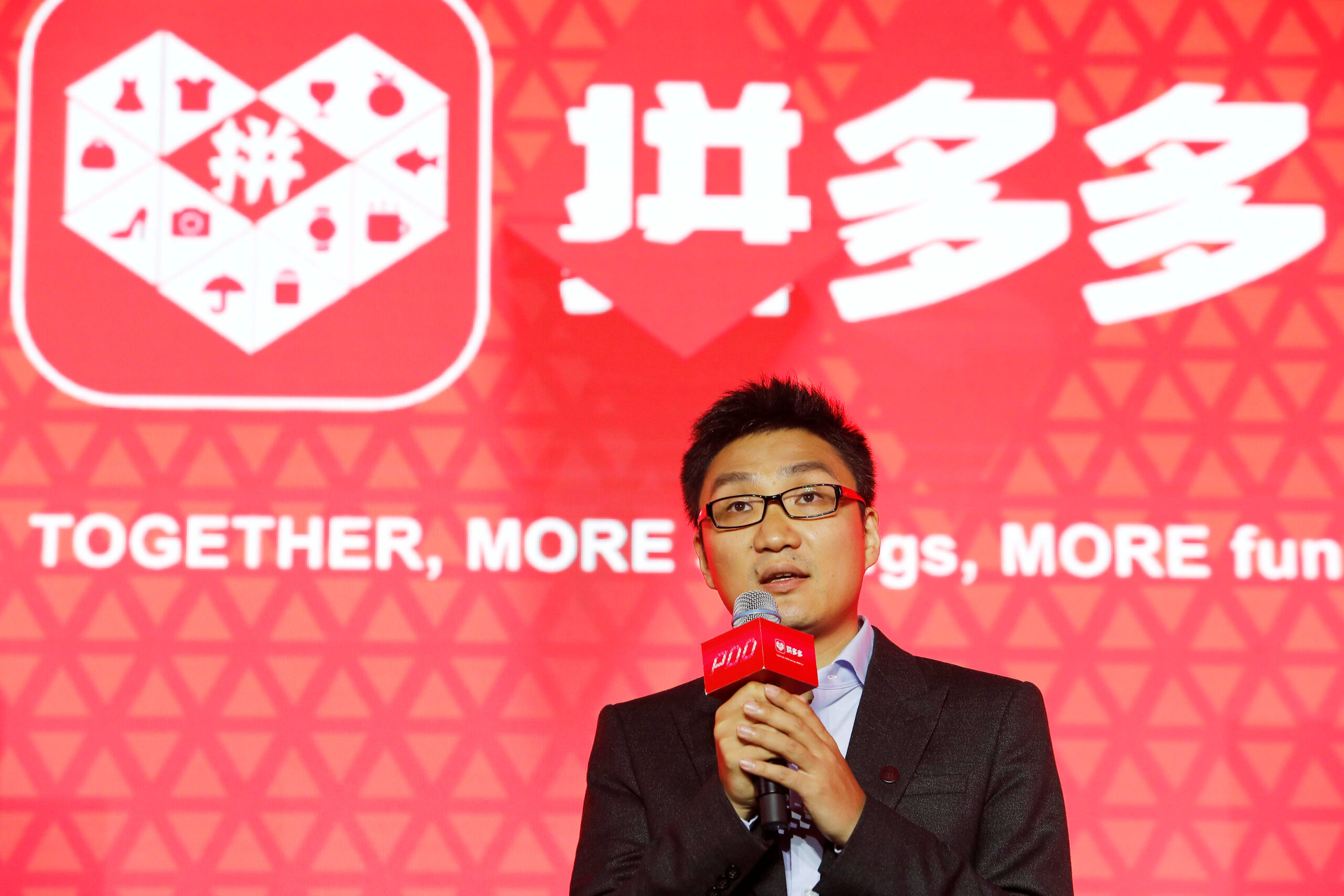
    Founded in 2015 by PDD Holdings, Pingduoduo started as a fresh agriculture platform before expanding to a leading social commerce player serving approximately 900 million users, according to its website. As a company rooted in agriculture, Pinduoduo has worked with more than 16 million farmers and their communities to take part in and benefit from the fast-growing digital economy. True to its slogan “Together, More savings, More fun”, Pinduoduo strives to bring fun into consumers’ shopping journey.

  • China’s Pinduoduo beats revenue estimates, eyes overseas growth

    China’s Pinduoduo beats revenue estimates, eyes overseas growth

    Shanghai-based e-commerce giant Pinduoduo Inc reported quarterly revenue above Wall Street estimates on Monday, buoyed by a major shopping festival and price promotions to lure China’s increasingly reluctant consumers to open their wallets.

    The group’s U.S.-listed shares rose more than 15% in trading before the bell.

    “We saw a recovery in consumer sentiment in the second quarter, especially during the 618 shopping festival,” said Chief Executive Chen Lei.

    He cited agricultural produce, fast-moving consumer goods, consumer electronics, and beauty products as standout sales performers and said promotions had also driven up sales.

    As a regulatory crackdown ensnared tech giants across China in recent years, Pinduoduo heavily promoted its role in connecting farmers with consumers, waiving sales commissions to merchants selling agricultural products.

    During a post-earnings call with analysts, Chen said a similar program would be rolled out for craftsmen and artisans shortly.

    Pinduoduo, founded in 2015, first gained traction among consumers in smaller cities in China, but has since expanded its reach to top-tier cities.

    Budget constraints China-wide have become more apparent amid an economic slowdown and record-high youth unemployment.

    According to China’s National Bureau of Statistics (NBS), July retail sales increased 2.7% year-on-year, below the expected 5% growth and the 3.1% rate seen in June.

    The platform is now looking to international expansion, with a cross-border e-commerce platform slated for launch in the coming months targeting the United States as its first market.

    “The overseas business is one of the opportunities we see… (we) see many peers in the industry achieving good results, so we believe it’s a direction worth trying out,” CEO Chen said.

    Pinduoduo may benefit from a deal struck between Beijing and Washington last Friday to allow U.S. regulators to vet accounting firms in China and Hong Kong, potentially putting to rest a dispute that threatened to boot Chinese companies from U.S. stock exchanges.

    Peers JD.com Inc, and Alibaba, will also potentially benefit from that deal. Both also beat expectations with quarterly earnings announced earlier this month.

    Pinduoduo’s total revenue stood at 31.44 billion yuan ($4.55 billion) in the quarter to June 30, compared with estimates of 23.68 billion yuan, according to Refinitiv data.

    Pinduoduo’s net income attributable to ordinary shareholders was 8.9 billion yuan during the quarter, compared with 2.41 billion yuan a year before.

  • Pinduoduo Trains Farmers in Online Commerce to Boost Agricultural Incomes

    Pinduoduo Trains Farmers in Online Commerce to Boost Agricultural Incomes

    Agricultural e-commerce platform Pinduoduo has helped to raise incomes for rural farming communities by widening market access for producers, who can now bypass intermediaries to sell directly to consumers.

    But while many farmers are aware of the benefits of selling online, they may still find it daunting to set up and run their own e-commerce business without help and training. This is especially so for those with less education and are less tech-savvy.

    Pinduoduo, which operates a digital platform connecting millions of farmers and consumers, identified the lack of digital skills as a potential sticking point toward wider adoption of agricultural e-commerce. Founded in 2015, Pinduoduo started as an online fresh produce retailer and has made it a core priority to use technology to improve agriculture.

    The company’s “Tech for Agri” approach is centered on increasing market accessibility, improving digital inclusion and literacy, and fostering innovation as key enablers for agricultural modernization.

    Recognizing that the lack of internet-savvy talent may prevent farming communities from participating fully in e-commerce and the digital economy, Pinduoduo set about creating a comprehensive learning platform to deliver courses for aspiring farmers to become agricultural entrepreneurs.

    In 2019, Pinduoduo partnered with China Agricultural University to train farmers on how to run their own online businesses. The inaugural class in Yunnan province was attended by dozens of local farmers. That year, Pinduoduo held more than 1,000 hours of instructor-led training sessions and trained hundreds of farmers. Together with its online courses, the company helped train 490,000 agricultural merchants.

    Since then, Pinduoduo has developed an extensive suite of online courses covering topics in business, finance and marketing. Delivered in the form of articles, videos and livestreaming sessions, the on-demand online courses leverage on the widespread availability of the mobile internet and provide a valuable resource for farmers and merchants to learn at their own pace.

    Pinduoduo has also focused on training the younger generation of farmers to take up e-commerce and help their communities. Many of these youths left their rural hometowns to work in big cities but have the desire to return to start their own businesses and to be closer to their families.

    As of the end of October 2021, more than 126,000 “New Farmers” born after 1995 have set up online stores on Pinduoduo. Many of these younger “New Farmers” have tertiary education.

    As digital natives, these “New Farmers” are more open to new technology and innovations. They are also more mindful of the need for more sustainable development in agriculture.

    Each young “New Farmer” is estimated to inspire another five to 10 youths to go into e-commerce. On average, each young “New Farmer” creates 50 local jobs directly and indirectly by boosting demand for ancillary services from logistics to packaging. This helps to grow agriculture-related industries and bolsters the agricultural ecosystem.

    To date, Pinduoduo has connected an estimated 16 million farmers to the digital economy through its platform. With its more than 800 million active consumers, Pinduoduo is helping to aggregate and channel consumer demand to benefit rural communities.


  • Pinduoduo named top logistics company for farm-to-fork innovation

    Pinduoduo named top logistics company for farm-to-fork innovation

    Chinese agriculture platform Pinduoduo was named one of the top 10 innovative logistics companies in Fast Company’s 2022 annual rankings for its work on a new logistics system for handling agricultural products.

    Pinduoduo operates an e-commerce platform that serves more than 850 million buyers and over 16 million agricultural producers. Its Duo Duo Grocery service matches orders and producers in the same geographical region to cut down on transportation time.

    “Pinduoduo has re-architected China’s hub-and-spoke-style delivery infrastructure, with the help of third-party logistics providers, and built out new cold-chain transportation routes to eliminate unnecessary transit points, which slow down delivery, diminish freshness, and increase food waste,” Fast Company wrote in its citation.

    The company has also been proactively investing in research and development to benefit China’s rural population and farmers, the publication noted.

    Pinduoduo’s journey to becoming a leader in logistics has its roots in an early setback in 2015, back when it was an online fruit seller. Back then, the lack of a comprehensive front-to-end order fulfillment system led to the team missing most of its deliveries after an unexpected surge in orders and resulted in many customers receiving rotten fruits.

    That episode highlighted the inadequacies of the fledgling company at that point in its development. It also laid bare the limitations of the logistics infrastructure, which was built to funnel parcels from tens of thousands of collection points to a centralized distribution system to maximize efficiency. However, what worked for transporting durable goods was also less suited for fragile agricultural products.

    About half of China’s annual food loss and waste takes place soon after harvest when the agricultural produce is being processed, stored and transported, according to a study published in Nature. Minimizing the loss not only reduces the environmental footprint of agriculture, but it also boosts farmer livelihoods and improves consumer welfare through fresher food.

    Since then, Pinduoduo has taken upon itself to develop a more flexible logistics infosystem and agriculture-focused infrastructure that reduces the need for multiple transshipments and enables more point-to-point deliveries.

    The new agri-friendly logistics system is built on the back of advanced calculations that take into consideration multiple factors such as the timing of truck deliveries, warehouse location and route planning. Computing power has also advanced to the point where making sense of the vast amounts of real-time supply chain information is now technologically possible.


  • Pinduoduo sales beat expectations

    Pinduoduo sales beat expectations

    Pinduoduo, China’s largest e-commerce platform for agricultural products, has expanded its online grocery ordering service to most provinces since introducing it in the cities of Wuhan and Nanchang in August.

    Duo Duo Maicai, as the grocery feature is called, was introduced in response to the surging demand for buying groceries online following the onset of Covid-19 in the first quarter. The pandemic-related lockdowns forced many households to seek alternative ways to buy their food and essential supplies as brick-and-mortar shops were closed and movements severely restricted.

    But even after the coronavirus was brought under control and restrictions were lifted, a survey by GlobalData found that 56% of Chinese consumers were buying food and groceries online more frequently than before the lockdowns.

    By 2025, nearly half of China’s grocery shopping is expected to take place online, up from 20% currently, according to Goldman Sachs. The online grocery market is projected to reach 7 trillion yuan in five years, the bank said.

    “We are seeing sustained consumer behavior post-pandemic and expect a further shifting from wet markets to structured retail, together with multiple models and build-out of cold-chain logistics to drive ongoing online share gains in” the fresh and FMCG categories, Goldman Sachs said in a report.

    The boom in online grocery shopping in China is a marked change for a society where going to the local market is woven into the fabric of daily life for many households. But with an increasingly fast pace of life, especially in the bigger cities, more and more consumers are availing themselves of the option to buy their groceries online and picking them up the following day.

    Sensing a seismic shift in consumer preference, internet companies have poured resources into catering to this growing need. Other companies that have gone into the online grocery business include Alibaba, Meituan and Didi, the ride-hailing giant.

    “We believe that grocery shopping in China is undergoing similar structural changes in consumer behavior that we saw in other sectors a few years ago,” Chen Lei, Chief Executive Officer of Pinduoduo, said in the company’s post-results conference call on Thursday. “The presumption that most consumers still prefer to go to the wet markets or supermarkets for their daily essentials has been challenged over the past few months.”

    Pinduoduo reported its first quarterly profit since its IPO in 2018. The company has garnered 731.3 million active buyers in the space of five years, an unprecedented feat for an e-commerce company.

    With Duo Duo Maicai, consumers can place their orders before 11 pm each day and pick up their agriculture products the next day from 4 pm onwards at designated pick-up points. Duo Duo Maicai is available as a mini-program and on the main Pinduoduo app.

    This trend of “planned consumption” is driving a surge in agricultural sales, which are estimated to double this year to at least 250 billion yuan in GMV on Pinduoduo. The company said earlier this year that GMV from agriculture could surpass 1 trillion yuan in five years.

    Logistics

    To ensure that supply can keep up with this increased online demand requires a sophisticated supply chain. China’s agricultural supply chain is characterized by small farms, multiple distribution layers, and wastage at various stages. As a result, distribution costs for agricultural products typically account for 40% of the total cost (60% for fresh produce), compared with about 10% in developed economies.

    To improve the supply chain efficiency, Pinduoduo has invested in optimizing key areas including logistics, warehousing and delivery. The company has developed a nationwide and regional agricultural logistics system to cater to the different needs of consumers.

    In the fast-changing consumer and e-commerce industries in China, companies must stay nimble and cater to their users to survive.

    Comparing the shift in grocery shopping habits to the apparel industry five to seven years ago, Chen said: “No one could have imagined then that a significant number of consumers would use online shopping to choose, try out, and return clothes.”

    “But that’s exactly what we are seeing today.”

  • Pinduoduo collects US$1.1 billion in private funding

    Pinduoduo collects US$1.1 billion in private funding

    Chinese e-commerce platform Pinduoduo has successfully raised US$1.1 billion in a private funding round.

    The firm will use the new funding, some of which was contributed by long-standing investors, to capture “additional opportunities” during a period when the world’s economy is affected by the coronavirus pandemic. Investors in this funding round were granted 2.8 percent of ordinary shares in the firm.

    The Shanghai-based business, which is a local competitor to Alibaba, saw poor fourth-quarter revenues following the impact of Covid-19, with a loss of US$250 million.

    “Pinduoduo surpassed RMB1 trillion [$140.9 billion] in annual gross merchandise value (GMV) in less than five years,” said Pinduoduo VP of strategy David Liu, “and we are confident that we will see robust growth beyond our current 585 million user base.

    “The extra funding gives us the strategic flexibility to capture opportunities to further benefit our users, as we bring interactive experiences, such as our new live-streaming features, and wider variety of value-for-money products to them.”

  • Amazon opens on Pinduoduo pop up store

    Amazon opens on Pinduoduo pop up store

    Global online retailer Amazon is set to launch a Pinduoduo pop-up store.

    According to reporting in Reuters, the Pinduoduo pop-up store will run until the end of the year with around 1000 selected overseas products.

    Amazon recently closed its Chinese marketplace for domestic sellers and is shifting focus to products sold in the Chinese market by overseas producers, as well as offering its cloud server services.

    The decision to host its pop-up on Pinduoduo reflects the platform’s popularity with rural Chinese residents over the more established Alibaba and JD services.

    “The Amazon Pinduoduo pop-up store provides customers with a curated selection of about 1000 overseas products, with competitive prices, an authenticity guarantee and convenient shipping,” said an Amazon spokesperson.

    “We look forward to enabling customers to enjoy cross-border shopping through this store, in addition to more deals and tens of millions of products available on [amazon].cn.”

  • Alibaba may buy Kaola from Netease

    Alibaba may buy Kaola from Netease

    Alibaba and Chinese tech firm Netease are in talks on the internet giant’s potential acquisition of its cross-border e-commerce platform Kaola, which would be merged with Tmall.

    According to sources from the mainland, Alibaba may offer as much as US$2 billion for the business.

    “The deal would represent a step toward market consolidation in China’s e-commerce sector,” wrote Tech Node’s Emma Lee. “A merger between the country’s top cross-border players would create a single market behemoth.”

    She said Alibaba could also use the deal to fend off rival Pinduoduo, which has also taken an interest in Kaola to expand its cross-border presence.

    Tmall was responsible for 32.3 per cent of China’s entire cross-border e-commerce takings in the first quarter, with Netease Kaola in second place with 24.8 per cent of the business.

    Alibaba rival Pinduoduo has also expressed interest in the Kaola business.

    “Netease has always been open-minded in seeking business development opportunities and strategic business partners to bring more vitality to Netease’s cross-border e-commerce and other business units,” said Netease CFO Yang Zhaoxuan.

  • The sharp rise of Pinduoduo – What is the secret?

    The sharp rise of Pinduoduo – What is the secret?

    Pinduoduo, also known as PDD, founded by the Ex-Googler Colin Huang, is currently the fastest growing app in the history of the Chinese Internet and the leading Chinese App for social e-commerce. Pinduoduo is reported to have raised a US$3 billion investment round led by Tencent Holdings, at a valuation of US$15 billion. A significant point here is the collaboration with Tecent’s WeChat app (The Chinese analogy to WhatsApp), which plays the most significant role in the functionality of the app and the way it works.

    The app has a list of techniques to push the users share it with their friends and to keep them actively using it after. Pinduodo allows users to participate in-group buying deals with their friends, mostly via Wechat. Pinduoduo can be described best with the words, viral, quick, addictive, attractive, and convenient. Also, probably the most contemporary version to online shopping, bringing into integration the most powerful tools of nowadays communication- messaging and group chats.

    The app, often used through WeChat messaging service, offers merchandise at times 20 percent cheaper than market price by letting consumers buy directly from manufacturers, cutting out middlemen, advertising and acquisition costs. Huang and his developers also used their experience to add gaming elements to the shopping experience, offering coupons and rewards.

    At the end of December 2017, PDD had more than 156.5 million users. PDD gives people a different experience than at traditional e-commerce sites like Amazon.com or Alibaba. PDD is like a digital version of shopping at the mall with friends.

    The strongest asset of PDD is that it is doing extremely well in small cities. Most of the users are price-sensitive women above 40 years old, living in small cities in China. Which gives us a clear picture – frequent purchases for the whole family.

    Pinduoduo has got a few main features:

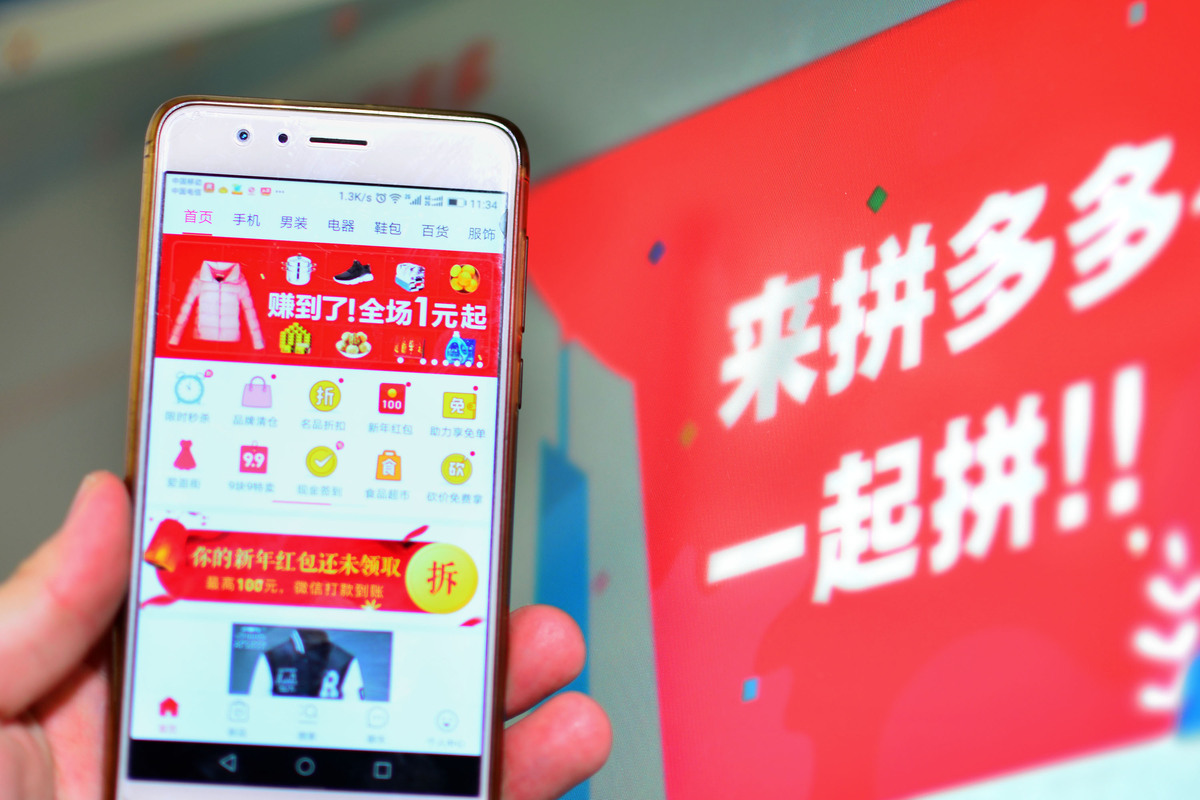
    1. Group Buying. In order to get discounted price, find a friend to join the group buy deal.
    2. Free products. If you get enough new users to follow the Pinduoduo Official Account, install the App and sign up via WeChat login.
    3. Buy it now coupons. Unlike other coupons in China, PDD offers coupons for two hours only. Which means the user has to take action immediately.
    4. “Bargain” with friends. Each time a friend volunteers to help you “bargain”, the price decreases a bit. You can even succeed getting the product free.
    5. Get cash rewards for inviting friends.
    6. Use of lotteries. Invite friends to join within a specific period of time and win the product for less than 10% of the cost.
    7. Automatic payment. PDD uses automatic WeChat payments. After allowing “password-less payments” by default at the end of your first purchase, you will not have to enter your password anymore and you will be able to pay with one-click payments.

    Pinduoduo has a strong asset over other online retailers and it is in offering cheap deals. To maximize this, Pinduoduo makes the best out of its own users. You may ask how? Very simple, to get the best bargains, users have to invite more buyers, which helps the company maintain the low prices.

    What are the reasons for the fast growth?

    The first point to highlight is the “social shopping” that PDD offers. WeChat has a monthly active user base of over 1 billion. It allows purchases as a group through which users can receive a group discount for purchasing as a group. Users get a product link that they can share with their WeChat friends. The will of users to get a good deal, it is what makes them want to share the app, with as many as possible people. In 2016, when people did not think it was impossible to exponentially grow user traffic, Pinduoduo accumulated one hundred million users through the above method.

    The second smart move of Colin Huang, the Founder of Pinduoduo is the fact that he knew that he must know his market. To understand Pinduoduo, we must understand the users behind Pinduoduo. Comparing Pinduoduo and JD.com’s user distribution, we see that 65% of Pinduoduo users are from third tier cities or more rural areas, while half of JD.com users come from first plus second tier cities, and half from the rest of China. Pinduoduo has achieved unprecedented growth by targeting the low-income population who are also new internet users with its value game.

    Last but not least key move of Huang was giving more profit for the merchants.  Pinduoduo attracts merchants by charging zero fees for selling on their platform. Advertising is achieved through users sharing to social media. As the number of Pinduoduo users grows, the app has formed an ecosystem of user-generated product promotion, allowing merchants to reach the 300 million users directly. By this, satisfying the survival needs of the mid-tail merchants. Colin Huang gave the small merchant a dream opportunity to grow big. And stories such as “Girl born after 1980 achieves 5 million yuan in sales after four months on Pinduoduo”, and “Selling 260 million packs of napkins in two years with three cents of profit per pack” began to appear on the news.

    Along with that, Huang does not compromise on the quality and makes sure that users know that the rapid rise of PDD is not accidental. After some users being dissatisfied with the poor quality, speed of delivery, inconsistencies between product and photo, and failure to receive refunds after waiting for a long time. To address these problems, a customer protection fund was set up by PDD. It helps consumers deal with after-sales disputes and claims. By this focusing on maintaining returning customers and not one time excitement, that will be the end of the customers’ interaction, with the app.
  • Chinese’s Pinduoduo seeks US$1 billion

    Chinese’s Pinduoduo seeks US$1 billion

    Chinese e-commerce startup Pinduoduo is seeking US$1 billion in a US IPO, going head to head with industry giants such as Alibaba.

    The company’s business model, in which users recruit friends via social media to enjoy group-discount offers direct from manufacturers, has seen its transaction volumes reach 141.2 billion yuan (US$21.3 billion) in 2017, tripling the company’s revenue. It was founded by ex-Google engineer Colin Huang and is backed by Tencent and Sequoia Capital, among others.

    Pinduoduo raised more than US$1 billion in its last fundraising round in April, against a valuation of around US$15 billion. Its sales have been strongly supported by its large user base in lower-tier Chinese cities. The site’s daily active users reached 55.9 million last month, more than 20 million more than the popular JD e-commerce platform.