
Tag: plastic industry

  • As plastic sector booms, Vietnamese firms are easy prey

    As plastic sector booms, Vietnamese firms are easy prey

    Major Vietnamese plastics firms are being taken over in a big way by foreign firms from Thailand, Japan and South Korea.

    In April, Thai business conglomerate Siam Cement Group (SCG) acquired over 50 percent of shares in Binh Minh Plastics (BMP), a big player in Vietnam’s plastics industry. Previously, SCG had already poured in $121 million to acquire seven other Vietnamese plastics firms, according to a report.

    Japan is also gearing up to conquer Vietnam’s plastics sector. Japan-based Sekisui Chemical has become a strategic partner in Tien Phong Plastics, acquiring 25 percent of the company’s shares last year, and Japan’s Meiwa Pax Group has paid $16.5 million to buy HCMC-based packaging firm Sapaco.

    South Korea firms have also jumped into the fray, with packaging firm Dongwon Systems acquiring over 97 percent of Tan Tien Plastics in 2016. Tan Tien is a frontrunner in Vietnam’s packaging industry, and a major partner for several big companies operating in Vietnam, such as Unilever, Ajinomoto, Trung Nguyen or Vinamilk.

    Vietnam has become a ripe destination for foreign firms because the plastics industry has been booming. For the last 3 years, it has grown by 15-17 percent each year.

    In 2016, Vietnam housed over 2,000 firms in the country. The annual per capita consumption of plastics in Vietnam is around 41 kilograms, according to Vietnamese securities firm Vietcombank Securities. That number is projected to increase to 45 kilograms per person in 2020, according to the Vietnam Plastics Association.

    “Vietnam’s plastics sector has great potential to grow,” said Kubo Hajime, a management board member of Sekisui Chemicals.

    Vietnam’s cheap labor and material costs is also an advantage, economist Dinh The Hien said. He said the fact that Vietnam is part of several trade agreements, most notably the Comprehensive and Progressive Agreement for Trans-Pacific Partnership, helps.

    Vietnamese plastics firms lack the necessary capital, technology and high-skilled labor required to compete in an increasingly tougher market, said Ho Duc Lam, President of Vietnam Plastics Association.

    “Another problem for Vietnamese plastics firms would be high production costs, which leads to high prices,” he said.

    Vietnam needs to focus more on targeting the right customers with the right products to compete, an unnamed representative of a Vietnamese plastics firm said.

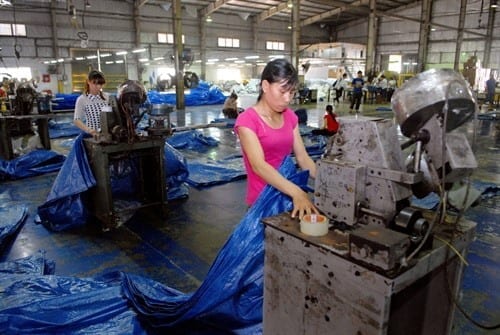
    “We would also need to invest more in technology and machinery to upgrade our assembly chains, thus increase our product quality and reduce production costs,” he said.

    Last year, the plastic sector recorded an export value of over $3 billion, a year-on-year increase of 17.6 percent.
  • Vietnam plastics export turnover to increase by 15%

    Vietnam plastics export turnover to increase by 15%

    Exports of plastics are expected to grow by 12–15 per cent this year, according to the Việt Nam Plastics Association (VPA).

    Hồ Đức Lam, chairman of the association, said the country’s key export markets this year would be Japan and the US, which has high demand.

    Other markets such as China, Laos, Cambodia and Myanmar are expected to become new export markets for plastics in the future.

    Plastic bags made in Việt Nam are still subject to anti-dumping taxes in the US market, but the US imposition of anti-dumping duties has had almost no impact on exports of the sector, according to Lam.

    Every year, the average US import turnover is more than US$50 billion for plastics and plastic products, accounting for 9.1 per cent of the world’s total import of plastics, according to VPA.

    The largest plastic export market is Japan, with an average growth rate of 20–25 per cent per year. Việt Nam now ranks sixth in the top 10 countries exporting plastics to Japan, which is one of the most difficult markets with many strict regulations on the quality of goods. Vietnamese plastic exporters have been urged to improve quality, design and trade promotions to enter this market.

    Lam recommended that Vietnamese plastic producers prepare long-term strategies and invest in market research to increase their penetration into the Japanese market.

    In addition, the EU’s demand for plastic products imported from Việt Nam is high, especially plastic pipes.

    Việt Nam’s plastic products are not subject to anti-dumping duties in the EU markets like other Asian countries (the average tax rate is from 8-30 per cent). Thus, Vietnamese producers are also urged to seek new export markets.

    Despite the high export prospects and strong development in recent years, the plastics industry is still known only as part of the plastic processing industry.

    More than 80 per cent of raw materials are still imported from other countries.

    Each year, the plastic industry needs an average of four million tonnes of raw materials, but only manages to produce about 900,000 tonnes, with the rest imported.

    Experts have said that a shortage of raw materials will reduce the competitiveness of exporters.

    Because of regulations on the origin of goods, it is difficult to take advantage of tax incentives in free trade agreements.

    Exporters also need to focus on environmentally-friendly and safe products for sustainable growth.

    Việt Nam’s plastics industry earned $3 billion last year, posting a 17.3 per cent increase over 2016, according to VPA.