Tag: players

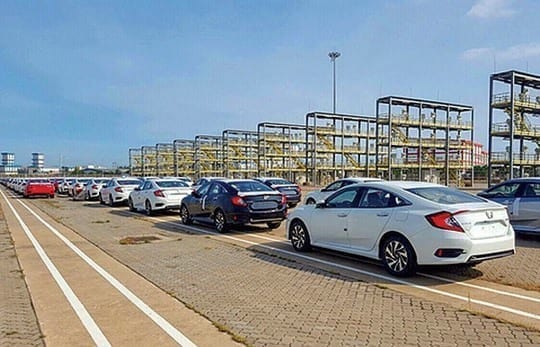
  • Electric Cars Take the Lead: Singapore Embraces EV Revolution, Toppling Traditional Players

    Electric Cars Take the Lead: Singapore Embraces EV Revolution, Toppling Traditional Players

    In a historic shift, electric vehicles (EVs) constituted 57.6% of new vehicle registrations in the first quarter of this year in Singapore. This marks the first time EVs have outpaced both combustion engine and hybrid models in new registrations. The proportion of EVs has seen a significant increase, rising from 45% the previous year. Specifically, about 7,700 new electric vehicles were registered out of a total of 13,300 units.

    Chinese Brands Leading the Charge

    BYD, the automotive giant from China, led the pack with 3,239 registrations, accounting for 24% of the total new vehicles. The company expanded its market share from 21% at the end of 2025. Furthermore, three other Chinese brands—Chery, GAC, and MG—made their debut in the top ten best-selling car brands in Singapore. These new entrants replaced Hyundai, Kia, and Mazda, which held the seventh, eighth, and ninth spots, respectively, in 2025.

    Toyota and Tesla Maintain Strong Presence

    Despite a relatively modest EV lineup, Toyota managed to secure second place with 1,932 registrations, holding a 14.5% market share in the first quarter of 2026, a slight increase from the previous year. Tesla, the US-based EV manufacturer, secured 11.4% of the market with 1,515 registrations. This performance propelled Tesla to the third spot among best-selling brands in Singapore, up from sixth place in 2025.

    Incentives and Challenges in EV Adoption

    Current incentives in Singapore, designed to reduce the cost of owning an EV, offer buyers rebates of up to $30,000 on upfront vehicle taxes. In contrast, non-electric vehicles may face penalties of up to $35,000, depending on their emissions.

    However, Walter Theseira, a transport economist at the Singapore University of Social Sciences, pointed out that while EV adoption is gaining momentum, it is still a challenge for all new car registrations to be fully electric—particularly for high-mileage drivers, for whom hybrid models may be more suitable.

    Change in the Automotive Landscape

    Automotive consultant Say Kwee Neng observed a fundamental shift in the dynamics of the car industry, which began with the rise in EV adoption in 2024 and 2025. According to Hal Serudin, a partner at automotive consultancy Lumina 3 Sixty, the increase in sales of Chinese and EV brands is in line with trends observed in other regional markets such as Malaysia and Thailand; these brands have disrupted both mass-market and luxury segments.

    Questions & Answers

    What proportion of new car registrations in Singapore were electric vehicles in the first quarter of this year?
    Approximately 57.6% of new car registrations were electric vehicles.

    Which Chinese automotive brands are among the top ten best-selling car brands in Singapore?
    BYD, Chery, GAC, and MG are among the top ten best-selling car brands in Singapore.

    What incentives are currently offered in Singapore to promote EV adoption?
    Currently, Singapore offers rebates of up to $30,000 on upfront vehicle taxes for electric vehicle buyers.
  • Indonesian Power Players Grab and GoTo Under Government Review for Potential Market-Shaking Merger

    Indonesian Power Players Grab and GoTo Under Government Review for Potential Market-Shaking Merger

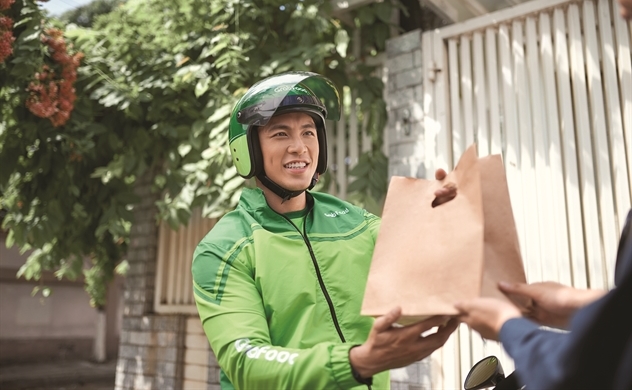
    Possible discussions are currently underway in Indonesia regarding a potential merger or acquisition involving Grab, a ride-hailing and food delivery company, and its competitor GoTo, according to a statement made by the presidential spokesperson on Friday.

    The Indonesian government sees the ride-hailing sector as a strategic factor in generating jobs and boosting the economy. Gojek, a subsidiary of GoTo, alone employs more than 3.1 million online riders. Both Grab and GoTo have long been major players in the Indonesian market.

    If a merger or acquisition does take place, the resulting entity would command a staggering market share of over 91 per cent in Indonesia, based on information provided by data analytics firm Euromonitor International.

    An official announcement regarding the possible merger or acquisition will be made shortly, according to Prasetyo Hadi, an Indonesian government spokesperson.

    “Online riders are the heroes of our economy, propelling it forward,” Hadi declared.

    There has been no immediate comment from Grab or GoTo in response to request for statements.

    Previous reports suggested that Grab, which is listed on Nasdaq, was planning to negotiate a deal to acquire GoTo, a smaller rival, in the second quarter of this year and had engaged advisers to assist with the proposed acquisition. According to a source close to the matter, such a deal could value GoTo at approximately US$7 billion.

    As per its 2024 annual report, GoTo is 73.90 per cent owned by foreign investors, including SoftBank Group and Taobao China Holding, a subsidiary of China’s Alibaba Group. The remaining stakes are held by Indonesian investors.

    Questions & Answers

    What is the potential impact of Grab and GoTo’s merger or acquisition on the Indonesian market?
    If Grab and GoTo merge or if one acquires the other, the resulting entity would control over 91% of the Indonesian market, according to data from Euromonitor International.

    Who are the main investors in GoTo?
    Foreign investors, including SoftBank Group and Taobao China Holding, own 73.90% of GoTo. The remainder is owned by Indonesian investors.

    What was GoTo’s potential value earlier this year?
    Earlier this year, a source close to the matter mentioned that a potential deal could value GoTo at around US$7 billion.

  • Vietnam Stocks Celebrate Largest Leap in a Month: Key Players and Factors in the Remarkable 2.16% Surge

    Vietnam Stocks Celebrate Largest Leap in a Month: Key Players and Factors in the Remarkable 2.16% Surge

    On Tuesday, Vietnam’s leading VN-Index experienced a significant increase, soaring by 2.16% to reach 1,654.98 points, marking the largest surge since October 6. This remarkable growth allowed the index to close approximately 35 points higher, a notable recovery from the 69-point decline it experienced over the previous three sessions.

    The trading value also increased significantly, rising by 16% to reach VND34.25 trillion, equivalent to US$1.3 billion.

    Dominant Performers

    The VN30 basket, which consists of the 30 highest capped stocks, saw impressive growth in 24 tickers. The rise was spearheaded by SSI Securities Corporation, VPBank, and Vincom Retail, each experiencing a gain of 6.9%. Other strong performers included Techcombank, which closed 4.2% higher, and MB, which rose by 3.9%.

    Despite the general upward trend, there were a few stocks that did not follow suit. The most notable of these were the tech heavyweight FPT Corporation and the state-owned Petrovietnam Gas, both of which saw a 1.6% decrease.

    Foreign Investment

    Foreign investors demonstrated significant activity, making net purchases worth VND1.22 trillion. Notably, the majority of this investment was directed towards HDBank and Masan Consumer.

    Lastly, the HNX-Index, which hosts mid-cap and small-cap stocks on the Hanoi Stock Exchange, rose by 2.6%. Simultaneously, the UPCoM-Index for the Unlisted Public Companies Market closed 0.57% higher.

    Questions & Answers

    What was the percentage increase of the VN-Index?
    The VN-Index increased by 2.16%.

    Which companies led the rise in the VN30 basket?
    The rise was led by SSI Securities Corporation, VPBank, and Vincom Retail, each with a 6.9% gain.

    What was the trend among foreign investors?
    Foreign investors were net buyers, mainly investing in HDBank and Masan Consumer.

  • Indonesian property players welcome house price increases for foreign buyers

    Indonesian property players welcome house price increases for foreign buyers

    The government’s decision to increase house prices for foreign buyers has been met with positively by Indonesian real estate business players, who reason that it will help to protect the domestic property market.

    “If the government keeps the price low for foreign buyers, Indonesians will be forced to bear the high price jump. Therefore, I think this is a right decision,” Association of Housing Development in Indonesia (Apersi) chairman Eddy Ganefo said on Tuesday. He explained that the higher purchasing power of foreigners might hurt the domestic industry.

    The price increase is stipulated in a regulation issued by the Agrarian and Spatial Planning Ministry.

    The minimum house price set for foreigners in Yogyakarta and Bali now stands at Rp 5 billion (US$371,112) per unit, up from Rp 3 billion under a previous regulation.

    In West Nusa Tenggara and North Sumatra, the minimum price also jumped to Rp 3 billion from Rp 2 billion.

    Indonesian Real Estate Association (REI) chairman Eddy Hussy said he was optimistic that the changes in price would not affect demand from foreigners to purchase houses.