
Tag: plummet

  • Vietnams Gold Market Slumps as Bullion Rates Plummet Globally

    Vietnams Gold Market Slumps as Bullion Rates Plummet Globally

    Gold prices in Vietnam fell on Friday morning, reflecting a global decline in bullion rates across the fourth consecutive trading session. This price drop was seen in the Saigon Jewelry Company’s gold bar, which reported a 0.6% decrease to VND164 million (approximately US$6,221.31) per tael. Despite this recent decrease, the local bullion rates have still seen an overall increase of 7.3% since the beginning of the year, even with a 2% decrease this week.

    Gold Ring Prices and Global Gold Rates

    Along with the decrease in gold bar prices, the cost of gold rings also fell by 0.6% to VND163.8 million per tael. In terms of weight, a tael is equivalent to 37.5 grams or 1.2 ounces.

    Internationally, gold prices were at a more than one-week low on Friday, resulting from higher energy prices driving inflation fears and the continuation of higher interest rates. The meeting between the U.S. President and the Chinese President was also a point of focus for investors. Spot gold saw losses for the fourth straight session and was down 0.8% at $4,613.19 per ounce, marking its lowest level since May 6. Bullion was down 2.1% for the week and U.S. gold futures for June delivery lost 1.4% to $4,619.

    Factors Impacting the Gold Market

    Analysts have attributed the drop in gold prices to several factors. Tim Waterer, chief market analyst at KCM Trade, remarked, “Gold is getting hit from all sides – rising oil has brought inflation back to the forefront, pushing yields higher and the dollar stronger, leaving the yellow metal as the unfortunate victim of the market’s renewed rate-cut skepticism.”

    Since the U.S.-Iran conflict began in late February, gold has fallen about 13%. This is largely due to increased energy prices, which have led to inflation concerns and higher U.S. interest rates. While gold is often viewed as a safe haven against inflation, high interest rates can negatively impact this non-yielding asset.

    Questions & Answers

    What caused the recent decline in Vietnam’s gold prices?
    The decline mirrors a global decrease in bullion rates. Factors such as higher energy prices, inflation fears and higher interest rates have contributed to this decrease.

    How has the U.S.-Iran conflict impacted gold prices?
    Since its onset in late February, the conflict has sparked an approximate 13% decrease in gold prices. This is due to increased energy prices, inflation concerns, and the potential for higher U.S. interest rates.

    How do interest rates affect gold prices?
    High interest rates typically lead to a decrease in gold prices. This is because gold, as a non-yielding asset, becomes less attractive to investors when interest rates are high.

  • Vietnamese Fruit Market Takes a Hit: Prices Plummet Amid Weak Demand and Strict Chinese Import Controls

    Vietnamese Fruit Market Takes a Hit: Prices Plummet Amid Weak Demand and Strict Chinese Import Controls

    Fruit prices in Vietnam, including watermelon and orange, have drastically dropped to VND1,000–5,000 (3.8-19 U.S. cents) per kilogram. This decrease is attributed to a slump in domestic demand coupled with strict quality control enforced by China, a major importer.

    Farming Woes in Gia Lai

    In Gia Lai, a province located in the central region of Vietnam, watermelons are currently fetching VND1,000-VND5,000 per kilogram. Only high-quality fruits are attracting significant prices as traders are exercising selectivity in their purchases. This situation has led to considerable financial losses for local farmers. One farmer noted a seasonal loss exceeding VND50 million, while another reported losses of VND500 million from her eight-hectare watermelon farm.

    Farmers have pointed to a significant decrease in domestic demand this year, alongside slow exports to China, unlike in previous years where sales often surged post-Lunar New Year holidays. If prices continue to dip, the situation in Gia Lai could worsen, given that over 90% of watermelon farms spanning 2,733 hectares are due for harvesting in the coming months.

    Plight of Other Fruits

    Similarly, the price of oranges in the southern province of Vinh Long has slumped to VND1,000-3,000 per kilogram. This has resulted in farmers experiencing losses of VND100-200 million per hectare. One farmer, who cultivates nearly a hectare of oranges, is considering switching crops after incurring severe losses this year.

    This price drop has pushed traders to sell their goods at heavily discounted rates on the streets of Ho Chi Minh City. Here, piles of oranges and watermelons are stacked up for sale at VND5,000 per kilogram and VND10,000 respectively. Prices of other produce such as tomatoes, green beans, and okra have also halved within a month, with tomatoes trading between VND10,000-25,000.

    Export Challenges

    Dang Phuc Nguyen, the general secretary of the Vietnam Fruit and Vegetable Association, attributes the drastic price drop to China imposing stricter quarantine controls and quality standards. As Vietnam’s largest agriculture produce buyer, these new measures have a significant impact on the local market.

    Furthermore, local testing laboratories in Vietnam are overwhelmed, leading to longer inspection times and an increase in risks for traders. The ongoing conflict in the Middle East has also led to a 50-66% surge in logistics costs. Consequently, exporters who cannot bear these costs are opting to sell their products domestically, causing a supply glut.

    The Binh Thuan Province Dragon Fruit Association reported a significant increase in air freight costs to Europe, which has jumped from $1.5 per kilogram to $7-8. This price surge has forced many traders to sell domestically at discounted prices. Exporters are looking into new Asian markets such as Japan and South Korea, but they acknowledge that these markets cannot immediately compensate for the loss of traditional markets.

    Questions & Answers

    What has led to the drastic drop in fruit prices in Vietnam?
    The fall in prices can be attributed to decreased domestic demand and China’s stricter quality control measures, which have slowed exports.

    What is the impact of the falling fruit prices on local farmers and traders?
    Falling prices have led to significant financial losses for farmers and forced traders to sell their goods at heavily discounted prices.

    What steps are Vietnamese exporters taking in response to the current situation?
    Exporters are seeking new markets in Asia, such as Japan and South Korea, and selling their produce domestically due to increased logistics costs and extended inspection times.

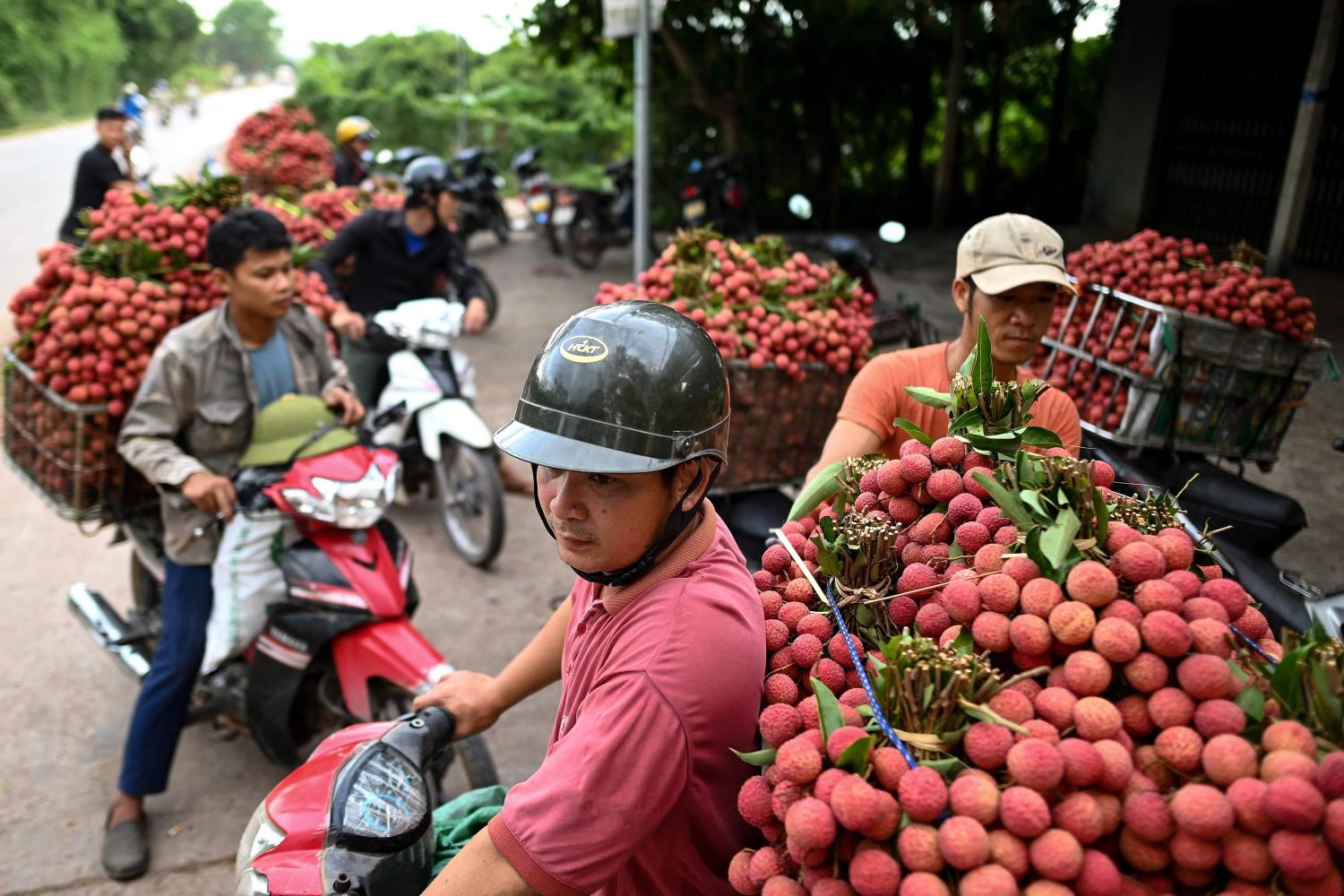
  • Lychee Farmers Brace for Hardships as Prices Plummet Below $1 Per Kilogram

    Lychee Farmers Brace for Hardships as Prices Plummet Below $1 Per Kilogram

    Fruits from certified export orchards in Vietnam now command prices between VND25,000-30,000 per kilogram, a drop from VND35,000-40,000 at the season’s outset. Luc, a seasoned lychee farmer from Bac Giang Province’s Luc Ngan District—the country’s leading lychee producing region—revealed that prices have plummeted by a third compared to last year, putting his profit margins at risk.

    Despite producing high-quality lychees from his one-hectare orchard, Luc warns he may barely break even if market prices do not rebound. Growers report that the production cost for a kilogram of lychee, including packaging, hovers between VND8,000-12,000. In southern Vietnam, retail prices range from VND25,000-40,000 per kilogram, reflecting a nearly 30% dip from earlier this month and a staggering 50% drop compared to the same time last year.

    Giang, another farmer from Hai Duong Province’s Thanh Ha District, explains that an oversupply of lychees coupled with fierce competition from other tropical fruits has contributed to the current price slump. The situation has been exacerbated by a 26.6% year-on-year decline in lychee exports during the first four months of this year, with 17 markets pulling back on imports, notably the Netherlands and France, which reduced purchases by 84% and 40%, respectively. However, markets such as the U.S. and China have seen increases in demand, ranging from 25% to 116%.

    Transportation costs, propelled by ongoing tensions in the Middle East, have also played a significant role in suppressing imports. Competing with Vietnam, China has stepped up its own lychee exports, putting additional pressure on the market.

    This year, Vietnam’s lychee output is projected at about 250,000 tons—up 25% from 2022—with Bac Giang accounting for a substantial 165,000 tons. Yet, since the season launched, the province has managed to sell only 13,000 tons locally, with export figures remaining modest.

    In a move to ease the situation, the Bac Giang Department of Industry and Trade is advocating for processing initiatives, such as drying, juicing, or freezing the fruit, as a strategy to broaden sales channels. They launched a promotional program in both Hanoi and Ho Chi Minh City this week, aiming to boost the visibility and demand for this seasonal delicacy.

    Questions & Answers

    How has the lychee market in Vietnam changed this year?
    This year, Vietnam’s lychee market has experienced a significant downturn, with prices dropping by a third compared to last year, largely due to oversupply and competition from other fruits.

    What factors are affecting lychee exports from Vietnam?
    Lychee exports have fallen due to reduced demand from several markets, including notable decreases from the Netherlands and France, alongside rising transportation costs and increased competition from Chinese lychee exports.

    What steps is Bac Giang Province taking to improve lychee sales?
    Bac Giang Province is encouraging businesses to process lychee into products like dried fruit and juice to diversify sales channels, while also rolling out promotional programs in major cities like Hanoi and Ho Chi Minh City.