Tag: PM

  • Malaysia PM launches Huawei’s Customer Solution Innovation Center

    Malaysia PM launches Huawei’s Customer Solution Innovation Center

    The newly refurbished and upgraded Huawei Customer Solution Innovation Center (CSIC) has been officially launched by prime minister, Dato’ Sri Ismail Sabri Bin Yaakob, as part of celebrations to commemorate Huawei’s 20th anniversary in Malaysia.

    The state-of-the-art technology and solutions displayed in Huawei Technologies (Malaysia) Sdn Bhd’s (Huawei Malaysia) CSIC also aim to assist the nation in becoming the ASEAN Digital Hub.

    Huawei’s CSIC was designed as an Information and Communications Technology (ICT) Hub and Centre of Excellence to drive the industry’s open ecosystem and accelerate digital economy transformation in Malaysia.

    The CSIC, located in Integra Tower at the heart of Kuala Lumpur, aggregates the company’s over 120 reference applications and services globally.

    Huawei’s customers and partners are able to leverage this innovative platform to design and test technology solutions, verify new business models, and nurture innovative applications and services to both the public and private sectors.

    Present during the ceremony was the chief executive officer of Huawei Malaysia, Michael Yuan.

    Delivering the keynote address during the launch, Dato’ Sri Ismail Sabri said the CSIC is a testament to Huawei Malaysia’s commitment to the nation’s digital transformation.

    “Thank you Huawei for accelerating digital transformation and strengthening the development of Malaysia’s innovative platforms since 20 years ago. For that, I would like to wish Huawei a happy 20th anniversary! We will always appreciate and value your contribution towards the nation’s digital talent development.”

    “I was informed that most of Huawei Malaysia’s employees are local. Talents are a crucial part in accelerating digital transformation for the nation,” he said.

    The prime minister added that he believes Malaysia has the capacity and capability to achieve 100% digital inclusivity, especially among the vulnerable communities.

    “I am proud to say, in embracing the concept of Keluarga Malaysia, Huawei has taken an important role in helping the government address this matter. I hope more corporations will come forward to follow in your footsteps,” he said.

    Yuan said that through the CSIC, Huawei Malaysia would continue to bring global experiences to serve the needs of the ICT industry in Malaysia and to assist local stakeholders in succeeding in their businesses.

    “This center will act as a catalyst to accelerate Malaysia’s digital transformation and to capitalize on the potential of advanced technologies and assist in driving investments in the digital economy for the nation at the same time,” added Yuan.

    He further pointed out, “It is our belief that a better-connected Malaysia will have a prosperous future. We are currently in a period where ubiquitous connectivity is no longer a luxury, but a vital requirement for a country to achieve fully developed status. Therefore, we look forward to growing together with Malaysia, to playing an integral part in the nation’s technology-based economy and to building a better future for all Malaysians.”

    Among the business-to-business solutions available and showcased at the CSIC included Huawei’s 5G solutions around the world, including those for smart cities and autonomous vehicles as well as Huawei’s Smart Education system, including hybrid learning, which increases participation and engagement between students and teachers, and allows for some students attending class in-person while others join virtually.

    Cloud computing was another highlight – where Huawei is working with Telekom Malaysia Bhd (TM) on their Alpha Edge, the only Malaysian-owned cloud and AI infrastructure and services to enterprises and government institutions that ensures data sovereignty.

    Also showcased were agro-tech systems with AI technology that could save time, monitor quality, as well as predict yield and output. This included the production of premium caviar in Malaysia using this technology.

    The CSIC also displayed network infrastructure devices that utilize the latest technological advances in 5G and telecommunications as well as Huawei’s RuralStar, which overcomes the technical challenges of connecting remote areas, bringing connectivity to hard-to-reach communities.

    Huawei also presented the Huawei RuralStar solution to Dato’ Sri Ismail Sabri as part of its corporate social responsibility initiative to bridge the digital divide in the prime minister’s constituency of Bera.

    This initiative is part of Huawei’s global vision of bringing digital to every person, home and organization for a fully connected, intelligent world.
  • PM for Men by Pomelo is launched

    PM for Men by Pomelo is launched

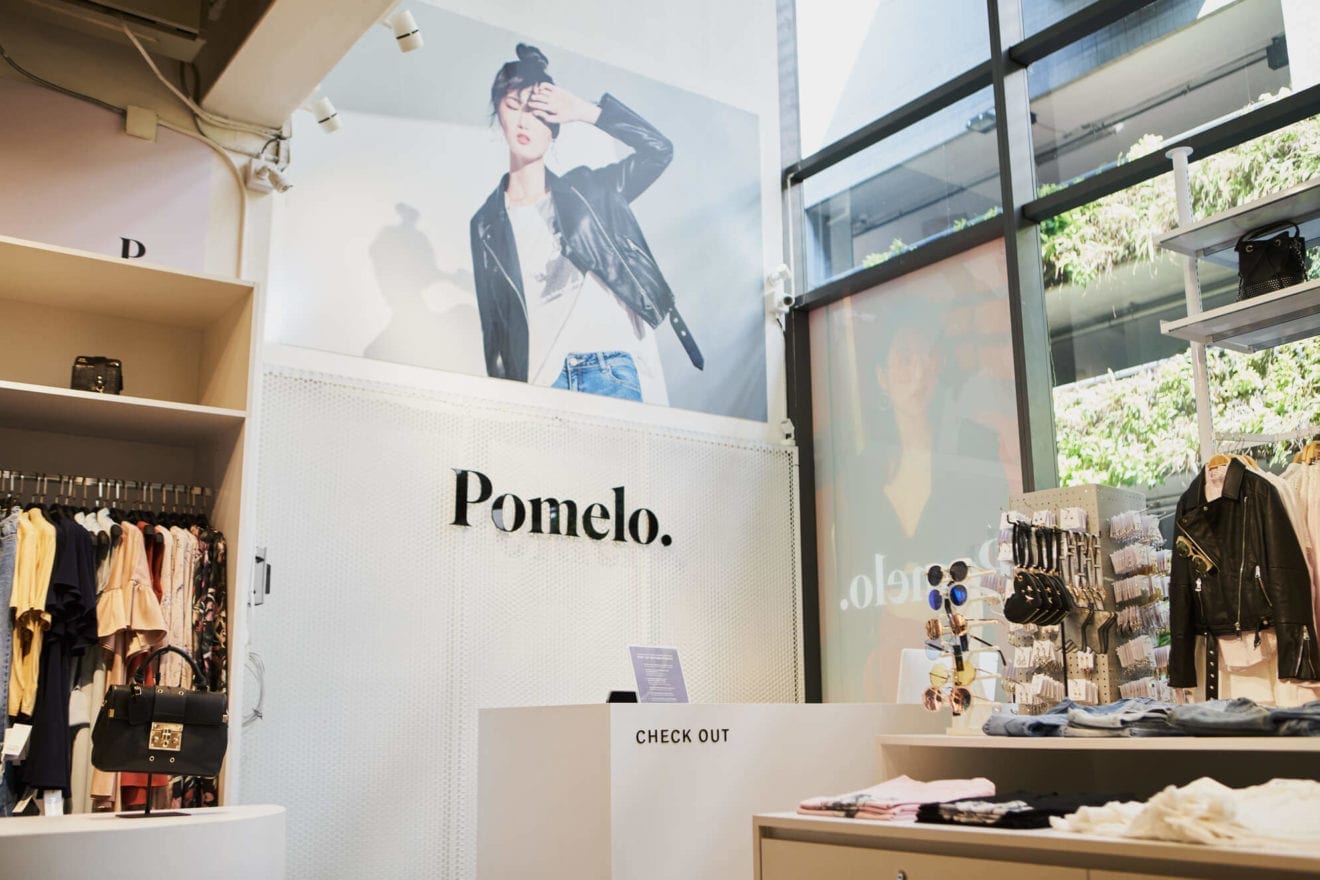
    JD.com-backed fashion brand, Pomelo Fashion, is launching a menswear label called Pomelo Man (PM.). The label will be making its debut in Thailand, launching exclusively on the App available on both iOS and Android. PM aims to offer a new shopping experience to the modern man, transitioning from the online to offline world, on-the-go seamlessly.

    Customers can now walk into a PM location, get measured by the store crew and never have to bother about sizing while shopping on the App again. Addressing one of the biggest drawbacks of online shopping – sizing, the brand aims to innovatively take it out of the equation altogether. Through technology, PM helps customers find what they call their unique ‘Perfect Fit’. With key items like t-shirts, chino pants, hoodies, and accessories, the brand will become a one-stop shop for every man’s daily fashion needs. PM takes it up a notch by providing all men with a ‘Man Lounge’ complete with free Wi-Fi, USB charging stations, and video games, all of which can be enjoyed by customers and everyone else alike.

    Opening its pop up store to customers at Siam Square One on December 20th, 2018, PM will offer affordable, yet premium clothing ranging from 390 THB to 1,590 THB. For customers that download and register on the App – the brand will be giving away free t-shirts in their ‘perfect size’. The first collection consists of wardrobe essentials such as t-shirts, pants, outerwear, and accessories in expansive size options, available at the stores for a fitting and to be purchased on the Pomelo App. Going further, PM would roll out monthly drops composed of not only everyday essentials, but eventually branching out to polos, shirts, and a mix of both formal and informal styles.

    David Jou, Pomelo’s CEO, commented: “With PM we wanted to re-imagine men’s fashion. We wanted something classic, yet fresh and contemporary, combined with the latest technology to create an effortless shopping experience.”

    He added, “PM has no sizes. It’s built for the urban gentleman who is always on the go and seamlessly traverses between the digital and physical. We wanted to start with a focused and approachable collection that will grow over time as the brand itself grows. The PM app is at the center of the experience.”

  • Supporting industry should be a major priority: PM Vietnam

    Supporting industry should be a major priority: PM Vietnam

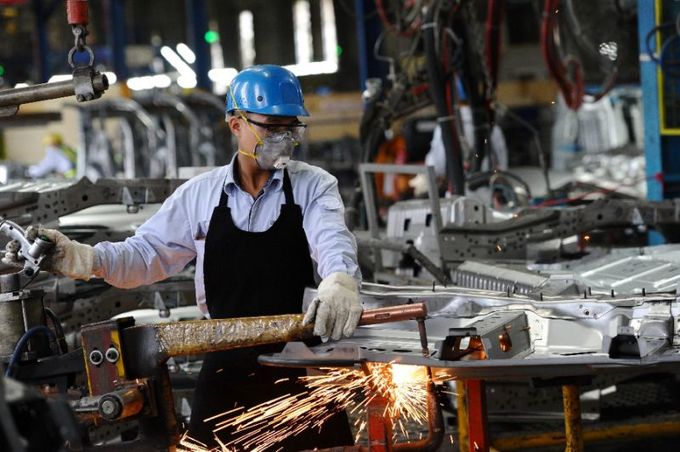
    Vietnam needs to make its supporting industry a production base for the global manufacturing chain, PM Nguyen Xuan Phuc says. “Vietnam should become a production base for multinational companies. This is what the Ministry of Industry and Trade and other government bodies should think about in their development strategy,” Prime Minister Nguyen Xuan Phuc said Wednesday.

    He was speaking at the conference on “Solutions for Promoting the Development of Supporting Industry in Vietnam,” held in Hanoi.

    He said that Vietnam should strive to compete in regional and global markets, manufacturing parts for cars, motorbikes and even airplanes.

    The government has always been prioritizing land access for the supporting industry, and has never said no to any such request, Phuc said.

    Supporting businesses should speed up and start operations earlier, Phuc said, adding that there were firms in the industry that could finish clearance and lay their foundations in just three months, while some have left things hanging for as long as three years.

    The supporting industry in Vietnam remains weak, having to import nearly 90 percent of raw materials, spare parts and components needed for production, according to the Ministry of Industry and Trade.

    This means a low localization rate, even in industries with great supporting industry potential, like automobiles and textiles and garments, it said.

    Minister of Industry and Trade Tran Tuan Anh said at the conference that only 300 supporting firms were currently part of the supply chain for multinational companies. As of last year, Vietnam had 75,000 manufacturing firms.

    The number of new businesses in this sector has barely increased in recent years, even though this is a key foundation for industrialization, Anh said.

    Therefore, those making finished products in the country are having to import accessories and parts from other countries or produce them on their own, he added.

    He cited Japan as a good example of a strong supporting industry. Even though the majority of Japanese supporting businesses are medium, small and micro sized, they are integrated deeply in the global manufacturing chain with high added value. They provide accessories and parts to the aviation industry, he noted.

    The trade minister added that Vietnam’s policy for attracting foreign direct investment (FDI) does not create favorable opportunities for local supporting businesses to develop and join the global manufacturing chain.

    There are over 3,000 supporting industry businesses in Vietnam, accounting for 4.5 percent of the manufacturing and processing sector, creating jobs for over 550,000 employees, according to the Ministry of Industry and Trade.

    From January to November this year, Vietnam imported $30.66 billion worth of machines, accessories and parts, and exported $15.13 billion worth of products, according to Vietnam Customs, marking a trade deficit of $15.53 billion.