Tag: point of sale

  • Nimbly AI Raises $4.6 Million to Track Retail Counter Audio

    Nimbly AI Raises $4.6 Million to Track Retail Counter Audio

    Nimbly AI has launched audio-tracking devices across retail stores in Indonesia and Thailand, pricing the monitoring system between US$80 and US$200 monthly. The startup, which secured a US$4.6 million pre-series A funding round in April 2021 led by Insignia Ventures Partners, uses hardware to evaluate checkout interactions across food, bakery, and fashion outlets.

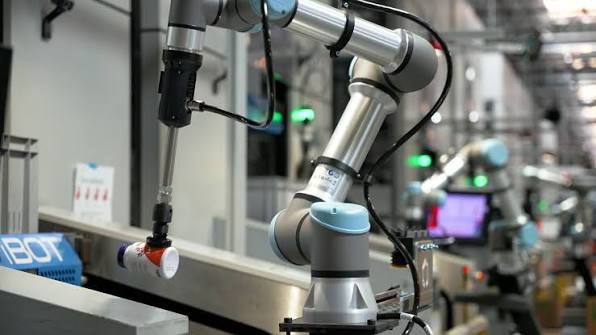
    A busy retail branch handles roughly 9,000 customer conversations each month. Nimbly AI records this exchange volume using a wearable staff device called Echo Go paired with a fixed cashier unit, transcribing Bahasa Indonesia, Thai, and mixed-language conversations.

    Founder and chief executive Daniel Hazman, who brings over 20 years of retail experience from past roles at Walmart and General Mills, launched Nimbly Ops in 2018 before pivoting to voice analysis. The automated units run continuously without worker intervention, checking whether employees greet shoppers, pitch active promotions, and follow mandatory sales playbooks.

    Hardware at the Checkout Counter

    Field supervisors visiting a busy outlet four times a month typically overhear roughly 40 customer exchanges, while third-party mystery shoppers sample even fewer. The automated hardware expands audit sampling to roughly 200 times the coverage of field manager spot-checks, tracking spoken interactions that point-of-sale software misses entirely.

    The Enterprise Dilemma on the Shop Floor

    Retail operations across Southeast Asia are pivoting away from aggressive physical expansion toward same-store sales efficiency as capital costs climb. Indonesia’s top 10 retail conglomerates manage more than 50,000 outlets combined, creating an acute operational blind spot between executive commercial plans and checkout execution. Unlike field sales tools like Rilla that require staff to trigger smartphone recordings manually, passive counter monitors remove employee discretion from the audit trail.

    That operational visibility brings immediate friction to store floors. Continuous voice recording introduces shop-floor pushback over workplace surveillance, worker trust, and privacy rights across regional branch networks. Store operators also face the commercial reality that strict script compliance does not guarantee cash conversion, especially when consumers resist pushy upselling at the till.

    From Audit Checklists to Spoken Scripts

    The company started in 2018 as Nimbly Ops, selling mobile audit forms and digital operational checklists to store networks. Enterprise clients quickly found that branches submitting identical compliance scores posted wildly different revenue numbers. Self-reported forms concealed whether staff actually spoke with customers, prompting the company to abandon checklist software in favour of continuous audio processing.

    To finance the shift to hardware and language models, the venture secured US$4.6 million in pre-Series A funding in April 2021. Insignia Ventures Partners led the financing round, joined by Sovereign’s Capital and Saison Capital.

    Field Traction and Multi-Brand Tests

    Pilot deployments now operate across international and local food, bakery, and apparel brands. Those pilot contracts test speech-to-text accuracy against ambient mall noise and multi-dialect slang common in Southeast Asian retail centers.

    Client renewals depend on whether automated speech auditing lifts average basket sizes during pilot phases before enterprise contracts roll out across entire retail networks.

  • Loyalty Management Spending Hits $17.38 Billion as Platform Costs Surge

    Loyalty Management Spending Hits $17.38 Billion as Platform Costs Surge

    Global spending on retail loyalty management tools reached an estimated 17.38 billion dollars this year, up from 5.5 billion dollars in 2020, even as operational expenses rose by more than 200 percent.

    While frequent shoppers spend 12 to 18 percent more than average store visitors, analysis from Korn Ferry highlights mounting fatigue as retailers face steep technology costs that complicate returns on complex app-based reward systems.

    The Rising Cost of Digital Points

    Running a modern loyalty scheme requires substantial capital. Retailers now buy dedicated software stacks, maintain integration with point-of-sale hardware, and pay ongoing fees for automated communication engines. These platform expenses rose more than 200 percent over the past six years. At the same time, consumers face friction from multi-step point activations, short redemption windows, and restrictive product exclusions that dilute the original incentive.

    Korn Ferry data shows that four out of five elite frequent fliers feel unrecognised by their airline programmes, pointing to similar fatigue across retail store chains. Many shoppers treat points programmes as simple commodities or gamify them to extract discounts on third-party products without building direct brand allegiance.

    Loyalty programs have become a mathematical game to maximize revenue that has little to do with loyalty.

    Shifting Value for Regional Operators

    Retailers across the Asia-Pacific region spent the last five years retiring physical stamp cards in favour of proprietary mobile applications. Department stores, pharmacy chains, and beauty retailers added tier structures, automated notifications, and points multipliers to capture granular transaction data. Yet the operational overhead of servicing those digital platforms now squeezes store margins during a period of cautious consumer discretionary spending.

    The strategic risk rests with mid-tier operators who lack the scale to run custom artificial intelligence programmes but carry enterprise software bills. Luxury retailers outperformed broader retail segments by maintaining high-touch store interactions rather than relying strictly on automated tier discounts. Mass-market merchants that rely purely on discounting points risk training customers to shop only on margin-eroding promotions.

    Automation Replaces Personal Touch

    Before the current wave of app consolidation, merchants relied on simple reward systems with immediate redemption. As software vendors expanded loyalty platform capabilities, programmes grew into distinct profit centres, selling customer data and co-branded financial products. This financialisation created multi-layered rulebooks that alienate core customers while customer service desks shifted to automated chatbots.

    Enterprise software budgets for retail marketing stacks will face their next formal audit cycle in the first quarter of 2027, when operators renegotiate multi-year platform contracts against actual member retention rates.

  • Wpay Processes over 1.55 Billion Transactions Annually Across ANZ

    Wpay Processes over 1.55 Billion Transactions Annually Across ANZ

    Australian payment provider Wpay processed over 1.55 billion transactions across Australia and New Zealand in October 2026. Merchants are overhauling disconnected point-of-sale and digital payment networks.

    Enterprise store operators face heavy pressure to link in-store payment terminals with online checkout engines. Software stacks across Australasian retail chains remain fragmented. This setup causes operational friction. Store staff cannot view cross-channel customer histories or process instant returns.

    Rebuilding Cross-Channel Checkout Systems

    Payment architectures across the region remain divided between legacy physical registers and digital gateways. When these systems run on separate databases, customer records fracture. Data splits across store registers, mobile apps, and e-commerce websites.

    Retailers are fixing this split by adopting universal identifiers, including Payment Account Reference codes and payment tokens. These network identifiers track shoppers across physical card taps and in-app transactions. They protect customer privacy by concealing raw card numbers. Operators also link these tokens directly to loyalty programs and gift card balances. That delivers accurate data on basket size and repeat visits.

    This engineering shift changes daily store operations. Integrated systems allow partial and multiple payment captures against a single authorization code. This step prevents payment failures during split shipments and deferred fulfillment orders. Shoppers who buy online can receive immediate terminal refunds in physical stores directly back to their cards. Store staff can also push refunds to original online payment methods.

    Integrating AI Agents into Payment Rails

    Beyond traditional point-of-sale hardware and mobile applications, Australian retail networks are preparing infrastructure for automated agentic commerce. Autonomous artificial intelligence agents are entering consumer markets. These bots search product catalogues, negotiate pricing, and execute transactions directly on behalf of shoppers.

    Non-human buyers demand structural changes to transactional payment architecture. Automated purchasing requires programmable, permissioned authorization protocols and hard spending limits to avoid erroneous transactions. Heavy bot traffic also demands multi-gateway routing engines. Fraud detection must operate at machine speed.

    Modern payment platforms treat automated agents as an integrated retail channel. They direct machine sales through the same settlement, inventory, and reporting databases used by physical cash registers. This safeguards supply chains against double-booking stock. It also prevents errors in daily cash reconciliations.

    Network Resilience and Offline Store Infrastructure

    Store chains in regional Australia and New Zealand face recurring telecommunications disruptions that threaten register uptime. Register downtime leads to lost sales. It also triggers long checkout queues during peak trading periods.

    To keep lanes open, retailers are installing payment terminals equipped with local store-and-forward offline processing alongside automated 4G cellular failover connections. When primary fixed-line connections drop, registers continue logging and clearing card taps locally. Normal synchronization resumes once data links restore.

    Back-end reporting tools aggregate physical register receipts and digital gateway feeds into one central balance sheet. This direct integration eliminates the need for manual end-of-day register reconciliation across regional store footprints.

    What Enterprise Retailers Face Next

    The operational divide between single-channel terminals and unified commerce platforms will drive retail technology spending across Australasia through 2027. Retailers that delay system overhauls will struggle to support combined click-and-collect fulfillment, split shipments, and cross-channel loyalty redemption.

    Technology directors now face the task of upgrading legacy enterprise systems without disrupting live checkout lanes. Artificial intelligence buying services are entering digital marketplaces. Store operators will need payment gateways capable of authorizing automated machine transactions while maintaining strict fraud thresholds.

  • McDonald’s Tests Third-Party Ads on Screens Across 13,700 US Stores

    McDonald’s Tests Third-Party Ads on Screens Across 13,700 US Stores

    McDonald’s is testing third-party ads on digital menu boards and ordering kiosks in select company-owned US restaurants. The trial targets the gap between payment and collection across a domestic footprint of more than 13,700 outlets.

    Drive-thru boards and self-service kiosks display commercial promos once a customer completes an order. Reserving that post-purchase window for outside brands lets the chain build a high-margin ad business without slowing down the ordering queue.

    Sales growth has decelerated sharply. Second-quarter global comparable sales rose 1.3 per cent for the period ended June 30. Domestic comparable sales slowed to 0.8 per cent, down from 3.9 per cent in the first quarter.

    Turning Customer Wait Times into Ad Inventory

    The system relies on idle visual time. After an order is logged and paid for, the display switches from item selection to third-party commercials while the kitchen prepares the meal.

    McDonald’s reaches roughly 26 million daily customers in the US. It interacts with nearly 90 per cent of the country’s population each year. That physical footfall provides an audience density rival digital networks struggle to match at the point of sale.

    A company spokesperson confirmed the test in an email statement:

    “This limited menu board advertising pilot at select company-owned restaurants is exploring ways to share post-purchase content that customers may find helpful, relevant, or interesting, while ensuring the McDonald’s experience remains at the center of every visit.”

    The Push into In-Store Retail Media

    Supermarket operators have spent years converting aisle footfall into retail media revenue. Media margins now generate between 3 per cent and 10 per cent of total operating profit for grocers, according to McKinsey & Co.

    Fast-food chains have lagged behind supermarkets in building dedicated advertising arms. A study by Forrester Consulting found restaurant operators have been slow to commercialise transaction data and screen interactions, leaving physical point-of-sale displays underutilised.

    In-store hardware is already deployed. Digital board rollouts began roughly a decade ago. By 2019, dynamic screens sat in more than 11,000 drive-thru lanes alongside self-ordering kiosks inside dining rooms.

    Implications for Asian Master Franchisees

    Asian master franchisees and licensed operators could use the pilot as a blueprint to extract auxiliary revenue from capital-intensive store refits. High-density markets such as Japan, South Korea, Taiwan and the Philippines already run heavily digitised ordering environments with dense foot traffic.

    Monetising screen real estate introduces friction with store operations. Franchisees run the vast majority of outlets globally. Operators will demand a clear split of ad revenues if corporate headquarters mandates third-party messaging on store hardware.

    Clutter presents another hurdle. Displaying non-food advertisements in dining areas risks degrading store environments. Promoting outside consumer goods at drive-thrus can also distract drivers during meal rushes, forcing operators to balance ad income against speed-of-service metrics.

    Traffic Squeeze and Hardware Modernisation

    Mounting margin pressure from rising input costs and softening store traffic drove the ad pilot. McDonald’s responded earlier this year by introducing value-oriented meal bundles to counter customer resistance to menu price increases.

    Modernising the digital footprint formed the first phase of this strategy. Over the past decade, capital poured into indoor touchscreens, drive-thru automation and mobile loyalty programmes to lower labour requirements and capture first-party consumer data.

    An investor day, the company’s first in three years, is scheduled for September 23. Management is expected to outline whether third-party screen advertising will expand across franchised locations or remain confined to company-operated pilot stores.

  • ShardLab Backs StoreHub to Roll Out Payment-Linked Merchant Rewards

    ShardLab Backs StoreHub to Roll Out Payment-Linked Merchant Rewards

    Singapore-based venture studio ShardLab has made an undisclosed strategic investment in StoreHub to build payment-linked rewards products across Southeast Asia, the companies said on Wednesday.

    The partnership gives ShardLab direct access to StoreHub’s network of more than 20,000 merchant locations across Malaysia, the Philippines, Thailand and Japan, which together process over 200 million transactions worth roughly US$3.5 billion annually.

    Alongside the equity investment, the two firms will establish a joint venture to build consumer payment and loyalty software. The products aim to tie merchant promotions directly to payment processing rather than relying on separate stamp cards or third-party apps.

    Plugging loyalty into payment hardware

    ShardLab operates as the innovation arm of South Korean blockchain investment firm Hashed, established through a partnership with Thai financial group SCBX. The venture studio develops programmable loyalty systems designed to embed rewards rules directly into point-of-sale transactions.

    For small restaurants and boutique retailers, managing fragmented payment options, ranging from cash and bank transfers to QR codes and mobile wallets, often makes running structured loyalty programmes impractical. StoreHub sells cloud-based point-of-sale hardware and management software that consolidates sales, inventory and ordering for small businesses.

    StoreHub chief executive Wai Hong Fong said the joint venture is part of a broader push to automate merchant operations, including rebuilding the core platform around artificial intelligence tools to handle demand forecasting and staff scheduling.

    Distribution over experimental software

    Point-of-sale software providers across Southeast Asia are competing to control the merchant checkout counter. StoreHub contends with regional competitors including Singapore-based Qashier and Oddle, Indonesia’s iSeller, and global platforms such as Block and Lightspeed.

    While blockchain and Web3 developers have spent years running digital loyalty pilots, most failed to scale because they required separate consumer onboarding or complicated checkout steps. Tying reward issuance directly to StoreHub’s existing register hardware removes friction for both shop staff and shoppers during peak business hours.

    The joint venture partners plan to roll out their first joint payment and rewards features in select Southeast Asian markets before expanding across StoreHub’s regional store network.

  • Mobile POS Deployments Accelerate Across Asian Retailers as Mobile Traffic Hits 59%

    Mobile POS Deployments Accelerate Across Asian Retailers as Mobile Traffic Hits 59%

    Singapore-based retail software vendor ETP Group rolled out its unified mobile point-of-sale platform across Asia-Pacific as mobile channels captured 59 percent of regional retail web traffic. That traffic share climbed from 46 percent in early 2024, forcing physical store operators to equip floor staff with connected billing and stock-checking tools.

    The system connects handheld devices directly to the enterprise core through ETP Unify, giving sales associates real-time visibility across retail locations and distribution warehouses. Rather than routing shoppers to fixed cash counters, staff can process billing, register loyalty accounts, and trigger ship-from-store or click-and-collect fulfillment directly beside the merchandise.

    Connecting Store Floors to Live Inventories

    Operating requirements vary sharply across individual markets. High-density retail centers in Singapore use mobile clienteling to retrieve shopper purchase histories and targeted promotions, while chains in Indonesia and the Philippines deploy handhelds to run endless-aisle transactions when shelf stock runs out. In India, where research from Meta and the Retailers Association of India found social media influences 77 percent of retail purchase decisions, mobile terminals allow associates to cross-reference products discovered on WhatsApp and third-party marketplaces.

    RetailNews Asia notes that fashion and specialty chains across Southeast Asia spent years treating mobile checkout hardware merely as auxiliary registers to ease holiday queues. Integrating those devices into enterprise inventory records marks a permanent move away from siloed store databases, bridging the operational gap between e-commerce catalogs and physical shops.

    Managing AI-Assisted Shoppers

    Store associates must also respond to consumers who arrive with machine-generated comparison data. Deloitte research across the region indicates that nearly three-quarters of consumers use artificial intelligence tools to research or compare products before buying, while 29 percent of consumer-facing enterprises have begun deploying agentic AI tools.

    Retail operators now face the task of unifying pricing logic, promotional rules, and local fiscal compliance across portable devices, with enterprise integration rollouts continuing across Southeast Asian store fleets through late 2026.