Retail News CRM

Tag: police

  • Melbourne Police Bust $10 Million Shoplifting Syndicate In Operation Supernova

    Melbourne Police Bust $10 Million Shoplifting Syndicate In Operation Supernova

    In a significant police operation in Melbourne, 19 individuals, believed to be part of an organized shoplifting syndicate, have been apprehended. The arrested individuals are accused of stealing goods worth over $10 million.

    Operation Supernova

    The Box Hill Divisional Response Unit, through its ‘Supernova’ operation, arrested the group allegedly involved in the theft of high-demand items over a period of five months. The stolen products included baby formula, medicines, vitamins, skincare products, electric toothbrushes, and toiletries.

    The majority of the accused are reported to be Indian nationals, residing in Australia on temporary visas. They are believed to be part of a network that systematically stole items and funneled them to various sellers.

    The Accused

    The arrested group includes six men and one woman, ranging in ages between 21 and 54. According to police reports, the total value of items stolen individually by these suspects ranged from $25,000 to $136,000.

    Detective Acting Inspector Rachele Ciavarella described the operation as “one of the most significant” in recent history to target organised retail theft.

    Not Just Ordinary Shoplifting

    Ciavarella further stated that the apprehended suspects were not stealing for their own use. Instead, they were part of an orchestrated criminal enterprise that reaped financial benefits from the stolen goods.

    In collaborating with major retailers, the police force was able to identify the alleged perpetrators swiftly. This cooperation also enabled them to form a comprehensive intelligence picture, allowing for the successful targeting of the right individuals at the right time.

    Ciavarella concluded with a stern message that those who target the retail sector would, in turn, be targeted by law enforcement.

    The arrested suspects are expected to appear in court in the coming months.

    Questions & Answers

    What was the value of the goods stolen by the shoplifting syndicate?
    The syndicate is accused of stealing goods worth over $10 million.

    Who are the accused individuals?
    The accused are predominantly Indian nationals on temporary visas, including six men and one woman, aged between 21 and 54.

    What types of products were stolen?
    The group is believed to have stolen a range of high-demand products, including baby formula, medicines, vitamins, skincare products, electric toothbrushes, and toiletries.

  • Vietnam Police Uncover $39 Million Money Laundering Scheme Utilizing AI Facial Recognition Technology

    Vietnam Police Uncover $39 Million Money Laundering Scheme Utilizing AI Facial Recognition Technology

    The recent police operation has shed light on a sophisticated money laundering scheme involving advanced technology, with authorities apprehending a 14-member gang in Hanoi and neighboring Ninh Binh Province. Allegedly, this group laundered a staggering VND1 trillion (approximately US$39 million), ingeniously using artificial intelligence to circumvent biometric security systems at banks.

    Illegal Gambling Under Investigation

    In a statement released on Thursday, Ninh Binh police announced that 13 individuals, spearheaded by 46-year-old Pham Hong Chuyen from Hanoi, are currently under investigation for orchestrating illegal gambling activities. Among them, seven are facing formal inquiries for their involvement in money laundering—a twist that introduces a layer of high-tech intrigue to traditional criminal practices.

    What sets this case apart is its novelty; it marks the first documented instance in Vietnam where AI-generated face scans were employed for illicit money laundering purposes.

    A Game of Deception

    Chuyen revealed to investigators that he had been recruited by an individual from Taiwan to help launder the funds amassed through a gambling website that has been operational for years. This platform, targeting Vietnamese players, astonishingly registered over one million accounts within just the first four months of this year, amassing VND1 trillion in gambling stakes.

    To clean this substantial cash flow, Chuyen had local individuals open bank accounts in their names. These unwitting participants were required to submit a 30-second video of their faces—a digital snippet that Chuyen then manipulated to create fraudulent AI-generated face scans. In Vietnam, to transfer VND10 million or more, individuals must scan their faces, a requirement that Chuyen cleverly leveraged to operate multiple accounts without the account holders’ awareness.

    In a swift response, police have frozen around 1,000 bank accounts believed to be linked to this web of deception. Chuyen’s syndicate is estimated to have laundered over VND1 trillion from September of last year to April this year.

    Now, one can’t help but wonder: as technology continues to evolve, so too will the creative tactics of those looking to exploit it. Will banks need to up their security game to stay ahead?

    Questions & Answers

    **Why did the gang use AI for money laundering?**
    They utilized AI to generate fake face scans to bypass biometric security measures, allowing them to operate multiple bank accounts without the knowledge of account holders.

    How much money was allegedly laundered by the gang?
    The group is believed to have laundered over VND1 trillion, which equates to approximately US$39 million.

    What are the consequences for those involved?
    Thirteen individuals are under investigation, with several facing serious charges related to illegal gambling and money laundering, potentially resulting in severe legal repercussions.

  • Philippines arrests 100 suspects in online scam farm raid

    Philippines arrests 100 suspects in online scam farm raid

    Philippine authorities arrested around 100 people on Friday in a raid on a suspected online scam farm in Manila they said extorted victims.

    The raid in the Makati financial district was part of a crackdown against online crime operators that often act under the guise of gaming firms.

    Agents from the Presidential Anti-Organized Crime Commission (PAOCC) and the National Bureau of Investigation, armed with assault rifles, surrounded two offices of a lending agency and arrested the suspects as they worked side-by-side at computers.

    The suspects, many of them young Filipinos, allegedly sought out victims via TikTok and other social media, offering collateral-free loans of up to 25,000 pesos (US$428).

    Borrowers were charged 35% weekly interest and those who fell behind on payments were harassed, humiliated and threatened with having their personal information spread online, PAOCC director Gilberto Cruz told reporters at the scene.

    “Some of those they harassed developed mental problems, others fell into depression, and there have even been some suicide incidents that occurred because of the harassment perpetrated by these people,” Cruz said.

    The suspects could be charged with fraud and other violations under the country’s cybercrime laws, he added.

    The raided company, Wewill Tech Corp, required victims to provide personal information and family photographs, which the scammers then used for threats, according to Cruz.

    Some victims of similar scams have reported having coffins and funeral wreaths delivered to their homes, he said.

    Authorities are checking the nationality of the owners, Cruz said, adding that they had arrested Chinese suspects running similar operations in the past.

    The scam farm owners are suspected to be remnants of online gaming operators that were banned under orders of President Ferdinand Marcos last year, he said.

    “Most of their keyboard workers are Filipino” and communicated with victims in the local language, Cruz told reporters.

  • Starbucks faces backlash in China over police incident at store

    Starbucks faces backlash in China over police incident at store

    Starbucks is battling its second bout of public fury in China in less than three months, after an incident described by the US coffee giant as a “misunderstanding” at one of its stores sparked criticism from online users and state media.

    The company came under scrutiny on Monday after a user on Weibo said that a number of police officers had been eating outside a Starbucks store in the southwestern city of Chongqing before they were told by staff to move away.

    The user’s description of the incident quickly went viral on the Twitter-like platform, prompting the ruling Communist party’s mouthpiece People’s Daily newspaper to issue a commentary, in which it called Starbucks “arrogant”.

    Chinese consumers and media have become more aggressive about protecting customer rights and monitoring the behavior of big brands, especially from overseas.

    In December, Starbucks apologised and carried out inspections and staff training across all its roughly 5,400 stores in China after a state-backed newspaper said two of its outlets used expired ingredients.

    Starbucks apologized on its Weibo account late on Monday for “inappropriate communications,” saying the whole thing was a misunderstanding.

    But it said staff had never chased away policemen or tried to file complaints against them.

    It continued to face criticism online on Tuesday, with a few small companies announcing on Douyin, the Chinese equivalent of TikTok, that they would “boycott” Starbucks by forbidding employees from arranging meetings in or buying drinks from the shops of the coffee chain.

    However, Hu Xijin, a prolific commentator in China who is the former editor-in-chief of the Global Times newspaper, urged his Weibo users to see the Starbucks Chongqing incident as an accident and not more, adding that Starbucks’s status as a foreign brand should not subject it to more criticism.

    “China is a country that is open to the world,” he said. “To label a mistake as arrogance is not conducive to the bigger environment of opening-up.”

  • Police smash massive China counterfeiting gang

    Police smash massive China counterfeiting gang

    Police have shut down a huge China counterfeiting ring estimated to have raked in some US$15 million.

    Chinese police have arrested 32 people believed to be part of the operation, which focused on counterfeiting luxury-branded goods.

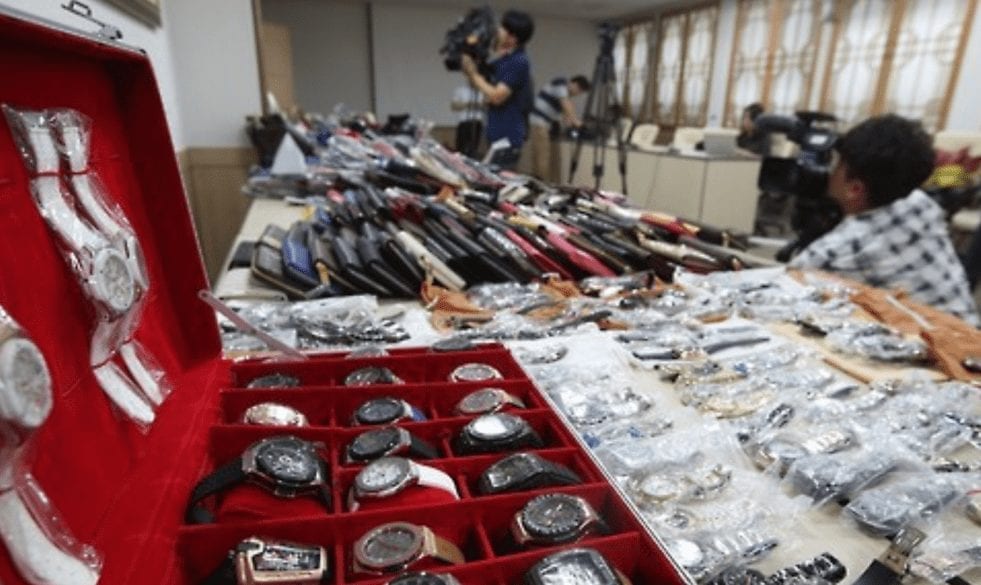
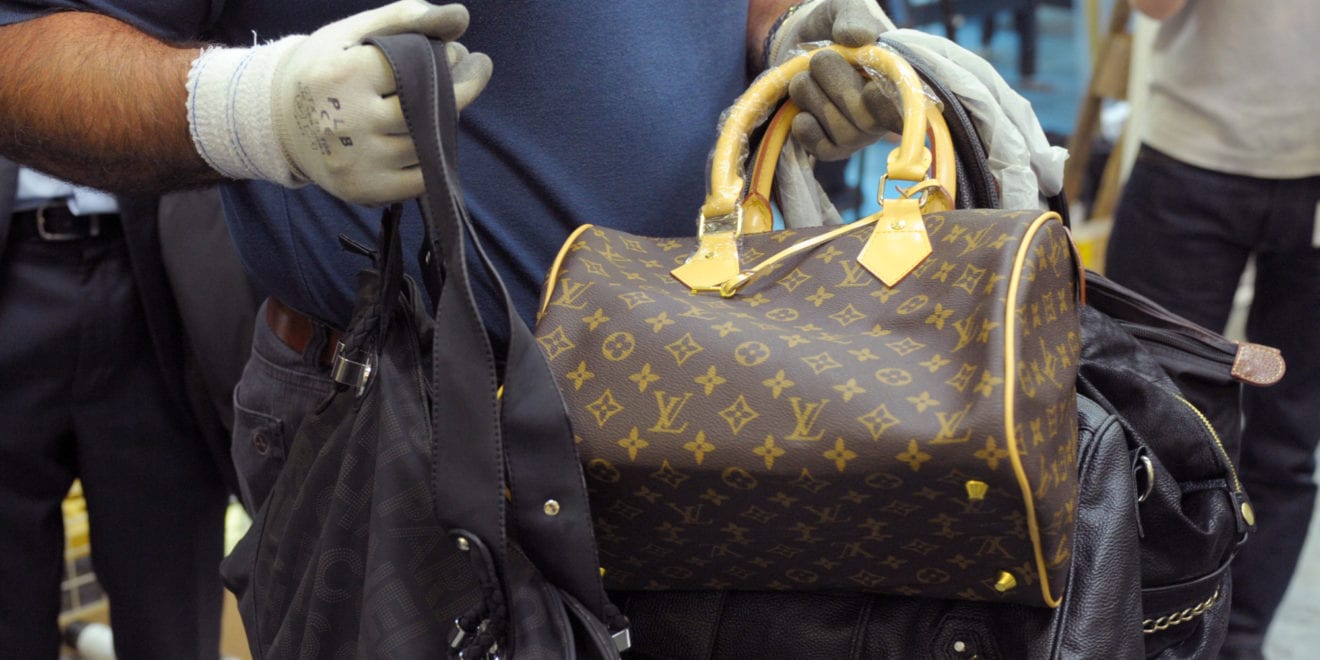
    The Shanghai raid led to the seizure of more than 4000 items of luxury apparel and accessories bearing Louis Vuitton, Kenzo and Loewe labels, among other top brands. Two assembly lines producing the counterfeit items were shut down.

    The raid was in response to a tip-off to the Shanghai Qingpu district public security bureau that fake Louis Vuitton bags were selling on Chinese social media platform, WeChat.

    Estimates held that the ring had sold more than 100,000 fake luxury items at a value of around RMB100 million (US$14.9 million). Each item would have cost around RMB200 ($30) to produce.

    The rise of online markets all over the world has been blamed for a general increase in fake products sold globally. The counterfeit industry is now worth an estimated $590 billion a year, and accounts for around 3.3 per cent of total international trade.

    According to customs officials, the most frequently seized fakes are items of footwear, clothing, leather goods and IT equipment. China is by far the world’s largest source of pirated goods.

  • Korean police question KT chair in donation probe

    Korean police question KT chair in donation probe

    South Korean police are reportedly questioning KT chairman Hwang Chang-gyu over suspicions that the operator made illegal political donations in exchange for favorable legislation.

    Police believe that KT made donations to lawmakers sitting on the parliamentary committee in charge of telecommunications in return for policies favorable to KT’s newest business, its internet banking service.

    South Korean law bars registered companies from donating any funds to lawmakers as well as donations made with company money.

    The police suspect that former and current KT executives may have paid around 90 legislators a combined 430 million won ($401.8 million) in illegal donations between 2014 and 2017.

    According to the report, police have already raided the offices of KT and its affiliates on suspicion that KT executives used company funds to buy large amounts of gift vouchers and then cashed these vouchers out for donation money.

    Authorities believe that Hwang may have either instructed these executives to do so or was briefed about the plan.

    Hwang, who was appointed chairman of the company in 2014 and last year renewed his term for a further three years, has been asked to come in for questioning today, the report adds. Depending on the outcome he may be interrogated for a second time.

  • Police, retailers in central Singapore partner to deter crime

    Police, retailers in central Singapore partner to deter crime

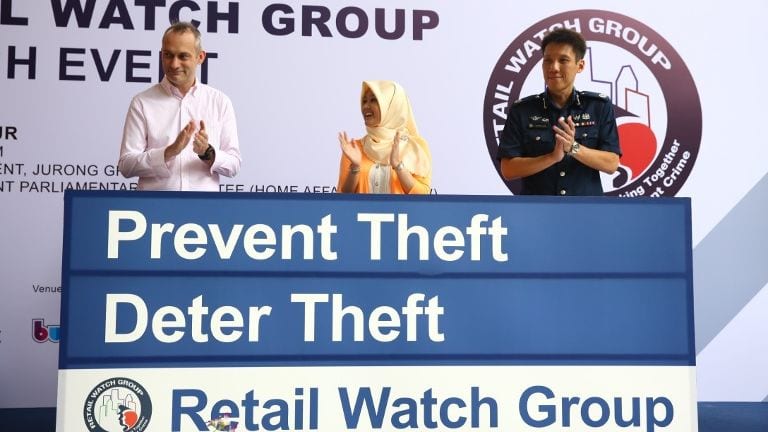
    The Marina Bay Neighbourhood Police Centre on Saturday (Jan 30) launched the Central Division Retail Watch Group, which aims to establish a partnership between the police and retailers to deter, detect and prevent crime.

    Rahayu Mahzam, Member of Parliament for Jurong GRC and a member of the Government Parliamentary Committee for Home Affairs and Law was the Guest of Honour for the event. In her speech, she referred to recent terrorist attacks in the region, and called on owners of retail and commercial establishments to be more vigilant and partner with the police to help ensure the safety and security of shoppers.

    In a media release, police said the Central Division Retail Watch Group consists of retailers from major shopping malls such as Bugis+, Bugis Junction, Raffles City, Marina Square and Suntec City. Membership is also open to all other retailers whose outlets fall within the jurisdiction of the Marina Bay Neighbourhood Police Centre.

    Police added that this Retail Watch Group serves as a platform for the police and retailers to exchange information and tips on how they can strengthen vigilance and measures against potential terrorist attacks.

    According to the release, the Central Division Retail Watch Group will implement two initiatives. Police will disseminate an e-newsletter to retailers with information on crime trends and statistics, as well as crime prevention and security practices. The second initiative is a “red teaming” exercise conducted by police and retail management.

    “These exercises aim to test the effectiveness of the stores’ security features and the vigilance of the duty staff,” said the police in their statement. “Following these exercises, the police will hold a review with the retail management to reinforce the learning points.”

  • Hong Kong police seize 30,000 fake bags

    Hong Kong police seize 30,000 fake bags

    Hong Kong police and customs officers have made the biggest seizure of counterfeit bags and accessories in a decade.

    The authorities say they netted 30,000 bags in a two day operation on July 28 and 29, details of which have only just been revealed.

    Customs and police say they successfully smashed a syndicate suspected of selling counterfeit goods by operating two upstairs showrooms and a storehouse in Tsim Sha Tsui and Tsuen Wan.

    The operation involved a record seizure in terms of quantity among similar cases in the past decade. The more than 30,000 suspected counterfeit products have an estimated street value of about $3 million, including leather goods, watches, apparel products, footwear, sunglasses and perfume, were seized.

    The syndicate was suspected of establishing a sales network with a membership scheme.

    A man thought to be the mastermind of the syndicate and two women, aged between 32 and 37, were arrested and released on bail pending further investigation.

    The Divisional Commander (Intellectual Property Transnational Investigation) of the Intellectual Property Investigation Bureau of Customs, Cheuk Tak-wai, and the Police assistant divisional commander (operations) of Tsim Sha Tsui Division, Ho Siu-tung, said at a press conference that Customs and the Police would continue to combat counterfeit activities with stringent joint enforcement actions. Customs also appealed to members of the public to shop at retail stores with a good reputation or at official brand stores.

    Under the Trade Descriptions Ordinance, any person who sells or possesses for sale any goods with any forged trademark commits an offence. Upon conviction, offenders are liable to a maximum fine of $500,000 and imprisonment of five years.

  • Indonesia police launch Uber investigation

    Indonesia police launch Uber investigation

    Police in Jakarta have launched an investigation into Uber after local taxi companies filed a complaint against the ride-hailing app in the latest regulatory battles to blight the company’s expansion plans in Asia.

    Five of Uber’s drivers in the country were detained last week, as local competitors questioned the legality of its operations.

    Local authorities released the drivers this week, but the Organization of Land Transportation Owners (Organda), the Jakarta-based association behind the initial complaint, is pursuing the investigation.

    “What they do is create the apps, hire individual cars, and operate just like other public transportation — like other official taxis — but without the proper licence,” says Shafruhan Sinungan, chairman of the organisation.

    “Uber taxis compete in a wild way,” Mr Sinungan said. “Other regular taxi operators have to make big investments to establish a company, providing land for parking and garages, paying tax to the government and hiring workers.”

    Alan Jiang, acting head of Uber in the country, said it was “really just a misunderstanding of what Uber’s business model is”.

    He added that “there are some interest groups that want us to get a taxi licence”.

    In a statement following the detention of its drivers this week, Uber said it “is fully compliant with applicable transportation laws and accredited by the local government”.

    Indonesia is an increasingly important market for Uber, because of its population of 250m people, high smartphone penetration and a burgeoning middle-class.

    The company, one of the world’s most valuable private technology companies, has expanded rapidly in the country since it launched in August last year, growing tenfold over the past year, in terms of the maximum number of rides per week.

    Although the Indonesian market has traditionally been dominated by Blue Bird, the family-run operator that listed on the local stock exchange last year, competition is heating up.

    Southeast Asian taxi-hailing app, Grabtaxi, is also expanding quickly, while Gojek, a Jakarta-based start-up, has developed an app to connect riders with Indonesia’s motorcycle taxis, called ojeks, which are also used for food delivery.

    These new players are unlikely to be caught up in the regulatory wrangling, according to Agustinus Reza Kirana, an analyst at Bahana Securities, a local brokerage.

    “It’s a different business line — it’s not just about passengers but also couriers,” Mr Kirana explains.

    The company has been expanding aggressively across Asia in recent months, with plans to move into several new cities across India and invest $1bn this year in China alone.

    But Uber has faced resistance. Police raided its office in Guangzhou in April, and the app was temporarily banned in New Delhi, following the alleged rape of a passenger by an Uber driver.