Tag: Pop Mart

  • Tencent Deploys Retail AI Suite Across 600 Asian Merchants

    Tencent Deploys Retail AI Suite Across 600 Asian Merchants

    Tencent Smart Retail rolled out its artificial intelligence enterprise software suite to 600 retail clients across Asia during an industry summit in Hong Kong. The deployment targets merchants across 30 retail sectors, connecting automated operational software directly into Tencent Cloud and the broader Weixin, WeCom and Mini Programs network.

    Terry Li, vertical general manager of Tencent Smart Retail, detailed the push alongside enterprise partners at the 2026 World Retail Lab Asia event. The software line-up introduces five specialized tools for merchant operations: WorkBuddy for workforce productivity, CodeBuddy for software development, DataBuddy for enterprise data workspaces, Miora for automated creative design, and Ardot for turning design assets into code.

    Connecting Weixin to the shop floor

    The system links merchant back offices directly to front-line sales teams on WeCom and shoppers on Weixin. Rather than forcing store associates to toggle between stand-alone software suites, the setup feeds automated inventory updates, design files and customer prompts into Tencent’s messaging channels. That reduces friction for floor staff who already run client relationships through corporate chat accounts.

    Enterprise software vendors across Asia frequently stumble on floor-level adoption. Tencent is betting that tying generative design and analytics agents to the chat apps clerks already use daily will bypass the standard training hurdles.

    Jewellery chains and supply taggers

    Chow Tai Fook Jewellery Group is using the infrastructure across customer management, store operations and jewellery design. The jewellery retail chain manages a database of nearly 60 million global loyalty members, who generate more than 95 per cent of its total sales volume. The group links unified customer insights to floor operations across its store network to track individual buying habits and stock preferences.

    Industrial supplier SML Group has embedded the software into its product development, market intelligence and supply management. The firm provides RFID tracking, retail identification and digital product solutions to roughly 600 consumer brands across global markets.

    Sinong Duan, vice president of strategy and transformation at SML Group, said: “Customer engagement is one of the areas where we see significant potential for AI. It can help businesses better understand customer needs and improve product recommendations, creating new opportunities to enhance both conversion and service experiences. We have also had the opportunity to work with Tencent WorkBuddy, and its flexibility, user experience and support capabilities have enabled our teams to explore AI adoption more effectively.”

    The platform battle against Alibaba

    The aggressive push into merchant operations pits Tencent directly against Alibaba Group’s cloud and DingTalk ecosystem across Greater China. While Alibaba dominates pure-play e-commerce marketplaces like Taobao and Tmall, Tencent controls private-domain traffic where brands cultivate direct shopper relationships through bespoke Mini Programs. Brand operators increasingly favor private-domain channels because customer acquisitions carry lower marketplace take-rates.

    For consumer brands, committing to proprietary cloud agents locks enterprise data deep inside Tencent’s walled garden. Shifting between competing cloud environments becomes punitive once product catalogs, customer service histories and design archives run on platform-specific models. Retailers gain rapid workflow speed today at the price of long-term software dependency tomorrow.

    Measuring actual returns on automation

    Chinese consumer spending has remained selective throughout the year, forcing retail executives to audit back-office overhead and technology spending closely. Multinationals and domestic retail giants, including Decathlon China, Estee Lauder Group and toy maker Pop Mart, have increasingly trimmed speculative software experiments in favor of tools that cut headcount costs or lift repeat store visits.

    Tencent began assembling its smart retail unit in 2018 to bridge social messaging with physical store sales counters. The group spent earlier iterations refining digital payment terminals and loyalty program Mini Programs for department stores and supermarket chains across tier-one Chinese cities. This latest enterprise suite represents the next operational tier: replacing manual design, coding and inventory forecasting with automated agents.

    Merchant adoption rates for tools such as Miora and Ardot over the upcoming Golden Week and Lunar New Year retail peaks will provide the first real test of whether generative design can shave measurable weeks off corporate fashion and merchandising cycles.

  • Asia Shifts from Adopting Retail Formats to Exporting Global Innovation

    Asia Shifts from Adopting Retail Formats to Exporting Global Innovation

    Asian retail operators have shifted from adapting Western store models to exporting original store formats, testing methods, and experiential concepts to international retail markets in September 2026.

    The transformation spans a region home to more than half of the world’s population, where intense domestic competition forces retailers to treat physical spaces as media platforms rather than pure transactional outlets.

    Compressed Cycles and Cultural Platforms

    Retail concepts originating in East Asia have redefined how physical stores interact with consumer culture. Japanese operators such as Uniqlo and Muji established operational models focused on product simplicity, while lifestyle brands including Beams and niko and … developed blended formats combining apparel, dining, print media, and gallery spaces.

    Chinese operators have pushed product experimentation into compressed timeframes. Collectibles retailer Pop Mart built an international retail footprint by combining proprietary intellectual property, gamified blind-box purchases, and scarcity mechanics. Cosmetics retailer Harmay reorganized beauty merchandising around warehouse-style discovery layouts, replacing traditional cosmetic counters with unguided foot traffic flows.

    South Korean retailers have centered physical retail on narrative spaces. Eyewear brand Gentle Monster builds flagship locations around large-scale kinetic art installations and architectural exhibits, treating optical frames as entry points to brand environments rather than primary display fixtures.

    Physical Real Estate as Entertainment Hubs

    In Southeast Asia, commercial developers are altering shopping center layouts to capture consumer footfall through leisure rather than tenant distribution. Bangkok properties including IconSiam, Siam Paragon, and One Bangkok allocate large square footage to indoor cultural floating markets, exhibitions, and public gathering areas.

    These developments operate on the principle that dwell time drives secondary spending. Landlords who prioritize transactional floor space over communal programming face higher tenant turnover as standard retail purchases migrate online.

    For global brand managers, the rise of Asian retail formats creates pressure to shorten product development cycles. International brands entering China, India, and Vietnam must build supply chains capable of responding to immediate consumer feedback rather than operating on seasonal six-month planning horizons.

    Operating Across Fragmented Retail Markets

    The operational discipline behind these models developed out of regional market complexity. In India, retail groups manage supply chains across multiple languages, varied regional income bands, and fragmented state-level tax structures, making standardized Western formats difficult to sustain without deep localization.

    Vietnam is replicating similar dynamics as rapid urban development and a high proportion of mobile-first shoppers accelerate the turnover of food, beverage, and lifestyle concepts in Ho Chi Minh City and Hanoi.

    Global retail operators are now monitoring flagship performance metrics and tenant lease structures at new mixed-use developments like Bangkok’s One Bangkok to measure returns on high-footprint experiential spaces.

  • Pop Mart Overseas Revenue Falls 11% as Labubu Toy Craze Cools

    Pop Mart Overseas Revenue Falls 11% as Labubu Toy Craze Cools

    Pop Mart International Group posted an 11.1 per cent decline in overseas revenue to RMB4.97 billion for the first half, hit by cooling international sales for its signature Labubu character.

    Shares in the Beijing-based toy maker fell more than 4 per cent in Hong Kong following the release, even as strong domestic sales lifted total group revenue 23.8 per cent to RMB17.17 billion ($2.55 billion). Profit attributable to shareholders rose 10.1 per cent to RMB5.04 billion, while operating profit gained 11.3 per cent. Revenue from Greater China jumped 47.3 per cent to RMB12.20 billion, now generating 71 per cent of group sales compared with 59.7 per cent a year earlier.

    Online sales slump outside China

    The international drop was sharpest across digital channels. Online sales fell 45.6 per cent in the Americas, 39.8 per cent in Asia Pacific excluding Greater China, and 59 per cent in Europe. The company’s own app and website sales in the Americas dropped 44.6 per cent.

    Physical stores showed resilience abroad. Offline sales grew 19.5 per cent in the Americas, 16.2 per cent in Asia Pacific, and 49.8 per cent in Europe. Yet store expansion failed to offset the online drop in the Americas, where regional sales fell 16.5 per cent despite the local store count jumping from 41 to 86 locations over the twelve-month period.

    Plush toys replaced vinyl figurines as Pop Mart’s primary sales driver, surging 60 per cent to RMB9.82 billion to account for 57.2 per cent of total turnover. Figurine sales remained flat with 0.3 per cent growth. Revenue from The Monsters series, which includes Labubu, contracted 7.5 per cent to RMB4.45 billion, marking its first recorded drop and shrinking its revenue share to 26 per cent. Twinkle Twinkle rose 580.6 per cent to RMB2.65 billion to become the second-largest intellectual property, while Crybaby, Dimoo, Skullpanda, and Hirono each surpassed the RMB1 billion mark.

    Rivals step up domestic pressure

    Domestic retail chains across Asia are accelerating their push into collectible toys to capitalize on the same customer demographic. Miniso has refiled to list its Top Toy business in Hong Kong, while rivals Kayou and 52Toys expand store networks across tier-one and tier-two Chinese cities. Frost & Sullivan projects China’s collectible toy market will reach RMB110 billion this year.

    Pop Mart is diversifying into location-based entertainment and hospitality through its Pop Land theme park, Pop Bakery food outlets, and a live-action Labubu feature film developed with Sony Pictures. Chief executive Wang Ning stated the company may fall short of its full-year 20 per cent revenue growth target as management executes operational adjustments across international distribution networks.

  • Pop Mart First-Half Revenue Rises 23.8% to RMB 17.17 Billion

    Pop Mart First-Half Revenue Rises 23.8% to RMB 17.17 Billion

    Pop Mart grew first-half revenue by 23.8 per cent to RMB 17.17 billion (US$2.4 billion) in Beijing as newer character lines diversified earnings beyond Labubu. Gross margin reached 69.7 per cent for the six-month period.

    The Monsters franchise, which includes Labubu, generated RMB 4.45 billion to remain the company’s largest intellectual property. Its share of total corporate revenue dropped to 26 per cent from 34.7 per cent a year earlier, reflecting faster gains in secondary product lines.

    Twinkle Twinkle Gains on The Monsters

    Twinkle Twinkle surged 580.6 per cent year on year to RMB 2.65 billion, making it the fastest-expanding property in the catalogue. Four other lines, Crybaby, Dimoo, SkullPanda and Hirono, each generated more than RMB 1 billion during the half.

    Product formats showed similar diversification away from standard vinyl blind boxes. Revenue from plush items climbed 60 per cent to RMB 9.82 billion as shoppers bought bag charms, soft figures and related lifestyle goods.

    Collectibles makers across Asia face rapid fad cycles once single characters peak on social media. By shifting production capacity toward plush accessories and scaling multiple character rosters simultaneously, Pop Mart is attempting to build a multi-franchise licensing business modeled on Sanrio rather than a single-hit novelty toy brand.

    Global Store Count Reaches 676 Locations

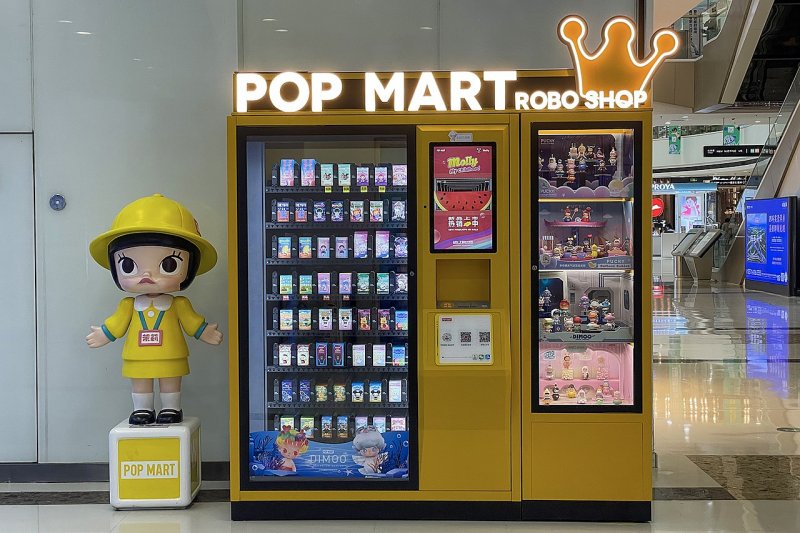
    Physical distribution expanded by 46 net new stores and 190 roboshops in the first six months of the year. That brought the global brick-and-mortar network to 676 physical outlets and 2,827 automated vending units.

    The Americas led store additions with 22 net openings to reach 86 sites. Asia-Pacific locations outside Greater China grew by five to 90, while Europe and other regions added nine stores to stand at 45.

    Food and beverage formats are also rolling out internationally. Following trial pop-ups across mainland China and a permanent venue in Aranya, the group opened its first overseas Pop Bakery site on Sentosa Island in Singapore, setting up the brand’s next wave of lifestyle retail openings.

  • Pop Mart Unleashes Exciting Expansion: Beijing’s Pop Land Theme Park Reveals New Attractions and Diversification Strategy

    Pop Mart Unleashes Exciting Expansion: Beijing’s Pop Land Theme Park Reveals New Attractions and Diversification Strategy

    Pop Mart, a Hong Kong-based firm known for their popular ‘blind box’ collectible toys, including the iconic Labubu, has recently updated and broadened its range at its Beijing-based theme park, Pop Land.

    A Revamped Experience

    After a year of significant renovations, the Labubu Forest Zone is set to reopen to the public on April 30th, the company announced during a recent event. This conversion includes several new amusement park rides, engaging carnival games, live entertainment, food vendors, and retail outlets featuring beloved characters such as Dimoo and the The Monsters series, including fan-favorite Labubu.

    A Gradual and Strategic Expansion

    During a press conference, Pop Mart’s Vice President, Jeffrey Hu, shared his insights on the company’s growth strategy. After examining both Chinese and global markets, Hu believes there are ample opportunities for expansion. However, he indicated that the company wishes to focus on perfecting one theme park before duplicating the concept elsewhere.

    The evolution of Pop Land, which initially opened its doors in 2023, represents a shift in Pop Mart’s strategy. Moving away from a sole reliance on toys, the company aims to diversify its business by capitalizing on a wider selection of intellectual properties featuring its characters. To further this strategic diversification, a Labubu-themed film in collaboration with Sony Pictures is also in development.

    Impressive Financial Growth

    In terms of financial performance, Pop Mart reported a nearly three-fold increase in its 2025 revenue. The company’s revenue surged to 37.12 billion yuan, up from 13.04 billion yuan a year earlier. The firm’s profit also witnessed a substantial growth, soaring by 308 percent to reach 12.78 billion yuan.

    Questions & Answers

    What are the new features in the renovated Labubu Forest Zone?
    The newly renovated Labubu Forest Zone offers new amusement park rides, carnival games, live performances, food outlets, and retail stores featuring popular characters like Dimoo and Labubu.

    What is Pop Mart’s current growth strategy?
    Pop Mart is focusing on expanding its intellectual property portfolio and diversifying its offerings beyond toys. This includes the development of a theme park and a movie in collaboration with Sony Pictures.

    How did Pop Mart perform financially in 2025?
    Pop Mart reported a nearly three-fold increase in its 2025 revenue, which rose to 37.12 billion yuan from 13.04 billion yuan a year earlier. The company’s profit also witnessed a substantial growth of 308 percent, amounting to 12.78 billion yuan.

  • Pop Culture Meets Travel Retail: Pop Mart Unveils First Middle Eastern Store at Qatar’s Hamad International Airport

    Pop Culture Meets Travel Retail: Pop Mart Unveils First Middle Eastern Store at Qatar’s Hamad International Airport

    Qatar Duty Free has embarked on a collaboration with Chinese collectibles company Pop Mart to unveil the brand’s first Middle Eastern store. This partnership marks a novel blend of travel retail and pop culture experiences.

    Unveiling Pop Culture at Hamad International Airport

    The new store, located at Hamad International Airport, brings a culture-inspired theme to passengers. It provides an immersive retail experience featuring the brand’s popular characters.

    The grand opening of the store was marked with a unique travel-themed fashion show. The event featured travel-ready outfits accessorized with Pop Mart collectibles, and was attended by international influencers and Pop Mart enthusiasts.

    The Twinkle Twinkle Wonderful Journey Series

    The store’s launch also presented an exclusive collection of travel-inspired Pop Mart collectibles named the ‘Twinkle Twinkle Wonderful Journey Series’. This series includes travel essentials such as bags, U-shaped pillows, and card holders.

    Revolutionizing Airport Retail

    Thabet Musleh, Chief Retail and Hospitality Officer of Qatar Airways Group, commented on the partnership, emphasizing the company’s commitment to revolutionizing airport and regional retail. He mentioned that this unique concept aligns perfectly with their vision to continually surprise travelers with exclusive, experience-centric concepts that redefine travel retail trends and standards.

    Justin Moon, Senior VP and COO of Pop Mart International Group, highlighted the significance of the collaboration. He noted that by integrating Qatar’s rich culture with their vibrant characters, they are setting a global benchmark for how pop culture connects with local communities.

    Following Pop Mart’s initial Middle Eastern debut in Abu Dhabi in May, the brand has recorded an increase in sales, thanks in large part to the popularity of their ‘ugly-cute’ Labubu figures.

    Questions & Answers

    What is the significance of the partnership between Qatar Duty Free and Pop Mart?
    The collaboration introduces a unique blend of travel retail and pop culture, marking Pop Mart’s first store opening in the Middle East.

    What special features does the new Pop Mart store offer?
    The store provides an immersive, culture-inspired retail experience, highlighting the brand’s popular collectibles. It also features an exclusive collection of travel-inspired items called the ‘Twinkle Twinkle Wonderful Journey Series’.

    What was the outcome of Pop Mart’s initial debut in the Middle East?
    Following its first launch in Abu Dhabi, Pop Mart has seen increased sales, particularly for its ‘ugly-cute’ Labubu figures.

  • Books-a-million Partners With Pop Mart: Iconic Characters Set To Invade Stores Nationwide

    Books-a-million Partners With Pop Mart: Iconic Characters Set To Invade Stores Nationwide

    Books-A-Million, a prominent US bookstore retailer, is set to collaborate with Pop Mart to make their beloved characters accessible to fans nationwide.

    The partnership is scheduled to commence in September. It will be launched throughout all retail locations of Books-A-Million, and will be available online on an ongoing basis.

    The collaboration with Pop Mart, a well-known producer of collectible designer toys and pop culture items, is expected to generate substantial sales and arouse significant interest among global consumers.

    Kathy Gagliano, the Executive Vice President of Merchandising at Books-A-Million, expressed her excitement over the new partnership. “We continuously strive to please our customers by offering products that are not only unique but also resonate with them,” she said.

    She further added, “Pop Mart’s iconic characters align perfectly with our bookstore community as they foster creativity, self-expression, and the pleasure derived from engaging with characters that truly inspire us.”

    The collaboration will introduce a selection of Pop Mart’s Intellectual Properties (IPs), such as Skullpanda, Molly, Crybaby, Dimoo, and The Monsters. These characters will be featured in a variety of collectible toys that will be available for purchase by all Books-A-million customers.

    Erica Graf, the Vice President of General Merchandise, shared her thoughts on the partnership, “Pairing Pop Mart with Books-A-Million seemed like an intuitive match,” she said.

    Graf believes that Pop Mart is at the forefront of a cultural trend captivating fans globally. Thus, joining forces with Books-A-Million creates an enticing space where fans can delve into stories, explore, and experience the excitement of collecting.

    Questions & Answers

    When is the partnership between Books-A-Million and Pop Mart set to begin?
    The collaboration is scheduled to start in September.

    What will the partnership entail?
    The partnership will involve introducing a selection of Pop Mart’s collectible designer toys and characters, available for purchase across all Books-A-Million retail locations and online.

    What characters from Pop Mart’s IPs will be featured in this collaboration?
    Characters including Skullpanda, Molly, Crybaby, Dimoo, and The Monsters will be featured in a range of collectible toys.

  • Pop Mart Unveils Landmark Store in Bangkok, Expanding Its Retail Footprint!

    Pop Mart Unveils Landmark Store in Bangkok, Expanding Its Retail Footprint!

    Pop Mart International Group, a prominent Chinese toy manufacturer known for its “blind box” collectibles, has officially opened its largest store in the world right here in Bangkok. This grand opening marks a significant milestone in the company’s ambitious global expansion strategy.

    On August 8, the bustling heart of Thailand welcomed the vibrant and youthful energy that Pop Mart is known for. As shoppers streamed into the new flagship store, excitement was palpable; after all, who doesn’t love the thrill of unveiling what’s hidden in a blind box? Pop Mart aims not just to entice local customers but to draw in tourists from across Southeast Asia as they seek unique and memorable experiences.

    The store, a sprawling 400 square meters, showcases a wide array of Pop Mart’s popular collectible toys, featuring designs that appeal to both young children and adult collectors. With 10,000 units available, the flagship store houses the most extensive selection yet, including exclusive items that will only be found in Bangkok. It’s unlikely you’ll walk away empty-handed — who knew shopping could feel like a treasure hunt?

    This launch is part of a broader strategy by Pop Mart to cement its brand presence in key Asian markets. By opening the Bangkok store, the company is making a bold statement about its commitment to expanding its footprint in Southeast Asia, a region buzzing with both passion for toys and growing purchasing power.

    Industry analysts view this move as a calculated gamble that could pay off. With Thailand’s vibrant shopping scene and its status as a travel hub, Pop Mart is positioning itself to tap into both local consumers and the influx of tourists looking for fresh and engaging shopping experiences.

    The expansion aligns with the rising trend of experiential retail, where mere shopping evolves into an adventure. As Pop Mart enters this new phase, it seems they’re ready to not just sell toys but to create playful memories that linger long after the boxes are opened.

    Questions & Answers

    What makes Pop Mart’s new store in Bangkok significant?
    The store is the largest Pop Mart location in the world, reflecting the company’s ambitious global expansion and its commitment to the Southeast Asian market.

    What kind of products can shoppers expect at the Bangkok store?
    The store features a range of Pop Mart’s collectible toys, including exclusive items only available in Bangkok, appealing to both children and adult collectors.

    How does this expansion fit with trends in retail?
    Pop Mart’s move highlights the shift towards experiential retail, where shopping is transformed into an engaging experience, attracting customers through the thrill of discovery.

  • Morgan Stanley Sees Potential in Pop Mart’s Labubu Amid Recent Stock Decline

    Morgan Stanley Sees Potential in Pop Mart’s Labubu Amid Recent Stock Decline

    Morgan Stanley maintains a bullish outlook on Pop Mart International Group, even as the company experiences a 10% dip in its stock price. The U.S. investment bank sees this slump as a potential buying opportunity, driven by Pop Mart’s robust growth trajectory fueled by exciting new product launches.

    Understanding Demand Amidst Market Fluctuations

    Despite a reduction in store lines and resale prices, Morgan Stanley asserts that this doesn’t reflect a drop in consumer interest. According to a recent report, most of Pop Mart’s offerings are mass-market items rather than scarce collectibles, which the Singapore-based investment platform Moomoo highlighted.

    This year has seen the LaBubu line—a collection designed by Dutch-Hong Kong artist Kasing Lung—continue to captivate children and collectors alike, while emerging toy lines such as Crybaby and Twinkle Twinkle are also generating buzz and showing promising sales.

    Power of Direct Sales

    Pop Mart’s direct-to-consumer model, which accounts for 90 to 95% of sales, enables the company to gather valuable real-time data. This agility allows them to adjust supply effectively, ensuring that inventory levels align closely with consumer demand.

    Impressive Projections Amid Challenges

    Morgan Stanley has ambitious forecasts for Pop Mart’s future, projecting sales to reach an impressive US$4.3 billion by 2025, escalating to US$6 billion in 2026. Notably, overseas operations could contribute as much as 60% of the company’s profit this year. Despite this optimistic outlook, the stock has suffered, dropping from a peak of HK$269.60 since July 8, largely due to a scarcity of near-term growth catalysts.

    “Market sentiment towards the company has yet to fully recover in the short term, given the high base last year,” noted Richard Lin, chief consumer analyst at SPDB International. “For the stock to rebound, the company will need to provide greater visibility on potential earnings drivers.”

    The Allure of the Labubu Toy

    The Labubu toys, featuring adorable yet cheeky creatures with a mix of soft fur and sharp teeth, have ignited a collector’s frenzy, prompting fans to queue for hours to snag the latest releases. Sold in blind boxes, these toys add an element of surprise, heightening the thrill of the collectable culture and motivating collectors to seek rare models, often marking them up for resale at enticing prices.

    This phenomenon has sent Pop Mart’s valuation soaring beyond US$40 billion, with its Hong Kong-listed shares skyrocketing an astonishing 588% in the past year, according to Bloomberg.

    Questions & Answers

    How is Morgan Stanley viewing Pop Mart’s recent stock price drop?
    Morgan Stanley views the 10% decline as a buying opportunity, emphasizing the company’s strong growth potential driven by new product launches.

    What factors contribute to Pop Mart’s success in the toy market?
    Pop Mart’s success stems from its popular toy lines, particularly Labubu, and its direct-to-consumer sales model that allows for real-time inventory management.

    What challenges does Pop Mart face in the near term?
    The company faces challenges such as a need for clearer visibility on earnings drivers to boost market sentiment and share price recovery after a significant peak loss.

  • Pop Mart Takes Legal Action Against 7-Eleven in the U.S. Over Alleged Fake Labubu Dolls

    Pop Mart Takes Legal Action Against 7-Eleven in the U.S. Over Alleged Fake Labubu Dolls

    Pop Mart International, a prominent Chinese toy manufacturer, has taken legal action against several 7-Eleven store operators in the United States, alleging the sale of counterfeit Labubu plush toys and infringement of its trademarks.

    Allegations of Counterfeit Creations

    The company has filed a lawsuit requesting court orders to stop 7-Eleven and seven of its franchisees from these alleged violations. The filing was made on July 18 in a California district court, as reported by Global Times.

    A Social Media Spark

    The lawsuit follows the viral spread of a video showing a U.S. consumer highlighting rows of counterfeit Labubu dolls, misleadingly branded “Lafufu,” on display at a local 7-Eleven. Priced at $25 each, these fake versions closely mimic the official retail prices of authentic Labubu toys.

    Pop Mart’s Assertion of Rights

    According to the complaint, which was also covered by South China Morning Post, Pop Mart claims that 7-Eleven has not leveraged its control over franchises to stop the counterfeiting and infringement of the company’s trademarks and copyrights.

    The Labubu Craze

    The Labubu plush toys, characterized by their furry bodies and sharp teeth, have captivated collectors worldwide, with many fans queuing for hours to snag the rarest editions. Sold in blind boxes, these toys create an element of surprise and intrigue, driving demand among shoppers eager to complete their collections — or resell them for a tidy profit.

    Pop Mart’s Financial Surge

    This surge in popularity has catapulted Pop Mart’s valuation to over $40 billion, with its shares listed in Hong Kong skyrocketing by an astounding 588% in just the last year, as noted by Bloomberg. The company has projected a 350% increase in first-half profits compared to the previous year, fueled by this escalating consumer interest.

    Furthermore, Pop Mart anticipates a revenue rise of at least 200% for the same period, as revealed in a recent company release. Clearly, the appetite for whimsical collectibles is thriving, even as battles over brand integrity unfold in the realm of retail.

    Questions & Answers

    What prompted Pop Mart to file a lawsuit against 7-Eleven?
    Pop Mart filed the lawsuit after a viral video surfaced showing counterfeit Labubu toys being sold at 7-Eleven, prompting concerns about trademark infringement.

    How have Labubu toys impacted Pop Mart’s valuation?
    The popularity of Labubu toys has significantly boosted Pop Mart’s valuation, exceeding $40 billion, with Hong Kong-listed shares experiencing a remarkable increase of 588% over the past year.

    What unique selling strategy does Pop Mart use for its toys?
    Pop Mart employs a blind box strategy for selling Labubu toys, creating an air of mystery and excitement that encourages collectors to seek out rare models, enhancing their overall shopping experience.

  • Pop Mart Anticipates a Whopping 350% Surge in Profits Thanks to Labubu Plush Toy Success!

    Pop Mart Anticipates a Whopping 350% Surge in Profits Thanks to Labubu Plush Toy Success!

    Pop Mart International Group, the acclaimed Chinese toymaker renowned for its whimsical Labubu plush characters, is poised to report an astounding 350% surge in profits during the first half of the year. This dramatic uptick is underscored by a projected revenue increase of at least 200%, as outlined in the company’s latest report.

    The sharp rise in profitability can be credited to several factors, including enhanced brand recognition, strategic cost optimization, and rigorous expense management. Pop Mart’s Labubu toys, characterized by their furry designs and playful sharp-toothed expressions, have captivated fans globally. Customers are often found queuing for hours, eager to snag the latest and most elusive models, which have become prized collectibles.

    Each Labubu toy is packaged in a blind box, adding an air of mystery to the shopping experience and heightening the thrill of collecting rare figures that can later be sold for profit. This intriguing retail strategy has helped Pop Mart stand out in a crowded market, and in turn, has propelled the company’s market valuation to an impressive US$40 billion. Its stock has soared by an astonishing 588% over the past year, according to Bloomberg.

    Pop Mart has achieved a remarkable feat by successfully tapping into Western markets, boasting one of the highest retail profit margins among Chinese companies with significant international footprints. The company’s gross profit margin reached nearly 67% last year, dwarfing that of competitors like Miniso Group Holdings, which reported a 45% margin.

    With the continuing meteoric rise of the Labubu phenomenon, it appears Pop Mart is not just cashing in on a fad but building a lasting legacy within the global toy industry. Who knew a plush toy could inspire such fervent loyalty and profit?

    Questions & Answers

    What fueled Pop Mart’s impressive profit growth?
    The company’s profit growth can be attributed to heightened brand recognition, cost optimization, and effective expense control.

    How do Labubu toys enhance the shopping experience?
    Each Labubu toy is sold in blind boxes, creating a sense of mystery and excitement around the collection of rare figures.

    What sets Pop Mart apart from its competitors in the toy market?
    Pop Mart has achieved one of the highest retail profit margins among Chinese companies with a substantial global presence, showcasing its successful penetration into Western markets.

  • POP MART Connects with Southeast Asia’s Toy Collectors Through Lazada

    POP MART Connects with Southeast Asia’s Toy Collectors Through Lazada

    Southeast Asia’s blind box obsession is now mainstream, and POP MART is at the heart of it, fuelling demand with exclusive IPs, sought-after collectibles and even real-life fan events. The global designer toy brand, best known for turning characters like MOLLY, DIMOO, and SKULLPANDA into household names, is tapping on Lazada’s LazMall to connect with millions of fans across the region through surprise drops, unboxings, and community events.

    With LazMall, POP MART is now reaching fans in a more direct and hyper-personalised way. Since joining the platform in 2023, it has grown over fivefold to become one of LazMall’s fastest-growing toy brands, a testament to the region’s deep love for collectibles and character storytelling.

    From live-streamed unboxings to data-backed product launches, POP MART’s success reflects how digital discovery and fandom go hand-in-hand. The global blind box collectibles market is set to hit USD 38.4 billion by 203, a boom fuelled by Gen Z and millennial collectors seeking rarity, emotional connection, and a bit of playful nostalgia.

    “Whether it’s the thrill of the mystery or the joy of finding your favourite character, our collectors are looking for more than just toys — they’re seeking stories,” said a POP MART spokesperson. “With Lazada, we’re able to deliver those stories in a more seamless way.”

    Global Exclusives Launching in June

    This month, POP MART will release two globally limited figures — MOLLY and Zsiga, and also unveil the second-generation SKULLPANDA plush toys, adding a soft and huggable twist to its cult-favourite character lineup.

    These products will be available on Lazada’s LazMall from June 2025 onwards. POP MART will also increase its stock levels and scale up visibility on its LazMall storefront to meet fan demand.

    Where Community Meets Commerce

    On Lazada, POP MART fans don’t just shop, they discover and experience. Using AI-powered recommendations and region-specific insights, the brand curates its releases based on what collectors love most in each market. SKULLPANDA, for instance, has become a breakout favourite in Thailand, while DIMOO charms fans in Malaysia.

    Collectors also benefit from prompt deliveries, with 85% of orders in all key Southeast Asian cities like Bangkok and Manila guaranteed to arrive within 48 hours upon order confirmation. Collectibles are also delivered in custom shock-proof packaging to ensure they arrive in pristine, collector-worthy conditions, and the parcel can be tracked in real time on the Lazada app.

    POP MART collectibles are not just toys, they are a lifestyle and the epitome of luxury and exclusivity that has been fuelled by the energy of its fans and creators. More than one-third (34%) of its sales on Lazada now come from affiliate creators in Southeast Asia — livestreamers, toy reviewers, and content creators who bring the world of POP MART to life through their own lens. Their curated content, character deep-dives, and unboxing videos don’t just sell toys — they build community and elevate collecting into a shared lifestyle.

    Taking the Experience Offline

    Fans in Singapore can look forward to experiencing the magic in-person next month. On 27 July, Lazada X POP MART 5KM run will be happening in Singapore. Designed to be a vibrant, community-driven event that blends fitness, music, and fandom, POP MART will be hosting an exclusive booth at the event, creating a playground for pop culture lovers to meet iconic characters, explore exclusive new drops, and immerse themselves in the joyful surprise of the trend culture and brand stories.

    IRL experiences like this are part of POP MART’s strategy to connect more deeply with its community – both online and offline.

    “POP MART’s world is built on creativity and connection,” said Kaya Qin, Chief Business Officer at Lazada Group. “Through Lazada’s platform, brands like POP MART are able to inspire and engage a new generation of collectors with stories that extend beyond the digital channels.”

  • Pop Mart launches jewellery concept store

    Pop Mart launches jewellery concept store

    Pop Mart, the renowned creator of the globally popular “blind box” toys featuring the unique and charming Labubu character, unveiled its debut jewellery store in Shanghai last Friday.

    The new concept store, known as Popop, offers a variety of accessories embellished with Pop Mart’s most popular characters, which include Labubu, Molly, and Skullpanda.

    Despite the ongoing property downturn and sluggish economic growth, Chinese consumer expenditure has remained somewhat muted. However, the demand for Pop Mart’s delightful yet economical toys continues to thrive both domestically and internationally, which has contributed to an over 200% rise in its share value so far this year.

    Zhang Zhanming, a 34-year-old investor who owns Pop Mart shares valued at 100 million yuan (US$13.92 million), made the journey from his home in Chongqing, a city in southwestern China, to witness the store’s launch. He wanted to evaluate the new storefront and consider whether to expand his investment in the company.

    Zhang expressed his belief that Pop Mart’s pricing strategy and target audience are a perfect match. He also expressed confidence in Pop Mart’s potential to evolve into China’s counterpart of Disney. He also predicted that the company, currently valued at US$45.65 billion, could potentially double its market capitalization.

    Pop Mart’s characters, along with a selection of Disney characters and others from the realms of anime, comics, and popular video games, are seen as exemplifying “emotional consumption”. This concept involves young consumers purchasing affordable luxury items that bring happiness into their lives.

    Fang Ke, a 35-year-old woman who will be celebrating her birthday this month, decided to indulge herself by purchasing a 699 yuan Labubu bracelet at the launch. She has been a long-time fan of Pop Mart, citing its visually appealing, brightly coloured products that also deliver a visual impact, a sentiment echoed by her daughter.

    At Popop, pricing begins at around 350 yuan for charms or a simple silver ring. Prices can climb up to 2699 yuan for necklaces decorated with metallic representations of the characters, with the majority of items priced under 1000 yuan.

    In a typical Pop Mart store, the famous “blind box” toys generally retail for a starting price of 69 yuan. However, consumers have demonstrated a willingness to spend more on limited-edition items.

    Earlier in the week, a human-sized Labubu figurine sold for a record-breaking 1.08 million yuan at a Beijing auction house, signifying the toy’s transition from a fad to a collector’s item.

    Questions & Answers

    What is the name of Pop Mart’s new jewellery store?
    The jewellery store is named Popop.

    Who is Zhang Zhanming?
    Zhang Zhanming is an investor who owns Pop Mart shares valued at 100 million yuan.

    What is the concept of “emotional consumption”?
    Emotional consumption refers to the trend of young consumers purchasing affordable luxury items that bring happiness into their lives, such as Pop Mart’s toys and accessories.

  • Pop Mart opens its first Taiwan store

    Pop Mart opens its first Taiwan store

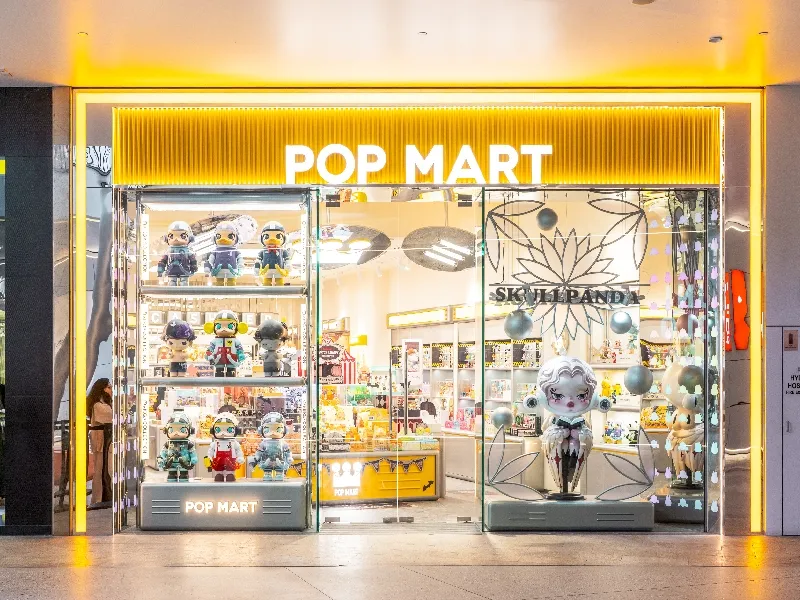
    Chinese collectible toy retailer Pop Mart has launched its first brick-and-mortar store in Taiwan, as part of its international growth strategy.  Pop Mart’s exclusive products are available at the store, which is located on the first floor of Shin Kong Mitsukoshi A11. At the entrance, there are large-scale dolls, and the store is decorated with a colorful theme, metallic materials, and LED lights that run throughout the store concept. To celebrate the opening, Pop Mart Taiwan offers a me

    Pop Mart’s exclusive products are available at the store, which is located on the first floor of Shin Kong Mitsukoshi A11. At the entrance, there are large-scale dolls, and the store is decorated with a colorful theme, metallic materials, and LED lights that run throughout the store concept.

    To celebrate the opening, Pop Mart Taiwan offers a membership system, which includes the ability to redeem points for gifts and discounts during the birthday month.

    Pop Mart opened its first flagship store in Australia last month, after expanding its presence in Korea, New Zealand and the US.

    Pop Mart’s Mainland China retail network includes more than 1000 vending machines, or “roboshops,” and 340 physical stores. The brand approaches its audience via its own international website and online collaborations with Amazon, Shopee, and AliExpress.

    The toy retailer is in developing multiple new markets concurrently, including in Southeast Asia, Vietnam, the Philippines, and Thailand.

  • Chinese mystery box retailer Pop Mart rakes in millions from millennials

    Chinese mystery box retailer Pop Mart rakes in millions from millennials

    Taking pride of place in 28-year-old Beijing lawyer Wu Ge’s bedroom are dozens of small figurines displayed on clear plastic shelves with designs ranging from cherubic dolls to characters from Japan’s Pokemon series.

    Wu estimates that she has spent over 5,000 yuan ($766) in the past three years buying the pieces from Chinese toy seller Pop Mart International Group, amassing a collection of over 80 figurines.

    Millions of young Chinese toy lovers like her are behind the popularity of Pop Mart, a Beijing-based company due to list in Hong Kong on Friday after raising $676 million in an initial public offering that priced at the top of its range, valuing the decade-old firm at as much as $7 billion.

    The company’s main product is “mystery” toy boxes that each hold a single figurine such as “pool babies” from the elf-like Pucky range, which Wu says are her favorite, or different versions of its best-selling character, the large-eyed, round-faced Molly doll.

    The boxes, which cost about $9 each, have been a big hit with China’s millennials. Consumers born after 1995 spend more on mystery toys than any other hobby, including fancy shoes and esports, according to a report last year by Alibaba-backed online shopping platform Tmall.

    Pop Mart, the market leader, more than tripled its revenues last year to 1.68 billion yuan ($256.8 million), according to its prospectus.

    The IPO drew strong interest from investors, with the retail offer 356 times oversubscribed.

    “The company operates in a niche and doesn’t really have any listed comparables in the region,” said Aequitas Research partner Sumeet Singh, who publishes on the Smartkarma research platform. “In addition, it is continuing to expand its network which will continue to aid growth.”

    Pop Mart and its advisors were so confident the deal would be popular that it elected not to take cornerstone shareholders which are common in Hong Kong IPOs.

    “I think consumer concepts will be a new focus in the market,” said a banker with direct knowledge of the matter who declined to be named as he was not authorized to speak to media. “In China, consumption is the growth engine of the economy.”

    Pop Mart’s listing will make its 33-year-old founder Wang Ning, who holds a 56% share in the firm, a billionaire. Pop Mart did not respond to requests for an interview.

    Mystery toy boxes are not new and trace their origins to Japan’s vending machine capsule models, Gashapon, a cash cow for the likes of toymaker Bandai. But Pop Mart has taken the trend to new heights, teaming up with artists to design new figurines and build up a pool of trademarks.

    The company now distributes its products in 21 countries outside China. Its customers – mostly aged 18 to 35 – are 75% female, the prospectus said.

    A key attraction for shoppers who buy the toys either online, from Pop Mart’s 136 mainland China stores, or 1,001 vending machines, is the surprise element: They do not know which exact figurine they get until they open the box.

    Some have become lucrative collectibles. Wang Di, a 19-year-old university student with more than 100 figurines, said she recently sold a rare Labubu – a rabbit-like creature with monster’s teeth – for over 700 yuan, more than 10 times what she paid for it.

    But other fans say they just love the toys for themselves.

    “Working pressure is huge for young people, and when I see these beautiful figurines on my desk, I’m cheered up. Some people prefer fresh flowers on their desk, and they are flowers for me,” said Wu.