Tag: Porsche Cayenne

  • Porsche Cayenne Coupe Unleached

    Porsche Cayenne Coupe Unleached

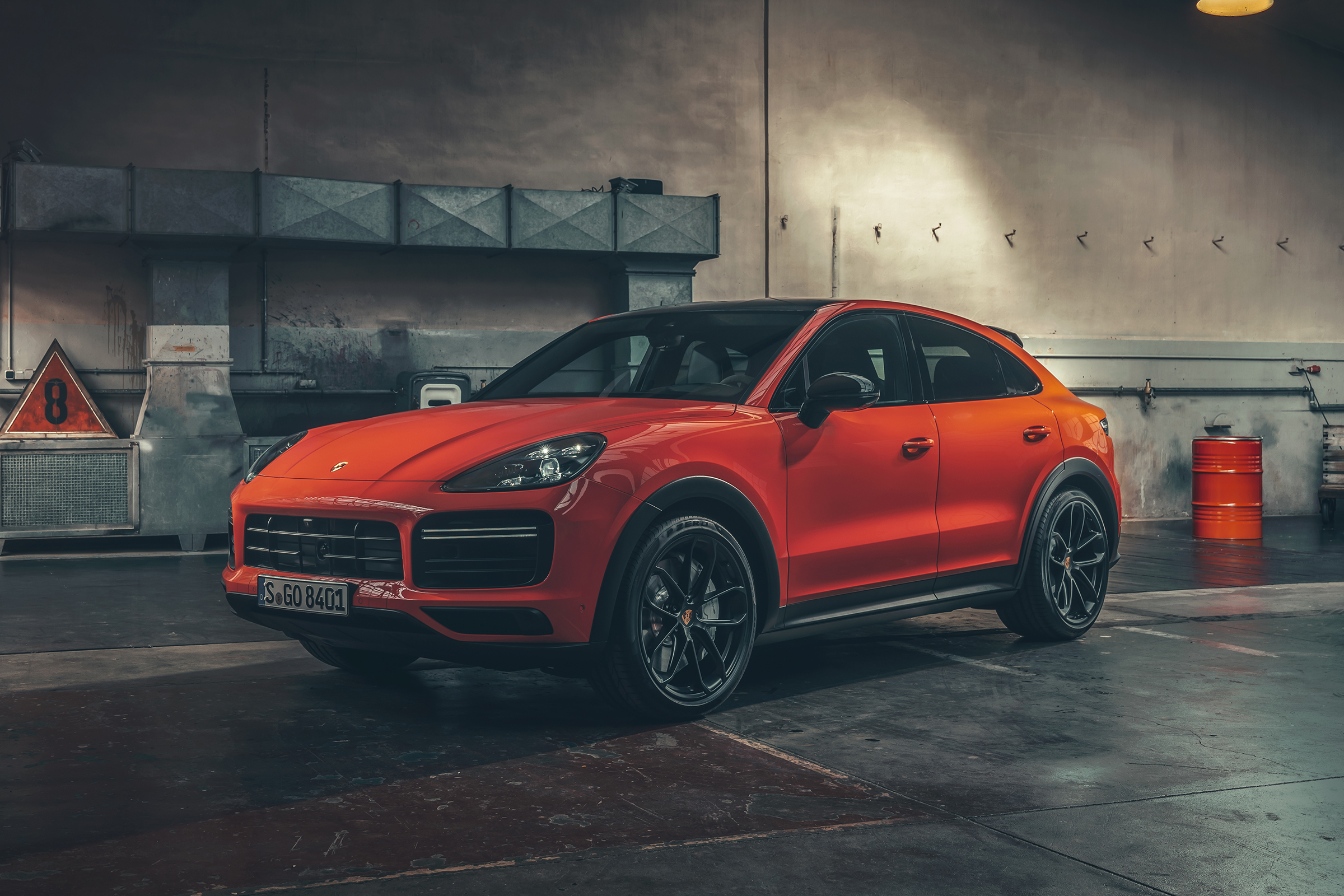
    We’ve been anticipating it for a while now from Porsche and it’s finally here. The Porsche Cayenne has taken the Coupe route and the company has revealed the Cayenne Coupe. The highlights of the new Cayenne model include sharper lines with a unique rear section, an adaptive rear spoiler, a rear bench with the characteristics of two individual seats. The new model also offers two different roof concepts, which includes a panoramic fixed glass roof fitted as standard and an optional carbon roof.

    The front windscreen and A-pillar are shallower than in the Cayenne, courtesy of a roof edge that has been lowered by around 20 millimetres. Redesigned rear doors and fenders broaden the shoulders of this vehicle by 18 millimetres, contributing to its overall muscular impression. The rear number plate is integrated into the bumper, making the vehicle seem closer to the ground. With its adaptive roof spoiler, the current Cayenne Turbo was the first SUV to feature this type of active aerodynamics. The new Cayenne Coupé picks up that ball and runs with it. On each Cayenne Coupé model, a roof spoiler is combined with a new adaptive rear spoiler as part of Porsche Active Aerodynamics (PAA). The spoiler – harmonically integrated into this model’s silhouette – extends by 135 mm at speeds of 90 kmph and up, increasing the contact pressure on the rear axle, while PAA simultaneously enhances efficiency.

    The new Cayenne Coupé comes with a 2.16 m2 panoramic fixed glass roof as standard. A contoured carbon roof is optionally available for the Coupe. The centre seam gives the roof the characteristic look of a sports car, similar to the Porsche 911 GT3 ₹ The carbon roof is available in one of the three lightweight sports packages. These packages also include the Sport Design features and new, weight-reduced 22-inch GT Design wheels, seat centres in classic checked fabric, as well as carbon and Alcantara accents in the interior. For the Cayenne Turbo Coupe, the package also includes a sports exhaust system.

    If you thought it’s pretty groovy looking on the outside, well, the inside is no different. At the front, the new eight-way sports seats with integrated headrests offer exceptional comfort and optimum lateral support. In the rear, the Coupé comes fitted as standard with a rear bench that has the characteristics of two individual seats. Alternatively, the comfort rear seats – a familiar feature of the Cayenne – can be ordered at no additional cost. Rear passengers sit 30 millimetres lower than in the Cayenne, meaning there is plenty of headroom despite the vehicle’s sporty lowered silhouette. The boot capacity is 625 litres – ideal for everyday use – and rises to 1,540 litres when the rear seats are folded down (Cayenne Turbo Coupé: 600 to 1,510 litres).

    Under the hood of the Cayenne Coupe will be two high-performance engines. It will come with a 3-litre 6-cylinder turbocharged engine that delivers 335 bhp and maximum torque of 450 Nm. The Sport Chrono Package fitted in the car achieves the standard sprint from 0-100 kmph in 6 seconds, with this figure dropping to 5.9 seconds with the optional lightweight sports packages. The vehicle’s top speed is 243 kmph. The top-of-the-range Cayenne Turbo Coupe goes to the starting line with a 4 litre V8 engine with twin-turbo charging 542 bhp, and a maximum torque of 770 Nm. The Cayenne Turbo Coupe accelerates from a standing start to 100 kmph in 3.9 seconds, and has a top speed of 286 kmph.

    The new Porsche Cayenne Coupe models are available for order now in the European markets. We have to wait to find out when India gets this model. We are sure that it will be very soon though.
  • 2018 Porsche Cayenne India Revealed

    2018 Porsche Cayenne India Revealed

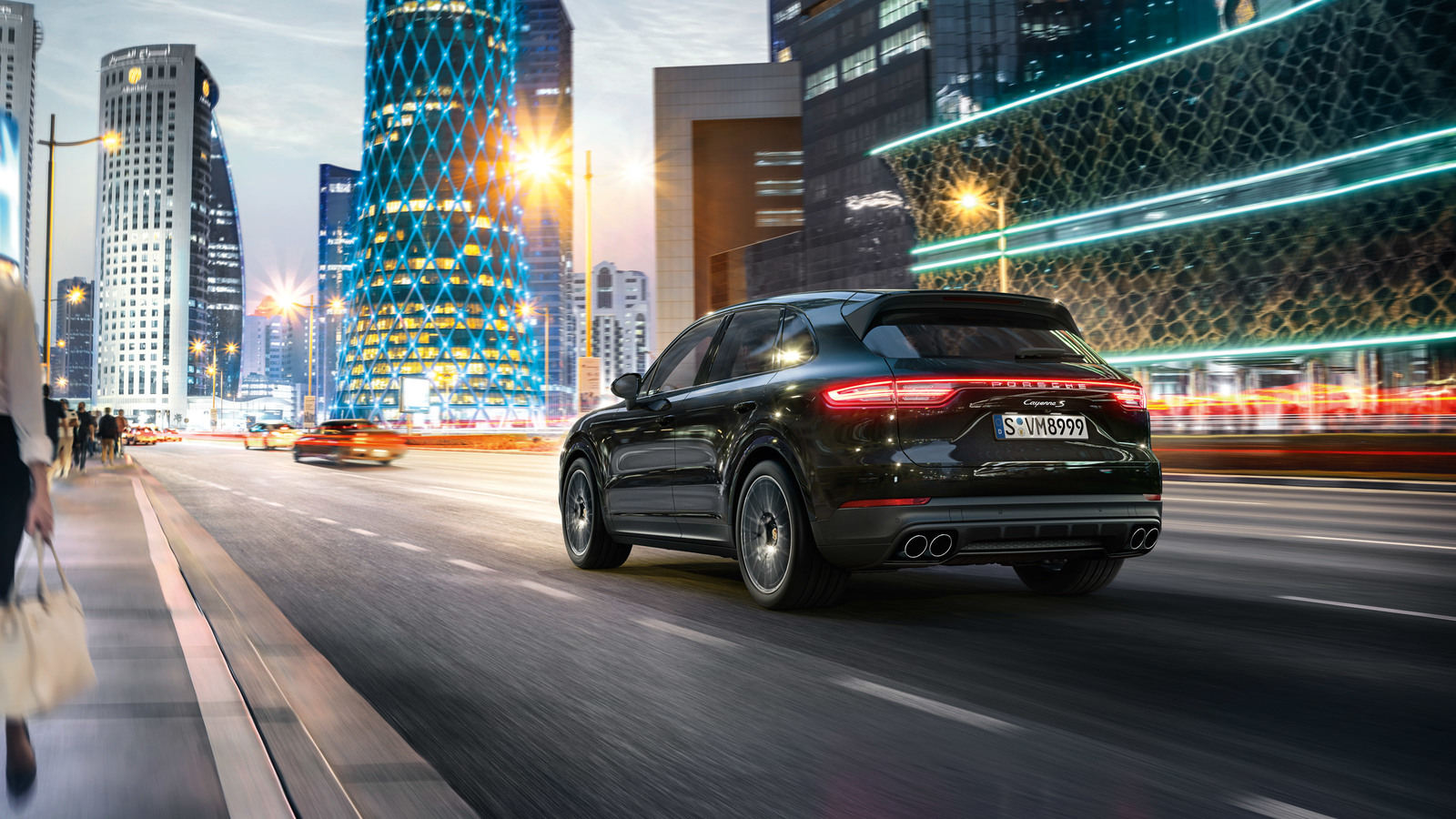
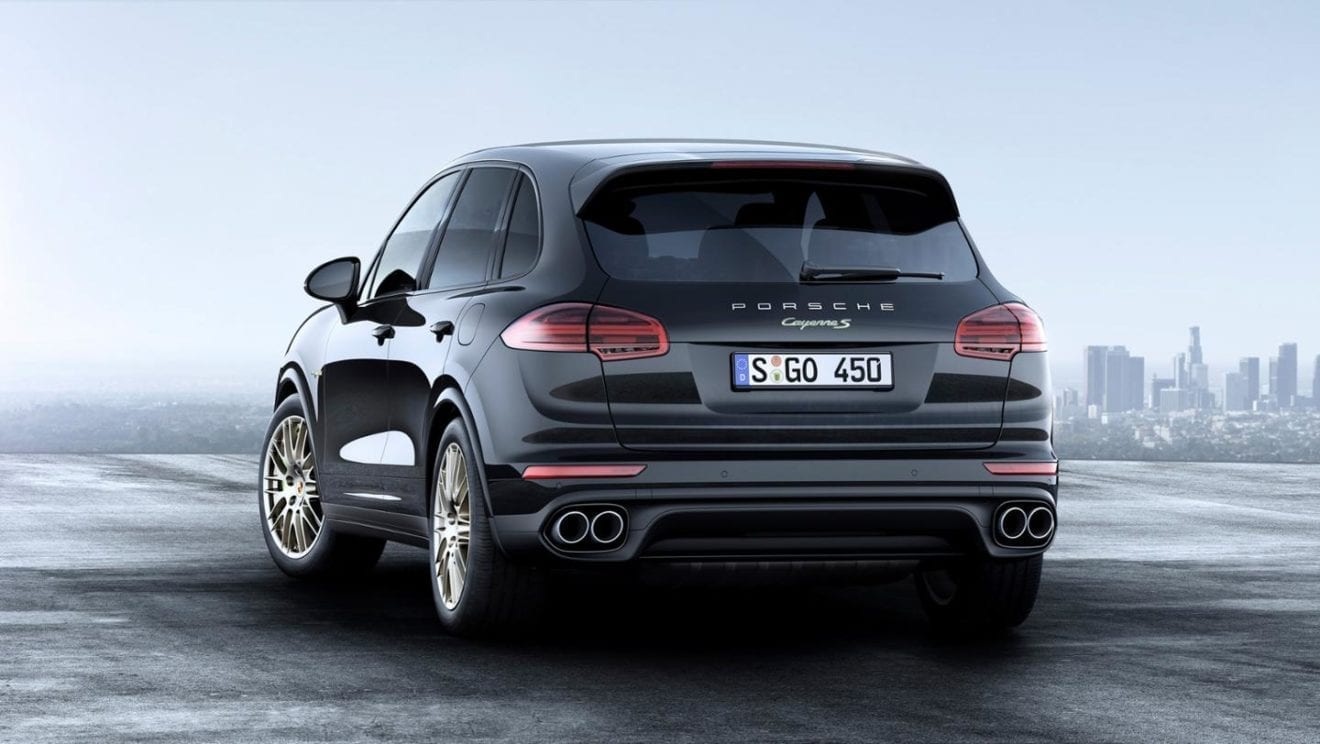
    We’d told you a long time back that the 2018 Porsche Cayenne is all set to land on Indian soil this year. Though the launch has been delayed to the festive season, the company was planning to launch the car in the middle of the year. However, the third generation of the SUV is all set to grace our shores today. Bookings for the new Porsche Cayenne Turbo had already started in September and the first batch of cars will be delivered this year. The all-new model boasts of a new and more agile platform, more powerful engines and for the first time, the option of a hybrid powertrain as well.

    The 2018 Porsche Cayenne SUV gets a host of upgrades over its predecessor including a revised chassis, and a separated link design for the front axle and a multi-link rear axle. The latter though is offered as optional, but further improves the agility on the car. Visually too, the Cayenne has evolved and gets a sharper looking appearance while keeping the appearance similar. The SUV now comes with the Porsche Dynamic Light System (PLDS) or LED Matrix Beam headlights, which also include PDLS.

    In terms of power, the new generation Porsche Cayenne will be offered in a range of engine options including V6 and V8. The standard version will use a 3.0-litre single-turbo V6 with 335 bhp and 450 Nm of peak torque, while the Cayenne S will draw power from the 2.9-litre twin-turbo V6 that produces 433 bhp and 550 Nm of peak torque. The 2018 Cayenne Turbo packs in 542 bhp and 770 Nm of peak torque from a 4.0-litre bi-turbo V8 engine, and is capable of hitting a top speed of 286 kmph.

  • Germany recalls Porsche Cayenne models over emissions software

    Germany recalls Porsche Cayenne models over emissions software

    German Transport Minister Alexander Dobrindt on Thursday announced a recall of Porsche Cayenne models equipped with 3-litre diesel engines after finding potentially illegal emissions controlling software in the vehicles.

    Dobrindt told he was withdrawing certification for the vehicles, which will need to undergo a software update.

    Sports car maker Porsche AG is owned by Volkswagen, which in 2015 admitted to systematic manipulation of engine management software to cheat emissions tests.

    Porsche on Thursday said it had discovered “irregular” engine management software during an internal probe into emissions. Porsche also said it had agreed to recall the vehicles to fix the problem.

    “The producer will of course bear 100 percent of the costs,” Dobrindt said. “There is no explanation why this software was in this vehicle,” Dobrindt said.

    The minister said: “We have examined Porsche Cayenne vehicles of the 3 liter TDI Euro 6 Mark – during tests these vehicles deploy a so-called defense strategy, which isn’t activated in real traffic.”

    “In our view that is a kind of test recognition, which we regard as an impermissible deactivation strategy.”

    “Even if there is a modern exhaust gas cleaning system in these vehicles, if this software is nonetheless there it is illegal, does not meet the legal requirements and needs to be removed,” Dobrindt said.

    He also said that Porsche would quickly be in a position to bring the software into conformity with the law.

    Dobrindt also said there were some 7,500 vehicles of this type certified in Germany and some 22,000 certified in Europe. “We don’t know how many are with dealers. These are the cars that fall under the certification ban.”

    The Porsche Cayenne model shares components with a sister model, the Volkswagen Touareg.

    Asked about Volkswagen’s Touareg model, Dobrindt said: “On the technical question, it is assumed that this vehicle has a similar parameter set but identical construction does not mean that the same software was used in it but it is assumed that the same software was used.”

    He said the Transport Ministry was, however, checking that and a hearing with Volkswagen would show whether that was the case or not, adding: “The probability is high.”

    Volkswagen CFO Frank Witter had no immediate comment about the Porsche recall on a VW earnings call also held on Thursday.

    Stuttgart prosecutors have been investigating Porsche AG after some models were fitted with 3 liter diesel engines supplied by Audi.

    Audi, another premium brand owned by Volkswagen is also being probed by prosecutors in Munich who are separately investigating Audi about its role in designing the 3 liter diesel engine.