Retail News CRM

Tag: port

  • NY/NJ Foreign Freight Forwarders & Brokers Association Announces 2025 “Captain of Industry” Award Recipient

    NY/NJ Foreign Freight Forwarders & Brokers Association Announces 2025 “Captain of Industry” Award Recipient

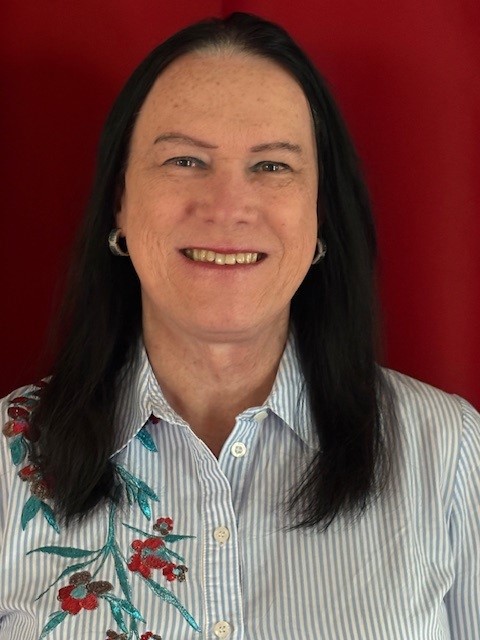
    The NY/NJ Foreign Freight Forwarders & Brokers Association,  announces that Charlene Riley has been selected as the recipient of the 2025 Captain of Industry Award. This prestigious honor is awarded to individuals who have demonstrated exceptional leadership, commitment, and long-standing service to the association and the international trade and logistics community. Ms. Riley will be honored on Wednesday, June 25, 2025, during the association’s annual Dinner Cruise, an event co-hosted with the Traffic Club of New York (TCNY).

    An industry veteran and licensed Customs Broker since 1989, Ms. Riley currently serves as East Coast Import Operations Manager at J.W. Allen. With a distinguished career spanning several decades in freight forwarding and customs brokerage, Ms. Riley has served in a variety of managerial roles. Ms. Riley began her career with Barthco, where she managed numerous offices across the country. She then spent over two decades with John A. Steer Co., rising to the position of Vice President of their NY/NJ office.

    “Charlene Riley exemplifies the integrity, expertise, and dedication that define our industry,” said Jeanette Gioia, President of NYNJFFF&BA. “Her leadership has guided not only our Association but the entire trade community through complex challenges and periods of great change. It is a privilege to recognize her with the 2025 Captain of Industry Award.”

    Ms. Riley has held several leadership positions with the NYNJFFF&BA, including Board of Governors, Treasurer, Vice President of Imports, and President, and most recently as Senior Advisor and former Chair. Her strategic guidance and deep operational knowledge have been instrumental in advancing the mission of the association. She is also a key contributor on the national stage through her active involvement with the National Customs Brokers and Forwarders Association of America (NCBFAA) especially the Future Role of the Broker Committee. She had represented the Port of New York/New Jersey on the Customs Committee, chaired the Legislative Committee, and headed the FIATA Committee, having represented the U.S. at two FIATA World Congress events.

    The celebration will take place aboard the Cornucopia Destiny, departing from Liberty Harbor Marina, 11 Marin Blvd, Jersey City, NJ, with boarding beginning promptly at 6:00 PM and disembarking between 9:30-10:00 PM. For details see Dinner Cruise 2025 – NYNJ.  Guests will enjoy an evening of networking and celebration featuring an open bar, appetizers, full dinner and dessert, DJ music, and dancing. Contact (732) 741-1936 for more information.

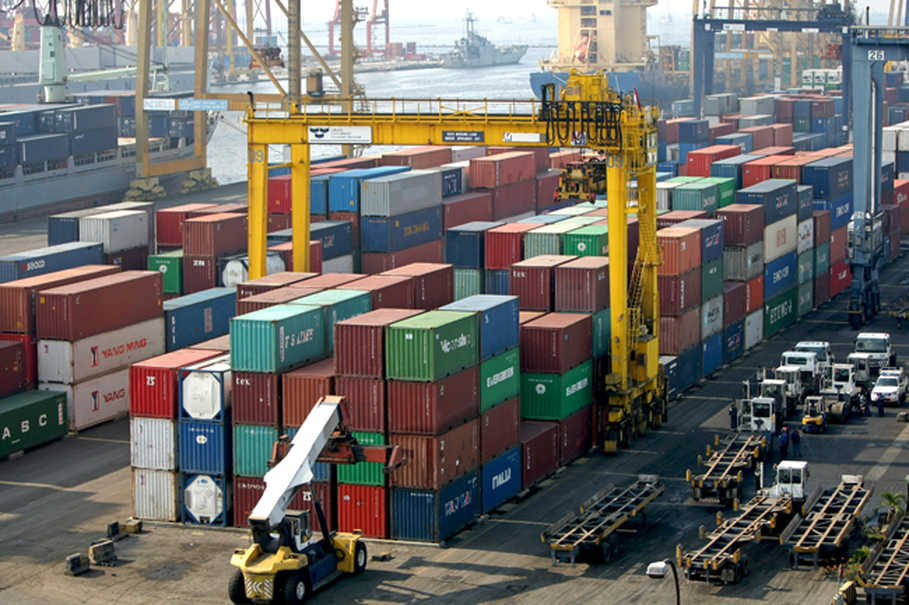
  • 4,800 containers unclaimed at HCMC ports

    4,800 containers unclaimed at HCMC ports

    Over 4,800 containers have been left unclaimed for more than 90 days at Ho Chi Minh City sea ports, causing difficulties for logistics activities.

    HCMC Customs said that the goods include wood, scrap and others.

    Many companies imported their goods in excess before the seven-day Lunar New Year holiday which began Feb. 8., causing a surge in the number of containers in January.

    Many importers of scraps are “ghost” companies, established with incorrect information regarding who operates them.

    Goods that are left unclaimed will be either sent back to the sender or be destroyed.

    A large number of unclaimed goods can cause congestion at ports and create a shortage of empty containers, which can result in higher transportation charges.

  • Port operators want container fee raised

    Port operators want container fee raised

    Seaport operators want the government to increase its terminal handling charge as they claim they lose billions of dollars annually at the current level, which is lowest in Southeast Asia.

    In a proposal to the government by the Private Sector Development Committee, port operators say that the current terminal handling charge (THC) in Vietnam is only 40-50% that of other countries in the region.

    Le Quang Trung, Deputy Chairman of the Vietnam Logistics Association, said that international shipping firms collect a THC of $140 per 20-foot container from their customers, but only pay Vietnamese seaport operators $45-52, or 37% of the total.

    Cambodian port operators, however, get as much as $90 per container, and operators in Singapore receive $115.

    According to international norms, 80% of the THC must go to the port operator, and therefore Vietnamese operators should get $80-100 per container instead of $45-52 as current, Trung said.

    Port operators have therefore proposed that the Ministry of Industry and Trade raise the THC in Vietnam gradually to reach the same level as other regional countries.

    A 15-20% increase annually for four or five years will bring THC in Vietnam to the regional average of $101 per container.

  • Vietnam eyes $13.7 billion port upgrade to boost trade

    Vietnam eyes $13.7 billion port upgrade to boost trade

    Vietnam needs VND313 trillion ($13.77 billion) by 2030 to upgrade and optimize its port system to reduce dependency on road transportation and boost trade.

    There will be two special graded terminals: Nam Do Son in the northern city of Hai Phong and Cai Mep in the southern province of Ba Ria-Vung Tau, according to a government plan for the 2021-2030 period with a vision until 2050.

    These terminals will act as international hubs for Vietnamese goods to be transported directly to Europe and the U.S. (the two biggest export markets) so businesses no longer need to send their goods to intermediate hubs in other countries.

    The remaining 34 ports will be divided into three categories: tier 1, 2 and 3, depending on their capacity and location.

    Special graded and tier 1 ports will be connected with smaller ports by newly prioritized railways and roads.

    The smallest ports located deep inland will be removed.

    Deputy Minister of Transport Nguyen Xuan Sang said the new plan will focus on developing a shipping route between localities instead of relying on roads.

    For example, Chinese imports could be shipped to Quang Ninh ports in the north and then to other localities along the coast, instead of being transported via road as in the current case.

    “Our country has a long coastline, why do we need to use roads while we can use sea routes?” he said, adding that on average shipping costs are lower than road delivery.

    The use of ports would also lower logistics costs and reduce pressure on roads, which would increase transport safety.

    The majority, around 95 percent, of funding for this plan will come from private companies and other legal sources, according to the transport ministry.

  • New deep-sea port to boost logistics capacity in Vietnam

    New deep-sea port to boost logistics capacity in Vietnam

    The new terminal will double the current loading capacity of the biggest port in northern Vietnam. A new deep-water port is set to open this month in Vietnam’s northern city of Hai Phong.

    The city is a major sea gateway for Vietnam, but the existing port cannot receive large container ships as it lies on the Cam River, which is only seven meters deep.

    The new Lach Huyen International Gateway Port faces the sea, where the water is 14 meters deep.

    It stretches 750 meters (2,460 feet), which is double the length of Hai Phong Port, and has two container cranes.

    Work started on Lach Huyen Port in 2013 at an estimated cost of $1 billion, and when the first phase is completed on May 13, it will be able to handle around 300,000 20-foot equivalent units, or TEUs.

    That figure will rise to between 2-3 million TEUs in 2019, which is double the current capacity of Hai Phong Port.

    At a ceremony to mark the construction of Lach Huyen’s second phase in 2016, Prime Minister Nguyen Xuan Phuc said the new port “holds a key role in Vietnam’s maritime strategy”.

    Infrastructure to support the operation of the port has been taking shape, including an expressway connecting Hai Phong with the capital Hanoi that cuts travel time by half to roughly 90 minutes, and Southeast Asia’s longest cross-sea bridge, which opened to traffic in September last year.

    Spanning 15.63 kilometers (10 miles), the $523-million bridge connects Tan Vu Port to the new Lach Huyen Port.

    At a government meeting in Hanoi last month, PM Phuc said Vietnam’s logistics costs are putting a strain on local businesses and need to be cut in order to make firms more competitive.

    Vietnam’s logistics costs accounted for 20.9 percent of GDP in 2016, according to the World Bank, and were higher than regional peers China, Thailand and Japan.

    The reason for this is the cost of transporting goods via land, he said.

    In Vietnam, transportation accounts for 59 percent of all logistics costs, Deputy Minister of Industry and Trade Nguyen Van Cong told the meeting.

    The cost of transporting a 40-foot container by land from Hanoi to HCMC is about VND40 million ($1,785), which is 9.7 times more than transporting it by water and 2.5 times more than moving it by train, he said.

    According to a 2016 report released by the ministry, 77.2 percent of goods are transported by land in Vietnam, while just 5.22 percent go via water and 0.42 percent by train.

  • Tanjung Api-Api Port to start operation in December

    Tanjung Api-Api Port to start operation in December

    Transport Minister Budi Karya Sumadi said the Port of Tanjung Api-Api in the regency of Banyuasin, South Sumatra, is to be operational in December, 2017.

    Physical construction of the project is already completed, but the port basin is not yet safe for big ships, Budi said after a meeting on the port and the progress made in the construction of Light Rail Transit project (LRT) in the city of Palembang on Saturday.

    The minister said the port basin is only 3.5 meter deep, therefore it still needs to be made deeper to be safe for big ships.

    He said South Sumatra Governor Alex Noerdin also agreed with the decision to operate the new international seaport in December.

    In addition the 60-kilometer long provincial highway linking the new port with the provincial city Palembang still needs repairs here and there, he said.

    He said later Tanjung Api-Api will need to be linked with toll road and railways to facilitate the transport of cargoes to and from the international port.

    The minister expressed optimism the port would help accelerate industrialization in South Sumatra and neighboring province of Jambi as it would serve as hub port for goods from the two provinces to be transported to Jakartas Tanjung Priok on the way to export market or other regions in the country.

    Meanwhile, Sea Transport Director General A Tonny Budiono said the port would be able to accommodate 464 death-weight ship that could carry 50 TEUs of container cargoes.

    Tonny said in the beginning the port would be operated by the Transport Ministry but later by phases it would be handed over to PT Pelindo II, the state-owned port operator based in Jakarta.

    He said the port has yet to be equipped with cranes to load and unload cargoes including containers. Normally ships already have their own cranes , but work would be faster if the port would also have cranes, he added.

    The quay of the port is 50×20 meters, the trestle is 118 X 8 meters and the causeway is 100 X 8 meters .

    Construction of the port project cost around Rp178 billion with fund from the state budget.

    The South Sumatra provincial administration contributed Rp48 billion for the construction of land supporting facility.

    Palembang will co-host the next Asian games in 2018, therefore, the government hastens the completion of infrastructure including the sea port and the LRT project.

  • Siemens partners with MMH to provide technology for Myanmar’s ports

    Siemens partners with MMH to provide technology for Myanmar’s ports

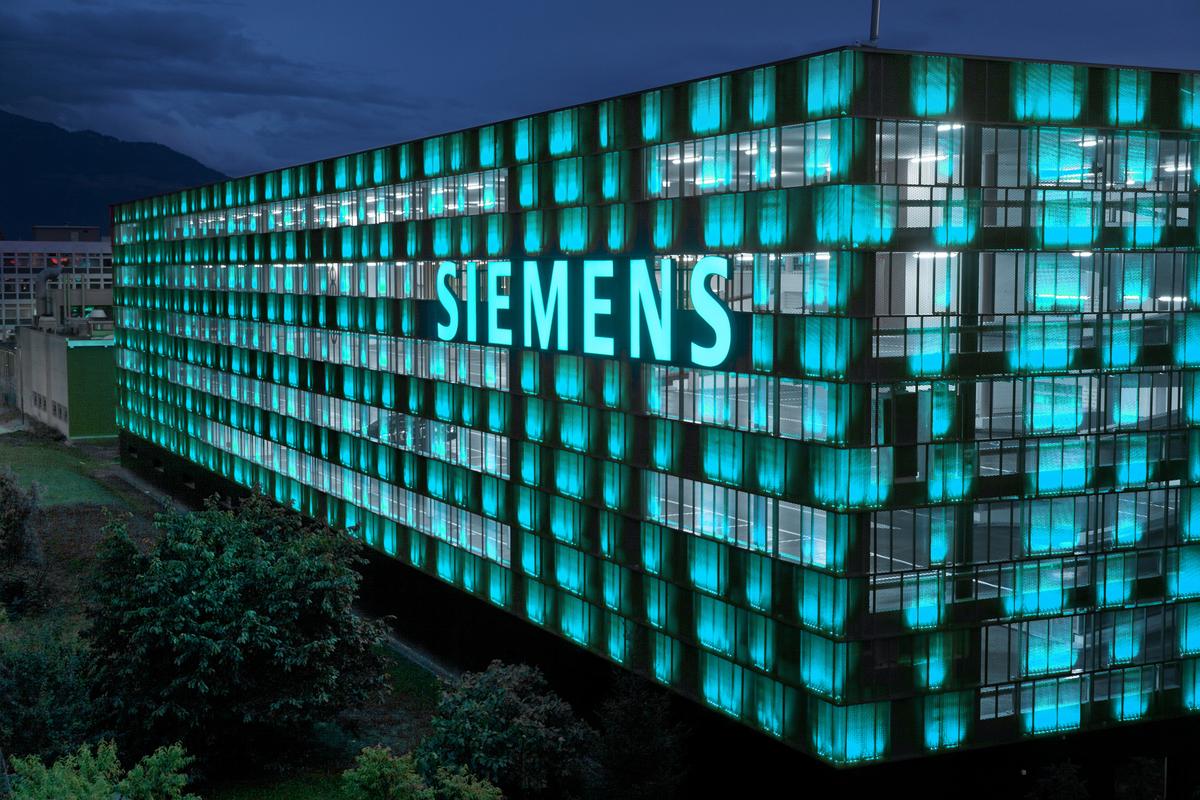
    Myanmar Mahar Htun (MMH) to provide technology and solutions for Myanmar’s busy ports with ever-increasing requirements. Through this collaboration, MMH will equip ports with cranes that feature Siemens’ technology, which would enable them to upgrade their services, enhance safety features and improve productivity. This is in alignment with the focus of Myanmar Port Authority (MPA) to increase capabilities of the country’s port facilities.

    Myanmar, with its strategic location that is connected to key regional markets China and India, and bordering three other Asian countries, Bangladesh, Thailand and Laos, currently is able to handle around 20 small tankers with around a total of 220,000 deadweight tonnes (DWT). This number is set to further rise with the expansion of its ports. In particular, its Yangon port is expected to handle ships with maximum of 50,000 DWT, putting it in front of ports in other Southeast Asian markets.

    Christian Beckers, head of business development, Digital Factory and Process Industry and Drives, Siemens Myanmar and Cambodia, said: “Growing demand for quality goods plus increase in trade and investments will create new opportunities for expansion of Myanmar’s port and logistics sector. Hence, it is important for the terminals to be equipped with the ability to handle the surging amount of imports and exports expected in the coming years.”

    “Siemens’ innovative technologies can enhance productivity, energy efficiency and flexibility while at the same time fulfil the highest international safety standards and increased competitiveness in the market. Along with MMH and the MPA, we aim to enhance port optimization to reliably handle increased traffic and trade volumes,” he continued.

    Yamon Win, executive director, Myanmar Mahar Htun Co., Ltd said: “Through our solid joint partnership, Siemens and Myanmar Mahar Htun Co. Ltd are able to provide a value-added product range which comprise of a combination of totally integrated and complete range of technologies and tailor-made solutions as well as local contact support for our customers in Myanmar. Our aim is to make Myanmar’s ports more efficient as they expand, and this will in turn make the country more competitive on a regional level, and all the more attractive to investors and operators.”

    Cranes are indispensable for transporting loads in terminals, industrial operations and shipyards. Wherever they are used, they must operate with the greatest performance and safety, as well as optimal availability, reliability, maintainability and cost-effectiveness.

    To underline their commitment to the industry in Myanmar, Siemens and MMH have also recently organized a seminar for their customers to discuss challenges faced by different terminals and identify potential solutions to address these challenges. The seminar, which was also organized with the support of MPA, enabled Siemens to showcase how its technology would enable the companies to enhance their offerings to meet with current and future industry demands.

  • Giant ships begin to make a call at Jakarta’s Tanjung Priok

    Giant ships begin to make a call at Jakarta’s Tanjung Priok

    PT Jakarta International Container Terminal (JICT) in Tanjung Priok said it has entered a new era when it succeeded in serving a giant ship, the Otello of Frances Compagnie Maritime dAffretement – Compagnie Generali Maritime (CMA-CGM).

    “The ships of CMA-CGM are the largest ever making a call at Tanjung Priok,” Chief Executive of JICT, Gunta Prabawa, said here on Monday.

    Earlier, JICT was similarly successful in providing fast services for 2 other giant ships of CMA CGM – the Titus and Tancredi – with port productivity at the JICT of 27-30 Mph.

    Gunta described the visits by the giant ships as a new era of the appearance of more giant ships at the Jakarta port indicating that JICT has been ready to provide world class port services.

    “Global shipping companies have allowed their ships to berth at Tanjung Priok as they have confidence in our services,” Gunta said.

    The 334 meter long Otello had unloaded 1,551 TEUs of container goods at Tanjung Priok, he said.

    He said CMA-CGM has reached an agreement with PT JICT by opening new shipping service called the Java South East Asia Express Services/ Java SEA Express Services/ JAX Services.

    The weekly service will take the route of Tanjung Priok – West Coast (Los Angeles & Oakland) of the United States.

    “The first service of JAX Services began on 9 April, 2017 by the Titus of CMA-CGM. Indonesian exporters and importers are expected to utilize the service,” Gunta said.

    Earlier this month, President Joko Widodo said large ships would began to berth at Jakartas Tanjung Priok port after continued improvements in services by the port operator.

    “Soon or next week there will be a ship measuring 10,000 TEUS to call at Tanjung Priok,” Jokowi said when officially commissioning an access toll road to the countrys largest port.

    The president attributed the success in attracting large ships to Tanjung Priok to improved service including a significant cut in dwelling time.

    The dwelling time, needed for unloading, has been cut short to 3.5 days now from earlier up to six days. Long dwelling time had discouraged ships from making a visit to Tanjung Priok as it would mean losing time and an increase in berthing fee.

    The president himself stepped in to improve services, cut the red tape and simplify all procedures that reduce illegal levies earlier rampant at the port.

    The president said he hoped improvement in the port service would make Indonesia more competitive and the seas transport cost would be cheaper to and from Indonesia as large cargo ships could sail directly to and berth at Tanjung Priok.

    “The flows of goods could be much faster via Tajung Priok. Transit is no longer needed for imported container cargoes in Singapore,” he said, adding large container ships could be berthed at Tanjung Priok.

    Previously large ships carrying container goods for Indonesia have to make a transit in Singapore to unload the cargo to be loaded gain on smaller ships as Tanjung Priok could not yet accommodate large container vessels.

    The new access road would contribute to improving services at the port , Jokowi said, adding “This also helps improve the countrys competitiveness.”

    He said an estimated 3,600 containers would be transported via the 11.4 kilometer access road everyday.

  • World’s largest container ship docks in southern Vietnam

    World’s largest container ship docks in southern Vietnam

    A giant container vessel arrived at Cai Mep International Terminal in Vietnam’s southern region Monday, helping mark the port on the world’s shipping map.

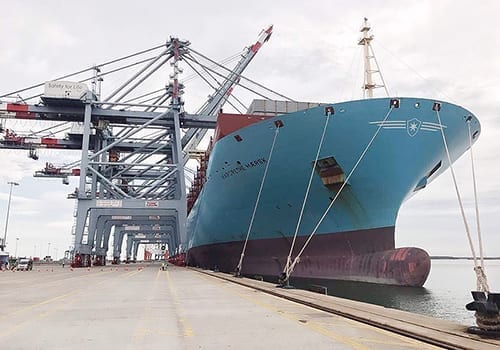
    The 194,000-DWT Margrethe Maersk of 399 meters long of the world’s biggest container ship family was built in 2015 and is owned by Denmark’s Maersk Line. The vessel can carry 18,300 TEU (twenty-foot equivalent unit).

    Cai Mep in the southern province of Ba Ria-Vung Tau is now among the world’s 19 ports which can accommodate Triple-E class container ships of more than 18,000 TEU.

    Vietnamese transport officials said the arrival marked “a milestone” in the country’s shipping history as they aim to develop Cai Mep into a transit port for cargo shipping between Asia and northern Europe.

  • Germany To Help Iran’s Port Infrastructure

    Germany To Help Iran’s Port Infrastructure

    Germany, which has been aggressively pushing for closer economic ties with Iran following the lifting of international sanctions against the latter, wants to play a pivotal role in the modernizing and upgrading of Iran’s dilapidated infrastructure and transport system. Germany signed six memoranda of understanding (MoUs) aimed at boosting transport cooperation following a late October meeting between Abbas Akhoundi, Iran’s minister of roads and urban development, and Alexander Dobrindt, Germany’s minister of transport and digital infrastructure, who led a delegation of major German shipping, port and marine companies.

    Iranian and German sources said that a German company is participating in a tender for completing two terminals at Chabahar Port in southeastern Iran, which was recently in the news because India is keen to develop it for strategic and trade reasons. German multinational Siemens is holding talks with Iran for developing suburb transport in Tehran and Tabriz, as well as the rail lines between Tehran and Tabriz.

    The lifting of sanctions against Iran has led German business executives and the shipping industry to tap what they describe as “huge business potential.” Hamburg Port, for example, has been trying to identify areas and ways to establish and upgrade ties with that country’s port facilities.

    Since the imposition of sanctions, Iran has struggled to have a normal trading relationship with the outside world. While the German industry has been euphoric – and this applies particularly to Hamburg, whose port prides itself as the “gateway to Asia” – the realities are different; indeed, access to Iran’s lucrative market is not an easy undertaking.

    Strategically located at the crossroads between the Arabian Peninsula and Central Asia, with ports in the Caspian Sea and the Gulf region, Iran is interesting for shipping lines. Iran also offers opportunities for foreign investment in important sectors such as oil and gas, electricity production, air, sea and road infrastructure, telecommunications, etc.

    Described as part of the “Axis of Evil” in 2002, Iran’s breakthrough came on January 16, 2016, when the first of the multiple layers of trade sanctions were removed, breaking the shackles that badly inhibited that country’s shipping and trade, and giving it access to huge sums of money that had been frozen under the sanctions regime.

    However, experts at a special event in Hamburg a few months back told shippers and others that only part of the sanctions had been lifted on January 16. While the ban on imports of Iranian oil and gas products, and against the country’s ship-building and shipping sectors, had been lifted along with restrictions on bank remittances, the situation remains complex in the sector of so-called “dual use” goods, which can be used both for civilian and military purposes.

    One of the first to take advantage of the lifting of sanctions was European aerospace company Airbus, which has bagged aircraft orders from Iran Air to replace its outdated A340 aircraft. The city of Hamburg, experts say, could flank trade with Iran by providing expertise in several areas, including modernization of Iran’s fleet of mercantile ships.

    US companies are not, yet, permitted to have dealings with Iran, although their associate companies in Europe can do so. However, weapons and certain police equipment are still prohibited. Also prohibited are deals with companies that are controlled by Iran’s revolutionary guards or those that have supported Iran’s atomic programme.

    Iran has been trying to recruit German companies to set up operations, particularly in the seven free trade zones in Iran for which the government has been dangling carrots in the form of incentives, including a 20-year tax holiday. Since Iran is keen to join the World Trade Organization, it has been trying to highlight the fact that many of its old agreements on trade and legal protection are in force. However, new companies to be established in Iran will be governed by certain religious laws and, as such, are required to have a Persian name or title, as Iranian legal experts have been saying during meetings with German companies. “Such a requirement can be a deterrent because many German companies are unsure what the implications would be on their business. I would suggest that companies do their homework before moving large-scale investments to Iran,” one German-Iranian told on the condition of anonymity.

    Meanwhile, Iran is in a rush to catch up with the rest of the world by modernizing its infrastructure and its economy.

    Hamburg and its port stand to benefit immensely from Iran’s opening. In 2014, German exports to Iran amounted to some €2.4 billion (approximately US$3.1 billion, in 2014 dollars), while imports from Iran were about €300 million, according to numbers from the German Statistics Bureau. Hamburg’s two-way trade with Iran amounted to roughly €214 million in the same year. International trade experts at Hamburg’s Chamber of Commerce are optimistic that German trade with Iran would double from its present level after all sanctions are lifted.

    Some 353 companies based in Hamburg already have business connections with Iran. Despite sanctions, some of these companies maintained business ties with Iran even during the embargo period. Hamburg, which is by far the world’s leading trading hub for Iranian products, including carpets, has the largest concentration – about 20,000 – of Iranian nationals or people of Iranian origin in Germany; the city hopes to resume its once flourishing trade and shipping through the Iranian diaspora.

    Another important German state interested in trade with Iran after the lifting of sanctions is Hesse, which recently sent a 40-member delegation led by Hesse minister for economics, energy and transport Tarek Al-Wazir to Iran. The trade volume between Hesse and Iran was around €212 million in 2015 (US$230 million), according to the state’s economics ministry.

    “The reputation of products and services offered by Hesse is traditionally good in Iran,” Al-Wazir said. There is huge potential in the expansion of the processing industry, the transport infrastructure and in urban development.

    During German minister for economic affairs and energy Sigmar Gabriel’s visit to Iran in early October, Gabriel’s second visit to Iran within 14 months, Iran’s oil minister had said that German banks were becoming a hindrance. “We have billions (of dollars) with which we could do good business with the Germans,” Bijan Namdar Zangeneh, the oil minister, was quoted as saying after his meeting with Gabriel in Tehran.

    The money cannot be transferred due to problems with the banks. Iran’s minister told journalists that that “is bad for us, but also bad for the Germans.”

    Germans say that although the sanctions against Iran were lifted in January, trade has not made much headway. A precluding factor is that part of the punitive measures – the so-called secondary sanctions – imposed by the United States are still in force. German and European banks are, consequently, dissuaded from financing Iran deals. In 2015, for example, Germany’s Commerzbank paid a hefty US$1.45 billion fine to US authorities because of violating American sanctions in deals with Iran. France’s large bank BNP Paris also had to pay a billion-dollar penalty.

    Iran’s economy has not done badly, with the International Monetary Fund forecasting an average growth rate of 4% for the next five years. Official Iranian projections suggest a GDP growth rate of 5% for 2016.

    Iran’s neighbour Turkey is also eyeing the opportunities unfolding in Iran; Turkey offers itself as an ideal transit point for German and other western companies wanting to enter Iran. Turkey trumpets its “manifold advantages,” particularly, for SMEs which can enjoy customs duty benefits. Turkish experts, who say that all the machinery and production tools in Iran are outdated, believe that German companies, with their past trade relationship with Iran, can look forward to a welcoming market with huge investment needs.

    Some German companies are looking at using Turkey to tap Iran’s huge business potential. Since 2014, Turkey has a preferential trade agreement with Iran. This agreement eliminates many customs duties. German companies can save customs duty twice because Turkey, a member of the European Customs Union, exempts German products from customs duty on exports to Turkey. All products shipped from Turkey to Iran are treated as Turkish products and thus spared the customs duties.
  • The Port of Hamburg has launched a Chinese-language version of its website

    The Port of Hamburg has launched a Chinese-language version of its website

    “China is by a wide margin the Port of Hamburg’s most important trading partner,” said Axel Mattern, joint CEO of Port of Hamburg Marketing. “We aim to do justice to this by now offering our internet presence, not just in German and English as the language of shipping, but also in Chinese. On our travels in China we have found that language still frequently forms a barrier to communication. We aim to reduce this and to facilitate immediate access to comprehensive data on the Port of Hamburg for our Chinese partners and customers through our Chinese internet presence. The new language version of the Port of Hamburg website is a logical extension of our already very comprehensive range of information.

    The website provides information such as liner services, agencies and handling facilities, as well as an integrated database on intermodal services, according to the port.

  • Indonesia Port Net to be Launched by Year-End

    Indonesia Port Net to be Launched by Year-End

    President Director of state-owned seaport operator PT Pelindo II Elvyn G. Masassya said the implementation of a single Internet-based electronic service or the Indonesia Port Net (Inaportnet) in Pelindo I to Pelindo IV has entered the finalization stage.

    Inaportnet is expected to improve connectivity of the four enterprises.

    Masasya added the Inaportnet application throughout all seaports managed by PT. Pelindo would be gradually done.

    “Our plan is that the Inaportnet in all the seaports managed by PT. Pelindon will be integrated at the end of 2016,” she said in Jakarta on Saturday.

    The Inaportnet will integrate the information system of ports throughout Indonesia and one of the benefits is to monitor domestic commodity and anticipation of complaints about waiting times for vessels.