Tag: posts

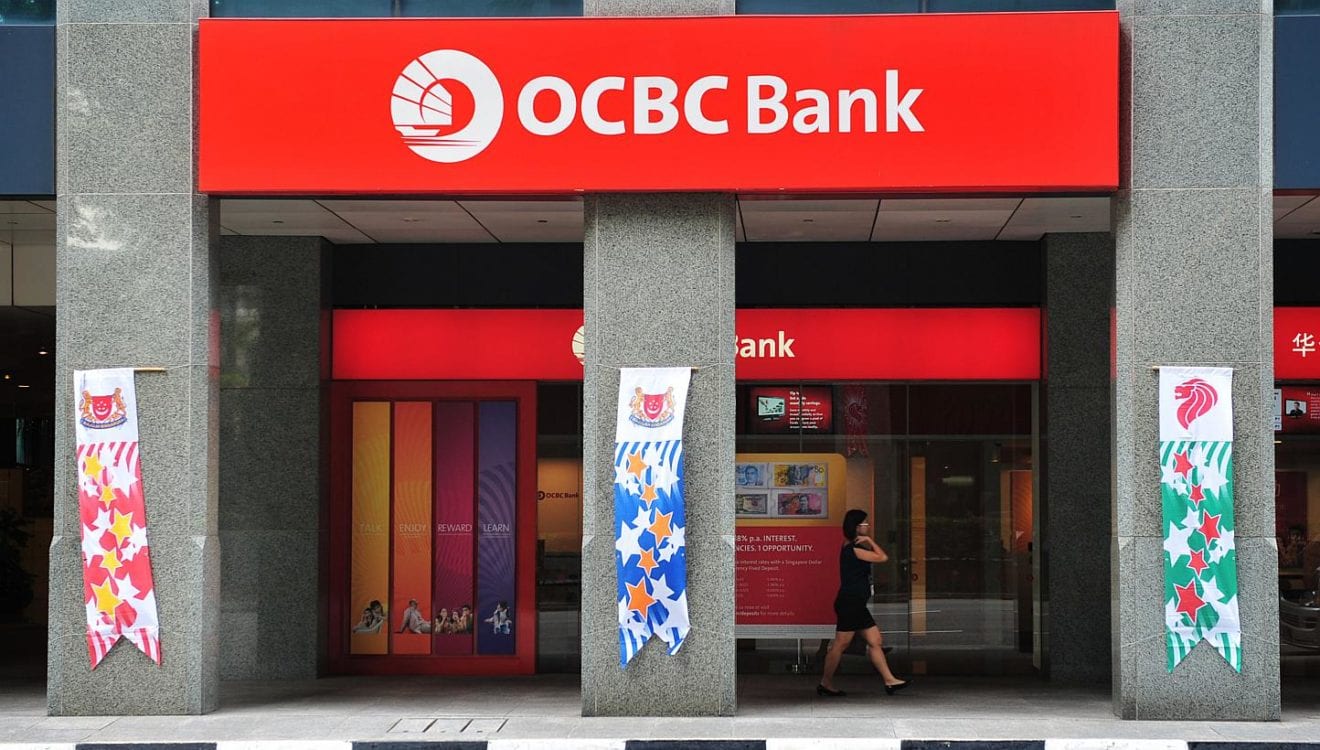
  • OCBC Posts 5% Surge in Q1 Profits, Bolstered by Wealth Management and High Fees

    OCBC Posts 5% Surge in Q1 Profits, Bolstered by Wealth Management and High Fees

    In the first quarter, the Oversea-Chinese Banking Corporation Limited (OCBC) experienced a decline in its net interest income. However, this was counterbalanced by increases in wealth-led gains and higher fees, resulting in an overall rise in total income.

    Financial Performance Overview

    OCBC reported a 5% increase in net profit for Q1, largely attributed to robust performance in its wealth management and insurance sectors. This helped offset the impact of falling interest rates. The bank, based in Singapore, saw its net profit increase to S$1.97 billion in the three months leading up to March 31, marking 13% growth from the previous quarter and up from S$1.88 billion in the equivalent period a year earlier. The total income also experienced an upward trend, reaching an all-time high of S$3.83 billion, a 5% annual increase.

    Non-interest income, a key driver of these results, also saw record figures. It witnessed a 23% surge, amounting to S$1.61 billion, and made up over 40% of the total income. This growth was spread across various operations including fees, trading, and insurance.

    Revenue Streams: Wealth Management and Lending

    Wealth management was a significant contributor to OCBC’s revenue. Income from this sector grew by 11% to S$1.48 billion, and assets under management in banking wealth management rose by 12%, reaching S$342 billion. This growth was facilitated by net new money inflows across all customer segments.

    Net fee income also saw considerable growth, up 24% to S$675 million. This was stimulated by a 34% increase in wealth management fees, fueled by a rise in customer investment activity across private banking, premier banking, and other wealth channels. Other areas that showed improvement were investment banking, trade-related, and loan-related fees. Trading income saw a rise of 10% to S$434 million, spurred on by strong customer flow income amid sustained wealth-related activity and heightened hedging demand from corporate clients.

    However, the bank also faced challenges in the form of pressure on its lending margins due to falling interest rates. Net interest income fell by 5% to S$2.22 billion, and net interest margin contracted to 1.76% from 2.04% in the previous year.

    Despite these challenges and a 6% increase in operating expenses to S$1.50 billion, mainly due to higher staff costs and continuous investment in technology infrastructure, OCBC managed to maintain a cost-to-income ratio below 40%, at 39.3%.

    Questions & Answers

    What were the major contributors to OCBC’s growth in the first quarter?
    Wealth management was a key factor, with an 11% income increase. There were also broad-based increases in non-interest income, which rose 23%.

    What challenges did OCBC face in the first quarter?
    The bank experienced pressure on its lending margins due to declining interest rates, which caused a 5% fall in net interest income.

    Did OCBC manage to maintain financial stability despite these challenges?
    Yes, although it faced some challenges, OCBC maintained a stable asset quality and a prudent approach to provisioning. The bank’s strong capital, funding, and liquidity position has left it well-equipped to pursue growth opportunities amidst ongoing economic uncertainties.


  • Luk Fook Holdings Posts Double-digit Growth In Q2, Eyes Expansion In Mainland China

    Luk Fook Holdings Posts Double-digit Growth In Q2, Eyes Expansion In Mainland China

    In the second quarter ending September 30, Luk Fook Holdings, a prominent jewelry group, has revealed impressive double-digit growth in several critical indicators.

    Retail Sales Value on the Rise

    The group recorded an 18% year-on-year increase in Retail Sales Value (RSV) during the quarter. RSV, which encompasses self-operated shops, licensed outlets, and e-commerce ventures, saw a significant upturn.

    Retail revenue, made up of earnings from self-operated stores and e-commerce businesses, escalated by 15%. Concurrently, the group also experienced a 10% rise in same-store sales. The management attributed this robust growth, which surpassed the first quarter’s figures, partly to the low base during the same period the previous year.

    Regional Sales Growth

    In the Hong Kong, Macau, and overseas markets, the group noted a 13% increase in both RSV and retail revenues. Same-store sales grew by 13% in Hong Kong, 15% in Macau, and 13% in overseas markets.

    In Mainland China, the RSV surged by 20%, and retailing revenues swelled by 23%. The increment in same-store sales at company-operated locations was a modest 3%, while licensed shops saw a leap of 27%. Licensed stores constitute approximately 93% of the group’s total shop count in Mainland China.

    Performance by Category

    RSV’s growth varied across different categories. The value rose by 78% for gold and platinum products, increased by 16% for fixed-price gold items, and crept up by 3% for diamonds.

    As of September 30, the group had 3113 shops worldwide. There was a net reduction of 49 shops in the second quarter.

    Future Prospects

    The group maintains a cautiously optimistic outlook on its medium- and long-term business opportunities in Mainland China and plans to continue expanding in the market when the timing is right.

    Despite the ongoing US tariff policies affecting the global economy and the escalating China-US tensions, the Mainland government has implemented a “dual circulation” strategic layout to stimulate domestic demand, as observed by the retailer.

    Questions & Answers

    What was the percentage increase in Luk Fook Holdings’ Retail Sales Value (RSV) in Q2?
    It saw an 18% year-on-year increase in RSV during Q2.

    What contributed to the robust growth Luk Fook Holdings experienced in Q2?
    The growth can be attributed to the low base during the same period the previous year and the increase in both RSV and retail revenues in several markets.

    What is Luk Fook Holdings’ future plan for expansion in Mainland China?
    The group plans to continue expanding in the Mainland China market when the timing is appropriate, with a cautiously optimistic outlook on its medium- and long-term business opportunities.

  • Adidas Announces Record-breaking Third Quarter Revenue And Upgraded Full-year Profit Projection

    Adidas Announces Record-breaking Third Quarter Revenue And Upgraded Full-year Profit Projection

    Adidas, the renowned sportswear brand, recently announced a significant increase in their revenue for the third quarter. This surge was widespread, affecting all markets, categories, and channels.

    For the third quarter, the company’s total revenue skyrocketed to approximately €6.63 billion (US$7.7 billion), marking the highest third-quarter revenue ever for the company. This was primarily due to a 12% growth in the Adidas brand.

    The company pointed out that the impressive third-quarter results did not include revenue from Yeezy. This is because Adidas had successfully sold off the remainder of their Yeezy inventory at the end of the previous year.

    The gross margin for Adidas saw a slight but notable increase, improving by 0.5 percentage points to 51.8%. Additionally, the operating profit rose to €736 million, marking an increase from the €598 million recorded during the same period the previous year.

    Adidas’ CEO, Bjørn Gulden, expressed his pride in the company’s accomplishments during the third quarter. He mentioned, “Our teams delivered record revenues during a period of global volatility marked by tariff hikes in the US and widespread uncertainty among retailers and consumers. Despite these challenges, our brand and products continue to resonate well with consumers.”

    In light of these positive developments in the third quarter, Adidas has revised its full-year operating profit forecast. The company now expects its operating profit to increase to approximately €2 billion. This is a significant upgrade from their previous projection, which ranged between €1.7 billion and €1.8 billion.

    The improved forecast is a testament to the continuing momentum of the Adidas brand. It also acknowledges the company’s better-than-anticipated business performance and its successful efforts to partially offset the additional costs incurred due to increased US tariffs.

    As far as revenue is concerned, Adidas maintains its expectation of achieving double-digit currency-neutral growth for the year.

    Questions & Answers

    What was Adidas’ total revenue for the third quarter?
    Adidas reported a total third-quarter revenue of approximately €6.63 billion (US$7.7 billion), marking its highest ever for the quarter.

    What are the factors attributed to Adidas’ improved full-year operating profit outlook?
    The revised outlook reflects the continuous momentum of the Adidas brand, better-than-expected business performance, and the company’s successful efforts to partially offset additional costs due to increased US tariffs.

    What is Adidas’ expectation for revenue growth for the year?
    Adidas continues to expect double-digit currency-neutral growth for the year’s revenue.

  • Birkenstock Reports Strong Q3 Growth, Boosted By Rising Demand Across All Primary Markets

    Birkenstock Reports Strong Q3 Growth, Boosted By Rising Demand Across All Primary Markets

    Birkenstock, a well-known footwear brand, has announced strong financial figures for its third fiscal quarter, which ended on June 30. This growth was propelled by increased demand in all primary markets.

    Revenue and Net Income

    Birkenstock’s total revenue for the quarter reached an impressive €635 million, which is equivalent to approximately US$699 million. This represents a 16% increase in constant currency terms, compared to the same timeframe in the previous year. The reported revenue also experienced a 12% uplift, although this was somewhat influenced by currency fluctuations.

    The company also enjoyed a significant increase in its net income, which rocketed to approximately €129 million, or $142 million. This shows a substantial 73% increase compared to the previous year.

    Regional Contributions

    Every major region contributed to this growth. The Asia-Pacific region led the surge with a 24% increase in constant-currency revenue. This was followed by the Americas and the EMEA regions, which saw increases of 16% and 13% respectively.

    Company Performance

    Oliver Reichert, CEO of Birkenstock, stated that the company’s underlying demand remains robust and they are on track to achieve their targeted constant currency growth at the high end of the 15-17% range they anticipated at the start of the year.

    The CEO also mentioned that they saw significant margin improvement in the quarter, fueled by net sales price adjustments after inflation and better absorption. He believes they are well-positioned to handle the impact of the ongoing 15% US/EU tariff agreement through pricing adjustment, cost discipline, and efficient inventory management. This is all in an effort to protect the long-term health and profitability of the Birkenstock brand.

    Sales and Expansion

    The sales momentum for this quarter was widespread, with wholesale revenue growing 18% on a constant currency basis and direct-to-consumer sales increasing by 12%.

    During the quarter, Birkenstock opened 13 new stores, bringing its total number of owned retail locations to 90 globally.

    The company is actively growing its direct-to-consumer footprint in conjunction with its sustained revenue growth. They are also investing to expand production capacity to meet the rising demand.

    Questions & Answers

    What is the total revenue for Birkenstock’s third fiscal quarter?
    The total revenue for Birkenstock’s third fiscal quarter is approximately €635 million, or US$699 million.

    Which region led in terms of revenue growth for Birkenstock?
    The Asia-Pacific region led the way for Birkenstock with a 24% increase in constant-currency revenue.

    What strategies is Birkenstock implementing to manage the impact of the 15% US/EU tariff agreement?
    Birkenstock is managing the impact of the 15% US/EU tariff agreement through pricing adjustment, cost discipline, and efficient inventory management.

  • Chow Tai Fook Overcomes Sales Slump With Increased Operating Profit: Unveils Expansion Plans

    Chow Tai Fook Overcomes Sales Slump With Increased Operating Profit: Unveils Expansion Plans

    Despite subdued consumer sentiment impacting its sales in the last fiscal year, Chow Tai Fook witnessed an increase in its operating profit.

    The company’s revenues for the fiscal year, ending on March 31, saw a significant decrease of 17.5 per cent, amounting to HK$89.6 billion (US$11.4 billion). The reasons behind this slump were attributed to wider macroeconomic factors and high gold prices, both of which contributed to dampening consumer sentiment.

    However, the company’s operating profit demonstrated resilience amidst these challenges, marking a 9.8 per cent increase and reaching HK$14.7 billion. This rise in profit can be attributed to a well-curated product mix, increased gold prices, and effective cost management strategies. Consequently, the operating profit margin also saw an enhancement of 400 basis points, rising to 16.4 per cent.

    Nevertheless, the profit assigned to shareholders witnessed a drop by 9 per cent, amounting to HK$5.9 billion. This was due to the fact that the growth in operating profit was overshadowed by the losses incurred through the revaluation of gold loan contracts.

    The company also highlighted that its same-store sales performance in Mainland China demonstrated a progressive improvement on a quarterly basis. Concurrently, the performance of stores in Hong Kong and Macau showed signs of stabilization towards the end of the fiscal year.

    Throughout the year, Chow Tai Fook made notable advances in its brand transformation strategy. The company launched five new stores featuring a premium format in Mainland China and Hong Kong. These were designed to augment brand desirability and enhance store productivity.

    In the upcoming fiscal year, the company is set to continue its strategic expansion by unveiling its new-format stores in Singapore and Canada. Additionally, it also plans to penetrate high-growth markets in Southeast Asia and prime locations.

    Questions & Answers

    What was Chow Tai Fook’s revenue for the year ended March 31?
    The revenue for Chow Tai Fook for the year ended March 31 was HK$89.6 billion (US$11.4 billion).

    What factors contributed to the increase in Chow Tai Fook’s operating profit?
    The rise in Chow Tai Fook’s operating profit can be attributed to an improved product mix, higher gold prices, and effective cost management measures.

    What are Chow Tai Fook’s expansion plans for the upcoming fiscal year?
    Chow Tai Fook’s expansion plans for the upcoming fiscal year include launching new-format stores in Singapore and Canada. It also plans to infiltrate high-growth markets in Southeast Asia and other prime locations.

  • An Instagram Stories update limits the visibility of excessive posts

    An Instagram Stories update limits the visibility of excessive posts

    Instagram has rather silently started implementing changes to their signature Stories feature. A limited number of users have already encountered the new Stories layout, which reduces the visibility of excessive posts.

    At this point, Instagram has become a cultural phenomenon. The social media platform has revolutionized the way people interact and has pushed forward a new philosophy on how we stay connected.

    Over the years, one of the most definitive aspects of Instagram has been Instagram Stories. The feature is rather straightforward – it allows users to share posts, which can only be seen for 24 hours and afterwards they disappear.

    Usually, content that does not warrant a dedicated post on the Feed is usually shared via a Story. At present, users can share up to 100 Stories at the same time. While this number is likely to remain the same, Instagram is now limiting the number of Stories that will receive direct visibility through the dedicated Stories Bar.

    Normally, users can simply tap away and view all Stories shared by the accounts they follow until moving on to the next user automatically. With this newest change, users will only see a maximum of 3 Stories before carrying on to the next account they follow.

    Users will still have the option to see all Stories of a particular account, but that will require tapping on a dedicated “Show All” button which will then display posts beyond the first three.

    The implications of this are rather obvious. This will allow users to quickly skim the Instagram Stories of the accounts they follow, without having to spend an excessive amount of time on a single spammy account.

    A problem arises when one considers how creators use Instagram. As a group, they rely on (sometimes many) Stories in order to promote their content and gain revenue. For the time being, there is no clear timetable of when the Story layout update will be rolled out. It is still theoretically possible for some tweaks to be implemented.

    If the change does get a mass release, it is bound to have an impact on how everyone perceives Instagram Stories. Users will have to think carefully about how they will get the most of their three posts.

  • TikTok, seeking advertisers, reveals info about its subscribers and how they use the app

    TikTok, seeking advertisers, reveals info about its subscribers and how they use the app

    TikTok has been seeking more advertisers for the global and U.S. versions of the short-form video app. As a result, the company has been meeting with potential advertising partners while carrying a B2B pitch book for its TikTok for Business unit. As you might imagine, the pitch deck reveals information about TikTok designed to show off the large number of TikTok users that could be mined by advertisers.

    The pitch deck has leaked online revealing plenty of information about TikTok’s audience. As of October, TikTok’s own numbers show that it’s monthly active users (MAUs) worldwide amount to 732 million. In the U.S., the MAU figure is over 100 million.

    When you consider that those figures are six months old, the numbers are much higher-perhaps tens of millions higher globally. Thanks to a lawsuit filed against the government last year, we know that from the end of July 2020 to October 2020, the app gained approximately 14.3 million monthly active worldwide users each month. If this growth continues over the next 13 months, by May 2022 the app will have over one billion monthly active users globally.

    Some of the data that TikTok is pitching to advertisers should be able to convince them to put some money in TikTok’s till. 47% of users said that they have purchased something that they saw on TikTok in the past while 67% said that TikTok gave them the inspiration to go shopping even if they weren’t planning to do so.

    The pitch deck also revealed the app’s attractive demographics with 42% of active users between 18 and 24 years old. 17% are between 13 and 17 with 22% aged between 25 and 34, 12% between 34 and 44 and only 7% over the age of 45. TikTok users continually return to the app as the average user opens TikTok 19 times a day although it isn’t clear whether this number reflects the actions of global or U.S. users.

    And as of this past January, the average TikTok user views the app 89 minutes a day. 80% of users call TikTok “the most entertaining platform.” The pitch deck is supposed to make TikTok sound like the perfect place for advertisers to spend their money and based on the numbers, many of them will do so on the app.