Tag: power station

  • Portable power stations sought after amid load shedding

    Portable power stations sought after amid load shedding

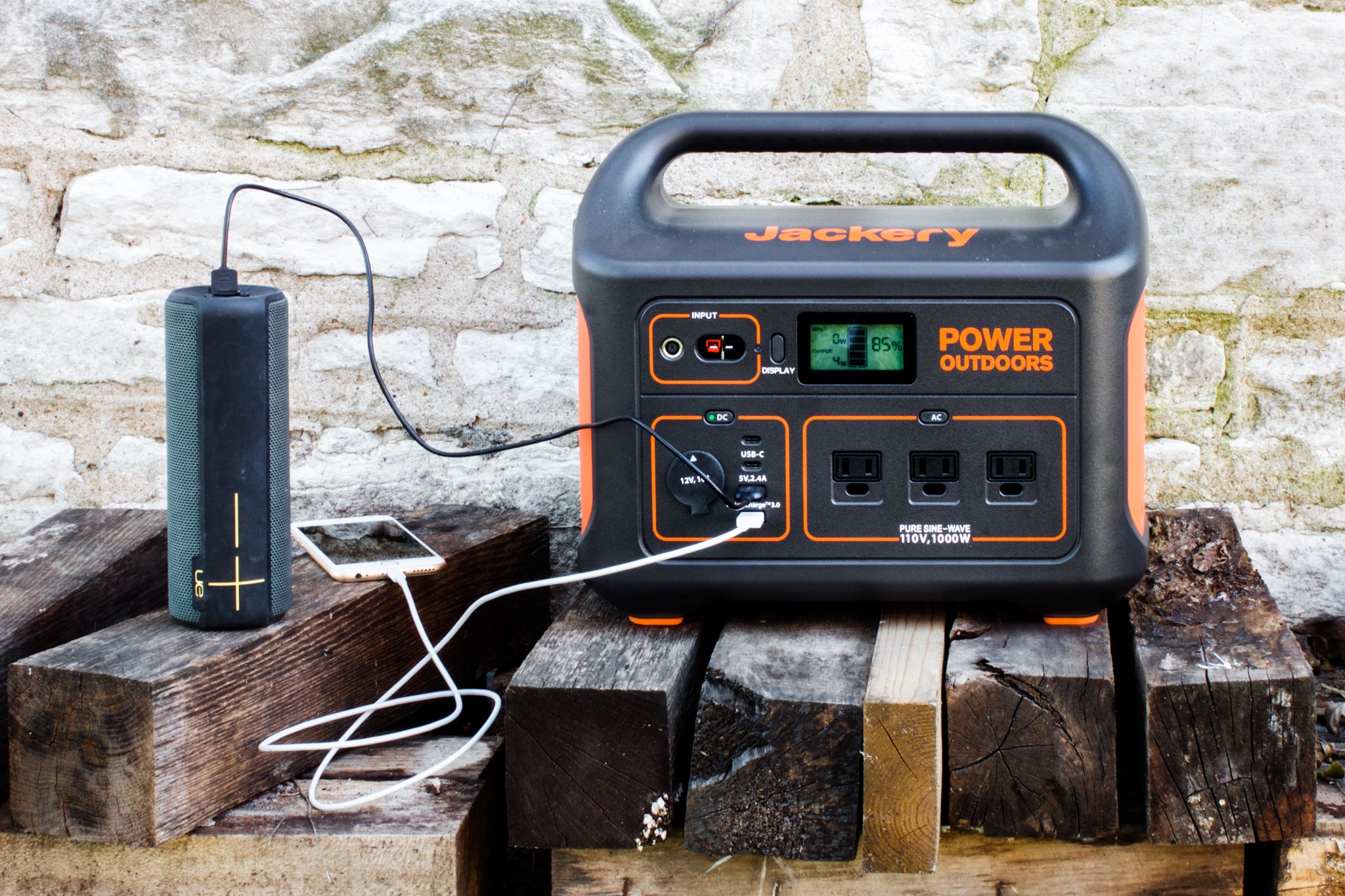
    Portable power stations have become sought-after items in northern Vietnam as unpredictable power cuts urged residents to store electricity in advance.

    Quang Minh in Hai Phong has been looking to buy a portable power station for his household, which has been experiencing load shedding of up to several hours at a time in recent weeks.

    The product that he plans to buy is made in China and sold at VND2.3 million (US$98). It can be used for many devices his family use regularly such as Wi-Fi routers, fans, rice cookers, and lamps.

    In contrast to power generators, the portable stations operate without noise and can be easily operated by both adults and children, he said.

    Users say that a station can meet a household’s basic requirement within a day.

    Vu Xuan Tung, an electronic store owner in Hanoi, said that in the past portable power stations are only bought campers, but recently many people buy them as a backup power source in case of power cuts.

    His store has been running out of power stations recently and sometimes customers have to order up to seven days in advance.

    Most stations are made in China, including some that are advertised to have a German brand. Their prices are around several million Vietnamese dong. Some high-end products can be priced more than VND10 million.

    A Facebook group of 10,000 members, which often sold battery-powered fans in the past, has changed its focus to portable power stations in recent weeks.

    Group admin Vien Duong said that power stations can be used for many devices, not just a fan, and therefore is preferred amid power cuts.

    A survey of nearly 400 readers on June 12-13 showed that around 53% were looking into buying a portable power station, while 7% had bought one.

    Northern Vientam has been experiencing frequent load shedding these days as hydropower plants were shut down due to low water levels.
  • Indonesia turns to floating power stations to meet short-term needs

    Indonesia turns to floating power stations to meet short-term needs

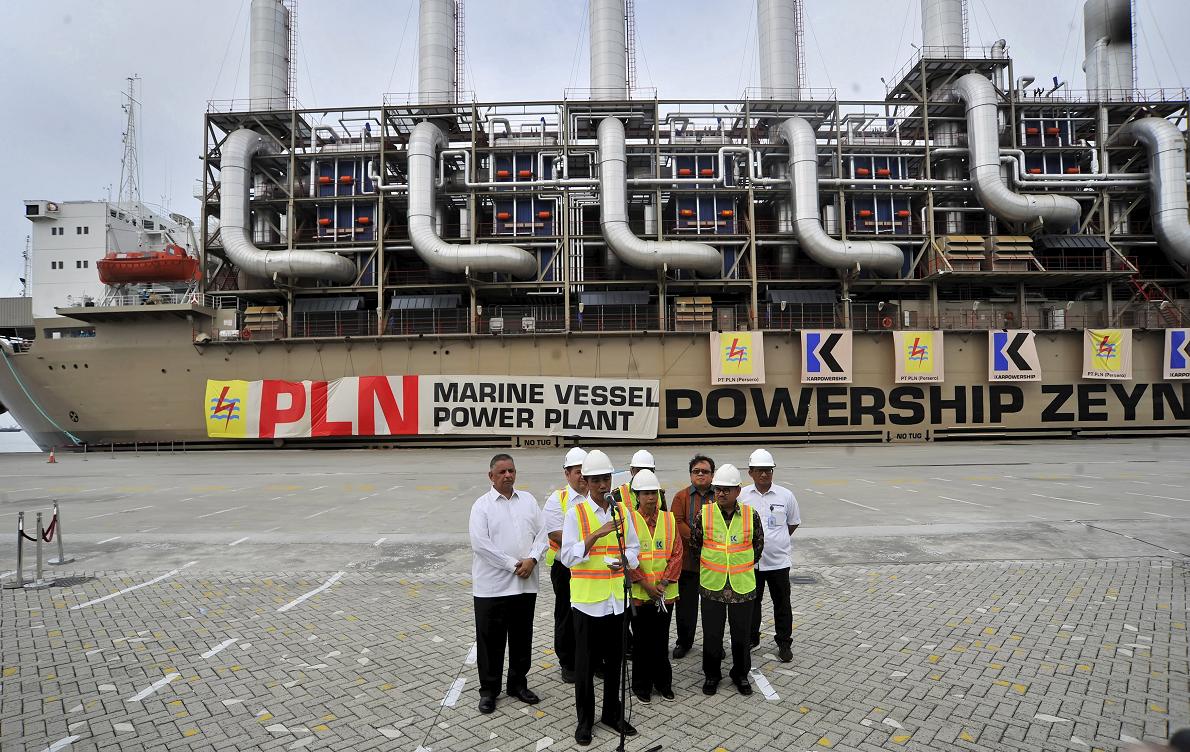
    Indonesia’s president launched the first of five new floating power stations on Tuesday, to serve as a stop gap for the country’s growing demand for power amid sluggish development of land-based plants.

    Southeast Asia’s largest economy has set an ambitious goal of building more than 35 gigawatts of power stations by 2019, the bulk of which are expected to be coal-powered.

    However, the $50 billion mega project has made slow progress since it was launched by President Joko Widodo in April, due to difficulties in acquiring land among other reasons.

    The vessels will mainly serve eastern Indonesia, an area that includes many remote islands to the east of Bali, including Sulawesi, Halmaherah, Maluku and Papua, which has suffered from slow development of power capacity.

    “Every time I go to (outer) regions it’s the same complaint: electricity crisis (and) blackouts,” Widodo said at the launch of the floating power station in Jakarta. The next four vessels will be delivered over the next six months, he said.

    “Because we are an archipelago, I think power stations on top of ships that are mobile like this are best for Indonesia,” Widodo added, referring to the five vessels owned by a subsidiary of Turkey’s Karadeniz Holdings, that will add around 540 MW of capacity to the Indonesian grid.

    Construction of a $4 billion, 2000-megawatt (MW) land-based Batang power station in Central Java has been held up by land acquisition problems since Japan’s Electric Power Development Co Ltd won the contract in 2011.

    State electricity utility Perusahaan Listrik Negara (PLN) sees the heavy fuel oil (HFO) powered floating power stations as a quick solution to meet power needs that will save costs in the short term, as heavy fuel oil is cheaper than diesel and gas.

    “The 35,000 megawatt programme still needs a long time to generate electricity that the community needs,” PLN CEO Sofyan Basir told reporters.

    Power demand is growing at around 12 percent annually in eastern Indonesia, PLN director Machnizon Masri said, adding that the region would face further shortages over the next two years if nothing was done.

    The largest of the five vessels on order, with a capacity to generate 240 MW, will be sent to North Sumatra, which has long faced power shortages due to slow progress completing projects, he said.

    Under the deal, PLN will rent the vessels for five years and only pay for the electricity they generate, Masri said.

    “This is cheaper than gas. We can save 350 billion rupiah ($25.23 million) a year if we use these in North Sulawesi and Gorontalo,” he said.