Retail News CRM

Tag: primark

  • Primark to stop sourcing from Myanmar after fresh probe

    Primark to stop sourcing from Myanmar after fresh probe

    UK fast fashion retailer Primark will make a “responsible exit” from the country following the Ethical Trade Initiative’s (ETI) latest report on human rights and responsible business conduct within the country.

    Primark described the situation in the country as “extremely concerning and very complex”, with international stakeholders holding differing views as to the best course of action for the garment sector.

    Last week, ETI urged companies involved in garment manufacture for export to reassess their presence in Myanmar as there has been “evidence of forced labour and exploitation at a sector level”, with evidence of workers facing long hours, low wages, unpaid overtime, and harassment.

    “This poses significant challenges to our ability to ensure the standards we require to protect the safety and rights of the people who make our clothes and products,” Primark said in a statement.

    The fashion retailer said its only option was to begin working towards a responsible exit from Myanmar. The company will work closely with its partners and stakeholders both there and internationally to make sure the exit follows the UN Guiding Principles on Business and Human Rights.

    “We will continue to monitor for compliance with our Code of Conduct as we work through this, and as an immediate priority, we are looking at what additional measures we can put in place to support workers in our supplier factories through this interim period,” the company said.

  • Primark opens world’s largest fashion store

    Primark opens world’s largest fashion store

    Primark has launched the world’s largest fashion store in Birmingham, the UK. The 160,100sqft store is built over five stories and has been officially recognised by Guinness as the largest fashion store in the world. It has effectively taken over the former Pavilion shopping centre in the city’s downtown heart.

    The entire building is given over to Primark’s ranges and includes several in-store shops, a custom lab for personalised goods, and three dining options including a Disney-themed cafe and the first own-brand Primark cafe.

    Primark’s store design director Sanjay Dihman told that the combination of food-and-beverage offers will attract footfall, along with the new store design and the sheer scale of the store.

    “People will be intrigued by that, and also personalisation, barbers and the beauty studio make it whole collection of different offers that will attract footfall.”

    The store, believed to have cost £70 million to construct, also contains a Duck and Dry salon, a Duck and File Xpress nail boutique, and Joe Mills barber shop.

    The Irish retailer launched in 1969, entering the US market in 2015 where it plans to expand beyond its current nine outlets.

  • Are We ready for gender-neutral changing rooms yet ?

    Are We ready for gender-neutral changing rooms yet ?

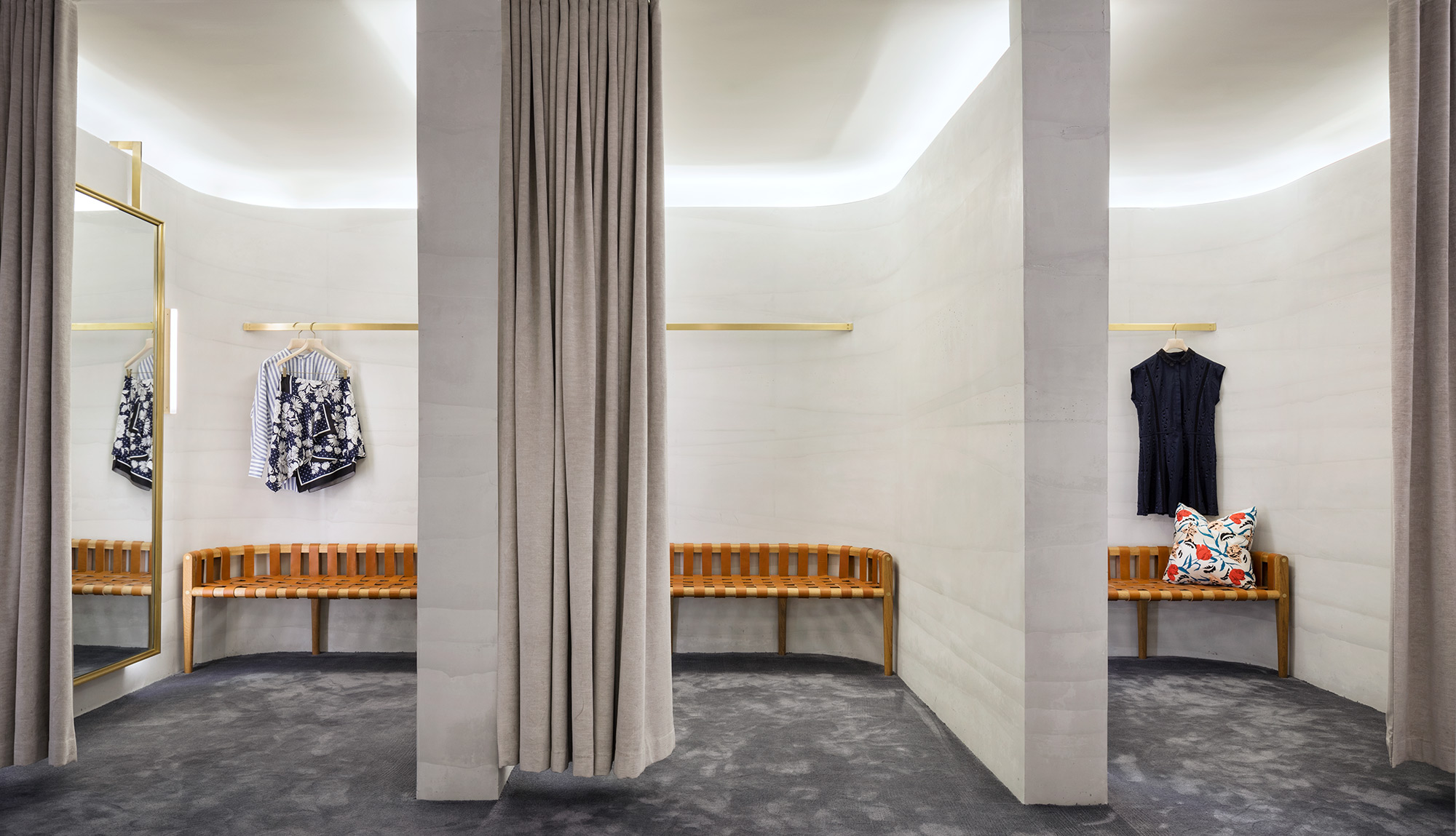
    UK fashion retailer Primark has introduced gender-neutral changing rooms in two stores, prompting both criticism and support from online observers.

    The move comes a year after Topshop began integrating its changing rooms.

    The response to Primark’s announcement has lit up social media in the UK, posing the question: Are shoppers ready for gender-neutral changing rooms?

    Primark says its action follows a challenge from transgender shoppers who said they faced difficulties using gendered changing areas. The new arrangement allows all shoppers to change in the same area, albeit in private booths.

    But critics online have suggested that more needs to be done to address privacy and safety concerns, in particular noting that doors would offer more protection than the current curtains.

    One user noted on Twitter that the perceived threat from men changing in neighbouring cubicles was far greater than any concerns from transgender people.

    “Women should not be made to feel unsafe when shopping,” tweeted another. “You don’t even have doors, so any man can walk in on us changing – so wrong will be boycotting!”

    Another shopper had a positive response, highlighting an advantage of the policy: “I am really happy to hear that Primark [has] swapped to gender-neutral changing rooms – as a disabled couple we often need to help each other try clothes on & need to accompany each other into changing rooms,” she tweeted. “We can’t always do that in some stores. It depends on the staff.”

    Primark responded to the mixed response calmly: “It has been our policy for some time that all customers are welcome to use the fitting rooms of their choice in our stores,” said a spokesperson.

    “As part of our latest in-store design, non-gendered fitting rooms, which are commonplace in retail and other markets in which we operate, have been introduced in our new Bluewater and Hastings stores.”

  • Primark sales rise despite winter

    Primark sales rise despite winter

    Primark sales and profits are on the rise as the UK-headquartered fast-fashion retailer shrugged off a chilly northern winter.

    Parent Associated British Foods (ABF), says Primark achieved a 7 per cent increase in revenue for the first half year and a 4 per cent improvement in profit, despite on the coldest winters on record in Europe.

    However, the growth was all down to a growing European store network, with like-for-like sales down a marginal 1.5 per cent.

    The retailer plans to open new stores at Westfield and Burnley and seven more outside the UK as it continues to grow both its footprint and its market share.

  • Budget fashion star Primark boasts record Christmas sales

    Budget fashion star Primark boasts record Christmas sales

    UK fast-fashion retailer Primark has reported record Christmas sales, largely due to the addition of a massive 300,000sqft of retail selling space.

    In its home market, Primark opened five stores during the 16-weeks to January 6 and during the whole year added 1.1 million sqft of space. By the end of the period the company, a subsidiary of Associated British Foods, operated 350 stores and 14.2 million sqft of trading space.

    Total retail sales rose 7 per cent year-on-year on a constant currency basis.

    “The UK continued to perform well with strong like-for-like sales, a consequent strong increase in share of the total market, and trading which reflected the breadth of our consumer offering,” the company said in a statement.

    Figures for Europe were less inspiring, due to warm weather in October reducing demand for winter clothing.

    The company said its operating margins in the first half year are now expected to be close to those in the same period last year with better buying almost offsetting the adverse effect of the weaker exchange rate between the pound and the US dollar.

  • Impressive Primark sales growth boosted by new stores

    Impressive Primark sales growth boosted by new stores

    The impressive Primark sales growth over the last half year has been boosted by network expansion with the addition of 16 stores across both Europe and the US – and exchange rates.

    The value retailer expects to end the first half with 329 stores, and 13.1 million sqft of trading space – up 12 per cent year-on-year. Like-for-like sales to date are flat compared with last year at a group level, brought down by store cannibalisation in the Netherlands, but fared better at home, up 2 per cent.

    But tourists drawn to Britain by the low pound have driven sales up 10 per cent at the company’s two London flagships.

    Parent company ABF expects Primark’s sales over the half year to be 11 per cent ahead of last year at constant currency rates. At actual exchange rates, sales are expected to be up 21 per cent.

    Kate Ormrod, senior analyst with GlobalData, says margin pressure will remain the big story for Primark in the second half, especially given its commitment to maintaining prices until August.

    “That’s a necessary move given the importance of staying price competitive at the value end of the market. As a result, operating profit margin for the full year is expected to fall. Some form of price increase can still be expected on Primark’s more expensive products, with investment in design and fit used to justify any hikes, ensuring shoppers still receive value for money,” she says.

    “Being known as the price leader affords Primark some protection at a time when disposable incomes are being squeezed; however, ensuring product ranges remain fashionable and relevant will be imperative to retain appeal.”

    Ormrod says this is particularly important as emerging players such as boohoo.com and Missguided continue to encroach on Primark’s fast fashion unique selling point, enabling them to steal customers and share.

    “Further investment in menswear to address new trends will be important to build Primark’s fashion credentials, as its offer remains more basics-driven than those of rivals such as New Look and H&M,” she concluded.

  • New Look loses market share in tough year

    New Look loses market share in tough year

    New Look’s share of the UK clothing market has fallen to 2.6 per cent for calendar year 2016 – from 2.7 per cent in 2015.

    Stores have failed to drive the necessary footfall to return its like-for-like performance to positive territory, with year-to-date (39 weeks to 24 December 2016) UK like-for-likes are down 7.3 per cent with the likes of Next, Primark and Matalan also finding it tough to grow organic stores sales during 2016. Moreover, weaker sales and significant levels of discounting throughout the year led to a 32.6 per cent decline in underlying operating profit to £111.5 million, bringing margins down 4.2 percentage points to 9.8 pr cent.

    The strength of the online competition has dampened the appeal of New Look’s physical stores.

    The fashion-led product mix, attractive pricing and inspiring shopping experience at the likes of boohoo.com, Missguided and Asos continue to encourage New Look’s core shopper base to browse and shop more online reducing the need to visit physical stores. This shift has benefited New Look’s online platform as has its investment in product styling, delivery options and editorial content.

    The double digit growth in online sales highlights that the problem does not lie with product – it is the number of stores New Look operates and their lack of responsiveness during periods of unseasonal weaker.

    Store closures, enhanced visual merchandising, increased product newness and adapting its seasonal mix and phasing is essential to return like-for-likes to growth and limit the threat of the online pure-plays.

    Honor Strachan

  • Lingerie startup Boux Avenue surges into top 15

    Lingerie startup Boux Avenue surges into top 15

    In just five years, British lingerie retail startup Boux Avenue has made it into the top 15 brands in women’s underwear.

    Despite facing growing pressure from Primark and H&M, following significant range expansion and improved design and quality in their underwear and nightwear collections, Boux Avenue continues to build a loyal customer following and differentiate its proposition from the value segment of the market.

    As a result, full year 2015/16 UK sales reached £44.4million – entering the lingerie specialist into the women’s underwear Top 15 with a market share of 1.3 per cent in 2016.

    boux-avenue-store

    Despite pressures on the high street to discount, Boux Avenue has maintained a strict stance on full-price trading and strategic promotions, which has been essential in justifying its mid-market prices and encouraging consumers to buy into the brand all year round rather than wait for sale periods. While midmarket rival M&S remains the UK market leader, it is losing share and traction among a younger shopper base. This provides Boux Avenue with a ripe opportunity to lure M&S’s customers in the 16-30 age bracket away, via investment in trend influenced designs, specialist customer service, and enhanced product fit and innovation – particularly in shapewear where M&S continues to excel in.

    For a young retailer, Boux Avenue has approached physical expansion cautiously, operating 28 UK stores after five years of trading. This has allowed it to build consumer awareness on the high street, but ensures that it is not overexposed during periods of restricted discretionary spending and as consumer spend continues to shift online.

    Improving brand accessibility via selling through third party online channels including Asos and Very will fuel further sales growth and win the appeal of new customers in 2017.

  • Primark sales flourish on new store openings

    Primark sales flourish on new store openings

    Despite third quarter like-for-like sales being hit by unseasonal weather, especially in April, UK-based discount apparel chain Primark has posted a solid 40-week performance – with a strong third quarter boosting overall growth.

    Primark sales benefitted from the weakness of the pound towards the end of the quarter, and from the 800,000 sqft in selling space added since the beginning of the financial year.

    The company ended the period with 310 stores and 12 million sqft of selling space. Primark is continuing its march throughout Europe and the US, and opened 11 stores in the quarter, including three in the UK, its third in the US and its first in Arese, northwest of Milan in Italy.

    Early trading in these new stores has been promising, especially in its recent US and Italian ventures – while new stores in France continue to impress, highlighting the appetite for the brand in the country. Having previously been overly cautious with its store expansion strategy, Primark’s recent bold attitude is set to continue with plans to add a net 300,000 sqft of space in the fourth quarter – including two more stores in the US, and also doubling its Creteil store in Paris.

    Despite the uncertainty brought on by the UK’s EU referendum result, Primark remains optimistic and will forge ahead with its expansion plans. Given its strong value proposition and the clear demand for its offer, Primark is well placed to benefit as shoppers’ discretionary spend comes under further pressure – though retaining its competitive pricing will be crucial.

    Consumers now place far more importance on quality and value for money – ensuring Primark cannot scrimp on fabric, quality or fit. While Primark continues to shun the online channel, it must invest in its in-store experience, with focus needed on reducing queuing times at fitting rooms and at the till, as well as customer service.

  • Uniqlo US quietly closing stores

    Uniqlo US quietly closing stores

    Tokyo-based fast-fashion brand Uniqlo US, a 1700-store global chain with 43 US outlets, has been retrenching amid slowing sales.

    It has quietly closed five stores in the US since January, all in suburban shopping malls.

    “The US is very important to the company,” says spokesman Aldo Liguori. “We are focussing on large cities where we can open large stores.”

    As well as urban markets, Uniqlo is beefing up its customer service, says Liguori.

    Chief executive Tadashi Yanai last year said brand penetration in big cities such as New York, San Francisco and Chicago was good, “but not in the suburbs”.

    Owned by Fast Retailing, which has seven clothing brands, Uniqlo said last year that it would be scaling back its US expansion after opening 17 stores in 2014. It opened four stores last year, and has announced that three stores will be opened this year.

    Meanwhile, the brand may face competition from Irish-based discounter Primark, which is expanding in the US.

  • M&S, Debenhams stand most to gain from BHS breakup

    M&S, Debenhams stand most to gain from BHS breakup

    Only the very bravest of investor should consider retaining BHS in its current dilapidated state. But if such a buyer cannot be found, and a BHS breakup ensues, with the store estate sold to other retailers, Marks & Spencer and Debenhams would be the main beneficiaries.

    As the deadline for bids for BHS looms, hopes are rising that a buyer can be found for the entire store estate and that its 11,000 employees can be protected. Even if such a buyer is found, it is likely to have to conduct major surgery to revive the moribund brand. Verdict data shows that it has consistently lost market share to its competitors in all its key sectors, and its weak multichannel offer, dated brand and underinvested store environment mean any buyer would have to think seriously about retaining the BHS name.

    BHS’ clothing proposition has become ever more irrelevant over the years, and many of its clothing shoppers have already defected to more agile competitors, leading to its market share more than halving in the 10 years to 2015.

    BHS clothing market share 2010-15

    BHS’ predominantly 45+ shopper base enjoy the convenience of shopping for a disparate variety of products under one roof, which means that department store rivals such as Debenhams and M&S would be first in line to benefit from its fallout. The grocers should also receive a much-needed boost given the similarity of their clothing proposition to BHS in terms of design and affordability.

    This is backed up by looking at where BHS clothing shoppers also tend to shop (from Verdict’s March 2016 How Britain Shops survey of 10,000 consumers) – M&S is the clear leader, and should be able to translate this into an increase in market share.

    Where BHS clothing shoppers also shop for clothing

    Clothing specialists at the value end of the market, such as Matalan, Primark and New Look are also likely to benefit; as are online pureplays such as Amazon – albeit to a lesser extent.  It is, however, those retailers that make a concerted effort to draw in BHS shoppers, through customer acquisition initiatives such as targeted promotions or local marketing campaigns that will see the maximum gains.

    BHS homewares market share 2010-15

    BHS’ unopposed trudge toward mediocrity has had a significant impact on where its remaining shoppers are likely to now go for homewares purchases. The retailer’s brand positioning means its shoppers will have also shopped at the ever growing homewares discounter set, like B&M and Home Bargains. However, it is Amazon and Argos, both value focused retailers with modern and extensive delivery/channel offers that have been the main beneficiaries of disaffected BHS shoppers in the past and will undoubtedly be so in the future.

    High street retailers M&S and Debenhams are also in line to see a marginal upswing as high street focused customers seek out alternatives. The former has the most similar customer profile to BHS and hence is more likely to be a first choice. However, M&S has made some strategic moves to appeal to younger, more fashion-conscious homewares shoppers in recent years, therefore BHS’ customers may be a little surprised about what is on offer when they visit, aside from its core bedding and bathroom offer.

    Living room textiles: Home Retail Series market share 2015

    BHS is currently strongest in softer, more aesthetic categories, such as living room textiles and lighting, as opposed to functional products such as cookware. Therefore its demise would be unlikely to have a significant impact on the grocers. Conversely, Dunelm and Next share a similar emphasis on textiles and design-led categories, and as such, their already strong performance in the homewares category is likely to be bolstered further should BHS disappear altogether.
     

  • Primark growth eroded by currency volatility

    Primark growth eroded by currency volatility

    Discount apparel retailer Primark has reported sales growth of 13 per cent to £5.3 billion at constant exchange rates for the year to September 12, demonstrating its continuing dominance in the value clothing market.

    However it was unable to escape the effects of currency volatility, reducing its total sales growth at actual exchange rates to eight per cent.

    While these results are in line with the expectations outlined in September this year, they are compounded by Primark’s two per cent increase in operating profit to £673 million at actual exchange rates – modest compared to growth of five per cent at constant exchange rates, observes Rebecca Marks, consultant at Conlumino.

    Sales growth was driven predominantly by a nine per cent increase in selling space – an additional 93,000 sqm that takes the total footprint to 1.04 million sqm. Considerable expansion in Germany, Belgium and the Netherlands resulted in marginal like for like growth at constant exchange rates of one per cent, as international customers chose to shop more locally, causing sales in existing stores to decline. Primark opened its first US store in Downtown Crossing in Boston in September 2015, with 7200 sqm of selling space.

    Further international expansion planned in the 2015/16 trading year will see a greater increase of 140,000 sqm across the year in northeastern US, Spain, Italy and France – its most successful market entry to date.

    “However, as the retailer continues to invest in international diversification, it endures the risk of substantial movement in currency markets, subjecting the retailer to negative transactional and translational currency exposures – a major challenge that Primark faced this financial year,” explains Marks

    “However, Primark believes a high proportion of this potential impact has been mitigated in-house by taking a shrewd approach to buying new season merchandise for next year.”

    Marks says Primark saw a return to a more normal level of markdown this year, following exceptional trading in 2013/14, resulting in a lower operating profit margin of 12.6 per cent, down from 13.4 per cent in its last financial year.

    “Inconsistent trading over the year resulted in moderated demand; while an unseasonably warm Autumn 2014 impacted sales in the early part of the trading year, Spring 2015 trading was also held back by cool weather. However, a strong Christmas in 2014 limited the impact of these challenging trading periods on its overall performance for the financial year,” observed Marks.

    “Although Primark actively resists plans to go down the online route that many of its fashion peers have chosen, the retailer shows no signs of slowing down. As parent ABF looks to maintain investment in Primark’s expansion opportunities, Primark will continue to see its budget-priced clothing ardently welcomed in all new territories, with its increased scale of distribution infrastructure helping to meet demand,” Marks concluded.