Retail News CRM

Tag: privacy

  • Google Assistant is secretly listening to you, it turns out

    Google Assistant is secretly listening to you, it turns out

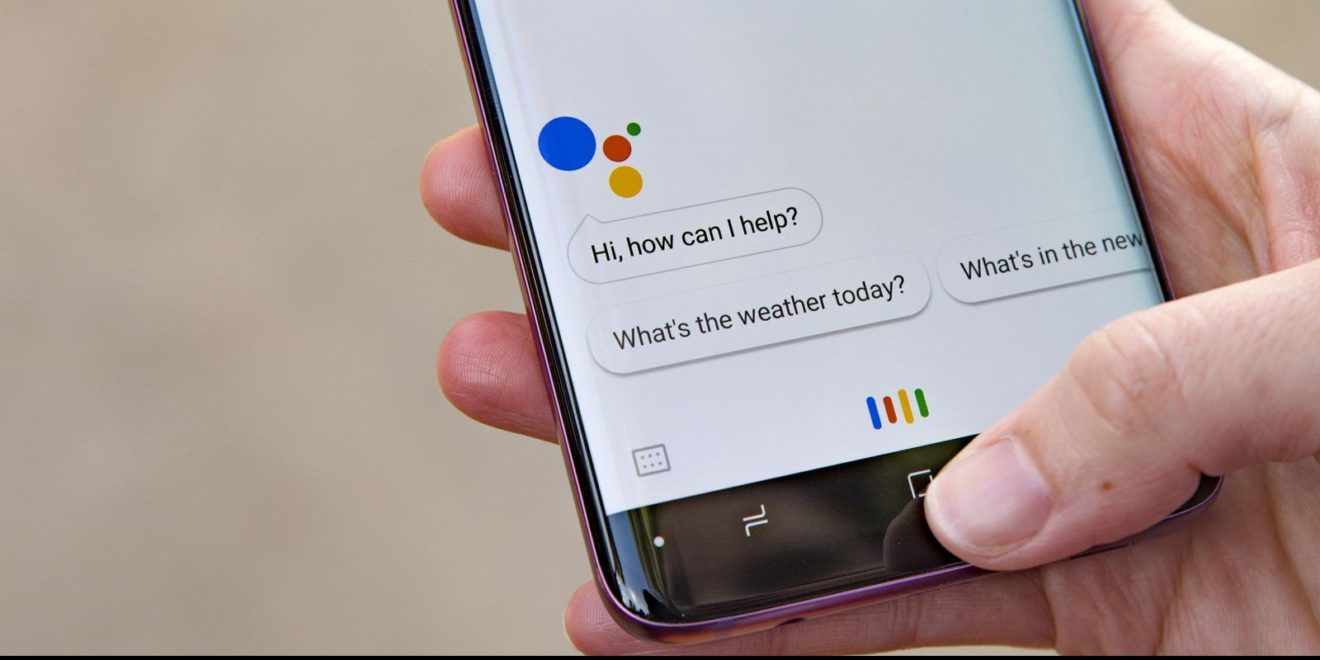
    In a strange turn of events, Google allegedly confirmed that Google Assistant on your phone or smart speaker may be recording your audio without your knowledge, but just “at times”.

    Google representatives on Tuesday told the Parliamentary Standing Committee on Information Technology that Google employees listen to some recordings of conversations between users and Google Assistant.

    Back in 2019, Google confirmed that its employees occasionally listen to conversations between users and Google Assistant. “We take a number of precautions to protect data during the human review process-audio snippets are never associated with any user accounts and language experts only listen to a small set of queries (around 0.2 percent of all user audio snippets), only from users with VAA turned on,” Google stated at the time.

    That’s all in the fine print but as it turns out, sometimes audio was recorded by the Google Assistant on a smartphone or smart speaker even when a user had not triggered the AI by saying Ok Google. IndiaToday sources claim that in response to a question from BJP MP Nishikant Dubey, the Google team confirmed the aforementioned.

    Google’s privacy policy states, “Occasionally, the Assistant will activate when you didn’t intend it to because it incorrectly detected that you wanted its help. If that happens, just say Hey Google, that wasn’t for you, and the Assistant will delete the last thing it sent to Google.”

    That’s all fine and dandy but there’s nothing about the times when Google Assistant is secretly listening to your conversations. How would you know in the first place? It’s a major scandal that has the potential to blow way out of proportion! We’re monitoring the situation closely and we’ll keep you posted if there’s any further information.

  • Apple protects email users from having their personal data collected

    Apple protects email users from having their personal data collected

    When you open an emailed newsletter, there are images that are not included in the message but are stored on a separate server. When you open the email, this server gets a message to  open the image along with information such as your approximate location, the device you are using, and the time that you opened the email. Bloomberg says that the data is used by publishers and brands as a way to determine how well their marketing strategy is working.

    But in its new role as internet privacy cop, Apple has a feature called “Mail Privacy Protection” that will automatically download the data held on the separate server whether you opened the email or not. But Apple will not give away your personal data such as location and the name of the device you are wielding. Considering that roughly 50% of all email is opened on an Apple app (says analytical firm Litmus Software), Apple is once again using its power to keep user data from getting into the hands of advertisers.

    According to data from marketing firm Warc, from this past March 22nd, ad spending on iOS rose 10%. During the same time period, ad spending on Android rose 21%. But how much is Apple really getting hurt?

    Andy Yen, CEO of encrypted email provider Proton Technologies says about Apple that “They’re making a big focus on privacy, but Apple is interested in the advertising market and already makes a lot of money there.”

    The thing to remember is that Apple can afford to accept fewer ads than Google and Facebook because of how each of the tech firms make the bulk of their profits. Apple sells devices while companies like Google and Facebook sell ads. Not only do ad sales provide those companies with big bottom lines to appease stockholders, they also help subsidize the price of the Google and Facebook devices you buy allowing them to be more affordable.

  • Huawei’s 7th Cyber Security and Privacy Protection Transparency Center opens its doors in China

    Huawei’s 7th Cyber Security and Privacy Protection Transparency Center opens its doors in China

    Huawei has opened its 7th and largest Global Cyber Security and Privacy Protection Transparency Center in Dongguan, China, with representatives from GSMA, SUSE, the British Standards Institution, and regulators from the UAE and Indonesia speaking at the opening ceremony. During the opening ceremony, H.E. Dr. Mohamed Hamad Al Kuwaiti, head of cybersecurity, UAE, delivered a keynote on the importance of cyber cooperation for a resilient and vibrant digital future.

    Along with the opening of the new center, Huawei also released its Product Cyber Security Baseline, marking the first time the company has made its product security baseline framework and management practices available to the industry as a whole. These actions are part of the company’s broader efforts to engage with customers, suppliers, standards organizations, and other stakeholders to jointly strengthen cybersecurity across the industry.

    “Cybersecurity is more important than ever,” said Ken Hu, Huawei’s rotating chairman, at the opening of the Dongguan center. “As an industry, we need to work together, share best practices, and build our collective capabilities in governance, standards, technology, and verification. We need to give both the general public and regulators a reason to trust in the security of the products and services they use on a daily basis. Together, we can strike the right balance between security and development in an increasingly digital world.”

    Over the past few years, industry digitalization and new technologies like 5G and AI have made cyberspace more complex than ever, compounded by the fact that people have been spending a greater portion of their lives online throughout the COVID-19 pandemic. These trends have led to a rise in new cybersecurity risks.

    During his speech, Hu also emphasized the importance of cybersecurity and shared responsibility to Huawei. Huawei has been committed to cooperative cybersecurity as early as 2000. There are now more than 3,000 cybersecurity R&D personnel in Huawei. Moreover, Huawei’s annual R&D investment in cybersecurity and privacy protection accounts for about 5% of its total R&D expenses.

    Huawei opened the new Global Cyber Security and Privacy Protection Transparency Center in Dongguan to address these issues, providing a platform for industry stakeholders to share expertise in cyber governance and work on technical solutions together. The center is designed to demonstrate solutions and share experience, facilitate communication and joint innovation, and support security testing and verification. It will be open to regulators, independent third-party testing organizations, and standards organizations, as well as Huawei customers, partners, and suppliers.

    H.E. Dr. Mohamed Hamad Al Kuwaiti, head of cybersecurity, UAE, said, “A public-private partnership will be critical to build collaboration among private, public and government entities so as to establish a globally trusted digital oasis in the UAE.”

    To further a unified approach to cybersecurity in the telecoms industry, organizations like GSMA and 3GPP have also been working with industry stakeholders to promote NESAS Security Assurance Specifications and independent certifications. These baselines have seen wide acceptance in the industry, and will play an important role in the development and verification of secure networks.

    Mats Granryd, director general of GSMA, spoke at the opening of Huawei’s new center. “The delivery of existing and new services in the 5G era will rely heavily on the connectivity provided by mobile networks and will fundamentally depend on the underlying technology being secure and trusted,” he said. “Initiatives such as the GSMA 5G Cybersecurity Knowledge Base, designed to help stakeholders understand and mitigate network risks, and NESAS, an industry-wide security assurance framework, are designed to facilitate improvements in network equipment security levels across the sector.”

    Hu also highlighted the importance of knowledge sharing. At the event, Huawei also released its Product Cyber Security Baseline, the culmination of over a decade of experience in product security management, incorporating a broad range of external regulations, technical standards, and regulatory requirements. The Baseline, together with Huawei’s other governance mechanisms, helps ensure the quality, security, and trustworthiness of the company’s products. Over the years, Huawei has built over 1,500 networks that connect more than three billion people across 170 countries and regions. None of these networks have ever experienced a major security incident.

    Hu emphasized that the more knowledge and best practices we share, the more effectively we can strengthen cybersecurity as a community.

    According to Huawei, the baseline covers 15 categories, 54 requirements, and 112 specific implementation instructions and interpretations, ensuring the high-quality, security, and trustworthiness of Huawei products. It includes 4 categories of legal compliance requirements (prevention of backdoors, prevention of malware and malicious behaviors, protection of user privacy and protection of communication freedom) and 11 categories of security and functional assurance requirements (including secure coding, compilation, sensitive data protection, encryption, secure boot, integrity protection, and lifecycle management).

    “This is the first time we’ve shared our security baseline framework with the entire industry, not just core suppliers,” said Sean Yang, director of Huawei’s Global Cyber Security and Privacy Protection Office. “We want to invite all stakeholders, including customers, regulators, standards organizations, technology providers, and testing organizations, to join us in discussing and working on cybersecurity baselines. Together, we can continuously improve product security across the industry.”

    At present, the industry still lacks a standards-based, coordinated approach, especially when it comes to governance, technical capabilities, certification, and collaboration.

    “Cybersecurity risk is a shared responsibility,” concluded Ken Hu in his opening remarks. “Governments, standards organizations, and technology providers need to work closely together to develop a unified understanding of cybersecurity challenges. This must be an international effort. We need to set shared goals, align responsibilities, and work together to build a trustworthy digital environment that meets the challenges of today and tomorrow.”

    Two years ago, Huawei opened a similar center in Brussels, with others located in the UK, Canada, Germany, Italy, and the UAE.
  • Apple updates AirTags to fix major privacy issues

    Apple updates AirTags to fix major privacy issues

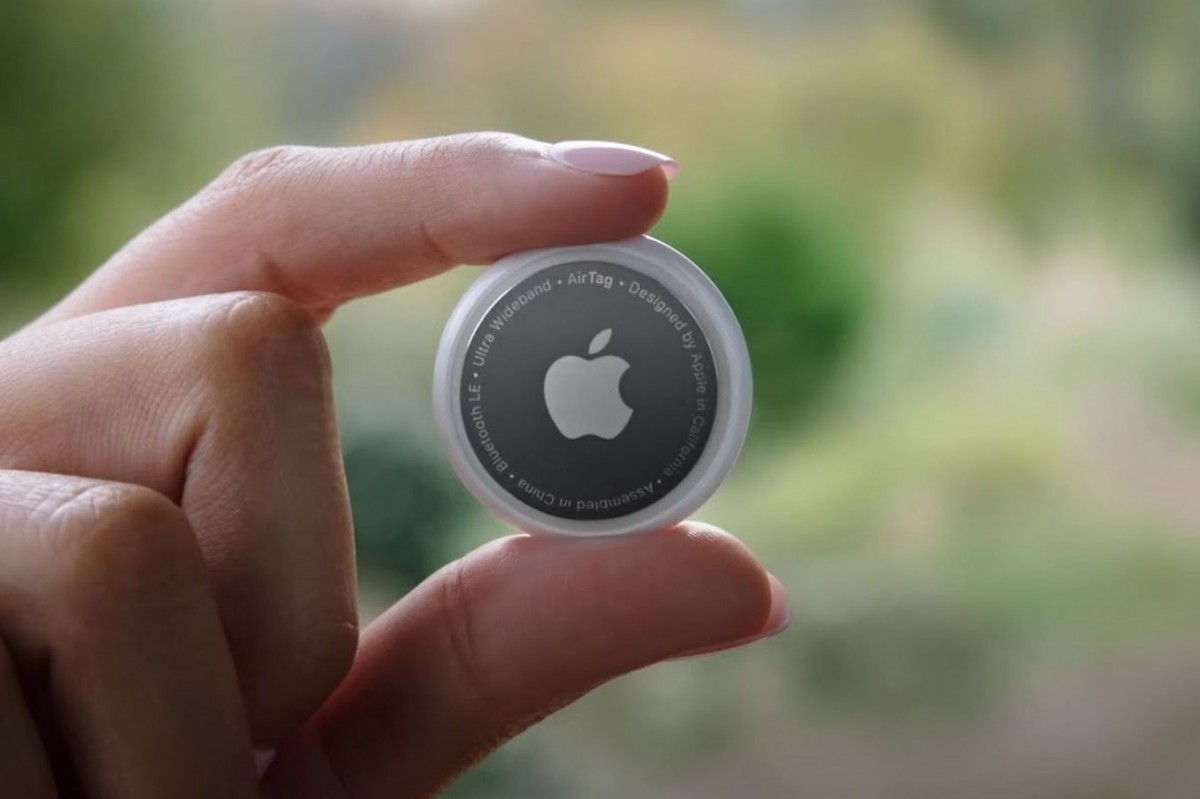
    Apple announced earlier today that an important update is rolling out to its new AirTags, which is meant to address privacy concerns raised by many users soon after the gadget’s market launch.

    It’s enough to slip an AirTag into someone’s backpack and you’ll be able to track the person for as long as it carries it. The privacy issue doesn’t affect iPhone users, since they will be notified if a stranger’s AirTag is moving with them for a certain period of time (usually several hours).

    Until now, Android users would only be notified after three days if they would be stalked/tracked by someone with the help of an AirTag. Thankfully, Apple announced that it’s now rolling out an update that addresses this privacy issue.

    Following up on our commitment to continue to improve AirTag’s privacy and security, starting today we will be updating the time period after which an AirTag that is separated from its owner will play a sound when moved. This time period is changing from three days to a random time between 8 and 24 hours.

    Obviously, Apple is referring to Android users who will now be notified if any AirTags are moving with them for up to 24 hours. In addition to the new update, Apple confirmed that an Android app that will be able to detect AirTags will be released soon.

  • DuckDuckGo reveals how you can block Google’s new method of tracking Chrome users

    DuckDuckGo reveals how you can block Google’s new method of tracking Chrome users

    Privacy-first search engine DuckDuckGo on Friday posted a blog that discussed Google’s new data-tracking system called Federated Learning of Cohorts (FLoC). Using an algorithm and browsing histories, Google groups together those with similar interests and demographics. FLoC replaces the use of cookies to track users and feed them ads and other targeted content.

    When Google added FLoC to Chrome, it did so without giving users a choice as the tracking system is enabled by default. As DuckDuckGo noted in its blog post, “The criteria for being opted into FLoC are somewhat hidden and conflicting.” As scary as that sounds for those who value their privacy, there are things that you can do to block FLoC from trying to fit you into a category.

    Google claims that FLoC is good for privacy. And while FLoC, in theory, replaces third-party cookies, the latter won’t be removed until 2023 at the earliest. Thus, Google is getting to track users via two different methods for the time being.

    With FLoC, the websites you visit will be able to target ads since they will know things about you from the moment you enter the site. While Google says that you are placed in a group of others with the same interests in demographics, you are more protected as an individual. However, the data that is available to websites, combined with your IP address (which these sites receive automatically), means that you remain tracked as an individual.

    It seems fairly straightforward, but if you don’t want to be tracked by Google Chrome, use a different browser on your iOS and Android devices and on the desktop. If you own an iPhone and don’t like Safari, this writer has started using the recently updated version of Opera Browser which is available for iOS and Android). Besides Opera, on Android the Samsung Internet Browser would be a great choice to replace Chrome.

    If you must continue to use Chrome, DuckDuckGo says that you might be able to avoid FLoC by changing the settings on the Chrome browser. Some suggestions include logging out of your Google account, avoid syncing your history data with Chrome, disabling “Web & App Activity” or “Include Chrome history and activity from sites, apps, and devices that use Google services” in Google Activity Controls. In Google Ad Services you should shut down “Ad Personalization” or “Also use your activity & information from Google services to personalize ads on websites and apps that partner with Google to show ads.”

    Since Google has been profiling users for years, even if FLoC reduces you to a series of numbers based on your interests and demographics, it will only be a matter of time until the code is broken and your identity becomes known. Google says that FLoC is 95% as effective as third-party cookies and DuckDuckGo says that this means that Google will continue “to target people based on age, gender, ethnicity, income, and many other factors. This targeting, regardless of how it’s done, enables manipulation, discrimination, and filter bubbles that many people would like to avoid.”

    DuckDuckGo has also enhanced its tracking blockers on its extension. This protection from FLoC appears on version 2021.4.8 and newer of the DuckDuckGo extension and is also in the process of being approved for the Chrome Web Store. Keep in mind though that by default it will set your default search engine and homepage to DuckDuckGo Search.

    Several organizations dealing with privacy pleaded with Google not to use FLoC, but to no avail. While Google makes it sound as though it is trying to improve privacy online, replacing third-party cookies with a tracking system that is enabled by default certainly sounds just as bad.

  • 1.3 million Clubhouse users have their personal data leaked

    1.3 million Clubhouse users have their personal data leaked

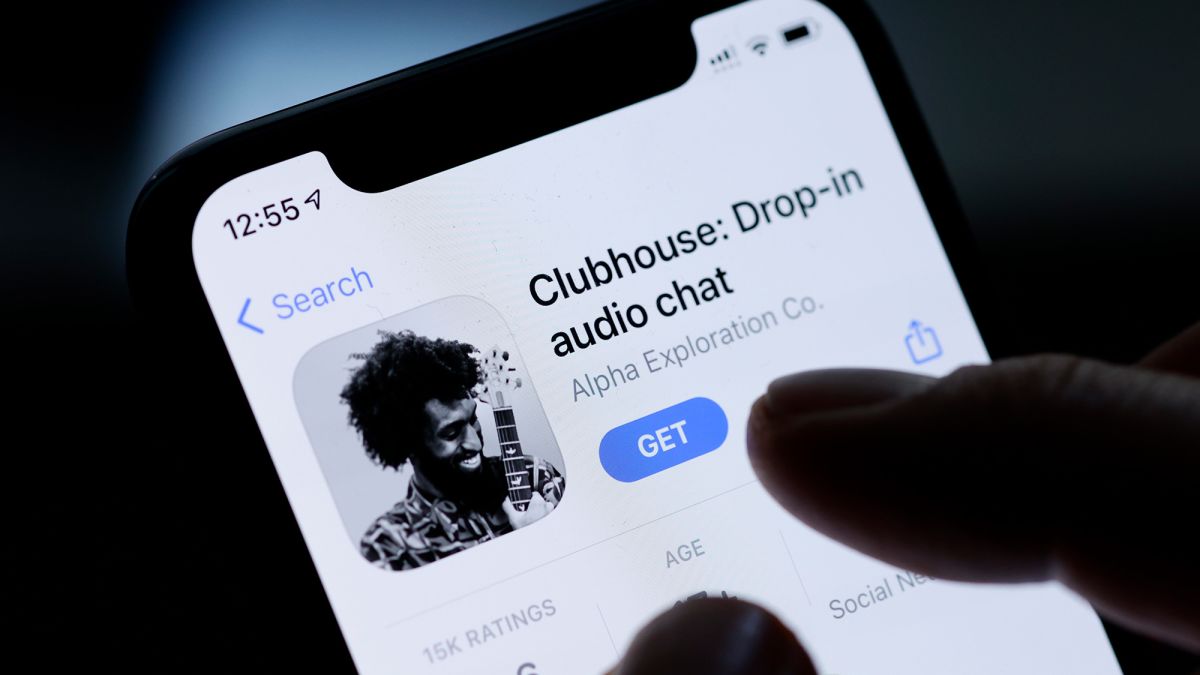
    For those who have been fast asleep for the last few months, one of the fastest-growing apps has been Clubhouse. It is an audio-only chatroom and at the moment it requires an invitation to join. It also is only available for iOS and a version for Android is reportedly months away.

    Cybercrooks have used Clubhouse for some of their nefarious schemes including one we told you about yesterday. Fake ads on Facebook attempted to get victims to join the non-existent Clubhouse for PC. Signing up for this fake software resulted in malware being sent to users’ devices although the ads have been discontinued.

    The latest issue to pop up around Clubhouse is a major leak that exposed 1.3 million scraped user records. The incident occurred a few days after more than one billion user records from Facebook and LinkedIn were offered for sale online. The difference is that the Clubhouse records were leaked for free on a widely read hacker site.

    The data that was leaked included a subscriber’s User ID, Name, Photo URL, Username, Twitter handle, Instagram handle, Number of followers, Number of people followed by the user, Account creation date and the user profile name used by the person who invited this subscriber. In other words, it is a treasure trove of information for hackers.

    Clubhouse has responded by saying that it has not experienced a data breach and that some of the information supposedly leaked has been available for free via the company’s API. That alone brings up some questions about the user privacy policy put into place by Clubhouse. Why should there be a need for all of this data to be available (financial information like credit card numbers were not included)?

  • Facebook and the very real problem of keeping student data private

    Facebook and the very real problem of keeping student data private

    After a serious data privacy scandal that happened on Facebook a few years ago, almost everybody knows about the security issues with this social network. Experts say that the company has a long track record of incidents that prove inadequate measures for users’ data protection. Repeated failures make many of us worried about the safety of our personal information. Keep reading the article if you want to learn more about the problem itself and the ways of dealing with it.

    The Facebook data privacy scandal

    It all started in 2009 when the New York Times reported an incident in which private users’ information was shared publicly. Two years later, after an FTC investigation, Facebook promised to address concerns about tracking and sharing personal information.

    In 2013, another data failure happened. It turned out that there was a bug, which exposed email addresses and phone numbers of 6 million accounts. It’s important to note that this data had not been given to Facebook by its users. Instead, it was vacuumed from the contact lists of other social network users who were acquainted with a particular person.

    In 2014, Cambridge Analytica joined the investigation of data security on Facebook. To begin with, Aleksandr Kogan asked users of a particular review platform to add the thisisyourdigitiallife app to their Facebook account. This allowed him to gather some demographic data and information about users’ likes, friends lists, and private messages, which he shared with Cambridge Analytica.

    Once Mark Zuckerberg revealed this, he claimed that Kogan’s app was immediately banned on Facebook. He also asked Cambridge Analytica to officially confirm that they had deleted all the data acquired from the app, so they provided formal certifications of that.

    But in 2018, Christopher Wylie, the creator of thisisyourdigitiallife app reported that Cambridge Analytica harvested up to 87 million profiles instead of 50, as was stated before. He said that the data was used to develop “psychographic” profiles of target users with the pro-Trump advertising campaign.

    After that, another investigation by FTC was opened to determine if Facebook violated the settlement terms from the 2011 investigation. It was revealed that Facebook was involved in data-sharing partnerships with a few big manufacturers, such as Apple, Microsoft, Amazon, Samsung, and BlackBerry. Later, in 2020, Facebook admitted to sharing its data with approximately 5,000 third-party developers

    Use essay writing services carefully

    As you can understand, privacy is one of the most acute issues in the era of social networks. It’s really hard to protect large sets of personal information so they are not used by third parties. Hence, everybody must be aware of different ways to keep their data secure. Especially, if you are a student that frequently shares study materials with peers or instructors, you should be very careful. Remember that when some experts or services similar to Edubirdie do essays for you , you should avoid providing personal details to them. If possible, don’t share your address, school name, and phone number to save your student image in case of data leakage.

    Danger for students

    Students should be aware that they are quite vulnerable to data exposure. Since Facebook harvests and shares different types of data, such as messages and voice call records, young people must know that they are at risk. If your data is incidentally or accidentally exposed, you might become a victim of cybercriminals.

    Also note, that deleting or deactivating Facebook apps can’t prevent you from all the dangers. Sounds a little bit frightening, doesn’t it? But the good news is that Facebook is actively developing a Clear History button that allows users to remove some database records.

    How to avoid privacy issues?

    To secure your data, you should review  Facebook’s Terms of Service, Data and Cookies Policy first. According to these documents, the company prevents apps from collecting information about individual users. Hence, if you want to disable third-party use of this social network, including features like Login With Facebook and apps that rely on FB profiles (like Tinder), go to the Settings menu and click a special button. Moreover, you can manually check if your data was shared with Cambridge Analytica a few years ago. To find out if your personal information was collected, go to Facebook Help page.

    Final thoughts

    Even though Facebook is one of the largest social networks in the world, it has some major issues. It’s really difficult to rely on its security system and trust its developers after all the scandals that have recently happened. But still, this company does its best to protect all loyal users, which deserves respect.


    Author’s BIO

    Julius Sim is the Head of the Support Team at Edubirdie, which is a leading assignment writing company in the world. He is responsible for high-quality customer service and does his best to meet clients’ needs. Julius believes that a good user experience and great customer support are the keys to Edubirdie’s success.


    https://www.pexels.com/photo/photo-of-laptop-near-plant-927629/

    https://www.pexels.com/photo/access-app-application-apps-267399/


  • Tesla’s In-Car Cameras Raise Privacy Concerns: Report

    Tesla’s In-Car Cameras Raise Privacy Concerns: Report

    Tesla’s use of in-car cameras to record and transmit video footage of passengers to develop self-driving technology raises privacy concerns, influential U.S. magazine Consumer Reports said on Tuesday.

    Consumer Reports said the usage potentially undermines the safety benefits of driver monitoring, which is to alert drivers when they are not paying attention to the road.

    “If Tesla has the ability to determine if the driver isn’t paying attention, it needs to warn the driver in the moment, like other automakers already do,” said Jake Fisher, senior director of Consumer Reports’ auto test center.

    Tesla Inc’s use of in-car cameras to record and transmit video footage of passengers to develop self-driving technology raises privacy concerns

    Automakers such as Ford Motor and General Motors, whose monitoring systems do not record or transmit data or video, use infrared technology to identify drivers’ eye movements or head position to warn them if they are exhibiting signs of impairment or distraction, the magazine said.

    Tesla did not immediately respond to a Reuters request for comment.

    The Palo Alto, California-based carmaker’s internal cameras are also a point of contention in China, where the military banned Tesla cars from entering its complexes, citing security concerns.

    Tesla Chief Executive Officer Elon Musk said last week his company would be shut down if its cars were used to spy.

  • Judge rules that Google secretly collects personal data even in ‘Incognito Mode”

    Judge rules that Google secretly collects personal data even in ‘Incognito Mode”

    Google is facing a class-action lawsuit filed by consumers who claim that the company continues to collect personal data from users even when the users browse using the incognito mode designed to keep their personal data private. The plaintiffs allege that even with data collection turned off in Chrome, Google has other options that can be used to collect information. Google asked that the court throw out the case, but a federal judge on Friday denied that request.

    The judge was none other than Lucy Koh, who became known for her handling of the original Apple vs. Samsung patent infringement case in which she originally awarded Apple close to a billion dollars. That amount was eventually reduced to $539 million and eventually, a settlement between the two firms was announced. In Koh’s ruling on Friday, she wrote that “The court concludes that Google did not notify users that Google engages in the alleged data collection while the user is in private browsing mode.” Google spokesperson Jose Castaneda said in an emailed statement that “We strongly dispute these claims and we will defend ourselves vigorously against them. Incognito mode in Chrome gives you the choice to browse the internet without your activity being saved to your browser or device. As we clearly state each time you open a new incognito tab, websites might be able to collect information about your browsing activity during your session.”

    Back in June, three Google users filed a complaint claiming that the firm runs a “pervasive data tracking business.” In that complaint, the plaintiffs said that Google collects data like a user’s browsing history and other activity on the web even after using “safeguards” to block their personal data from being used such as the Incognito private browsing mode. Google says that the plaintiffs agreed to Google’s privacy policy which explains explicitly how it collects personal data.

    The court filing (aka the “complaint”) says, “Google knows who your friends are, what your hobbies are, what you like to eat, what movies you watch, where and when you like to shop, what your favorite vacation destinations are, what your favorite color is, and even the most intimate and potentially embarrassing things you browse on the internet — regardless of whether you follow Google’s advice to keep your activities “private.”

    “Google also makes clear that ‘Incognito’ does not mean ‘invisible,’ and that the user’s activity during that session may be visible to websites they visit, and any third-party analytics or ads services the visited websites use,” according to a court filing submitted by Google. For your legal eagle types (you know who you are), the case is called Brown v. Google LLC, 20-3664, U.S. District Court, Northern District of California (San Jose).

  • Facebook appears to be using misleading data to attack Apple’s new privacy feature

    Facebook appears to be using misleading data to attack Apple’s new privacy feature

    Starting with iOS 14.5, iPhone users will be asked to decide whether they want to opt-in to getting tricked by third-party apps. Allowing the trackers to do their thing means that when users do make a purchase online or merely visit an online store, they will get inundated with ads for related products on their phones and tablets. Facebook, which generated nearly $85 billion in ad revenue during the fourth quarter of last year, says that its advertising business could shrink by as much as 50% because of Apple’s new feature. The social media network also claims to be concerned for small businesses that will be hurt if most iOS users, as expected, decide not to allow themselves to be tracked.

    Facebook has been giving evidence of the damage that Apple could do to small businesses by citing certain examples. However, a pair of marketing professionals have written a piece in the Harvard Business Review claiming that this so-called evidence uses figures that have been “overstated,” “cherry-picked,” “misleading,” and are part of a disinformation campaign.”

    For example, Facebook claimed in a full-page newspaper ad that “Without personalized ads, Facebook data shows that the average small business advertiser stands to see a cut of over 60% in their sales for every dollar they spend on ads.” However, as marketing pros Bart de Langhe and Stefano Puntoni wrote in the Harvard Business Review, this data is misleading because Facebook bases the data on a metric known as ROAS or return on ad spend. The information this provides is the amount of revenues associated by advertising as opposed to the amount of revenue caused by advertising.

    If certain consumers were going to make purchases anyway, their spending is not caused by the advertising and the resulting decline would be less than 60%. As the two marketing pros wrote, “The problem with the 60% figure is that Facebook doesn’t report anything about the two kinds of campaigns it was comparing. For all we know, they might involve different industries, different companies, different products, different times, different places — and if they did, then Facebook’s comparison wouldn’t mean much. In fact, it might just show that companies who knew their customers well achieved a higher return on advertising spend than companies that didn’t.”

    Besides the above example, Facebook also incorrectly repeated certain figures. For example, Facebook posted on its website and in its ads that “Forty-four percent of small to medium businesses started or increased their usage of personalized ads on social media during the pandemic, according to a new Deloitte study.” But that figure was misleading; the authors looked at Deloitte’s numbers which included the percentage increase in targeted advertising on social media for companies in nine industries. Telecom and Technologies had the largest increase at 34%. Facebook’s figure of 44% was not only overstated, the industry that Facebook chose to use was the one best suited to fit its argument.

    Let’s examine this again. Facebook said, “Forty-four percent of small to medium businesses started or increased their usage of personalized ads on social media during the pandemic.” If you read this without double-checking the figure, you’d believe that Apple’s new opt-in policy on targeted ads was affecting as much as 44% of small and mid-sized businesses. However, as noted above, the largest industry increasing its targeted advertising during the pandemic was Telecom and Technologies with a 34% hike. As de Langhe and Puntoni wrote, “Facebook, it seems, cherry-picked the data that best supported its case, and then increased the size of the cherries it picked by a third.”

    The authors say that they are not trying to dismiss the concerns that small businesses have over Apple’s new privacy policy. However, “Under Apple’s new plan, companies will have to explain their data-collection practices when submitting new apps or making updates, and many users won’t give permission to have their behavior tracked online. Facebook says it wants to stand up for small businesses in the face of these changes, which it is perfectly entitled to do. But disinformation about advertising effectiveness isn’t the way to do that.”

  • WhatsApp delays the implementation of its new terms and privacy policy

    WhatsApp delays the implementation of its new terms and privacy policy

    For the first time in many years, it looks like Facebook is taken into consideration users’ feedback. After informing its 2 billion users that WhatsApp is going to update its terms and privacy policy, forcing them to share data with Facebook and third-party associated companies, the social giant has taken a step back.

    Facebook is now giving WhatsApp users three extra months to decide whether or not they agree with the new terms and privacy policy, the company announced this week. Along with the new deadline, WhatsApp clarified some of the misinformation running around after its initial announcement.

    The update includes new options people will have to message a business on WhatsApp, and provides further transparency about how we collect and use data. While not everyone shops with a business on WhatsApp today, we think that more people will choose to do so in the future and it’s important people are aware of these services. This update does not expand our ability to share data with Facebook.

    Also, Facebook announced that it will do a lot more to clear up the misinformation around how privacy and security work on WhatsApp in the coming weeks. That being said, Facebook will no longer suspend or delete WhatsApp accounts that don’t agree with the new terms and privacy policy on February 8. Instead, Facebook will “go to people gradually to review the policy at their own pace before new business options are available on May 15.”

  • Millions of WhatsApp users join Telegram as Facebook forces them to give up their data

    Millions of WhatsApp users join Telegram as Facebook forces them to give up their data

    Facebook informed WhatsApp users last week that in order to continue to use the app, they will have to agree with the company’s updated privacy policy. That wouldn’t be unusual unless the new policy requires WhatsApp users to allow the company to share their information with Facebook and its associated firms.

    About three years ago, WhatsApp introduced this option with the promise that it will “help operate, provide, improve, understand, customize, support and market it services and offerings,” but users could opt-out from this trial.

    Unfortunately, this has become mandatory this year, so those who don’t comply won’t be able to use WhatsApp starting February 8. Well, it looks like Facebook’s decision had drastic repercussions for its customer database.

    Telegram, a similar messenger service with a lot less users, has just announced a surge in the number of active users immediately after Facebook’s announcement. First, the founder of the company, Pavel Durov, pointed out that Telegram surpassed 500 million monthly in the first week of January 2021.

    More importantly, soon after WhatsApp announced the new changes, Telegram reported a massive surge in a number of users. No less than 25 million users joined Telegram in the last 72 hours. According to him, most of them are coming from Asia (38%), Europe (27%), and Latin America (21%).

    Apparently, this is an important increase compared to last year, when “just” 1.5 million users signed up every day. Durov went on to say that while Telegram had surges of downloads before, “this time is different.”

  • Razer releases data on 100,000 customers

    Razer releases data on 100,000 customers

    Global gaming retailer, manufacturer and payments ecosystem Razer has inadvertently exposed personal information about some 100,000 of its customers online due to a misconfigured server.

    The data was stored on an Elasticsearch cluster that was set to allow public access, potentially exposing the customers to targeted phishing attacks by individuals posing as the company. Sensitive personal data such as credit card numbers and passwords were not revealed.

    According to a comment posted by the firm, the server misconfiguration was fixed on September 9 prior to the lapse being made public. The information had been exposed for three weeks as Razer’s non-technical staff processed a report alerting the firm to the problem.

    The breach was uncovered by cybersecurity consultant Volodymyr Diachenko, who has since offered to conduct a live educational session to raise cybersecurity awareness within the firm. It is unclear whether or not Razer has accepted the offer.

  • Singapore Watchdog Fines Ride-Hailing App Grabcar $10000 For Data Privacy Violation

    Singapore Watchdog Fines Ride-Hailing App Grabcar $10000 For Data Privacy Violation

    Singapore’s privacy watchdog fined ride-hailing app Grabcar S$10,000 ($7,310), saying a 2019 update put the data of some users at risk of unauthorized access in what the watchdog said was the fourth breach of data privacy regulations and “a significant cause for concern”. In a filing published on Sept. 10, the Personal Data Protection Commission (PDPC) said the update risked the personal data of 21,541 drivers and passengers, including profile pictures, names and vehicle plate numbers, related to carpooling service GrabHitch.

    Grabcar, a unit of Southeast Asia’s largest startup Grab Holdings, rolled back the app to the previous version within about 40 minutes and took other remedial action, the PDPC said.

    “Given that the organization’s business involves processing large volumes of personal data on a daily basis, this is a significant cause for concern,” the PDPC said.

    The regulator also directed Grab to put in place data protection by design policy, where data protection measures are considered and built into tech systems as they are being developed.

    In a statement, Grab said: “To prevent a recurrence, we have since introduced more robust processes, especially pertaining to our IT environment testing, along with updated governance procedures and an architecture review of our legacy application and source codes.”

  • WhatsApp might launch self-destructing messages feature for individual accounts

    WhatsApp might launch self-destructing messages feature for individual accounts

    We already know that WhatsApp has been working on a self-destructing message feature. What we don’t know is when it will be made available to everyone and in what form. The self-destructing messages feature is quite common in apps like Snapchat and Telegram, but WhatsApp doesn’t yet include the functionality.

    However, we know that WhatsApp tested the feature since last October, but decided to limit it to groups chat. The good news is the latest version of WhatsApp beta reintroduces self-destruct messages for individual accounts.

    Unfortunately, since it’s still in the beta, WhatsApp might change its mind again and either limit its availability to a certain group of users or not release it at all. Well, the important thing WhatsApp has reconsidered its strategy and plans to bring it to all users, not just to some of them.

    Those of you who have access to WhatsApp beta for Android will find the new feature in the Settings menu of each chat. Make sure to tap Delete messages and choose how long new messages will last before they are deleted. You can select from several options: Off, 1 hour, 1 day, 1 week, 1 month, and 1 year.