Tag: private banking

  • Barclays Injects over Rs 1,500 Crore into Indian Operations

    Barclays Injects over Rs 1,500 Crore into Indian Operations

    Barclays Bank Plc has infused over Rs 1,500 crore (£125 million) of fresh capital into its Indian operations in November 2026. The move marks the British lender’s third capital infusion into the country within five years.

    With this additional investment, Barclays lifts its total invested capital and reserves in India to nearly Rs 16,600 crore (£1.31 billion). The group will use the funds to back the expansion of its domestic investment banking and private banking franchises.

    Barclays Asia Pacific chief executive Jaideep Khanna and Barclays Bank India chief executive Pramod Kumar are directing the capital toward deeper local financing demands. The infusion strengthens the bank’s balance sheet as local and international clients seek sophisticated risk solutions.

    Balance Sheet Firepower

    Capital injections of this scale give foreign branch banks the underwriting room they need to compete against entrenched domestic lenders. Barclays routes the funds into advisory, structured finance, and wealth services where foreign banks still command deal flow.

    Pramod Kumar, chief executive officer of Barclays Bank India, noted that domestic capital markets are gaining depth while clients seek more complex financing and risk management products. The additional equity allows the bank to take larger single-borrower exposures on debt syndications and advisory mandates.

    Funding Corporate Expansion

    Large consumer conglomerates, retail chains, and tech platforms in India require international debt and offshore equity syndication as they build out supply chains and retail networks. Foreign lenders that lack localized capital bases often lose out on large corporate mandates to domestic powerhouses. By parking permanent equity in its Indian operations, Barclays secures the balance-sheet room needed to hold loan exposures while arranging outbound acquisitions and bond issuances.

    Competition for high-net-worth private wealth has intensified simultaneously across major commercial centers. Family offices running traditional retail groups and consumer brands are reallocating portfolios into global assets and structured credit. Holding more local capital allows Barclays to intermediate these private wealth flows without breaching statutory regulatory limits.

    Three Tranches in Five Years

    The latest capital infusion represents the third major cash injection Barclays has executed for its Indian franchise within the past five years. The bank had previously funneled 3,000 crore rupees, or 300 million pounds, into the operation during 2021.

    A second round followed in March 2025, when the British lender injected another 2,300 crore rupees, equivalent to 210 million pounds, into the domestic arm. That steady cadence of internal funding rounds confirms India’s status as a core market inside the bank’s wider Asia-Pacific regional structure.

    Regional Focus and Next Deployments

    The commitment ties directly into how foreign banks allocate risk-weighted assets across Asian hubs. Jaideep Khanna, head of Barclays Asia Pacific, explained the strategic view behind the equity allocation.

    “India is central to Barclays’ growth strategy in Asia Pacific. This investment reflects a deliberate long-term allocation of capital to a market where we see sustained opportunity. It strengthens our balance sheet and increases our capacity to support clients as they scale domestically, expand internationally and access global capital,” said Jaideep Khanna, CEO Barclays Asia Pacific.

    The bank now focuses on deploying this fresh equity into forthcoming corporate bond offerings, cross-border mergers, and institutional financing rounds scheduled across the coming quarters.

  • IIFL Capital Hires 4 Senior Barclays Bankers to Expand Wealth Arm

    IIFL Capital Hires 4 Senior Barclays Bankers to Expand Wealth Arm

    Fairfax-controlled IIFL Capital Services Ltd. Has hired four senior private bankers from Barclays Plc to target ultra-high-net-worth families, business promoters and non-resident Indians, the company said on Monday.

    Neeraj Pandey, Subir Didwania, Kunal Kapadia and Vivek Makim have joined IIFL Capital’s wealth unit as senior executives. The team will lead the expansion of its domestic wealth business and its Global Indian division, which manages cross-border assets for Indian families.

    Pandey will anchor the Global Indian business after spending more than seven years at Barclays leading a team focused on high-net-worth individuals and family offices.

    Where the Team Lands

    Didwania spent two decades at Barclays, most recently as a director overseeing corporate and family office relationships. Kapadia previously worked at Citibank, Deutsche Bank and Edelweiss before joining Barclays, while Makim spent 10 years at Barclays Private Bank India after stints at DSP Merrill Lynch and HSBC Private Bank.

    “Talent is the ultimate differentiator in financial services. By welcoming experienced private banking professionals to IIFL Capital, we are strengthening our capabilities, deepening client relationships, and accelerating our growth ambitions,” joint chief executive Prakash Bulusu told Mint .

    The Battle for Indian Balance Sheets

    Domestic non-bank wealth managers in India are systematically stripping talent from European lenders whose headquarters are cutting costs. Global lenders including Barclays, HSBC, Standard Chartered and Mizuho have announced over 35,000 job reductions globally since October last year as automation programmes reduce staff numbers. Barclays itself initiated plans to cut 5,000 jobs, or 5 percent of its global headcount.

    That pressure gives capitalized local platforms room to pick off experienced relationship managers holding tight ties to Indian family promoters. The battle lines are clear: multinational banks offer institutional balance sheets, but domestic Indian firms offer higher advisory discretion, equity incentives, and faster turnaround on local deal pipelines.

    Scale and Ownership Shifts

    Revenue from wealth management and financial product distribution at IIFL Capital rose 12 percent year-on-year to Rs 572 crore, based on the firm’s 2026 annual report. The division generated nearly 22 percent of total company revenue.

    The current recruitment push started taking shape in June 2024. At that time, IIFL Capital brought in former Citibank bankers Raghav Gupta and Prakash Bulusu as joint chief executives of the wealth arm, adding Amit Srivastava as senior managing partner for investments.

    Control of the underlying firm shifted in May. The board cleared a Rs 2,000 crore preferential equity issue to Canadian billionaire Prem Watsa’s Fairfax Financial Holdings Ltd at Rs 350 per share, giving Fairfax outright control of the business.

    What to Watch Next

    Founder Nirmal Jain outlined a plan in March to expand assets under management from Rs 60,000 crore at the end of fiscal 2026 by 80 to 100 percent over two years. Having added roughly 60 relationship managers over 18 months, management intends to hire another 120 advisers.

    The next corporate milestone rests on Fairfax Financial. The Canadian group intends to fold IIFL Capital under a wholly owned subsidiary once it finalizes its proposed Rs 52,878 crore buyout of IDBI Bank Ltd.

  • DBS Expands Avaloq Wealth Tech Alliance to Target SGD 1 Trillion Assets

    DBS Expands Avaloq Wealth Tech Alliance to Target SGD 1 Trillion Assets

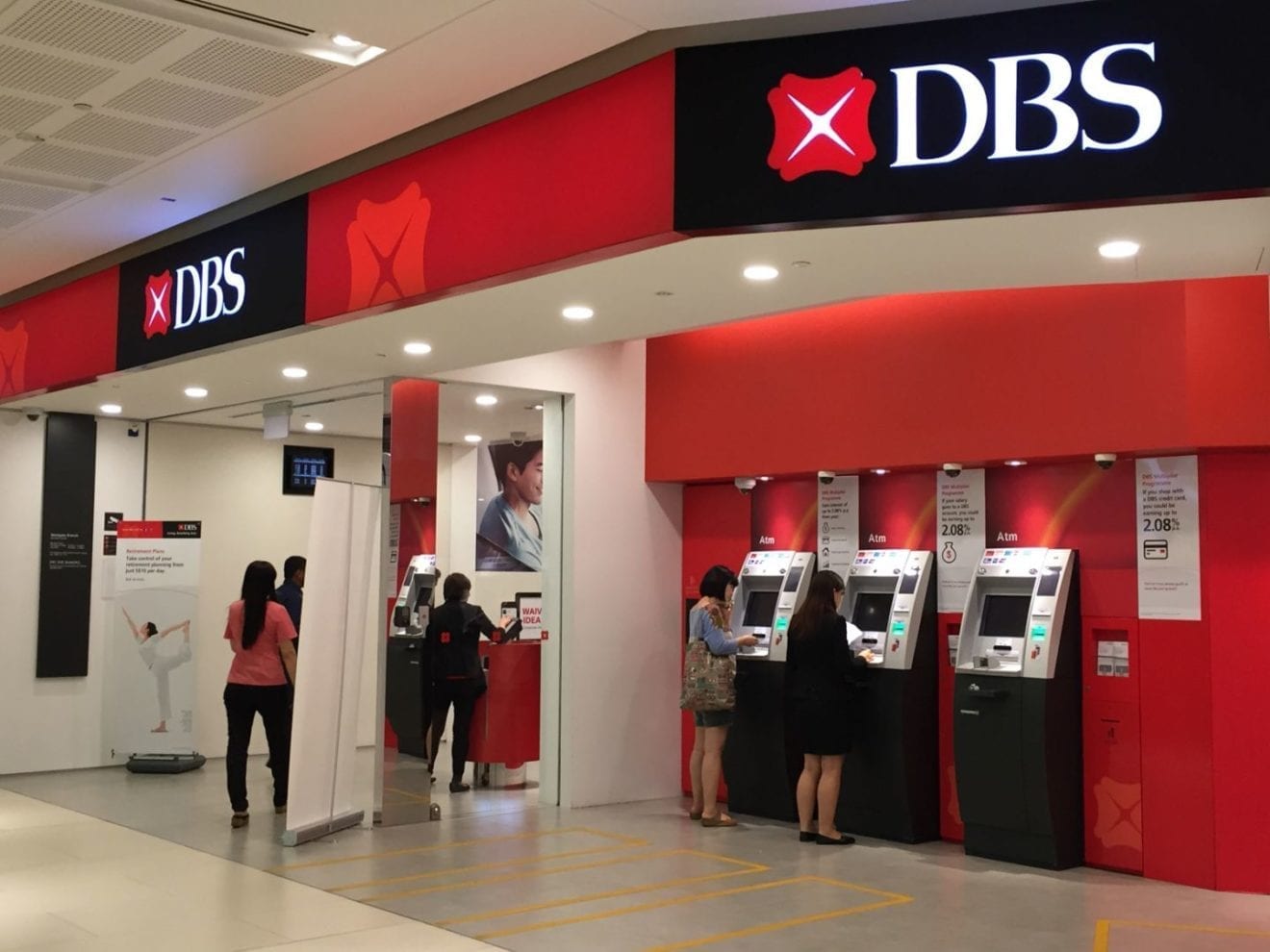
    DBS Bank signed a memorandum of understanding with wealthtech vendor Avaloq to expand platform deployment across Asia. The lender is targeting SGD 1 trillion in retail and wealth assets.

    The agreement extends an 18-year technology alliance. It supports the Singapore-based bank’s goal of reaching S$1 trillion (USD 781 billion) in assets under management by 2030.

    Scaling Assets to One Trillion Dollars

    Under the memorandum, DBS and Avaloq will evaluate broader deployment of the Avaloq core platform across the bank’s international markets and retail lines. The work includes adapting software architecture to local regulatory requirements across the region.

    Both companies plan to jointly build digital tools, execution workflows, and operating models for advisers. DBS will also run capability exchanges and training programmes with Avaloq to teach front-line and back-office staff to use automated and artificial-intelligence-enabled tools.

    “Avaloq has been a critical enabler for our wealth management operations for the past 18 years,” said Shee Tse Koon, group executive and head of consumer banking and wealth management at DBS. “By deepening capabilities across the wealth continuum, we can give our advisers greater capacity for the judgment that matters and help more customers put their money to work.”

    Software to Bridge Adviser Shortages

    Wealth managers across Asia face a persistent shortage of licensed human advisers as private capital expands in financial hubs. Industry figures indicate that seven in 10 regional investors currently use a dedicated wealth adviser. Meanwhile, more than 40 per cent of self-directed investors want one assigned to them.

    Automating portfolio construction, compliance checks, and back-office trade processing allows relationship managers to handle larger client books without inflating headcount. DBS is betting software scalability bridges that advisory shortfall faster than direct hiring. Rival institutions continue to bid up compensation packages for experienced bankers in Singapore and Hong Kong.

    Cross-Border Wealth Infrastructure

    The Avaloq deal builds on recent distribution partnerships designed to capture wealth flows across East Asia. In July, DBS established a wealth management alliance with South Korea’s Samsung Securities. That tie-up linked domestic capital markets access in Seoul with the bank’s regional advisory infrastructure.

    Integrating third-party platforms with proprietary banking engines creates operational complexity, especially when synchronising risk rules and multi-currency product suites across jurisdictions. Avaloq is widely deployed among European and Asian private banks. It provides the core transactional layer DBS relies on to process high-net-worth and mass-affluent accounts.

    Operational Execution Targets

    Technical collaboration will focus on three areas: enterprise growth, co-innovation of advisory products, and talent development across technology teams.

    DBS has set 2030 as the firm deadline to reach its SGD 1 trillion asset target. The initial rollout of platform enhancements under the agreement will launch across key Asian franchises over the coming financial year.

  • Hong Kong Retains Top Billionaire Spot in Asia with 106 Ultra Wealthy

    Hong Kong Retains Top Billionaire Spot in Asia with 106 Ultra Wealthy

    Hong Kong held its position as Asia’s top billionaire city with 106 ultra-wealthy residents last year, ranking second globally behind New York’s 164.

    The city lost two billionaires over the period even as its aggregate billionaire net worth rose, according to data from research firm Altrata.

    San Francisco, London, Singapore and Los Angeles took the third through sixth spots globally. Beijing placed seventh with 61 billionaires, while Shenzhen and Dubai tied for eighth place with 43 each.

    AI Gains Shift Wealth Creation

    New York added 12 billionaires during the year as the artificial intelligence investment boom propelled technology fortunes higher. Global billionaire numbers recorded their fastest pace of expansion since 2020, with the United States and mainland China remaining the only countries holding multiple cities in the top 15 rankings.

    Hong Kong and London were the only hubs in the top 15 to register declines in billionaire headcount. A prolonged downturn in Hong Kong’s real estate sector and relatively limited exposure to direct AI equity gains curbed new entries.

    Asian Hubs Draw Inbound Capital

    Banking and finance accounted for the largest share of global billionaire fortunes at 19.6 per cent, more than double the proportion held by business and consumer services. Across the worldwide cohort, the average age stood at 71, with men representing 86.9 per cent of the total.

    For luxury operators, private banks and commercial landlords across Asia, the shifting balance between property and technology fortunes alters where discretionary capital flows. Both Hong Kong and Singapore continue to draw high proportions of foreign-born billionaires, particularly from mainland China and India, supporting prime retail footfall and asset management inflows despite broader market volatility.

    Attention now turns to whether mainland China’s expanding tech sector can push Shenzhen and Beijing past European wealth centres in Altrata’s next census.

  • Standard Chartered Strengthens UAE Private Banking Team for Enhanced Client Service

    Standard Chartered Strengthens UAE Private Banking Team for Enhanced Client Service

    The private banking division of Standard Chartered is ramping up its presence in the UAE with a series of notable new hires in a move that underscores the region’s burgeoning wealth landscape. The bank has appointed Yahya Ismail as managing director and market head for Europe, the Middle East, and Africa (EMEA). Bringing over 25 years of expertise, Ismail has spent the last two decades immersed in private wealth management roles at prestigious firms like Julius Baer and ABN AMRO.

    Emerging Wealth in the Middle East

    “The Middle East is growing at an extraordinary pace, with the UAE in particular experiencing rapid growth in wealth creation among high-net-worth (HNW) and ultra-high-net-worth (UHNW) individuals who increasingly seek bespoke, cross-border financial solutions for wealth preservation, intergenerational transfers, and sustainable growth,” noted Vinay Gandhi, the global head of the South Asian community and regional head of EMEA at the private bank.

    A Stronger Team for Enhanced Client Care

    Ismail now leads a powerhouse team that includes Laura Haddad, appointed as senior client partner responsible for GCC UHNW clients, alongside Samia Shahnawaz as executive director and relationship manager. Additional key players include Ramla Mansukhani and Lakshmi Menon, who serve as relationship and client service managers, respectively. Haddad brings two decades of experience at firms like Credit Agricole and Citibank, while Shahnawaz boasts a similar wealth of experience in private and institutional banking.

    Investing in Future Growth

    This latest expansion is part of Standard Chartered’s ambitious plan to inject $1.5 billion into its affluent business over the next five years. “As one of the Bank’s wealth hubs, the UAE plays a pivotal role in Standard Chartered’s global strategy. We are dedicated to enhancing our talent pool, providing tailor-made client solutions, and diversifying our product offerings to meet the evolving needs of our HNW and UHNW clients,” Gandhi added, hinting that the private banking sector may soon see a flurry of innovation and bespoke services aimed at high-end clientele.

    In a region known for its luxury lifestyles, can you imagine the tailored experiences these banking professionals will bring to their high-flying clients? The sky is not just the limit; it’s merely a starting point.

    Questions & Answers

    What is the role of Yahya Ismail at Standard Chartered? Ismail is appointed as managing director and market head for EMEA, overseeing the bank’s private banking operations in the region.

    Why is the UAE significant for Standard Chartered’s strategy? The UAE is considered a key wealth hub, prompting Standard Chartered to actively invest in talent and resources to cater to the growing HNW and UHNW client base.

    How much is Standard Chartered investing in its affluent business? The bank plans to invest $1.5 billion in its affluent business over the next five years.

  • HSBC Appoints Switzerland and EMEA Private Banking Head

    HSBC Appoints Switzerland and EMEA Private Banking Head

    A former executive vice-chairman of global wealth management of UBS Switzerland joins HSBC as head of Switzerland and EMEA private banking. Gabriel Castello is joining HSBC in Zurich and Geneva in July and taking on a wide range of responsibilities at the bank, the HSBC announced Tuesday.

    Subject to regulatory approval, Castello becomes the regional head of private banking for EMEA, CEO of the Swiss Private Bank, and country head for Switzerland starting in July. Switzerland is HSBC’s largest private banking operation in Europe.

    Castello brings more than 30 years of experience in private banking and wealth management and was previously at Quintet bank as a partner and member of the group executive committee. Before that, he was at UBS for 13 years in various roles, including CEO of France, head of wealth management in Latin America, and executive vice-chairman of global wealth management, UBS Switzerland. He also spent 17 years at CaixaBank in Spain and France.

    He takes over from Alex Classen who is leaving HSBC after nearly four years at the firm.

  • Private Banking Drops its Traditional Restraint

    Private Banking Drops its Traditional Restraint

    New money is flooding private banks although it is not necessarily from millionaires. The catchphrase is potential. Last year was a record one for Swiss private banking, as one institute after another reported a historic high. There is a key metric that sticks out, and one that the sector had difficulty with until recently.

    Invested assets, or assets under management, are clearly growing again as 2021’s buoyant equity markets drove double-digit gains at UBS, Julius Baer and Geneva-based private bank Pictet.

    It should be a triumph for the sector, the mainstay of Swiss finance. But looking more closely, one thing does stand out – private bankers have become far less choosy.

    The unwritten $1 million US dollar barrier to entry no longer seems to apply when it comes to so-called net new money, net new assets, or even UBS’s mouthful for the term, net new fee-generating assets – all of which can be generalized as expressions of new client investment mandates and assets isolated of exchange rate and market movements.

    Swiss private banks have become more flexible that way, confirms Andreas Arni in an interview with finews.com. We are not a retail bank. In that way, there is an entry threshold. But we don’t have a strict minimum. We look at the potential of the client. You can say that, generally, we welcome younger people who have established their own company.

    Julius Baer, which is seeing new momentum in its Swiss business, has also been swayed by modest fortunes. A spokesperson confirmed that there is no fixed minimum for the bank in its home market. We can lend our hand even with a relatively moderate level of assets for clients who have a long-term perspective related to the growth of their wealth.

    The million seems to have been replaced by the promise of future millions. Although it is by no means a safe bet, it is a trend that digitalization has made possible.

    The trend towards internet-based advisory models has been propelled forward by the pandemic, turning numerous young entrepreneurs into millionaires. And the spread of crypto-investments, and their fluctuating prices, has made some of them very wealthy practically overnight.

    Traditional private banking is a geriatric business. In Switzerland, wealth is concentrated in the hands of retirees. More than out of five households where the male spouse is more than 65 years old has taxable assets of more than $1 million, Zurich statisticians have calculated.

    But private banks can now use digital channels to efficiently serve smaller piles of client assets. A clear example of that is market leader UBS, which bought robo-advisor Wealthfront in the U.S. for $1.4 billion. It did that in the hope of acquiring a more youthful clientele while in the domestic market, Vontobel offers up its Volt app, which gives users active asset management advice. The minimum assets required – about $10,000.

    Practice shows, however, that it is best to invest a medium-sized six digit figure if a client wants to fully benefit from Vontobel’s investment expertise, a company spokesperson maintained.

    And there are, of course, exceptions that only serve to confirm the rule. Pictet says it welcomes clients if they have about $2 million to invest although they do not officially confirm the figure. Although the sector may not be showing as much restraint as before, it still seems to adhere to another well-practiced characteristic. Silence.

  • StanChart Nets Ex-Safra Singapore CEO

    StanChart Nets Ex-Safra Singapore CEO

    Standard Chartered has hired the former Singapore chief executive of J. Safra Sarasin to lead its South Asia private banking segment.

    Vinay Gandhi joins Standard Chartered as its regional head, ASEAN and global head, global South Asian community, private banking, according to a statement, subject to regulatory approval.

    Based in Singapore, Gandhi will report to global head of affluent coverage Raymond Ang when he joins the bank in the first quarter of 2022.

    Seasoned Private Banker

    Gandhi has 30 years of financial experience, most recently with J. Safra Sarsin where he was last its Singapore CEO and Asia deputy CEO.

    Previously, he also worked for UBS Wealth Management, Deutsche Bank and Citi Private Bank.

    Gandhi’s profound knowledge of affluent clients in Standard Chartered’s footprint markets and proven track record in leading effective teams will be a strong addition to our team, Ang said in the statement.

  • Deutsche Bank Adds Greater China Wealth Vet from HSBC

    Deutsche Bank Adds Greater China Wealth Vet from HSBC

    Deutsche Bank has hired a former HSBC executive as a managing director in its wealth management unit.

    Tse Yi-Mun joins Deutsche Bank Wealth Management as a managing director and group head for North Asia, according to a statement.

    Based in Singapore, she reports to North Asia head of wealth management Kanas Chan.

    Tse has 23 years of private banking experience, most recently with HSBC Private Banking where she was its market head for Hong Kong. Previously, she also worked for DBS and ABN AMRO covering the Greater China market.

  • Standard Chartered Names Regional Head of Private Banking

    Standard Chartered Names Regional Head of Private Banking

    The bank has hired a new regional head to replace its outgoing regional head, Private Banking West.

    Standard Chartered has appointed Grant Parkinson as regional head of its private banking business for Europe, Africa, and the Middle East, the bank said in a statement.

    Parkinson joins the bank from U.K. wealth manager Brewin Dolphin, where he was a chief operating officer. He was also a chief operating officer at Coutts from 2012 to 2017, and previously worked for Barclays and McKinsey. Based in London, he reports to Didier von Daeniken, global head, private banking.

    Current regional head, Private Banking West, Steve Atkinson, is stepping down from his role and will be leaving after three decades with the bank. He will work closely with Parkinson to ensure a smooth leadership transition over the next few weeks, the bank said.

    The Private Bank’s franchise in the West is an important part of its global Private Banking business, complementing its franchise in Asia to cater to the needs of a global client base,» Standard Chartered said in the statement.

    The London-headquartered private bank previously stated plans to grow its assets under management (AUM) from $65 billion currently to about $100 billion in three to five years and said it would be hiring 30-40 relationship per year over the next two to three years.

  • HSBC Private Banking Raises Over $500M in Asia for PE

    HSBC Private Banking Raises Over $500M in Asia for PE

    In half a year, HSBC Private Banking has already raised over $500 million from Asia clients into private market investments including its Vision Private Equity 2019 fund.

    In addition to various other private equity and debt funds, Vision Private Equity 2019 (Vision 2019), the first of a new program, raised $250 million globally, of which more than half was sourced from clients in the region.

    Vision 2019’s portfolio includes a blend of primary investments and «selectively sourced secondary investment and co-investments» designed in joint partnership with HSBC Alternative Investments Limited (HAIL), a unit of HSBC Global Asset Management.

    The increased client adoption of alternatives within their strategic asset allocation is a response to volatile market conditions and the late cycle investment stage, according to Edward Moon, HSBC Private Banking’s regional head of alternative investments, Asia.

    In addition to Vision 2019, the bank has also successfully received in Asia $142 million of investor commitment for a Baring Private Equity Asia VII fund and $230 million placement for a Blackstone PREP IX (PE real estate fund).

    In recent years, the overall number of publicly listed companies on US stock exchanges has been declining, or conversely, more companies are choosing to stay private and for longer periods than ever before, Moon said.

    Against this general backdrop, clients with the appropriate risk profiles and who have a long-term investment horizon are increasingly looking to investment opportunities within private markets (both equity and debt) as a way to diversify their portfolios,» he added

  • Digital Private Bank Hits Singapore

    Digital Private Bank Hits Singapore

    Another digital wealth manager is poised to enter the Singapore market. How does the newest entrant seek to grab market share off rivals?

    Kristal will launch in Singapore on Thursday, as reported. The city-state would be the wealth manager’s third market, after Hong Kong and India.

    The platform allows investors to pick and choose investment strategies – so-called Kristals – among independent advisers and portfolio managers.

    With the glut of digital efforts hitting the market, how is Kristal carving itself a niche?

    «Sandbox» Shield

    It is meant to service mass affluent clients who are not getting the service that they want today from their wealth managers and private bankers,» co-founder Asheesh Chanda said.

    Kristal will operate under a shielded «sandbox» permit offered as a regulatory light-touch testing ground for start-ups which allows them to take a limited amount of client money.

    DBS and Cyberport Ties

    Kristal already manages an undisclosed amount of funds from retail and affluent clients, and says it will keep working on a machine-learning algorithm to feed its own strategies for its portfolios.

    «We expect to exit the sandbox in nine months and then we have to decide what kind of licence we take,» Chanda said.

    Kristal completed a «pre-accelerator» program backed by DBS last year, and is part of Cyberport’s incubation in Hong Kong this year.

    Interactive Brokers, Saxo Bank

    Clients can invest as little as S$1,000 in exchange-traded funds for equities, bonds, foreign exchange, options and futures.

    Kristal’s fees hinge on investment strategies: bond portfolios are cheap, while an alternative investment-heavy one will cost more, Chanda said.

    Kristal uses Interactive and Saxo Bank in Singapore and Hong Kong for execution and as asset custodians.