
Tag: private equity

  • Barambah Organics Founder Ian Campbell and Daughter Die in Plane Crash

    Barambah Organics Founder Ian Campbell and Daughter Die in Plane Crash

    Barambah Organics founder Ian Campbell, 56, and his daughter Hannah, 23, died in a light plane crash south of Brisbane on Monday.

    Campbell founded the dairy business alongside his wife Jane in 2002.

    The Tamara Capital Buyout and Brand Growth

    Private equity firm Tamara Capital bought a majority stake in the business in 2020 in a deal valuing it at $50 million, while the Campbell family kept a minority stake and continued to influence operations.

    Following the buyout, the business expanded distribution across Australian retail channels to supply independent grocers, organic specialists and national supermarket shelves. It established a dedicated processing network and direct farm supply model across regional Queensland and northern New South Wales.

    Dairy Sector Pressures and Market Position

    Australian premium dairy producers face cost inflation across cold chain freight, feed and energy. Premium organic labels rely on tight supply agreements and consistent volume to protect margins against conventional private-label milk pricing.

    Customer retention was built on single-source farm provenance and organic certification standards. Preserving brand equity and operational continuity now falls to the institutional investors and executive management installed following the 2020 acquisition.

    Operational History and Next Steps

    The Campbell family ran the business as an independent operation for 18 years. Outside capital was brought in to fund factory upgrades and broader national distribution.

    Aviation safety authorities continue to examine the site south of Brisbane to determine the mechanical factors and flight conditions surrounding the crash.

  • Tokyo Stock Exchange Delistings Set for Record High in 2026

    Tokyo Stock Exchange Delistings Set for Record High in 2026

    A record number of companies will delist from the Tokyo Stock Exchange in 2026, marking the third consecutive year of peak departures from Japan’s main equity market.

    Departures stem from corporate buyouts alongside investment funds seeking to take firms private, combined with companies failing to satisfy stricter listing criteria across exchange segments.

    Tougher Criteria Squeeze Growth Names

    Stricter compliance thresholds have forced underperforming issuers to evaluate their public status. On the Tokyo Growth market, a majority of listed equities sit below required market capitalisation cutoffs as regulatory deadlines approach. Companies unable to reverse their valuations or generate sufficient trading liquidity face mandatory removal.

    At the same time, maintaining a listing carries heavier burdens. Rising domestic interest rates have increased the cost of capital for corporate borrowers, while Japan now ranks second globally in shareholder activism campaigns. Management teams face direct pressure from institutional investors to improve capital efficiency, leading smaller operators to conclude that public market scrutiny outweighs the benefits of an equity quote.

    Private Capital and Shifting Exits

    Private equity sponsors have moved quickly to absorb listed targets. Founders and management teams are teaming up with domestic and global buyout funds to execute management buyouts, taking operating businesses private to restructure away from quarterly earnings demands.

    For consumer, retail, and technology operators across Asia, this turnover alters how expansion capital is secured. Public equity is no longer an automatic default for mid-tier Japanese businesses. Instead, unlisted status gives boards latitude to cut unprofitable units, absorb logistics cost increases, and realign supply chains without continuous market valuation hits.

    New Channels for Unlisted Shares

    Japanese regulators have adjusted market infrastructure to accommodate this shift away from traditional public listings. Authorities greenlit a dedicated trading platform for unlisted shares, providing secondary liquidity for private companies and venture-backed entities that choose to bypass or exit the main exchange.

    The current delisting volume builds on two prior years of record departures following the Tokyo Stock Exchange’s comprehensive market restructuring in 2022. That overhaul replaced legacy trading sections with Prime, Standard, and Growth boards, setting concrete governance and liquidity minimums.

    Attention now turns to upcoming compliance deadlines for Growth market issuers sitting below capitalisation cutoffs, which will dictate the final delisting count before year-end.

  • Ares Closes $4 Billion Japan Logistics Fund Backed by CPPIB

    Ares Closes $4 Billion Japan Logistics Fund Backed by CPPIB

    Ares Management closed its fifth Japan logistics development fund at JPY 612 billion ($4 billion). The raise hit its hard cap, led by Canada Pension Plan Investment Board.

    Known as Japan Logistics Development Partners V, the vehicle is the largest closed-end institutional fund raised by the Los Angeles firm’s real estate arm. It grew nearly 50 percent beyond its JPY 412 billion predecessor from 2021.

    CPPIB committed JPY 150 billion as cornerstone backer, taking a 24.5 percent stake. Other capital came from sovereign wealth funds, insurers and pension systems across North America, Asia-Pacific, Europe and the Middle East.

    Expanding the Marq Logistics Footprint

    This close follows the integration of GLP’s international fund management business, which Ares bought for $3.7 billion through GCP International in March 2025. That deal handed Ares the Japan logistics series along with digital infrastructure assets under Ada Infrastructure.

    Marq Logistics will build and manage facilities under the fund. Ares created the platform to oversee its industrial assets. As of June, Marq operated 120 million square feet of warehouse space across Japan and 655 million square feet globally.

    Pipeline Across Core Metro Hubs

    Institutional capital continues to target Japanese logistics space because corporate supply chains face structural warehouse shortages along major metropolitan transport corridors. CPPIB has backed every JDP vintage since 2011. That track record makes it one of the longest institutional partnerships in Asia-Pacific industrial real estate.

    Total investment capacity for the vehicle reaches JPY 1.7 trillion ($11 billion), focused on Greater Tokyo, Greater Osaka and Nagoya. Ares has committed JPY 450 billion, or about 26 percent of that capacity, to initial projects ahead of site acquisitions in the coming quarters.

  • Nestlé Sells Holistic Health Supplement Business to Yellow Wood for $1.4 Billion

    Nestlé Sells Holistic Health Supplement Business to Yellow Wood for $1.4 Billion

    Nestlé has sold its mainstream vitamins, minerals and supplements unit, Holistic Health, to private equity firm Yellow Wood Partners for $1.4 billion. The transaction transfers brands including Nature’s Bounty to the consumer-focused buyout firm for US$1 billion in cash.

    The Swiss food and beverage group is pruning product lines that fall outside its core high-margin categories. Management described the divestment as a necessary step in realigning capital toward divisions where the company holds stronger global pricing power and manufacturing advantages.

    Portfolio refocus at Swiss food group

    Chief executive Philipp Navratil pointed to changing dynamics across consumer health channels as the rationale for exiting mainstream supplements. Dedicated specialist owners are better suited to run broad-market dietary brands as grocery and pharmacy retail channels fragment.

    Yellow Wood Partners focuses on corporate carve-outs in personal care, beauty, and consumer health. The private equity buyer plans to run the acquired supplement portfolio as an independent platform operating across global retail networks.

    Divestment strategy in global retail

    Consumer goods giants across the Asia-Pacific region and western markets have spent the past two years shedding slower-growth divisions to protect margins against inflation. Nestlé itself has pursued selective acquisitions in medical nutrition while trimming commoditised lines from its health science roster.

    Regulators will review the sale before formal closing, with transfer of manufacturing assets and brand distribution agreements expected in the coming quarters.

  • Temasek and ChrysCapital Compete to Buy 33 per Cent Stake in India’s Blue Tokai

    Temasek and ChrysCapital Compete to Buy 33 per Cent Stake in India’s Blue Tokai

    Singapore’s Temasek Holdings and private equity firm ChrysCapital are competing to invest up to 1,200 crore rupees in Indian specialty roaster Blue Tokai Coffee Roasters. The transaction values the 13-year-old chain at up to 3,700 crore rupees and will hand the winning bidder a stake of between 30 and 33 per cent.

    The deal structure involves both primary capital to finance retail expansion and secondary sales to provide exits for early seed backers. Existing shareholders include A91 Emerging Fund, which holds 21.72 per cent, alongside Verlinvest, Waterfield Fund and 12 Flags. The three founders, Matt Chitharanjan, Namrata Asthana and Shivam Shahi, currently hold an aggregate 15.27 per cent stake.

    Funding store targets across Asia and the Gulf

    Blue Tokai currently runs 240 outlets across India through parent company Muhavra Enterprises. The roaster plans to open 120 locations during the current financial year, pushing into secondary markets including Ahmedabad and Lucknow, before reaching an 800-store target by fiscal 2030.

    Overseas expansion is also underway. The chain partnered with UAE-based Ambrosia Gulf last year to build a regional store footprint, while setting up plans for an entry into Japan. It also acquired bakery operator Suchali’s Artisan Bakehouse in 2024 to support food service across its cafe network.

    Financial performance has shifted after Blue Tokai turned Ebitda-positive on a monthly basis for six consecutive months. Revenue climbed 50 per cent to 325 crore rupees in fiscal 2025, while net losses narrowed by 20.6 per cent to 50 crore rupees.

    Competition intensifies in India’s cafe sector

    Specialty coffee operators across Asia are racing to scale before high real estate overheads catch up with unit economics. In India, Tata Starbucks remains the market leader with more than 500 outlets and a plan to add 100 locations annually, while international entrants such as Canada’s Tim Hortons and Britain’s Pret a Manger compete against domestic rivals including Third Wave Coffee, Barista and Cafe Coffee Day.

    For ChrysCapital, a deal would follow its acquisition of patisserie chain Theobroma in August 2025 for roughly 2,410 crore rupees, opening opportunities to combine bakery and beverage operations. Temasek brings its own food service portfolio to the table, with holdings in Rebel Foods, Haldiram’s, Licious and Chinese coffee operator Luckin Coffee.

    Blue Tokai has not yet filed its fiscal 2026 accounts, though projections reviewed by investors point to revenue reaching between 750 crore and 775 crore rupees in fiscal 2027.

  • Southeast Asia Data Centers Secure 11.5 Billion Dollars in Equity as AI Surges

    Southeast Asia Data Centers Secure 11.5 Billion Dollars in Equity as AI Surges

    Southeast Asian data center operators raised 11.5 billion dollars in disclosed equity across 19 deals, with 85 percent of the total arriving since early 2024.

    Five Singapore-headquartered platforms secured roughly 98 percent of that capital, backed by sovereign funds, pension investors, and global private equity firms building capacity for regional artificial intelligence demand.

    Sector funding expanded sharply after years of modest activity. Between 2020 and 2023, regional data center operators raised a combined 1.68 billion dollars. Annual totals climbed to 3.2 billion dollars in 2024, 1.9 billion dollars in 2025, and 4.7 billion dollars in 2026 to date, driven by mega-rounds such as DayOne’s 4.5 billion dollar Series C.

    Capital concentrates in Singapore

    All five top-funded platforms, DayOne with 6.4 billion dollars, Princeton Digital Group with 2.2 billion dollars, ST Telemedia GDC with 1.3 billion dollars, Nxera with 806 million dollars, and Digital Edge with 640 million dollars, hold their corporate headquarters in Singapore.

    While holding companies domicile in the city-state, physical construction spreads across neighboring growth corridors. DayOne committed over 28 billion ringgit (7 billion dollars) to Malaysia through 2026 and partners with the Indonesia Investment Authority on a 72-megawatt campus in Batam. Princeton Digital Group operates a 1.1-gigawatt portfolio across six Asian markets, while Digital Edge runs sites in Japan, South Korea, India, Malaysia, Indonesia, and the Philippines.

    Mergers and acquisitions accelerated alongside greenfield development. Deal intervals compressed from over four years down to nine months. In the sector’s landmark transaction, buyers followed a June 2024 purchase of an 18.3 percent stake in ST Telemedia GDC by acquiring the remaining 82 percent 20 months later at an enterprise valuation of 13.8 billion Singapore dollars (10.86 billion dollars).

    Debt builds beside equity

    Hyperscale tenant contracts with predictable cash flows have allowed operators to layer large debt packages onto their balance sheets. Digital Edge paired its 640 million dollar equity round with 1 billion dollars in debt. Princeton Digital Group split its 2025 capital raise between 1.3 billion dollars of equity and 1.2 billion dollars of debt, following that with plans outlined in March 2026 to raise up to 5 billion dollars in additional debt facilities.

    Public market debuts remain rare, with Indonesia colocation provider Elitery’s 16 million dollar listing in January 2023 standing as the lone regional listing so far. DayOne filed confidentially for a US initial public offering in August 2026 to raise roughly 5 billion dollars at a 20 billion dollar valuation, while simultaneously seeking to expand an existing 3.4 billion dollar credit line to 7 billion dollars.

  • Burger King Korea Opens Seoul Flagship Store as It Chases 1.1 Trillion Won in Sales

    Burger King Korea Opens Seoul Flagship Store as It Chases 1.1 Trillion Won in Sales

    Burger King Korea will open its first global flagship store in Seoul on September 10, backing a push to reach 1.1 trillion won in annual sales.

    The quick-service operator is targeting a network of more than 600 locations across South Korea this year, up from its current footprint.

    Located in the eastern district of Seongsu, the new format trades under the name Flameground. Local operator BKR designed the venue around exclusive menu items, branded merchandise and reservation-only dining, shifting away from standard counter-service fast food into experiential dining in one of Seoul’s busiest retail corridors.

    Private equity backing and store targets

    BKR operates both Burger King and Canadian coffee chain Tim Hortons in South Korea. The company entered the country in 1984 with an initial site in Jongno, changed hands to VIG Partners in 2012, and joined Hong Kong private equity firm Affinity Equity Partners in 2016.

    Affinity attempted to divest its Burger King operations in South Korea and Japan in 2022 before pausing the auction. In June, the buyout group restarted the sale process for BKR, seeking an exit four years after first testing buyer appetite.

    Shifting format in Seongsu

    Fast-food chains across East Asia are building larger experiential flagships in high-footfall neighborhoods to protect margins against rising ingredient costs and weaker discretionary spending. Seongsu has become the preferred testing ground for experimental retail formats, drawing both domestic fashion pop-ups and international food brands trying to appeal to younger consumers.

    BKR will open Flameground on September 10, with transaction advisers watching whether the higher-margin concept supports the ongoing sale process.

  • KKR Agrees to Buy Japanese Beauty Platform Ci Flavours

    KKR Agrees to Buy Japanese Beauty Platform Ci Flavours

    KKR has agreed to acquire Japanese personal care platform Ci Flavours from existing shareholders, including consumer buyout specialist L Catterton.

    The buyout firm will take full ownership from all current equity holders, which include founder Yusaku Horiuchi, Ebeauty Group and Yanagi Capital Partners. Financial terms were not disclosed.

    Horiuchi and Ci Flavours chief executive Yoshiaki Okura will reinvest alongside KKR to retain management stakes in the company. Founded in 2011, the Tokyo-based firm built a retail footprint across Japan and expanded overseas distribution into Asia and North America.

    Brand roster and overseas distribution

    Ci Flavours operates a portfolio spanning haircare, skincare, body care and lifestyle goods. Its primary labels include &Honey, 8 The Thalasso, Unlabel, Theratis and Moroccan Beauty.

    The business handles product lines through multiple channels, including original equipment manufacturing, direct-to-consumer digital storefronts, department store counters and international ingredient sourcing. Mass-market and premium haircare lines in domestic drugstores provided the company with steady cash flow to push into regional export markets.

    Private equity shifts in Japanese consumer assets

    L Catterton backed Ci Flavours in 2022, completing an exit four years later as global private equity funds continue trading established Japanese consumer brands. KKR has actively adjusted its regional consumer portfolio, having completed the sale of supermarket chain Seiyu to Trial Holdings for US$2.55 billion.

    Okura and his executive team plan to deploy fresh capital into foreign market distribution, recruitment and targeted add-on acquisitions in personal care.

  • Mekong Capital Has Won an Award From Private Equity International

    Mekong Capital Has Won an Award From Private Equity International

    Mekong Capital announced that it was awarded the 2018 Private Equity International (PEI) Award for Operational Excellence for a Lower Mid-Market/Small Cap investment in Asia Pacific, based on the performance of Traphaco.

    This is the sixth year in a row of Mekong Capital winning an award by Private Equity International, after having won the Operational Improvement Firm of the year for the Asian Small Cap category in 2013, 2015 & 2017, and Frontier Market Firm of the year for 2014 & 2016.

    Mekong Capital is well-known for its Vision Driven Investing framework – the secret sauce for its series of consistently successful investments. Traphaco has applied certain elements of the framework and was one of the best performers in Mekong Capital’s Vietnam Azalea Fund.

    Mekong Capital worked closely with Traphaco on projects covering areas such as establishing a clear vision and organizing around achieving the vision; optimizing working capital; aggressively expanding the nationwide distribution network; bonus system; consolidation of subsidiaries by acquiring minority interests; improving corporate governance; etc.

    As a result, during the 10-year lifecycle of Vietnam Azalea Fund’s investment in Traphaco, Traphaco developed from the 5th largest into the 2nd largest pharmaceutical company in Vietnam. The company possesses one of the largest direct-to-pharmacy distribution networks in Vietnam and is #1 in traditional medicine. In 2017, Traphaco delivered $82.6 million net revenue and $11.4 million net profit.

    In November 2017, the Vietnam Azalea Fund successfully divested the entire 24.99% holding in Traphaco for $64.5 million, realizing a gross IRR of 27.7% and a gross return multiple of 6.3 times.
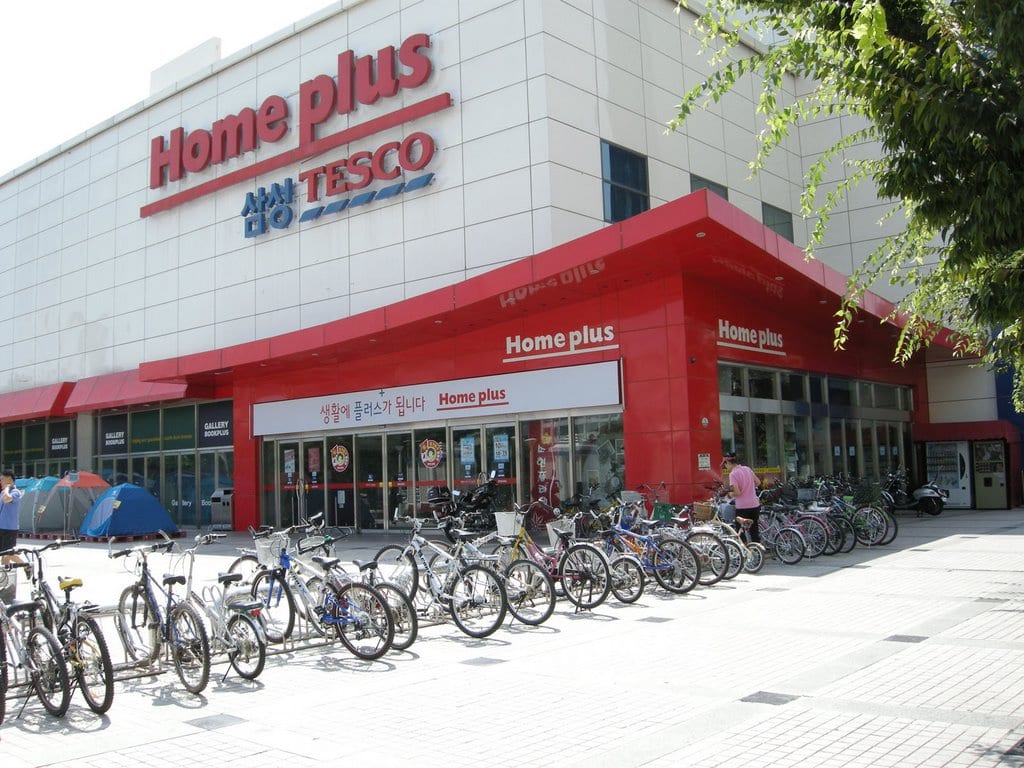
  • Tesco’s South Korea empire draws interest from private equity giants

    Tesco’s South Korea empire draws interest from private equity giants

    KKR and Carlyle, the US private equity firms, have been invited to bid for the Asian business, which trades as Homeplus, while London-based CVC Capital Partners has also been asked to bid.

    The decision to sell the South Korean stores comes as the retail giant’s chief executive Dave Lewis looks to streamline the business, to concentrate on its core UK shops and raise cash.

    After two decades of uninterrupted growth, Tesco has been struggling after it became distracted by overseas expansion and failed to spot the threat of discounters like Aldi and Lidl.

    The retailer is now looking to slash capital spending, as well as fund a vicious supermarket price war and put more people on the shop floor.

    Hong Kong-based Affinity Equity Partners and Asia-focused MBK Partners were also invited to bid, and Hyundai Department Store, which is separate from the car maker, said today that it was considering bidding.

    Tesco, advised by HSBC, has asked for indicative bids later this month.

    If the sale is achieved it would be Asia’s biggest private equity deal and the region’s second biggest consumer deal ever. Sovereign wealth funds could be involved in the financing of it, given the size of the sale.

    Homeplus is Tesco’s largest business outside Britain, with more than 400 stores, 500 franchise stores and over six million customers a week.

    But the business has been under some pressure, with falling like-for-like sales for the last two years.

    Tesco is also selling its £1 billion Dunnhumby data business, and has already sold its Blinkbox digital entertainment service and Tesco Broadband to TalkTalk for an undisclosed sum.