Tag: problems

  • Globe launches Future Makers 2019 accelerator

    Globe launches Future Makers 2019 accelerator

    The Philippines’ Globe Telecom has launched the latest round of its accelerator program for startups working to tackle some of the market’s most challenging social problems.

    The Globe Future Makers 2019 program will be open to all Philippine-based individuals, groups, or organizations with solutions that use technology to achieve wide-scale positive impact.

    The technology can include devices, platforms, hardware, or software. The solution developed must be a functional product or service that has been working for at least two years, and be able to address one or more of the United Nations’ Sustainable Development Goals.

    Successful applicants will receive technology support from Globe Telecom as well as access to mentorship, collaboration and related support from industry partners.

    The Globe Future Makers program was first introduced in 2017 with the goal of helping encourage businesses to use technology for social good. This year’s event is being jointly implemented by Philippines’ based crowdfunding website and community for social projects The Spark Project.

    “Globe Future Makers offers a unique opportunity for our small enterprises using digital technology to scale up and test if their businesses are replicable in global markets. We encourage social innovators and startups to participate in GFM 2019.”

  • Victoria’s Secret joins JD with store

    Victoria’s Secret joins JD with store

    Victoria’s Secret is expanding its online presence in China with the launch of a flagship store on JD, the e-commerce platform.

    A representative from JD’s underwear business said the collaboration of the two companies not only expands JD’s cooperation with international fashion brands, but also provides additional choices for JD’s customers pursuing high-quality products.

    The JD flagship store offers Chinese customers Victoria’s Secret’s full range of classic bras, panties, lingerie and T-shirts. The launch came in time for the Chinese Valentine’s Day when sales are expected to boost as local consumers buy gifts for their loved ones.

    The online flagship follows the opening of the brand’s first China duty store in Hainan Tourism Duty-Free Shopping Complex earlier this month.

    The US lingerie brand closed its high-profile Victoria’s Secret flagship store in Hong Kong last year after two years of operation.

  • No respite likely for Hong Kong-based retailers

    No respite likely for Hong Kong-based retailers

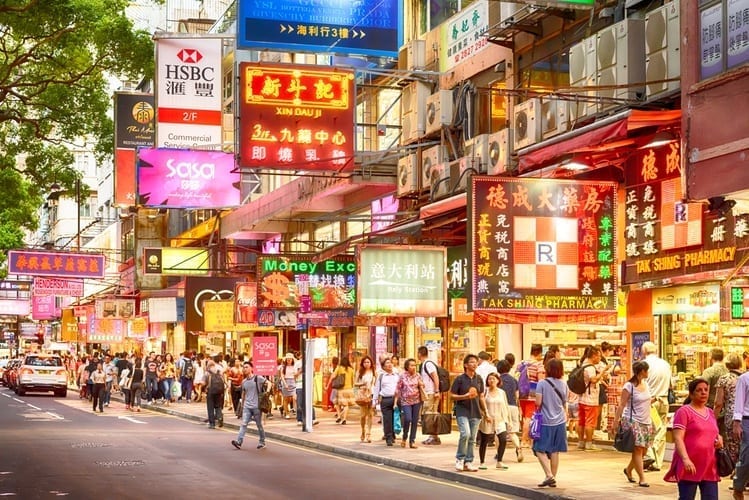
    Hong Kong-based retailers will continue to face tough times as domestic and international issues impact the economy according to a leading analyst.

    Anne Ling, an equity analyst at the investment bank and financial-services company Jefferies Group,  says every 10 percent decline in retail sales impacts the earnings-before-tax (EBIT) of Hong Kong retail companies by between 7 percent and 55 percent. Retail sales in October and November fell by about 24 percent and during the first 11 months of last year were down by 10.34 percent.

    “For international brands like Prada, Samsonite and L’Occitane, we estimate the impact at the sales level is not that material [because] Hong Kong [represents] less than 2 percent to 5 percent of sales. However, at the EBIT level (circa 3 percent to 7 percent) Hong Kong has a higher contribution.”

    Ling warns Hong Kong-based retailers are vulnerable to a risk of the further market slowdown from a higher unemployment rate and weaker consumer confidence in the city.

    “In such times, the immediate lever to hand for brands and retailers is to increase cash flow by reducing inventory and staff and/or rental costs. However, over the medium term, we would expect most players to reset or readjust their Hong Kong store networks to avoid over-reliance on tourist spending.

    “We see a need for the Hong Kong and international brands and retailers listed in Hong Kong, which have heavily de-rated in recent years, to review their business strategies and seek out new business drivers, [so] that they remain relevant to investors.”

    Ling says she expects Sino-US tensions to continue while the mainland Chinese government focuses on stabilizing economic growth this year.

    Given that backdrop, Jeffries would favor recommending investment in Hong Kong-based retailers and manufacturers of low-ticket items like staple goods, food retailers and the fast-food segment, as they are more resilient.

  • Hong Kong retail ‘will recover’ says analyst

    Hong Kong retail ‘will recover’ says analyst

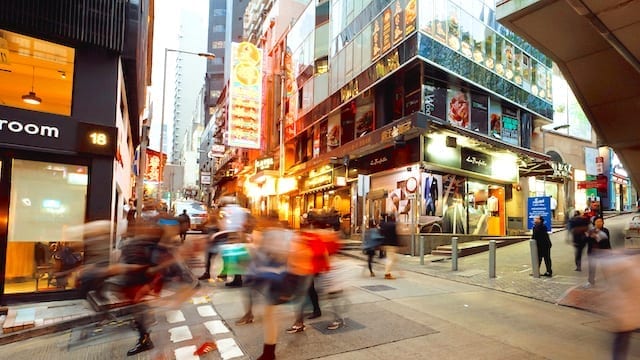
    The Hong Kong retail industry – hammered by declining visitor numbers from the mainland will recover, says leading analyst Pascal Martin, a partner at OC&C Strategy Consultants.

    As reported earlier this week, Hong Kong retail sales in October plunged by 24.3 percent year on year – the largest decline since records began. That followed a revised fall of 18.2 percent in September and several retailers have told Inside Retail Asia they expect November’s figures to be even worse.

    But Martin has a positive spin: “The Hong Kong market will recover, as it always does. As soon as Chinese tourists are reassured about the safety and convenience of visiting Hong Kong, they will come back.”

    However, he cautions than the recent events have accelerated “a structural trend” that Hong Kong is not as attractive a retail destination as it used to be.

    “There are a variety of reasons contributing to this trend – among them the lower China taxes and duties, and brands’ global pricing structures that have become much more homogeneous and harmonized, with smaller price differences across markets because of the transparency created by the Internet.

    “Additionally, Chinese travelers also have a greater diversity of shopping destinations beyond Hong Kong, with Japan, South Korea, France, and Italy becoming increasingly popular.”

    Martin says many brands that have built extensive retail footprints in Hong Kong on the assumption that Chinese tourist numbers and spending power will continue to grow without limit will have to adjust their presence in Hong Kong.

    “The impact of this trend will not be felt immediately, but gradually, as brands reach the renewal date of their stores, one store at a time, over the next few years. There will be adjustments in the number of stores, and adjustments in rent levels.”

    Meanwhile, the Hong Kong Retail Management Association this week predicted Hong Kong retail will experience a “low double-digit drop” in sales for the full year.

  • Singapore retail sales slip again

    Singapore retail sales slip again

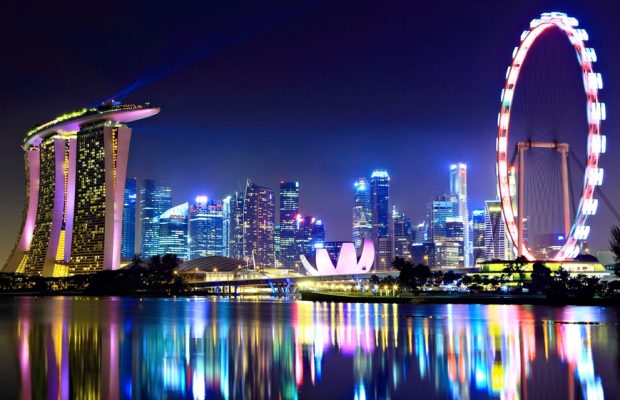
    Singapore retail sales slipped 1 per cent year on year in May, after motor vehicles were excluded from the data. The month-on-month decline was the same.

    Statistics Singapore estimated total retail sales in May (including motor vehicles) at $3.7 billion, with online retail sales accounting for 5.3 per cent of that figure.

    Year-on-year, furniture and household equipment was the category showing the greatest decline –  7.5 per cent – while sales of computer and telecommunications equipment, of optical goods and books, and by department stores, fell by between 4.7 per cent and 7 per cent.

    Categories to improve in May included watches and jewellery, up by 4.1 per cent, partly due to higher demand for gold jewellery during the Akshaya Tritiya festival.

    Sales of food and beverage services grew by 2 per cent year on year to n estimated $849 million.

    Turnover of restaurants, other eating places (such as cafes) and fast-food outlets increased by between 1.8 per cent and 2.7 per cent in May.

    In contrast, sales by food caterers decreased by 1.2 per cent.

  • Amazon Fashion drops first influencer collection

    Amazon Fashion drops first influencer collection

    Amazon Fashion has just released the first collection from an influencer as part of its new shopping experience, The Drop.

    For the next 30 hours, customers will be able to purchase pieces made on-demand from the collection designed by influencer Paola Alberdi via the Amazon app or mobile browser. The Drop collections are available in more than 100 countries and regions.

    Fashionistas are encouraged to sign up for Amazon text alerts, as the next Drop influencer collaboration could be released at any time. Other influencers slated to design future collections include Emi Suzuki, Sierra Furtado, Leonie Hanne and Patricia Bright.

    “Influencers are able to turn their creativity and style into beautifully designed collections that capture the latest street style trends from around the world,” said a statement from Amazon.

    “Amazon Fashion is excited to enable influencers to be designers and bring fresh Fashion assortments directly to customers via The Drop.”

    Amazon Fashion is also offering Staples By The Drop, wardrobe staple pieces to complement the influencer collections.

    “I am beyond grateful to Amazon for entrusting me to be the first influencer to launch The Drop, their innovative new shopping experience. I have worked hard for many years to create a brand that is true to myself and did the same with this collection,” said Alberdi.

    “Fashion can be so expensive but my belief is that it should not have to be expensive to feel beautiful. The primary goal of my collection is simply to help women feel good about themselves. I’m so excited to share these pieces with the world!”

    Other retail brands have been tapping into the power of influencers and collaborating with them on collections for some time, such as Nordstrom, which is currently selling the Cupcakes and Cashmere range from fashion blogger and designer, Emily Schuman.

    When the department store engaged with influencer Arielle Charna in 2017, her collection reportedly brought in $1 million in sales in less than 24 hours, according to an article from Fashionista.

  • Indonesian Retail Sales Down Last Month

    Indonesian Retail Sales Down Last Month

    Indonesian retail sales grew by 10.1 percent in March following a 9.1 percent increase in February, according to central bank survey data.

    The strong March performance was underpinned by sales of apparel along with automotive parts and accessories.

    However, the bank’s survey predicted that Indonesian retail sales growth will rise by a more modest 5.7 percent in April, the same figure it projects for the full year.

  • Franchising report reveals “cultural problems”

    Franchising report reveals “cultural problems”

    The Australian Senate thinks there needs to be a comprehensive shift in power in the franchising sector.

    In a long-awaited report on its inquiry into the sector, released today, the Senate said the current regulatory environment has failed to deter poor conduct and exploitation within the sector and created an imbalance in power.

    On that basis, it recommends giving greater protection to franchisees and whistleblowers and applying greater penalties for misconduct. This would involve making several changes to the Franchising and Oil Codes and giving more responsibility and enforcement powers to the ACCC to conduct investigations into misconduct in the sector.

    “There are deeply rooted cultural problems that will not be resolved by a franchisor replacing a few senior executives,” the report stated.

    The report points out that disclosure has been the principal and almost only protection for franchisees, and that while many franchisors would like to keep it that way, it is no longer sufficient.

    “The extent and breadth of misconduct within the franchise sector demonstrates that disclosures and transparency alone, while vitally important, are an insufficient response to power and information asymmetry,” the report said.

    The report recommends more protection for franchisees and employees who want to blow the whistle on franchisors engaging in misconduct, and suggests that whistleblower protections should apply in these cases. The inquiry uncovered many instances of franchisors using intimidation to keep franchisees from speaking out.

    The report also recommends steeper civil penalties be introduced into the Competition and Consumer Act 2010, and the Franchising Code of Conduct, in order to ensure they act as a “meaningful deterrent” against further misconduct.

    The penalty amounts would be similar to those currently found under Australian Consumer Law, and should be prescribed in legislation so that the limit on penalties under industry codes does not apply to franchising.

    One of the major issues in the sector presented in the report is wage theft, partly due to the business model franchisors operate under, and partly due to social and cultural problems within the industry.

    “At times, wage theft is occurring as a way for franchisees to extract profits or service payments in order to stay afloat in a financially constrained business model (given wages are one of the greatest costs in the franchisee’s control),” the report said.

    “Whilst many franchisors cited greed as the primary motivation for wage theft, the committee notes that the issue is far more complex and partly inherent to the business models’ structural breakdown of power and the imposition of cost controls.”

    Last week, the Migrant Workers Taskforce recommended criminal penalties be put in place for businesses which intentionally conduct staff underpayment, noting it had found “widespread levels of non-compliance with relevant laws.”