Tag: processed food

  • Cola, sugar prices shoot up 10% in Korea

    Cola, sugar prices shoot up 10% in Korea

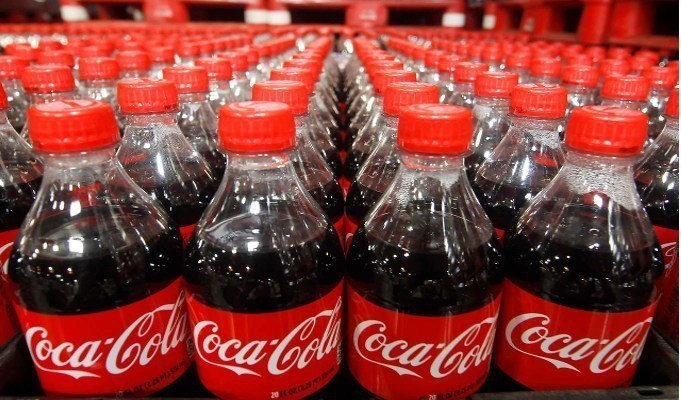
    Processed food prices rose in January, with soybean paste, sugar and cola all jumping up around 10 percent compared to a year earlier. The Korea Consumer Agency (KCA) said Monday that 18 of 26 major processed foods measured both in 2018 and 2019 cost more in January than the previous year. The highest price hikes on year included sugar at 11 percent, soybean paste at 9.8 percent and cola at 9.7 percent. Among processed grain foods, instant rice products rose the most, by 5.6 percent. Prices for cup ramyeon noodles, one of the country’s favorite snacks, rose 3.4 percent.

    The KCA releases prices for a basket of around 30 major processed food categories every month. The basket price data serves as a separate indicator of real price changes for consumers. Other tracked products include beer, coffee mix and curry.

    Compared to the previous month, the average basket price for January rose 0.2 percent to 122,686 won ($109) from 122,491 won. Soybean paste prices rose on month by 4.7 percent and curry by 1.4 percent. Average cola prices rose 6.0 percent from December. The soft drink’s price rose last month after two months of declines.

    The KCA reported that the basket’s price was most affordable from large retail stores compared to traditional markets, department stores and large-size supermarkets.

    Meanwhile, products that declined in price on year included cooking oil at minus 6.1 percent, orange juice at minus 5.3 percent and red pepper paste at minus 4.9 percent.

    The data comes as consumer prices for January rose by 0.8 percent from 2018, according to Statistics Korea. The consumer price index for “living necessity food” rose 2.6 percent last month from the previous year.

  • Vietnamese prefer fresh food by far to processed items

    Vietnamese prefer fresh food by far to processed items

    Vietnamese citizens spend three times more on fresh food than fast-consumer moving goods (FMCG), a new survey says. A family in urban Vietnam spends about VND1.1 million ($47.12) on fresh food a month, according to the recent survey by market research firm Kantar Worldpanel Vietnam.

    The survey polled over 2,000 households in Hanoi, the central city of Da Nang, Ho Chi Minh City and southern Can Tho City, and over 1,000 households in various rural areas across Vietnam.

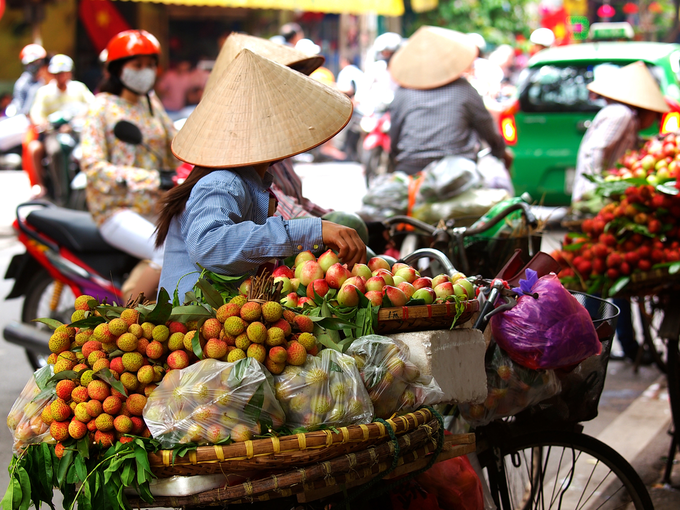
    Fruits top the spending category in fresh food, accounting for 19 percent of the total, while vegetables come second at 11 percent. The rest goes to meat, seafood and rice.

    The traditional market remains the favorite shopping outlet for Vietnamese people, accounting for 85 percent of total spending on fresh food.

    Vietnamese people spend VND930,000 ($39.81) per week on fresh food at traditional markets, mostly on meat and seafood.

    Although locals spend only VND220,000 ($9.42) per week on fresh food at supermarkets, the figure shows a 28 percent growth over last year. Most of the supermarket spending is on fruits and processed food.

    Fresh food and FMCG make up the majority of Vietnamese people’s spending at 26.8 percent last year in the cities and 25.9 percent in rural areas.

    With rising incomes, Vietnamese people, especially in the cities, have been spending more on education and health, the report finds.

    The share of spending on education by urban families increased from 10.8 percent in 2012 to 12.9 percent last year, while spending on health grew from 3.5 percent to 3.9 percent in the same period.

    The report also finds that Vietnamese consumers accord top spending priority to food safety, health and environmental issues/disease.

    The majority of survey respondents, 96 percent, are confident that their spending capability will be stable or increase in upcoming months, and 86 percent expect the Vietnamese economy to be stable or grow stronger in the near future.

  • Indo and India see strong growth in processed food retail

    Indo and India see strong growth in processed food retail

    Global innovation within the processed meat, poultry and fish categories has increased over the years and many markets with the highest growth potential are from the Asia Pacific region. New research from global market intelligence agency Mintel reveals that Asia is home to the world’s fastest growing retail markets for processed meat, poultry and fish, with Indonesia and India playing key roles across these categories.

    Indonesia is currently among the fastest growing processed meat and poultry markets globally with a CAGR of 26.7% between 2011 and 2015, followed by India* (22%), Vietnam (15.5%), China (13.9%), and Brazil (10.9%). Mintel estimates Indonesia’s processed meat and poultry market reached a value of IDR 16 trillion in 2016**, while India is estimated to have reached a value of INR 11 billion. Vietnam, China and Brazil have estimated retail values of VND 10 trillion, CNY 275 billion, and BRL 12 billion, respectively.

    Meanwhile, India* is one of the fastest growing retail markets for processed fish and seafood globally, growing at a CAGR of 24.9% between 2011 and 2015, while Indonesia has seen a CAGR of 19.5%, with Turkey (11.8%), South Africa (11.2%) and Russia (10.8%) rounding out the top five growth markets. In 2016**, Mintel estimates India’s processed fish and seafood market reached a value of INR 2,422 million, while Indonesia is estimated to have hit IDR 32 trillion, Turkey TRY 372 million, South Africa ZAR 3 billion and Russia RUB 148 billion.

    In the five years between 2011 and 2015, Thailand also experienced a positive CAGR of 9.4% for the processed fish and seafood market and a CAGR of 7.5% for the processed meat and poultry market. In terms of retail market value for 2016**, Thailand’s processed fish and seafood market is estimated to have reached THB 65 billion and its processed meat and poultry market, THB 60 billion.

    Driven by a surge in innovation activity, the global processed meat, poultry and fish markets saw an 18% increase in product launches in 2016, compared to 2014, according to Mintel Global New Products Database (GNPD). In 2016, Asia Pacific was the second most active region globally in terms of processed meat, poultry and fish new product development (NPD), accounting for 24% of processed meat, poultry and fish product innovations, led by China, Thailand, South Korea, Vietnam and the Philippines.

    Patty Johnson, global food and drink analyst at Mintel, said: “The need for convenience is the key driver behind Asia’s growing processed meat, poultry and fish retail markets in Indonesia, Thailand and India. Demand for processed and ready-to-eat foods, particularly frozen foods, is growing across Asia as increasingly time-pressed consumers have embraced the convenience of the freezer and of microwave cooking. Aligned with consumer interest in the region, processed meat, poultry and fish product innovation in 2016 saw strong focus on convenience claims, such as ease of use and microwaveable.”

    Indeed, according to a consumer study*** conducted by Mintel, over two in five (43%) metro Indonesians and 39% of metro Thais aged 18 and over tend to shop closer to home or work due to a lack of time. Furthermore, over one in four (28%) consumers in Indonesia prefer to buy smaller, bite sized or convenient packs as they can eat these anytime, anywhere, rising to over one in three (37%) Indonesians that fall within the monthly household income bracket of IDR 15,000,000 and above. In Thailand, as many as one in five (22%) consumers prefer to buy smaller, bite sized or convenient packs for the same reason.