Retail News CRM

Tag: Procter & Gamble

  • Procter & Gamble Starts S$12m Innovation Hub in Singapore

    Procter & Gamble Starts S$12m Innovation Hub in Singapore

    Procter & Gamble Singapore has announced a S$12 million innovation investment to create the next billion-dollar corporate concept for Singapore. GrowthWorks was announced on the 5th anniversary of P&G’s Singapore Innovation Center (SgIC). The intrapreneurship hub will focus on new brands, new technologies and new business models. Working in cooperation with P&G Singapore’s $250 million R&D division, P&G hopes that the next big idea in international business will crop up in Singapore.

    Procter & Gamble is a consumer goods company. Their famous brands like Max Factor, Old Spice and Gillette make them sought after by investors, as these brands have reach well outside the US market. Investing in Procter & Gamble takes investors into multi-national economies: the P&G stock was trading at US$108 on the eToro site on May 17, and their expansion into international markets like Singapore has much to do with this. Do we anticipate this news to precipitate further P&G stock price growth?

    Why Singapore?

    So why is American company Procter & Gamble putting so much emphasis on geographically tiny Singapore? For more than a decade, Singapore has topped the World Bank’s list of easiest countries in which to do business. Whether it is starting a business, paying taxes, receiving construction permits, or enforcing contracts, Singapore is generally faster, cheaper, and more efficient than anywhere else.

    According to the World Bank, it takes only 150 days, on average, to resolve a commercial dispute in Singapore. In the United States (7th place on the World Bank’s list), this would take 420 days. In Myanmar (167th place), a similar conflict would drag on for at least three years.

    P&G correctly identifies Singapore as the most fertile ground for new businesses to flourish. If P&G can convince their “intrapreneurs” to innovate on the scale they desire, GrowthWorks really could bring the next international billion-dollar business idea into fruition via Singapore.

    What Will the New GrowthWorks Innovation Center Bring to the Table?

    GrowthWorks won’t be concerned with the full product pipeline like the SgIC. Instead, GrowthWorks is focusing on “home run” ideas, concepts that can be developed elsewhere into innovative products or businesses, without burdening the GrowthWorks team with the difficulties of taking the concepts all the way through the multi-year development cycle.

    GrowthWorks puts an emphasis on “intrapreneurship” – a word referring to employees who act with all the inspiration and drive of entrepreneurs, but for Procter & Gamble, not their own private interests. S$8 million of the initial S$12 million P&G investment will go directly to the intrapreneurs, who will use their funding to conduct lean experiments for early concept development. They will work with relevant Singaporean companies and agencies to establish feasibility and other early conceptual design, with the aim of creating business ideas that are tailor made for the Singaporean marketplace. P&G hopes to see a minimum of S$3 billion-dollar ideas grow out of GrowthWorks.

    GrowthWorks represents one of the first dedicated corporate attempts to incubate new major businesses specifically for the Singaporean market, and it’s P&G’s most significant R&D investment outside of the United States.

    In the big scheme of things, S$12 million isn’t very much money for a multinational to invest in innovation. From our perspective, P&G is simply testing the waters in Singapore, seeing if the small nation can serve as a meaningful strategic outpost for expansion in the wider region.

    If the investment brings returns, P&G will have greater expansion opportunities in Asia than in the US, where it faces relative market saturation. Asia numbers its consumers in the billions, while America numbers them in the tens of millions. America may be the larger and more stable economy, but we can see the value of this strategic play in Singapore.

     

  • P&G to invest US$100mn in a new Singapore E-center

    P&G to invest US$100mn in a new Singapore E-center

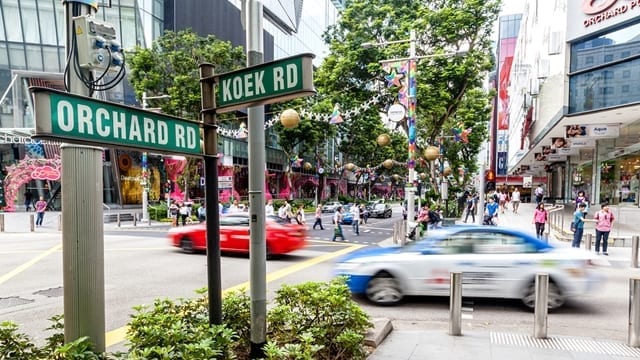
    Procter & Gamble, in partnership with the Singapore Economic Development Board, established its first digital innovation center in Singapore alongside guest-of-honor, S Iswaran, Minister for Trade and Industry (Industry), announcing an investment of over US$100 million over the next five years to support this E-Center. The launch reaffirmed P&G’s commitment to Singapore and aim to strengthen Singapore’s standing as a leading digital and e-Commerce hub in the world.

    The E-Center – P&G’s first outside the United States of America – will be pivotal to its undertaking of end-to-end digital innovation across three core areas: Supply Chain Management, e-Analytics and e-Business. In the area of Supply Chain Management, termed “i-Supply”, the E-Center will focus on transforming P&G’s supply chain end-to-end, enabling greater accuracy, visibility and more efficient processes.

    The e-Business unit aims to translate digital strategies into scalable plans for the region, and to leverage new digital channels to innovate and improve business models. Through its focus on e-Analytics, the E-Center will also leverage predictive analytics and big data to optimize product distribution and marketing strategy.

    With the launch, P&G will be training 40 employees in the first year to take on digital-related roles in these three capability areas. Through the E-Center, P&G will also expand its partnerships with local Small and Medium Enterprises (SMEs) and start-ups to strengthen digital capabilities and co-develop new digital solutions. To bolster the inauguration of the E-Center, P&G also hosted the second edition of its leadership development program – P&G Leadership College – for SMEs in collaboration with SPRING Singapore.

  • Shiseido perfume ambition revealed

    Shiseido perfume ambition revealed

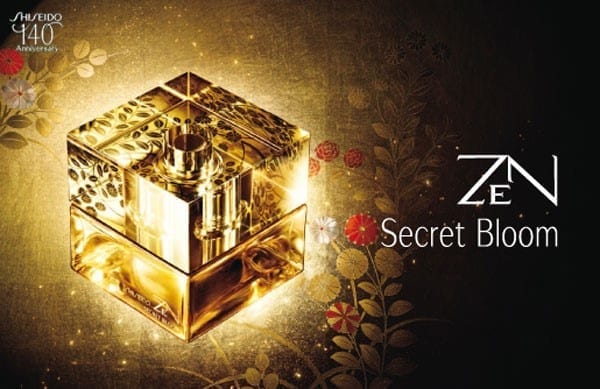
    Japanese cosmetics group Shiseido is aiming to become one of the world’s top five perfume makers in five years, up from its current seventh spot.

    New acquisitions will help Shiseido perfume market share grow – along with a step-up in marketing, especially online.

    Shiseido has beaten Spain’s Puig to win Procter & Gamble‘s Dolce & Gabbana perfume (D&G) licence, which generates 400 million euros ($445 million) in annual revenue. It aims to grow this to 1 billion euros in 10 years.
    Shiseido group chief executive for Europe, Middle East and Africa Louis Desazars, who was previously US head of Shiseido’s Nars make-up brand, says there is a new mindset and energy in the group.

    The D&G licence business will compensate for Shiseido’s loss this year of the Jean-Paul Gaultier perfume licence as part of an agreement with Puig when it bought the French brand in 2011.

    Shiseido says the D&G perfume business helped it more than double its market share instantly to 5.8 per cent from 2.2 per cent. It is aiming to reach 9 per cent in five years.

    On top of its own skincare lines, Shiseido makes perfume under licence for fashion brands Azzedine Alaia, Elie Saab, Issey Miyake and Narciso Rodriguez. The group has created a separate branch for niche brands it has acquired such as Serge Lutens last year, and the skincare and cosmetics brands Laura Mercier and ReVive in July.

    The global perfume market grew 2.9 per cent last year, while niche perfume brands saw their sales surge 15 per cent.

    Estee Lauder has also placed niche perfume brands it has bought, such as Editions de Parfums Frederic Malle and Le Labo, in a separate division.
    Including perfume, skincare and makeup, Shiseido ranks fifth globally behind L’Oreal, Coty, LVMH and Chanel, and is bigger than Clarins. In skincare alone, Shiseido says it aims to join the top three globally, up from its current fifth spot.

  • Alibaba hosts intellectual property event

    Alibaba hosts intellectual property event

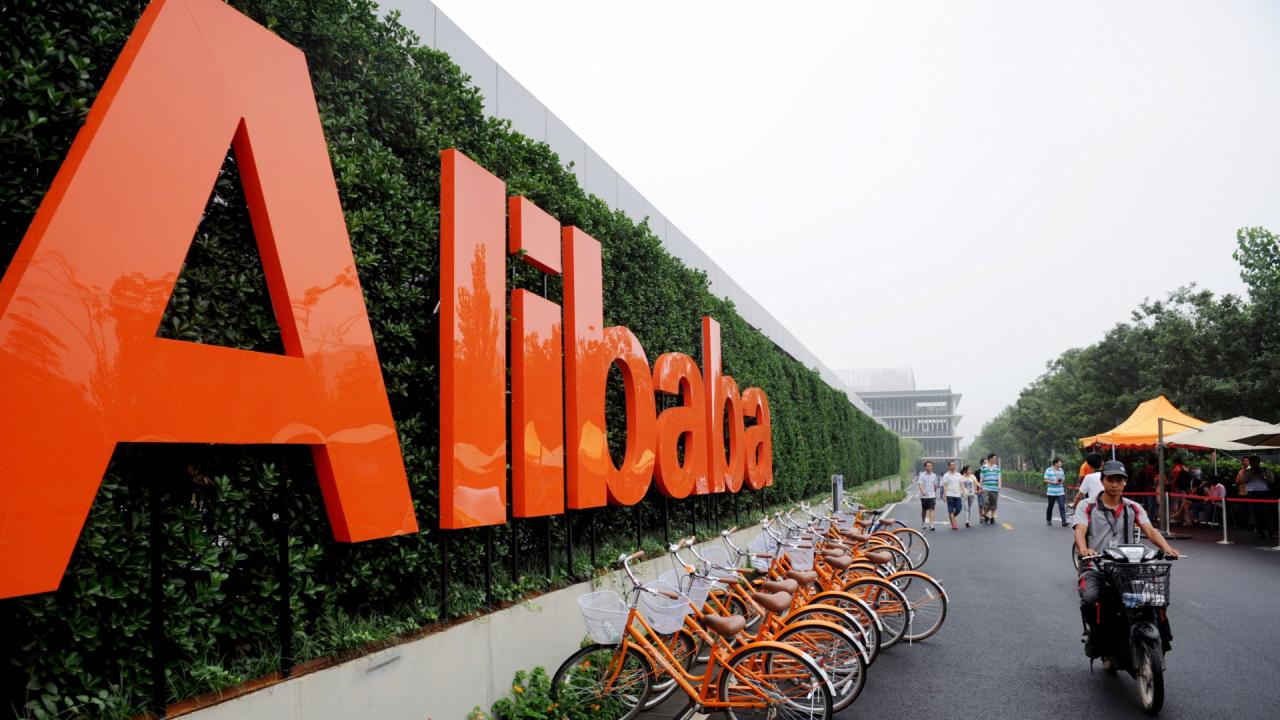
    Chinese online commerce giant Alibaba Group has hosted an inaugural Rights Holders Collaboration Summit involving international brands and the intellectual property (IP) enforcement community to enhance collaboration in the fight against infringements.

    More than 100 Chinese and international brands as well as trade associations attended the event, including Adidas, Apple, Burberry, Hewlett Packard, Louis Vuitton and Mars, the Chinese British Business Council (CBBC) and the Quality Brand Protection Committee (QBPC).

    Alibaba also announced the launch of the IP Joint-Force System, an online platform designed to streamline IP-related communications between the group and brands. The system aims to build a more collaborative working relationships with international brands as Alibaba continues its fight against counterfeits and IP infringement.

    New challenges

    With eCommerce becoming a way of life and the internet sector continues to evolve, brands and online marketplaces alike face new IP enforcement challenges, says Alibaba Group chief platform governance officer Jessie Zheng.

    “As the leading online marketplace, we have a responsibility to all our constituents to govern our platform and find innovative solutions. The Rights Holders Collaboration Summit and IP Joint-Force System are a couple of the many ways Alibaba is working closely with rights holders in our efforts to eradicate counterfeits both online and offline.”

    All brands in the “Good Faith Takedown” program are eligible for the IP Joint-Force System, which came into effect this month. This Alibaba program was launched last year to expedite the notice-takedown process for brands that submit valid counterfeit complaints. Many of the more than 700 brands involved in the program are participating in the first phase of the IP Joint-Force System, including Adidas, Apple, Mars, Philips and Procter & Gamble.

    With more than a billion products listed across its marketplaces at any given time, Alibaba Group’s data analytics and processing technologies enabled it to remove more than 120 million infringing product listings last year, which is eight times the number of counterfeit products removed based on takedown requests from brands.

    Dedicated support

    For the IP Joint-Force System, each participating brand is assigned a dedicated online portal and Alibaba account manager to enhance collaboration, heighten transparency around IP enforcement efforts, and reinforce mutual understanding and trust. The system enables Alibaba to directly and efficiently seek information from rights holders regarding suspected counterfeit product listings.

    It also lets brands identify the authenticity of a product and easily notify Alibaba of any infringements. Alibaba will then initiate the Good Faith Takedown process and immediately remove the listing without subsequent correspondence with the brand.

    “The IP Joint-Force System is a revolutionary industry solution that will redefine how IP enforcement is conducted in the digital age – where brands and eCommerce marketplaces work collectively and strategically to combat counterfeiters,” says Alibaba Group head of global IP enforcement Matthew Bassiur.

    “This is one of several game-changing approaches Alibaba will be advancing to both simplify and greatly enhance our overall enforcement process.”

  • Tmall driving more than sales for top beauty brands

    Tmall driving more than sales for top beauty brands

    Scores of high-end cosmetics companies are setting up shop on Alibaba Group’s Tmall.com online marketplace as eCommerce continues to gain ground as a critical marketing and sales channel for reaching China’s increasingly sophisticated consumers.

    At the recent Tmall Beauty Awards ceremony in Shanghai, which celebrated the top cosmetics brands operating on the eCommerce platform, Alibaba announced that 29 well-known Western brands and 37 from Japan and Korea had storefronts on Tmall at the end of 2015, including more than 10 joining the platform last year alone such as Lancôme, Bobbi Brown, La Mer, Anessa and Avene. Another 20 cosmetics companies are planning to launch their own presence on Tmall this year.

    Alibaba also announced a cooperation agreement with Korean cosmetics maker AmorePacific Group to expand the latter’s Tmall presence. AmorePacific will add two more storefronts exclusively on Tmall for the Sulwhasoo and IOPE beauty brands in the following months. AmorePacific already operates the Laneige, Innisfree, Mamonde and Etude House e-shops on Tmall, and about 800,000 Chinese consumers have purchased goods from Laneige’s shop over the past three years, according to Alibaba. The brand also sold about 45,000 BB creams, or blemish balms, during Alibaba’s 11.11 Shopping Festival, bringing in US$1.4 million from that product alone.

    Alibaba has similar cooperation agreements with Procter & Gamble, Estée Lauder, L’Oréal and domestic retailer Shanghai Jahwa Corp.

    The eCommerce push by cosmetics companies comes amid strong growth in high-end cosmetics purchases by Chinese consumers. A report from Chinese research firm CBNData, released in conjunction with the awards, noted that total sales of cosmetics products in China climbed nearly 20 per cent to $74.1 billion last year from 2014. Citing independent researchers, CBNData’s report also said that online channels accounted for 36 per cent of that, or $27 billion, with Tmall controlling about a 70 per cent share of the B2C market. Alibaba Group is an investor in CBNData parent China Business Network.

    Tmall Cosmetics GM Mike Hu said total sales generated on all business-to-consumer retail websites in China currently account for 12 to 15 per cent of the entire cosmetics market, and he predicts those channels will grow by another 30 per cent to 50 per cent over the next two to three years.

    Hu stressed that Tmall offers more than just another sales channel to brands. It’s also a platform to promote new products, build a connection with customers and increase business both online and off. According to Hu, over 20 brands have introduced about 160 versions of products that were exclusive to Tmall shoppers, and the brands have launched more than 100 new products via the website in 2015.

    “Two or three years ago, eCommerce played as a sales channel since its significance grew and it helped enhance business,” said Gary Chu, online general manager at Estée Lauder China, said at the awards ceremony. “Now what we are thinking about is how to integrate brand property, content and products into our presence in Alibaba’s ecosystem to meet the needs and demands of the brand.”

    To that end, Estée Lauder has been engaging customers via its so-called Fans communities within the Tmall mobile app. One brand, Bobbi Brown, opened its Fans page last November and now has more than 640,000 followers. It offers make-up tips and sample trials, among other initiatives, to tackle customers’ most common inquiries in order to educate and interact with shoppers, while serving as a bridge to the Bobbi Brown storefront. In addition to the Fans page, the company also used Instagram-like photo sharing on Tmall to generate buzz about Bobbi Brown lipstick ahead of Chinese New Year earlier this month, and Estée Lauder regularly uses the Tmall mobile app to help launch new products.

    Alibaba Group CEO Daniel Zhang said Estée Lauder’s efforts are prime examples of ways brands can engage shoppers with content and convert interactions into business opportunities.

    “All the brands and merchants are the best content producers, and merchants should incorporate products into content that consumers are willing to read and eager to buy,” he said.

    Brands are also using their Tmall storefronts to boost their online-to-offline (O2O) business. So far 54 of them, including Estée Lauder, La Mer and Laneige, have integrated their online and offline membership programs and now allow users to make appointments for skin care treatments in brick-and-mortar stores online.

    Tmall will continue to promote O2O retail to “achieve the goal of same product, same service and same membership” online and offline, Hu said.

    Here are the winners from some of the biggest award categories from last Friday’s ceremony. The winners were chosen based on search popularity, interaction with shoppers, customer reviews, trial reports, sales and services among millions of customers and thousands of brands on Tmall in 2015.

    Most popular brands online: Laneige, Lancôme, Innisfree, Maybelline

    Hot search brands: Bobbi Brown, Avene, Sulwhasoo (which launched on March 1)

    Favorite brands among customers born in the 1990s:Sekkisei, The Face Shop, Hanhoo (Chinese domestic brand)

    Favorite brands among customers holding Alibaba Passport (shoppers spending more than RMB 100,000 ($15,270) annually on Alibaba’s platforms): Shiseido, Whoo, L’Oréal, Clarins, Innisfree

    Favorite brands among male shoppers: JVR (Chinese domestic brand), L’Oréal, NIVEA

    Best-selling brand: Pechoin (Chinese domestic brand)

    Outstanding and popular group: Estée Lauder Group