Tag: profit loss

  • Esprit sales continues to dive

    Esprit sales continues to dive

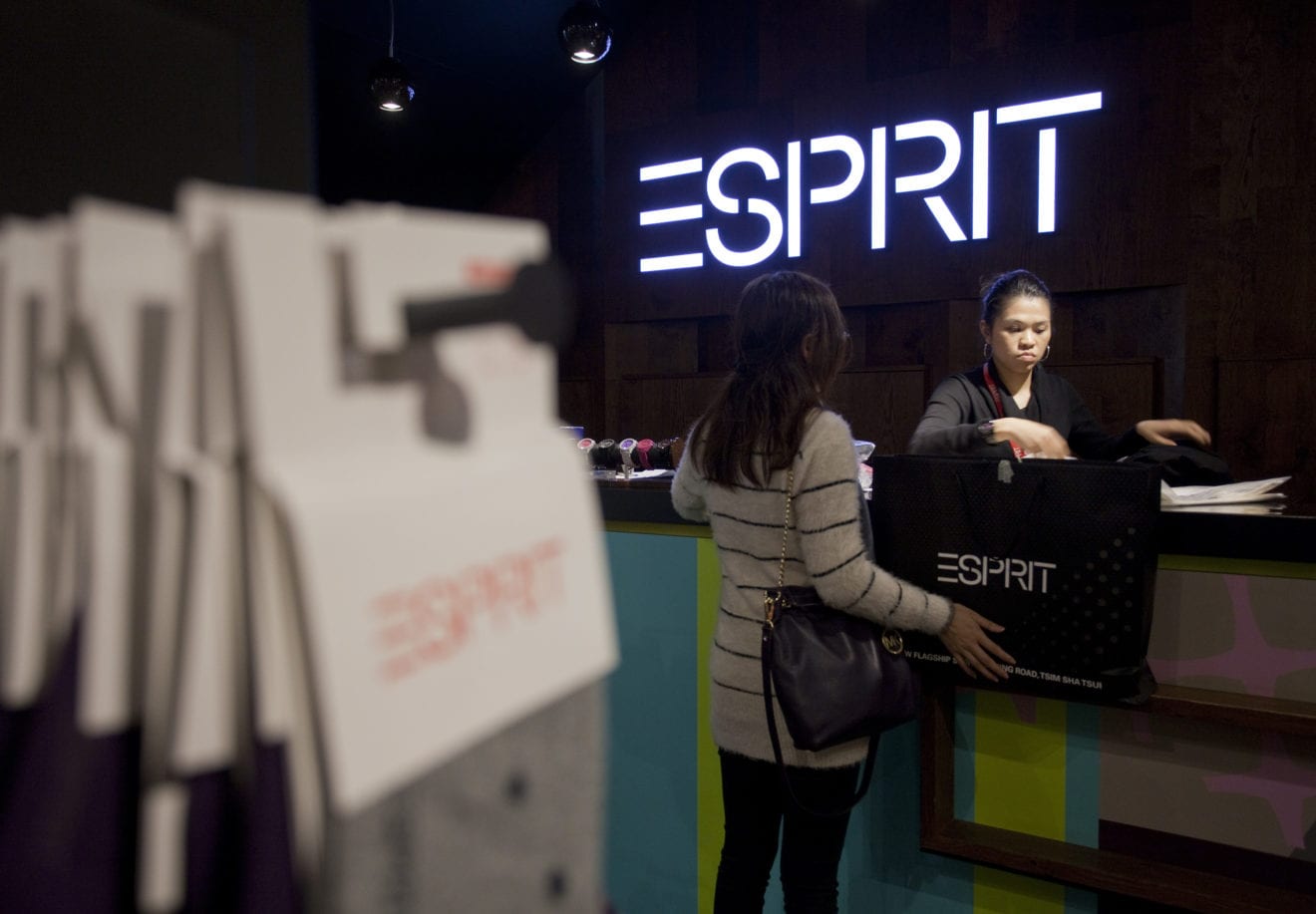
    Esprit sales slumped further in the first quarter as the embattled fashion brand’s store network continued to shrink. In a stock exchange filing on Friday, Esprit said group revenue for the quarter to September 30 slumped 16.2 per cent year on year in local currency while its own offline store sales area reduced by 10.6 per cent, to HK$3.34 billion (US$425.8 million). The company’s own-managed stores, which account for 37 per cent of the company’s total turnover, fell by 17.8 per cent.

    “The decline was due to a reduction in net sales area of 11.5 per cent year on year, a result of continued rationalisation of our distribution footprint, including the closure of the Australia and New Zealand markets and a decline in comparable retail store sales (excluding e-shop) of 14.1 per cent … mainly due to declining customer traffic to our stores and extended warm summer temperature in Europe which impacted sales of our autumn merchandise,” the company said.

    Offline same-store sales in Asia Pacific grew by 0.3 per cent, mainly due to promotional activities. But online sales, which accounted for 24.9 per cent of the company’s revenue, fell by 14.9 per cent globally.

    Eshop, almost entirely in Europe and representing 24.9 per cent of group revenue, recorded a decrease of 14.9 per cent. Online sales in Asia Pacific, which account for a mere 2.6 per cent of total e-shop sales, plummeted 36.7 per cent, largely blamed on the closure of the Australia-New Zealand business.

    Wholesale revenue, almost entirely from Europe, fell 15.5 per cent.

    The company reiterated comments made after its dire full-year results were released last month, which included a US$325.5 million loss in the year to June 30: “Corrective measures are in place to reignite sales momentum.”

    A strategy plan will be released on November 26 outlining how the company plans to sharpen its brand identity, putting the customer at the centre of everything it does; improve product offering and brand positioning; reduce complexity and improve accountability in the organisation; become a leaner organisation; and eliminate loss-making parts of the business.
  • Chinese Estates shares falls as much as 11 per cent despite rise in core profit

    Chinese Estates shares falls as much as 11 per cent despite rise in core profit

    Shares of Chinese Estates dropped as much as 11 per cent on Tuesday despite its core profit jumping 3.4 times last year to HK$16.78 billion, mainly driven by asset disposals.

    The company’s shares end the day 8.65 per cent or HK$1.80 lower at HK$19 after hitting an intraday low of HK$18.50.

    The hefty increase in core earnings, excluding revaluation gains on investment properties, folllowed the sale of investment properties including a Tsim Sha Tsui commercial building, The One, and buildings in Chengdu, Chongqing and Shanghai.

    In a filing to the Hong Kong stock exchange, Chinese Estates said a final dividend of 1 HK cent would be paid, down 98 per cent from 50 HK cents a year ago.

    Shareholders received a conditional interim dividend of HK$2 in January. The group will continue to closely monitor the changes in local consumption patterns – Lau Ming-wai, Chinese Estates

    Net profit, including revaluation gains on investment properties, fell 11.67 per cent to HK$7.72 billion last year due to lower rental income after its disposal of Silvercord and The One in Tsim Sha Tsui.

    Turnover tumbled 41.22 per cent to HK$1.54 billion.

    “The group remains cautiously optimistic in the rental income growth from its retail investment properties,” said chairman Lau Ming-wai, who is the son of Joseph Lau Luen-hung, the firm’s controlling shareholder.

    The group’s overall gross rental income from Hong Kong tumbled 35.23 per cent to HK$1.09 billion last year. Rental income from retail properties fell 50.8 per cent, while rental income from non-retail properties rose 7.09 per cent.

    Lau said some retail business sectors had shown indications of reaching their peaks, especially tourist-related business.

    “Although the group’s well-located retail investment properties in Hong Kong leased well during the year, the group will continue to closely monitor the changes in local consumption patterns, refine its tenant mix, boost customer flow and spending for its retail investment properties by organising various marketing and promotional activities,” he said.

    Lau said the disposal of MassMutual Tower in Wan Chai in January would mean the rental income contribution from office buildings would be significantly lower this year.

    Chinese Estates sold the MassMutual Tower to Evergrande Real Estate for HK$12.5 billion.

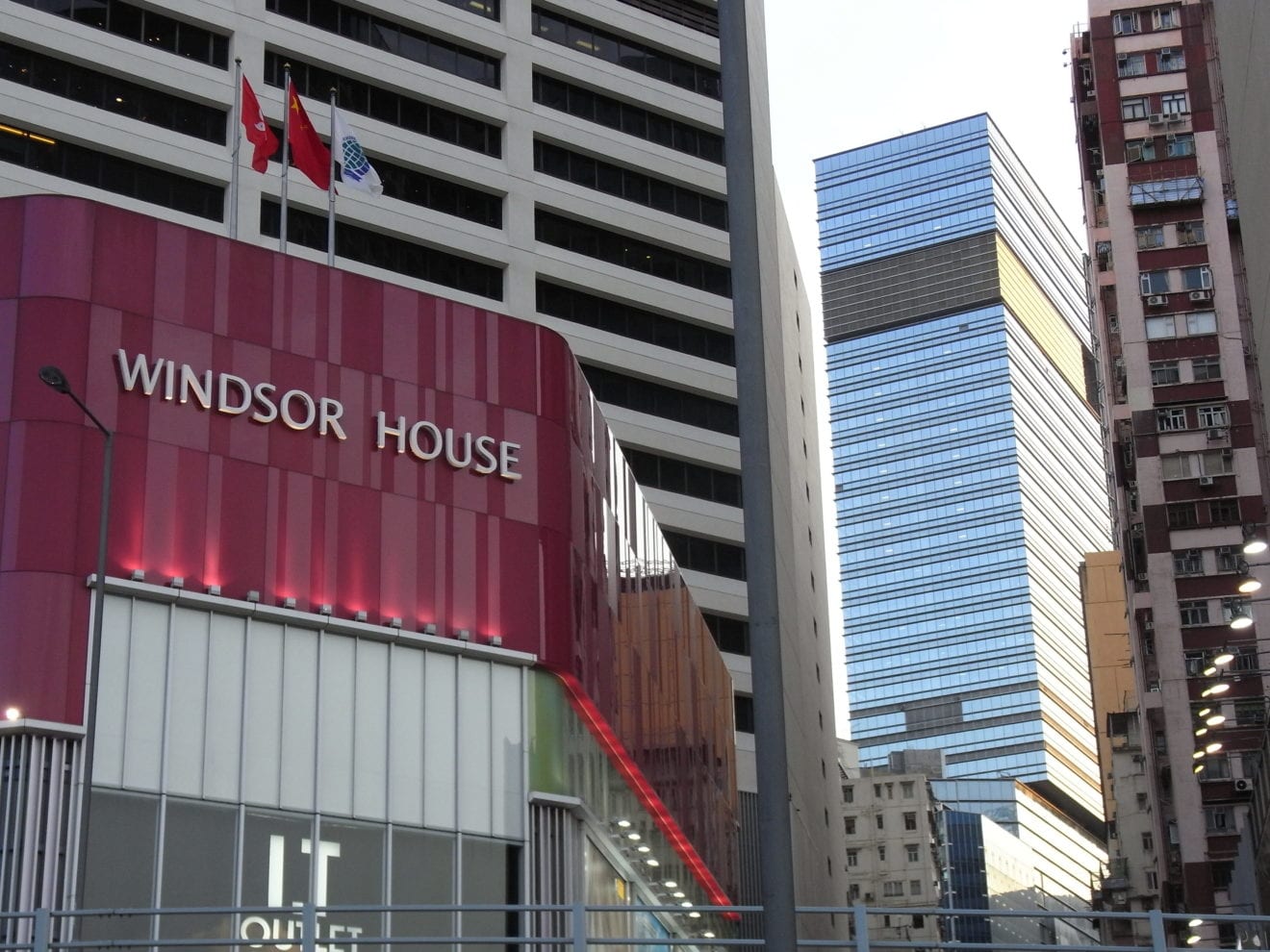
    In December , the firm sold the Windsor House in Causeway Bay for HK$12 billion to a company wholly owned by Joseph Lau. The deal will be completed this year.

    It said the majority of the sale proceeds from the sale of Windsor House would be declared as a dividend.

    This month, it said it had entered into a sale and purchase agreement with an independent party to acquire a London freehold property at St George Street, Mayfair, for £121.7 million (HK$2.33 billion).

  • Hongkong Land’s 2015 results in line with expectations and support its ratings

    Hongkong Land’s 2015 results in line with expectations and support its ratings

    Hong Kong, March 10, 2016 — Moody’s Investors Service says Hongkong Land Holdings Limited’s (HKLH) results in 2015 reflected lower underlying profit but were in line with expectations and continue to support its A3 issuer rating.

    The results also support the A2 issuer rating of Hongkong Land Company Limited, a wholly-owned subsidiary of HKLH.

    The outlook for all ratings remains stable.

    “HKLH’s overall financial profile remained strong, despite the company reporting lower profitability and weaker financial metrics in 2015 as a result of lower earnings in its property development business,” says Joe Morrison, a Moody’s Vice President and Senior Credit Officer.

    HKLH’s revenues for 2015 grew by 3% year-on-year to $1.93 billion, as both rental income and property development revenue experienced moderate growth during the year.

    However, its adjusted EBITDA fell by around 14% year-on-year to $1.08 billion in 2015 due to an 11% year-on-year drop in the underlying operating profit of its property development business to $354 million. The drop was caused by completion and delivery of lower margin projects along with lower provision write-backs for two residential projects in Singapore during the year.

    Nevertheless, HKLH’s financial profile continues to support the A3 rating level. HKLH ‘s adjusted EBITDA interest coverage — which excludes fair value gains, but includes dividends from associates and joint ventures — was 7.9x for FY2015, down from 9.3x in 2014, while adjusted debt/EBITDA increased moderately to 3.6x from 3.4x.

    “The company’s investment property business remained strong in 2015, and the limited office supply situation in Central will continue to support its rental and occupancy rates over the next two years,” says Morrison.

    HKLH’s office vacancy rate declined to 3.4% at end-2015 from 5.4% at end-2014, while average office rents remained stable. Retail space remained fully let, with average net rent increasing around 3.3% year-on-year to HKD221 per square feet.

    The vacancy rate of HKLH’s Singapore office portfolio remained low at 3% at end-2015 compared to 1.7% at end-2014. However, taking into account the committed area under new leases, the adjusted vacancy would have been 1% at end-2015.

    The company’s rental income grew around 1% year-on-year to $851 million, benefitting from positive rental revisions for its Central office and retail portfolio during 2015.

    Moody’s expects HKLH’s EBITDA interest coverage and adjusted debt/EBITDA to weaken moderately over the next 2 years, as the company raises debt for potential land acquisitions and development projects.

    The impact should be mitigated by the contribution from property development. At end-2015, HKLH had unrecognized contracted sales of USD821 million for its projects in Mainland China, with around 70% scheduled for delivery in 2016.

    HKLH’s liquidity profile remained robust. The company had cash of $1.6 billion and committed unutilized facilities of $2.5 billion at end-2015. These resources are more than sufficient to cover its short-term debt of $169 million over the next 12 months.

    The principal methodology used in these ratings was Global Rating Methodology for REITs and Other Commercial Property Firms published in July 2010.

    Hongkong Land Holdings Ltd is a Bermuda-incorporated holding company engaged in property investment, management, and development. HKLH is 50%-owned by Jardine Strategic Holdings Ltd. (A2 stable).

    The Hongkong Land Company Ltd (A2 stable), incorporated in Hong Kong, is a wholly owned subsidiary of HKLH and holds the group’s portfolio of 5 million square feet of prime office and retail space in Hong Kong, the Central portfolio.