Retail News CRM

Tag: project

  • Revolutionizing Connectivity in Southern Philippines: Globe’s Groundbreaking Mindanao Submarine Cable Project Begins 2026

    Revolutionizing Connectivity in Southern Philippines: Globe’s Groundbreaking Mindanao Submarine Cable Project Begins 2026

    Globe Telecom has announced plans to implement a new submarine cable system in Mindanao, set to begin in early 2026. This advancement highlights the ongoing commitment to strengthen network resilience and extend capacity in Southeast Asia’s archipelagic markets.

    Project Details

    The forthcoming project involves the installation of a 48-core, 175-kilometer submarine cable that will link Zamboanga to Isabela City in Basilan, with an extension to Sulu. According to Globe, the infrastructure will bolster both broadband and mobile services by incorporating submarine and inland cable systems, landing stations, fronthaul facilities, and core and access network nodes.

    Survey activities for the submarine cable are slated to commence in early 2026, with full construction anticipated by mid-2027. The operational hub in Isabela City is set to function as a regional aggregation point for high-capacity internet traffic. This will enhance redundancy and service stability in parts of Mindanao and the broader southern Philippines region.

    This innovative initiative aligns with the Philippine government’s National Broadband Plan. It reflects the concerted regional effort to extend digital infrastructure to remote and underserved communities, a persistent challenge for many ASEAN countries with dispersed island geographies.

    More than Infrastructure

    Carl Cruz, President and Chief Executive Officer of Globe Telecom, emphasized the significance of the project beyond its physical infrastructure. He stated, “This is more than infrastructure; it is a bridge to opportunity.” Cruz added that the average monthly data consumption has skyrocketed beyond 30 gigabytes per user, necessitating sustained investment in fiber and broadband networks to support digital services, small businesses, and economic participation.

    The Mindanao submarine cable is part of Globe’s broader network modernization program, which has already transitioned more than 600 towns across 70 provinces to full-fiber infrastructure. This shift from legacy copper networks has enhanced service reliability and reduced energy usage, aligning with regional operators’ sustainability goals.

    Impact on Communities

    Jowin Marquez, Senior Director and Territory Lead for Globe’s Network Technical Group, highlighted the transformative potential of reliable connectivity. He noted that it empowers communities with access to education, bolsters local businesses, and fosters greater participation in the digital economy.

    In the past three years, Globe has invested PHP 228 billion in capital expenditures and PHP 236 billion in operating expenses to fortify and future-proof its network. Its GFiber Prepaid service – a reloadable, no-contract broadband offering – experienced a 53% growth in early 2025. It currently serves approximately 400,000 households nationwide, contributing to Globe’s total broadband subscriber base of 1.83 million.

    Questions & Answers

    What is the purpose of Globe Telecom’s new submarine cable system?
    The new submarine cable system aims to strengthen network resilience and expand capacity in archipelagic markets, particularly in Mindanao, Philippines.

    What does the project entail?
    The project involves the deployment of a 48-core, 175-kilometer submarine cable connecting Zamboanga to Isabela City in Basilan, with an extension to Sulu. It will enhance both broadband and mobile services.

    How does this initiative align with broader efforts in the region?
    The project is consistent with the Philippine government’s National Broadband Plan and mirrors a wider regional effort to extend digital infrastructure to geographically isolated and underserved communities.

  • Meta’s Project Phoenix: Mixed Reality Glasses Launch Delayed, Aims for Superior Quality over Speed

    Meta’s Project Phoenix: Mixed Reality Glasses Launch Delayed, Aims for Superior Quality over Speed

    Meta, a tech giant known for its innovative projects, seems to have hit a temporary halt on its advanced mixed reality glasses project. The anticipated launch, previously expected in late 2026, will likely be delayed until sometime in 2027.

    A Shift in Timeline for Project Phoenix

    The tech enthusiasts looking forward to experiencing Meta’s pioneering holographic glasses might need to modify their anticipations. The company recently announced that the launch of their state-of-the-art mixed reality glasses, internally referred to as “Phoenix”, will be deferred.

    Previously, the company planned to release the product in the latter half of 2026, but recent statements from Meta executives suggest a shift to the first half of 2027. According to CEO Mark Zuckerberg, the delay is strategic as the firm aims to prioritize a sustainable business plan and a superior product experience over haste.

    Project Phoenix: What We Have Learned So Far

    The highlight of the Phoenix project is the External Compute Module, where the glasses will be linked to a “puck-like” power and compute source via a wire. This design is intended to reduce the weight on the wearer’s face.

    The glasses will prioritize visual fidelity, aiming to deliver the immersive experience of mixed reality headsets in a form similar to traditional eyewear. Furthermore, they will incorporate advanced sensor technology for an enhanced digital overlay on the real world.

    The delay in the project’s timeline is designed to give the product development team more time to refine the product details.

    The Mixed Reality Market Landscape

    Currently, the mixed reality market is experiencing a unique phase. On one hand, there is the Apple Vision Pro, a remarkable but hefty and expensive device that tends to isolate its users. On the other hand, there are Meta’s Ray-Ban Meta AI glasses, which integrate AI, cameras, speakers, microphones, and a monocular screen display for notifications and information.

    While the Ray-Bans are ideal for quick interactions, they do not offer a “true” mixed reality experience. Project Phoenix aims to bridge this gap by combining the immersive experience of Vision Pro with the wearability of the Ray-Bans.

    The delay in the project launch indicates that Meta is closely observing its competitors. The mixed reactions to Apple’s bulky headset might have prompted them to realize that a mediocre product will not suffice. These developments come at a time when Meta is reportedly reducing its metaverse budget by approximately 30%, indicating that they cannot risk a major hardware failure.

    Questions & Answers

    Why is the Project Phoenix launch delayed?
    The launch delay is strategic, allowing Meta to focus on developing a sustainable business model and a superior product experience.

    What are the key features of the Project Phoenix glasses?
    The Phoenix glasses will connect to a “puck-like” power and compute source via a wire, incorporate advanced sensor technology for digital overlaying, and prioritise visual fidelity to deliver an immersive experience similar to mixed reality headsets.

    How is Project Phoenix different from other products in the market?
    Project Phoenix aims to bridge the gap between extreme immersion and practical wearability, offering a “true” mixed reality experience in a form similar to traditional eyewear.

  • Samsung Challenges Apple’s Dominance: Unveils Project Moohan, Its First XR Headset

    Samsung Challenges Apple’s Dominance: Unveils Project Moohan, Its First XR Headset

    Samsung has officially entered the extended reality (XR) market with the announcement of its “Worlds Wide Open” Virtual Galaxy Event. The event, which will live-stream on October 21st at 10 p.m. ET, will reveal “Project Moohan,” the company’s first XR headset.

    A New Entrant in the XR Arena

    Samsung’s “Project Moohan” is the first device to be officially unveiled as a product of the collaboration between Samsung, Google, and Qualcomm in the XR space. The headset is built on the new Android XR platform and marks the dawn of “multi-modal AI.” The design of the product has been kept under wraps until its official reveal at the event. To create excitement among customers, Samsung is offering a $100 reservation credit on its official website.

    Why This is a Significant Development

    The XR space has been primarily dominated by Apple’s expensive Vision Pro, which is priced at $3,499. However, due to its high cost and closed ecosystem, there has been a significant gap in the market for a rival product. The Samsung-Google-Qualcomm alliance is set to fill this gap, leading to a classic Android vs. iOS competition in spatial computing. The open platform of the new product encourages developers to create a variety of apps, potentially leading to faster innovation and increased consumer choice. For those seeking an alternative to Apple’s XR vision, Samsung’s “Project Moohan” could be the ideal solution.

    The Battle for the XR Market is On

    The launch of “Project Moohan” brings a much-needed heavyweight competitor to challenge Apple in the XR space and potentially drive down prices. While Apple’s Vision Pro is a remarkable piece of technology, its high price tag makes it inaccessible for most people. The alliance between the tech giants has the potential to offer a compelling alternative that is more affordable. The hope is that “Project Moohan” will be released at a more consumer-friendly price point. If Samsung can deliver a premium experience without the high cost, it could be the device that finally brings XR into the mainstream, promoting an open ecosystem over Apple’s polished, closed one.

    Questions & Answers

    What is “Project Moohan”?
    “Project Moohan” is Samsung’s first XR headset, unveiled at the “Worlds Wide Open” Virtual Galaxy Event.

    Who is involved in the creation of “Project Moohan”?
    The headset is a product of the collaboration between Samsung, Google, and Qualcomm.

    How does “Project Moohan” compare to Apple’s Vision Pro?
    Unlike the expensive and closed ecosystem of Apple’s Vision Pro, “Project Moohan” operates on an open platform, encouraging faster innovation and increased consumer choice due to its more affordable price point.

  • Yili Group Forecasts Robust Revenue Growth; Investments Boost Dairy Production Capacity

    Yili Group Forecasts Robust Revenue Growth; Investments Boost Dairy Production Capacity

    Yili Group, a leading dairy company based in New Zealand, is predicting a steady increase in revenue for the upcoming year, following impressive growth during the first half of the current year. The company’s subsidiaries, Westland Milk Products and Oceania Dairy, reported a joint unaudited revenue growth of 16% during the first half of this year, compared to the same timeframe in the previous year. In addition, the pre-tax profit experienced a 12% increase.

    Investing in Production Capacity

    Zhiqiang Li, the Executive Director of Yili Group, stated that the companies are in an excellent position for sustained growth due to significant investments in their production capacity at essential sites.

    “Major investments have been made to increase the production capacity of high-demand, high-value products at Westland’s Hokitika and Rolleston sites, as well as ODL’s Glenavy facility. This is in response to the rising global demand for top-quality dairy products,” said Li.

    Among the significant upgrades is an increase in butter production by 10,000 tonnes at the Hokitika site, as well as enlarged skim milk powder output at the Glenavy site.

    Boosting UHT Cream Production and Export

    These enhancements have facilitated a 20% growth in UHT cream production at the Rolleston site. A considerable amount of this production is exported to China, facilitated by the addition of new equipment such as a silo and revamped unloading facilities.

    In the past year, Westland and Oceania have partnered in sales and marketing ventures to offer a wider variety of dairy products.

    “While the profits for the individual companies will experience a period of consolidation, both total revenue and profit margins are projected to continue their healthy growth trend,” added Li.

    Questions & Answers

    **What is the projected growth for Yili Group?**
    Yili Group is anticipating consistent revenue growth in the upcoming year, following a significant increase in the first half of the current year.

    **What key upgrades have been made to increase production?**
    Key upgrades include a 10,000-tonne increase in butter production at the Hokitika site, as well as an expanded skim milk powder output at the Glenavy site.

    **What collaborations have occurred between Westland and Oceania?**
    In the past year, Westland and Oceania have collaborated on sales and marketing to offer a broader range of dairy products.

  • Australian Banks Join Forces to Explore Tokenised Asset Settlement Innovations

    Australian Banks Join Forces to Explore Tokenised Asset Settlement Innovations

    The Reserve Bank of Australia (RBA) and the Digital Finance Cooperative Research Centre (DFCC) have officially unveiled the industry participants for their tokenised asset settlement research initiative, marking a significant step towards modernizing Australia’s financial landscape.

    Leading Banks Join Forces for Project Acacia

    Among the key players in this ambitious endeavor are the ANZ, Commonwealth Bank of Australia (CBA), and Westpac, who will spearhead various use cases as part of Project Acacia. This groundbreaking project is designed to examine how innovative forms of digital money and supportive infrastructure can facilitate the growth of Australia’s wholesale tokenised asset markets, according to a joint statement from the RBA and DFCC.

    A Closer Look at the Use Cases

    The research project is set to explore a total of 24 use cases. Out of these, 19 will pilot real monetary and asset transactions, while the remaining 5 will focus on proof-of-concept scenarios involving simulated transactions. The testing phase is scheduled for the latter half of 2025, leading up to an anticipated report detailing the project’s findings in the first quarter of 2026.

    Innovators on Board

    The initiative will also feature a diverse lineup of other lead participants, including the Australian Bond Exchange, Australian Payments Plus, Canvas, Catena Digital, Fireblocks, Forte, Imperium Markets, Northern Trust, NotCentralized, ProspEx, and Zerocap. With such a medley of innovators, one is left wondering if the future of finance will soon resemble a high-tech chess game, where every move is calculated with precision.

    Regulatory Support Accelerates Progress

    In a move to enhance the feasibility of this project, the Australian Securities and Investments Commission (ASIC) has granted regulatory relief to participating entities. This support aims to streamline the testing of tokenised asset transactions, including those utilizing Central Bank Digital Currencies (CBDCs), among select financial institutions over the coming months.

    Embracing a Digital Future

    As Australia stands on the cusp of a transformative era in its financial markets, the outcomes of Project Acacia could have lasting implications for how assets are traded and settled in the digital age, heralding an exciting new chapter for the retail sector.

    Questions & Answers

    What is the primary goal of Project Acacia?
    The main aim of Project Acacia is to explore how different forms of digital money and infrastructure can enhance Australia’s wholesale tokenised asset markets.

    When will the testing of use cases take place?
    Testing is scheduled for the latter half of 2025, with project findings expected in the first quarter of 2026.

    Which regulatory body is supporting the project?
    The Australian Securities and Investments Commission (ASIC) is providing regulatory relief to facilitate responsible testing of tokenised asset transactions among participants.

  • CapitaLand Development Kicks Off Construction on Exciting New Project: The Fullton

    CapitaLand Development Kicks Off Construction on Exciting New Project: The Fullton

    Nestled within the stunning Vinhomes Ocean Park 3 in Hung Yen Province, just east of Hanoi, The Fullton is set to make waves in Vietnam’s luxury housing market, boasting an estimated gross development value of around US$800 million. This impressive undertaking by CapitaLand Development marks a significant milestone as its inaugural luxury low-rise residential project in northern Vietnam.

    Groundbreaking Ceremony with Dignitaries

    The celebration of this ambitious project kicked off with a groundbreaking ceremony, graced by notable figures including His Excellency Jaya Ratnam, Singapore’s Ambassador to Vietnam; Tan Wee Hsien, CEO of CapitaLand Development Vietnam and International; and executives from Far East Organization. Their presence underscored the collaborative spirit behind this landmark endeavor.

    Phased Development Plan

    Spanning an expansive 25 hectares, The Fullton will unfold in two distinct phases. The first phase, aptly named The Fullton Edition, will consist of 342 residential units spread over 12 hectares, with a completion target set for 2026. In a subsequent phase slated for 2027, an additional 350 residences will be unveiled, contributing to a luxurious living experience.

    Prime Location for Easy Accessibility

    The project’s strategic location provides seamless access to the Northern Key Economic Region through major highways, including National Highway 5A and the Hanoi–Hai Phong Expressway. With future infrastructure developments, such as the anticipated Tran Hung Dao Street set to enhance connectivity, residents can expect not only convenience but also the tranquility of suburban living.

    Meeting the Demand for Quality Housing

    Addressing the rising demand for quality, low-density housing in northern Vietnam, Tan Wee Hsien highlighted that The Fullton caters especially to discerning homeowners and professionals in the Hanoi area. “With nearly 700 homes and shophouses, we aim to build a prestigious community with a range of villa types, including enclave, twin, and detached villas within a secure gated environment,” he elaborated. This marks CapitaLand’s first venture into Greater Hanoi, reflecting a promising growth trajectory bolstered by ongoing infrastructure enhancements and changing lifestyle preferences.

    A Symbol of Bilateral Relations

    Ambassador Ratnam noted the project’s role in strengthening the ties between Singapore and Vietnam, expressing confidence in the nation’s growth prospects. “The Fullton is not just about homes; it’s about contributing to Vietnam’s urban transformation,” he affirmed, indicating the project’s alignment with the country’s bustling urbanization efforts.

    Architectural Harmony with Nature

    Designed with aesthetic sensibilities, The Fullton features an array of meticulously crafted boutique townhouses and villas, echoing the terraced landscapes of Vietnam. Its architectural blueprint harmonizes with the natural greenery, providing an oasis of tranquility, contemporary luxury, and vibrant communal spaces.

    Community-centric Amenities

    Central to The Fullton is a lively 1.9-hectare park designed to nurture community spirit and promote wellness. With themed playgrounds, fitness areas, and serene gardens for yoga, it’s a hub for recreation for all ages. A standout feature is the private clubhouse, a rarity in low-rise residential spaces, offering a retreat-like atmosphere inspired by the surrounding landscape.

    Sustainability at Its Core

    Emphasizing eco-friendly initiatives, The Fullton includes electric vehicle charging, expansive green areas, and energy-efficient designs. These features reflect CapitaLand’s commitment to sustainable urban development, contributing positively to Vietnam’s ever-evolving urban fabric.

    The Vision Behind CapitaLand Development

    CapitaLand Development, representing CapitaLand Group’s robust global portfolio valued at SGD 21.5 billion (US$16.7 billion), is focused on leveraging its extensive real estate expertise across key markets. The firm’s ongoing project in Vietnam highlights over 30 years of investment and development, with achievements celebrated through numerous prestigious awards.

    As CLD aims to be the developer of choice, its vision is firmly rooted in creating quality spaces that enrich lives, enhance communities, and champion sustainability. After all, who wouldn’t want to live in a place where nature meets modern living?

    Questions & Answers

    What is the estimated value of The Fullton development?
    The estimated gross development value of The Fullton is approximately US$800 million.

    When is the completion date for the first phase of The Fullton?
    The first phase, The Fullton Edition, is expected to be completed by 2026.

    What unique features does The Fullton offer to its residents?
    The Fullton features a vibrant central park, a rare private clubhouse, and numerous eco-friendly amenities, all designed to promote community, health, and sustainability.

  • Binance Launches Billion-Dollar Crypto Rescue Initiative

    Binance Launches Billion-Dollar Crypto Rescue Initiative

    Binance invites participants to support the crypto industry via a rescue initiative, to which it will initially commit $1 billion.

    Binance has established the Industry Recovery Initiative (IRI), which includes its own initial commitment of $1 billion, according to a blog post by the crypto giant.

    The IRI is not an investment fund, Binance said, adding that it intends to increase the amount to $2 billion soon if the need arises.

    The initiative is expected to last about six months with flexibility on the investment structure, be it token, fiat, equity, convertible instruments, debt, or credit lines. The committed capital must be set aside within public addresses to ensure transparency.

    Aside from Binance, there are other existing IRI participants, including Jump Crypto, Polygon Ventures, Aptos Labs, Animoca Brands, GSR, Kronos, and Brooker Group which have made an initial aggregate commitment of around $50 million. 150 applications from companies seeking to provide support have also been received.

    On the participation of traditional financial institutions, Binance said it was open to exploring other deal structures for those keen as such firms may be unable to send money to a public address.

    On the targets for capital deployment, IRI is aiming for companies with «innovation and long-term value creation, a delineated and viable business model, and a laser focus on risk management.

    Aside from funding support, we plan to provide founders and projects with comprehensive support – from formation, technical execution, fundraising, and more – so that they can emerge and grow stronger from the crypto winter, the post added.

    Meanwhile, the crypto winter persists following the collapse and subsequent revelations of the fallen exchange FTX. Binance had planned initially to acquire FTX but backed out one day after signing a non-binding agreement citing concerns from due diligence and news reports.

  • Ferrari And Qualcomm Team Up For Tech Projects For Road, Racing Cars

    Ferrari And Qualcomm Team Up For Tech Projects For Road, Racing Cars

    Ferrari said on Tuesday it would partner with Qualcomm Technologies to use the San-Diego based group’s premium product, the Snapdragon chipsets, to accelerate the sports carmaker digital transformation. The deal will involve both its road cars and its Formula One racing team and the first common projects, including the so-called digital cockpit, have been already identified, the Italian group said in a statement.

    Ferrari’s new CEO Benedetto Vigna – a technology industry veteran – said in November Ferrari would seek technology partnerships as it moves ahead with transition toward cleaner mobility and in order to pivot technologies that require high investments.

    The Snapdragon logo will make its debut on Ferrari’s F1-75 racing model, which will debut on Feb 17

    “Innovation requires market leaders working together. Thanks to this agreement … we expand our knowledge in digital technologies and web 3.0, areas with great potential for automotive and motorsport,” Vigna said in the statement.

    The Snapdragon logo will make its debut on the F1-75 racing model, the Ferrari single-seater which will be unveiled at the company’s headquarters in Maranello on Feb. 17.

  • Apple reportedly accelerates ‘Project Titan’ as fully self-driving car could arrive by 2025

    Apple reportedly accelerates ‘Project Titan’ as fully self-driving car could arrive by 2025

    It might not fit in your pocket, but you might consider the Apple Car to be a mobile product. And today Apple has decided to produce a car that will be able to drive without any help from humans. Apple reportedly had been deciding between producing a car with limited self-driving capabilities similar to models currently available, and an auto that requires no human intervention.

    Sources familiar with the situation told Bloomberg that under team leader and VP of technology Kevin Lynch, Apple is working to take humans out of the equation right off the bat with its first vehicle. And we might see the Apple Car released as soon as 2025. But today’s report says that this date can change and Apple also could decide to offer limited autonomy (steering and acceleration) with its first model if need be.

    Many inside the team are not optimistic that the product will be available to consumers as soon as 2025. The timeline is aggressive and Apple still needs to find partners to help it build the vehicle. Still, investors liked the sound of what they were hearing and Apple’s shares hit an all-time high today of $158.40, up over 3% on the day.

    Apple has called its work on a self-driving car “Project Titan” as it competes with Tesla and others who are racing to complete what is obviously a complex task. Still, the company has shaved some years off of its timeline from the five-to-seven years that Apple engineers had been planning to the four years mentioned in today’s report. Apple’s car would be expected to go without a steering wheel and a large iPad-like touchscreen would be placed in the middle of the vehicle for the passengers to use.

    In case of an emergency, Apple has considered the inclusion of an emergency takeover mode. The company also has finished much of the work required to develop the chip needed to, uh, drive the car. The same team inside Apple that designed the chips used on the iPhone, iPad, and Mac did the work for the car’s processors instead of the Project Titan team. This component is the most advanced ever designed by Apple and consists mostly of neural processes needed for the vehicle to self-drive.

    Apple is also looking to include stronger safeguards for its self-driving cars than those available from Tesla and Waymo. This includes layers of backup systems just in case something in the car fails while it is going 65 miles per hour on the highway with your family inside. The tech giant is looking to hire engineers to develop test and safety features related to Project Titan.

    A recent job posting for engineers says, “The Special Projects Group is seeking an accomplished mechanical engineer to lead the development of mechanical systems with safety-critical functions. You will use your passion for figuring things out to help design safety systems and to lead the testing and countermeasure of those systems.” Apple also recently hired Tesla’s former self-driving software director CJ Moore.

    Another Apple job listing for software engineers mentions that those hired will work on “experiences for human interaction with autonomous technology.” The listing also hints that the software being developed will be based on similar technology used on the iPhone’s iOS operating software.

    Apple also has talked about using the combined charging system (CCS) to power up the vehicle allowing it to be used with a “global network of chargers.” This would be a big change from the firm’s current use of its proprietary Lightning charging platform used for the iPhone and iPad.

    With Apple looking to sell the cars for individual ownership, it will have to develop a global network of dealers, repair centers, and more. Apple might also be counting on more availability of faster 5G signals in order to make sure that there is no lagging with the mapping and navigation systems that will be used for the vehicle.

  • Unicom, Ericsson to collaborate on 5G development

    Unicom, Ericsson to collaborate on 5G development

    China Unicom and Ericsson have signed an agreement to accelerate the development of commercial 5G technology.

    The agreement signed at China Unicom’s 5G Innovation and Cooperation Conference in Shenzhen involves further co-operation on a 5G test network.

    The companies have already completed innovative 5G projects, such as the live 4K HD broadcast of a marathon; live 8K HD broadcast of the Women’s World Club Volleyball Championship; 360 degree panoramic live broadcasting, and driving demos.

    Meanwhile China Telecom and Ericsson announced they are collaborating to provide an end-to-end 5G network for the Beijing Expo 2019 horticultural exhibition in Beijing’s Yanqin district.

    The two companies are providing an end-to-end 5G network for the expo offering a combination of garden art and 5G mobile edge computing (MEC) technology to provide visitors with 360-degree panoramic UHD video VR live broadcasting, 5G+VR live broadcasting, and 5G cloud gaming services.

  • SoftBank JV to invest $125m in Project Loon

    SoftBank JV to invest $125m in Project Loon

    Japan’s SoftBank has announced that its joint venture HAPSMobile will invest $125 million in Google’s Project Loon to advance the use of high-altitude vehicles to carry mobile base stations.

    HAPSMobile, the joint venture between SoftBank and US-based unmanned aerial vehicle systems company AeroVironment, was established in 2017 to conduct network equipment research and development for the high-altitude platform station (HAPS) business.

    Under the agreement with Google, Loon has been given the right to invest the same sum in HAPSMobile at a later date.

    The two companies have also agreed to actively explore commercial collaborations to accelerate the development of high altitude network connectivity solutions, such as the network of stratospheric balloons that Loon is trialling to deliver internet access to unserved areas of the world.

    Potential areas of collaboration being negotiated include enabling flight vehicles from each party to connect and share the same network connectivity in the air, as well as the establishment of a wholesale business that would allow HAPSMobile to utilize Loon’s vehicle and technology, and allow Loon to utilize HAPSMobile’s in-development unmanned aircraft.

    Other possibilities include a jointly developed communications payload that is adaptable to multiple flight vehicles, a common gateway or ground station that could be deployed globally and used by both companies to provide connectivity over their platforms, and adapting Loon’s fleet management system and temporospatial SDN for use by HAPSMobile.

    “Building a telecommunications network in the stratosphere, which has not been utilized by humankind so far, is uncharted territory and a major challenge for SoftBank,” SoftBank CTO Junichi Miyakawa said.

    “Working with Alphabet’s subsidiary Loon, I’m confident we can accelerate the path toward the realization of utilizing the stratosphere for global networks by pooling our technologies, insights and experience. Even in this current era of coming 5G services, we cannot ignore the reality that roughly half of the world’s population is without Internet access. Through HAPS, we aim to eliminate the digital divide and provide people around the world with the innovative network services that they need.”

    “We see joining forces as an opportunity to develop an entire industry, one which holds the promise to bring connectivity to parts of the world no one thought possible,” Loon CEO Alastair Westgarth added.

    “This is the beginning of a long-term relationship based on a shared vision for expanding connectivity to those who need it. We look forward to what the future holds.”

  • DBS Partners Sinosure for BRI Projects

    DBS Partners Sinosure for BRI Projects

    DBS Group has signed a cooperation agreement with China Export & Credit Insurance Corporation, adding to the list of banks that are partnering Sinosure for projects under the Belt Road Initiative.

    DBS Group Holdings on Monday announced that it has partnered with Sinosure, the only state-funded Export Credit Agency conducting export credit insurance business in the People’s Republic of China. It joins OCBC Bank, who last week announced a similar partnership agreement.

    «Through signing the cooperation agreement with Sinosure, we will strengthen our partnership and increase the depth of our business with mainland China by facilitating project finance, and investment and trade opportunities especially with partners in ASEAN. We look forward to helping companies capitalize on the numerous business opportunities offered under BRI,» said DBS Singapore Country Head Shee Tse Koon.

    Under the cooperation agreement, DBS and Sinosure will collaborate on projects under the Belt and Road Initiative, especially those from ASEAN, by leveraging each other’s strengths in trade and investments and in-market experience.

    Sinosure will provide credit insurance for DBS’ mid and long-term financing activities for projects in the fields of marine engineering, infrastructure construction, energy, chemicals and textiles, aerospace, as well as services and technology.

  • Malaysia’s BLand earmarks RM1.05b property launches this year

    Malaysia’s BLand earmarks RM1.05b property launches this year

    Berjaya Land Bhd (BLand) plans to launch some RM1.05 billion worth of properties in 2019, mainly The Tropika in Bukit Jalil and Timur Bayu in Shah Alam, after a two-year hiatus. The group, via its subsidiary Berjaya Golf Resort Bhd, launched The Tropika over the weekend, a mixed development project with a gross development value (GDV) of RM720 million, comprising 868 residential units across four towers.

    BLand senior general manager of property marketing Tan Tee Ming expects The Tropika in Bukit Jalil to be the main revenue contributor for the group’s property segment this year.

    The Tropika is located on 6.5 acres of freehold land in Bukit Jalil. There are four different types of units, namely Type A, Type B, Type C and Type D measuring 732 sq ft, 974 sq ft, 1,318 sq ft and 1,251 sq ft respectively.

    Tan said units of the first tower is priced at RM725 psf and every subsequent tower will increase RM50 psf.

    “There are two market segments that we want to cater for in The Tropika. We thought of the buyers in mind and the first segment is young families. We also want to focus on investors. We know that there will be a rental market for the apartments that we build here,” Tan told the media.

    The Tropika is within close proximity to SJKC Lai Meng, International Medical University and Asia Pacific University, as well as the Bukit Jalil Complex, the Bukit Jalil Recreational Park and the Bukit Jalil Gold & Country Resort.

    Surrounding the four residential towers of The Tropika is a 2.9-acre deck equipped with 68 types of facilities.

    The commercial space of the project features a 23,695 sq ft grocer along with a two-storey dual frontage office lots ranging from 3,316 sq ft to 3,814 sq ft and retail space ranging from 752 sq ft to 1,677 sq ft.

    Completion of the commercial component will take two years while the residential towers will take four years.

    Tan said BLand is also planning to develop the 12-acre land next to The Tropika, where the Berjaya Property Gallery sits on, into a 1,500-unit residential project with managed healthcare.

    Meanwhile, he said the Timur Bayu development in Shah Alam has a GDV of RM330 million, consisting of high-rise and low-rise residential units. It is expected to launch the project in the third quarter this year.

  • New integrated resort in China by Fosun

    New integrated resort in China by Fosun

    Fosun bets on integrated resorts to address the needs of Chinese travelers, who are showing interest in these types of experiences. Fresh from its Hong Kong initial public offering last month, Fosun Tourism Group is making good on its intention to use the proceeds to develop two new integrated resorts in China, announcing properties under the Thomas Cook Group brands Casa Cook and Sunwing.

    The two projects are in Lijiang, Yunnan province, famous for its UNESCO World Heritage old town, and Taicang, Jiangsu province, 30 minutes from Shanghai.

    Fosun Tourism chairman and CEO Jim Qian told Skift he is seeing different segments emerging in China’s domestic travel market. While this is already the norm in mature western markets, it’s just starting in China, and there’s a need to offer local travelers a choice of hotel brands and a variety of experiences, said Qian.

    In so doing, Fosun is turning to what’s in the family, its own Club Med and its Thomas Cook China joint venture. The Lijiang Albion International Resort will also have a Club Med, which has “a different positioning” from the boutique, design-led Casa Cook, he said.

    The whole development in Lijiang is spread over at 350,000 square meters (382,765 square yards). It is located near the Baisha old town, which lies closest to the majestic Yulong Snow Mountain, and is the only land permitted for massive development.

    How it will be sensitive to the tranquil and preserved ancient surroundings remains to be seen. For now, its website says it aims to attract mid- to high-profile guests by offering the total package, including a Club Med snow-themed resort, a guesthouses town, riverside shows, heritage towns, outdoor activities, health and wellness.

    “We will deliver a lot,” said Qian. “I believe in the future when a family goes on a holiday, they don’t just want to stay in the room.

    “Nowadays in China, we have more resort hotels in destinations such as Sanya, but most are actually business hotel brands moving from the city to the beach. I don’t think that kind of hotel is suitable for a family holiday. We will introduce the real beach or holiday resort to a destination.”

    Not much is known of Fosun’s other resort project in Taicang except that it is smaller at 145,000 square meters (158,570 square yards).

    Both are expected to be completed in stages from late 2020.

    Fosun Tourism, whose slogan is Everyday is Foliday (short for Fosun holiday), having tested destination development and management with its fully owned Atlantis Sanya, is keen to bring the experience to bear on the projects.

    “We have the experience in the construction of resort destinations, and we know how to make foreign brands suitable for the Chinese market,” said Qian.

    Fosun Tourism also believes the timing is good. It pointed out the per capita tourism expenditure in China in 2017 was about $575, which was below the global average of $741. “This implies the great potential for the growth of China’s tourism market,” it said.

    Besides, it claimed to be in a stronger position now, announcing ahead of its annual results to be released in March that it expects a net profit of at least 350 million yuan ($52 million) in 2018, compared with a net loss of 295 million yuan ($44 million) in 2017.

  • Keppel to sell 70 pct stake in Vietnam waterfront township

    Keppel to sell 70 pct stake in Vietnam waterfront township

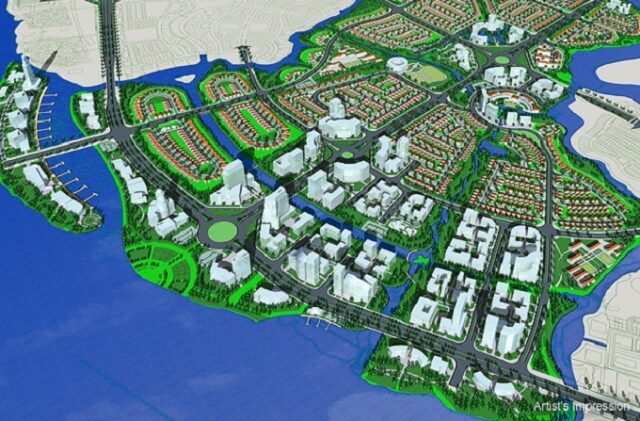
    Singapore-based Keppel Corp will sell 70 percent stake in a waterfront township project to a Vietnamese investor for $100 million. The company said in a release Monday that, pending certain developments, it will sell its stake in the Dong Nai Waterfront City Company (DNWC) to Ho Chi Minh City-based Nam Long Investment Corp for VND2.31 trillion ($99.72 million).

    The DNWC is a company incorporated under Vietnam’s laws that has been granted the right to develop the Dong Nai Waterfront City township project.

    Keppel Land, Keppel’s real estate arm, is currently in the process of taking over complete control of DNWC from an unnamed joint venture partner through a demerger.

    Once the demerger is done, DNWC will become a wholly-owned subsidiary of Keppel with the rights to develop a 170-hectare plot of land.

    DNWC also holds a 28-hectare plot of land which is excluded from the proposed divestment.

    The 70 percent stake sale will depend on demerger going through.

    Dong Nai Waterfront City is a 170-hectare residential township project in Dong Nai Province, located 28 kilometers to the northeast of HCMC.

    It will have about 7,850 homes, including townhouses, villas and high-rise apartments with various commercial facilities.

    Keppel Corp said that the stake sale was in line with Keppel Land’s strategy to recycle assets for higher returns. The funds generated will be used to pursue other opportunities in Vietnam, it said.

    The Dong Nai Waterfront City will be Keppel Land’s second township project in Vietnam after the 64-hectare Saigon Sports City in HCMC’s District 2 which is under construction.