Tag: properties

  • Retail Guru Leo Tsoi to Spearhead Hang Lung Properties as New CEO

    Retail Guru Leo Tsoi to Spearhead Hang Lung Properties as New CEO

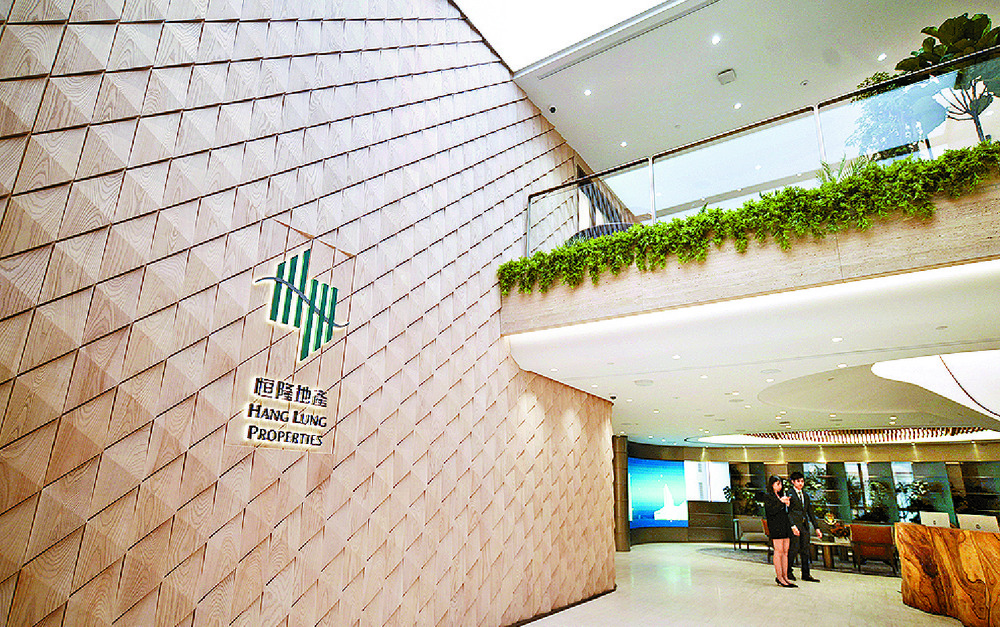
    Hang Lung Properties, a prominent Hong Kong property development firm, recently announced the appointment of retail expert, Leo Tsoi, as their new CEO and Executive Director. His tenure is scheduled to commence effectively as of October 1.

    In an initial phase, Tsoi will join Hang Lung Properties as the CEO-Elect and Executive Director, beginning on September 7. He is set to succeed the current CEO, Weber Lo, who will continue to serve in his role until September 30.

    Strategic Leadership Transition

    Building on a solid foundation of leadership and experience, Adriel Chen, the Chair of Hang Lung Properties, speaks highly of Tsoi as the right choice for the company’s future. Chen’s confidence in Tsoi’s ability to navigate the company towards its next growth phase is unwavering. In his view, Tsoi’s impressive leadership record marks him as the ideal person for the role and guarantees future prosperity for the organization under his guidance.

    In his address, Chen also expressed gratitude to the outgoing CEO, Weber Lo, acknowledging his significant contributions over the past eight years. He noted that Lo had left the company in a strong position, perfectly setting the stage for continued success in the future.

    Decades of Retail Expertise

    Tsoi comes with an impressive portfolio of over thirty years of experience in retail and business management. At present, he holds the position of CEO of Toys R Us Asia, where he has successfully steered the retailer’s venture into the thriving “kidult” market. His leadership has facilitated substantial growth across the regions of Greater China and Southeast Asia.

    Before his stint with Toys R Us Asia, Tsoi had been at the helm of Starbucks China as CEO, following numerous senior leadership roles within the company. Earlier in his career, he had also held managerial positions at well-known companies such as PepsiCo and Procter & Gamble China.

    In his response to the new appointment, Tsoi expressed keenness to work with Hang Lung’s employees, stakeholders, tenants, and customers. He highlighted his enthusiasm to be part of Hang Lung, a company with an expanding imprint and a commitment to operational excellence, making a significant influence on the communities it serves.

    Questions & Answers

    What experience does Leo Tsoi bring to Hang Lung Properties?
    Leo Tsoi brings vast experience, spanning over thirty years in retail and business management. He has served in numerous senior roles, including CEO of Toys R Us Asia and Starbucks China.

    Who will Leo Tsoi succeed as CEO of Hang Lung Properties?
    Leo Tsoi will succeed the current CEO, Weber Lo, who will remain in his role until September 30.

    What does Leo Tsoi’s appointment mean for Hang Lung Properties?
    Leo Tsoi’s appointment is expected to steer Hang Lung Properties into its next growth phase. His extensive leadership experience and track record in retail and business management are viewed as significant assets for the company’s future.

  • McDonalds Bags Premium Prices for Half of Its Hong Kong Properties Amidst Retail Downturn

    McDonalds Bags Premium Prices for Half of Its Hong Kong Properties Amidst Retail Downturn

    Despite the overall downturn in Hong Kong’s retail market, fast-food conglomerate McDonald’s has successfully managed to sell close to half of its 23 retail properties in the city at premium rates. The selling spree initiated in July of the previous year, in collaboration with property consulting firm JLL, has seen the fast-food giant yield approximately HKD 900 million (US$703 million) from the sale of 11 properties.

    Investor Interest in Prime Retail Real Estate

    Eunice Tang, JLL’s executive director of capital markets, has been overseeing the sale of six McDonald’s outlets. Tang elaborated that while the overall retail real estate market, particularly for properties valued above HKD 50 million, has been sluggish, these prime-located assets backed by a blue-chip tenant like McDonald’s have managed to pique the interest of high-net-worth buyers.

    As a part of its strategy, McDonald’s plans to sell all its 23 retail spaces, cumulatively valued at HKD 3 billion. However, the company intends to continue operations in these locations as tenants post their sale, ensuring no disruption to its citywide operations. Remarkably, McDonald’s has a network of 256 outlets in Hong Kong, many of which operate from rented spaces.

    The pace of sales, given the prevailing recession in Hong Kong’s retail real estate sector, is noteworthy. While McDonald’s continues to amass substantial gains over its historical purchase costs, other shops are being sold at rates 30% lower than their peak valuations or original asking prices.

    McDonald’s Sale & Lease-Back Agreements

    The McDonald’s outlets have been sold via sale-and-lease-back agreements, enabling the fast-food giant to continue operations under leases of up to 20 years. Most properties offer rental yields of over 6%, providing investors with steady income even as rents and capital values remain under pressure in the wider market.

    High-net-worth individuals, family offices, and seasoned private investors, including local investor Ng Yin and veteran investor Chang Yen-hsu (known as “Taiwan’s Chang”), have been among the buyers. Other purchasers include the Malaysian developer MB World Group and private investors from mainland China.

    The properties sold were initially owned by MCD Real Properties, a company associated with McDonald’s U.S. parent, and were retained post the local operating business’s sale to a Citic Capital-led consortium in 2017. Importantly, McDonald’s strategic approach of releasing its portfolio in phases rather than inundating the market has been commended by industry insiders for achieving these sales in this challenging market environment.

    However, the upcoming phase could present more difficulties, with several properties, including the flagship Star House shop in Tsim Sha Tsui, remaining unsold. Challenges in selling these remaining properties are not just related to their location but also to the larger ticket size and unconventional property specifications, which limit the pool of potential buyers.

    Questions & Answers

    What is the overall retail property market situation in Hong Kong?
    Given the ongoing recession, the retail property market in Hong Kong is experiencing a downturn. Many shops are trading at prices 30% lower than peak valuations or original asking prices.

    How has McDonald’s managed to sell its properties amid the market downturn?
    McDonald’s has strategically released its portfolio in phases rather than flooding the market all at once. The prime locations of its properties, the company’s reputation as a reliable blue-chip tenant, and the sale-and-lease-back agreement that allows for continued operations have attracted high-net-worth investors.

    What are some challenges in selling the remaining McDonald’s properties?
    The remaining properties, including the flagship Star House shop in Tsim Sha Tsui, have larger ticket sizes and unconventional specifications, which limit the potential pool of buyers. These factors, combined with the current market conditions, may pose challenges in the upcoming sales phase.

  • Homestay startup raises $4.5 million

    Homestay startup raises $4.5 million

    Luxstay has raised $4.5 million from South Korean retailer GS Shop and venture capitalist Bon Angels in its bridge round. A Luxstay representative said Wednesday that receiving funding from reputable international investors in this round is an important stepping stone for the enterprise to expand to other areas in the future.

    GS Shop is a South Korean multimedia retailer as well as a global leader in TV home shopping. It also established a retail chain called GS25 in Vietnam in 2018.

    Bon Angels Venture Partners is a South Korean venture capital firm investing in early-stage startups. It has invested in well known South Korean startups like Woowa Brothers, Daily Hotels, and My Real Trip.

    Luxstay has targeted an annual turnover of over $300 million and 30 percent of Vietnam’s home-rental market share by 2023, the representative said.

    It is also working with financial investors and strategic partners for the next funding round, a Series A round, which is expected to close in 2019, aiming to raise $15-20 million.

    Prior to this investment, Luxstay had raised a total of around $6 million from CyberAgent Ventures (Japan), Genesia Ventures (Japan), ESP Capital (Vietnam), Founders Capital (Vietnam) and Nextrans (South Korea).

    Launched in late 2016, Luxstay has a network of nearly 10,000 properties across the country. This is a short-term rental booking platform for apartments, villas and other homestay accommodations positioned in the mid and high-end segments of Vietnam’s real estate market.

    It also offers property management and maintenance solutions to assist and save time for homeowners who want to participate in the home-sharing market through its system.

    “In developed countries, home-sharing accounts for 10-20 percent of the home-rental market. This shows a huge opportunity for this industry in Vietnam, which is expected to reach $2-4 billion in 2025,” Luxstay said.

  • ESQUE properties in Melbourne to feature in showcase

    ESQUE properties in Melbourne to feature in showcase

    APAD Australia Property and Development and Mitraland Australia are extending an invitation to the general public to attend an event on Nov 19-20 which is  a 2-hour educational seminar and presentation on how to buy property in the Australian market, insights into popular suburbs considered as growing hotspots, wealth creation and legal landscape associated with purchasing Australian properties based in Melbourne’s South Yarra.

    Ringed to the north by Port Phillip Bay, two lush recreational parks and a lake, a botanical garden and the city’s Central Business District, as well as Arts and Sports Precints of this thriving city; the properties are also within easy reach of two grammar schools, Melbourne High School and South Yarra train station, making the location of these properties prime acquisitions.

    Taking place at the Radisson Hotel Brunei, and revolving around the exclusive ESQUE properties, APAD’s representatives will be in Brunei for one-on-one consultation sessions with potential clientelle during the event, which is aimed at boosting relations between the private business sectors of both nations. Australian immigration personnel and director of Mitraland will also be present to answer any queries fielded by interested applicants.

    Among the guest speakers will be Jenny Neoh. As a qualified CPA Certified Public Accountant who has worked for the state government before embarking on her career as a senior property analyst, Jenny has since helped over 500 customers in securing their dream homes and investment properties since 2009. With over 12 years of experience across both commercial and private property sectors in Australia and Malaysia, Jenny will be of value to Bruneians who are interested in the possibility of purchasing property in Melbourne.

    Also attending from Australia is the owner and managing director of Australian Migration Agents Pte Ltd, Grant Colbron, who is a former career-diplomat with experience operating in countries within the region including Malaysia, Indonesia and Thailand, as well as having his company office headquartered in Singapore with additional branches spread throughout Australia.

    Representing the Consumer Banking division of Maybank’s Singapore office, its executive vice president Marc Leong, will utilise his 19 years of experience in retail banking to actively engage the audience in his capacity as the third invited guest speaker on topics inclusive of mortgages and retail loans.

    To overcome the tightening of the foreign lending policy, ESQUE is the only project in Australia supported by Maybank Singapore in providing finance assurance to Bruneians who wish to purchase their first properties in Australia.

    Concealed within this slender and sleek piece of architecture are seven different apartment types that occupy Levels 1 to 16, while two categories of residence occupy the 17th floor of this dynamic building. Designed to make brilliant use of space and natural light, the overall theme of the interior decor for the apartments as well as the residences are based on a light and dark colour scheme.

    The lobby and lounge area are situated on the ground floor as well as a special-desginated area for mail. On top of that and readily available for the leisure of tenants is an open garden-concept roof top space that provides a commanding view of the Melbourne city skyline.

    Apartment types 1 and 3 are equipped with 2 bedrooms and 2 bathrooms, while apartment types 2, 4 and Apartment 402 have a similar configuration in addition to having a study. Apartment type 5 is slightly larger with each boasting an extra bedroom and bathroom.

    On the 17th floor can be found the City Residence and the Chapel Residence, which are equipped with 3 bedrooms, 3 bathrooms and a study.

    The programme which will run from 10am to 5pm on  Saturday and Sunday (Nov 19-20) is split into two seperate consultation sessions for the morning and afternoon, presentations by guest speakers and the announcement of pre-launch promotions as well as a talk on migration and Australian lifestyles.

  • Cambodia Properties Shine in Asean

    Cambodia Properties Shine in Asean

    Asean property markets are promising, with Cambodia offering the most attractive prospects due to strong demand and limited supply, notably in Phnom Penh.

    Aliwassa Pathnadabutr, managing director of property consultant CBRE Thailand, said prime residential property for rent in the Cambodian capital has posted the highest yield among all sectors at eight percent per year. Selling prices remain relatively low, but rents are high.

    “Demand for rental in Phnom Penh is driven by expatriates working for multinational companies set up in the city,” she said. “Asking rents are high as those companies are willing to spend on good accommodation for their staff.”

    With strong demand and a limited supply of only 5,500 units, the apartment sector has an occupancy rate of between 80 to 90 percent while rent per square meter is 700 to 1,000 baht (about $20 to $28).

    Rent for a one-bedroom serviced apartment is around 40,000 to 50,000 baht per month ($1,141 to $1,426), the same rate for a unit in Bangkok.

    But the average selling price for a high-end unit is only 110,000 baht per square meter, lower than Bangkok’s 200,000-300,000 baht.

    She said the selling price per square meter for a high-end residential unit in Phnom Penh is lower than that in Bangkok due to lower land costs. Construction costs, however, are close to those in Bangkok as most of the construction materials are imported from Thailand.

    For the high-end segment, the average selling price is 110,000 to 170,000 baht per square meter. For middle-end condos it is 93,000 baht and 24,000 baht on average for the affordable segment.

    The foreign ownership quota in Cambodia’s residential sector is higher than Thailand’s, with up to 70 percent of total units at a project. But foreigners are not allowed to buy ground-floor or basement units. Foreigners are also allowed to set up a company with 100 percent ownership.

    However, Thai investors should be cautious if they want to jump on the bandwagon as Phnom Penh’s residential supply will reach 25,000 units in 2018 from only 5,000 units this year, Ms. Aliwassa said.

    Investing in a condo for rent in Phnom Penh is attractive for individual investors. The major investment buyers in the city are Taiwanese, Chinese, Singaporean, South Korean and Japanese.

    “If Thais want to get in on the act, they should do so now or at the beginning of the boom as there will be a large volume of new supply being completed in the next two years,” added Ms. Aliwassa.

    She said office and retail spaces in Phnom Penh are limited but demand is strong so the occupancy rate is quite good. The city’s office supply totals around 280,000 square meters, compared with 8.4 million square meters in Bangkok.

    For C-grade office space, occupancy is as high as 90 percent due to a lower monthly rent of $10 to $15 per square meter. Rent for B-grade office space is $16 to $25 with an occupancy rate of 85 percent while A-grade rent stands at $28 with an occupancy rate of only 40 percent, compared with $30 in Bangkok.

    Another attractive investment in Phnom Penh is retail, as Thai brands are very popular among Cambodian consumers. Successful Thai retailers in Phnom Penh now include Major Cineplex, Fuji and S&P restaurants.

    Nonetheless, the retail property market in Phnom Penh is quite small compared with Bangkok. The current retail space in Phnom Penh totals 680,000 square meters, which accounts for less than 10 percent of Bangkok’s total retail area of seven to eight million square meters.

    Despite limited supply, the monthly rent for prime malls remains low at only 1,200 baht per square meter, compared with 3,000 to 4,000 baht in Bangkok.

    Although Phnom Penh’s luxury segment has a limited supply, it might be too soon to enter the market as the segment is very small and Cambodian consumers are not ready to accept luxury prices, said the consultant.

    “Besides checking local regulations, investors should consider the balance of costs, prices and returns. If one of them is too high, the rest will fall down just like in Myanmar where land costs are very high,” added Ms. Aliwassa.

    Tony Picon, managing director of property consultant Colliers International Myanmar, said all commercial properties in Yangon are attractive with high occupancy rates since supply is limited and demand is strong.

    “New supply is difficult to enter as regulations are unclear and land costs are steep,” he said. “But opportunities in Myanmar are high as its GDP is the highest in the region at 8.3 percent. The country also boasts abundant resources.”

    Suphin Mechuchep, managing director of property consultant JLL Thailand, said Vietnam is an interesting investment destination as its economy is picking up, purchasing power is strong and the government is spending on infrastructure projects.

    “All segments in Vietnam’s property market have bottomed out in the past two years as middle-income earners prefer spending on IT, mobile and technology,” she said.

  • Asians to invest more in properties beyond the region

    Asians to invest more in properties beyond the region

    Real estate markets in Asia will likely remain less appealing than those in the US and Europe this year, with Asia plagued by anaemic economic growth and waning rents and capital values amid a supply deluge.

    In a recent interview with The Business Times, CBRE head of global research Nick Axford flagged that there will be greater outbound capital flow from the region this year by Asian real estate investors, who snapped up some US$39.7 billion (S$55.3 billion) of properties outside the region last year, a 26.8 per cent jump from 2014.

    He said: “If you look at parts of Europe and North America, there is strong economic growth, recovering demand, rising rents and not much developments. In many Asian markets like Singapore and Hong Kong, it is almost the opposite – strong pricing, but weakening economic growth and demand.

    “The balance of attractiveness has shifted towards Europe and North America.”

    Asian investors invested US$14.3 billion in real estate within the region last year, a 12.3 per cent rise from 2014, going by CBRE’s preliminary estimates covering office, retail, industrial, hotel and mixed-use projects; the figures exclude residential projects and development sites.

    Rising interest rates will generally fuel upward pressures on capitalisation rates – the ratio of a property’s net operating income to its market value. With the spread between interest rates and property yields near historical highs in many markets in Europe, Dr Axford noted that it is possible that rising interest rates will be “absorbed” in the normalisation of spreads.

    Sovereign wealth funds (SWFs) in the region such as Singapore’s GIC have trained their eyes on Europe and North America as they re-balance their portfolios. CBRE estimates that some US$8.1 billion was invested outside the region by Singapore-based investors, compared to the US$6.6 billion they ploughed into properties within the region.

    Based on preliminary data from real estate data and analytics firm Real Capital Analytics (RCA) as at Jan 12, Singapore-based investors purchased a record US$26.3 billion in overseas real estate in 2015, up 49 per cent from US$17.6 billion in 2014.

    These outbound Singaporean investments were driven by big-ticket purchases by heavyweights such as GIC and Global Logistic Properties (GLP), Temasek Holdings, Mapletree, ARA Asset Management Group and Ascendas Real Estate Investment Trust.

    RCA’s database covers transactions above US$10 million in asset classes such as development sites, office, industrial, retail, apartment, hotel and serviced apartments.

    Dr Axford said that while rental declines are seen across all property segments in Singapore, investors can make opportunistic buys with a time horizon of five to 10 years.

    In Hong Kong, the retail and logistics segments have softened; the office sector is holding up. Last year, Hong Kong Central Business District office rents rose 14 per cent, with prime office rents hovering at levels more than double those in Singapore.

    Dr Axford said: “There is still demand from the Chinese in good-quality office space in central Hong Kong. We are expecting rental growth of 5 to 10 per cent for Hong Kong office this year.”

    He views the recent volatility in the Chinese stock markets as an over-reaction to negative news from China – even though there has been no significant change to its economic outlook over the past six months.

    But with the probability of further weakening of the renminbi against the greenback, there will be sustained interest from Chinese investors wanting to put their capital to work outside China, in European and North American real estate, he added.

    Capital outflow from China was evident last year. CBRE’s estimates indicate that real-estate investments outside Asia by Chinese investors jumped 35.9 per cent to US$13.1 billion, against a 7.5 per cent drop to US$9 billion which they sank into domestic real estate.

  • Hang Lung Properties China woes hit developer’s 2015 earnings

    Hang Lung Properties China woes hit developer’s 2015 earnings

    China’s slowing economy has claimed another victim, as Hang Lung Properties reported on Thursday a 56% fall in 2015 net profit from a year ago.

    The property developer said its net income declined to 5.09 billion Hong Kong dollars ($653 million) for the financial year ended on Dec. 31. Total revenue shrank by 47% to HK$8.94 billion from a year ago. Property sales in Hong Kong fell 88% to HK$1.2 billion.

    Over the year, only 63 apartments and a few car parks were sold — a dramatic downturn from 2014’s sales of 412 residential units that generated a turnover of HK$9.81 billion.

    Although the company’s rental income from commercial properties in both Hong Kong and the mainland rose by 7%, total operating profit of its mainland China portfolio — comprising eight shopping malls and three office towers — dipped 3% year-on-year to HK$2.72 billion. Overall rental margin fell by 7 percentage points to 65%.

    “The [property] market in mainland China is in the doldrums, if not deteriorating,” said Hang Lung Chairman Ronnie Chan. He said that turnover in the second half of the year typically outperformed the first half, but that was not the case in 2015. “I can’t see how it is going to improve in the short run,” said Chan.

    Such distress was most palpably felt in cities outside of Shanghai. Occupancy rates in Hang Lung’s malls in Shenyang and Wuxi fell 87% and 72% respectively, while retail sales, excluding autos, dropped 3%.

    “If the market is not there, we may have no choice but to lower rent,” said Chan, adding that negative rent reversion is a pressure.

    Hang Lung’s commercial and office complexes are built for the high-end, premium market. But China’s slowing economic growth is eroding sentiment and demand for luxury goods in Hong Kong. International brands are worried about opening in China and Hong Kong.

    Hang Lung said the weakness in retail supply, rental growth and high-end spending will continue in 2016. But Chan said the company had no plans to refashion its establishments for the mid-market, or to suspend construction projects in China, given their still bullish outlook for China in the long run.

    “It is the only country that can maintain a higher-than-6% GDP growth in the next few years,” said Chan.

    In line with its lackluster annual results, dividend payout for the year will be slightly trimmed to HK$0.75 per share. “The cut is less about maintaining cashflow, but a reflection of our bearish outlook on the [property] market strained by China’s slowing economy. I don’t have a clue when spring will return,” said Chan, adding that the company is still holding plenty of cash at around HK$31.3 billion.

    Hang Lung’s shares have shed 17.8% to HK$21.25 year-to-date. Citibank analysts see no upside for the stock.