
Tag: property market

  • China Tech Boom Fuels August Factory Output as Domestic Spending Stalls

    China Tech Boom Fuels August Factory Output as Domestic Spending Stalls

    China’s industrial sector showed renewed strength in August as an AI-driven tech boom fuelled factory output, according to data reported by Reuters this week.

    The readings highlighted deepening imbalances in the world’s second-largest economy, where resilient manufacturing and exports are sustaining growth even as sluggish consumption and a worsening investment slump weigh on domestic demand.

    Factory gains split from retail demand

    Industrial production accelerated through August on higher orders for computing equipment, semiconductors, and automated factory machinery. Tech supply chains absorbed high component volumes, keeping coastal industrial belts busy throughout the month.

    Consumer-facing businesses saw none of that momentum. Retail cash registers recorded sluggish turnover across apparel, home furnishings, and department stores, extending a pattern where consumers withhold discretionary spending while property values slide.

    Property drag hits consumer sentiment

    Household wealth remains tied up in residential real estate, where falling prices continue to deter family spending on non-essential goods. Shoppers in major metropolitan areas have shifted budgets toward essentials and discounted product lines rather than big-ticket purchases.

    For retail landlords and store operators across tier-one and tier-two cities, this split complicates leasing and store expansion plans. Brand owners face rising warehouse inventories because finished goods leave assembly lines faster than domestic retail networks can clear them.

    The export reliance risk

    The gap between manufacturing capability and domestic retail absorption leaves consumer goods makers dependent on overseas shipments to balance their books. That trade balance face headwinds if external import demand slows or overseas tariffs tighten on Chinese-made goods.

    Retailers across the country now look to third-quarter national retail sales totals and upcoming autumn trade figures to gauge whether household demand will stabilize before the year-end shopping season.
  • China August Exports Surge 25% as Real Estate and Retail Slump

    China August Exports Surge 25% as Real Estate and Retail Slump

    Slower consumption and a sharper fall in property investment in August 2026 pushed the Chinese economy deeper into difficulty, showing pressure on policymakers to deliver more stimulus.

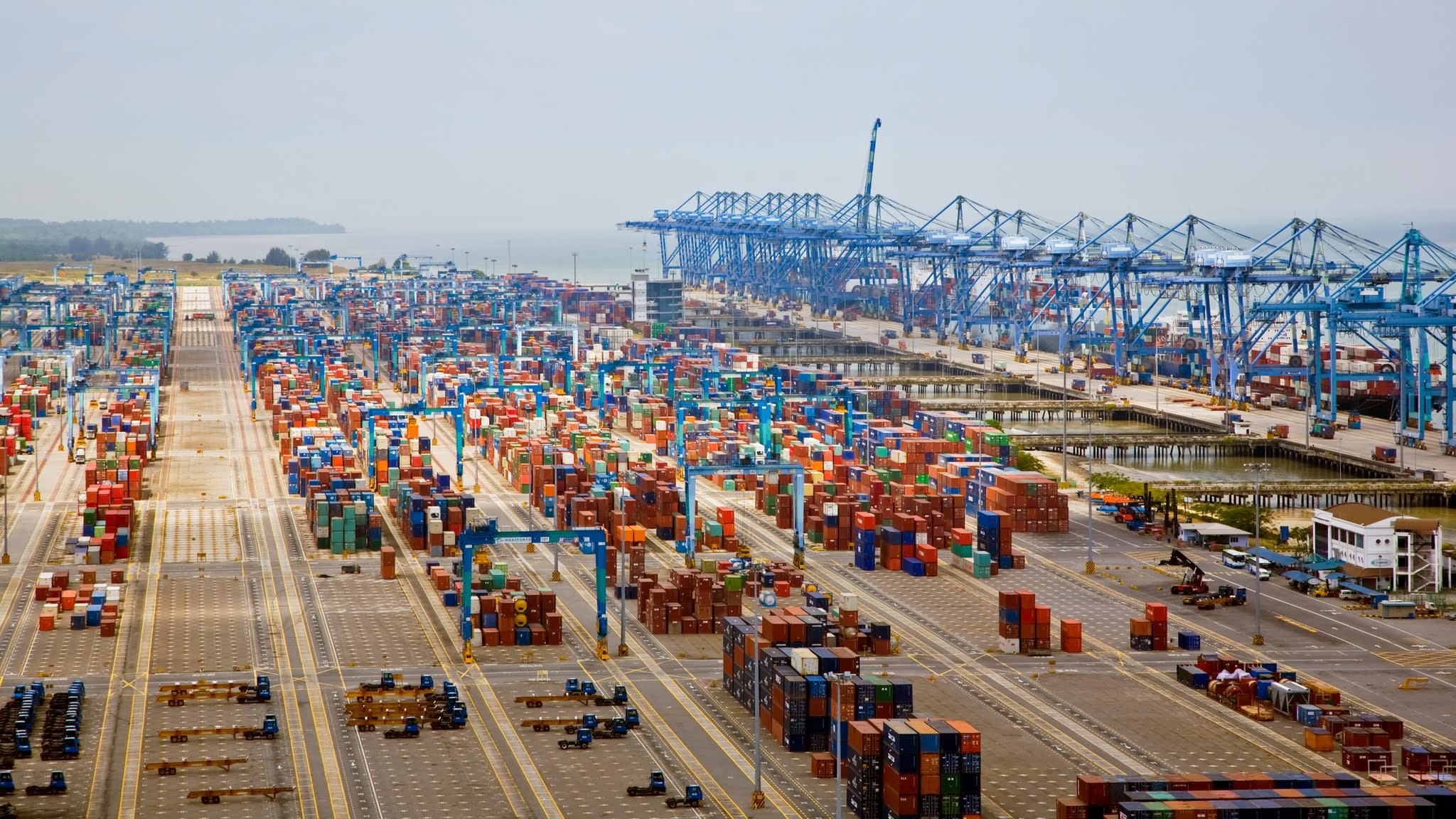
    The twin drag from sluggish domestic retail demand and falling real estate outlays left the country dependent on foreign shipments, where outbound trade surged 25 per cent during the month.

    Property Slump Weighs on Household Demand

    Unfinished housing developments in Hebei province, documented by Reuters, illustrate how the property downturn continues to suppress asset values and prompt households to curb discretionary spending.

    Retail operators face a challenging operating environment as domestic shoppers hold back purchases. Brands that expanded floor space across secondary and tertiary cities now confront weaker footfall, leaving store networks with higher inventory overheads and compressed operating margins.

    Export Strength Offsets Domestic Drag

    External trade provided the single major counterweight to weakening internal activity. China’s trade surplus topped $800 billion for the year following the August export surge, keeping industrial assembly lines active even as domestic order books thinned.

    Relying on overseas demand presents clear operational risks for manufacturers and retail suppliers. Export strength cannot replace broad-based retail consumption across China’s tier-one and tier-two metropolitan centers, where commercial landlords and department stores remain exposed to cautious tenant leasing.

    Policy Measures Under Scrutiny

    State planners have approached broad monetary easing with caution, preferring targeted injections rather than wide-scale consumer subsidies. State bank and insurer shares retreated after a proposed $54 billion capital injection plan failed to revive wider market confidence.

    RetailNews Asia sees consumer-facing businesses adjusting expansion budgets across the mainland while monitoring national retail sales prints and property start data scheduled for release in October.

  • Malaysia property market expected to be flattish in 2018

    Malaysia property market expected to be flattish in 2018

    Property transactions are expected to be flattish in 2018, marking yet another challenging year for the Malaysian property market, according to real estate consultancy firm Rahim & Co International Sdn Bhd.

    However, it said many are hoping that the results of the forthcoming general election would give a firmer direction for the nation, hence re-igniting the momentum in the property sector.

    Although it may be too soon to say that the market has bottomed out, Rahim & Co does not expect the market in 2018 to be much worse off than in 2017.

    The property market is expected to be flat and stable, while waiting for the consumers’ wait-and-see attitude to warm up.

  • Malaysia’s property market still resilient despite challenges

    Malaysia’s property market still resilient despite challenges

    The property market remains resilient despite of the challenging economic environment, according to observers.

    Rahim & Co Research director Sulaiman Saheh said although the number of launches and sales performance of developers have been declining, there were projects that were performing well due to the nature of the product, concept, location and marketing strategies.

    “Market fundamental is still resilient and the market has the holding power, in spite of some expectations of rising unit sales,” he said during a presentation at the Rahim & Co property research seminar recently. He said affordability is still a major concern.

    “The market is leaning towards the affordable market segment. Creative products within the affordable segment are going to be well-received,” he said, adding that there is still demand but the buyers were hindered by end-financing woes.

    “We expect a rationalisation of high-end and branded residences as the global economy remains challenging,” said Sulaiman.

    According to Knight Frank in a report on the local real estate market, the outlook for the high-end condominium segment remains lacklustre, impacted by weak sentiment as potential buyers and investors continue to adopt a “wait-and-see” approach. “With the widening gap between supply and demand as well as mismatch in product pricing and affordability in the domestic market, more developers are expanding their target catchment by marketing overseas as the weak ringgit translates into attractive pricing and low-entry level for foreigners.”

    It said the challenging property market environment had led to more strategies with developers adopting “push marketing” to boost sales of selected projects and improve revenue.

    Meanwhile, Knight Frank said the office market in the Klang Valley is expected to remain subdued and face downward pressure.

    “Amid the mismatch between supply and demand, office vacancies are expected to trend upwards due to a strong supply pipeline and lacklustre absorption as more firms cut workforce or freeze hiring to consolidate business operations.

    “Owners of newly-completed office buildings which have yet to achieve significant occupancies may offer more competitive rental package to secure tenants while those of secondary office buildings are expected to be more flexible in negotiations to retain existing tenants.”

    According to Axis REIT Managers Bhd head of investments and Malaysian Institute of Estate Agents immediate past president Siva Shanker, some 5.8 million sq ft of office space is expected to come onstream in the Klang Valley in the second half of 2016.

    He said the market would “start to level out” by 2018 or 2019 and start peaking by 2020 or 2021.

    “With additional office space expected to be completed by end-2016 in addition to the still available space in the Klang Valley, the general market will continue to be a tenant’s market.

    “Landlords or building owners have become more aggressive in marketing to attract tenants,” Siva said at Rahim & Co’s property research seminar recently.

    Knight Frank added that good grade and dual-compliant office space in good location, however, is expected to remain resilient.

    As for the retail market, Knight Frank said the projected sales growth for 2016 had been revised downwards from 4% to 3.5% following the weak performance last year.

    “Consumer spending remains a key challenge in the retail industry with many continuing to hold back on purchases due to growing concerns about rising cost of living and the weaker job prospects.

    “Moving forward, the uncertainties following the recent Brexit referendum are expected to further weigh down market sentiments globally and this will not augur well for the local retail industry. With the scheduled completion of some 3.36 million sq ft of new retail space in the second half of 2016, competition in the retail market will heighten.”