Retail News CRM

Tag: proton

  • Proton Launches $134,000 EV in Singapore, Boosting Brand Growth in Retail Sales

    Proton Launches $134,000 EV in Singapore, Boosting Brand Growth in Retail Sales

    Proton Makes a Charge into Singapore’s EV Market

    In a strategic comeback, Malaysia’s national carmaker Proton is re-entering the Singaporean automotive scene after a decade, unveiling its first electric vehicle, the e.MAS 7. Set to start at approximately S$174,000 (around US$134,000), this move aligns perfectly with Singapore’s growing commitment to sustainable mobility.

    A Showcase of Innovation

    The e.MAS 7 was introduced at The Car Expo 2025 in Singapore over the weekend, generating excitement among attendees and industry experts alike. Available in two variations—Prime and Premium—this electric vehicle features a cutting-edge 12-in-1 electric drive system paired with an advanced Aegis short blade battery, underscoring Proton’s commitment to innovation and performance.

    Proton’s return dovetails with Singapore’s ambitious plans for greener initiatives, reflecting a wider trend in consumer demand for electric vehicles. The city-state has seen a steady increase in electric vehicle adoption, with market share rising from 12% in 2022 to 18% in 2023. Projections suggest this could soar to 55% by 2027.

    A Limited Edition Launch

    As part of its reintroduction, Proton plans to release a limited Founders Edition of the e.MAS 7. Automotive enthusiasts can expect this model to be available in Singapore showrooms as early as this August, with local dealer Vincar stepping in as Proton’s official distributor. Vincar will also establish a flagship showroom in the prominent Leng Kee motor belt to enhance its presence.

    While Proton has not confirmed pricing details for Singapore, automotive news sources estimate the e.MAS 7 will start at around S$174,000. Comparatively, the model is priced starting at RM105,800 (approximately US$32,400) in Malaysia, where it has quickly risen to become the best-selling electric vehicle in the first quarter of 2025.

    A New Era for Proton

    Proton’s last engagement in Singapore dates back to 2014, prior to the company’s acquisition by Chinese automotive group Geely, which has since revitalized the brand’s product offerings. Geely’s influence extends across several platforms in Singapore, including well-known names like Lotus, Polestar, Volvo, and Zeekr.

    Proton’s resurgence not only marks a pivotal moment for the brand but also contributes to the broader evolution of the retail automobile market in Southeast Asia, where consumer trends are increasingly leaning towards sustainable options.

    Conclusion

    Proton’s entry with the e.MAS 7 not only signifies the brand’s expansion into a competitive market but also underscores a pivotal shift in consumer preferences towards electric vehicles. As adoption rates climb, this development may shape future strategies across the automotive sector.

    Questions & Answers

    1. What is Proton’s new electric vehicle model? Proton has introduced the e.MAS 7, its first electric vehicle, in its comeback to the Singapore market.

    2. How much will the e.MAS 7 cost in Singapore? The anticipated starting price for the e.MAS 7 in Singapore is around S$174,000 (US$134,000).

    3. What are the expected consumer trends for electric vehicles in Singapore? Electric vehicle adoption in Singapore is projected to grow significantly, from 18% in 2023 to an estimated 55% by 2027.
  • Pakistan To Start Proton Car Production

    Pakistan To Start Proton Car Production

    A joint venture between Malaysia’s Proton Motors and Pakistan’s Al-Haj group will begin producing cars from June, officials said on Friday at a ceremony in Islamabad unveiling a series of business accords between the two countries.

    The Proton joint venture, first agreed last year, was the centerpiece of a series of agreements signed during a visit of Malaysian Prime Minister Mahathir Mohamad. Pakistani officials said the deals would total around $800-900 million.

    “These partnerships are just the beginning and I look forward to more and more partnerships,” Board of Investment chairman Haroon Sharif said at the signing ceremony, at which Mahathir presented Pakistani Prime Minister Imran Khan with a symbolic car key.

    The Proton plant, near the southern port city of Karachi, is the latest in a series of assembly deals set up in Pakistan by international auto makers including Volkswagen AG and Hyundai Motors.

    “We were told that the first Proton which will be assembled here will be on the roads next June in Pakistan,” Sharif said.

    The deals come as Pakistan steps up efforts to attract foreign investment. The country is struggling with a ballooning current account deficit and a balance of payments squeeze that has forced it into bailout talks with the International Monetary Fund.

    In recent months, it has signed multibillion dollar credit and investment deals with countries including Saudi Arabia and the United Arab Emirates. It is also a central part of China’s vast Belt and Road Initiative through the $60 billion China Pakistan Economic Corridor.

    As well as the Proton accord, Malaysia’s Edotco Group signed agreements in the telecoms sector with local units of China Mobile and Telenor, as well as local mobile group Jazz.

    Other deals included a halal meat agreement signed by the foods unit of Pakistan’s Fauji Foundation conglomerate and a $20 million venture capital agreement between Pakistan’s Fatima Ventures and Gobi Partners of Malaysia.

  • Qatar possible partner for Malaysia’s third national car project

    Qatar possible partner for Malaysia’s third national car project

    Malaysia is looking at the possibility of having Qatar on board the third national car project. In a statement, the International Trade and Industry Ministry (Miti) said Minister Datuk Darell Leiking had a bilateral meeting with Qatar’s Minister of Commerce and Industry Ali Ahmed Al Kuwari and Qatar Investment Authority CEO Mansoor Ebrahim al-Mahmoud on Jan 22.

    “The main objective of the meeting is to explore the possibility of having Qatar on board Malaysia’s third national car project. This is to leverage on Qatar’s investments in Volkswagen and Audi. Qatar positively welcomed the idea and reiterated on the need to deliberate the details of the joint manufacturing project,“ Miti said.

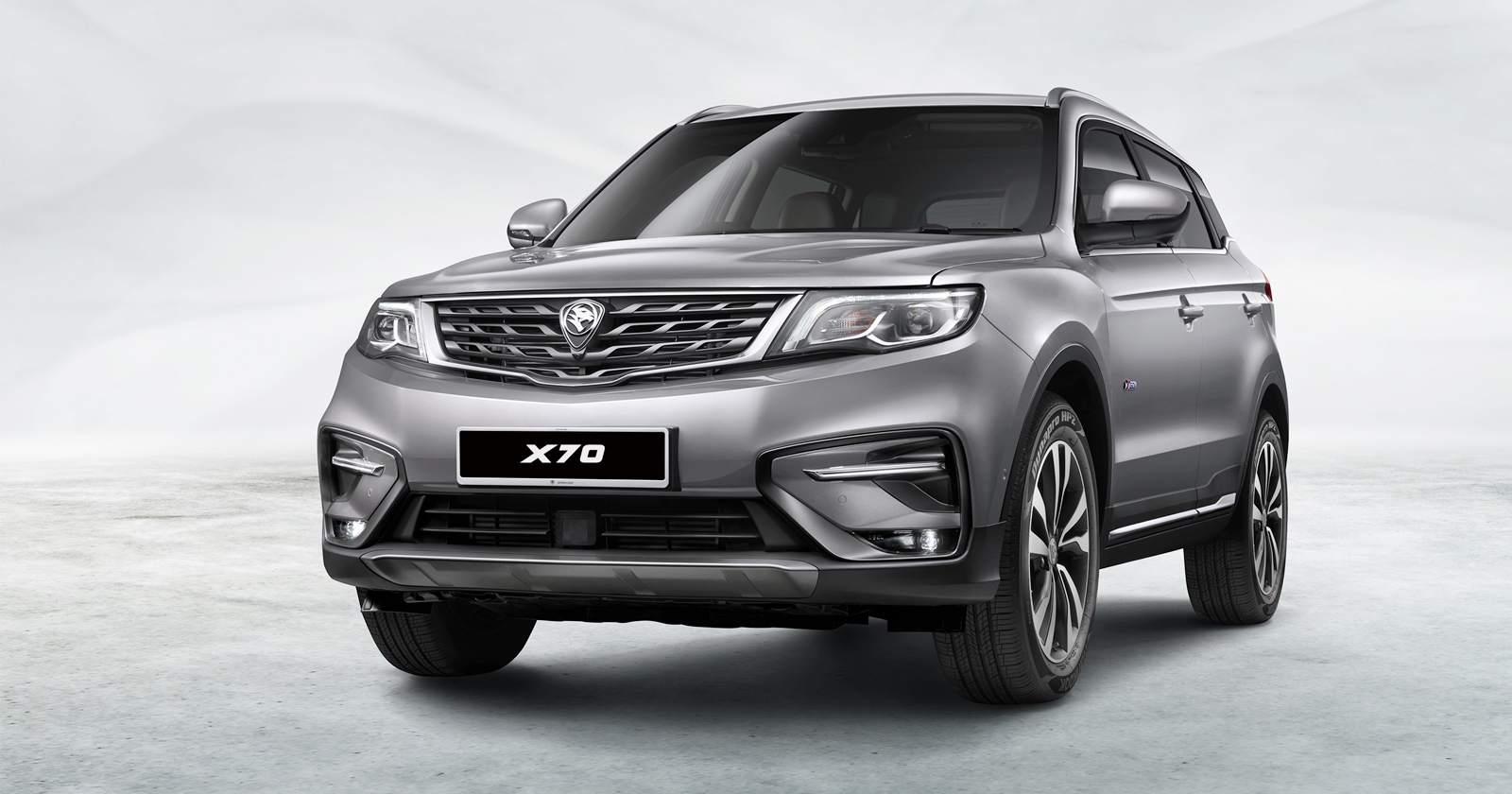
    Darell highlighted that Qatar could look at the possibility of collaborating in Malaysia in other parts of the automotive sector such as investment in automotive components or producing electric cars. He also informed Qatar on the recent launching of the latest Proton model X70 and Perodua Aruz.

    “Qatar took the opportunity to update Malaysia on its current investment reforms including the relaxation of foreign investment ownership, of which 100% foreign ownership is now allowed in Qatar in various sectors.”

    Qatar expressed hope that more Malaysian companies to invest in Qatar. Qatar can be seen as a gateway to the Middle East market and Malaysia as a springboard to the Asean market. To this effect, the Second Malaysia-Qatar Joint Trade Committee Meeting is scheduled to be held on March 28-29 2019.

    “Noting the good relationship between Malaysia and Qatar, the minister also expressed the possibility of proposing Qatar to be a dialogue partner in Asean,“ Miti said.

  • Proton aims to double exports in 2019

    Proton aims to double exports in 2019

    Proton Holdings Bhd aims to double the export of its cars to at least 3,000 units this year from 1,388 units in 2018. “In 2017, we exported 248 units. This year we want to export more,” its CEO Li Chunrong said. With the support from the Malaysian government, he said, the group could export up to 4,000 to 5,000 units this year. Asked on the group’s plans to enter the Pakistani and the Middle Eastern markets, Li responded by saying that Asean will remain as the group’s focus for its export business, but it does not intend to abandon other markets.

    “We don’t want to forget the other markets (as well). We are trying our best to enter other markets,” he added.

    On response to the Proton X70 that was officially launched on Dec 12, 2018, the group said bookings for the sports utility vehicle have exceeded 15,000 units, with over 2,000 units delivered so far.

    Earlier, Proton deputy CEO Datuk Radzaif Mohamed said the group expects to bring an initial investment of RM47 million into the country through the second set of collaboration agreements between its vendors and their overseas counterparts.

    On Oct 10, 2018, Proton hosted its first signing ceremony where eight colla-boration agreements were signed and they are expected to help bring in an initial investment of RM170 million into the country.

    Radzaif said the collaborative agreements will range from technical tie-ups and joint ventures to 100% foreign direct investments with foreign vendors investing into the Malaysian economy.

    Aside from the investments in facilities and technology, he said, the collaborations are also expected to create about 450 new jobs in the automotive industry that range from assembly to design engineering.

    Additionally, these vendors will supply parts to Proton’s manufacturing facility in Tanjung Malim, which is undergoing expansion at a cost of RM1.2 billion.

    Meanwhile, Deputy International Trade and Industry Minister Ong Kian Ming, who witnessed the signing ceremony, said the government is targeting RM15 billion from exports of local automotive components and spare parts by 2020.

    Malaysian Automotive, Robotics and IoT Malaysia (MARii) CEO Datuk Madani Sahari shared that the value of exports for automotive components and parts could have easily touched the RM12 billion mark by end of December 2018.

  • Malaysia PM : ‘Third national car will not be like Proton’

    Malaysia PM : ‘Third national car will not be like Proton’

    The International Trade and Industry Ministry (Miti), which is confident of completing its review of the National Automotive Policy (NAP) by year-end, assured that the third national car mooted by Prime Minister Tun Dr Mahathir Mohamad, will not be like Proton, according to Miti Deputy Minister Dr Ong Kian Ming.

    He said Mahathir’s concept of the national car project is not about going back to Proton, but for energy efficient vehicles (EEV).

    Ong said the NAP needs to look at new mobility pathways, trends in driving patterns, and be adjusted with the improvement in public transportation and vendor development in the ecosystem.

    “There are many things that can be updated in terms of how we want to make the aspiration of Dr Mahathir to propel the automotive industry into something more sustainable and green.

    Inputs from the industry and stakeholders are important to help Miti shape this NAP. We hope the public do not think that Dr Mahathir’s intention is to revive Proton as Proton 2.0. There are many more ideas that he has,” Ong said at the British Malaysian Chamber of Commerce-Shell Premier Luncheon: Sustainability in Business, today.

    He said the third national car project will be open to all inputs and ideas of cooperation.

    “Dr Mahathir has spoken on the possibility of having an Asean car with cooperation with Indonesia, so there is opportunity to explore with other players, but looking at the angle of how the NAP is going at an international level, moving towards electric cars and EEV, and the value chain that comes along it, which includes electronics, artificial intelligence, internet of things – that would be part and parcel of the ecosystem.”

    On the matter of free trade deals, Ong said the government needs to decide on the ratification of the Comprehensive and Progressive Agreement for Trans-Pacific Partnership (CPTPP) first before it can discuss on free trade agreements (FTA) with other countries, but remains committed to the existing FTAs.

    “We’re already negotiating RCEP (Regional Comprehensive Economic Partnership) and is part of the countries negotiating it. Whatever happens to CPTPP will not affect our direct participation in RCEP at this point in time,” said Ong.

    Earlier at the event, Ong spoke about the government’s short term priorities in reforming for sustainability, which are to reduce and restructure national debt, put in place institutional and policy reform and design new narratives and strategies for investment and growth.

    He said ministers will need three to six months to get a complete grasp of their respective ministries.

    Its long term priorities are to realign the country’s fiscal structure and priorities, reform institutions for sound leadership, policy and justice, as well as to change the underlying structure of the Malaysian economy. This will take two to five years, before the 15th General Election.

  • DRB-Hicom studying Proton-Indonesia joint venture

    DRB-Hicom studying Proton-Indonesia joint venture

    DRB-Hicom Bhd is studying the proposed collaboration between Malaysia and Indonesia to produce an Asean car.

    Group managing director Datuk Seri Syed Faisal Syed Albar said a discussion on the matter is taking place as a memorandum of understanding was signed in 2015 between its subsidiary, Proton Holdings Bhd, and an Indonesian company to undertake the joint effort.

    “There is no cost involved and we need to study it a lot,” he said.

    Proton is 50.1% owned by DRB-Hicom and 49.9% by China-based automaker Zhejiang Geely Holding Group via its wholly-owned subsidiary, Geely International (Hong Kong) Ltd.

    It was reported earlier that the joint effort between Proton and Indonesia to produce an Asean car would be revived following talks between Prime Minister Tun Dr Mahathir Mohamad and Indonesian President Joko Widodo during the former’s visit to Indonesia last month.

    Meanwhile, Syed Faisal, who is also Proton chairman, disclosed that Geely has invited Mahathir to visit the company’s facilities in China during the prime minister’s visit to the country next month.

    Syed Faisal gave an assurance that the launch of the first Proton sport utility vehicle (SUV) will take place as scheduled in October.

    He said the briefing today also covered future technology offered by Geely.

    “Tun Mahathir likes the SUV that we loaned to him earlier, which indirectly shows that he has confidence in Geely’s technology in Proton,” he said.

    On the Mahathir’s plan for another national car, Syed Faisal said he believes that Proton, as the national car, has secured the confidence of banks, vendors and dealers. “In that regard, we will think of Proton first, and there will be no change in direction on that.”

    Syed Faisal reiterated the group’s commitment to pursue a 30% price cut from its automotive parts suppliers by year-end.

    Also present at the briefing was Dr Li Chunrong, CEO of Proton’s manufacturing arm, Perusahaan Otomobil Nasional Sdn Bhd.