Tag: provider

  • Thai Airways Partners With Unilode For Advanced Uld Management: A Leap Towards Operational Excellence And Sustainability

    Thai Airways Partners With Unilode For Advanced Uld Management: A Leap Towards Operational Excellence And Sustainability

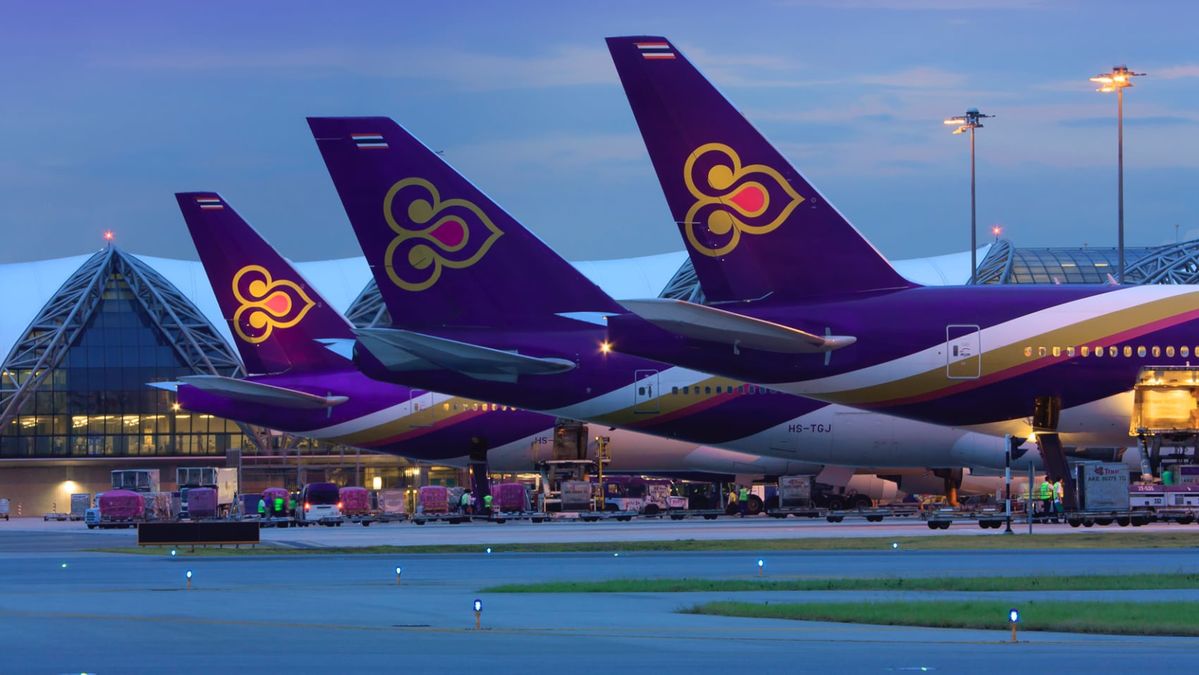
    THAI Airways, Thailand’s national airline, has named Unilode Aviation Solutions, a leader in the Unit Load Device (ULD) management, repair, and digital solutions realm, as its provider for comprehensive ULD management services.

    Advancing THAI Airways’ Transformation

    The partnership with Unilode Aviation Solutions signifies a significant stride in THAI Airways’ ongoing evolution, underlining the airline’s commitment to operational excellence, digital innovation, and long-term sustainability throughout its international network.

    After a successful business rehabilitation, THAI Airways is embarking on a new chapter of growth and modernization. The airline’s five-year strategic plan includes a focus on operational excellence, fleet renewal, and digital transformation. It also aims to nearly double its fleet to approximately 150 aircraft by 2033 and expand its market share across essential international markets.

    In collaboration, Unilode will deliver extensive ULD management, maintenance, repair, and digital tracking services across THAI Airways’ international network. This partnership will enhance fleet utilization, decrease operational complexity, and boost reliability for THAI Airways’ passenger and cargo operations.

    Sustainability Goals Alignment

    The alliance with Unilode Aviation Solutions aligns closely with THAI Airways’ sustainability objectives. The pooling of assets across Unilode’s international network results in fewer ULDs required to support operations, thereby diminishing raw material consumption, minimizing waste, and reducing carbon emissions. Unilode’s centralized repair and refurbishment service further prolongs asset lifecycles, promoting circular economy principles and more responsible resource use.
    Unilode’s digital platforms and data-driven insights, leading the market, will offer THAI Airways real-time visibility, improved asset utilization, and enhanced sustainability reporting throughout its operations. Unilode’s Operations Control Centre in Bangkok and a global team of over 800 ULD experts further support the partnership, ensuring local responsiveness and customer success at every interaction.

    Investment and Expansion

    Unilode has made significant investments over recent years, strengthening its infrastructure, expanding its Maintenance, Repair and Overhaul (MRO) footprint, and enhancing its workforce through advanced training, development, and external education programs. These initiatives, coupled with ongoing innovation in digital technology and product development, enable a broader international network and a larger, more flexible pool of assets, yielding higher efficiency, resilience, and service reliability for all airline partners.

    Unilode’s expanding asset base across an increasing number of airports and regions continues to provide tangible benefits to its entire customer network. These benefits include improved operational agility, quicker turnaround times, and greater access to resources and repair capabilities. These investments underscore Unilode’s commitment to long-term growth and customer value creation, reinforcing its position as a global leader in sustainable ULD management.

    As airlines worldwide prioritize sustainability and efficiency, ULD pooling and complete service management are rapidly becoming the industry norm. THAI Airways’ collaboration with Unilode emphasizes its leadership in adopting innovative, environmentally responsible solutions that combine operational excellence with long-term sustainability.

    Expert Opinions

    Ross Marino, Chief Executive Officer at Unilode Aviation Solutions, expressed his delight and pride in becoming THAI Airways’ comprehensive ULD management service provider. He believes that their partnership will yield measurable results, improve efficiency, foster digital transformation, and support THAI Airways’ sustainability goals.

    The Head of Cargo & Mail Commercial at THAI Airways acknowledged the partnership with Unilode as a critical step in their transformation strategy. They believe Unilode’s expertise, global network, and digital solutions will help streamline operations, fortify reliability, and make substantial progress towards sustainability goals.

    Questions & Answers

    What does the partnership between THAI Airways and Unilode Aviation Solutions signify?
    The partnership signifies a significant stride in THAI Airways’ ongoing evolution, reinforcing the airline’s commitment to operational excellence, digital innovation, and long-term sustainability throughout its international network.

    How will Unilode Aviation Solutions assist THAI Airways?
    Unilode will deliver extensive ULD management, maintenance, repair, and digital tracking services across THAI Airways’ international network. This collaboration will enhance fleet utilization, decrease operational complexity, and boost reliability for THAI Airways’ passenger and cargo operations.

    How does this collaboration align with THAI Airways’ sustainability goals?
    By sharing assets across Unilode’s international network, fewer ULDs are required to support operations, thereby diminishing raw material consumption, minimizing waste, and reducing carbon emissions. Unilode’s centralized repair and refurbishment service further prolongs asset lifecycles, promoting circular economy principles and more responsible resource use.
  • Vietnamese internet startup VNG files for IPO in the US

    Vietnamese internet startup VNG files for IPO in the US

    Vietnamese internet company VNG Corp has filed for an initial public offering (IPO) in the United States via VNG Ltd, a U.S. Securities and Exchange Commission filing showed.

    The listing will make VNG the first technology firm from Vietnam to list in the U.S.

    VNG said in the filing that it planned to offer some 21.7 million shares, with the proposed price range yet to be set.

    IPO proceeds will be used to pay original foreign investors who were direct shareholders of the company and repay outstanding loans, among others, the filing showed.

    The company counts the likes of Chinese social media and gaming giant Tencent and Singapore state investor Temasek as shareholders.

    Founded in 2004, VNG was Vietnam’s first unicorn, or startup valued at $1 billion or more, and it inked a preliminary agreement in 2017 with U.S. bourse operator Nasdaq Inc to explore an IPO.

    The Ho Chi Minh City-headquartered company’s businesses include online games, payments, cloud services and Vietnam’s most popular messaging app, Zalo.

    Citigroup, Morgan Stanley, UBS, and Bank of America are underwriters of the IPO, according to the filing.

    VNG’s IPO follows the recent U.S listing debut by VinFast and could help to add momentum for other Southeast Asian companies seeking IPO in the U.S.

    Philippine real estate company DoubleDragon Corp earlier in August announced that it was considering listing its Singapore-registered unit Hotel101 Global on the Nasdaq via a merger with a special purpose acquisition company (SPAC).

    Southeast Asian used car marketplace Carsome Group was also weighing a listing in the U.S.

    “While the future outcomes of these startups’ IPO plans cannot be guaranteed, the growing interest in international listings and the presence of notable players in the region indicate a promising landscape for Southeast Asian startups seeking to expand their reach and access global capital markets,” said Seth Farbman, chairman and co-founder of New York-based stock transfer agency VStock Transfer.

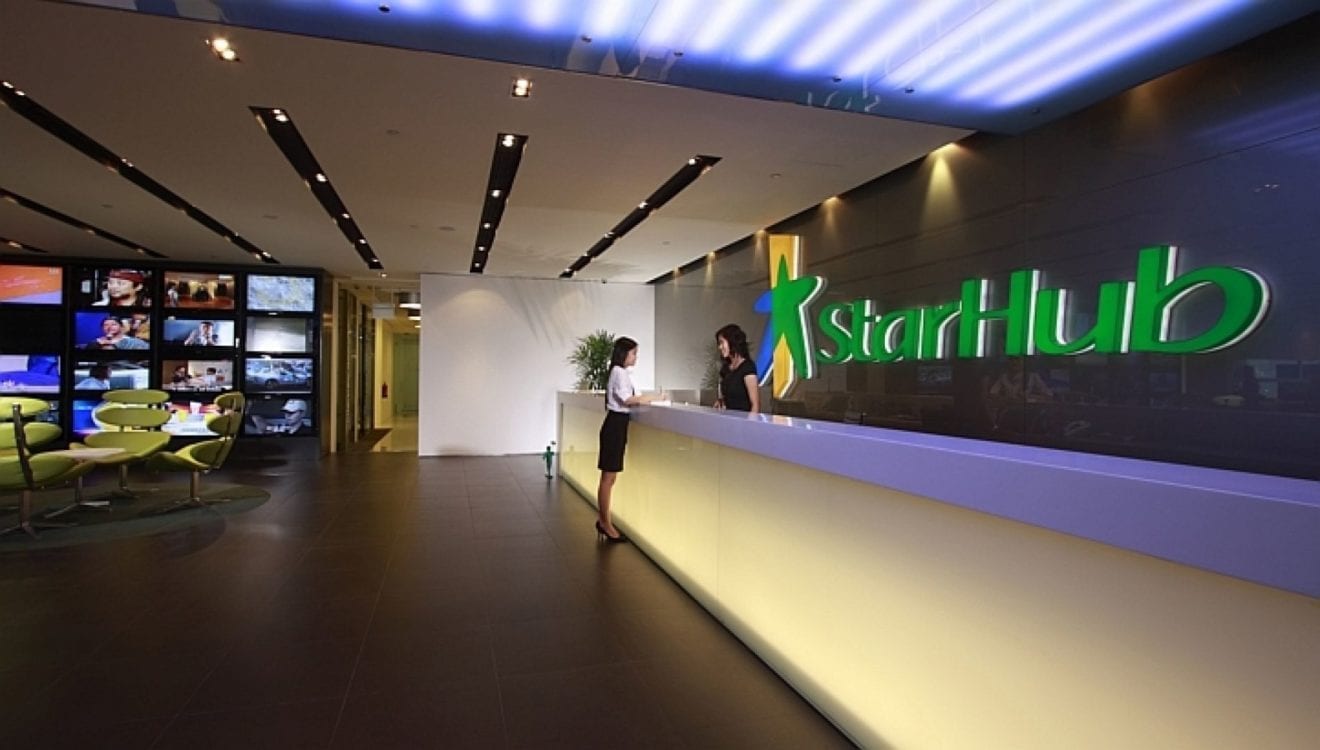
  • StarHub and Chubb partner to safeguard customers against online risks

    StarHub and Chubb partner to safeguard customers against online risks

    Digital service provider to help customers mitigate the impact of online risks, StarHub and Chubb Insurance Singapore Limited (Chubb) have introduced CyberCover, a cyber protection policy designed to provide financial support for StarHub mobile and broadband customers affected by cyber-bullying, identity theft, unauthorized transactions, and undelivered or discrepancies in online purchases.

    With CyberCover, cyber protection, traditionally offered to only enterprises, has now become accessible and affordable for all consumers, providing individuals and families with financial support in the event of cyber threats.

    “Boldly embarking on DARE+ to be the digital service provider with the most enriching experiences for our customers, we are taking a leap towards offering much-needed services that complement our mobile and broadband subscriptions as well as our best-in-class network,” said Johan Buse, chief, consumer business group, StarHub. “Cybercrimes are on the rise, and as the cases strike closer to home, we want to give our customers peace of mind, knowing that StarHub will be there to help them get back on their feet during difficult times. Following the recent launch of our CyberSecure Business Solution to safeguard enterprises, we are now pleased to work with Chubb to extend a safety net to our customers, empowering them to do more of what they love without feeling threatened by dangers online.”

    Chubb’s country president for Singapore, Kevin Bogardus said, “The COVID-19 pandemic has prompted an increase in digital consumption – users are spending more time on social media platforms and consumers are engaging more in digital payments. As digital footprint goes up, so does the likelihood of cyber risk exposure. We are very excited about our partnership with StarHub to offer CyberCover. It is through this personal protection solution that we want to provide StarHub’s customers and their family members with practical support in the face of cybercrimes.“

  • PPRO Grows in Indonesia

    PPRO Grows in Indonesia

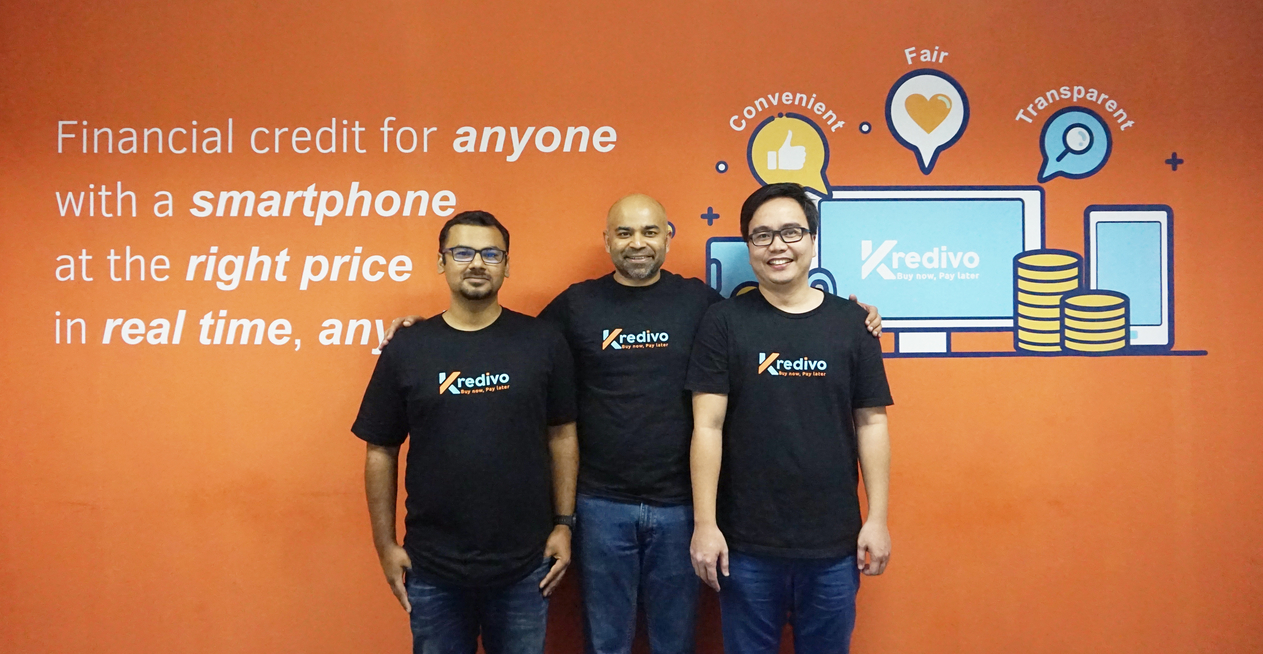
    The payments infrastructure provider has announced the integration of Indonesian buy now pay later (BNPL) pioneer Kredivo to its platform.

    PPRO is partnering with Kredivo – one of Indonesia’s largest and fastest-growing digital credit platforms – to allow more merchants to reach a large pool of underbanked or unbanked Indonesians.

    The integration is a cooperation between PPRO, Kredivo, and DOKU, a leading payment technology company, and enables PPRO to offer the increasingly popular BNPL payment option, as well as split payment and flexible instant credit offerings via Kredico.

    Indonesia continues to be recognized as the world’s hottest battleground for digital payments. The addition of Kredivo to our platform is a milestone in our Indonesia expansion, Kelvin Phua, PPRO head of global market development, said.

    Kredivo currently has more than 4 million users in Indonesia, representing over 50 percent of the local BNPL market.

    The news follows the recent announcement of the integration of two of the most popular payment methods in Indonesia, Jenius Pay and LinkAja, to the PPRO platform. Other payment methods on PPRO’s wider global network include Alipay, WeChat Pay, GrabPay, Bancontact, iDEAL, BLIK, and Boleto Bancário. PPRO raised $180 million earlier this year, taking the firm’s total value to over $1 billion.

    Kredivo has also been expanding of late – it inked a partnership with Standard Chartered in October to offer BNPL loans to the mass market segment via digital channels. The company also launched in Vietnam in August through a joint venture. FinAccel, Kredivo’s parent company also announced plans to go public via a $2.5 billion SPAC merger. The firm had raised US$90 million in 2019 during a Series C funding round to double down on its Southeast Asian expansion plans.

  • Korea’s KT 5G bus hits the road

    Korea’s KT 5G bus hits the road

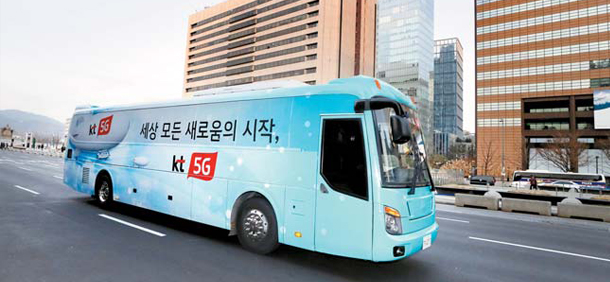
    Are you curious about all the hype over 5G? A ride on a 5G-powered bus may answer some questions. Mobile carrier KT announced Tuesday that people can sign up for free rides on its 5G bus. The bus will be connected to its ultra-fast 5G wireless network and will demonstrate devices that can be used to enjoy new media services like KT’s GiGA Live TV. GiGA Live is a head-mounted display – thick goggles with a screen embedded inside. GiGA Live supports virtual reality (VR) media services, including live sports broadcasts, as well as 360-degree films.

    VR and augmented reality (AR) are commonly cited as the technologies that have the most to benefit from 5G network. Because 5G promises up to 20 times faster speeds than LTE, it can transfer large volumes of data quickly in real-time, which is integral to the proper operation of VR and AR services.

    Those who want to take 30-minute sojourns on the 5G bus can apply online at www.kt5Gbus.com. The bus will run in the Gwanghwamun area from Jan. 15 to 24, and Gangnam Station from Jan. 25 to Feb. 2. Rides will be offered five times a day, excluding Sundays and Mondays.

    “5G network makes it possible to transfer huge volumes of information safely and in real-time,” said Park Hyun-jin, head of KT’s 5G business. “We will continue to offer innovative 5G services that can provide new experiences and value to consumers.”

    Earlier this month, KT added 5G-capabilities to its barista robot B;eat in Samsung Life Insurance’s Seocho District office. The robot, which looks like an advanced vending machine, can now recognize customers’ presence and send real-time footage of orders to human managers.

  • Vietnam’s Viettel seeks to double Myanmar customer base: CEO

    Vietnam’s Viettel seeks to double Myanmar customer base: CEO

    Vietnam’s largest telecommunication company, Viettel, is seeking to double its five million subscribers in Myanmar by the end of the year. Viettel, whose $1.22 billion unit Viettel Global Investment is trading on the Unlisted Public Company Market, has also shown interest in investing in North Korea and Cuba. “The growth seen in Myanmar is rare in the telecom market,” Viettel’s president and chief executive officer Le Dang Dung said on Friday. “We still have room to grow there.”

    Myanmar, where Viettel and its local partners launched a $1.5 billion 4G network in June last year has emerged as one of the most promising markets for the company, Dung said.

    The Mytel network, jointly developed by Myanmar National Holding Public Ltd and Star High Public Co Ltd, has amassed around five million subscribers, a figure which Dung said he expects to double by the end of this year.

    Viettel is also in talks to buy stakes in existing telecommunication firms in Malaysia and Indonesia, Dung said, without giving further details due to the sensitivity of the deals.

    The company will be the first to develop a 5G network in Vietnam, Dung said, in anticipation of rapid development of data services.

    He said Viettel had earmarked $40 million for the development of its own 5G chipset, but was also considering using technology from Ericsson and Nokia.

    The military-run firm, formally known as Viettel Group, has around 60 million subscribers in Vietnam and over 30 million users across 10 other countries – predominantly in Asia and Africa.

    The company is also in talks to buy a 20 percent stake in a European mobile carrier, Dung said, without elaborating.

    Dung said Viettel plans to stop expanding its investment in the African market, however, where the company has struggled to make a profit due to poor economic growth.

    Closer to home, Viettel is looking to invest in North Korea, said Dung, where Koryolink – a joint venture between the North Korean state and Egypt’s Orascom Investment Holdings – has amassed millions of subscribers since its 2008 launch.

    “We first sought permission from North Korea to build a mobile network there in 2010,” he said. “But we’re still waiting for sanctions to be lifted and for the country to open its market to foreign investors.”

  • KT promotes its 5G team to run entire mobile business

    KT promotes its 5G team to run entire mobile business

    Mobile carrier KT announced its annual reshuffle Friday as it actively prepares to gain a strong foothold in 5G-related activities in 2019. The next-generation 5G mobile network is expected to be 20 times faster than the current 4G network. Mobile carriers are working to achieve commercialization of the technology by March next year.

    KT’s 5G business team used to be part of the company’s marketing division. Following the reshuffle, the team is in charge of the carrier’s entire mobile business.

    Its main role will be developing customer services using the 5G network.

    A new 5G Platform Development team will be part of the marketing division. It is tasked with devising services for corporate clients, including those related to smart cities, smart factories and connected cars.

    As for changes at the top, former chief secretary, Kim In-heo, 55, was appointed president of KT. Kim has been noted inside the company for his practical working style and flexibility with regard to fixed customs.

  • KT increases fixed-line network speed tenfold, to 10Gbps

    KT increases fixed-line network speed tenfold, to 10Gbps

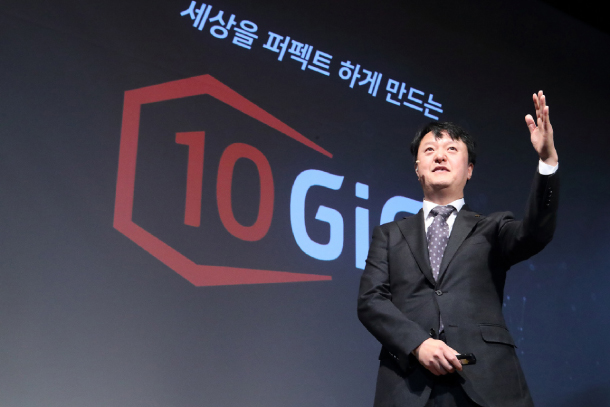
    KT announced Wednesday it will introduce a fixed-line network 10 times faster than its current offerings in Seoul as well as six major Korean cities.  The launch of Korea’s first home internet with speeds of up to 10 gigabits per second (Gbps) comes about four years after the mobile carrier launched wired internet with 1-Gbps speed.

    According to the company, Korea’s largest fixed-line internet service provider, a faster home internet has become a necessity as the number of independent content creators, like YouTubers and dedicated Esports players, has grown explosively.

    “The 10 times faster network will enable creators to air their content in ultra high-definition quality,” said Lee Pill-jai, senior executive vice president for marketing at KT. “It will also make virtual reality and augmented reality content a norm.”

    In a demonstration Wednesday at KT headquarters in Gwanghwamun, central Seoul, the actual download and upload speeds of the new internet service exceeded 8 Gbps whereas the existing internet achieved speeds of less than 1 Gbps. With the new internet, it takes only 30 seconds to download a 33-gigabyte ultra high-definition movie, according to KT. At 1 Gbps, it takes four minutes and 30 seconds.

    “You also need to think of the many devices that will be connected to home internet in the future,” said Park Hyun-jin, head of the wire and wireless business unit at KT. “I personally use five internet-powered devices, but by 2021, an average person will have 13 devices connected to the internet.”

    According to Park, the connection of numerous devices will slow internet speeds and make a 10-Gbps fixed-line a necessity to maintain tolerable internet speeds on each device.

    Faster fixed-line internet will also support the deployment of the high-speed 5G wireless internet nationwide, according to KT.

    “The 5G network is offered as wireless internet through base stations, but 5G network equipment and base stations need to be connected via a wired backbone network,” a spokesperson from KT said. “Having a 10-Gbps fixed-line network as the 5G’s backbone network will increase the stability of the wireless service.”

    The so-called backbone is a part of a computer network that connects other networks.

    According to KT, its 10-Gbps internet will be able to cover about 60 percent of the country by the early half of next year.

    To subscribe to the 10-Gbps internet, it costs 110,000 won ($96) per month, but if users already subscribe to KT for TV services, the monthly fee could be discounted to 77,000 won on a three-year contract basis.

    The company also released 5-Gbps and 2.5-Gbps internet plans, for those wanting faster but affordable home internet.

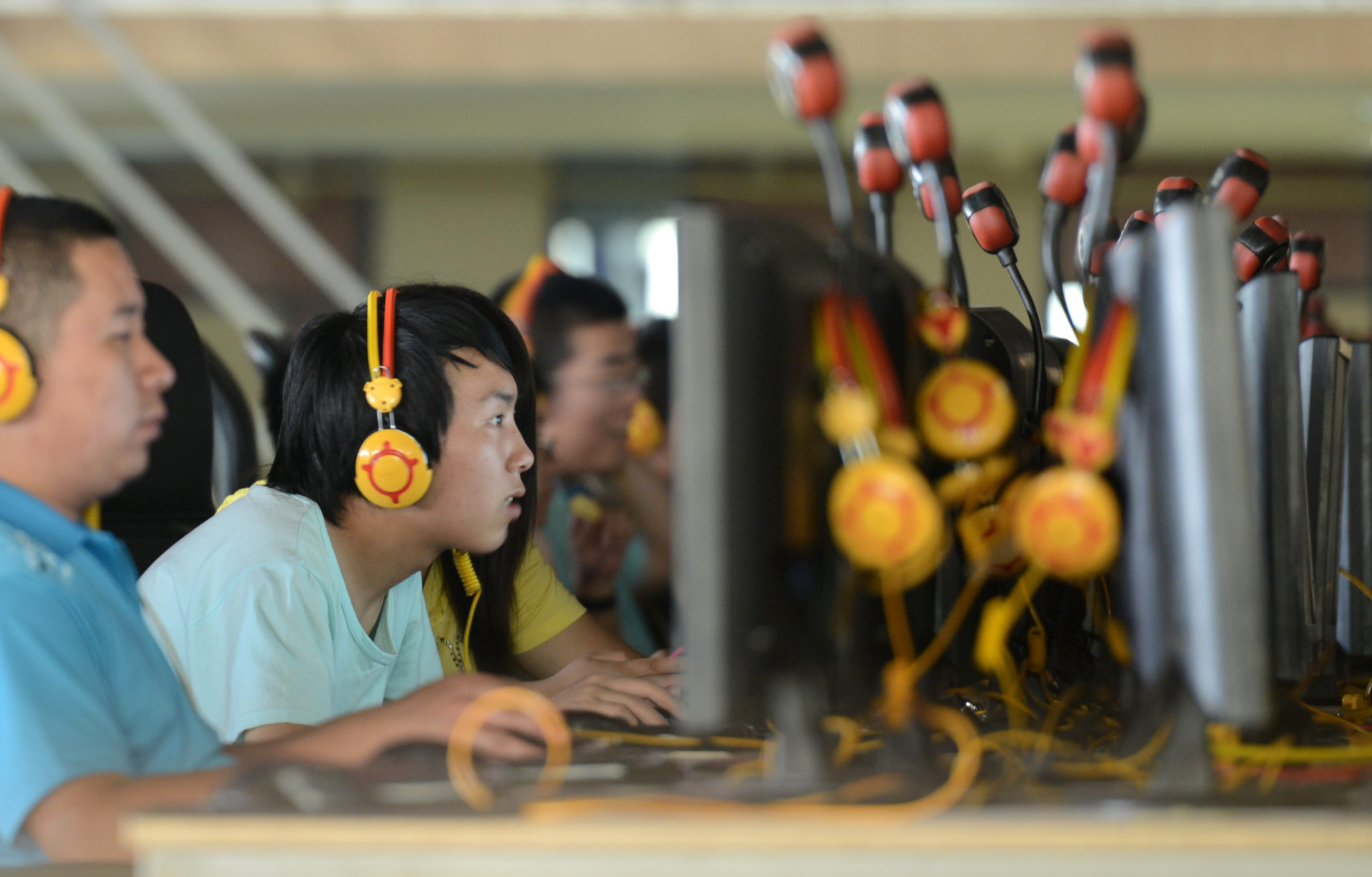
    To enable users to get a feel for 10-Gbps internet, KT said it will gradually install the network at 80 Starbucks Reserve shops in Korea and six PC rooms operated by AfreecaTV by this year.