Tag: Pure

  • Pure Foods Tasmania Chills Out: Sweeps Up Elato Ice Cream to Expand Frozen Dessert Empire

    Pure Foods Tasmania Chills Out: Sweeps Up Elato Ice Cream to Expand Frozen Dessert Empire

    Pure Foods Tasmania (PFT) has strategically broadened its stock of frozen dessert offerings by securing ownership of Elato Ice Cream.

    Implications of the Acquisition

    With this acquisition, PFT gains full ownership of all the intellectual property and brand assets associated with Elato Ice Cream. This encompasses recipes, formulations, and distribution arrangements. The aim behind this move is to lay the groundwork for a dedicated Ice Cream Division within the company.

    This new division is planned to be an amalgamation of Elato Ice Cream and PFT’s existing frozen dessert enterprise, The Cashew Creamery. It will offer consumers a wide variety of both dairy-based and plant-based ice cream products.

    New Leadership

    As part of the agreement, the founder of Elato Ice Cream, Roz Kaldor‑Aroni, has been named General Manager of the newly-formed division. She will be responsible for supervising product development, manufacturing processes, and sales growth strategies.

    On the acquisition, Kaldor-Aroni remarked, “Witnessing Elato being acquired after only four years in the market stands testament to the fact that award-winning products, which emphasize innovation and community support, hold immense appeal not just to ice cream aficionados but also to like-minded innovators such as PFT.”

    About Elato Ice Cream

    Elato Ice Cream was established with a dual mission to fight global hunger and to reduce food waste. The brand is distinctive for its authentic texture, reduced sugar content, and omission of artificial additives.

    Elato Ice Cream is available for purchase at select Woolworths Supermarkets, Woolworths Metro stores, and independent retailers. It has been the recipient of numerous awards since its inception.

    Questions & Answers

    What does the acquisition of Elato Ice Cream by Pure Foods Tasmania entail?
    The acquisition implies that PFT now owns all intellectual properties and brand assets of Elato Ice Cream. It intends to use this acquisition to establish a dedicated Ice Cream Division.

    What is the role of Roz Kaldor-Aroni in the new setup?
    Roz Kaldor-Aroni, the founder of Elato Ice Cream, will serve as the General Manager of the new division. She will oversee product development, manufacturing, and sales growth strategies.

    What differentiates Elato Ice Cream from other brands?
    Elato Ice Cream stands out due to its authentic texture, lower sugar content, and absence of artificial additives. It was founded with a mission to combat global hunger and minimize food waste.

  • Pure Sports Nutrition Revolutionizes Athlete Recovery With New ‘race Recovery’ Product

    Pure Sports Nutrition Revolutionizes Athlete Recovery With New ‘race Recovery’ Product

    Pure Sports Nutrition, a New Zealand-based company, has recently extended its Performance+ product line with the introduction of Race Recovery, a product specifically targeted at endurance athletes.

    Boosting Post-Exercise Recovery

    The company asserts that Race Recovery has been carefully designed to provide a comprehensive recovery solution following intense workouts or competitive sporting events. Each serving of Race Recovery boasts 29g of protein and 52g of carbohydrates.

    Marewa Sutherland, the co-founder and sports nutritionist of Pure Sports Nutrition, clarified that the carbohydrate-to-protein ratio in Race Recovery has been deliberately chosen to maximize the benefits during the crucial 30 to 60-minute window following exercise. During this period, recovery nourishment can significantly impact training outcomes.

    According to Sutherland, each component in Race Recovery plays a specific role, from replenishing carbohydrate and fluid levels to promoting gut health and mitochondrial function. She asserts that the formula approaches recovery from multiple angles, thus assisting athletes in becoming stronger, adapting quicker, and enhancing performance.

    About Pure Sports Nutrition

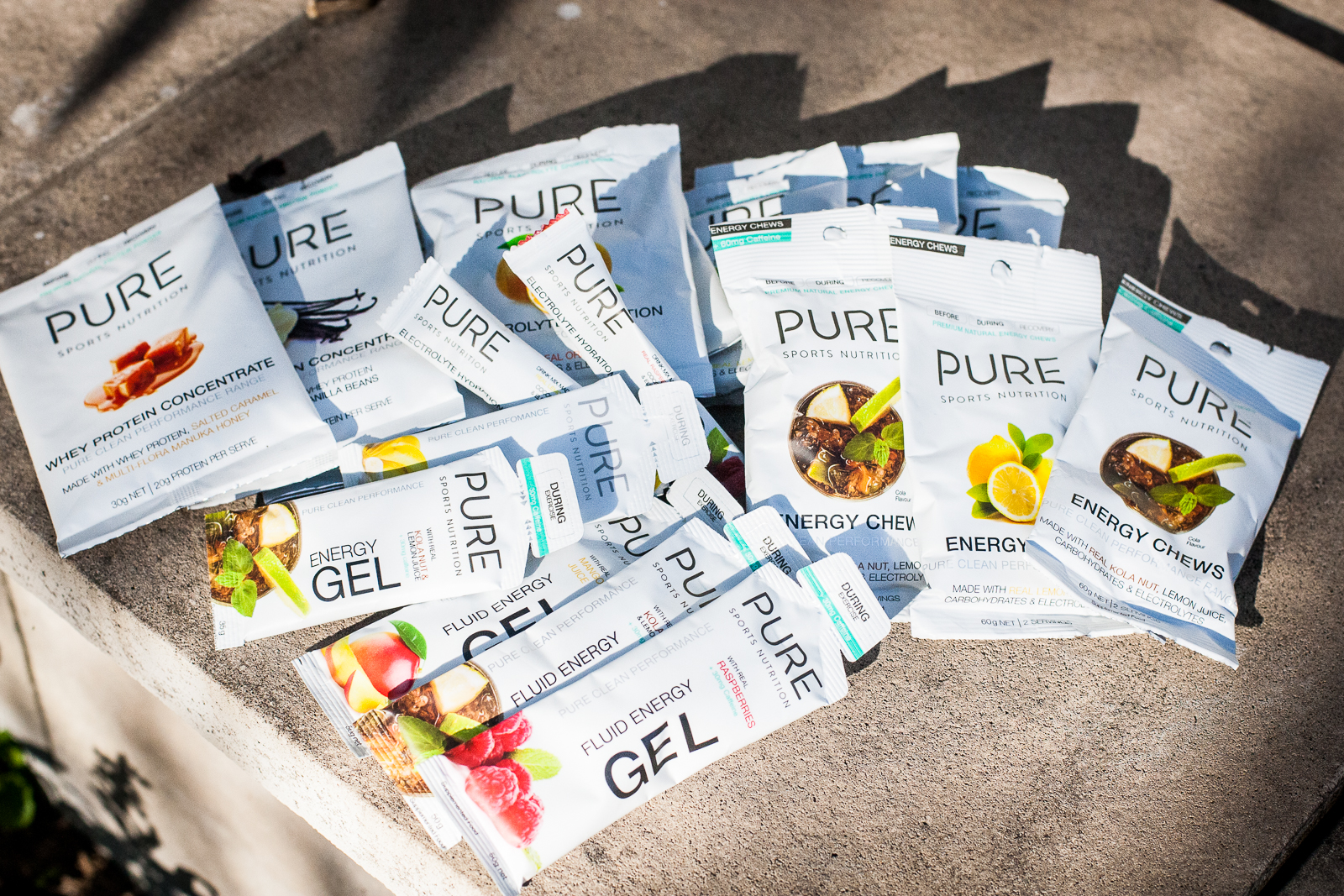
    Pure Sports Nutrition, which was founded in 2012, has made its mark with a variety of products including energy gels, electrolyte hydration powders, and functional foods.

    Race Recovery is now available in a select number of retailers including Aidstation, Active Health Clinic, Sole Motive Mr Vitamins, Nutrition Warehouse, WholeLife Pharmacy, and Healthfoods Pace Athletic. Pricing for Race Recovery is set at $11.99 for individual servings and $79.99 for multi-packs.

    Questions & Answers

    What is the new product launched by Pure Sports Nutrition?
    The new product is called Race Recovery, designed for endurance athletes to aid in their post-exercise recovery.

    What does each serving of Race Recovery contain?
    Each serving of Race Recovery contains 29g of protein and 52g of carbohydrates.

    Where can one purchase Race Recovery?
    Race Recovery is available in select retailers including Aidstation, Active Health Clinic, Sole Motive Mr Vitamins, Nutrition Warehouse, WholeLife Pharmacy, and Healthfoods Pace Athletic.

  • Volvo Cars To Go Leather-Free In All Pure Electric

    Volvo Cars To Go Leather-Free In All Pure Electric

    Volvo Cars is taking an ethical stand for animal welfare in its fully electric cars. Starting with the new C40 Recharge, all-new fully electric Volvo models will be completely leather-free. In the coming years, Volvo Cars will launch a completely new family of pure electric cars. By 2030 it aims to offer only fully electric cars – all of them leather-free.

    As part of its ambitions to go completely leather-free, Volvo Cars is working actively to find high-quality and sustainable sources for many materials currently used in the wider car industry. By 2025, the company is aiming for 25 percent of the material in new Volvo cars to consist of recycled and bio-based content, as it looks to become a fully circular business by 2040. As part of its climate action plans, it also aims for all its immediate suppliers, including material suppliers, to use 100 percent renewable energy by 2025.

    Volvo Cars has created a new interior material – Nordico. It will consist of textiles made from recycled material such as PET bottles, bio-attributed material from sustainable forests in Sweden and Finland, and corks recycled from the wine industry.

    The company’s move towards leather-free interiors is also driven by a concern about the negative environmental impacts of cattle farming, including deforestation. Livestock is estimated to be responsible for around 14% of global greenhouse gas emissions from human activity, with the majority coming from cattle farming.

    Instead of leather interior options, Volvo Cars will offer its customers alternatives such as high-quality sustainable materials made from bio-based and recycled sources.

    For example, Nordico, a new interior material created by Volvo Cars, will consist of textiles made from recycled material such as PET bottles, bio-attributed material from sustainable forests in Sweden and Finland, and corks recycled from the wine industry – setting a new standard for premium interior design. This material will make its debut in the next generation of Volvo models.

    Instead of leather interior options, Volvo Cars will offer its customers alternatives such as high-quality sustainable materials made from bio-based and recycled sources.

    Volvo Cars will also continue to offer wool blend options from suppliers that are certified to source responsibly, as the company looks to ensure full traceability and animal welfare in its wool supply chain. Volvo Cars is also looking to reduce the use of residual products from livestock production commonly used within or in the production of plastics, rubber, lubricants and adhesives, either as part of the material or as a process chemical in the material’s production or treatment.

    The company takes this step because it believes that while going leather-free is a step in the right direction, doing so alone does not make a car interior vegan.

    By aiming to actively replace these materials as much as possible, Volvo Cars takes a strong and ethical position to do what it can to help stop animal harm, by contributing to a reduced demand for these materials containing animal products.

  • Expansion plan from Big C parent company

    Expansion plan from Big C parent company

    Berli Jucker (BJC), the owner of Big C Supercenter, will allocate TB10 billion (US$280 million) to expand the Big C hypermarket chain.

    It plans to opening 213 stores and renovate 54 outlets next year.

    BJC executive VP for group strategy and investor relations Oliver Gottschall says the company will make an aggressive expansion of the Big C network through Thailand, spending TB8 billion to open nine Big C hypermarkets, four Big C Market outlets and 200 Mini Big C stores, as well as renovate 54 outlets. The remaining TB2 billion will be reserved as cash flow.

    As previously reported, MM Mega Market, BJC’s wholesale business, has been merged with Big C’s hypermarket business in a bid to promote expansion and management efficiency. BJC closed its Ogenki beauty/drugstores to focus on Big C’s Pure drugstore chain.

    Two MM Mega Market stores in the Nong Khai and Sa Kaeo provinces are expected help expose Big C’s retail network to cross-border trade through their strategic locations near Laos and Cambodia.

    BJC has more than 700 retail branches under various formats in Thailand, mostly under the Big C brand, and more than 100 branches in Vietnam.

    BJC CEO Aswin Techajareonvikul says Big C’s revenue dropped 20 per cent to TB22.7 billion in the third quarter of this year because of the gradual reduction of cigarette and liquor sales. Net profit rose 14.6 per cent year-on-year to TB1.53 billion.

    During the nine-month period, Big C posted a net profit of TB5.27 billion on revenue totalling TB92.6 billion. Nine-month revenue declined 7.3 per cent, attributed to the economic slowdown.

    Gottschall says the rise in net profit in the third quarter came from Big C restructuring, with low-profit products being replaced with more fresh food.

    During the first nine months, BJC posted a net profit of TB2.77 billion on revenue totalling TB97.4 billion. For the third quarter, net profit was TB1.8 billion and total revenue stood at TB33.5 billion.