Tag: qantas

  • Qantas Freight Expands Asia Pacific Presence with New Singapore Stop, Boosting Changi Airport’s Air Cargo Network

    Qantas Freight Expands Asia Pacific Presence with New Singapore Stop, Boosting Changi Airport’s Air Cargo Network

    Qantas Freight, a subsidiary of the Australian airline Qantas, recently announced the launch of its dedicated freighter services to Singapore. These services, which are expected to begin on April 3, 2026, will operate twice a week and include stops in Sydney, Shanghai, and Singapore.

    New Freight Services

    Qantas Freight’s new services are expected to further bolster the cargo network at Changi Airport. The services will provide increased capacity, more routing options, and more flexible scheduling for shippers and freight forwarders. The services will be carried out through Qantas’ A330 freighter flights on Fridays and Sundays, delivering more than 50 tons of cargo capacity per flight.

    The Singapore stopover is a new addition to Qantas’ existing Sydney-Shanghai freighter operations, which is set to enhance connectivity across the Asia Pacific cargo network.

    First Dedicated Freighter Service

    This is the first time Qantas is offering a dedicated freighter service to Singapore. This service is expected to complement its existing belly-hold cargo capacity on scheduled passenger services. Moreover, this new routing reflects the growing demand for time-sensitive air cargo moving across Asia, Australia, and beyond.

    Singapore’s strategic location and significant global air cargo connectivity make Changi Airport an essential consolidation and transshipment hub for regional and intercontinental cargo flows.

    Statements from Qantas Freight and Changi Airport Group

    Lim Ching Kiat, Executive Vice President of Air Hub and Cargo Development at Changi Airport Group, stated that Qantas Group’s decision to expand its freighter operations to Singapore couldn’t have come at a better time. According to him, there has been an increase in air cargo demand in the Asia-Pacific region, and the region is playing a more significant role in global air cargo growth.

    Igor Kwiatkowski, Qantas Freight Executive Manager, also remarked on the importance of the new Singapore stop. He said that it would be a significant addition to the airline’s Asia Pacific presence and freight network. According to Kwiatkowski, Singapore’s status as one of the world’s major cargo hubs will play a crucial role in connecting shipments between Australia, China, and Southeast Asia. He added that the new stop would provide freight forwarders with more routing options and flexibility, especially for high-tech goods and e-commerce.

    Questions & Answers

    What is Qantas Freight’s new service?
    Qantas Freight’s new service is a dedicated freighter service to Singapore, with twice-weekly operations that include stops in Sydney, Shanghai and Singapore.

    What benefits does this new service bring to shippers and freight forwarders?
    The new service provides increased capacity, more routing options, and more flexible scheduling to shippers and freight forwarders.

    How will the new service impact Qantas Freight’s presence in the Asia Pacific region?
    The new Singapore stop is expected to significantly enhance Qantas Freight’s presence and freight network in the Asia Pacific region. It will connect shipments between Australia, China, Southeast Asia, and improve routing options and flexibility for freight forwarders.

  • Qantas Airways Hit with Historic $58M Fine Over Controversial Pandemic Layoffs

    Qantas Airways Hit with Historic $58M Fine Over Controversial Pandemic Layoffs

    In a landmark ruling, Australia’s Federal Court has imposed a staggering penalty on Qantas Airways, marking the largest fine ever levied on a company under the nation’s labor laws. Judge Michael Lee expressed his discontent with the airline’s litigation tactics and questioned whether its recent expressions of remorse were sincere or merely strategic maneuvers to mitigate damage.

    Qantas’ Controversial Layoffs Under Scrutiny

    While Qantas has made changes to its leadership team in light of the judgment, Judge Lee remarked that the company’s apologies appeared more focused on its own reputation rather than the genuine hurt caused to its workforce. “I accept Qantas is sorry, but I am unconvinced that this measure of regret is not, at least in significant measure … the wrong kind of sorry,” he stated.

    A Record-Breaking Fine

    The fine, which amounts to 75% of the maximum the court could enforce, aims to ensure it is seen not as a mere cost of doing business. A total of A$50 million will be directed to the Transport Workers’ Union (TWU), which spearheaded the case against the airline. TWU’s national secretary, Michael Kaine, provided a triumphant reflection post-verdict: “Against all the odds, we took on a behemoth … that had shown itself to be ruthless, and we won.”

    Compensation and Layoff Fallout

    This judicial decision follows a December agreement that set up a A$120 million compensation fund for the airline’s dismissed employees. The controversy began during the pandemic in 2020, when Qantas management opted to lay off 1,820 ground staff in favor of outsourcing their roles to contractors. Although the airline presented the layoffs as a commercial strategy, the court determined they represented “adverse action,” infringing on workers’ rights under Australia’s Fair Work Act.

    Cultural Critique and Legal Defenses

    Judge Lee highlighted concerns regarding Qantas’ corporate culture and its approach to public relations and litigation, labeling its strategy as reactive and dismissive. The judge referred to the airline’s swift announcement of its intent to appeal the 2021 ruling without allowing sufficient time to digest the 431-paragraph judgment.

    When its initial appeal failed, Qantas’ response was seen as an attempt to spin the narrative, neglecting the court findings that highlighted unlawful conduct. Lee also chastised the airline for its choice to keep its CEO, Vanessa Hudson, from taking the stand. “It is one thing for the ‘Qantas News Room’ to issue press releases by a CEO saying sorry; it is quite another for written assertions of contrition, recognition of wrong and cultural change to be tested in a courtroom,” he remarked.

    Implications for Labor Practices

    The penalty is not only a personal setback for the airline but also serves as a stark reminder to employers about the legal ramifications of disregarding labor rights. “This record-breaking penalty reflects the monumental scale of Qantas’ wrongdoing,” noted Josh Bornstein, a principal at Maurice Blackburn Lawyers, the firm representing TWU. Labor law expert Shae McCrystal from the University of Sydney added that such adverse action cases send a crucial message to employers that unlawful practices will not go unnoticed.

    In response to the court’s ruling, Qantas has stated its commitment to paying the fine as ordered and expressed remorse for the situation. “We sincerely apologize to each and every one of the 1,820 ground handling employees and to their families,” Chief Executive Vanessa Hudson conveyed in her statement. As markets reacted, Qantas shares dipped 0.4% to A$11.58 in early trading, a slice of the turbulence that now surrounds the airline’s future.

    Questions & Answers

    What was the ruling against Qantas about?
    The Federal Court ruled against Qantas for laying off 1,820 ground staff and outsourcing their work, determining it constituted “adverse action” against workers’ rights under Australia’s Fair Work Act.

    How much is the penalty imposed on Qantas?
    The penalty is A$50 million paid to the Transport Workers’ Union, marking the largest fine in Australia’s labor law history, which Judge Lee stated is significant enough to deter similar future violations.

    What steps has Qantas taken following the ruling?
    In the wake of the decision, Qantas has made changes to its management and reiterated its commitment to pay the imposed fine, while expressing apologies to the affected employees and their families.

  • Jetstar Asia to Close, Impacting 500 Jobs in the Singapore Airline Industry

    Jetstar Asia to Close, Impacting 500 Jobs in the Singapore Airline Industry

    Australian airline Qantas has made the difficult decision to close its budget carrier, Jetstar Asia, effective July 31. This move comes in response to escalating operational costs, increased fees at Singapore’s Changi Airport, and fierce competition across the region.

    Operational Costs Taking Their Toll

    Jetstar Group Chief Executive Officer Stephanie Tully highlighted the widespread impact of rising costs on the airline’s operational framework. The recent hike in airport fees at Changi, implemented on April 1 as part of a S$3 billion (US$2.3 billion) upgrade, played a significant role in this challenging situation. “The airport fees are a part of that. That has had an impact on the business,” she stated, referencing comments made to Bloomberg.

    As Qantas Group Chief Executive Vanessa Hudson expressed, this is a heavy moment for the Jetstar Asia team. “We are incredibly proud of them. This is a very tough day for them. Despite their best efforts, we have seen some costs for Jetstar Asia’s suppliers rise by up to 200%, which has materially changed its cost base.”

    Staff Impact and Passenger Reassurance

    The closure will inevitably affect around 500 staff members, who will be offered redundancy benefits and assistance in finding new employment, as reported by AFP. Meanwhile, passengers whose flights have been canceled will be entitled to refunds, ensuring they are compensated as the airline winds down operations.

    Prior to the announcement, Jetstar Asia was projected to incur an underlying loss of A$35 million (US$23 million) this financial year, with Qantas owning 49% of the airline. The cancellation of operations means that the fleet of 13 A320 aircraft will soon be redeployed to Australia and New Zealand, creating over 100 local jobs.

    In a strategic move, Qantas noted that shutting down Jetstar Asia could generate up to A$500 million to bolster the group’s fleet renewal program. The decision was made in conjunction with Westbrook Investments, which holds a 51% stake in the regional carrier.

    While the closure is certainly a somber development, it raises some intriguing questions about the future of air travel in a region that continues to evolve rapidly.

    Questions & Answers

    Why is Qantas closing Jetstar Asia?
    Qantas is shutting down Jetstar Asia due to rising operational costs, increased airport fees at Changi Airport, and intense regional competition making it financially unviable to continue.

    What happens to the staff of Jetstar Asia?
    Approximately 500 employees will receive redundancy benefits and support in finding new jobs as the airline winds down its operations.

    How will affected passengers be compensated?
    Passengers whose flights are canceled will be offered refunds, ensuring they are financially protected during this transition.

  • Qantas Launched Beijing Flight

    Qantas Launched Beijing Flight

    The new flight is operated daily with an Airbus A330-200. “It’s the perfect time for Qantas to fly to Beijing,” said Alan Joyce, CEO of Qantas. “The China-Australia Free Trade Agreement is hitting its stride and China is on track to become the number-one source of visitors to Australia within the next year or so. What’s really exciting is the potential we see for the future. We now have the Qantas Group’s biggest-ever network in Greater China, and our goal is to make our Beijing route a flagship corridor for tourism and trade.”

    The airline also flies to Hong Kong from Brisbane, Melbourne and Sydney, and to Shanghai from Sydney. It suspended flights to the Chinese capital in 2009.

    The schedule for the new flight is as follows.

    QF107

    SYD 13:50

    22:40 PEK

    QF108

    PEK 00:15

    14:55 SYD

  • House of Chivas pours Regal Ultis to Qantas First Class customers

    House of Chivas pours Regal Ultis to Qantas First Class customers

    To celebrate the launch of Chivas Regal Ultis, Pernod Ricard Travel Retail Asia Pacific is offering the blended malt Scotch whisky to Qantas First Class customers until March.

    Chivas Regal Ultis features on the summer menu in the Sydney and Melbourne First Lounges and in a bespoke cocktail called ‘Fine St Blend’. First Class Qantas passengers will also be offered the spirit onboard and can buy it through Qantas epiQure and Qantas inSky shopping pre-order sites.

    Pernod Ricard Travel Retail Asia Pacific Senior Brand Manager Katie Gee said: “We know our Chivas Regal drinker travels frequently and is always discovering and seeking out new experiences. Showcasing our new product, Chivas Regal Ultis, with Qantas is a fantastic platform to connect with whisky enthusiasts along their journey.”

    To further promote the Chivas Regal Ultis launch in the region, Pernod Ricard Travel Retail Asia Pacific has partnered with duty free retailers to create large scale promotions in airports. Tasting bars, ambassador appearances and gifts-with-purchase were featured in December and will continue in selected locations throughout January.

    Chivas Regal Ultis is available now in global travel retail and in selected domestic retailers. The Scotch is also available through Qantas epiQure and Qantas inSky shopping pre-order channels in Asia Pacific.

  • Qantas To Launch 787 with Melbourne – LA Route

    Qantas To Launch 787 with Melbourne – LA Route

    Qantas will inaugurate long-haul flights with its new Boeing 787-9s by flying them between Melbourne and Los Angeles from December 15, 2017.

    The flight will be operated six times a week, replacing the current twice-weekly flight operated by a 747-400.

    Qantas also operates a daily Airbus A380 flight between Melbourne and Los Angeles.

    The carrier recently announced that it would fly its 787s non-stop between Perth and London from March 2018.

    Qantas has eight 787-9s on firm order.

  • Qantas Freight has been appointed as the carrier to transport milk

    Qantas Freight has been appointed as the carrier to transport milk

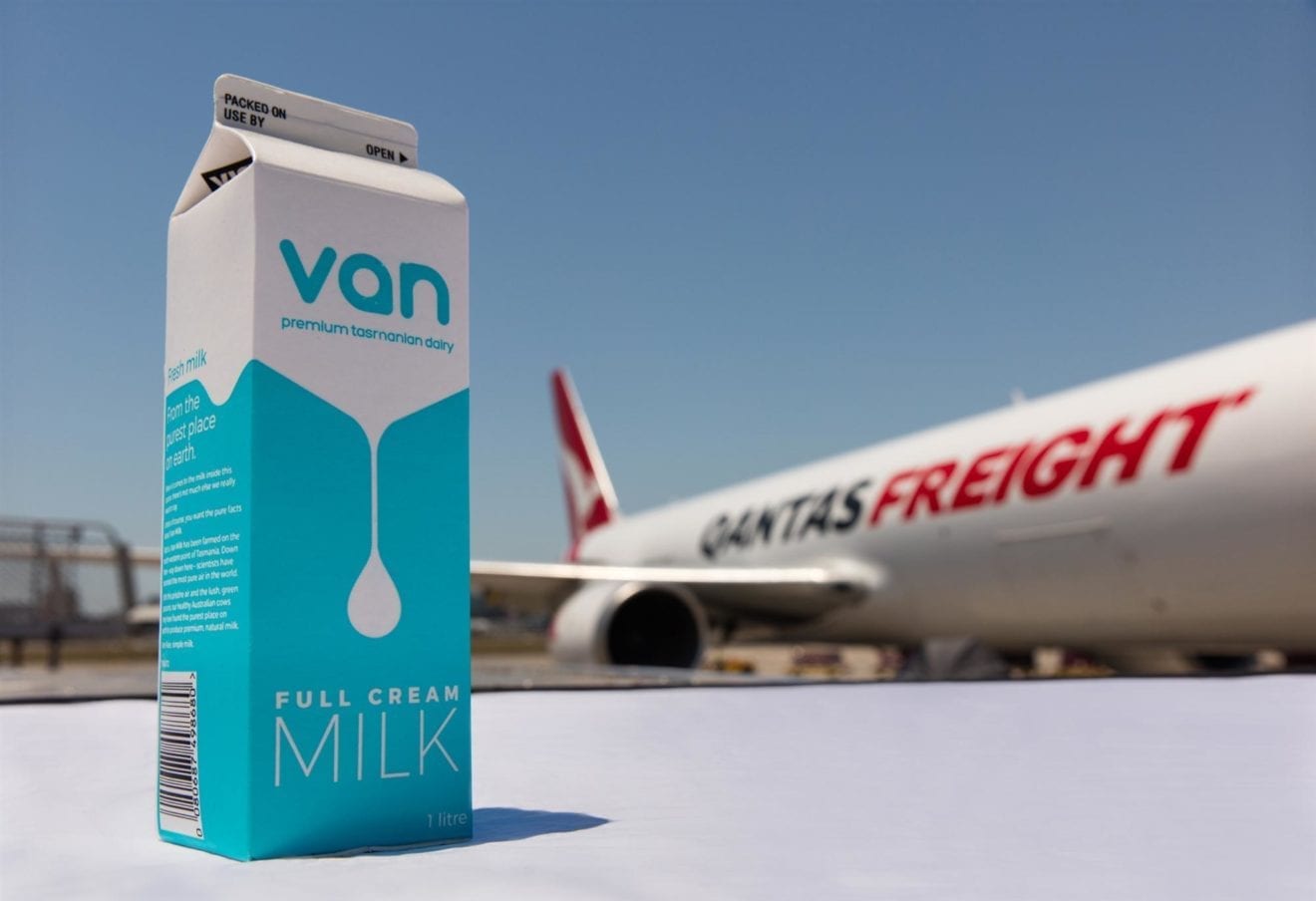
    Qantas Freight has been appointed as the exclusive carrier to transport Van Dairy’s Tasmanian milk to Ningbo, China.

    Starting in the first half of 2017, Qantas Freight will operate a weekly Boeing 767-300 freighter flight from Hobart to Ningbo, carrying more than 50,000 litres of fresh milk. Qantas will look at increasing the frequency if there is additional demand.

    “There is a huge demand for fresh milk in China and the key to satisfying that demand is having a reliable freight partner with an established freighter network, infrastructure and support in China and expertise in handling fresh produce – Qantas provides that,” said Sean Shwe, managing director of Moon Lake Investments, parent company of Van Dairy. “Establishing this trade bridge is an exciting venture for our dairy company, Van Dairy who produce Van milk, and opens the door for access for other Tasmanian producers of fresh perishables such as seafood, fruit and vegetables to air freight their produce on this direct flight to China. It will be a game changer for Tasmania, and we are proud to be leading the charge.”

    According to Qantas, local distributors will truck the milk to supermarkets and convenience stores in Ningbo and Beijing. Moon Lake Investments has plans to extend the dairy’s market reach to Shanghai, Hangzhou and other Chinese cities after the product is established.

    “We’ve been flying freight between Australia and Greater China for more than 30 years, and currently offer freight capacity on 40 flights a week,” said Alison Webster, executive manager of Qantas Freight and Qantas Catering Group. “This includes five dedicated freighter aircraft services, carrying a mix of perishables such as chilled meat, seafood, dairy, fruit and vegetables as well as general cargo. Over the past three years Qantas Freight has developed particularly strong capabilities in dairy export which, with its short-life, requires close collaboration to ensure on-time delivery and quality control throughout the supply chain. We’re really pleased to partner with Van Dairy to help meet the booming demand for fresh Tasmanian milk in China – it’s the ultimate milk run.”

    Qantas currently operates passenger flights from Brisbane, Melbourne and Sydney to Hong Kong, as well as from Sydney to Shanghai. It is also scheduled to launch a flight between Sydney and Beijing in January 2017.

  • Qantas and Singapore named the best airlines in the world by AirlineRatings.com

    Qantas and Singapore named the best airlines in the world by AirlineRatings.com

    Qantas has been named as one of the best airlines in the world if you want to travel in style.

    Popular travel rating website Airlineratings.com has announced the winners for their third annual Best of the Best in luxury air travel, and Qantas, along with Singapore Airlines were clearly ahead of the competition.

    Editors of the site examined the offerings and in-flight service of more than 450 airlines.

    Qantas and Singapore made it into the Top Ten in each of the four categories, while Air New Zealand, Cathay Pacific Airways and Etihad made the Top Ten in three of the categories.

    This lucky guy has plenty of room to stretch out in his first class seat on a Singapore Airlines A380 airliner.

    This lucky guy has plenty of room to stretch out in his first class seat on a Singapore Airlines A380 airliner.

    AirlineRatings.com Editor-In-Chief Geoffrey Thomas said that it was “not surprising that Qantas, Singapore Airlines, Air New Zealand, Cathay Pacific Airways, Etihad Airways and the Virgin Group featured so significantly in the Top Ten selections. These airlines are consistently a byword for in-flight excellence and service. They are the trendsetters and the industry looks to what they are doing next.”

    AirlineRatings launched in June 2013 and rates the safety and in-flight product of 450 airlines using a proprietary system.

    The winners — in alphabetical order:

    FIRST CLASS: All Nippon Airways, Emirates, Etihad Airways, Japan Airlines, Korean Air, Lufthansa, Qantas, Singapore Airlines, Swiss and Thai International

    BUSINESS CLASS: Air France, Air New Zealand, All Nippon Airways, Cathay Pacific Airways, Etihad Airways, Japan Airlines, Qatar, Qantas, Singapore Airlines and Virgin Australia/Atlantic

    You can watch the clouds go by or pop on the tele in first class on board Singapore Airlines' Boeing 777-300ER aircraft. Supplied.

    You can watch the clouds go by or pop on the tele in first class on board Singapore Airlines’ Boeing 777-300ER aircraft. 

    PREMIUM ECONOMY: Air France, Air New Zealand, All Nippon Airways, British Airways, Cathay Pacific Airways, EVA Air, Japan Airlines, Qantas, Singapore Airlines and Virgin Atlantic/Virgin Australia

    LONG HAUL ECONOMY CLASS: Air New Zealand, Cathay Pacific Airways, Etihad, EVA Air, Japan Airlines, Korean Air, Qantas, Qatar Airways, Singapore Airlines and Thai Airways

    In June, Qatar Airways was voted the best airline for 2015 in the annual Skytrax awards for the world’s best airline.

    Time for a dinner date on board a Qantas A380. Supplied.

    Time for a dinner date on board a Qantas A380.

    Meanwhile, in June the presitigous Skytrax awards were revealed, with Qantas coming in at number 10 on the list. The awards are judged by 18.9 million passengers in 110 countries around the world who vote on factors such as comfort, friendliness of cabin crew and in-flight food.

    The top ten airlines included Singapore Airlines, Cathay Pacific, Turkish and Emirates.

    In the low-cost airline category AirAsia was voted the world’s best for the seventh year in a row, despite the tragic accident in the Java Sea last year that killed all 162 people on-board flight QZ8501.

    Other awards included Garuda Indonesia for best cabin crew, Air France for most improved airline, EVA Air for cleanest aircraft cabins and Cathay Pacific for best transpacific airline.

    The best airlines for 2015, according to Skytrax:

    1. Qatar Airways

    2. Singapore Airlines

    3. Cathay Pacific Airways

    4. Turkish Airlines

    5. Emirates

    6. Etihad Airways

    7. ANA All Nippon Airways

    8. Garuda Indonesia

    9. EVA Air

    10. Qantas Airways

    The fancy Qantas Chairman's Lounge at Sydney Airport serves up some first class food. Supplied.
  • Qantas & China Eastern pact to drive Oz arrivals

    Qantas & China Eastern pact to drive Oz arrivals

    A tie-up between Australian carrier Qantas and China Eastern will create one of the world’s largest airline partnerships following the June signing of the China-Australia Free Trade Agreement (ChAFTA) – and open the door more widely to tourist traffic.

    Speaking on Talk to China, the interview series from the China government news agency Xinhua, Qantas Chief Executive Alan Joyce said of the deal: “We can benefit out of tourism, and out of economic activity.”

    The partnership with China Eastern – given a green light last month by the Australian Competition & Consumer Commission – boosts each airline’s access to the other’s markets [for an initial five-year period], strengthening travel links that have already been enhanced in recent years. The approval is also subject to strict capacity conditions and reporting on seats and passengers flown between Australia and Shanghai.

    Australian airport retailers are currently benefiting from the higher number of Chinese travellers at the country’s major gateways. In the year to July, Chinese nationals were Sydney Airport’s fastest growing market, up +17%.

    Joyce told Xinhua that both airlines will increase capacity on the Australia-Shanghai route starting with Brisbane and plan to grow the market by over +20%.

    CHINESE TRAFFIC BOOM

    Chinese tourists have overtaken the British to become the second biggest tourism market in Australia with 864,000 arrivals behind New Zealand’s 1.15m, but they are closing in on the number one spot due to high annual growth rates.

    The Australian government says that tourism “will be a big winner” from ChAFTA. “We forecast about 40% of inbound expenditure growth in the tourism sector to 2022-23 to be sourced from China. Some 1.5m Chinese are expected to visit Australia by that year and they are projected to spend more than A$10.2bn/$7.5bn.”

  • Tigerair Australia proves it’s ‘true blue’ despite Qantas concerns

    Tigerair Australia proves it’s ‘true blue’ despite Qantas concerns

    A government body has paved the way for Virgin Australia subsidiary Tigerair Australia to begin operating low-cost flights to Bali despite concerns raised by rival Qantas.

    The ruling by the International Air Services Commission, deeming Tigerair an “Australian international airline”, should also make it easier for Tigerair to add more international destinations such as New Zealand and Fiji. Obtaining this designation was a prerequisite for Tigerair to apply for an international airline licence.

    Virgin had applied to the IASC to vary the terms of its allotted capacity to Bali so that a wholly owned subsidiary, Tigerair, could also use it. The positive decision helps clear the way for Tigerair to launch flights from Melbourne, Adelaide and Perth to Bali from March, taking over routes that are currently flown by Virgin.

    To be designated an “Australian international airline”, a carrier needs to be majority-Australian owned. More than 80 per cent of Virgin shares are held by overseas investors including Air New Zealand, Etihad Airways, Singapore Airlines and Sir Richard Branson’s Virgin Group. However, in 2012 it split off its international arm and gave it its own board to meet the ownership requirements under the Air Navigation Act.

    Qantas concerns

    In 2013, when Qantas boss Alan Joyce was seeking government aid for his then-ailing carrier, he called the Virgin structure a “sham”. “We all know that Virgin’s international business has no independent existence apart from the foreign-­controlled domestic business: no assets, no management, no people, no funds,” Mr Joyce said at the time.

    In a submission to the IASC last week, Qantas said Virgin needed to prove its subsidiary was an Australian carrier in order for a complete assessment of the application to be made.

    A Virgin spokeswoman said on Friday Tigerair’s international arm was a subsidiary of Virgin’s international arm.

    Tigerair will use Virgin international’s Boeing 737 aircraft and pilots on the Bali route, although the flight attendants will be employed by the low-cost carrier. There are no plans for Tigerair to apply for a separate air operator’s certificate for its international operations, but it is required to obtain an international airline licence, which is a less onerous process.

    The IASC on Friday approved Virgin’s application to transfer some of its Bali capacity allocation to Tigerair, after being advised by the Department of Infrastructure and Regional Development that the budget carrier complied with the ownership and control obligations of the Air Navigation Act.

    The IASC said there would be a public benefit to Tigerair flying to Indonesia, which had outbound traffic of 1.1 million passengers in the year ending July. Other carriers that operate the route include Jetstar, Garuda Indonesia, Virgin, AirAsia Indonesia and Indonesia AirAsia X. Qantas has also announced plans for seasonal flights to Bali from Sydney in December and January.

    “The commission considers that Tigerair’s proposed services between Australia and Indonesia will likely benefit consumers, as Tigerair’s presence on the Indonesia route will likely promote competition on this popular route,” the IASC said.

  • Qantas adds more flight to Sydney from Hong Kong

    Qantas adds more flight to Sydney from Hong Kong

    Qantas will add more flights between Hong Kong and Sydney, Australia as a result of increasing demand from travellers.

    From 26 October 2015*, Qantas will operate an additional four Hong Kong-Sydney services each week, on top of the current daily services available to Sydney, Melbourne and Brisbane.

    Qantas International CEO Gareth Evans said the airline was pleased to offer customers more choice from Hong Kong, on a route that is experiencing strong demand from customers.

    “Customers travelling from Hong Kong will have the choice of double daily flights to Sydney on peak days of the week for business travel and we’ll look at expanding beyond that if the opportunity is available,” said Mr Evans.

    The four new Hong Kong-Sydney services will be operated by Qantas’ refurbished A330 aircraft with lie-flat seats in Business and new Economy seats, the first time customers travelling on this route will experience the airline’s latest international product.^

    The new services have been made possible by Qantas’ continued focus on more efficient use of aircraft across its fleet. It coincides with the airline also today announcing an increase in services from Manila to Sydney from four to five per week between early December 2015 and late March 2016 and follows an additional 140 international services recently announced to operate to Australia from Singapore, Jakarta and New Zealand over the upcoming summer holiday season.

    “We’re pleased to add to the seasonal services we’re set to operate from Asia later this year, with the new services again representing the dynamic nature of our network, which has the flexibility to offer our customers more flights during peak seasons,” said Mr Evans.

    With the new services, Qantas will operate 25 services per week from Hong Kong to Australia, in addition to daily services which operate from Shanghai to Australia. From 21 January to 16 February, Qantas will upgrade its B747 services to daily A380 services between Sydney and Hong Kong. 

    Schedule*

    Flight

    Dep

    Arr

    Days of week

    Aircraft

    QF118 HKG-SYD

    2135

    1000+1

    Monday, Tuesday, Wednesday, Thursday

    A330

    QF117 SYD-HKG

    1315

    1940

    Monday, Wednesday, Thursday

    A330

    1340

    2005

    Tuesday

    A330


    * Flights subject to regulatory approval.

    ^ All aircraft subject to change for operational requirements.

  • Qantas announces Hugh Jackman as global ambassador

    Qantas announces Hugh Jackman as global ambassador

    The “Boy from Oz” Hugh Jackman and Australia’s national carrier Qantas have announced a new partnership to promote Australia on the global stage.

    The award-winning actor has signed on to become an official global ambassador for the airline and will also work with Qantas on community projects in Australia, with further detail to be announced soon.  

    The international superstar is one of Australia’s most successful and highly regarded performers with a career spanning 30years from his early days in “Correlli” right after his graduation from Western Australian Academy of Performing Arts, to his recent stage and screen successes including the X-Men films, The Boy from Oz stage show, the film version of Les Misérables and the soon to be released fantasy film Pan.

    Jackman said he was proud to become a Qantas Ambassador and was looking forward to teaming up with Qantas to highlight the best of Australia.

    “I travel a lot and like all Aussies, I get a buzz whenever I see the familiar red tail and the kangaroo logo, no matter where I am in the world.  Qantas is great airline with great people and represents the very best of our wonderful  country,” Jackman said.

    “Qantas has always had a vital role in promoting Australia as a tourism destination and I’m looking forward to playing my part as we work together to showcase our amazing cities, landscapes and experiences in the U.S., Asia and beyond.

    “What I also love about Qantas is the role it plays in the community.  It’s inspiring to see an Australian company stand up for causes that make a difference and I know it’s something that the Qantas team and its employees are really passionate about.

    “The Qantas projects I will be getting involved with will create opportunities for Australians to learn, to work and to reach their potential.  I will also be working directly with Qantas employees to build on the fantastic community work they already do and I can’t wait to get started later this year.”

    Qantas CEO Alan Joyce said the airline was thrilled to welcome Hugh Jackman in to the Qantas family as an ambassador.

    “Hugh represents everything that the world loves about Australians and he has used his enormous international success to promote Australia as well as highlight causes that are close to his heart.

    “We will build on the work both Qantas and Hugh are already doing and together we believe we have the capacity to create some truly life changing opportunities,” Joyce said.  

    Further details in relation to the Hugh Jackman/Qantas community initiatives will be announced in coming weeks.

    Qantas has also recently been announced as a co-sponsor of Jackman’s upcoming “Broadway To Oz” arena shows across Australia in November and December.

  • Qantas still positive about Jetstar’s Asian growth plans

    Qantas still positive about Jetstar’s Asian growth plans

    Jetstar’s Asian division reported an underlying loss before interest and tax of $33 million in the first half of the financial year.

    Qantas Airways has no plans of abandoning its investment in Jetstar’s Asian arms despite disappointing returns to date because the growth potential is so big, says Qantas chief executive Alan Joyce.

    All of the airline’s other divisions are expected to report returns exceeding their cost of capital this financial year, amid forecasts the carrier could report an underlying pre-tax profit approaching $1 billion. But Jetstar’s Asian division, including businesses in Singapore, Japan, Vietnam and Hong Kong, reported an underlying loss before interest and tax of $33 million in the first half of the financial year.

    “What we are investing in Asia for the group, it is a very small amount of capital,” Mr Joyce said on Sunday on the sidelines of the International Air Transport Association annual meeting in Miami. “It is done in a very capital-light way. So for the group to get its cost of capital, this year as an example, [Jetstar in Asia] won’t return its cost of capital but the overall group will. For us these are low capital cost investments for huge growth potential.””For us these are low capital cost investments for huge growth potential.”: Qantas boss Alan Joyce.

    Mr Joyce noted the Asian market is the fastest-growing aviation market in the world, and said he believed it would eventually become the most profitable aviation market in the world. Qantas has invested in Jetstar’s Asian arms through joint ventures with local shareholders.

    Jetstar Group chief executive Jayne Hrdlicka said Singapore-based Jetstar Asia an Vietnam-based Jetstar Pacific are expected to be profitable in the second half of the financial year.

    “Significant capacity has come out of the [Singapore] market post the FY14 results,” she said. “Everybody did it tough with too much capacity coming into the market. So that has rationalised. A little bit of it is starting to come back in because the Singapore dollar is so strong. But we are very confident that the outlook will improve.

    In the meantime, Jetstar Japan remains loss-making and Jetstar Hong Kong has yet to receive long-delayed government approvals to begin flying and it has sold all but one of its original nine aircraft.

    Ms Hrdlicka admitted Jetstar had misjudged the ease of gaining regulatory approvals in Hong Kong.

    “Our expectations were not lined up with the reality of the way this government is making decisions in Hong Kong,” she said.

    But she said fellow Jetstar Hong Kong shareholders China Eastern and Shun Tak Holdings were more “patient and longminded”, especially now that the Hong Kong government has committed to a third runway at the busy Hong Kong International Airport.

    “The other aspect that is brewing confidence in our shareholders is the Hong Kong economy needs the tourism flows into Hong Kong,” she said. “Chinese tourism is significantly down. For some retail sectors in Hong Kong, they are off by 30 per cent. So that flow of customers who need low fares to make Hong Kong affordable, to have the Hong Kong experience is really important to the Hong Kong economy and supports the Hong Kong people.”