Tag: Qoo10

  • Singapore-based e-commerce firm Qoo10 to acquire Tmon

    Singapore-based e-commerce firm Qoo10 to acquire Tmon

    Singapore-based e-commerce firm Qoo10 plans to acquire TMON through a stock swap deal, industry sources said Thursday.

    TMON’s two major shareholders — Anchor Equity Partners and Kohlberg Kravis Roberts & Co. — have agreed on the stock swap deal with Qoo10, according to the sources.

    Under the deal, the two shareholders will trade their 81.74 percent stake in TMON with new shares issued by Qoo10’s logistics affiliate, Qxpress. The remaining amount will be paid in cash, sources said.

    The remaining stake in TMON is owned by a consortium led by Poongsung Group, a Korean car parts maker.

    Qoo10 is also pushing to buy ecommerce platform Interpark from travel platform operator Yanolja, which bought a 70 percent stake in Interpark worth some 294 billion won ($220 million).

    Based in Singapore, Qoo10 is an ecommerce platform founded by eBay and GMarket founder Koo young-bae. The site operates localized marketplaces across five Southeast Asian countries, including Indonesia, China, Hong Kong and Malaysia.

    Its affiliate, Qxpress, reported around 150 billion won in sales in 2020. It is pushing for an initial public offering on the tech-heavy Nasdaq, and is currently under review by the U.S. Securities and Exchange Commission.

  • Japan’s Utena debuts in Singapore

    Japan’s Utena debuts in Singapore

    Japanese beauty brand Utena has launched in Singapore.

    The 91-year-old heritage brand, which is currently distributed throughout Greater China and Thailand, is now available at selected Watsons stores, Yue Hwa, Welcia-BHG, Tokyu Hands, Don Don Donki, Metro Singapore, and online via Shopee, Lazada, Redmart and Qoo10.

    Its key products are a high-level beauty serum mask called the Premium Puresa Golden Jelly Series, now selling in Singapore, and the Matomage Hair Styling series fortified with natural ingredients, arriving in stores next month.

  • Qoo10’s acquisition is finally done

    Qoo10’s acquisition is finally done

    US-headquartered eBay has bought out its partners in the Japanese e-commerce business Qoo10.

    According to regulatory filings seen by US media, eBay has paid US$306 million in cash for Qoo10’s Singapore-headquartered parent Giosis and relinquished its existing equity holding.

    In July 2015, eBay was a partner in a founding round lead by Singapore Press Holdings, and also including Saban Capital Group, UVM 2 Venture Investments LP, Brookside Capital and Oak Investment Partners, which raised $182 million. eBay was an original founding investor.

    At the time, Qoo10 operated six online e-commerce marketplaces across Asia – in Singapore, Japan, Indonesia, Malaysia, Hong Kong and China. It had 17.6 million registered users across the region and a combined turnover of more than US$408 million in 2014.

    eBay’s investment this month would value Giosis at $573 million, given the cash paid combined with eBay’s shareholding of $266 million.

    Earlier this year, when flagging the proposed purchase, eBay CFO Scott Schenkel projected Qoo10 would generate about $1 billion in gross merchandise volume per year, a fraction of eBay’s circa $100 billion expected this year.

  • E-Mart to introduce Korean SMEs’ products in Singapore

    E-Mart to introduce Korean SMEs’ products in Singapore

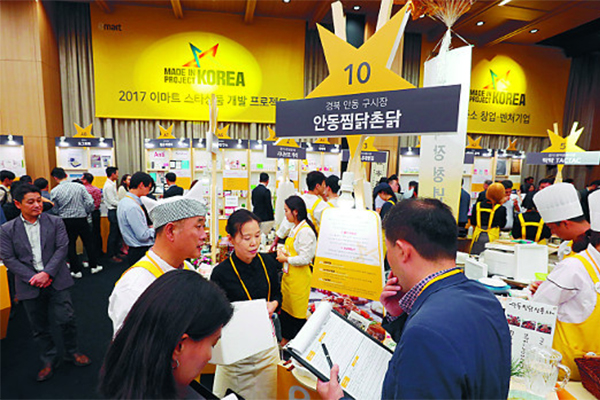
    Korean retailer E-Mart starts selling products from 16 Korean SME companies in Singapore yesterday.

    The move is a part of E-Mart’s plan to take Korean brands into new markets, starting with the winners of the giant retailer’s SME-support project.

    The products include Mpac Plus waterproof cases for smartphones and JM Green’s  containers for storing food in a refrigerator.

    E-Mart will promote the products via both online and offline sales channels across Southeast Asia.

    From yesterday until July 22, the products will be sold on Singapore’s largest online shopping mall, Qoo10.

    Korea’s Small & Medium Business Corporation has teamed with I’m Startice to sell the products through offline channels as well. A pop-up store will open at Suntec City from July 2 to 8.

    E-Mart will also provide consulting services for local buyers that want to sell Korean SME products.

    This the third time that E-Mart, a subsidiary of Shinsegae Group, has organised such a project.

  • Qoo10 to ‘renew focus’ on Singapore e-commerce market

    Qoo10 to ‘renew focus’ on Singapore e-commerce market

    It may be one of the earliest players in Singapore’s e-commerce market, but Qoo10 seems to have lost some of its shine in recent years as more high-profile names such as Lazada, RedMart, Amazon, and Carousell hog the headlines.t

    Still, the e-commerce site has managed to climb to pole position in Singapore based on traffic and gross merchandise volume (GMV). Launched in June 2010, Qoo10 currently has 2.5 million registered users in the country where it is headquartered. There are more than 10 million product listings on the site.

    According to online shopping aggregator iPrice, for the first quarter of 2018, Qoo10 clocked the highest monthly traffic in Singapore at 13.47 million visits, followed by Lazada at 10 million. In the previous quarter, Qoo10 saw 14.41 million monthly visits compared to Lazada’s 10.87 million. The Alibaba-owned e-commerce site, however, led in ranking for both Apple App Store and Android Play Store, while Qoo10 placed third in both appstores.

    Its general manager Sam Too acknowledged that Lazada was narrowing the gap and nipping at its heels. He noted, though, that the Singapore e-commerce market still was nascent and remained largely untapped.

    Too said Qoo10 was “refocusing” on the city-state and tapping the market as a springboard into Southeast Asia, where it was targeting to be the region’s second-largest player in the next three to five years.

    He said the company was planning for its Series C funding round this year and, if successful, would use the money to drive its expansion plans.

    He said Qoo10 had spent the last five years focused on the Japanese market, which was its fastest growing and where the site rose to claim the fourth-largest share. In February, its parent company Giosis sold the local business to eBay for an amount that Too declined to reveal, but he said the deal would see eBay divesting all its shares in Giosis’ businesses outside of Japan.

    While the sale gave the company a cash boost, it also meant Qoo10 would have to look elsewhere to ensure its sustainability, especially since Japan was its largest contributor, accounting for 50 percent of its GMV. Singapore was its second-largest.

    “No, we’re not late,” Too said, when asked if there still were growth opportunities in the Singapore market, where the likes of Lazada–backed by Alibaba’s deep pockets and dominance in China–and Carousell and Carro with their latest funding rounds, already had been ramping up their expansion plans over the past couple of years.

    While noting that Singapore was a challenging landscape, he said Qoo10 had first-mover advantage in the market where it had “groomed” the e-commerce industry a decade ago. “From out point, this industry is still only at its infancy. There is no clear winner at this point,” he said, adding that the market had the potential to grow three-fold by 2025 and another five-times by 2028.

    GETTING THE SMALL TO GO BIG ONLINE

    Specifically, he pointed to two key focus areas for Qoo10: small and midsize businesses (SMBs) as well as consumers aged between 35 and 45, who had only just started to shop online.

    SMBs, for instance, accounted for 99 percent of Singapore’s local enterprises, but many had yet to fully engage the digital world, running websites that had little traffic, Too said.

    “We want to engage these brick-and-mortar business owners and encourage them to try out e-commerce with minimum risks and resources…that’s where the [growth] potential is,” he said.

    Merchants peddling their wares on Qoo10 do not have to pay a monthly subscription. Instead, the e-commerce operator takes a cut of each transaction the merchant successfully closes.

    “So if they don’t see any sale on our platform, they don’t lose anything,” Too said, adding that the company had a salesforce dedicated to engaging and guiding SMBs on how to use its online tools to promote their products.

    It also meant these small retailers would need to learn how to sell and manage the entire cycle of growing their business on a digital platform, including responding to customer queries and reviews.

    In addition, they had to ensure their backend operations could support Qoo10’s three-hour delivery service, he said. The site processed 1.5 million transactions in the first quarter this year.

    To differentiate its offerings from the competitors, he underscored the need for Qoo100 to constantly test new ideas and bring new things to the table, including new apps, news contests, and new services.

    In addition, he said it was looking to bolster its grocery offering, though, by tapping different merchants to sell such products on the site, rather than storing its own inventory.

    “We have mini Redmarts,” Too quipped, noting that a FMCG (fast-moving consumer goods) retail chain processed S$500,000 worth of transactions on average each month, peaking at S$800,000 last November. He revealed that the merchant, three years ago, had started by offering diapers and formula milk on Qoo10 because these items were bulky and cumbersome to store in their physical stores.

    He added that the site now was exploring the use of retail outlets as pickup points, from which online customers could choose to pick up their purchases at these physical points.

    Asked if the business was profitable, he declined to give specifics but said Qoo10 was focusing on its bottomline and confident it was running a sustainable business.

    Apart from Singapore, the company currently operates online marketplaces in four other markets: Indonesia, Malaysia, Hong Kong, and China.

    Its focus for now, though, was on Singapore, Too said, adding that it would look to ramp up its presence in Indonesia and Malaysia in about two years when these markets were “ready”. He noted that some e-commerce markets in the region remained immature and needed more time to stabilise.

  • Qoo10 commits to tighten counterfeit security

    Qoo10 commits to tighten counterfeit security

    Singapore e-commerce platform Qoo10 has stepped up its measures against counterfeit items.

    As well as internal systemic protocols to check and deter the sale of counterfeit items, it has a red-flag system for its security team.

    “Where a listing is flagged for potentially infringing intellectual property (IP) rights or selling counterfeit products, our dedicated compliance team steps in to investigate and take any necessary action,” says Qoo10 Singapore country manager HyunWook Cho.

    Secondly, the website’s compliance team also actively responds and reacts to claims by customers, sellers and businesses or brands. Customers who suspect they may have bought a counterfeit item from a Qoo10 seller may alert the compliance team, which will then investigate and issue a refund.

    Anyone who suspects a listed product is counterfeit may also report the issue.

    The compliance team also works with businesses and brands under its Brand Protection Program to take down infringing listings. Errant sellers with repeat offences may also be restricted from selling their items on Qoo10.

  • Qoo10 visitors balloon by 70%

    Qoo10 visitors balloon by 70%

    Visitors to e-commerce site Qoo10 ballooned 70 per cent to hit an average of 14.4 million in last year’s fourth quarter, according to Malaysian online aggregator iPrice.

    Qoo10 has about 3 million registered members and offers products ranging from women’s fashion to groceries, and services that include credit card and insurance policy subscriptions. The site offers daily deals, limited-time sales and coupons.

    Discounts and savings of up to 70 per cent off are offered through promotional deals.

    Qoo10’s Live10 mobile app includes a GPS-enabled interactive game with daily discounts, coupons or Qpoints as prizes.

    Based in Singapore as a JV established between founder Ku Young Bae and eBay, Qoo10 launched online in 2010 and has expanded its marketplaces to Korea, Indonesia, Malaysia, Hong Kong and Mainland China.

  • Qoo10 bridges the gap between online and offline retail in Singapore

    Qoo10 bridges the gap between online and offline retail in Singapore


    Asia’s e-commerce platform, Qoo10, has launched a GPS-enabled mobile game called MameGo! in Singapore. The game, which was developed by Qoo10, is available on Qoo10’s online marketplace as well as its Qoo10 and Live10 mobile apps.

    Nearly similar to Pokemon Go!, the game issues three Mameballs to Qoo10 shoppers on a daily basis to unlock and catch Mamemons, which can be exchanged for discounts, super sale coupons or Qpoints. Mameballs can also be collected through electronic direct mailers (eDMs), mobile pushes and various loyalty programmes.

    According to Qoo10, brick-and-mortar retailers can use MameGo!’s GPS feature to attract shoppers to visit their physical stores. This method thus bridges the gap between brick-and-mortar outlets and e-commerce platforms.

    “The future of retail is no longer divided between online and offline, but one converged platform offering consumers an end-to-end shopping experience. As consumers’ shopping appetites continue to become more sophisticated and as they demand more personalised experiences, it will take a concerted effort to boost Singapore retail sector,” said Jacob Yu, Brand Manager and PR, SEA, Qoo10.

    To help retailers leverage the game to increase brand awareness, MameGo! offers exclusive branded Mamemon characters, also known as Brandmons. Currently, more than 100 retail brands are exploring the adoption of MameGo!, each with their own personalised Brandmons.

    “Singapore remains a key growth market for us, and initiatives such as Mame Go! are aligned with our mission to create a marketplace that benefits everyone – not just customers, but also the retail ecosystem as a whole,” concluded Yu.

  • ASEAN e-commerce market keeps booming

    ASEAN e-commerce market keeps booming

    The ASEAN region (The Association of Southeast Asian Nations) is emerging as one of the most promising e-commerce markets in the world to replace the saturated Chinese market.

    Following the establishment of the ASEAN Economic Community (AEC) at the end of 2015, e-commerce is providing huge opportunities for Korean retailers seeking new customers abroad.

    Most member states of ASEAN, including Indonesia, Thailand, Malaysia, Singapore, the Philippines and Vietnam, are experiencing an e-commerce boom.

    The Internet-based retail market has been relatively underdeveloped in Southeast Asia due to low Internet penetration and lack of customers with purchasing power.

    However, with the middle class growing and Internet penetration spreading, the number of online and mobile shoppers in the region is rising fast.

    Still, it is fragmented and Internet users account for only around 40 percent of the total population of Southeast Asia, indicating that the region has much room to grow.

    According to the 2016 report “E-Conomy SEA (Southeast Asia)” released jointly by Singapore’s sovereign fund Temasek and Google, the average annual growth rate of Internet users in the region is forecast to reach approximately 14 percent by 2020, well above 4 percent for China and 1 percent for the United States.

    Online shoppers, accordingly, are also on a sharp rise.

    According to Bain & Company, the number of digital consumers, or those aged over 16 and using e-commerce, reached 150 million in 2015. Of them, around 100 million or 75 percent actually purchased goods online.

    By nation, Indonesia ranked at the top with 51 million digital consumers, followed by Vietnam (31 million), the Philippines (28 million), Thailand (23 million), Malaysia (14 million) and Singapore (3 million).

    “Chinese and global Internet companies should look at Southeast Asian e-commerce as their next potential gold rush,” reported IT-specialized media TechCrunch in June, 2015.

    In particular, ASEAN’s e-commerce has a special feature that sets itself apart from other countries.

    For example, the online retail market in the U.S. and Korea first grew with expansion of PC-based shopping. However, Southeast Asia experienced the e-commerce boom with more consumers accessing Internet via smartphones.

    In 2015, e-commerce in the ASEAN is estimated at $5.5 billion (6.06 trillion won), and the amount is expected to rise to $8.78 billion by 2025, according to E-Conomy.

    The portion of e-commerce to retail sales in the region stood at only 0.8 percent in 2015 but is forecast to jump to 6.4 percent by 2025.

    Global players eye ASEAN

    Against this backdrop, global players are making fast forays into the ASEAN e-commerce market.

    In April, Alibaba, China’s largest e-commerce company, purchased a controlling stake in Southeast Asian online retailer Lazada Group for $1 billion, its largest overseas investment.

    Lazada was started by Germany’s Rocket Internet in 2012 with headquarters in Singapore. It is operating in Malaysia, Indonesia, the Philippines, Thailand and Vietnam. It is the number one e-commerce player in Philippines, Malaysia, Thailand and Vietnam.

    In June, U.S. retail giant Amazon also decided to invest $600 million to open an e-commerce platform in Indonesia, according to Daniel Tumiwa, chairman of the Ecommerce Association of Indonesia (IDEA).

    Japanese SoftBank and Silicon Valley venture capitalist Sequoia Capital acquired a $100 million stake in Tokopedia, the biggest startup investment in Indonesia. eBay, another U.S. e-commerce giant, currently owns Qoo10, the online shopping mall based in Singapore.

    Korean companies are also expanding their operations in the region to capitalize on the rising popularity of hallyu or the Korean Wave.

    On Sept. 20, CJ Korea Express, South Korea’s largest parcel delivery service company, signed an international delivery service contract with Lazada. Under the deal, CJ would deliver goods made in Korea purchased by customers via Lazada’s website.

    On the same day, KOTRA, Korea’s trade-investment promotion agency, joined hands with Qoo10 to start an online support program and help Korean small firms export their goods to Southeast Asia. Qoo10 has a total of 300 million online members in Singapore, nearly 60 percent of its population.

    SK Planet opened 11th Avenue, its online shopping mall, in Indonesia in 2014 and Malaysia in 2015.

    Korea is now focusing on expanding exports of consumer goods to ASEAN as it has faced limitations to increase external shipments of parts and intermediary products.

    “With more Korean firms entering the ASEAN e-commerce network, including Lazada, exports of Korean consumer goods, such as mobile phones, cosmetics, food and fashion items, are on a sharp rise,” Roh In-ho, KOTRA’s Asia Regional Director based in Singapore, said.

    For sustainable growth, Korean firms need to make more effort to come up with localized strategies that meet demands from local customers.

    “If diversifying marketing strategies, ASEAN e-commerce will offer good opportunities for small Korean exporters,” Roh said. “It is very important to develop designs and products that locals would like.”

  • Qoo10 parent raises $82m

    Qoo10 parent raises $82m

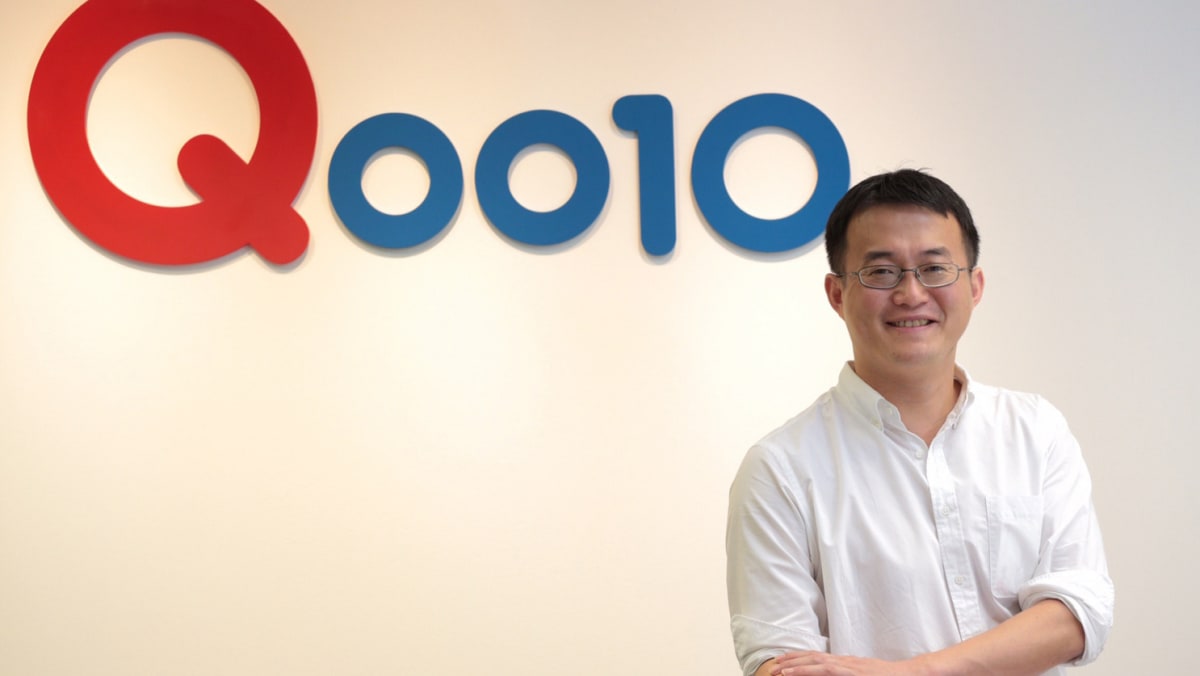
    Singapore-based Giosis, the parent company of Pan-Asian eCommerce platform Qoo10, has raised US$82.1 million in new funding led by Singapore Press Holdings.

    Other investors in the mix included eBay, Saban Capital Group, UVM 2 Venture Investments LP, Brookside Capital and Oak Investment Partners.

    Qoo10 operates six online eCommerce marketplaces across Asia – in Singapore, Japan, Indonesia, Malaysia, Hong Kong and China. Qoo10 has 17.6 million registered users across the region and combined, turned over US$408 million in 2014. Of the six markets in which the company operates, Qoo10 Singapore is the best performer with 1.8 million registered users as of June 2015 and US$182 million in gross merchandise volume in 2014.

    “Through this Series A investment, Giosis will deploy the new funds to accelerate Qoo10’s technology growth and service development, while investing in additional infrastructure and talent acquisition,” the company said in a statement.

    “The new funds will also help Qoo10 strengthen its position as a leading Pan-Asian platform in its key markets Singapore, Japan and Indonesia, and accelerate its expansion in its other rapidly growing Asian markets Malaysia, Hong Kong and China.”

    As the lead investor in this Series A round, SPH will also partner with Qoo10 to explore strategic collaborations on the e-commerce platform across various content, marketplaces, retail, advertising and classifieds opportunities.

    Alan Chan, SPH CEO, said Qoo10 is the number one ranked eCommerce website in Singapore and its parent company Giosis has established itself as a market leader in the region’s e-commerce space.

    “The investment in Qoo10 will enhance our portfolio of digital assets and open up opportunities for future marketing collaborations. With the region’s eCommerce market poised to grow, this investment puts us in a good position to tap on the industry’s growth and be an active player in this space.”

    A joint venture between Gmarket Inc founder Ku Young Bae and eBay, Qoo10 was founded in 2010 with US$20 million seed capital, after Gmarket was acquired by eBay in 2009 for US$1.2 billion.

    Ku Young Bae, CEO of Qoo10, said: “From the beginning Qoo10 has strived to be a hyperlocal eCommerce platform which enables local merchants, big and small, to sell their products to a local and regional customer base across Asia.  Today, 90 per cent of our staff and merchants are local, in order to provide consumers with a seamless shopping experience in a specialised marketplace. With this new funding, we aim to further strengthen our position as the leading Pan-Asian marketplace.”