Retail News CRM

Tag: QSR

  • Domino’s seeks to grow its slice of QSR following bumper year

    Domino’s seeks to grow its slice of QSR following bumper year

    For many, March and April 2020 came with plummeting sales and a scramble to pivot operations. Domino’s was not a part of that crowd—not by a long shot. From April 20 to May 17 last year, same-store sales lifted 20.9 percent at U.S. franchises and 22 percent at company-owned stores. In the same period, domestic retail sales increased 25 percent.

    It was a stellar run for Domino’s amid all the challenges. But now the calendar has flipped forward a year, and the environment is completely different. Capacity restrictions are lifting, vaccines are increasing, and COVID rates are declining, for the most part. There’s a lot more options for consumers out there, which means Domino’s market share comes into question.

    CEO Ritch Allison is wary about the upcoming laps, but not worried, and that’s an important distinction, he said. Allison feels Domino’s is in as good of a position as it’s ever been. U.S. same-store sales increased 13.4 percent in Q1, the market’s 40th consecutive quarter of growth. With a two-year stack of 15 percent, Domino’s saw a slight sequential improvement on a two-year basis compared to Q4 2020. The lift in comps was driven by a healthy mix of average check and order growth.

    The brand opened a net of 36 U.S. stores, including just one company-owned closure. Most importantly, franchisees are coming off another year of record-setting profitability, with average store-level EBITDA coming in at just over $177,000.

    “We’ve got some pretty strong laps ahead of us from the second and the third quarters of last year, but what we’re really focused on are continuing to make the investments to drive long-term growth in the business,” Allison said during the chain’s Q1 earnings call. “And as I look out across the rest of the year, we are really in an enviable position.”

    Domino’s is in an enviable position because it has plenty of “arrows in the quiver” to fuel business, Allison said. For example, there is much room to gain in the carryout business, which saw growth in sales throughout 2020, but a weakening order volume. There’s reasons for this trend, too. Domino’s began 2020 running TV advertisements for Pie Pass, a big screen that displays customers’ names as they pick up their pizza. That had to be turned off immediately when COVID hit.

    Through the remainder of the year, Domino’s developed carside delivery as a safer service model, but it still wasn’t pushing carryout as hard as it had been in the past few years. Domino’s turned off its more aggressive promotional weeks that are usually spread across the annual calendar. Even in Q1 the pizza chain elected not to run any “boost week” promotions because of the positive sales impact from stimulus checks. Domino’s also doesn’t discount the affect of other restaurants dedicating more resources to the carryout channel throughout the pandemic.

    One key remedy is continuing the fortressing strategy, which helps Domino’s capture incremental carryout business, as well as lower relative costs, better service, and higher economics for drivers.

    “As I look this year and ongoing, fortressing is going to continue to be a big part of that strategy to gain share,” Allison said. “As we’ve talked about in the past, we are still relatively underpenetrated in terms of share in the carryout business specifically. And fortressing gives us an opportunity to go out and grab that largely incremental carry out business.”

    The foundation is already there. Domino’s has 27 million active members in its loyalty program, and the figure continues to grow. The company sees strong and steady frequency among these guests, as well. Going forward, Allison said there will be opportunities to “turn the volume back up” on new customers.

    Domino’s arsenal includes an advertising war chest to drive customer awareness and acquisition. It allows Domino’s to gather sales trends and “put a little bit more muscle against things” when and where it needs to. A good example of this came earlier this week. Domino’s announced a national TV campaign highlighting its relationship with Nuro, a robotic delivery company. As part of the advertisements, Domino’s brought back “The Noid,” a character the chain first used in the 1980s. Allison said the campaign is already “generating incredible buzz around the Domino’s brand.”

    “It’s stuff that we think about all the time because the vast majority of the dollars in that advertising fund are franchisees dollars,” Allison said. “So we spend it with great care. We talk a lot about how we use analytics to make decisions at Domino’s. It’s an area where we’ve got terrific analytics in terms of understanding the return on spending those dollars across a range of different channels or opportunities that we have to invest them on the part of our system. And so, we are constantly looking at that and managing the dials to use that investment for the greatest return for our system.”

    The marketing and advertising efforts will include carside carry out, which is a “critical weapon” in cranking up awareness toward the carryout business, Allison noted.

    “We brought that forward to address the safety concerns that customers had around picking up their food in a COVID environment,” Allison said. “But over the long-term, that’s really a great tool for us as we compete for carryout business against the drive-thru lanes of other [quick-service restaurant] concepts.”

    As Domino’s ignites its carryout business, it will be doing so in a pressure-filled labor market. Just this week, the pizza chain announced that franchise-owned stores in Florida are looking to hire roughly 4,000 workers across more than 400 stores.

    When it comes to labor pressures affecting the supply chain, CFO Stu Levy said Domino’s keeps franchisees from carrying that burden. The company is absorbing a piece of that labor increase versus passing it through, and it does the same with food inflation. At the store level, Levy noted that restaurants are challenged in many areas, but Domino’s will never use it as an excuse to slack on service.

    Similar to the carryout business, fortressing will be the “arrow” used to mitigate future labor issues. So will technological investments that drive throughput and reduce the need for manpower.

    “A good bit of the work that we’re trying to do around tech and around the store operating model is basically to keep drivers moving 100 percent of the time, with the long-term goal that they never get out of their cars or delivering pizzas constantly as opposed to other tasks and other activities that they had to perform in the old operating environment,” Allison said.

    Allison said one factor that separates Domino’s from the crowd in terms of incentive is that being a driver or a pizza maker is a legitimate stepping stone toward becoming an entrepreneur. Domino’s has the stats to prove it—more than 90 percent of franchisees started as employees.

    Will the job market prevent franchisees from opening stores? Allison doesn’t think so. In 2020, Domino’s opened a net of 624 stores. And when you look back at the trailing four quarters, its 730 net new openings. So the pace is accelerating. The unit economics are more than solid, and the demand for franchisee investment hasn’t faltered in the least, according to the CEO.

    “Staffing’s always a challenge, but one that we and our franchisees feel comfortable that we can manage overtime,” Allison said. “Part of the beauty, particularly as it relates to the opening of these new stores, is that the majority of these are opening as part of our fortressing program and giving us an opportunity to do two things. One is to shrink the territory, so we get more deliveries per hour of delivery driver labor, but also you get that incremental carry out business, which is a much less labor-intensive business for our stores, which is one of the reasons we want to continue to grow and build that business.”

    Domino’s ended Q1 with 17,819 restaurants—6,027 domestic franchise, 11,428 international, and 364 domestic company-owned.

    International comps increased 11.8 percent in Q1, marking the 109th consecutive quarter of international same-store sales growth. International markets also opened a net of 109 stores in the quarter.

    Total revenues increased from $873.1 million to $983.7 million year-over-year. The growth was primarily due to U.S. and international same-store sales growth and increases in global store counts during the trailing four quarters.
  • QSR chain Pepper Lunch sold to J-Star

    QSR chain Pepper Lunch sold to J-Star

    Japanese restaurant operator Pepper Food Service is selling its profitable Pepper Lunch chain to J-Star investment fund for US$79 million.

    The sale is expected to provide a much-needed cash injection to the debt-ridden Pepper Food business in the hopes of restoring investor confidence in the firm, which also operates the struggling Ikinari Steak brand.

    Pepper Lunch, which serves sizzling platters of meat-based dishes with sauces, has expanded throughout Asia on a franchised basis, including in Vietnam, Singapore, and Thailand.

    The acquisition also includes the Pepper Lunch Diner, 92’s, Charcoal-Grilled Hamburger Steak Kuni, Tokyo 634 Berg, Musashi Hamburg, and CAB Steak restaurant brands. Collectively, the business operates 181 stores in Japan and 333 overseas.

    In a statement announcing the purchase, J-Star said the 26-year-old restaurant concept has a strong market position in food courts, where affordable prices and quick delivery are required, by combining customer satisfaction and high productivity, with a unique cooking system in which selected steak meat is cooked right in front of customers.

    “We will support the management team to establish a corporate foundation as an independent business, to accelerate domestic growth by leveraging its competitive advantage, as well as growth strategy through global expansion,” J-Star’s statement said.

    Meanwhile, Pepper Food is expected to use the funds to sustain the remaining business in the hope it can stabilize and return to profit. Ikinari Steak currently runs an operating margin of 3 percent, a fraction of the 14 percent of Pepper Lunch and the other businesses sold.

    Pepper Food is reportedly considering switching more of its owner-operated locations into franchises – although the appeal of the Inikari brand may be limited.

    J-Star is an independent and partner-owned Japanese alternative asset manager with $300 million of assets under management.

  • QSR starts selling in Foodpanda Malaysia platform

    QSR starts selling in Foodpanda Malaysia platform

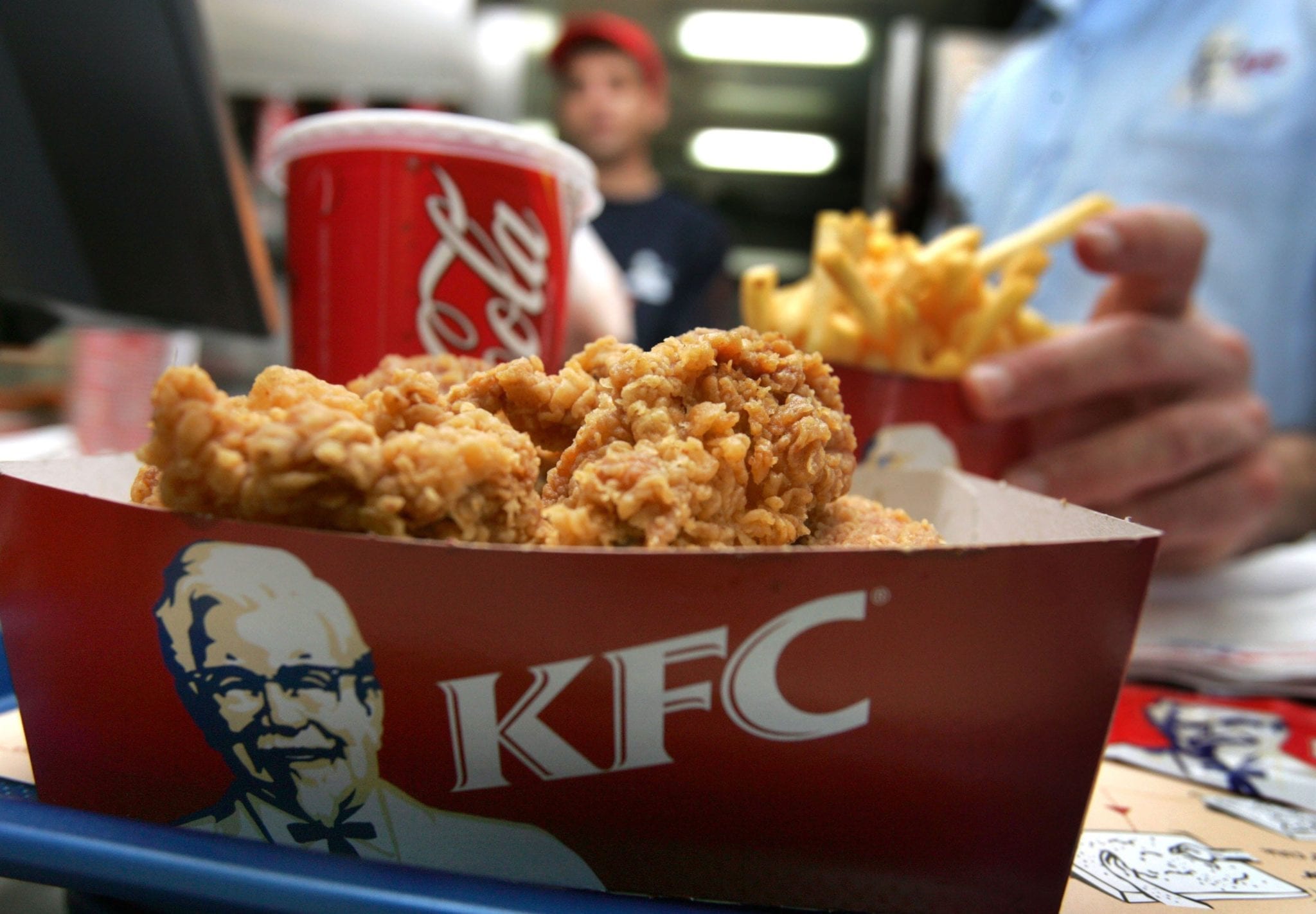
    Malaysia’s largest fast-food operator QSR Brands is partnering with Foodpanda Malaysia to deliver its Pizza Hut and KFC orders, according to a Deal Street Asia report.

    The move is expected to increase food revenue for the firm by 15–20 per cent, and allow delivery outlets for both brands to increase to 480 by the end of this year, and 730 before 2020.

    QSR MD Mohamed Azahari Mohamed Kamil said: “This will provide a new revenue stream by serving not only our non-delivery outlets but also complement existing delivery outlets.”

    QSR is expected to list on Bursa Malaysia this November, seeking to raise around RM2 billion (US$500 million), raising its market capitalisation to an estimated RM6 billion ($1.5 billion).

  • Texas Chicken to open 80 more stores in Indonesia

    Texas Chicken to open 80 more stores in Indonesia

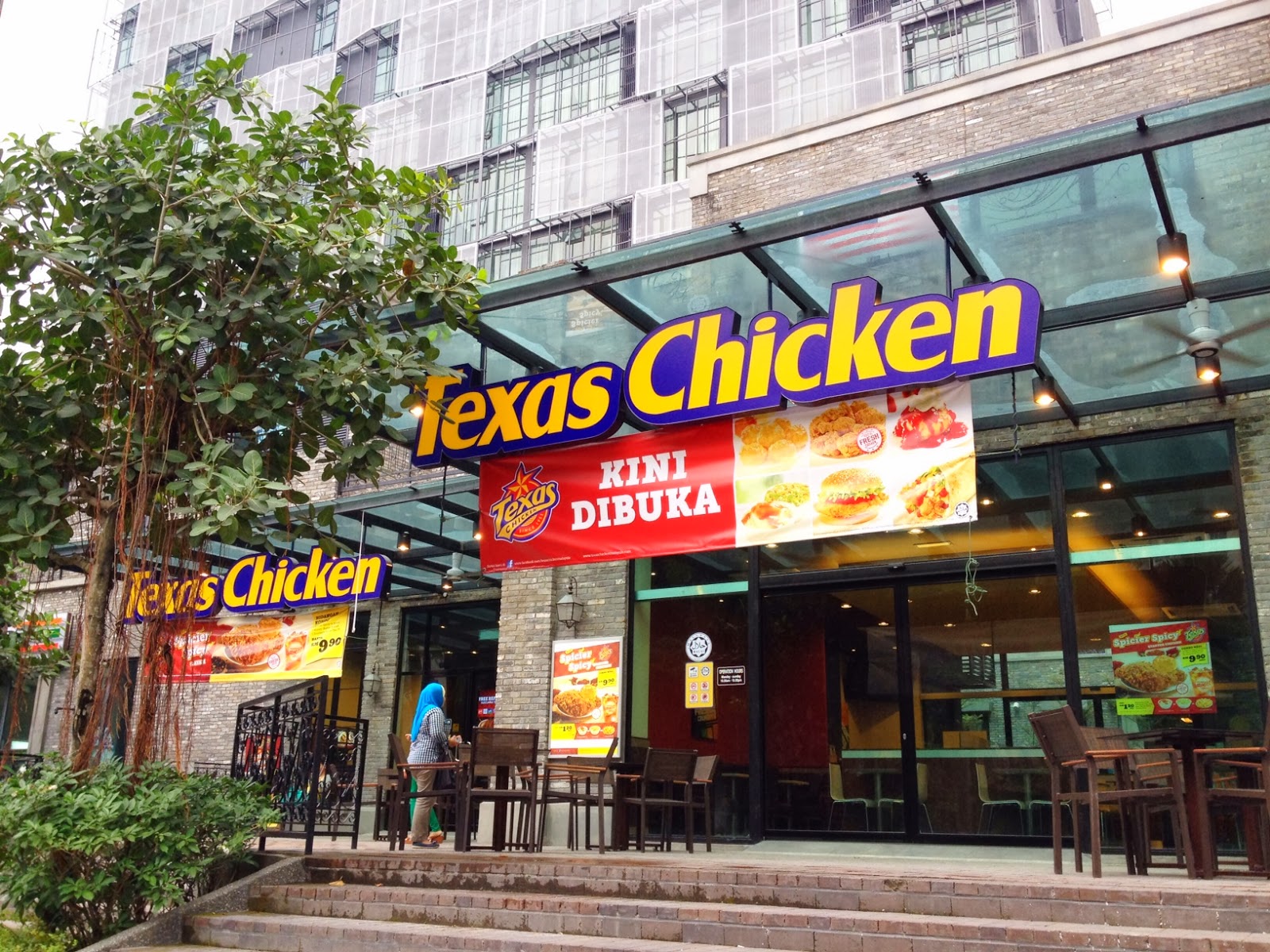
    Quick Service Restaurant (QSR) has signed an 80-restaurant deal with US fast-food chain Texas Chicken.

    QSR is the third Texas Chicken Indonesia master franchisee to enter the market, following Quick Serve Indonesia which signed a development agreement earlier this year and Cipta Selera Murni, which has been there since 1985 and now has 59 restaurants.

    The companies said in a statement that QSR will open and operate locations “primarily in Indonesia” which it says is one of the fastest growing markets for the company. But it did not elaborate on where other stores may be located.

    QSR expects to open its first three restaurants by the end of this year. “The Asia Pacific market has been a sweet spot for Texas Chicken. We’ve experienced incredible growth in this part of the globe,” said Tony Moralejo, executive VP of international business for Texas Chicken. “The public and franchisee response to our presence in Indonesia, and the surrounding Asian markets, has been encouraging and we are excited to watch the developments that will occur in the coming years.

    “To continue the momentum of this expansion, we are actively pursuing more franchisees, who believe in the brand and its growth potential.”

    The newest Texas Chicken Indonesia operator plans stores in the DKI Jakarta, South Sumatra, Bengkulu, Banten, West Java and Lampung Provinces over the next 10 years.

    QSR is a subsidiary of Singapore-listed Envictus International Holdings, a well-established F&B operator with several businesses in its portfolio, including bread maker Hearty Bake, San Francisco Coffee and Delicious restaurants in Malaysia and foodservice supplier Pok Brothers.

  • QSR and PETRONAS tie-up to open 50 new KFC drive-thru outlets

    QSR and PETRONAS tie-up to open 50 new KFC drive-thru outlets

    QSR Brands Holdings’ wholly owned subsidiary QSR Stores has signed a memorandum of understanding with Petronas Dagangan to gradually open 50 KFC Drive-Thru outlets at Petronas gas stations within the next three years.

    QSR Brands MD Mohamed Azahari Mohamed Kamil says the strategic collaboration provides an excellent opportunity for the quick-service restaurant group to expand its business and restaurant services in Malaysia.

    “While continuing to strengthen our core product and service offerings, we place a great emphasis on our expansion strategies to meet the elevated demands of our customers,” says Azahari.

    QSR has more than 1250 KFC and Pizza Hut restaurants in Malaysia, Singapore, Brunei and Cambodia.

  • QSR Brands considering IPO

    QSR Brands considering IPO

    Malaysian fast-food group QSR Brands is mulling an IPO to raise around MR2 billion (US$509.6 million).

    QSR Brands operates the KFC and Pizza Hut restaurant franchises in Malaysia and is part owned by private equity firm CVC Capital Partners, which is looking to exit the business.

    Shareholder Johor Corp president/CEO Kamaruzzaman Abu Kassim says it would like to see this happen no later than November. Johor Corp is the investment arm of Malaysia’s Johor state.

    The listing would be the largest IPO in Malaysia since integrated petrochemical producer Lotte Chemical Titan Holding raised $878 million last July. The move has been planned since 2016, reports Reuters, with the company hiring Citigroup, Credit Suisse and another bank to lead the exercise.

    The estimated market capitalisation of QSR would be about MR6 billion after listing, Kamaruzzaman says. “Further details will have to be worked out with various parties.”

    The  QSR Brands IPO was part of an “exit plan” for CVC and fellow investor the Employees Provident Fund when QSR was privatised in 2013.

  • PappaRich expands into Hong Kong

    PappaRich expands into Hong Kong

    Malaysian restaurant chain group PappaRich has opened its first Hong Kong outlet, marking a strategic move in its Asian expansion by leveraging the city’s status as a ‘food paradise’ in the region.

    The PappaRich restaurant at the L-Square in Causeway Bay offers traditional Malaysian cuisine with a sophisticated twist, boasting genuine PappaRich ingredients flown fresh from its Malaysia headquarters, according to the president of PappaRich Asia Pacific Region, Sebastian Low. The restaurant offers, among other dishes, branded Hainan bread as well as the country’s famous durian cheese cake.

    Said Low: “When we were choosing a location for our global expansion, Hong Kong was one of the most promising destinations, not only because of its thriving restaurant and bar scene, but also its dynamic cultural background as an international city. It is the ideal place for us to promote Malaysian cuisine, as well as our food culture, to the world.

    Paparich food

    “The Hong Kong outlet is a joint venture between Tang Palace (China) Holdings and Beppu GroupLimited. With concerted efforts of the professional team and business partners in Hong Kong, we are ready to take the PappaRich brand to the next level.”

    Founded in 2006 in Malaysia, PappaRich has steadily grown from the home country into a franchise network comprising over 100 outlets worldwide. It has 80 outlets in Malaysia and has ventured into overseas markets such as Australia, Mainland China, Singapore, the US, South Korea, Brunei, Indonesia, Taiwan and New Zealand since 2012.

    Associate director-general of Investment Promotion Dr Jimmy Chiang said Hong Kong is renowned as the culinary capital of Asia and many restaurants with different dining options have already established their presence in the city.