Retail News CRM

Tag: quarter report

  • Petronas Gas Q4 profit weighed down by Kimanis Power

    Petronas Gas Q4 profit weighed down by Kimanis Power

    Petronas Gas Bhd’s net profit fourth quarter ended Dec 31, 2018 fell 34.7% to RM317.90 million from RM486.70 million a year ago, largely attributed to share of losses from a joint venture company, Kimanis Power Sdn Bhd. The losses were due to de-recognition of deferred tax assets amounting to RM124.3 million (being 60% share of the group) in relation to certain tax benefits which now have a seven-year utilisation limit under the new Finance Act 2018.

    Its revenue grew 4.9% to RM1.39 billion compared with RM1.32 billion in the previous year’s corresponding quarter mainly contributed by the second liquiefied natural gas (LNG) regasification terminal in Pengerang, Johor which commenced commercial operations in November 2017, coupled with higher revenue from utilities and gas transportation segment.

    The group has approved a fourth interim dividend of 22 sen per share amounting to RM435.3 million in respect of the financial year ended Dec 31, 2018.

    For the full-year period, Petronas Gas’ net profit grew 0.98% to RM1.81 billion from RM1.79 billion a year ago, while revenue of RM5.5 billion was the highest in history, an increase of 12.3% compared to RM4.90 billion last year.

    The Energy Commission has approved the tariffs for the gas transportation and regasification services for 2019. While the tariffs are expected to affect the group’s transportation and regasification business segment revenues in 2019, both segments are anticipated to continue contributing positively to its earnings.

    The group’s gas processing segment is expected to deliver improved earnings pursuant to the higher fixed remuneration charge under the second term of the 20-year Gas Processing Agreement effective from 2019 until 2023.

  • Amazon enjoys positive performance with increases in sales, profit

    Amazon enjoys positive performance with increases in sales, profit

    Global online shopping platform Amazon reported growth in both net sales and profit for the fourth-quarter 2018 and full-year, adding its Alexa use and Prime membership continues to thrive, particular in the all-important holiday season. For the fourth quarter ending December 31, net sales increased 20% to $72.4 billion in the fourth quarter, compared with $60.5 billion in fourth quarter 2017. Excluding unfavourable foreign exchange rates, sales increased 21%.

    Amazon said net income for the quarter increased to $3 billion in the fourth quarter, or $6.04 per diluted share, compared with net income of $1.9 billion, or $3.75 per diluted share, in 2017.

    For the twelve months ending December 31, Amazon’s net sales increased 31% to $232.9 billion, up from $177.9 billion in 2017. Excluding the $1.3 billion favorable impact exchange rates, net sales increased 30% compared with 2017.

    For the full-year 2018, Amazon’s net income increased to $10.1 billion, or $20.14 per diluted share, compared with net income of $3 billion, or $6.15 per diluted share.

    In the earnings announcement, Amazon’s founder and CEO Jeff Bezos, praised the recent holiday season, in particular, the Amazon customer uptake of Alexa, the voice activated shopping device and its associated Echo products.

    “Alexa was very busy during her holiday season. Echo Dot was the best-selling item across all products on Amazon globally, and customers purchased millions more devices from the Echo family compared to last year,” said Bezos.

    “The number of research scientists working on Alexa has more than doubled in the past year, and the results of the team’s hard work are clear. In 2018, we improved Alexa’s ability to understand requests and answer questions by more than 20% through advances in machine learning, we added billions of facts making Alexa more knowledgeable than ever, developers doubled the number of Alexa skills to over 80,000, and customers spoke to Alexa tens of billions more times in 2018 compared to 2017. We’re energized by and grateful for the response, and you can count on us to keep working hard to bring even more invention to customers,” he added.

    Other highlights for Amazon in 2018 included the increase in Prime memberships. During the holiday season alone, tens of millions of customers worldwide started Prime free trials or began paid memberships. More customers signed up for Prime worldwide in 2018 than ever before, said Amazon.

    In Asia, Amazon Fashion launched Prime Wardrobe in Japan, allowing Prime members to order clothing, shoes, and accessories and only pay for what they keep.

    Looking ahead to the first quarter 2019, net sales are expected to be between $56 billion and $60 billion, up 10% to 18% compared with first quarter 2018. Meanwhile, operating income is expected to be between $2.3 billion and $3.3 billion.

  • Jubilant FoodWorks Q3 net profit up 46 pc to Rs 96.5 cr

    Jubilant FoodWorks Q3 net profit up 46 pc to Rs 96.5 cr

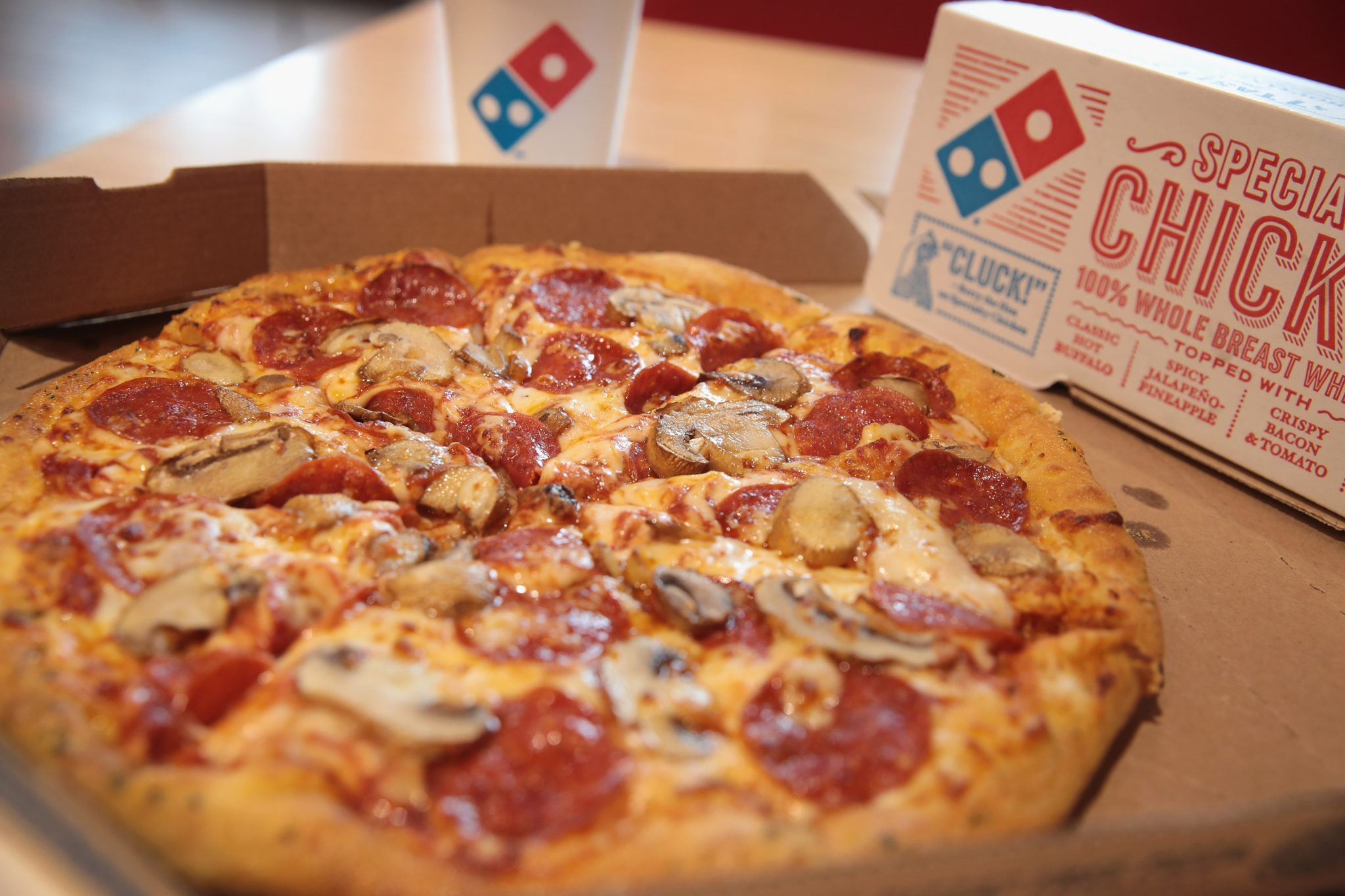
    Jubilant FoodWorks Limited (JFL) has reported its financial results for the quarter and nine-months ended December 31, 2018. Operating revenue for Q3 FY19 stood at Rs 9,291 million, representing an increase of 16.8 percent over Q3 FY18, and a sequential growth of 5.4 percent over the preceding quarter. The growth was driven by a strong 14.6 percent same store growth (SSG) in Domino’s Pizza.

    EBITDA for Q3FY19 was Rs 1,706 million, or 18.4 percent of revenue, a growth of 24.6 percent over Q3FY18 and a margin expansion of 120 bps. This is the highest EBITDA margin in seven years.

    Profit after Tax in Q3 FY19 stood at Rs 965 million, or 10.4 percent of revenue, a growth of 46.2 percent over Q3 FY18 and a margin expansion of 210 bps.

    During the quarter, the company added new products to its portfolio. Domino’s launched ‘Multigrain Crust’ with an objective of offering a wider range to the customers. In addition to this, the company also introduced four new side dishes viz. Potato Cheese Shots, Crunchy Strips, Crinkle Fries and Brownie Fantasy.

    The store opening momentum accelerated during the quarter, with 35 new Domino’s stores being opened during the quarter.

    Dunkin’ Donuts delivered break-even in Q3 FY19 on the back of strong growth in the core portfolio of Donuts and Beverages, as also disciplined cost management.

    Commenting on the performance for Q3 FY19, Shyam S. Bhartia, Chairman and Hari S. Bhartia, Co-Chairman, Jubilant FoodWorks Limited said, “I am delighted to share that we have once again delivered healthy earnings growth during the quarter which stood in-line with our expectations. Performance was driven by consistent progress made across each of the growth pillars.”

    Commenting on the performance for Q3 FY19, Pratik Pota, CEO and Whole time Director, Jubilant FoodWorks Limited said, “We have demonstrated strong all-round performance in Q3 FY19, led by robust same-store sales growth (SSSG) of 14.6 percent reported in Domino’s Pizza. This was accompanied by a tight control on operating costs that led to EBITDA margins improving to a seven year high of 18.4 percent. In addition, Dunkin’ Donuts also broke even during the quarter, ahead of the targeted Q4 timeline. We are happy with our performance and confident of the prospects ahead, as evident in the 35 new stores opened in Q3, the highest in eleven quarters.”

  • Tesco Asia sales continue dropping despite growth in profit

    Tesco Asia sales continue dropping despite growth in profit

    Tesco Asia like-for-like sales continue to decline while the UK-headquartered company repositions its offer – masking a stronger underlying performance for the business. “We have made good progress in our discussions with suppliers towards a new commercial approach,” explained Tesco CEO Dave Lewis in a quarterly update. “We also accelerated planned changes to our operating model in Thailand, helping to reduce costs and underpinning our profit recovery.”

    Lewis said that despite minor changes to the government-issued welfare cards scheme during the third quarter, Tesco Thailand sales fell by about 1 per cent for the 19-weeks including the key Christmas trading period.

    Restructured Thailand store operations have led to reduced costs, underpinning profit recovery at the expense of sales.

    Referring to Tesco’s global operations, Lewis added: “We have more to do everywhere but remain bang on track to deliver our plans for the year and as we enter our centenary we are in a strong position.”

    The December quarter represented the 12th consecutive quarter of like-for-like sales growth for Tesco globally, with sales up 2.6 per cent.

  • Vietnam GDP growth tops 7 pct, highest in a decade

    Vietnam GDP growth tops 7 pct, highest in a decade

    Vietnam’s GDP growth of 7.08 percent this year retained its status as one of the best performing economies in the world. It was the highest growth the country has experienced since 2008 and compared with the median estimate of 6.9 percent in a survey of 12 economists.

    The scale of the economy at present value is over VND5.53 quadrillion ($237.38 billion), with average GDP per capita at $2,587 per person, a $198 increase over 2017, Nguyen Bich Lam, head of the General Statistics Office, said Thursday afternoon.

    According the office, the agriculture, forestry and fisheries sector grew by 3.76 percent this year, and contributed to 8.7 percent to the country’s GDP. Corresponding figures for industry and construction sectors were 8.85 percent and nearly 49 percent; and that of the service sector, 7.03 percent and approximately 43 percent.

    Lam said that the consumer price index (CPI) in December 2018 fell by 0.25 percent compared to the previous month. On average, CPI in 2018 increased by 3.54 percent, well below the 4 percent target set by the National Assembly.

    Export turnover for the year is estimated at over $244.7 billion, up nearly 14 percent compared to 2017.

    The FDI sector (including crude oil) still accounts for nearly 70 percent of export turnover, at more than $175.5 billion.

    On the other hand, Vietnam imported more than $237.5 billion the whole year, up 11.5 percent over 2017.

    Overall, in 2018 Vietnam achieved a trade surplus of $7.2 billion.

    “The quality of economic growth has improved,” Lam said.

    The GSO director general explained that labor productivity this year saw an increase of nearly 6 percent compared to 2017, at VND102 million (nearly $4,512) per person.

  • Aeon Credit posts better earnings in third quarter

    Aeon Credit posts better earnings in third quarter

    Aeon Credit Service (M) Bhd’s net profit for the third quarter ended Nov 30, increased 23.5% to RM87.14 million from RM70.55 million a year ago, attributed to lower impairment loss on financing receivables. Revenue for the period increased 11.6% to RM348.5 million from RM312.35 million.

    For the nine-month period, the group reported a 22.62% rise in net profit to RM267.01 million from RM217.75 million. Revenue was up by 8.7% to RM1.01 billion from RM925.95 million.

    Aeon Credit told Bursa Malaysia that its gross financing receivables as at Nov 30 was RM8.31 billion, representing an increase of 15.41% from RM7.2 billion a year ago. Meanwhile, net financing receivables after impairment was RM7.74 billion compared with RM7.03 billion a year ago.

    Its non-performing loan ratio stood at 2.05% as at Nov 30, 2018 versus 2.48% as at Nov 30, 2017.

    Total transaction and financing volume in the current quarter and nine months ended Nov 30 increased by 49.5% to RM1.5 billion and by 26.4% to RM3.9 billion respectively.

  • Abercrombie & Fitch results going uphill

    Abercrombie & Fitch results going uphill

    Abercrombie & Fitch is on the right road to recovery. Third-quarter net income is up by 133 per cent year on year, supported by a 75 per cent increase in operating profit. The company has still delivered positive comparables both overall and for each of the Hollister and Abercrombie brands. And at 6 per cent growth, US comparables are still on fairly solid ground.

    While Abercrombie & Fitch’s sales growth has slowed, both overall and on a comparable basis, and total sales at the Abercrombie brand have slipped into negative territory, a calendar shift in reporting periods, currency fluctuations and some tough-to-match prior year comparable figures are mitigating factors.

    GlobalData’s consumer-tracking data continues to show a number of positive movements in consumer sentiment about both of the main brands. Over the past year, there has been a 4 percentage point increase in the number of American shoppers who say they consider Abercrombie when shopping for apparel. For Hollister, the same metric rose by just shy of 6 percentage points. The same research also reveals that among core shoppers, perceptions of quality and design at both Abercrombie and Hollister are up sharply on last year.

    The results justify the step changes that have been made to things like fabrication, detailing and styling of the product set. The range – especially at Abercrombie – is now more sophisticated, more on-trend, and better reflects what modern consumers want. There is also a cohesiveness to the assortment which stimulates multiple purchases and helps to push up average transaction values. However, as good as these things are, both brands have more to do yet in making consumers aware of the changes and getting them to take a fresh look at the brands.

    Many of the positive movements are far more pronounced in the US than they are elsewhere. In our view, the geographical difference in the pace of recovery is telling. While it is right that the company has focused its recovery efforts on its most important market, there is now a need to adapt some of the strategies and plays so that they are relevant overseas. Customer dynamics, competitive sets, and perception of the brands are all very different in markets like the UK and a degree of localisation is needed to ensure that the brands fully resonate with regional consumers. We believe management recognises this and has already taken some steps, such as opening a new-format mall-based store in the UK at Manchester’s Intu Trafford Centre.

    Overall, the recovery at Abercrombie & Fitch is still a work in progress. However, turning around a once very-troubled brand is far from easy. Progress and advancement do not all come at once; this is a step-by-step process that will build over time.

  • Maybank sees marginally lower net profit for Q3

    Maybank sees marginally lower net profit for Q3

    Malayan Banking Bhd posted marginally lower net profit for the third quarter ended Sept 30, 2018 of RM1.96 billion, compared with RM2.03 billion in the corresponding quarter in 2017, on lower net operating income, higher allowances for impairment losses on loans, advances, financing and other debts and lower share of profits in associates and joint ventures .

    For the quarter under review, the group registered a net operating income of RM5.69 billion, compared with RM5.89 billion a year earlier, impacted by a dip in fee based income owing mainly to lower investment and trading proceeds as well as foreign exchange fluctuations. Notwithstanding this, operating profit for the third quarter ended Sept 30, 2018 was higher at RM2.61 billion from RM2.60 billion a year, as the group benefited from lower overhead expenses which declined 6.2% from a year earlier, as well as lower impairment losses which fell 5.5%.

    Maybank group said its key priorities for 2018 include maintaining pricing discipline across our products, focus on attaining cheaper funding sources to support loan growth, growing our loan portfolio within our risk appetite, while proactively managing our asset quality.

    The group has implemented MFRS 9 on Jan 1, 2018, of which the impairment assessment is based on the expected credit loss model that uses forward looking assumptions as opposed to an incurred loss model under the previous accounting standard. The group’s capital and liquidity positions remain strong notwithstanding the implementation of MFRS 9.

    Barring any unforeseen circumstances, the group expects its financial performance for 2018 to be satisfactory against the expected growth prospects of its key home markets. The group has set its Headline Key Performance Indicator for Return on Equity of 11%.

    Net profit for the nine month period ended Sept 30, 2018, was 7.39% higher at RM5.79 billion, compared with RM5.39 billion for the period in 2017.

    This was on 3.82% higher revenue of RM35.09 billion, compared with RM33.79 billion.

  • CIMB Group Q3 net profit up 4.2%

    CIMB Group Q3 net profit up 4.2%

    CIMB Group Holdings Bhd posted 4.2% higher net profit for the third quarter ended Sept 30, 2018 of RM1.18 billion, compared with RM1.13 billion for the same quarter in 2017 with contribution from all segments except wholesale banking. This was despite group revenue coming in 6.4% lower at RM4.14 billion, compared with RM4.42 billion.

    CIMB Group said the decline in operating in the quarter under review, was attributed to declines in non-interest income and net interest income of 17.0% and 1.6%, respectively.

    Consumer Banking profit before tax (PBT) grew 3.9% year-on-year (Y-o-Y) from better cost management. Regional Commercial Banking PBT rose 450.0% Y-o-Y from the reduction in provisions. Wholesale Banking PBT was 41.7% lower Y-o-Y across all wholesale segments given the weaker capital markets. Group Asset Management and Investments (Gami) PBT was 542.9% higher Y-o-Y from improvement in private markets, while Group Funding for the third quarter ended Sept 30, 2018 PBT was flat Y-o-Y.

    “As 2018 draws to a close, we remain on track to meet our key T18 targets. However, we remain cautious amidst weaker regional economies and global trade tensions. Against this backdrop, we will continue to control asset quality and cost across all businesses and geographies, while we finalise our next mid-term plan to propel CIMB onto a stronger growth trajectory,” said Group Chief Executive Tengku Datuk Seri Zafrul Aziz.

    Net profit for the nine month period was 30.8% higher at RM4.47 billion, compared with RM3.41 billion for the period ended Sept 30, 2017.

    Revenue for the period was also higher at RM13.31 billion, compared with RM13.11 billion.

  • Q3 Macau retail sales rise

    Q3 Macau retail sales rise

    Third-quarter Macau retail sales surged 12.8 per cent year on year to 18.19 billion patacas (US$2.26 billion), according to data from the SAR’s Statistic Department. However, possibly reflecting the timing of typhoons last year and this year, sales rose only 1 per cent quarter on quarter. Watches and jewellery accounted for 21 per cent of total spending during the quarter. Department stores accounted for 16.3 per cent of the market and apparel 13 per cent.

    The increase in third-quarter Macau retail sales was driven by department stores, up 23.1 per cent, communications equipment (up 19.8 per cent) and pharmacy goods, up 19.4 per cent.

    For the first nine months of this year, Macau retail sales rose by 20.8 per cent.

    However the Statistics Department’s data suggests retailers have modest expectations for the rest of the year. Just 16 per cent of retailers questioned expect an increase in sales for the three months to December, compared with 38.2 per cent who expect a decline and 45.8 per cent who expect sales to remain steady.

  • Higher revenue lifts Petronas’ Q3 net profit to RM14.3 billion

    Higher revenue lifts Petronas’ Q3 net profit to RM14.3 billion

    Petroliam Nasional Bhd’s (Petronas) net profit for the third quarter ended Sept 30, 2018 rose 43% to RM14.3 billion from RM10 billion a year ago due to higher revenue. The group said in a statement today that the higher revenue was partially offset by higher product costs in tandem with higher prices, coupled with increased depreciation and amortisation.

    Earnings before interest, taxation, depreciation and amortisation (ebitda) rose 25% to RM26.9 billion from RM21.5 billion a year ago.

    The state-owned oil company attributed the higher earnings to its continuous execution of business improvement activities, focused on increased operational excellence and supported by higher commodity prices.

    Revenue for the quarter rose 19% year-on-year to RM63.9 billion, mainly driven by higher average realised prices for key products coupled with increased efficiency throughout the group.

    Higher sales were partially offset by the strengthening ringgit and lower sales volume, mainly for liquefied natural gas (LNG). Capital investments for the quarter stood at RM6.7 billion, mainly attributed to upstream projects.

    For the nine months ended Sept 30, 2018, Petronas’ net profit rose 50% year on year to RM41 billion, due mainly to higher revenue, lower net impairment on assets as well as other expenses. These were partially offset by higher product costs in tandem with higher prices coupled with increased depreciation and amortisation as well as tax expenses.

    Revenue for the period rose 12% year-on-year to RM181.1 billion mainly due to the impact of higher average realised prices for key products as well as increased efficiency efforts, largely offset by the effect of the ringgit strengthening against the US dollar.

    Capital investments for the period stood at RM26.5 billion mainly attributed to upstream projects while total assets rose to RM623.1 billion as at end-September, compared with RM599.8 billion as at end-December 2017.

    Shareholders’ equity rose to RM402.1 billion as at end-September from RM389.8 billion as at end-December 2017. The gearing ratio remained at 16.1% while return on average capital employed rose to 12.6% from 9.8% during the same period.

    The Pengerang Integrated Complex achieved 95% progress as at end-September and successfully received its first crude oil cargo at the Pengerang Deepwater Terminal 2. The project is on track to be ready for startup in 2019.

    President and group CEO Tan Sri Wan Zulkiflee Wan Ariffin said Petronas is on track to deliver a strong year-end performance by maintaining focus on driving efficiency efforts across its operations.

    “The recent drop in oil prices demonstrate the volatile and cyclical nature of the industry and we will continue to maintain our prudent outlook amidst this landscape while remaining steadfast in pursuing our growth strategies to ensure the long-term sustainability and progress of the company,” he said.

  • TM posts RM175m net loss in Q3

    TM posts RM175m net loss in Q3

    Telekom Malaysia Bhd (TM) suffered a net loss of RM175.59 million during the third quarter ended Sept 30 compared with a net profit of RM211.82 million a year ago, due to an impairment loss on network assets recognised during the quarter.

    In a filing with Bursa Malaysia, TM said it recognised a provision of RM934.8 million during the quarter for the impairment of fixed and wireless network assets following the continued pressure from challenging business, industry and economic conditions.

    It said that the impairment losses were projected based on an assessment of the recoverable value in use of the affected network assets at respective entity levels and it will continue reviewing the economic circumstances revolving around these assets in coming periods to reflect any potential impairment or recoverable value.

    Its core net profit, excluding non-operational items, stood at RM266.4 million, a 71% improvement sequentially while revenue for the quarter rose marginally to RM2.95 billion from RM2.94 billion a year ago on the back of higher data as well as other telecommunication related services revenue.

    During the quarter, UniFi recorded a loss of RM808.3 million compared with a profit of RM56.7 million a year ago, due to the impairment loss on network assets while revenue fell 2% to RM1.33 billion from RM1.36 billion a year ago due to lower revenue from voice services in line with a decrease in customer base and usage.

    This was partially offset by higher UniFi revenue in line with increase in customer base at 1.24 million as at end-September compared with 1.04 million a year ago.

    TM ONE recorded a 13.2% drop in profit to RM147.5 million during the quarter from RM170 million a year ago due to high operating costs, including the allocated impairment loss of network assets.

    Revenue for the segment rose 1.9% to RM1.12 billion from RM1.10 billion a year ago due to higher revenue from customer projects.

    As for TM Global, profit rose 9.1% to RM103.3 million from RM94.7 million a year ago due to lower operating costs while revenue rose 2.6% to RM562.8 million from RM548.4 million a year ago due to higher revenue from voice services.

    For the nine months ended Sept 30, net profit plunged 87.21% to RM83.5 million from RM652.74 million a year ago while revenue fell 1.74% to RM8.73 billion from RM8.89 billion a year ago.

    “The recent industry and market challenges have had major impact to the overall revenue estimates and earnings of TM Group in the financial year. TM anticipates that the challenging environment will persist for both our retail and wholesale segments,” the group said.

    In the midst of these challenges, TM said it will continue to focus on strengthening the performance of its core business and operations.

    In a separate filing, TM announced a revised dividend policy of distributing yearly dividends of 40-60% from its net profit, effective from the next dividend declaration.

    The group said that dividends will be paid depending on overall business and earnings performance, capital commitments, financial conditions, distributable reserves and other relevant factors.

  • AirAsia X falls on the back of Q3 losses

    AirAsia X falls on the back of Q3 losses

    AirAsia’s share price slid in yesterday’s early morning trade as the airline recorded widening losses. At 9.45am, the counter was down 1.5 sen or 6.25% to 22.5 sen a share on turnover of 2.8 million shares. An increase in average fuel price and a RM138.2mil impairment made on an amount due from a joint venture resulting in AirAsia X’s net losses jumping almost five times to RM197.47mil from RM43.3mil in the year-ago quarter.

    The carrier said the average fuel price in 3Q18 had increased to US$91 per barrel compared with US$65 in 3Q17.

    Meanwhile, the impairment made in the third quarter was related to a lease rental and maintenance reserve due from a JV through a third-party leasing intermediary.

  • GAP sales report slumps in Q3

    GAP sales report slumps in Q3

    Gap brand sales fell 7 per cent globally in the last quarter as the US apparel retailer fails to re-engage consumers.

    However Gap Inc increased its overall sales by 6.5 per cent to US$4.09 billion on the back of solid growth in its Old Navy business and a modest 2 per cent improvement of the more upmarket Banana Republic banner. Net income rose to $266 million, up $37 million year on year.

    “Old Navy is doing all of the heavy lifting while the Gap brand languishes,” observed retail analyst Neil Saunders, MD of GlobalData Retail.

    “When it comes to Gap the numbers are particularly bad. Despite protestations from management that improvements to the range and inventory are coming through, we do not buy the story of recovery. Gap’s brand image is still lacklustre and it is not bringing anything new or exciting to the market. Products are still samey and boring and they are still being discounted because Gap is unable to sell them at full price.”

    Saunders said the sales results testify to the deep-seated problems at the Gap brand – especially when they are delivered against the backdrop of a robust consumer economy in which people are spending more on clothing than they have done for many years.

    “Our consumer data still shows that shoppers see Gap as bland and increasingly irrelevant in the apparel space. This is not healthy and it underlines the fact that Gap still has an enormous amount of work to do before it can even start down the road to recovery.”

    In contrast, Old Navy’s fashion edits and the brand’s ability to put out well-curated collections are attracting the attention and spend of family shoppers.

    “The strong economy is giving consumers a little more money to spend and we believe that Old Navy is benefitting from this as consumers buy more treats for themselves and their families. The strength of Old Navy’s brand is evidenced by the fact that all categories and channels have benefitted from growth.”

    Gap Inc will end the year with a net gain of about 70 new stores, including outlets in Canada and Mexico, where the brand continues to perform well.

    Banana Republic turns a corner

    Meanwhile, Banana Republic achieved a 9.2 per cent uplift in US sales due to store openings and a 2 per cent increase in comp sales.

    “The work to re-engineer the brand is paying off,” said Saunders. “Fall and winter collections were stronger than they have been for many years and there is now more cohesion between marketing and assortments. While the recovery remains in its early phases, Banana Republic is moving in the right direction.”

    Overall, said Saunders, despite poor Gap brand sales figures, the business is in a reasonable state. “However, the ongoing issues at the Gap brand are raining on what would otherwise be a sunny parade.”

  • Jollibee Philippines Q3 profit rises

    Jollibee Philippines Q3 profit rises

    Philippine fast-food franchise Jollibee posted an increase in profit of nearly 20 per cent in its third quarter. Backed by strong sales, the firm has posted a 19.2 per cent rise in net income attributable to shareholders to PHP6.09 billion (US$114.5 million).

    According to Jollibee’s CFO Ysmael Baysa, the company’s global sales have seen strong growth this year, including in its home base in the Philippines, partly driven by concerted efforts to expand Jollibee’s store network.

    “We look forward to the recovery of Jollibee profit margins in the Philippines next year and the significant improvement in the profit performance of our new businesses in the next one to two years,” he said.

    Beyond its own franchise, Jollibee operates the Chowking, Greenwich, Red Ribbon and Smashburger brands in various worldwide locations. It currently has 3003 stores worldwide, with more set to open in the immediate future in Malaysia and Guam.