
Tag: quest

  • Nvidia’s Multi-Billion Dollar Quest: Fueling the Expansion of AI Infrastructure with Top Financial Firms

    Nvidia’s Multi-Billion Dollar Quest: Fueling the Expansion of AI Infrastructure with Top Financial Firms

    Nvidia, a prominent player in the tech industry, publicized its deal with several major firms such as Apollo, Blackstone, Blackrock, Brookfield, Goldman Sachs, and KKR, among others. The intent of this agreement is to collect a minimum of 500 billion dollars in long-term financing from their clients. This substantial fund aims to facilitate the expansion of AI infrastructure.

    Nvidia’s Ambitious Leap Towards AI

    Jensen Huang, the CEO of Nvidia, regards this initiative as a crucial stride towards the enhancement and expansion of artificial intelligence. In his view, the evolving prominence of computing capacity is transforming it into an asset class in itself, with chips becoming a substantial investment opportunity.

    Huang was joined by several senior executives from some of the world’s leading financial groups during the announcement. Larry Fink, the CEO of Blackrock, acknowledged the AI infrastructure expansion as a significant economic opportunity. As per his estimates, the United States would need an additional 70 gigawatts of power, and constructing one gigawatt of data center capacity would cost between 50 and 60 billion dollars.

    Unprecedented Opportunities and Challenges

    Fink projects this venture as an immense financial opportunity that would generate an abundance of new jobs. He emphasizes the urgency to generate the necessary funds to ensure the United States maintains its global leadership in the AI race. He projects that this endeavor would necessitate trillions in fresh capital.

    David Solomon, the CEO of Goldman Sachs, voiced his confidence in Nvidia’s potential growth and the opportunities it presents. He stated, “We strongly believe in the continued development and the opportunities associated with it.”

    However, concerns have arisen among investors that the technology companies and their financial backers are accelerating AI investment to an unsustainable pace. These concerns have been fueled by a recent correction in technology and semiconductor stocks due to unexpectedly strong competition from China.

    Huang clarified that the funding would not be sourced from Nvidia but from external investors. The consortium plans to establish dedicated pools of capital at a considerable scale and on enticing terms for Nvidia’s customers, with the goal of making it easier for them to access scarce computing capacity on a large scale.

    Despite the apprehensions, Nvidia has already secured deals worth hundreds of billions of dollars with companies across the AI industry. Nvidia also recently expanded its partnership with the South Korean conglomerate SK Group, with plans to conduct more than 500 billion dollars’ worth of business with each other in the future.

    Questions & Answers

    What is the primary goal of Nvidia’s deal with major firms?
    The primary purpose is to facilitate the expansion of AI infrastructure by raising at least 500 billion dollars in long-term financing from their clients.

    What is the role of computing capacity, according to Nvidia’s CEO?
    According to Jensen Huang, the CEO of Nvidia, computing capacity is transforming into an asset class in itself, with chips becoming a substantial investable asset.

    What are the concerns among investors?
    Investors have expressed concerns that technology companies and their financial supporters might be pushing AI investment to an unsustainable pace, especially in light of recent corrections in tech and semiconductor stocks due to strong competition from China.

  • Thailand’s Digital Leap: The Quest for Universal Internet Access & its Economic Impact

    Thailand’s Digital Leap: The Quest for Universal Internet Access & its Economic Impact

    Thailand’s mission is to provide universal access to affordable and dependable internet services, a goal reflective of a broader international accord. Over the past ten years, the nation has shifted from planning to action, spearheading campaigns such as the Village Broadband Internet (Net Pracharat) program and the Universal Service Obligation (USO) plan. These strategies harness the power of fiber, mobile, and satellite technologies, embodying the nation’s ultimate objective of digital inclusion to boost economic growth, strengthen social services and education, and enhance national competitiveness.

    The Current State of Universal Access in Thailand

    Thailand’s strategy for universal access comprises several critical elements:

    Primarily, the focus is on connecting rural villages and public institutions. The Net Pracharat project, overseen by the Ministry of Digital Economy and Society (MDES), has established fiber and Wi-Fi networks in numerous villages and public locations such as schools and health clinics. This project utilizes an open-access network (OAN) model, which permits licensed operators to share infrastructure for last-mile services. This approach reduces costs, prevents infrastructure duplication, and allows commercial providers to offer services via the government’s network.

    Thailand’s strategy is technology-agnostic, incorporating fiber, mobile, and satellite. Fiber is preferred for speed and reliability, but accessing remote islands, mountainous regions, and thinly populated agricultural areas necessitates a blend of mobile broadband and satellite or low-Earth-orbit (LEO) services. Thailand has already undertaken commercial trials with LEO satellite providers, and there are further plans for satellite coverage in Phase 3.

    Progress Thus Far

    Rapid, noticeable results have been achieved through Net Pracharat and other public initiatives. By December 2017, the MDES and the Telephone of Thailand Public Company Limited (TOT) had completed the deployment of fiber-optic cables to 24,700 rural villages as part of the Net Pracharat initiative. Complementing the fiber rollout, the government installed free public Wi-Fi hotspots in these villages, offering speeds up to 30/10 Mbps (download/upload). In November 2018, approximately 4.5 million users had registered to access Net Pracharat Wi-Fi.

    These enhancements have elevated national internet and mobile data coverage substantially compared to a decade ago. Even though some gaps persist, fixed-line providers are investing in fiber and 5G network upgrades, often in tandem with government initiatives to connect backbone routes and aggregation points. The National Broadcasting and Telecommunications Commission’s (NBTC) spectrum planning, including auctions aimed at 5G-Advanced bands, further exemplifies the policy environment that views broadband as both essential social infrastructure and an economic growth catalyst.

    New Tools in The Toolbox

    A significant development is the emergence of satellite broadband, both geostationary and increasingly LEO constellations, as a supplement to terrestrial infrastructure. Thai commercial agreements and trials with satellite vendors indicate that operators, such as True Corporation, are exploring direct-to-cell (D2C) and consumer LEO services for remote coverage. If these solutions are validated, they could expedite reach to islands and highlands where terrestrial backhaul is expensive or environmentally sensitive.

    Allowing licensed operators to utilize publicly funded backhaul without unjust fees helps Thailand avoid duplicating infrastructure and reduce the cost of acquiring new customers.

    Economic and Social Implications

    International institutions emphasize that digital connectivity is an economic multiplier, affecting productivity, digital services, foreign investment, and SME digitization.

    Thailand’s infrastructure planning aligns with the Thailand 4.0 transformation and its larger goal to attract data center and AI investment. Universal access supports education, health, financial inclusion, and civic participation. However, ongoing digital gaps exacerbate inequality as regions without reliable internet access experience slower growth and fewer opportunities to join the digital economy.

    Projected Near-Term Outcomes

    Thailand’s drive for universal internet access is among the most advanced in Southeast Asia. Armed with backbone fiber, open-access network principles, a growing USO fund, and receptiveness to satellite and mobile tech, the country is poised to bridge the rural-urban digital divide in the future.

    Despite the risks revolving around affordability, transparent procurement, and ensuring quality beyond basic coverage, the existing policies and robust participation from both local and foreign companies provide the necessary tools. If Phase 3 delivers significant infrastructure and the government combines investments with efforts to make the internet affordable and build digital skills, Thailand could transform near-universal access into genuine digital inclusion.

    Questions & Answers

    What is Thailand’s approach to achieving universal access to the internet?
    Thailand’s strategy involves connecting rural villages and public institutions, using an open-access network model, and leveraging fiber, mobile, and satellite technologies.

    How is Thailand utilizing satellite technology in its drive for universal internet access?
    Thailand is testing direct-to-cell and consumer Low-Earth-Orbit services for remote coverage. If validated, these solutions can expedite reach to isolated areas where terrestrial backhaul is expensive or environmentally sensitive.

    What are the potential outcomes of Thailand’s push for universal internet access?
    If successful, Thailand’s universal internet access initiative could result in improved education, health, financial inclusion, and civic participation. It could also bridge the rural-urban digital divide and lead to genuine digital inclusion.

  • CES 2019 Gadgets that will define the online casinos of tomorrow

    CES 2019 Gadgets that will define the online casinos of tomorrow

    Consumer Electronics Show or CES serves as the best time of the year when manufacturers and developers all over the world get to showcase their greatest and latest technologies. And none of them disappointed this time around as well, especially with regard to the developments in the augmented in virtual reality technologies, and their application in the gaming industry of tomorrow.

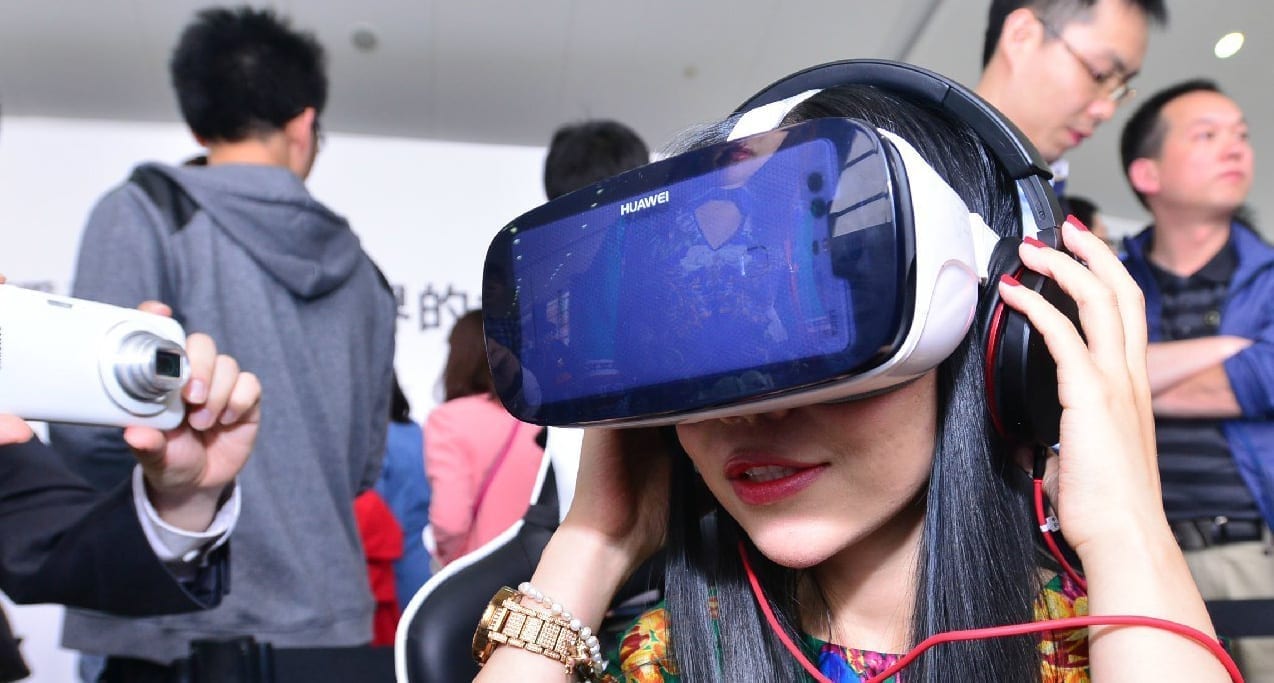
    Right from the latest VR headsets to the system peripherals that are going to completely transform the way we interact with our surroundings in virtual reality, there were all kinds of impressive offerings in the CES 2019. You could very well see how the future of online slots and various other online casino games is going to unfold in the times to come. Let’s take you through some of the best AR and VR tech products that were showcased in this year’s edition of CES.

    Oculus Quest

    Nothing denying the fact that Oculus Rift is an excellent option for virtual reality enthusiasts, but we all know that it needs continuous tethering to a PC to be able to enjoy it. Oculus Quest does away with that requirement. It’s an all-in-one gaming headset which is absolutely wireless, enabling players to enjoy the VR games to the fullest, even while being on the move.

    Once you set up Oculus Quest with the help of the oculus mobile app, it can start tracking your movements without the need of any external cameras. It instead uses the camera situated on the headset’s front, implying that you’ll be able to play anywhere you like as long as the place has room for the two controllers and the headset. It’s not without a reason that Time.com has called Oculus Quest the Virtual Reality’s best bet yet.  Furthermore, you can operate Oculus Quest both from the sitting and standing positions. Although it lacks the power of Vive or Rift, the PC-powered headsets, the Quest still supports some of the highly popular VR games, including The Climb and Moss.

    Vivo Pro Eye

    This one’s a premium VR headset which is a version better than the earlier one, after integrating the Tobii eye-tracking technology. With Vivo Pro Eye headset you can enjoy an even more immersive VR experience, and get to navigate menus and execute all kinds of functions using nothing but your gaze. The headset is already being used in popular apps such as Major League Baseball’s Home Run Derby VR. It’s also expected to make it easier for businesses to use eye-tracking technology with minimum resources.

    3D Rudder for Playstation VR

    With PlayStation VR you can explore your virtual environment in 360° and PlayStation has done an excellent job in making this experience very realistic. However, people felt that something was slightly off as they were unable to use their feet in this environment. The 3D Rudder for PlayStation VR is meant to fix this problem, and allow the players to apply pressure, spin or tilt using their feet, and move around freely inside their favourite VR environments.


  • The Macallan pursues ‘Quest’ with global travel retail rollout

    The Macallan pursues ‘Quest’ with global travel retail rollout

    The Macallan Quest Collection has launched in global travel retail following a month-long exclusive tie-up with DFS Group at Singapore Changi Airport.

    Quest, unveiled to members of the press during TFWA WE, initially launched across all four of Changi’s terminals in January and will now be available on-shelf at key airports globally.

    A giant, rotating bottle cut-out display housed in an illuminated diamond-shaped glass showcases Quest’s four different expressions at Changi.

    As part of the promotion, shoppers were taught more about the collection via interactive displays that emphasised the cask story and flavour of the four expressions.

    This twinned with food pairings and complimentary postcards to act as an additional incentive to purchase.

    Brooke Supernaw, Senior Vice President, Spirits, Wine & Tobacco at DFS Group, commented: “The Macallan Quest Collection embodies the innovation, storytelling and dedication to quality which have made The Macallan such a powerful brand in the single malt category.

    “This partnership and exclusive launch are especially significant for DFS, as we continue our own quest to offer fresh, engaging and exciting experiences to delight travelling customers at our airport and downtown stores around the world.”