Tag: railroad

  • Vietnam high-speed railroad to cost $500M annually to operate

    Vietnam high-speed railroad to cost $500M annually to operate

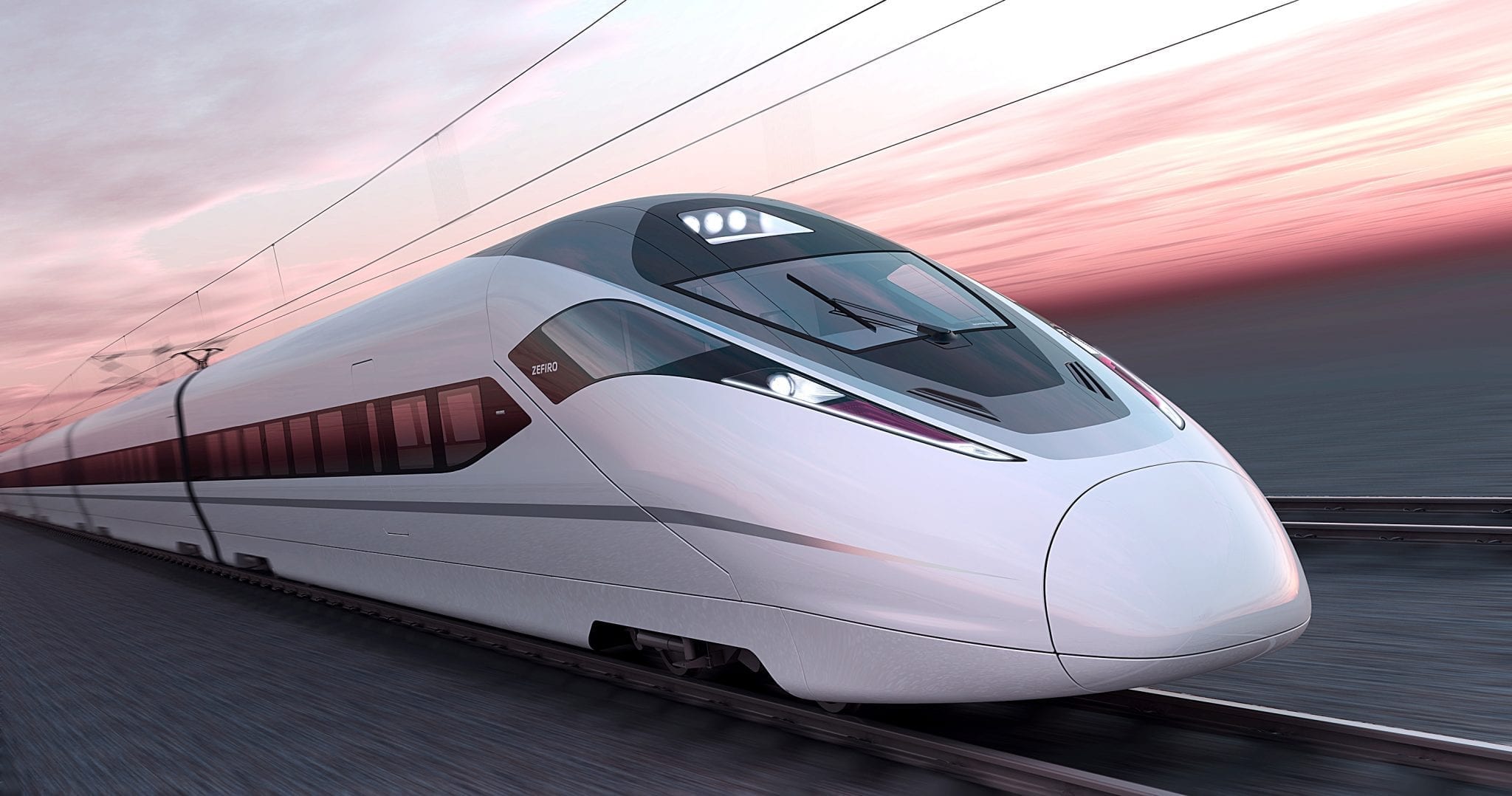
    Vietnam’s north-south high-speed rail is expected to cost US$500 million a year to operate in the initial time, with the government footing a substantial part of the bill.

    According to the Ministry of Transport, in the first four years revenues are expected to cover only operational and rolling stock maintenance costs, and the government will need to provide funds for infrastructure maintenance.

    The 1,541 km line, running between Hanoi and Ho Chi Minh City, is estimated to cost $67.3 billion, with construction expected to last from 2027 to 2035.

    In 2037 the annual operating costs are estimated at $477 million, with the government providing $238 million.

    They are projected to rise to $524 million and $213 million, $571 million and $187 million and $618 million and $140 million in the next three years. Vietnam’s GDP last year was $430 billion, according to the General Statistics Office.

    The project is expected to take 33.61 years to break even if infrastructure costs are not considered, the ministry said in a new report addressing feedback from National Assembly deputies regarding the railway project.

    During the feasibility study phase, detailed calculations of financial indicators would be done based on investment plans, operational strategies and the conditions obtaining at the time the railroad begins operation, it said.

    The ministry was confident of the project’s economic viability, citing quantifiable benefits such as reduced travel time, lower logistics costs, fewer accidents, and reduced CO2 emissions.

    The economic internal rate of return is estimated at 12%, the benefit-cost ratio at 1.06 and net present value at $9.15 billion.

    The ministry said while economic and indirect benefits had been carefully considered, they could not be included in the financial calculations.

    In addition to measurable benefits, the railroad is also expected to enhance Vietnam’s competitiveness, restructure its transportation and create new economic opportunities through effective land use.

    The construction is projected to boost the country’s GDP by an average of 0.97 percentage points annually.

    Addressing legislators’ concerns about prioritizing the high-speed railway over other infrastructure projects, the ministry explained that the funding would be spread over 12 years, averaging $5.6 billion annually, or 16.2% of the medium-term public investment plan for 2026-30, and only account for 1% of GDP in 2027, when construction is expected to begin.

    Besides, investment for 3,000 km of expressways has been arranged, and another 1,700 km are being built, meaning reaching 5,000 km of expressways by 2030 should not be difficult, it said.

    Allaying concerns about increasing public debts and potential cost overruns, it said public debt indicators are projected to remain within acceptable limits through 2030.

    While external debt obligations and budget deficits may see slight increases, these are manageable and considered reasonable compared to scenarios without the high-speed rail.

    The railroad is designed to integrate with regional and international networks, linking up with China through routes from Hanoi via Lao Cai and Lang Son, with Laos through the Vung Ang–Vientiane route and with Cambodia through Trang Bom.

    By 2050, even with significant investments in aviation and road transport, the north-south corridor is projected to have unmet passenger demand of 122.7 million trips annually.

    The high-speed railroad is expected to address this, the ministry said.

    It will have a double track with a 1,435 mm gauge, electrified for a designed speed of 350 kph and a load capacity of 22.5 tons per axle.

    The existing north-south railroad will continue to handle freight and short-distance passenger transport.

  • Railroad popularity a thing of the past

    Railroad popularity a thing of the past

    Though demand for travel and transportation has grown exponentially in recent years, the railroad has witnessed a sharp decline in popularity since its heydays a few decades ago.

    Some 10.4 million people traveled by trains in 1990, accounting for 3 percent of the total number of commuters using all modes of transport.

    Thirty years later, the number plummeted to 4.7 million passengers or a mere 0.2 percent of commuters, according to the General Statistics Office (GSO).

    Freight transport by rail too has declined though not so dramatically.

    The volume of freight transport grew at 10.3 percent annually during the decade between 1991 and 2000. In the next 10 years, the rate plummeted to 2.3 percent before it declined at 4.7 percent in 2011-20.

    Other modes of transport meanwhile grew at 7.3-11.7 percent a year.

    Outdated infrastructure is a major reason for the decline in the popularity of trains. Of Vietnam’s 3,163 kilometers of track, 84 percent is one meter wide, a gauge that has long been abandoned in most countries.

    They allow speeds of just 50-60 kph for freight trains and 80-90 kph for passenger trains, perceived to be a drawback.

    In developed countries, trains travel at speeds of 150-200 kph on traditional tracks and even 300 kph and higher on high-speed tracks.

    Low budget for railway projects partially results in the sector’ falling behind, according to the GSO. Only 3 percent of the transport infrastructure investment was for the railway network.

    Vietnam has over 3,000 km of track, none of it high speed.

  • AI-controlled on demand bus services planned in Japan

    AI-controlled on demand bus services planned in Japan

    Japan’s Mitsubishi Corporation and Nishi-Nippon Railroad Co. have established a new joint venture to provide commercial on-demand-bus (ODB) transit services controlled by artificial intelligence.

    The joint venture, Next Mobility, will commence operations in April 2019 (as planned) in Island City, which is located in Fukuoka City’s Higashi-ward.

    Lacking profitability and drivers, many of Japan’s public passenger road transportation (PPRT) providers are struggling to develop efficient and sustainable services. Island City is undergoing a wave of development, and with more residential, commercial and port facilities going up, traffic is getting heavier. There are concerns in the area about parking shortages, worsening traffic congestion and a lack of public transportation.

    To help address these concerns, the AI-controlled ODB services provided by Next Mobility JV are being rolled out in Island City on a one-year, trial basis. The purpose of the trial will be to verify these services’ effectiveness and commercial feasibility. By improving public transit and making it more readily available to citizens, the trial hopes to encourage people to leave their cars at home and help to build more efficient and sustainable transportation networks

    AI-controlled ODB is a new concept of public bus transit services. The AI generates routes automatically and in real time based on passenger requests submitted through smartphone apps. It uses deep learning to accumulate operational data on rider destinations and traffic conditions, enabling the buses to run more efficiently the more they are used. Passengers can also use their smartphones to book rides and can even pay with their credit cards. The booking and dispatching system has been developed by Spare Labs Inc., a Canadian Company.

    Nissan Motors has agreed to sponsor the project and provide its ten-passenger Nissan Caravans for the trial. They will be driven by taxi drivers dispatched from Fukuoka Nishitetsu Taxi Fukuoka City and companies located in Island City will also be supporting the project by promoting its use throughout the area.

    MC and NNR hope that this ODB service will ultimately help to realize a model for sustainable, efficient and seamless public transit, servicing both Island City and other areas throughout Japan.