Retail News CRM

Tag: railway

  • Vietnamese Automaker Thaco Joins Forces with Hyundai Rotem for Advanced Rail Tech Transfer

    Vietnamese Automaker Thaco Joins Forces with Hyundai Rotem for Advanced Rail Tech Transfer

    South Korean company Hyundai Rotem, a subsidiary of the Hyundai Motor Group, has entered into a technology transfer agreement with Thaco, a Vietnamese automaker. The deal will enable Thaco to manufacture rolling stock for metros and high-speed railway systems under its own brand, by using Hyundai Rotem’s advanced technologies.

    Integrated System Development

    In addition to the technology transfer, Hyundai Rotem will aid Thaco in the development of an integrated system encompassing signaling and communications, as well as mechanical and electrical components.

    Thaco’s Railway Industrial Complex

    As part of its expansion plans, Thaco aims to construct a railway industrial complex sprawling across 786 hectares in Ho Chi Minh City. The complex will include a manufacturing zone for rolling stock, a closed-loop test track system, and a repair center.

    Thaco’s agreement with Hyundai Rotem aligns with Vietnam’s current contemplation of strategies to advance its railway industry. Earlier this year, Prime Minister Pham Minh Chinh encouraged Thaco to be actively involved in research, technology transfer, and the production of carriages and locomotives for high-speed rail projects.

    Thaco’s Investment in High-Speed Rail Projects

    In May, Thaco proposed to construct the North-South high-speed rail link, with an estimated projected cost of US$61.35 billion. Thaco proposes to contribute 20% of the total cost, with the remaining funds to be borrowed from banks, with the backing of government interest subsidies.

    Thaco also revealed interest in developing the 47-kilometer Ben Thanh-Long Thanh rail line, which would connect downtown Ho Chi Minh City with the soon-to-be-completed Long Thanh International Airport.

    Established in 1997, Thaco has a diversified portfolio that includes the auto, agriculture, construction, and logistics sectors. The company assembles Kia, Mazda, and Peugeot cars and also manufactures trucks and buses under its own brand.

    Questions & Answers

    What is the significance of the technology transfer agreement between Hyundai Rotem and Thaco?
    The agreement will enable Thaco to use Hyundai Rotem’s cutting-edge technologies to manufacture rolling stock for metro and high-speed rail under its own brand.

    What is Thaco’s plan for the development of the railway industry in Vietnam?
    Thaco plans to construct a railway industrial complex in Ho Chi Minh City, which will include a manufacturing zone for rolling stock. They have also shown interest in developing high-speed rail projects, including the North-South rail link and the Ben Thanh-Long Thanh rail line.

    What sectors does Thaco operate in?
    Thaco has a diversified business portfolio, with interests in the auto, agriculture, construction, and logistics sectors. They assemble Kia, Mazda, and Peugeot cars and manufacture trucks and buses under its own brand.
  • Lawmakers Approve $61B High-Speed Rail Boosted by Private Investment Opportunities

    Lawmakers Approve $61B High-Speed Rail Boosted by Private Investment Opportunities

    In a significant move for infrastructure development, the National Assembly of Vietnam has paved the way for private investment in the ambitious North-South high-speed rail project by approving two new development models: public-private partnerships and fully private funding. This decision, reached during a vote on Friday, grants the government the mandate to select both the investment model and the investors for this extensive initiative.

    Initially framed as a public sector endeavor, the project garnered renewed interest from the private sector following a recent resolution from the Politburo which emphasized the importance of advancing private enterprise in national development. This shift not only signals a move towards more flexible funding options but also invites major players to join in one of Vietnam’s largest infrastructure projects to date.

    Two prominent domestic conglomerates have stepped forward with proposals to construct the railway. VinSpeed, led by Vietnam’s wealthiest entrepreneur Pham Nhat Vuong, has committed to covering 20% of the estimated US$61 billion project cost while seeking to borrow the remaining $49 billion from the government. On the other hand, Thaco Group has put forth a similar proposal but intends to secure its financing through loans from both domestic and international financial institutions, with the government serving to guarantee these loans.

    What’s particularly intriguing is Thaco’s approach to maintaining local control; they plan to create a dedicated subsidiary to oversee the project, ensuring that a significant portion of the funding and management remains within Vietnam.

    The rail line, stretching an impressive 1,541 kilometers from Hanoi to Ho Chi Minh City and traversing 20 provinces and cities, is designed to facilitate speeds of up to 350 kilometers per hour. It will feature 23 passenger stations and five dedicated freight terminals, transforming travel and cargo transport across the region.

    The feasibility study for this landmark project is set to commence this year, with ambitious plans for completion by 2035, a timeline that keeps an eye firmly on future connectivity and economic growth.

    Questions & Answers

    What new investment models have been approved for the North-South high-speed rail project?
    The National Assembly has approved public-private partnerships and fully private investment options for the project.

    Who are the major domestic companies proposing to fund the railway?
    VinSpeed, owned by Pham Nhat Vuong, and Thaco Group are the two major conglomerates vying to invest in the railway project.

    What are the key features of the planned high-speed rail line?
    The rail line will span 1,541 kilometers, connect 20 provinces and cities, and operate at speeds of up to 350 kilometers per hour, with numerous passenger and freight stations along the route.

  • Siemens Plans Ambitious High-Speed Rail Project to Transform Vietnam’s Transportation Landscape

    Siemens Plans Ambitious High-Speed Rail Project to Transform Vietnam’s Transportation Landscape

    In a compelling dialogue at the 16th Annual Meeting of the New Champions, held by the World Economic Forum in Tianjin, China, Siemens’ Chief Technology Officer and Chief Strategy Officer, Peter Keotre, presented an ambitious invitation to Vietnam’s Prime Minister Pham Minh Chinh. The offer reflects Siemens’ ongoing commitment to strengthening its presence in the region.

    Siemens, which operates across sectors including industry, infrastructure, transportation, and healthcare, has distinguished itself in the arena of industrial AI. Last year, the company reported impressive revenues of EUR 75.9 billion (US$ 89 billion). Since establishing a foothold in Vietnam in 1993, Siemens has operated offices in Hanoi, Da Nang, and Ho Chi Minh City, alongside a manufacturing facility located in Binh Duong Province.

    Prime Minister Chinh lauded Siemens for its substantial global operations and meaningful contributions to Vietnam, expressing enthusiasm for the company’s intentions to escalate investments, particularly in critical infrastructure projects like the North-South high-speed rail. This project, which received National Assembly approval in November 2024, carries a hefty price tag of VND 1.7 quadrillion (US$ 67 billion) and will stretch 1,541 kilometers, linking Hanoi to Ho Chi Minh City through 20 provinces and cities.

    The North-South rail initiative isn’t drawing interest solely from Siemens; various foreign firms have also shown eagerness to participate. On the domestic front, major players like VinFast, backed by Vietnam’s wealthiest individual Pham Nhat Vuong, and automaker Thaco are also vying to invest.

    In addition to the high-speed rail, Vietnam is eyeing enhanced rail connections with China to streamline routes extending to Central Asia and Europe. Chinh has encouraged Siemens to collaborate with relevant ministries, agencies, and the Vietnam Railways Corporation to explore potential involvement in these transformative projects.

    Infrastructure development is a focal point for the Vietnamese government, viewed as a vital catalyst for economic growth. Chinh shared that public-private partnership models are being considered to attract investments in essential national initiatives encompassing transportation, energy, and digital infrastructure.

    His remarks underscored recent institutional reforms aimed at creating more open mechanisms and policies, expanding investment opportunities for businesses eager to be part of Vietnam’s progressive development narrative. With plans covering roads, railways, air transport, and maritime infrastructure, the government is laying the groundwork for a robust economic future, where even trains can hit the high speeds of innovation.

    Questions & Answers

    How is Siemens planning to deepen its investments in Vietnam?
    Siemens aims to enhance its investments primarily in infrastructure projects, with a keen focus on the North-South high-speed rail initiative that promises to revolutionize the country’s transportation landscape.

    What are the key features of the North-South high-speed rail project?
    The rail project, approved by the National Assembly in November 2024, will span 1,541 kilometers, connecting Hanoi to Ho Chi Minh City and traversing 20 provinces and cities, with a projected cost of VND 1.7 quadrillion (US$ 67 billion).

    How does Vietnam view infrastructure development?
    Vietnam considers infrastructure development as a crucial driver for economic growth and is exploring public-private partnerships as a means to attract investments into vital national projects, particularly in transportation and digital infrastructure.

  • VinSpeed, led by billionaire Pham Nhat Vuong, unveils ambitious $61B high-speed rail initiative.

    VinSpeed, led by billionaire Pham Nhat Vuong, unveils ambitious $61B high-speed rail initiative.

    VinSpeed, a company established by Vietnam’s wealthiest individual, Pham Nhat Vuong, has unveiled an ambitious plan to construct a North–South high-speed railway, projected to cost a staggering VND1.56 quadrillion (US$61 billion). This monumental project aims to be completed by 2030, setting the stage for Vietnam’s modern railway industry while invigorating regional economies.

    As part of its investment strategy, VinSpeed, nestled within the ecosystem of Vingroup—Vietnam’s largest private corporation—has committed to covering 20% of the total investment, which equates to roughly $12.27 billion. To fund the remaining 80%, VinSpeed has proposed to secure zero-interest loans from the state budget, repayable over 35 years, not counting expenses related to land clearance such as compensation and resettlement.

    With a charter capital of VND6 trillion (US$231 million), VinSpeed is ambitious about hitting the ground running, vowing to commence construction by December 2025 and bring the full railway into operation by December 2030.

    The firm is also engaging with premier partners from China, Germany, and Japan for technology transfer, focusing on domestic production of locomotives, carriages, and signaling systems. Additionally, VinSpeed plans to rapidly train the workforce to enhance local technical capabilities, promoting Vietnam’s independence in railway development.

    To drive revenue and partially finance public investment, VinSpeed will collaborate with Vingroup and Vinhomes to create urban areas adjacent to key railway stations, utilizing the innovative Transit-Oriented Development approach.

    Duong Thu Van, a representative of VinSpeed, emphasized the company’s steadfast commitment to this groundbreaking initiative, placing a strong emphasis on innovation, decisive action, and collaborative efforts with domestic businesses to not only develop the railway system but also cultivate a sustainable high-speed rail industry in Vietnam.

    Who knew a high-speed journey could also pave the way for fresh urban landscapes?

    Questions & Answers

    What is the estimated cost of the North–South high-speed railway project?
    The project is estimated to cost VND1.56 quadrillion, which is approximately US$61 billion.

    What portion of the funding is VinSpeed responsible for?
    VinSpeed has committed to mobilizing 20% of the total investment, or about $12.27 billion.

    When is the construction of the railway expected to start?
    VinSpeed plans to begin construction by December 2025, with the goal of having the railway operational by December 2030.

  • Vietnam to invest $8B in rail link to China

    Vietnam to invest $8B in rail link to China

    The National Assembly has approved plans for the Lao Cai-Hanoi-Hai Phong railway, which links to the border with China, at a cost of US$8.37 billion or $15.96 million per kilometer.

    The cost per kilometer is similar to that of other projects in the region, such as the Vientiane-Boten railway in Laos, which cost $16.77 million.

    According to the proposal approved on Wednesday morning, the line will run 391 km from the border crossing point in Lao Cai Province to the port city of Hai Phong. It will also include 27.9 km of branch lines.

    It will run through nine localities, including Hanoi and the provinces of Yen Bai, Phu Tho, Vinh Phuc, Bac Ninh, Hung Yen, and Hai Duong.

    The railway will be a single-track line with a 1,435 mm gauge used for both passenger and freight services.

    It is designed for speeds of 160 km per hour from Lao Cai to southern Hai Phong, 120 kph through Hanoi, and 80 kph on other sections.

    Funds for the project will come from the state budget and other legal sources.

    Relevant agencies will prepare feasibility reports this year, with the project set for completion by 2030 at the latest.

    The National Assembly has approved several special mechanisms for the project, such as allowing the Prime Minister to issue government bonds to cover shortfalls in the annual investment plan approved by the parliament without increasing the state budget deficit.

    Several other special mechanisms regarding mineral extraction for construction materials, scientific and technological development, workforce training, industrial growth, and technology transfer are also applied to the project.

    Contractors must prioritize domestically produced goods, services, and materials whenever possible.

    The National Assembly Standing Committee said the project aims to meet transport demand, reduce logistics costs, and foster sustainable development.

  • Vietnam to start work on high-speed rail within next 3 years

    Vietnam to start work on high-speed rail within next 3 years

    Work on a 1,500-kilometer high-speed rail link between the northern and southern regions will start in 2026 or 2027, Minister of Transport Nguyen Van Thang has said.

    Vietnam hopes to partner with China in building the railroad and rolling stock and setting up its signaling system, he told Lou Qiliang, chairman of China Railway Signal & Communication Corporation (CRSC) at a meeting Tuesday in China’s Dalian City.

    The three determine the safety of a rail project, and China has advanced technologies for developing them and at reasonable prices, he said.

    CRSC is a state-owned company and the world’s biggest supplier of rail control systems.

    It accounts for 45% of China’s subway market.

    Railroad infrastructure, especially for the north-south high-speed route, is among the government’s priorities for enhancing the country’s competitiveness.

    Prime Minister Pham Minh Chinh said at the meeting that China has strengths in developing high-speed and urban rail networks.

    He sought China’s support in design, construction and technology transfer, including for three cross-border rail projects spanning 700 kilometers between the two countries.

    Work on the first is set to begin next year, connecting China with the northern province of Lao Cai, Hanoi and the port city of Hai Phong.

    Lou told the PM that his company is seeking opportunities to partner with Vietnam, and can provide assistance in researching and developing rail signaling systems.

    Human resource training also plays an important role in rail projects, he added.

  • Hanoi Railway Transport reports record profit

    Hanoi Railway Transport reports record profit

    The Hanoi Railway Transport Joint Stock Company has reported record after-tax profits of VND54 billion (US$2.2 million) mainly due to a nonrecurring revenue item, interest in bank deposits.

    It received interest of VND245 billion on deposits, but also managed to trim expenses, according to its latest financial statements. Gross profit rose 40% year-on-year to VND110 billion. However, total revenues were down 5% to VND637 billion.

    The company has improved its profits for three consecutive quarters, but still has accumulated losses of VND285 billion after 11 quarters of losses during the Covid pandemic.

    For the year to date it had revenues of VND1.895 trillion and profits of VND98 billion, the former only slightly up year-on-year but the latter surging 2.8-fold.

    This year the company is promoting cargo transportation and joining hands with major travel agencies to transport foreign tourists.

    The company, one of the two biggest subsidiaries of the Vietnam Railways Corporation, operates northern and the Hanoi-Ho Chi Minh City routes and international transportation of goods and passengers through two northern border gates.

  • Vietnam Railways eyes profit in 2023

    Vietnam Railways eyes profit in 2023

    Train operator Vietnam Railways expects to earn a profit this year after posting losses in three previous years due to the impact of Covid-19.

    The company predicts a post-tax profit of VND3 billion ($127,960) and a revenue of over VND6.5 trillion.

    In the first quarter this year subsidiary Hanoi Railways served over 800,000 passengers and recorded VND300 billion in revenues. Both figures went up 200% year-on-year.

    Its other major subsidiary, Saigon Railways, also saw revenues rise 147% to VND360 billion and passenger numbers grow 136% to 660,000.

    Vietnam Railways attributed the rise to increasing demand and discounts of 50%-65% during days with low bookings. Other types of discounts for groups of four and large tourist groups also contributed to higher ticket sales.

    Vietnam Railways started to see signs of recovery last year after two years of difficulties due to Covid-19. It saw revenue rising 14% to VND7.7 trillion, and saw losses dwindling from VND1.33 trillion in 2020 to VND130 billion last year.

  • Vietnam to have 16 more railway lines by 2030

    Vietnam to have 16 more railway lines by 2030

    Vietnam’s railway network planning expects to have 16 new national lines with a total length of about 4,802km by 2030.

    According to the Ministry of Transport, the planning for 2021-2030 will also upgrade seven existing lines, whose total length amounts to 2,440km.

    By 2050, the number of new rail lines will be 25, which together are 6,354km long.

    The completely upgraded and expanded network following the planning will connect strategic economic areas and corridors, urban centres, international sea ports, border gates, and airports nationwide, said a leader of the ministry.

    Rail transport boasts several advantages. It requires less land areas, leaves little impact on the environment, and carries a large amount of goods and passengers. It is also fast, safe, and low cost.

    However, the railway investment budget is enormous, while the State budget resources are limited. Due to the low financial efficiency of railway investment, it is difficult for the sector to attract capital from society.

  • Government mulls 250 kph transnational railway

    Government mulls 250 kph transnational railway

    The Ministries of Planning and Investment and Transport will study the possibility of building high-speed rail across Vietnam to transport both passengers and cargo.

    The dual-gauge railway, with design speeds of 250 kilometers per hour and operational speeds of 180-225 kph, is required as rail only carries 6% of passengers and 1.4% of cargo on the north-south route, the planning ministry said.

    When completed it would be a key means of transport capable of carrying large volumes of cargo, connect major economic centers and boost growth, it said.

    It suggested that the railroad be built under a public-private partnership and funded partly by auctioning lands near the 50 stations along the route.

    The 250-kph option has been suggested by a consultancy consortium over a 350-kph option which can only transport passengers.

    Though costing more to build, it would have a higher chance of recouping the investment thanks to cargo transport, the consortium comprising the University of Transport and Communications Consultancy and Construction, Germany’s Evo mc, Ove Arup & Partners Hong Kong, and Hung Phu Trading and Construction Consultant said.

    They will respectively cost US$62.7-64.8 billion and $58.7 billion.

    Since 2019 officials have been considering the transnational rail since roads and airports are becoming increasingly overloaded.

  • Vietnam considers $58.7 billion high-speed railway

    Vietnam considers $58.7 billion high-speed railway

    Vietnam is considering building a high-speed railway that runs along the country’s length with a possible price tag of up to $58.7 billion, the government said on Sunday.

    The Southeast Asian country’s transport ministry will next month submit a proposal to build the 1,545 km (960 miles) railway to the Politburo, the powerful decision-making body of the ruling Communist Party of Vietnam, the government said in a news release.

    Vietnam, a regional manufacturing hub, is ramping up its investment in transport infrastructure to support its fast-growing economy.

    The first two sections with combined length of 665 km (413 miles) and total investment of $24.72 billion would be open to traffic by 2032, the government said, adding that the entire project would be completed by 2045-2050.

  • Former SpaceX Engineers Are Making Electric & Self-Driving Railway Vehicles

    Former SpaceX Engineers Are Making Electric & Self-Driving Railway Vehicles

    Tesla is not the only company that’s run by Elon Musk. In fact, Musk used some of the money he made with SpaceX to invest in Tesla to eventually gain control of the electric car maker. And SpaceX has also been categorized by Musk as some of the most important work he is doing in his life. But as it happens some of his former SpaceX engineers have quit and formed a startup that’s looking to reinvent the railway industry.

    Parallel Systems, founded by former SpaceX engineer, Matt Soule who partnered with a bunch of his former SpaceX colleagues, intends to disrupt the railway industry with electric powertrains and autonomous vehicle technology that’s taking over the consumer automotive space. The company has received $50 million in a Series A funding round and only recently came out of stealth

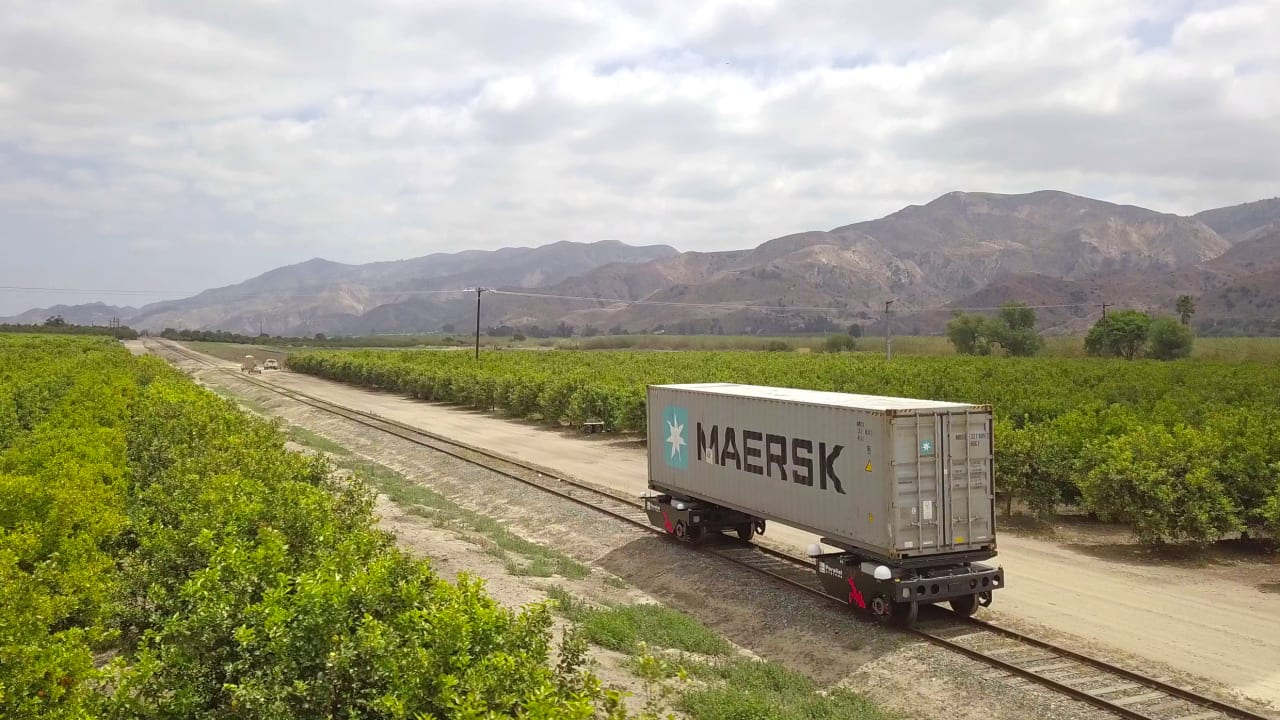
    Their idea is to create a small autonomous electric-powered rail vehicle. The idea is for a cargo vehicle that enables one to drop the cargo on a Parallel Systems vehicle and have it move without the need for the entire train to be unloaded. Each container can do individually move 800 km or band together to be even more efficient.

    This would allow smaller railroads to be reopened and new ones to be built to deliver cargo closer to customers and take some market away from trucks. These vehicles in question can also take in an impressive payload of 128,000 pounds which is twice the capacity of a semi-truck. So far though, their prototype vehicle can only do 80 km.

  • Railways seeks bailout as Covid-19 rages

    Railways seeks bailout as Covid-19 rages

    Vietnam Railways (VNR) is seeking a VND800 billion ($34.82 million) loan to fund operations amid plummeting demand for its services because of the Covid-19 pandemic.

    The state-owned company has requested the government for the funds, saying that if the pandemic impacts persist until the next year, it would run out of money to pay staff salaries.

    It is, therefore, proposing that the government gives it an “emergency” loan and provide support for its 13,000 employees, who are either suspended or working part-time.

    It is also proposing that over 6,000 employees are prioritized for vaccination; and that infrastructure fees and land fees are lowered or scrapped for the projects it is implementing.

    Last month, the company suspended 393 trains, and there were times when just one pair of trains was used for the North-South route.

    The company’s revenues in the first five months fell 19 percent year-on-year to VND1.11 trillion and 40 percent from 2019, when the pandemic was yet to hit the country. It posted a loss of over VND1.32 trillion last year.

  • Starbucks Japan launches Smart Lounge railway station concept

    Starbucks Japan launches Smart Lounge railway station concept

    Starbucks Japan has launched a new concept store in collaboration with railway operator JR East.

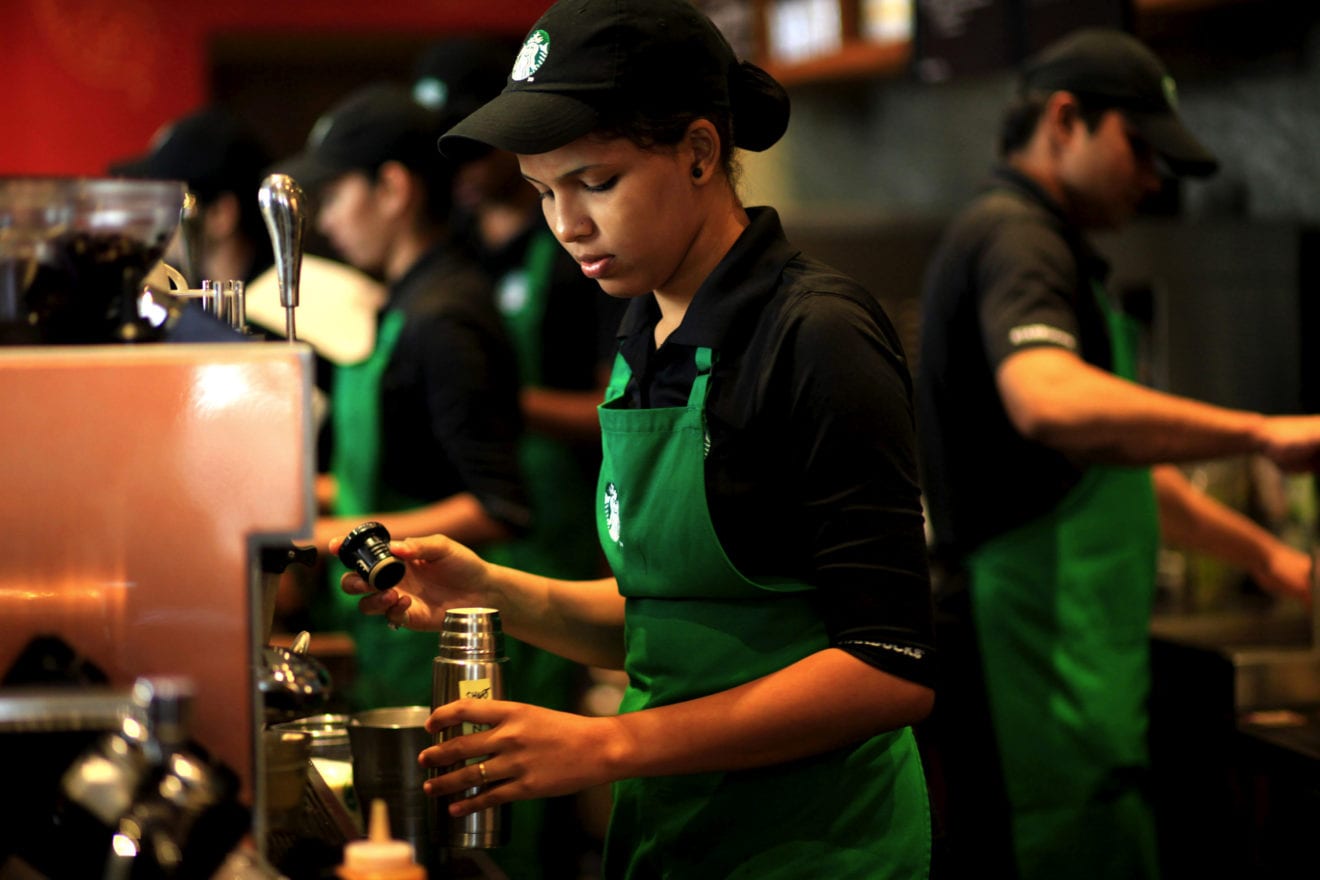
    The “Starbucks Coffee Takanawa Gateway Station” opened yesterday, introducing its Smart Lounge concept – a store space focused on business use. The store features numerous semi-private and single-seat seats to meet the needs of using a cafe for work purposes as well as a large table used for meetings with multiple people.

    Two fully-private booth-style share offices are provided within the store. Power outlets are available for all seats, and the store also operates a mobile battery sharing service. Wifi is available throughout the premises.

    The cafe also specializes in speedy cashless payment via Starbucks Card and Suica, among other e-payment platforms. Via a dedicated app, it allows customers to settle orders in advance and receive products smoothly at stores, designed to allow more effective use of time and reduction of waiting time at cash registers.

    “Starbucks has more than 1500 stores nationwide and connects with 800,000 customers a day,” said Starbucks Japan head of store development Kazuhiro Ishihara. “Each store has its own personality and expression that reflects the locality and needs of each individual.

    “At the Takanawa Gateway Station, we provide a smart and comfortable experience that suits its location and purpose, and integrates with people’s lives to create a future city that no one has yet seen. We aim to be a store and base that can be created with people.”

    Takanawa Gateway Station is situated in Shinagawa town, a new urban area under development that aims to be a new gateway to Tokyo.

    JR East aims to operate 30 shared office spaces by the end of the financial year.

  • JR East metro station outlets opening in Singapore

    JR East metro station outlets opening in Singapore

    East Japan Railway Co. is expanding its operations into Singapore with new JR East metro station stores launching in island’s metro stations.

    The firm is planning to set up store clusters at 27 out of the 32 stations on the Thomson-East Coast Line, which will be partially operational by the end of the year. It is the first Japanese railways firm to start-up commercial operations in another country.

    The firm’s contract to establish JR East metro station stores along the line was secured via its local unit along with SMRT Experience and store chain operator NTUC Fairprice Co-operative for S$24 million (US$17.3 million) last month. The three partners will trade as Stellar Singapore, in which JR East will hold a 35 percent shareholding.

    Under the terms of the agreement, Stellar Singapore will rent 5000sqm of total floor space at the stations under a 16-year lease. The largest single shopping center will cover 1570sqm at Woodlands Station.