Tag: railways

  • Vietnam Railways sees smaller losses in H1

    Vietnam Railways sees smaller losses in H1

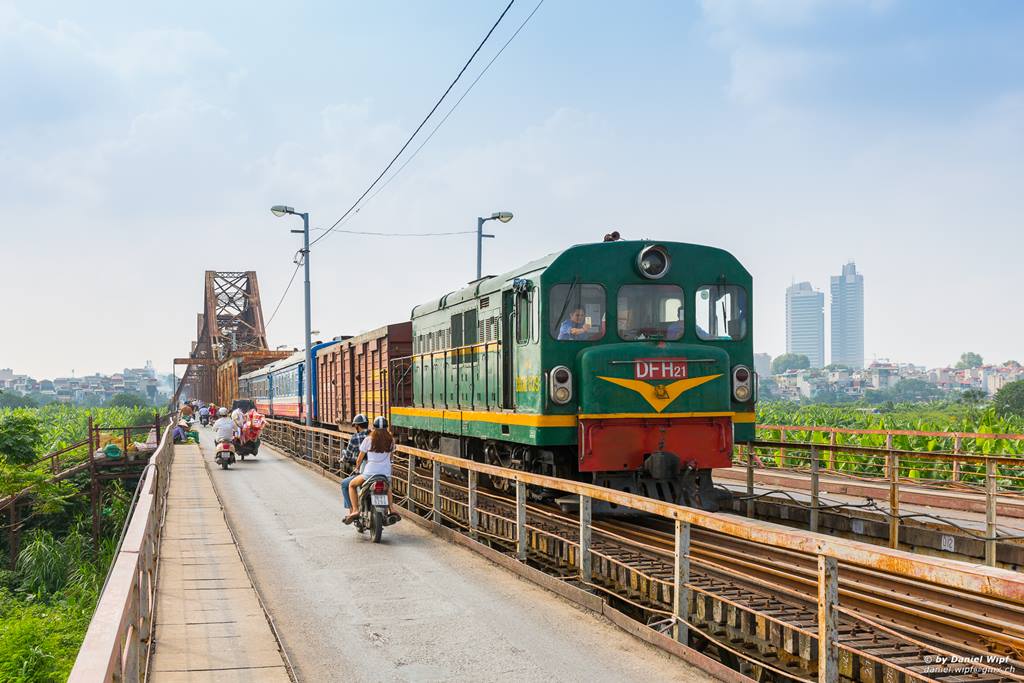
    State-owned Vietnam Railways Corporation racked up after-tax losses of VND30 billion (nearly $1.3 million) in H1, down from losses of VND100 billion in the same period last year.

    The corporation said it would suffer after-tax losses of VND570 billion in 2022, compared with losses of VND1.327 trillion in 2020 and of VND565 billion in 2021.

    Vietnam Railways’ financial statements showed that its revenues in the first half grew 36% on-year to nearly VND1.045 trillion. It has targeted revenues of VND1.62 trillion in the whole year.

    By the end of June, Vietnam Railways had assets of over VND15 trillion, up VND200 billion against the beginning of this year.

    The corporation currently runs a debt of nearly VND2.23 trillion, with undistributed loss exceeding VND1.85 trillion.

    It is gradually shifting focus from passenger to freight transport, promoting routes linking with international equivalents.

  • Vietnam Railways pleads for government funding as staff remain unpaid

    Vietnam Railways pleads for government funding as staff remain unpaid

    Vietnam Railways owes its 11,300 workers four months’ salaries due to a funding delay by the government, and fears this could cause many to quit.

    It reminded the government that it was supposed to receive VND2.8 trillion ($121.3 million) at the beginning of this year, but has not, forcing it to pay minimum compensation to staff.

    Vu Anh Minh, its chairman, said the delay could cause barrier operators at grade crossings and patrol staff to quit since they have the lowest incomes.

    “The issue has pushed the company to the end of its road. We might not survive until the end of this month.”

    This is not the first time VNR has been forced to beseech the government for funding. Last year too it owed its staff salary for months but managed to survive that crisis.

    The problem can be tracked to a dispute between two government agencies. Last year VNR became one of 19 state-owned companies whose oversight passed to the Commission for the Management of State Capital at Enterprises (CMSC), an entity that manages the government’s $43 billion investment in various companies.

    The CMSC refused to provide funds, saying maintenance workers should be paid by the Ministry of Transport since it controls the maintenance and infrastructure budget.

    But the ministry cannot provide funds to any entity it does not manage.

    A temporary solution was agreed upon last year and the transport ministry provided the needed sum of VND2.5 trillion.

    But there has been no decision yet on whether the same thing will happen this year, leaving VNR and its staff in the lurch.

    VNR wants the government to provide the money through the CMSC.

  • Vietnam Railways struggles to compete with budget carriers

    Vietnam Railways struggles to compete with budget carriers

    The Vietnam Railways Corporation (VNR) has admitted its inability to meet performance targets because of competition from low-cost airlines.

    VNR transported VND8.4 trillion ($362 million) worth of cargo in 2018, up 5 percent year-on-year, but 1.9 percent off the annual target, chairman Vu Anh Minh said at a recent industry conference. Revenue was VND8.19 trillion ($353 million), the same as in 2018, but only 97.2 percent of the target.

    Railway sector employees earned an average of VND9.12 million ($393) a month, Minh said.

    The railway sector continues to face rising competition on freight transport from the road and marine sectors, and its passenger section has to contend with low-cost carriers and highways, Minh said, but did not provide comparative statistics.

    Furthermore, investment in railway infrastructure has been limited because of bottlenecks in policies and investment mechanisms, including land management regulations. The railway sector has only received 40 percent of state capital earmarked for its business and production activities, and among other things, this has undermined railway traffic safety, Minh added.

    Because the railway infrastructure and stations belong to the state, VNR cannot use its own money to conduct repairs, he noted.

    For instance, VNR needed to spend VND30 billion ($1.29 million) to repair and upgrade infrastructure at the Song Luy station in the southern province of Binh Thuan, but it could not do so because of regulatory constraints, Minh said.

    Vietnam currently has over 3,000 kilometers of railway tracks, none of them high-speed.

  • Russian Railways eyes high-speed Europe-China cargo trains

    Russian Railways eyes high-speed Europe-China cargo trains

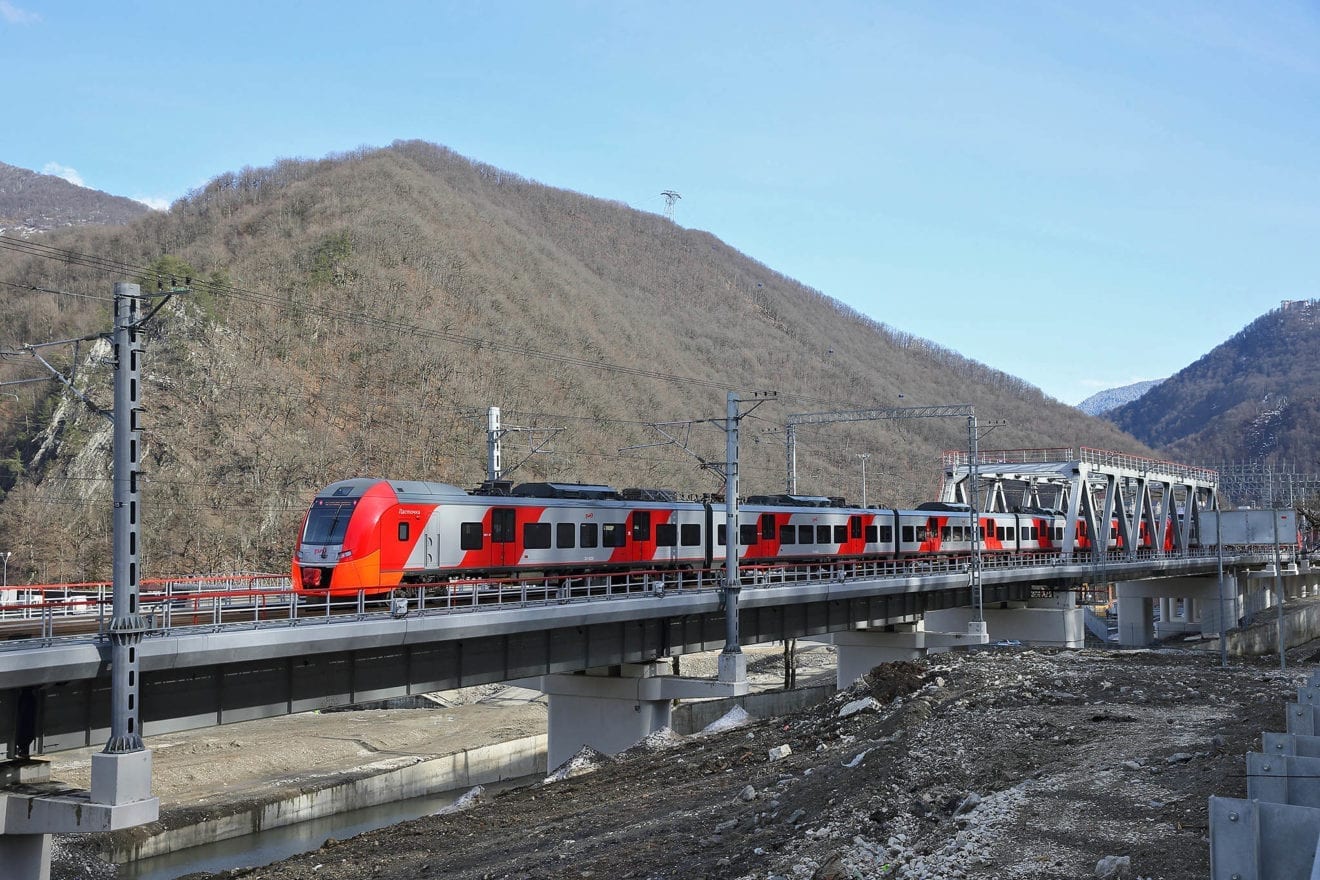
    The president of Russian Railways, Oleg Belozerov, proposed a high-speed cargo railway connection between Europe and China, allowing transport of goods to take as little as two days.

    “We plan to reach China via Kazakhstan and to carry special, high-profit cargoes to Europe via Russia, because a ship sails now 60 days, which is a long time. It sails round India and only then arrives to Europe. With a high speed rail transport we will be able to deliver goods in two days, and to earn extra money for our country,” Belozerov told a United Russia party meeting recently according to an Executive Intelligence Review News Service (EIRNS) report.

    Earlier Russian Railways said it was working on developing a cargo train capable of carrying from 300 to 600 tonnes of cargo at speeds up to 300kph.

    The China-Europe cargo line will be part of the Moscow-Kazan high-speed railway, whose construction should begin in 2017, Belozerov said. With a distance of some 770 kilometers, and a speed of of 350-400 kph, the rail route will cut the time between the two cities to as little as 3-3.5 hours; the current time is 14 hours. The line could be commissioned before 2022-2023.

    The US$16.8 billion railway project could later be extended to China, connecting the two countries across Kazakhstan. The Moscow-Beijing railroad will be 7,769 kilometers, with a travel time of 32.8 hours — four times faster than the current 130.4 hours. The average annual passenger traffic is estimated at 195 million people.

    China is committed to providing $6.5 billion as a credit for 20 years and $1.6 billion as a contribution to the charter capital of the special-project company. The German Initiative Consortium (includes Siemens, Deutsche Bank, Deutsche Bahn, and other companies) is ready to allocate €2.7 billion to finance the construction of the high-speed railway line and to attract up to €800 million for the project.