Tag: Raja Ampat

  • Marine tourism sector expected to contribute US$4 billion

    Marine tourism sector expected to contribute US$4 billion

    The marine tourism sector is expected to contribute US$4 billion in 2019, or a four-fold increase from the present contribution, according to Tourism Minister Arief Yahya.

    “We hope that the foreign exchange earnings from marine tourism will increase in 2019 from $1 billion this time,” Yahya remarked, during the signing ceremony of cooperation between the Ministry of Maritime Affairs and Fisheries and the Ministry of Tourism in the field of marine tourism here, on Tuesday.

    The minister admitted that the contribution of marine tourism to the foreign exchange at present was still lower than that of the tourism sector as a whole.

    He said that the marine tourism currently contributes to only about 10 percent of the overall foreign exchange of national tourism that reaches $10 billion per year. Thus, the contribution of marine tourism is only about $1 billion.

    The minister compared this to Malaysia, where marine tourism contributes to about 40 per cent of the total foreign tourists.

    Malaysia itself is expected to rake in tourism foreign exchange of about $25 billion per year.

    Yahya argued that the factors that lead to minimal contribution of marine tourism in Indonesia, among others, were regulatory factors, human resources, and the approach on being more concerned about security than services.

  • Indonesia Prepares New Strategy to Meet 2019 Tourist Arrival Target

    Indonesia Prepares New Strategy to Meet 2019 Tourist Arrival Target

    When President Joko “Jokowi” Widodo set out to double Indonesia’s foreign tourist arrivals within the five years of his presidency, many were skeptical. Now, the target seems to be within reach. Combined government efforts that included the massive development of airports and tourist destinations, aggressive digital promotions and a visa-free policy have, along with the weakening rupiah, attracted 16,2 million foreign tourists to Indonesia last year, which is 71 percent more than four years ago.

    Still, some setbacks were unavoidable. A series of volcanic eruptions, earthquakes and tsunamis over the past 12 months, as well as the tragic crash of Lion Air flight JT-610 into the Java Sea near Jakarta, resulted in the government missing its target to woo 17 million foreign tourists last year.

    Industry players worry that the bad image created by these disasters would take long to erase and thus undermine the country’s ability to attract 20 million foreign tourists this year.

    “Indonesia is situated on the Ring of Fire; we could not predict or prevent any disaster. What we need now, is to work extra hard to ensure that the world knows that when disaster strikes here, all tourists and local residents are well cared for,” said Elly Hutabarat, chairwoman of the Indonesian Travel Agent’s Association (Astindo).

    She cited Mexico as an example of a country that had just been hit by an earthquake, but still managed to quickly revive its tourism industry.

    “We see Mexico, which had just experienced an earthquake, is responsive and is able to give up-to-date information to the world. Such efforts are able to quickly revive their tourism industry,” Elly said.

    Border Tourism, Low-Cost Terminals

    The government has not given up, as the tourism industry could potentially generate $20 billion in foreign exchange revenue this year, which is crucial to plugging the country’s persistent current-account deficit.

    Guntur Sakti, head of communications at the Ministry of Tourism, said the government has implemented a strategy to meet this year’s tourist arrival target by developing border tourism, hub tourism and the renovation of airport terminals to cater to low-cost carriers.

    The government’s border tourism plan is aimed at making it easier, faster and cheaper for tourists to visit Indonesia from neighboring countries.

    Malaysia, Singapore and the Philippines also have a similar cultural heritage and history as Indonesia.

    “The potential from border tourism is massive, especially from neighboring countries,” Guntur said.

    Through the hub tourism strategy, the government expects to attract a larger number of foreign tourists that travel to the capitals of neighboring countries, specifically Bangkok, Kuala Lumpur and Singapore.

    The government estimates that more than 11 million foreign travelers – excluding Indonesians – transit at Singapore’s Changi Airport annually before continuing their travels to other countries for business or leisure. Guntur said this represents a massive potential for Indonesia.

    He added that tourists frequently transit in Singapore or other cities in the region because of limited direct flights to Indonesia from Europe, the United States and even parts of East Asia.

    For instance, about half of all Chinese tourists heading to Indonesia must transit in Singapore or Malaysia before reaching the archipelago, while 80 percent of tourists from Thailand and Malaysia are able to reach the country via direct flights.

    The government also plans to renovate several terminals at Soekarno-Hatta International Airport outside Jakarta to exclusively accommodate low-cost carriers.

    Terminal 1 at the airport will soon only cater to passengers of low-cost airlines traveling to domestic destinations, while Terminal 2 will cater to passengers of low-cost airlines on both domestic and international flights.

    Many countries have built terminals or even whole airports to specifically accommodate low-cost airlines. This lowers the airport’s operating budget, which in turn helps to reduce airport taxes and airline ticket prices, which ultimately attract more foreign tourists.

    Guntur said at least 70 percent of foreign tourists use low-cost carriers to travel to Indonesia.

    “To realize our strategy and attract more tourists, we are working with state-owned airport operator Angkasa Pura to renovate Terminal 1 and 2 at Soekarno-Hatta Airport. We’ve noticed many countries operate several terminals that cater to full-service carriers and low-cost carriers separately,” he added.

    The number of passengers traveling to Indonesia on low-cost carriers grows by about 55 percent annually, while the number of passengers arriving on full-service airlines only increases by about 7 percent per year, according to tourism ministry data.

    Ten New Balis

    The government also actively promoted its “10 New Balis” program last year to develop and promote several destinations beyond Bali, Indonesia’s most popular destination.

    The 10 New Balis include Mandalika in Nusa Tenggara, Thousand Islands in Jakarta, Tanjung Lesung in Banten, Tanjung Kelayang in Bangka Belitung, Borobudur Temple in Central Java, the Bromo Tengger Semeru National Park in East Java, Labuan Bajo in East Nusa Tenggara, Wakatobi in Southeast Sulawesi and Morotai in North Maluku.

    The project, spearheaded by the tourism ministry, has also established programs to develop each of the destinations by building 5,000 homestays, improving infrastructure, increasing financing for tourism to around Rp 2.5 trillion ($177 million), implementing sustainable tourism in 16 destinations, developing 10 special economic zones and developing nomadic tourism.
  • Raja Ampat to organize various festivals to lure tourists

    Raja Ampat to organize various festivals to lure tourists

    The district administration of Raja Ampat in West Papua Province will organize various festivals to lure tourists to the island.

    The planned festivals will be part of the tourism campaign for the region, according to the Head of Raja Ampat tourism office, Yusdi Lamatenggo, on Saturday (Jan. 21).

    This years list of festivals include a maritime festival, a flute and drum festival, the Wonderful Misol festival, the Wonderful Salawati festival, the Wonderful Waigeo festival, a fish cooking festival and a Red and White festival.

    There will also be a spiritual festival, a blue sea festival, the Raja Ampat Fair and the Raja Ampat childrens reading festival.

    The events are also intended to preserve and promote the regions local culture and arts, he added.

    In an effort to improve transportion access to Raja Ampat, the government has also launched several key infrastructure projects on the islands.

    Regular transportation will be made available from the regional capital of Waisai to other islands, including Misol Island.

    “Foreign and local tourists will now be able to visit the islands without having to hire expensive speedboats,” explained Lamatenggo.

    The Wing Air Lion Group will also operate direct return flights from Jakarta to Manado and Waisai to improve the access to West Papua from outside the region, he said.

    “At the moment, tourists wishing to visit Raja Ampat have to take a long flight from Jakarta to Sorong,” he added.

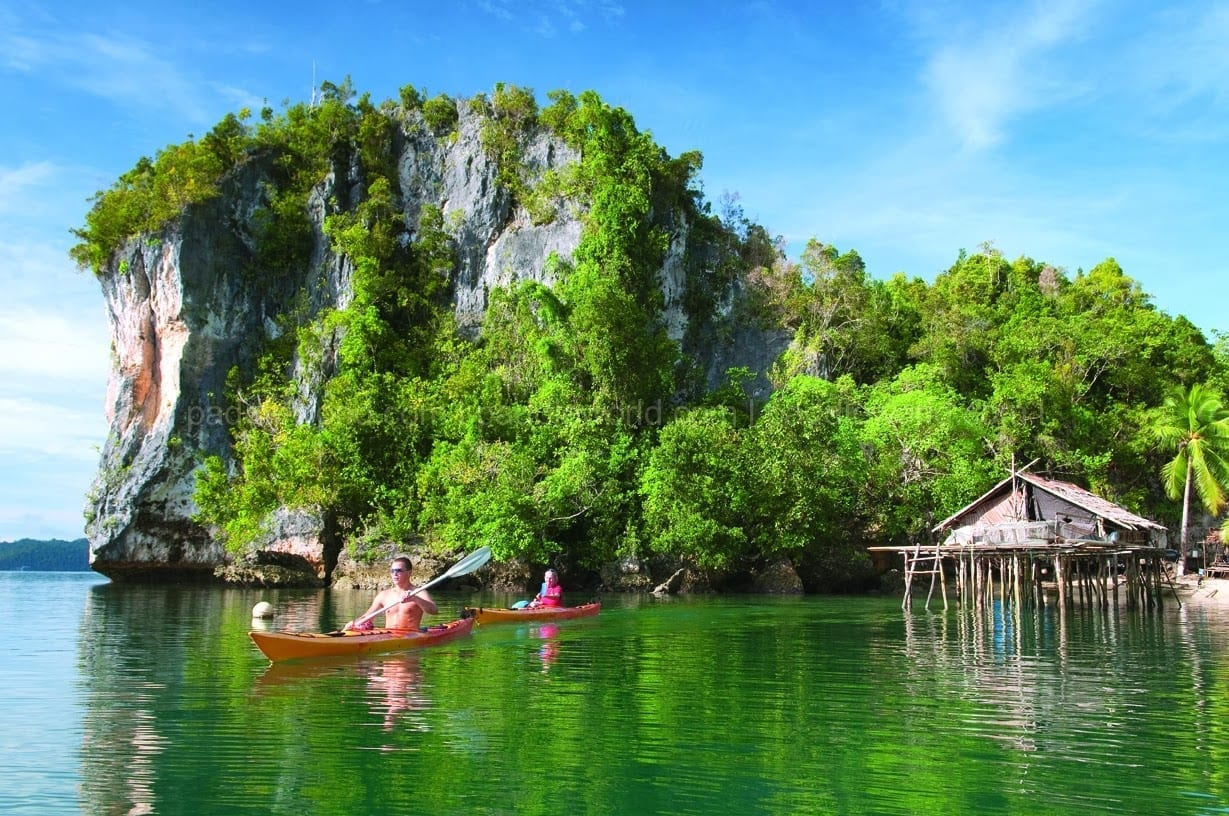
    The Indonesian archipelago of Raja Ampat, fondly called the Living Eden or Paradise on Earth, was a lesser-known tourist destination and was familiar only to intrepid travelers and avid divers.

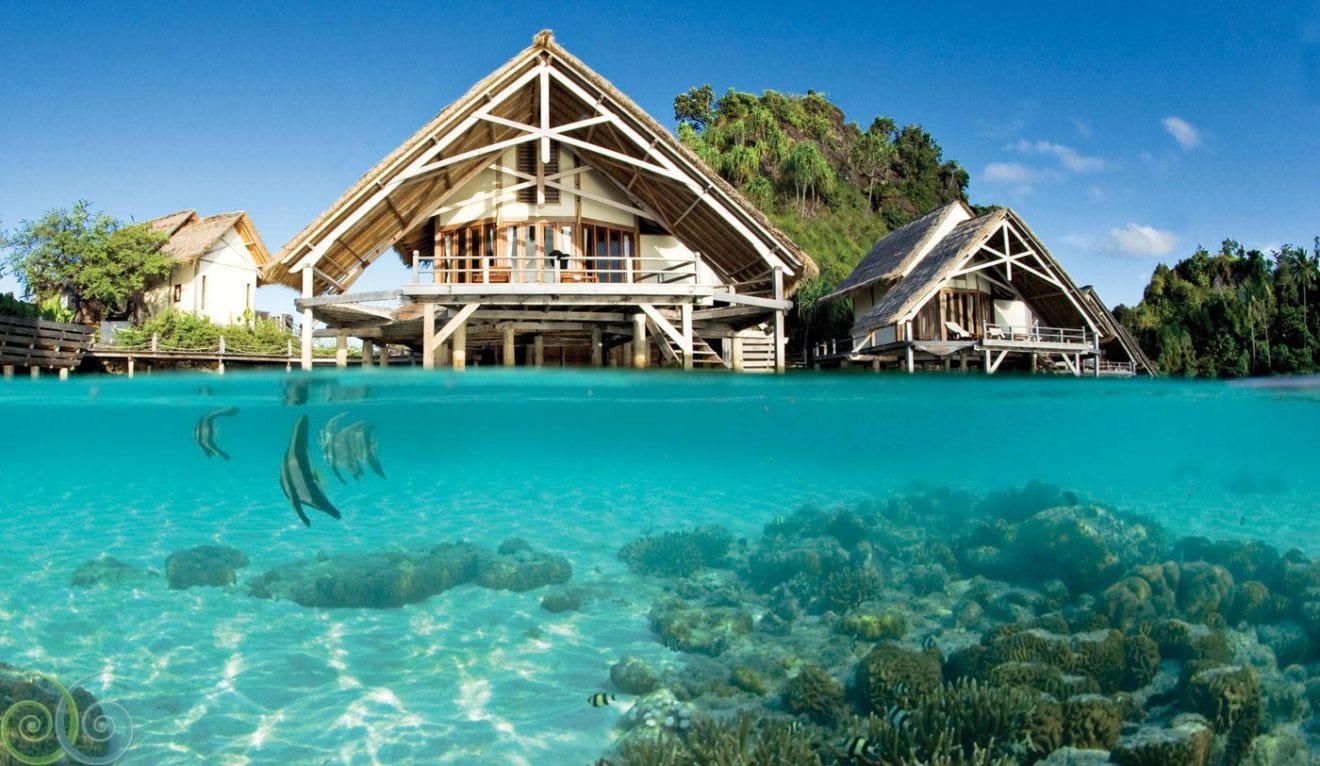
    Considered to be a crown jewel in Indonesia, Raja Ampat has crystal clear turquoise waters and islands covered by dense green forests and mangrove swamps.

    Located in an area called the “Coral Triangle” between the Pacific and Indian oceans in eastern Indonesias West Papua province, the world is now taking notice of Raja Ampat after the Indonesian government intensified its tourism campaign to promote the region.

  • Raja Ampat launches tourism and conservation website

    Raja Ampat launches tourism and conservation website

    The government of Raja Ampat, West Papua, has launched a website on tourism and conservation to support tourism services in the region.

    The government is striving to boost innovation, Head of the Public Service Regional Office Technical Implementation Unit (BLUD UPTD) Water Conservation Area Raja Ampat Adrianus Kaiba noted in a press release received by Antara in Manokwari on Thursday.

    A technical institute, since its establishment in 2015 and under the coordination of the Department of Marine and Fisheries Raja Ampat, has been given the authority to manage water conservation in the area.

    He remarked that it was committed to improving services. Launching a website is rated as a step forward to improve the quality of services offered to both domestic and foreign tourists.

    “As a conservation area, we felt it was important to manage conservation in a professional and sustainable manner for the preservation of nature in this area,” he pointed out.

    He emphasized that the website was launched by Raja Ampat Regent Faris Abdul Umlati at Kampung Saonek, South Waigeo District, Wednesday (Aug. 17). It is part of a series of celebration activities to commemorate the 71st anniversary of the countrys independence.

    Kaiba said any information on water conservation in Raja Ampat can be updated on www.kkpr4.net, which is developed by BLUD UPTD.

    Meanwhile, Umlati highlighted that the website provides information on various conservation initiatives, scientific research, as well as water conservation activities being carried out in Raja Ampat in a sustainable manner.

    He believes the website will help domestic and foreign tourists obtain information regarding Raja Ampat, mainly related to water conservation.

    Moreover, Umlati remarked that the website is important to ensure that the areas biodiversity is always maintained and can be enjoyed by future generations.

    The Raja Ampat Islands are located at the northwestern tip of West Papua Province. They are located right in the heart of the coral triangle and are the worlds center of marine biodiversity.

    The results of ecological studies by The Nature Conservancy and Conservation International showed that Raja Ampat is home to 75 percent of the coral reefs in the world, with 553 species of coral and 1,437 species of reef fish.

    The waters in the area have abundant resources to provide sustenance and a means of livelihood for more than 40 thousand people spread across 135 villages in Raja Ampat.

    Local communities in Raja Ampat have cultural links and strong traditional ownership rights over the land and sea territory.

    Local authorities, through the BLUD UPTD Water Conservation Area, continue to ensure that water conservation is being carried out effectively, efficiently, and professionally.

    This step is being taken to ensure preservation of the natural resources and to improve the experience of tourists visiting the area to enjoy its natural beauty.

  • Tourists claim tour rates in Raja Ampat expensive

    Tourists claim tour rates in Raja Ampat expensive

    Some tourists have assessed that the tour rates offered in Raja Ampat, West Papua, were expensive, and it was feared to affect other travelers keen on visiting this tourist area.

    “Raja Ampat is much more beautiful than Bali, but the tour rates are also more expensive as compared to Bali,” Sami Ninggoroh, a tourist of Indian descent who visited Raja Ampat along with some Japanese tourists, stated on Tuesday.

    According to Ninggoroh, the rates of the Raja Ampat tour should be reconsidered as it is quite high, and the high prices will have a major impact on the number of visitors to the area.

    “We have ever been to Bali and found that the services offered there were better, and the travel rates were cheaper as compared to Raja Ampat,” he pointed out.

    Further, Ninggoroh opined that tourists visiting Bali will certainly want to revisit it, but ironically, visitors to Raja Ampat will think twice to return as it is quite expensive.

    He noted that besides being costly, there were other issues in Raja Ampat that should be addressed, especially with regard to the services, so every visitor will feel comfortable and will crave to come back.

    “The services offered by the people of Bali to the tourists are very good as they highly value the tourism sector. They serve the tourists as best as possible, and the same thing should also be applied in Raja Ampat,” he emphasized.

    Ninggoroh stated that Raja Ampat, as a marine tourism attraction, was already popular across the world, but the offered tourism packages should be made cheaper, so that tourists would yearn to revisit the region.

    “The local governments must lower the tour rates and improve the tourism supporting facilities, so Raja Ampat is thronged by as many visitors as Bali,” he added.