Tag: Ralph Hamers

  • UBS Lifts Ex-CEO Sergio Ermotti’s Pay in Final Year

    UBS Lifts Ex-CEO Sergio Ermotti’s Pay in Final Year

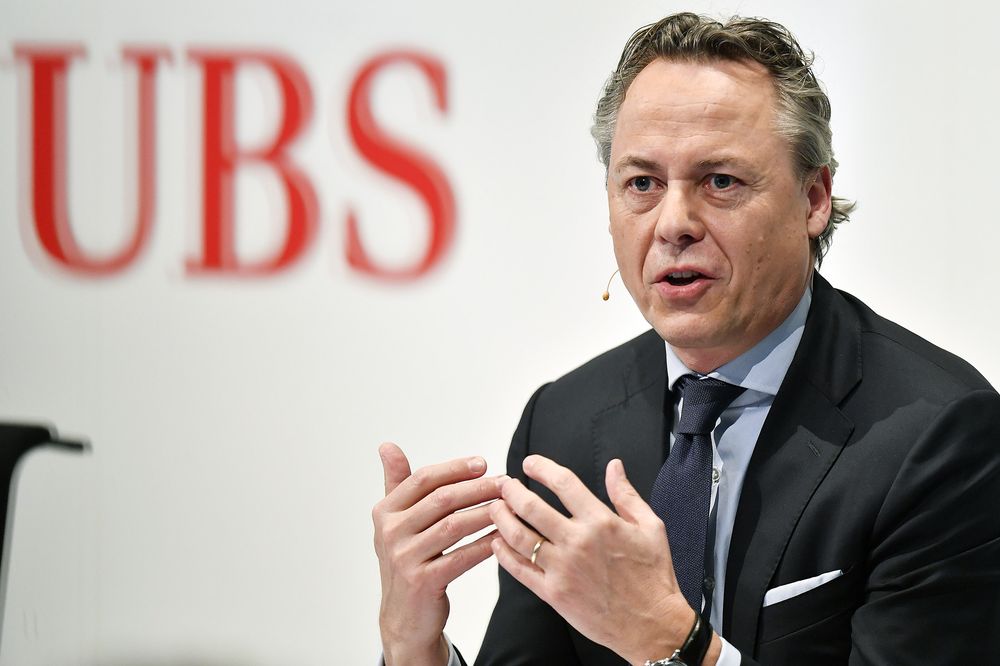
    Swiss bank UBS lifted pay for outgoing CEO Sergio Ermotti by nearly 14 percent and granted its new CEO Ralph Hamers a $3.3 million bonus for four months of work.

    Zurich-based UBS paid Sergio Ermotti 14.2 million Swiss francs ($15.4 million) last year, according to its annual report disclosed on Friday, from 12.5 million francs last year. The Swiss banker ran the bank from 2011 until October 31.

    The board of directors recognizes that Sergio Ermotti successfully led UBS through a very challenging year marked by the Covid-19 pandemic,» UBS said in an excerpt of his performance assessment included in the report.

    Ralph Hamers, who took over as CEO of the Swiss wealth manager four months ago, was paid 4.5 million francs, according to the report. At ING, Hamers earned 2.6 million euros ($3.1 million) in 2019, his last full year running the Dutch bank.

    It is common knowledge that Switzerland pays better than wider Europe: Even after a big cut in 2019, Ermotti’s payday made him the top-earning CEO of a listed European bank. Hamers’ UBS bonus last year – 3 million francs – alone is larger than his entire 2019 salary from ING.

    Ralph Hamers has launched a number of strategic initiatives, all with the aim of ensuring the continued long-term success of UBS,» the bank said.

    The unexpected reopening of a criminal investigation into Hamers in the Netherlands puts the Swiss bank on the back foot: it desperately needs its new CEO’s know-how to revitalize, but not with those plans effectively captive to the Dutch legal process, nor at the cost to its reputation.

    UBS had to pay a modest 164,000 francs to «make whole» Hamers – or to compensate him for ING instruments and awards he abandoned to join the Swiss bank. By contrast, it paid Iqbal Khan 8.1 million francs to replace Credit Suisse awards when UBS poached him as private bank co-head in 2019.
  • Ralph Hamers’ Long Road to Leaving ING Behind

    Ralph Hamers’ Long Road to Leaving ING Behind

    The UBS boss has a long road to shaking off his past: he faces an 18-month journey before knowing if prosecutors will charge him in a Dutch money-laundering investigation.

    A Dutch criminal probe into whether Ralph Hamers and money laundering is ticking on after prosecutors agreed to comply with a surprising court ruling last month. Prosecutors were ordered to revisit a money-laundering scandal at ING that culminated in a 775 million euro ($939 million) settlement.

    We’re currently clarifying the organizational questions in relation to the court’s decision,» the Dutch prosecutor told HandelsblattThe German outlet reported that it may take prosecutors as long as 18 months to decide whether to press charges against Hamers or not, citing a person familiar with the investigation.

    The matter is potentially explosive for the Swiss lender, which hired him in full knowledge of the 2018 settlement – UBS had ordered an outside evaluation of Hamers while recruiting him, and the Dutch banker also passed Swiss fitness and probity checks by regulator Finma.

    What UBS didn’t know is that a Dutch activist, Pieter Lakeman, would successfully force the 2018 settlement to be reopened. This represents a major stumbling block for Hamers, who ran ING from 2013 until mid-2020, then joined UBS in September and took over fully three months ago.

    The Dutch prosecutor’s comments perfectly exemplify the logistics involved in reopening the investigation: Hamers has since moved to Switzerland and is widely expected to later this month unveil an outline of his plans to modernize and update UBS during his tenure.

    But he must also appear in-person in the Netherlands when prosecutors want to question him, seriously cutting into his chockfull calendar running the Swiss lender. The pandemic also complicates his life in a very practical way: Switzerland last week reimposed a mandatory ten-day quarantine on travels from the Netherlands (the Netherlands requires the same of all visitors from abroad).

  • UBS Boss Ralph Hamers in Tight Spot

    UBS Boss Ralph Hamers in Tight Spot

    The new UBS boss’ chances of escaping a criminal trial over money laundering at the last bank he ran appear to be slimming.

    Ralph Hamers is 99 percent certain to be formally criminally investigated in the Netherlands over money-laundering accusations, the Dutch activist who is seeking to reopen the probe told Swiss weekly NZZ am Sonntag.

    Pieter Lakeman, the 78-year-old who runs a foundation devoted to financial transparency and fair business, told the outlet that Dutch prosecutors informed him in a letter dated January 8 that they would seek charges against Hamers over his role in a money-laundering scandal at ING that culminated in a 2018 settlement.

    The matter has exploded less than three months into Hamers’ tenure running the world’s largest wealth manager, where he is widely expected to modernize, soften a hidebound, bulky hierarchy, and better equip the Swiss bank on technology, data, and digitization.

    The Dutch legacy means Hamers will instead have to devote considerable time and resources to answer to investigators. A feted European banking CEO who was also wooed by HSBC, Hamers may not be tenable if criminally charged in the Netherlands.

    UBS’ board has thus far backed him, and noted that it had ordered an outside review of the ING events while it was recruiting Hamers – which found no wrong-doing.

    Hamers also passed Swiss financial regulator Finma’s fitness and probity testing. UBS Chairman Axel Weber made clear this week that «we are monitoring the situation and will adjust to developments.»

  • UBS Hires a Proven Digital Transformer in Ralph Hamers

    UBS Hires a Proven Digital Transformer in Ralph Hamers

    Ralph Hamers brings with him a track record of not only profitability but also effective transformation to compete with tech giants that threaten to take the financial sector’s lunch.

    As expected, Sergio Ermotti stepped down from UBS’s top role succeeded by 30-year ING veteran Ralph Hamers. Though ending on a less than ideal note with 2019 results missing both profit and cost targets, Ermotti leaves behind a legacy of successfully transforming the business from being investment banking-focused to wealth management-focused.

    In Hamers, UBS has also hired a chief with a proven track record for transformation. His thoughts, speech and subsequent results at ING may very well paint him as the poster boy for the current zeitgeist in banking.

    In mid-2019, ING’s app was reportedly ranked 10th by daily usage in the Netherlands, behind mainstays like Facebook or Google. The reasons are almost purely non-financial. In addition to regular online banking, it was the biggest outlet for Philips products in the country through an e-platform that sells a vast array of non-food products including barbecues, TV sets, clothing and discount tickets for theaters.

    The Amazons, the Facebooks, the Googles of this world – knowing what people are looking for – are involved much earlier in this decision-making process, Hamers said. They know the trajectory of this customer going through that process and already have more intelligence than we will ever get. The question for me is whether I can build this platform, which is open, so I extend my activities into this decision-making process.

    Stemming from this strategic focus on mind share, the bank in 2018 purchased Makerlaarsland, a sizeable digital housing broker and agent (4-5 percent market share), precisely to be involved earlier in the decision-making process.

    While Europe does not house as many household tech names as the U.S. or Asia, its regulatory environment in finance is nonetheless in many ways more liberal and progressive. Since 2017, regulators leveled the playing field in payments through the Payment Service Directive 2 (PSD2), breaking banks’ monopoly on customer data.

    Fintechs force us to be more efficient, as a consequence of which we can deal more easily with low-interest rates and tougher regulations. If you open up to trends and try to make them yours, then it can still be fun to run a bank, Hamer said in a 2015 report with German newspaper Handelsblatt.