Online sales in Malaysia and Indonesia are set to boom in the lead up to – and during – Ramadan, according to an analysis by advertising platform Criteo. Based on data from last year’s festival – which ran from May 15 to June 14, consumer activity typically slowed at the start and end of the period.
However, while this could be a result of consumers focusing more on the actual festivities during those times, online retail sales surged 10 days into Ramadan and lasted through the two weeks before Eid al-Fitr on 15 June.
A 57 per cent uplift in online retail sales was observed on June 4, Criteo revealed.
By comparison, shoppers in the Middle East typically shop early into the season and slow down closer to Eid al-Fitr to focus on celebrations. Online retail sales surged early, reaching a 106 per cent uplift on May 26. The shopping behaviour during Ramadan in Turkey mirrored that in Malaysia and Indonesia, with online retail sales reaching a peak at 50 per cent uplift a week before Eid al-Fitr.
“Ramadan represents a notable cultural shift in consumer behaviour, with the Middle East and Southeast Asia being key regions,” said Criteo SEA-Pacific MD said Alban Villani. “Moreover, the global Islamic economy is also growing year-on-year, estimated to reach US$3 trillion by 2023.
“Given the growth potential of the halal industry, retailers should leverage Ramadan to engage Muslim shoppers,” continued Villani. “They should start reaching out to shoppers early with the relevant messaging two weeks earlier, especially when shoppers are thinking of buying gifts for family and friends. As some shoppers might purchase later into the festive season, retailers should continue engaging them with special offers and personalised content throughout Ramadan to optimise their campaign efforts. By doing so, it is easier for retailers to stay top-of-mind when shoppers are ready to buy gifts to share the festive joy.”
Ramadan month is the most popular time for online shopping in Indonesia, data from shopping search engine and price comparison platform Priceza Indonesia shows.
Click rates increased by 26 per cent compared to the previous month, its figures show, while transaction values rose by as much as 16 per cent.
Priceza Indonesia says this is in line with conventional shopping, where the turnover of traditional traders can double and even triple in some cases as Lebaran (Eid Al Fitr) approaches.
During the Ramadan period to its peak on Lebaran day there was a “significant transaction boom”, says Priceza Indonesia co-founder/country head Bayu Irawan.
“This means the traditional month of Ramadan is still going to be effective for e-commerce promotional programs.”
Indonesian consumers tend to spend their time shopping online during the holiday, says Priceza Indonesia. Its data shows the top three categories during the month are fashion, electronics and smartphones.
Priceza was established in Thailand in 2010, with the Indonesian offshoot starting in 2013 with nearly 4.5 million users a month. The platform is also active in Malaysia, Singapore, Philippines and Vietnam.
The holy fasting month of Ramadan is a special time in Indonesia, with nightly celebrations and long days of devout reflection for Muslims and discrete respect from non-Muslim expats and locals. Although for bosses and managers, the month can be a time of frustration with productivity seemingly grinding to a halt.
“The productivity of workers declines in the holy month by 35 to 50 percent as a result of shorter working hours and the change in behaviour during this month,” Samer Sunnuqrot, an economist based in the Jordanian capital Amman told.
Unlike Muslims practicing in Muslim-minority countries, like the United Kingdom or Australia, the specific needs of fasting can be taken into account by business and government in Muslim-majority countries like Indonesia or Jordan.
“Decisions and meetings will be postponed until the period of Ramadan is over, especially in governmental institutions. This causes lower productivity and performance and might incur losses for business people because of the postponing of decisions and processing of government transactions,” Sunnuqrot said.
While productivity dips during the fasting month, Sunnuqrot notes consumption tends to rise.
“The positive side of Ramadan for business people is a higher demand for goods and services and higher consumption.
“That often means higher prices, which translates into higher profit margins for merchants, retail stores, restaurants and cafes – especially those which arrange amusement programmes for after iftar (the breaking of the fast),” he said.
Rumy Hasan, a lecturer at the University of Sussex, investigated the economic impact of lost productivity during Ramadan. His research found Ramadan creates a loss of 42 working hours per fasting participant each year, representing an overall 2.5 percent reduction in output annually.
“Productivity declines not only from the physical strain of fasting but from the disruption to the flow and organization of work. It is reasonable to assume that a decline in productivity would further reduce economic output by at least 3 percent each year, which represents a significant annual recessionary impact of Ramadan,” he said.
This decline is due largely to the physical effects of fasting.
“Occupational health researchers have highlighted various adverse health consequences from severe dehydration, including headaches, dizziness and nausea,” Hasan found.
For Muslim-minority countries this loss can be absorbed by the non-fasting majority of the labour force, but in Indonesia, where almost 88 percent of the population identifies as Muslim, this represents a massive issue.
But all hope is not lost for managers and bosses hoping to boost productivity in the office until the Idul Fitri long weekend. While fasting, early mornings and late nights leave workers lethargic and struggling to focus so making the workplace flexible can help overcome some productivity issues.
Beginning work earlier for an earlier finish will ensure workers maximize their energy from the pre-dawn morning meal, or suhoor, while also helping employees make it home in time to break the fast, or iftar, while dodging crippling traffic.
Business consultant Mohammed Faris suggest non-Muslim managers and bosses take part in their own three-day fasting challenge in an effort to demonstrate both solidarity and to better understand the experiences of fasting colleagues.
“If you want to engage with your staff on the challenges of fasting in Ramadan and work productivity, the best way is to actually talk about it and empathize with them. Start a conversation by asking your fasting employees how they consider work would be affected in Ramadan and what could be done about it,” he told.
United Kingdom news portal Metro recommends tailoring traditional productivity tips for the month, such as goal setting and creating daily lists of tasks. This ensures Ramadan is treated as the special time that it is, while also maintaining good work habits.
Additionally, while it may be tempting to gorge on the traditional treats and meals of the season, keeping healthy during the working week at least will go a long way to maintaining functionality. Lots of fresh fruit and proteins during the morning meals will help keep any participant in great health for a long, productive day ahead. Likewise, avoiding overly sugary and fried snacks in the evening and staying hydrated will keep the body healthy.
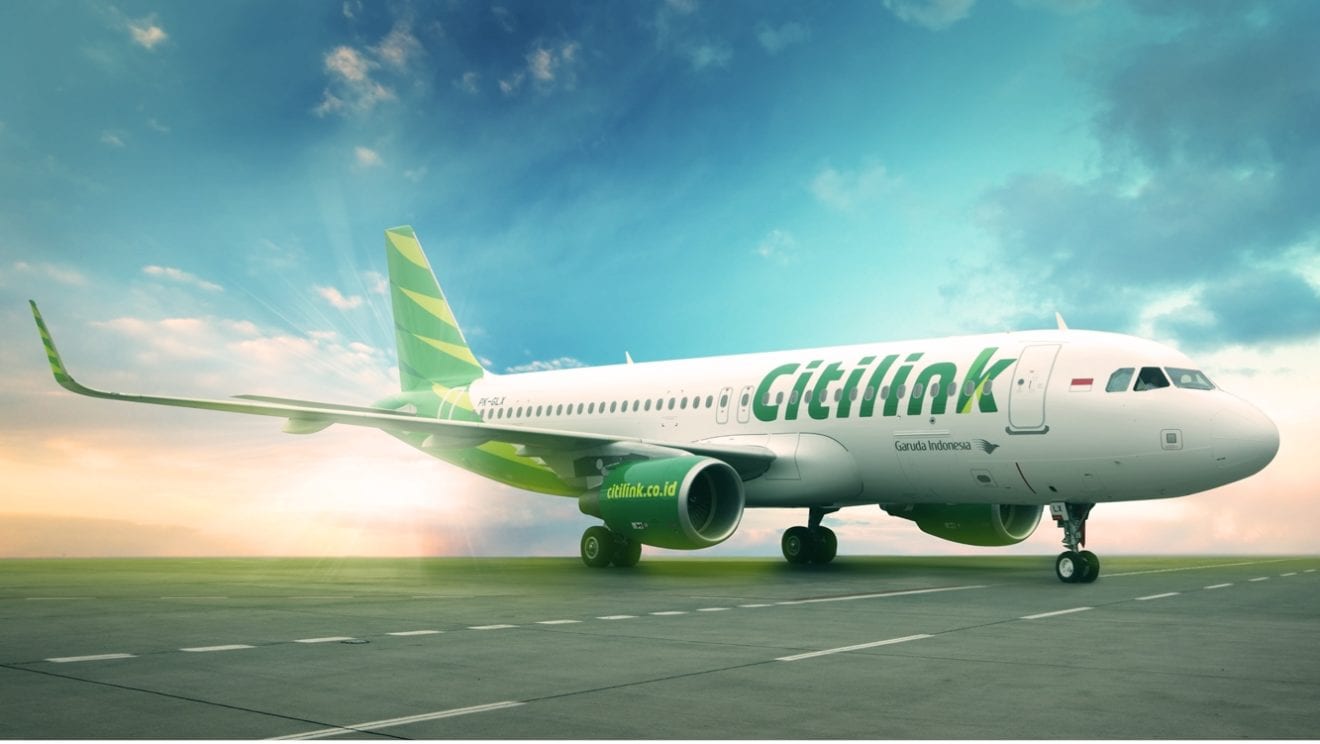
Citilink is set to add more flights in Holy Month Ramadan. “There will be at least 9 extra flights,” said Commerce Director of PT Citilink Indonesia, Hans Nugroho, on Thursday.
Hans said that the flights will operate 7 days before and after Eid. The extra flights will cover routes to Padang, Yogyakarta, Medan, and Denpasar. “We will see if other routes are necessary,” he said.
Finance Director of Citilink Indonesia, Mega Satria, said that the airline adds flights only on the existing routes. “It the routes are potential, we will add more routes,” she said.
Morever, Hans added that a surge of passengers is a certain thing on Eid holiday, Therefore, extra flights is a bid to anticipate it. He underlined that tcket reservation has started to increase in number.
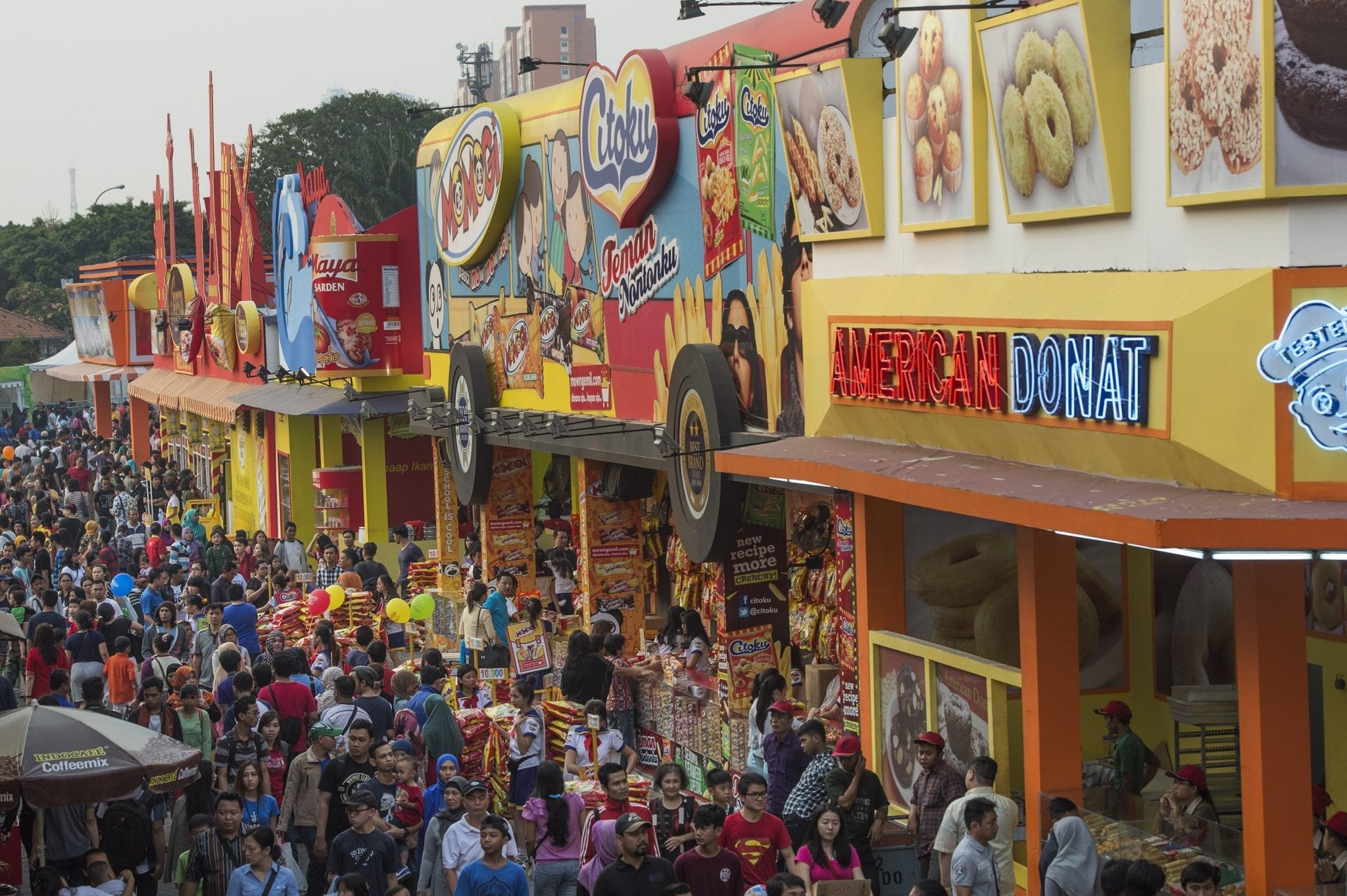
The Jakarta Fair, an festival and exhibition, will be held at JIExpo Kemayoran from June 10 to July 17, coinciding with Ramadan, the fasting month and Eid.
“Jakarta Fair coincides with fasting month and the Eid break, something that happens once every 3 years. It opens many opportunities for all the businessmen involved,” said PT JIExpo Marketing Director, Ralph Scheunemann, during a press conference in Jakarta on Monday.
The exhibition that will be opened by President Joko Widodo has a target to attract 5 million visitors and at least Rp5 trillion in transaction value within 38 days of execution.
Being organized under the slogan, “Lets celebrate Eid together at Jakarta Fair,” the organizers hope that the event offers an alternative to those wishing to spend their Eid holiday away from the usual tourism destinations in Jakarta.
Even though most residents from the capital city will be going back to their hometowns during Eid, PT JIExpo organizers were confident that visitors number would not fall.
“Only about 30 percent of the residents are expected to return home, which means approximately 5-6 million people will remain in the city from among its 9 million residents,” explained Ralph.
Also, many people residing elsewhere are most likely to return to Jakarta.
This year, the organizers are also preparing new rides, such as an ice skating rink, a snow playground and a vicious prison.
The Jakarta Fair will open its doors everyday during Ramadan from 3.30 PM to 10 PM, Monday through Friday, and 10 AM to 11 PM on Saturdays and Sundays.
Visitors will be able to enjoy the festivities at the Jakarta Fair 2016 by paying an admission fee of 20,000 rupiah on Mondays, 25,000 rupiah Tuesday through Thursday, and 30,000 rupiah Friday through Sunday and on national holidays.
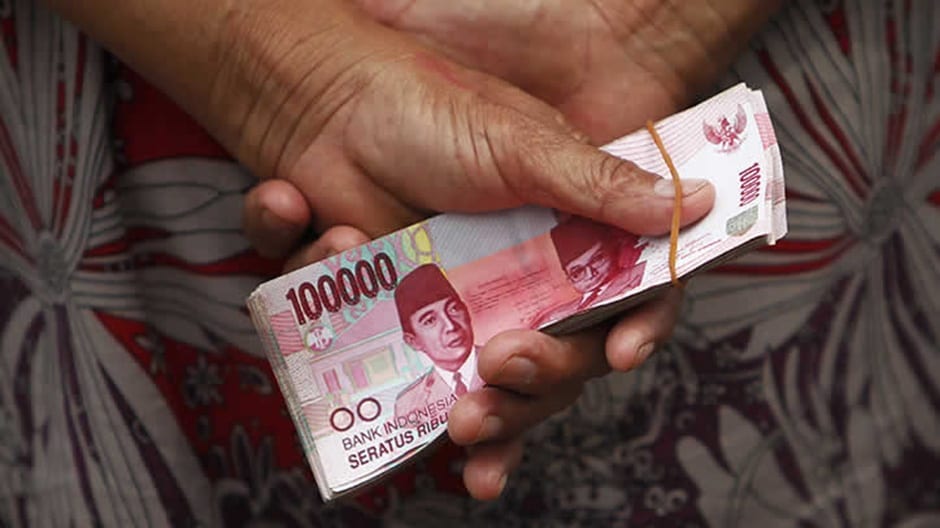
Demand for cash in Indonesia is expected to rise by 14.5 percent to Rp160.5 trillion during Ramadan and post-fasting holiday of Lebaran this year, a central bank official said here on Monday.
“There are several factors that would make cash demand to increase this year,” Bank Indonesias executive director for money circulation management, Suhaedi, said.
The forecast for the cash demand growth of 14.5 percent this year is in line with the trend in the growth of money in circulation in the community in the Ramadan-Lebaran period which has always increased by 14 percent every year for the past nine years, he said.
Suhaedi said he predicted demand for cash would increase because of economic recovery, the disbursement of the 13th and 14th salaries of civil servants, police and military members and a longer period of the Lebaran holiday which this year will happen in concurrence with the school holiday.
He said the central bank has prepared Rp160.5 trillion to meet the need of cash money and spread its supply across BI branches in the provinces.
“Almost 100 percent of the cash money are newly printed bills,” he said.
Bank Indonesia would send 26 of the money supply to Jakarta, 33 percent to Java, 20 percent to Sumatra, 7 percent to Kalimantan and 11 percent to Sulawesi, Maluku, Papua, Bali and Nusa Tenggara.
Starting today Bank Indonesia Jakarta started opening service for people wishing to exchange their money for the new bills at the National Monument square in Central Jakarta.
On June 10, 20 banks would help Bank Indonesia in carrying out the service at the square.
“Besides Monas (National Monument) 200 branches of banks in Jakarta will also open the service,” he said.
Bank Indonesias executive director for payment system Bramudija Hadinoto said during Ramadan especially from June 6 to July 1 the operational hours for non-cash payment system would not change.
On July 4, however Bank Indonesia would only conduct limited operations for transfer of clearing funds.
“It is limited because no debt clearing is to be carried out especially in Jakarta, Surabaya, Medang and Bandung while other cities it still continues,” he said.
Regarding real time gross settlements (RTGS) he said Bank Indonesia would impose a new rule as of July 1, 2016 in which it would reduce the limit of the nominal value of RTGS from Rp500 million and over per instruction to over Rp100 million per instruction.
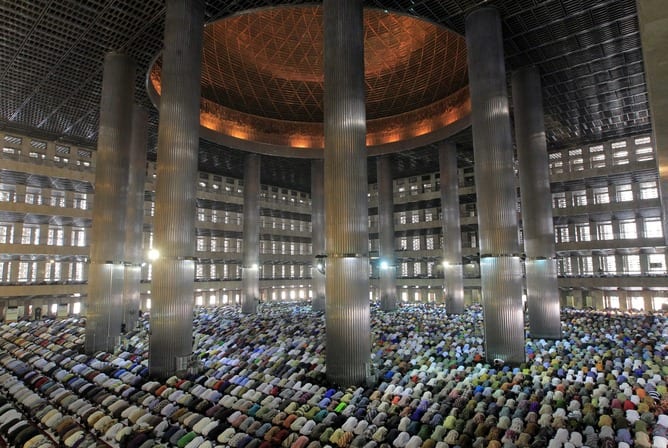
The Islamic calendar has entered the second week of Ramadan. During this month, Muslims refrain from eating, drinking and sexual activities from dawn to dusk.
But, in countries where Muslims are the majority, consumption increases during this month of restraint. This happens not only in high-income countries, such as Qatar and United Arab Emirates, but also in developing countries such as Indonesia. Traditions that spur consumerism during Ramadan and preparations for Eid Fitr, the end of Ramadan, drive this trend.
Spending patterns
People spend more during Ramadan – mainly on food and beverages, but also on clothing. In Indonesia, the retail sales index on these categories showed a 30% increase during the Ramadan month in 2013.
Meals taken during Ramadan help tighten family ties and increase social interactions. In the fasting month, Muslim families usually have sahur – the pre-dawn meal – and iftar – the fast breaking meal – together, with more elaborate menus than in other months. People also have more social gatherings by breaking the fast together in restaurants at malls or in mosques.
Just after Ramadan ends, Muslims celebrate Eid Fitr. They start preparing for this holy day weeks before. People wear new clothes during Eid. They make or buy an assortment of cookies and sweets. They also prepare special menus to be enjoyed and served to guests.
The main ingredients for the festive meals are mostly beef or chicken. The Indonesian government has to ensure that beef is stocked for Ramadan and Eid holidays. Australia, as the biggest exporter of live cattle to Indonesia, benefits much from the Ramadan season.
People take the time to visit family and friends during Eid Fitr. In Muslim majority countries, the time around Eid is a long holiday. In Indonesia, the government obliges employers to pay a religious holy day bonus. This one-month salary bonus helps increase the public’s spending power during Ramadan and Eid.
Clothing sales increase in Ramadan and ahead of Eid Fitr.
Paying alms
During Ramadan, Muslims pay alms (zakat). The increase in alms can quadruple from regular months.
The compulsory alms in Ramadan, the zakat fitrah, is actually not much – around 3.5 litres of rice per person. But many Muslims pay other types of compulsory alms that are actually payable in other months.
Aside from zakat, spending on charities that are not compulsory also increase during Ramadan. The channelling of zakat and charity for the poor also factors in the increase in purchasing power.
Inflation
Indonesians often complain about high inflation during Ramadan. Prices for food, transportation and recreation usually rise during the fasting month.
But the holiday bonus plays a role as a safety net for people’s spending power. Zakat also helps the poor cope with rising prices of food. Last year, food prices increased 2% during Ramadan.
Prices for flights, and train and bus rides, also increase as the end of Ramadan marks the start of a long holiday in Indonesia. A lot of people go to their hometowns or where their parents or grandparents live. Even though formally the Eid Fitr holiday is two days, in reality people take a week off. Many workers take their annual leave. Plane ticket prices can increase twofold. Some are fully booked long before the day of travel.
Productivity during Ramadan
Reduced working hours is common during Ramadan. A two-hour workday reduction, as occurs in Pakistan and Egypt, brings an estimated7.7% decrease in the country’s monthly GDP. For countries that only cut an hour of its workday – such as Indonesia and Malaysia – the decrease is around 3.8%.
Workers’ productivity tends to decline during Ramadan. A rough figureof decrease in productivity in Muslim majority countries is between 35% and 50%. However, the slowing down of productivity in Ramadan is predictable, meaning the economy can anticipate it.
The decrease in productivity happens as people choose subjective well-being from religious and Ramadan-related activities over the benefit people might get from working. During Ramadan, Muslims tend to do more religious activities and take time for activities related to Ramadan, such as breaking the fast with family, sprucing up their house and making cakes.
When people feel they get more positive benefits from non-work activities, the opportunity cost – the value that people sacrifice to gain something – from work increases.
In his study on Ramadan, Harvard economist Filipe Campante finds that, in the fasting month, people tend to choose self-employment (with flexible working hours) over formal employment. Campante says Ramadan makes people poorer but happier.
Being social
Many economic activities related to Ramadan and Eid are not just for private consumption – they are also collective ones.
Networking activities happen during Ramadan and Eid. Fast-breaking gatherings, religious activities in mosques, social bazaars and the Eid holiday exodus facilitate information exchanges. On the journey to their hometowns, people bring souvenirs for family and friends. There, people catch up and exchange information about activities in cities.
These social gatherings can increase further economic activities.
Ramadan has the potential to improve Indonesia’s current economic slowdown with its increase in consumption and trade. However, economic activity on this year’s Ramadan is predicted to be lower than previous years. The lunar calendar has brought Ramadan to coincide with school holidays in Indonesia in 2015. This means less holiday travel for Indonesians.