Tag: ranks

  • Indonesia Climbs the Ranks as 4th Largest Food & Beverage Exporter in ASEAN, Eyeing More Global Growth

    Indonesia Climbs the Ranks as 4th Largest Food & Beverage Exporter in ASEAN, Eyeing More Global Growth

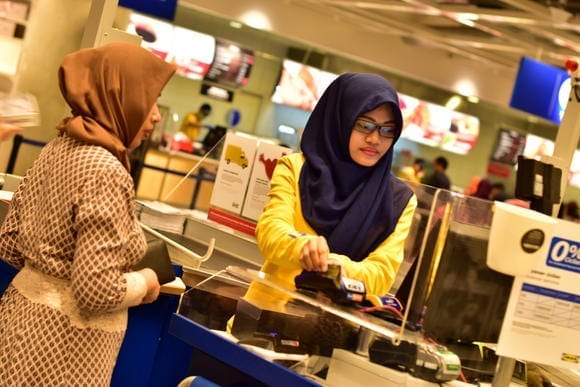
    Indonesia is emerging as an influential player in the food and beverage (F&B) industry. According to Dyah Roro Esti, Indonesia’s Deputy Minister of Trade, the nation’s F&B exports have accumulated a value of $6.25 billion. This figure positions Indonesia as the fourth-leading F&B exporter in the Association of Southeast Asian Nations (ASEAN), trailing Thailand, Vietnam, and Singapore.

    Indonesian F&B Industry: Potential for Expansion

    Esti shared these insights during the Indonesia Food and Beverage Trade Promotion Forum held in Jakarta. She emphasised that the F&B sector has significant prospects for expansion and growth. The Ministry of Trade is actively encouraging local businesses to explore international markets via Indonesia’s extensive global trade network.

    Comparatively, Indonesia’s F&B exports rank fourth in ASEAN nations, following Thailand ($17 billion), Vietnam ($8.8 billion), and Singapore ($6.5 billion).

    Esti pointed out the robust potential for Indonesian F&B products in international markets, particularly the ones complying with halal standards. Highlighting the Middle East as a promising marketplace, she expressed optimism about the export prospects for Indonesian businesses.

    Support for Domestic Businesses

    To propel domestic businesses, the trade ministry is utilizing a network of Trade Attachés and Indonesian Trade Promotion Centers in 33 countries. This framework aims to facilitate connections between Indonesian enterprises and potential overseas partners and purchasers.

    Indonesian food products are steadily gaining a firmer foothold in international markets. This growth is attributed to the continuous overseas expansion of local businesses and restaurants. Additionally, the global Indonesian diaspora serves as a substantial market for the country’s F&B products.

    In conclusion, the Ministry of Trade believes that leveraging its international trade network, penetrating new markets, and capitalizing on the rising demand for halal food will be instrumental in boosting exports in the future.

    Questions & Answers

    What is the current value of Indonesia’s food and beverage exports?
    As per Indonesia’s Deputy Minister of Trade, Dyah Roro Esti, the nation’s food and beverage exports have reached a value of $6.25 billion.

    What strategy is the trade ministry employing to support domestic businesses?
    The trade ministry is leveraging a network of Trade Attachés and Indonesian Trade Promotion Centers in 33 countries to help domestic businesses connect with potential overseas partners and buyers.

    What’s the significance of halal standards for Indonesia’s food and beverage industry?
    Halal compliant food and beverage products have a robust potential in international markets, particularly in the Middle East. The trade ministry sees the rising global demand for halal food as an opportunity to boost Indonesia’s exports.
  • Singapore Retains 5th Position In Global City Rankings, Emerges As Top Education And Urban Innovation Hub

    Singapore Retains 5th Position In Global City Rankings, Emerges As Top Education And Urban Innovation Hub

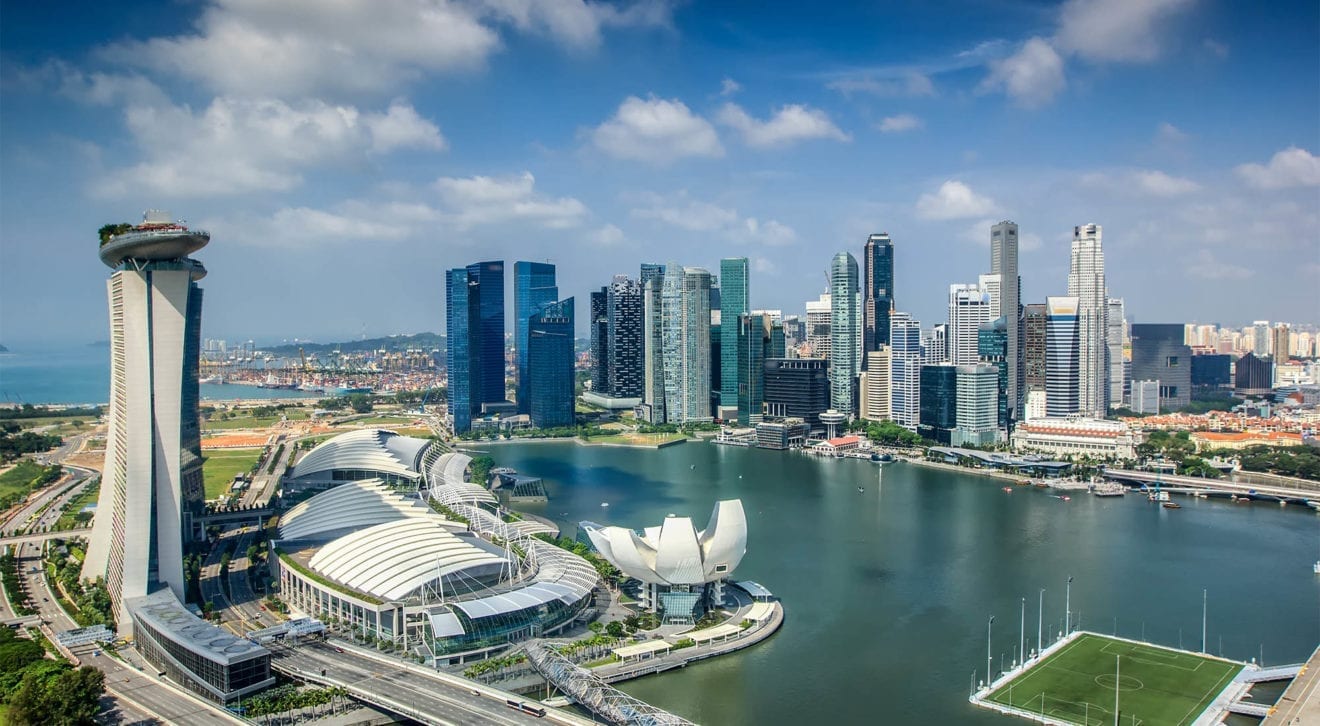
    In the yearly global city rankings, Singapore has managed to hold onto its fifth place, trailing only behind Tokyo in the Asia Pacific region. This city-state has continued to strengthen its status as a top international education center and a leading pioneer in urban innovation, based on findings from the 2025 Global Cities Report by Kearney, a management consulting company.

    Evaluating City Rankings

    The Global Cities Index, a section of the Kearney report, relies on publicly accessible data to evaluate 158 cities across the globe, using 31 different metrics over five areas. These include business activity, human capital, information exchange, cultural experiences, and political engagement.

    Singapore showed minor progress this year in areas of political engagement and human capital, primarily due to enhancements in ease of access. However, these advancements were somewhat negated by a decline in cultural experience and business activity.

    The top ten cities in the report include five from the Asia Pacific region. Japan’s Tokyo leads the pack in fourth place, followed by Singapore, with Beijing, Hong Kong, and Shanghai from China filling the sixth, seventh, and eighth positions respectively.

    Other Southeast Asian cities like Bangkok, Thailand, and Kuala Lumpur, Malaysia, appeared lower on the list, securing the 33rd and 55th places respectively.

    Recognizing Resilience

    According to Shigeru Sekinada, Kearney’s regional chair for Asia Pacific, the report highlights the resilience of well-established Asian hubs amid rising global challenges and technological shifts. He lauded the region’s adeptness in managing evolving global dynamics, due to the expansion of digital infrastructure, prioritizing regulatory innovation, and investing in climate resilience. He also expressed optimism that Asia Pacific cities would not only fuel the region’s economic growth but also serve as essential links in the global economy.

    The report underscored a shift in the way city competitiveness is viewed. In the emerging era of intelligence, the size or historical importance of a city no longer solely determines its competitiveness. Success now increasingly depends on readiness or the ability to incorporate infrastructure, renewable energy, and talent to grasp opportunities presented by artificial intelligence while managing its associated risks.

    Globally, New York City retained its top position, with London and Paris following closely, maintaining their standings from the previous year.

    Future City Projections

    The report also includes a future outlook section, which examines cities’ ability to foster inclusive growth, attract investment, and preserve livability in a progressively competitive global scenario. In this section, Singapore was the only Southeast Asian city to feature in the top 30, vaulting from 20th place in the previous year to 3rd place projected for 2025.

    This significant leap reflects Singapore’s enhanced infrastructure, increasing GDP per capita, and burgeoning foreign investment. It also highlights the city’s active efforts to upgrade its digital infrastructure.

    Questions & Answers

    What key factors contributed to Singapore’s strong showing in the report?
    Singapore’s advancement in political engagement and human capital, as well as its enhanced infrastructure, burgeoning GDP per capita, and growing foreign investment, were key contributors.

    How are city rankings determined in the Global Cities Report?
    City rankings are determined based on 31 metrics across five areas: business activity, human capital, information exchange, cultural experience, and political engagement.

    What shifts have been observed in defining city competitiveness?
    In the emerging era of intelligence, city competitiveness is no longer solely determined by its size or historical significance. It now increasingly depends on readiness, or the ability to integrate infrastructure, renewable energy, and talent to leverage the opportunities presented by artificial intelligence and manage its risks.

  • Hong Kong International Airport Scores High In Global Ranking For Best Airport Washrooms

    Hong Kong International Airport Scores High In Global Ranking For Best Airport Washrooms

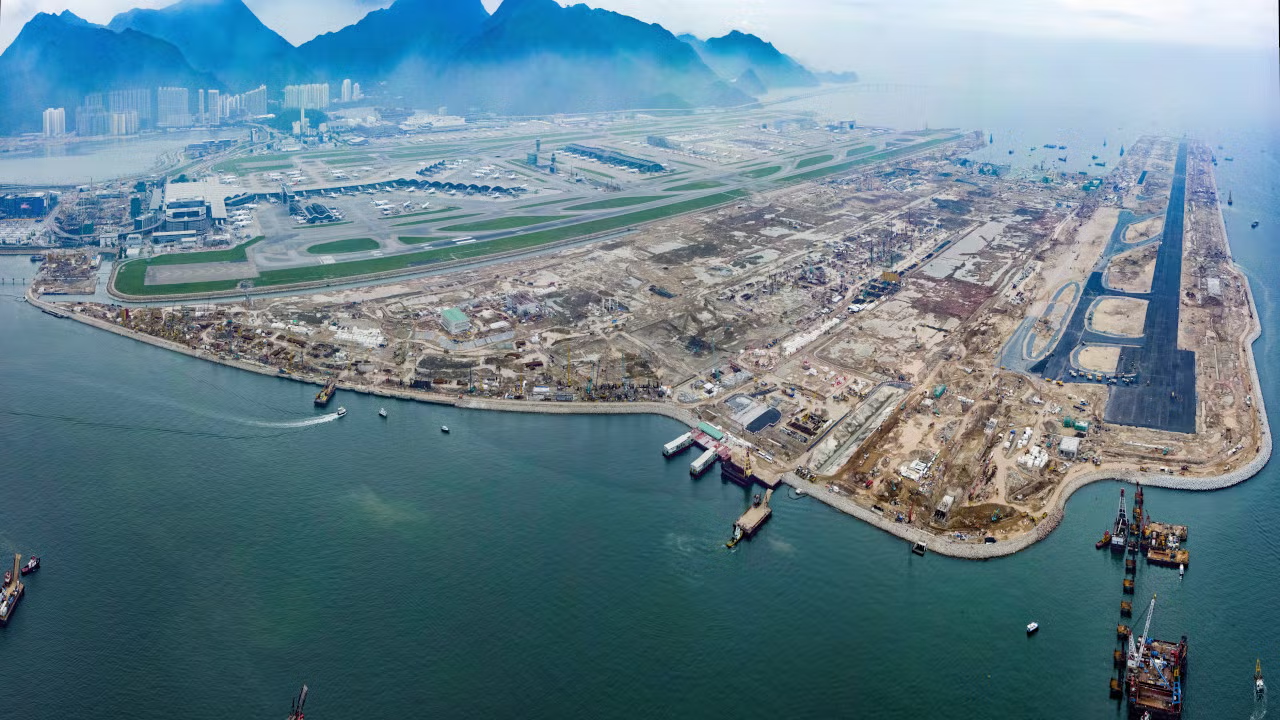
    Hong Kong’s airport, already considered the fifth cleanest globally, has now been recognized for another unique feat – its excellent public washrooms. The international air transport rating body, Skytrax, awarded Hong Kong International Airport the fifth position in its inaugural World’s Best Airport Washrooms 2025 awards. The other airports outshining HKIA in this category include Bahrain International Airport, Seoul Incheon International Airport, Tokyo Haneda Airport, with Singapore’s Changi Airport clinching the top spot.

    Superior Washroom Facilities at HKIA

    The award-winning washrooms at HKIA stand out for their remarkable cleanliness and generous space, both in the waiting areas and individual cubicles. Recognizing that travelers often need to carry their luggage into the washroom, the design incorporates plenty of room for these items.

    Furthermore, the washbasins in these restrooms are ultra-modern, all-in-one stations where one can rinse, soap, and dry their hands in one place, eliminating the need to move around wetting the floor. Another fascinating feature is an intelligent noticeboard system at the entrance of each washroom that displays the current occupancy rate and the number of unoccupied stalls. Additionally, each cubicle is fitted with a red and green LED light indicator to show its occupancy status, eliminating the need for guesswork or knocking to check if a stall is available. The men’s bathroom even boasts small screens resembling airplane windows installed above the urinals to keep users entertained.

    Selection Process and Rankings

    Skytrax evaluated 235 airports worldwide to compile these rankings. Given that this was the first year of rating airport bathrooms, the awards were based on feedback from Skytrax’s audit office. However, traveler feedback will be factored into the rankings for future awards. Intriguingly, all ten of the recognized airport bathrooms are located in Asia, with Japan, the homeland of smart toilets, having five of its airports in the top 10.

    Among the standout facilities, the New Chitose Airport in Hokkaido was particularly noteworthy, mainly due to its unique Japanese onsen bathing facilities inside the airport terminal.

    The top ten airport bathrooms in 2025 include:

    1. Singapore Changi Airport
    2. Tokyo Haneda Airport
    3. Seoul Incheon International Airport
    4. Bahrain International Airport
    5. Hong Kong International Airport
    6. Kansai International Airport
    7. New Chitose Airport
    8. Tokyo Narita Airport
    9. Taiwan Taoyuan International Airport
    10. Fukuoka Airport

    Questions & Answers

    Which airport won the top spot in the World’s Best Airport Washrooms 2025 awards?
    Singapore Changi Airport won the top spot in these awards.

    What unique feature do the washrooms at Hong Kong International Airport have?
    The washrooms at Hong Kong International Airport have an intelligent noticeboard system that displays the current occupancy rate and the number of unoccupied stalls. They also have an all-in-one wash station, and LED indicators for stall occupancy.

    Which country has the most number of airports in the top 10 list of the World’s Best Airport Washrooms 2025 awards?
    Japan has the most number of airports, five in total, in the top 10 list of these awards.

  • Chains top China restaurant rankings

    Chains top China restaurant rankings

    Chains outperform independent eateries in China restaurant rankings, new research shows.

    A survey by global consulting firm OC&C Strategy Consultants shows that Chinese consumers dine out on average two or three times a week, with Hai Di Lao, Pizza Hut and Little Sheep ranking as their favourite brands.

    Western brands ranking in the top 10 are: McDonald’s (7), TGI Friday’s (8) and KFC (9). Others on the list are South Beauty (4), Shanghai Min (5), Waipojia (6) and Tairyo (10).

    Food quality, wide choice and service quality shows as the three critical factors in restaurant choice, while serving speed, convenience and pricing are rated as less important Chinese consumers actively seek out new restaurants and are receptive to new formats and concepts such as theming, healthy lifestyle menus and organic produce, as well as innovative, fusion cuisine.

    According to the report, Serving up a Winner – Establishing a Winning Proposition in China’s Restaurant Landscape, China’s restaurant market is more vibrant than ever, with growth outstripping other major markets despite higher volatility.

    “While other retail segments struggle in the face of ‘the new normal’, restaurants are becoming more innovative and reaping the benefits of the growing middle class,” says OC&C greater China partner Jack Chuang. “The arrival and rapid expansion of international chains in the past few years has increased the competitiveness of the market.”

    He says getting diners through the door of a restaurant is still challenging. “Restaurant staff need to ensure that service is authentic and make creative, personalised decisions to delight guests.”

    Chuang says restaurants should also offer a wide menu range with local flavour.

    The study canvassed 2600 respondents in 21 cities across China, with consumer surveys and restaurant audits in February.

    Founded in 1987, OC&C provides corporate and business strategy, channel, marketing, organisational and change strategy, as well as transactional support services. It has more than 400 consultants in 14 offices globally, including China and India. The greater China practice has offices in Hong Kong and Shanghai.