Tag: Ray-Ban

  • BlackPink’s Jennie Rocks Ray-Ban: New Global Brand Ambassador Brings K-pop Style to Eyewear

    BlackPink’s Jennie Rocks Ray-Ban: New Global Brand Ambassador Brings K-pop Style to Eyewear

    Global eyewear leader, Ray-Ban, has announced Jennie Kim, from the K-pop girl group, Blackpink, as its newest worldwide brand ambassador. This engagement aligns with the brand’s strategy of exploring partnerships in the music and fashion spheres.

    The Campaign

    The campaign showcases minimalist imagery punctuated with deep red accents, mirroring Jennie Kim’s stage identity as Jennie Ruby Jane. The visuals are designed to resonate with her vibrant persona and dynamic stage presence.

    Curated Collection

    In conjunction with this announcement, Ray-Ban has launched a six-piece capsule collection, curated by Jennie Kim. This range encapsulates her personal style, serving as an extension of her aesthetic appeal.

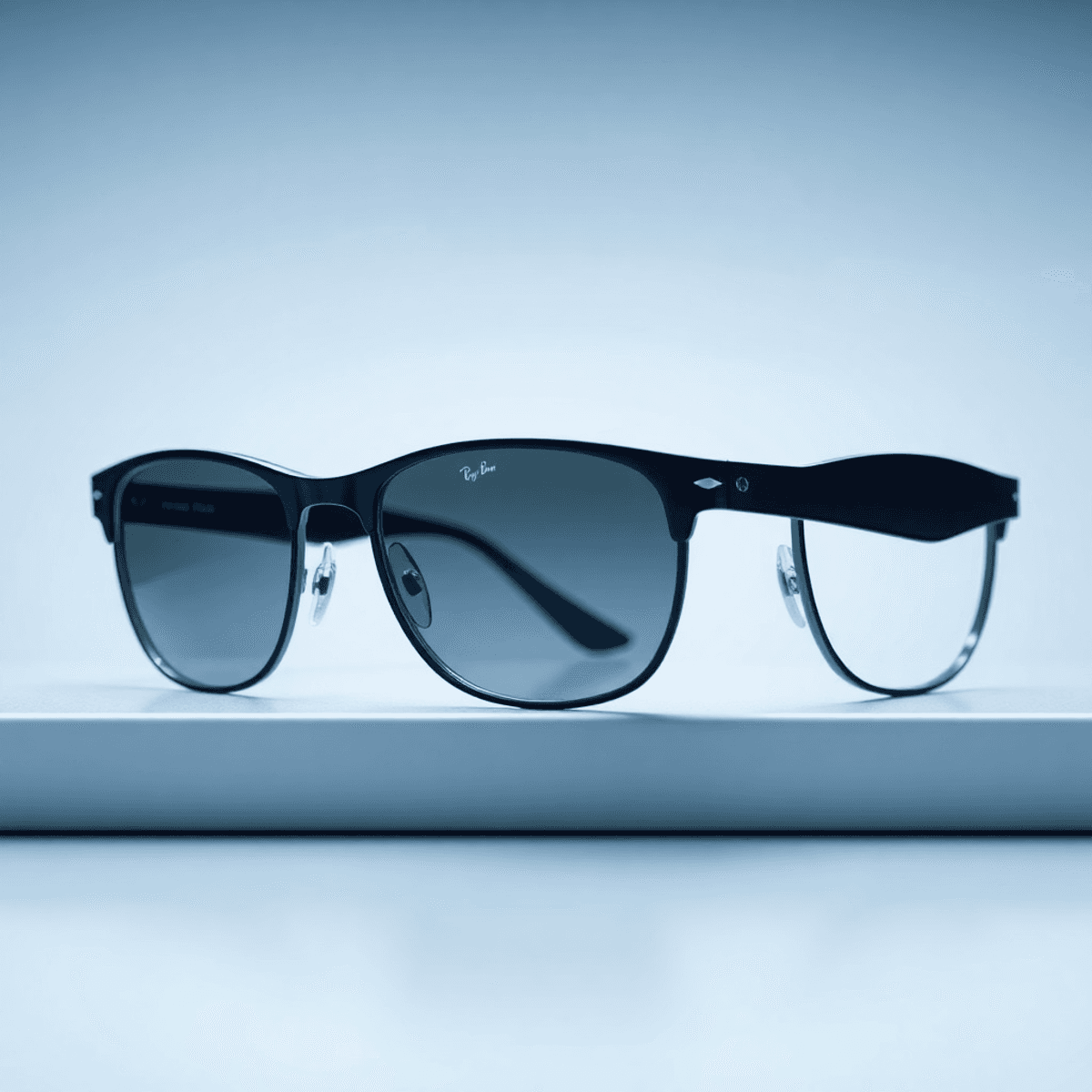
    The collection features a mix of existing silhouettes, including the Daddy-O and Alix models. Additionally, it includes frames from Ray-Ban’s Asian Design Collection which boasts low-bridge fits and retro-inspired details, combining modern aesthetics with a nostalgic touch.

    Jennie Kim on the Partnership

    Expressing her delight at the partnership, Jennie Kim shared, “I’m really happy to be partnering with Ray-Ban – it felt natural from the beginning.” She further added, “To me, confidence isn’t loud; it comes from feeling comfortable with yourself and expressing who you are in a quiet way. Ray-Ban has that same energy: simple, expressive, and easy to live in.”

    Questions & Answers

    Who is the new global brand ambassador for Ray-Ban?
    Jennie Kim, from the K-pop girl group Blackpink, is the new global brand ambassador for Ray-Ban.

    What is special about the new Ray-Ban campaign?
    The campaign features minimalistic visuals with deep red accents that reflect Jennie Kim’s stage persona, Jennie Ruby Jane. Along with this, a six-piece capsule collection curated by Jennie herself has been launched.

    What does the curated collection by Jennie Kim include?
    The collection includes existing models like the Daddy-O and Alix, as well as frames from Ray-Ban’s Asian Design Collection that feature low-bridge fits and vintage-inspired details.
  • Ray-Ban maker EssilorLuxottica sees “good surprise” performance in Asia

    Ray-Ban maker EssilorLuxottica sees “good surprise” performance in Asia

    EssilorLuxottica reported a rise in its third-quarter revenues on Friday as the world’s biggest eyewear maker saw a rebound in sales in the Asia-Pacific region and slight growth in North America.

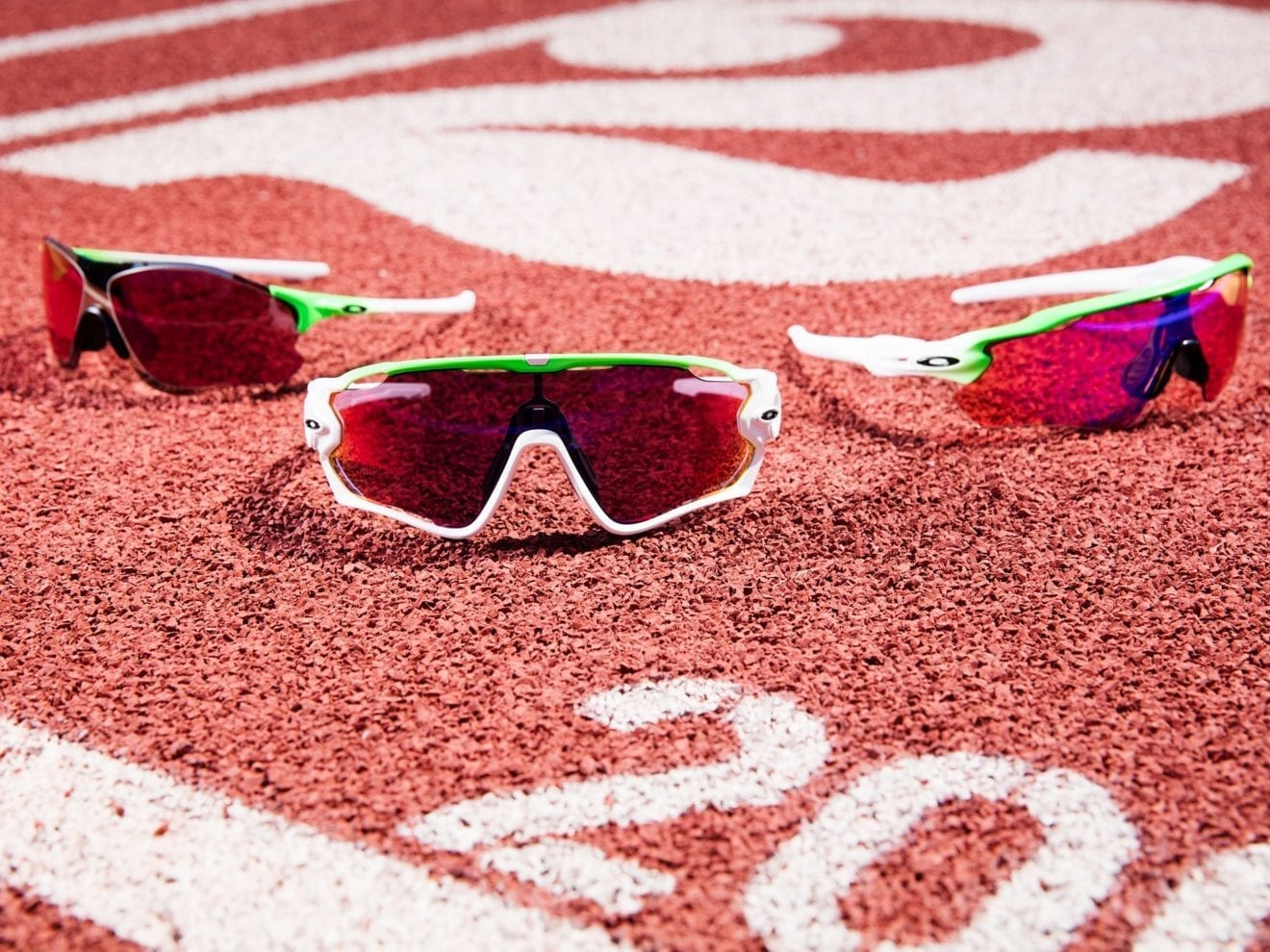
    The French-Italian company, which makes Oakley and Ray-Ban sunglasses, reported revenue of 6.39 billion euros ($6.24 billion) for the three months to Sept. 30, up 8.2% on the year at current exchange rates.

    Asia-Pacific was the group’s fastest-growing region with a 22.7% revenue rise in the quarter at constant exchange rates to 761 million euros.

    The retail business in particular bounced back strongly in the region, EssilorLuxottica said, after a negative second-quarter performance hit by COVID-19 lockdowns in mainland China.

    Sales in North America, the company’s biggest market, increased by 3.4% to 3.01 billion euros at constant exchange rates, driven by the direct-to-consumer division, the group said.

    “It’s a solid and reassuring publication,” Stifel analyst Cedric Lecasble told Reuters, noting a “resistant” performance in North America and a “good surprise” in other regions, notably Europe amid the macroeconomic downturn and Asia.

    While EssilorLuxottica’s broad consumer base in the United States and Europe exposes it to macro pressures in those regions, it is more insulated from inflation than peers in the discount eyewear business thanks to its luxury licences, Bernstein analyst Luca Solca said.

    EssilorLuxottica makes glasses for brands such as Chanel and Prada, among others.

    Despite concerns that the luxury industry’s post-pandemic boom could be cooling, Birkin bag maker Hermes on Thursday said there were no signs of a slowdown so far as U.S. shoppers took advantage of the dollar’s strength in Europe and China rebounded sharply, echoing earlier comments from Louis Vuitton owner LVMH.

    EssilorLuxottica’s shares were down 1.8% at 0743 GMT, slightly underperforming France’s blue-chip index CAC 40 that fell 1.2%.

  • Oakley China will start with Nanjing store

    Oakley China will start with Nanjing store

    Oakley China has its first dedicated store, in Xinjiekou’s Deji Plaza, Nanjing.

    The Nanjing store follows the opening in Shanghai of a one-of-a-kind store for the group, being half Oakley and half Ray-Ban. “This Nanjing store is the first Oakley-only store in China, and it not only glasses focused.”

    It also offers the brand’s speciality activewear for such outdoor sports as skiing, cycling and running, and is situated beside other sporting giants Evisu, Nike and Puma, and is across from Adidas.

    Owned by Luxottica, Oakley works not only with Ray-Ban in China but with LensCrafters, another US retailer of prescription eyewear.

    Attending the official opening were Oakley president of retail for greater China Alessandro Donadelli, and LensCrafters, Ray-Ban and Oakley GM for greater China Carl James.

  • Dutch chain Topshelf to close down

    Dutch chain Topshelf to close down

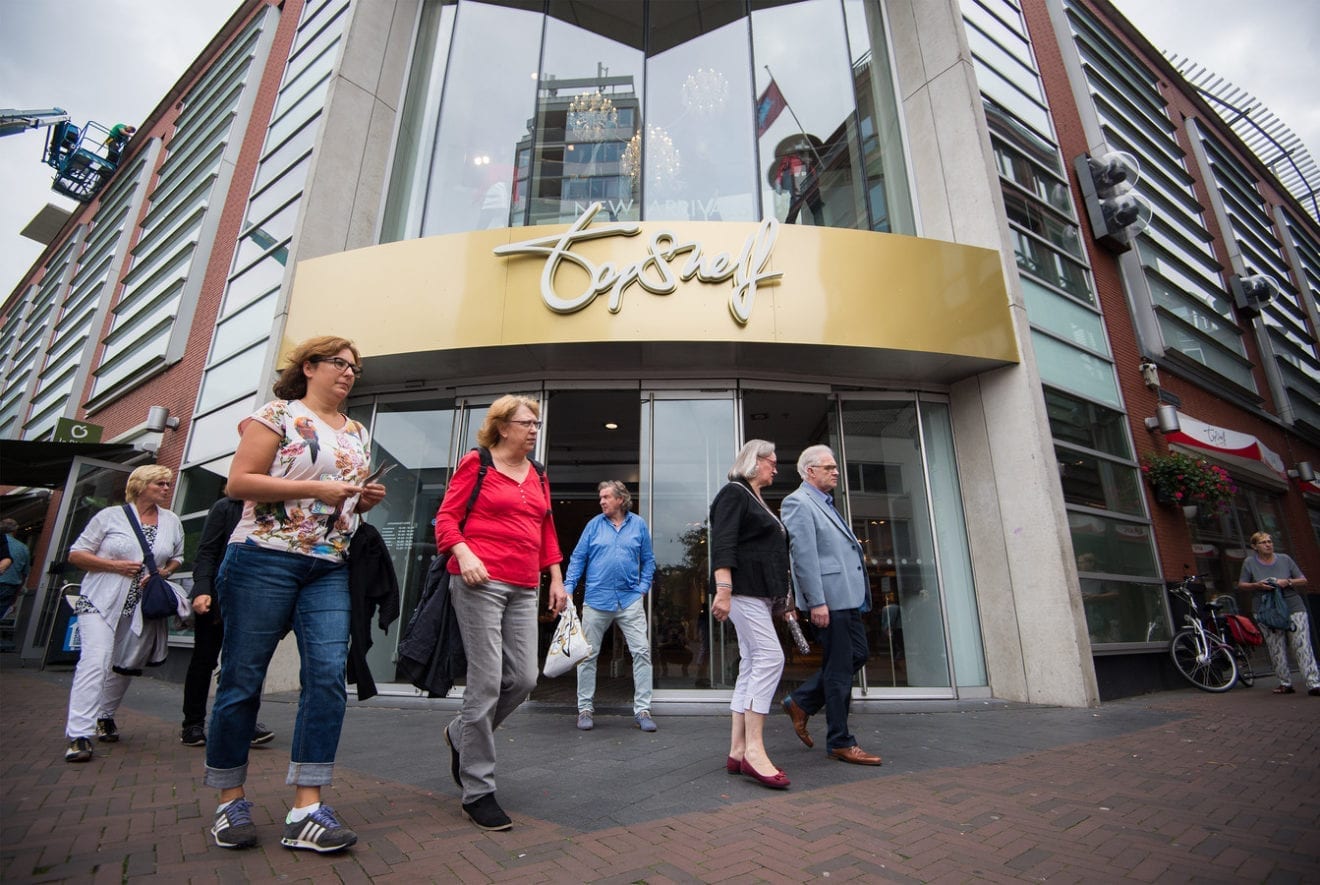
    Dutch department store operator Topshelf appears to be closing down.

    The company has announced its last store in Alkmaar will close in mid-January, following the shuttering of stores in Arnhem, Nijmegen and Groningen.

    The company has not filed for bankruptcy and it says it will continue to employ existing staff as it quits remaining stock. Disappointing sales were cited as the reason for the closure.

    Topshelf – no relation to the UK-headquartered Topshop and Topman retail brands – was launched in 1995 as a megastore, focusing on sports and outdoors wear, called Sportsworld. At the end of 2015, it opened stores in premises occupied by collapsed department store chain V&D, expanding further in April last year into Arnhem and Nijmegen en Groningen.

    With sales remaining weak last December, the company decided to convert the city stores – Arnhem, Nijmegen, Groningen and Alkmaar – to Topshelf, continuing to operate other branches in Beuningen, Leerdam and Cruquius, outside the city, as Sportsworld.

    The Topshelf stores stocked luxury gifts, fashion and homewares and ranged products from brands including Versace, Guess, McGregor, Superdry, Lacoste, Tommy Hilfiger, Speedo, Calvin Klein, Ray Ban, O’Neill and Atomic.

  • Ray Ban transforming optical retailing

    Ray Ban transforming optical retailing

    Is Arnie, the most famous Ray ban wearer of all? Possibly, although celebrities from Justin Bieber, Kate Moss, Tom Cruise to the late James Dean in his 1955 wayfarers, or Audrey Hepburn in 1961’s breakfast at Tiffany’, or Peter Fonda, the original easy rider (1969) might hold a different view,

    Oh, did I mention Roy Orbison, Bob Dylan John Lennon, or Michael Jackson as contenders?

    Although the common element of the Ray ban brand is disruptive to cool, a brand cache that still largely holds true today, and so we explore the retailing of this iconic brand, one of Eboltoft’s Global Retail Innovation 12 finalists in the interactions category.

    Let’s look at Ray-Ban’s flagship store in SoHo, New York City because after all, every cool brand needs a cool flagship in one of the world’s coolest cities.

    Although Ray-Ban New York’s shop demonstrates and sells ‘cool’, there is no sign that says how cool they are and that’s cool in itself.

    They have successfully transformed their flagship store into a retail store, music hall, artist exhibition space and community cultural haven hybrid, featuring everything from live performances to film screenings. The store’s breadth of offerings embraces and showcases the brand’s long history and history in being cool.

    The brands DNA echoes throughout the fit out, it’s a little edgy, irreverent, playful, anti-establishment and is the absolute physical manifestation of the RayBan brand, and that’s what makes it so entertaining. Many retailers can and do try to transform their brand into cross categories, such as in this store, and leave emotion missing in the customer experience.

    Great brands don’t include as much as they exclude and Ray Ban lives this creed.

    This shop embodies its brand as not functional but aspirational- doesn’t matter if the price is $69 or $799 they all carry the essence of cool, the function of sunglasses and the form of an invitation to join a new tribe.

    And they have some cool devices in-store as well including:

    3D Magic Mirrors is the secret ingredient

    Customers can touch, feel and try on products in an innovative setting with 3D Magic Mirrors to an optician on site. The innovative technology helps customers find the perfect pair of sunglasses giving the ultimate augmented reality experience, where they can virtually try on the latest Ray-Ban styles.

    Product Customisation Service

    Customised glasses are delivered within a week, after customers use an instore iPad or similar device to create the perfect pair of sunglasses. Embroidery on the temples or cases featuring name or symbol personalises the product for the customer. As we know personalisation or customisation is a key trend to maximise and Ray Ban deliver here.

    Additional on-site service: eye examination

    The store offers appointments during operating hours making it a one-stop shop. Not only can you look cool, you can check how well you see too, taking the typical sunglasses store to the next level by having an on-site optician.

  • Sunglass Hut Opens New Store In Hangzhou

    Sunglass Hut Opens New Store In Hangzhou

    International sunglasses retailer Sunglass Hut opened a new store in Hangzhou’s Intime Wulin store, which is the brand’s third store in the city following the ones in Hangzhou Kerry Centre and Hangzhou Bailian Outlets.

    Sunglass Hut has reached cooperation with many first-tier brands, including Ray-Ban, Prada, Dolce & Gabbana, Burberry, Tiffany & Co., and Coach.

    It started as a small independent store in Miami in 1971 and it developed 100 chain stores in Miami by 1986, reaching annual sales of USD24 million. By 1991, Sunglass Hut’s annual sales exceeded USD100 million and by 1996, the company seized 30% share of the American sunglasses market.

    By the end of 2016, Sunglass Hut already opened 3,269 retail stores in 28 countries and regions around the world, including 3,104 retail stores in North America, Asia Pacific, Europe, South Africa, and Latin America; and 165 authorized retail stores in Middle East and India.

    For the Greater China region, Sunglass Hut had nearly 40 retail stores, including 13 in Hong Kong, seven in Shanghai, and three in Beijing.

  • Essilor and Luxottica to create global eyewear powerhouse

    Essilor and Luxottica to create global eyewear powerhouse

    France’s Essilor and Italy’s Luxottica have agreed to terms of a 46 billion euro (US$49 billion) merger, creating a global eyewear powerhouse with annual sales of  more than 15 billion euros.

    Essilor and Luxottica said they will be focusing on boosting sales in Asia and Latin America as well as building their eCommerce presence.

    Essilor is the world’s largest lens maker and Luxottica the world’s largest frame maker and vendor which owns extensive retail chains, such as Sunglass Hut, Australia’s OPSM and brands including Ray-Ban, Oakley and Persol.

    “Finally, two products which are naturally complementary – frames and lenses – will be designed, manufactured and distributed under the same roof,” said Luxottica’s founder Leonardo Del Vecchio, 81, in a statement.

    The two companies are battling slowing growth internationally, but believe there is massive potential in the market with an estimated 2.5 billion of the world’s population suffering from uncorrected eyesight issues.

    Once complete, the merger of the two companies could add as much as 600 million euros to their combined bottom line.

    The new entity will be headquartered and listed in Paris and have a staff of more than 140,000 across the globe.

    It will be jointly headed by Del Vecchio and Essilor CEO and chairman Hubert Sagnieres. Del Vecchio will be CEO and executive chairman and Sagnieres, 61, executive vice-chairman and deputy CEO – but the pair will have equal powers.

    “We have and share the same values, we have and share the same vision, we have and share the same interest in the product…,” Sagnieres said in a conference call to discuss the merger. “If we really want to provide consumers with the best product, Leonardo and I will have to co-manage.”

    “This marriage will take place and will work,” Del Vecchio added.

  • Alibaba joins forces with counterfeited brands

    Alibaba joins forces with counterfeited brands

    Chinese eCommerce giant Alibaba has teamed up with some of the world’s most-counterfeited brands to fight against copycats.

    Collaborating with such global brands as Louis Vuitton, Samsung and Swarovski, Alibaba will provide its members with big data and other support to help them block, identify and even take down listings from its marketplaces such as Taobao and Tmall. Those two sites boast 1 billion product listings at any given time.

    In return, the brands have committed to share their anti-counterfeiting data with Alibaba.

    The move follows a lawsuit filed by the internet powerhouse against two vendors selling knock-off Swarovski watches from their online shopping bazaars on Taobao, claiming 1.4 million yuan (US$202,950) in losses. Taobao is the retail platform for smaller merchants.

    “The most powerful weapon against counterfeiting today is data and analytics, and the only way we can win this war is to unite,” says Alibaba’s chief platform governance officer Jessie Zheng.

    “Alibaba welcomes brands and other organisations to join us in what we believe is the world’s first ‘big-data anti-counterfeiting alliance’.”

    Taobao was returned to the US government blacklist of “notorious markets” last month for hosting fake items, four years after Alibaba lobbied American trade officials to drop the platform from the list.

    Listings removed

    Alibaba says it is disappointed by the decision, noting it has “proactively removed more than double the number of infringing product listings than in 2015”. The company employs 2000 permanent staff and 5000 volunteers devoted to spotting fake goods.

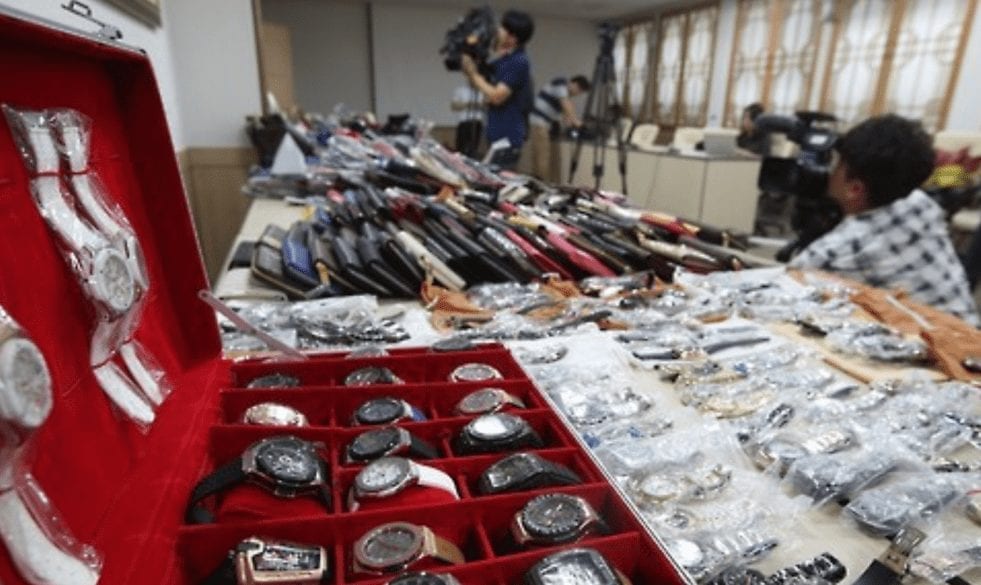
    According to the International Anti-Counterfeiting Coalition, a nonprofit watchdog overseeing piracy concerns, China is the biggest market for knockoffs globally with handbags, footwear, watches and iPhones topping the list of most-faked items.

    Louis Vuitton, Nike, Ray Ban and Rolex are among the labels that seem to be more intensely targeted by counterfeiters, says a report by the Organisation for Economic Co-operation and Development (OECD).

    Domestic brands also have fallen victim. Chinese liquor maker Kweichou Moutai has confiscated 300 tonnes of fake Moutai in a three-year drive against bootleggers, whose products can feature packaging identical to genuine products.

    Chinese authorities have also stepped up efforts to root out people involved in marketing fake goods, staging raids and arresting thousands of suspected offenders.

  • RayBan Manila marks first Asian pop-up

    RayBan Manila marks first Asian pop-up

    A new Ray-Ban Manila pop-up store is the eyewear brand’s first in Asia.

    The pop-up, at the Greenbelt shopping centre in Makati, will showcase the Ray-Ban Aviators range.

    Originally designed for US military pilots in 1937, Ray-Ban Aviators is one of the leading global brands in the premium eyewear category.

    “We’re trying to recreate everything here in the Philippines. We’re the first (in Asia) from Ray-Ban,”  Vincent Teotico, Ray-Ban’s assistant marketing manager, told Manila Bulletin.

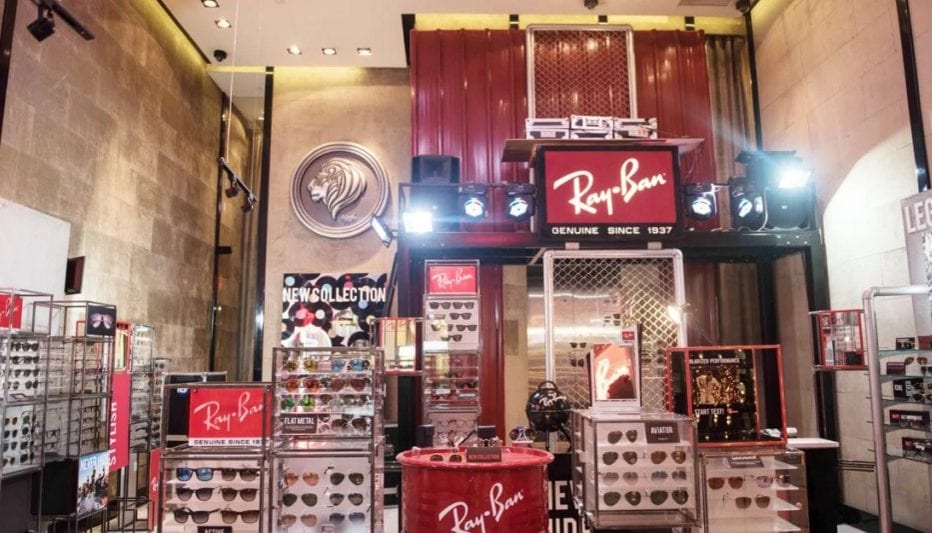
    The Ray-Ban Hub – the first flagship store in New York City inspired the Pop-Up Concept Store, both having an urban feel, with neon lights and fun activities inside.

    Asked about setting up a permanent store in the Philippines, Teotico said this would be possible depending on the turnout of their latest move in the Philippine market.

    Ray-Ban’s Pop-Up Concept Store will only be around until July on the ground floor of Greenbelt 5 in Ayala Center, Makati City. Ray-Ban products are also available at optical stores such as Eye Society outlets in Jupiter St and SM Aura in BGC.