Tag: reality

  • Meta’s Project Phoenix: Mixed Reality Glasses Launch Delayed, Aims for Superior Quality over Speed

    Meta’s Project Phoenix: Mixed Reality Glasses Launch Delayed, Aims for Superior Quality over Speed

    Meta, a tech giant known for its innovative projects, seems to have hit a temporary halt on its advanced mixed reality glasses project. The anticipated launch, previously expected in late 2026, will likely be delayed until sometime in 2027.

    A Shift in Timeline for Project Phoenix

    The tech enthusiasts looking forward to experiencing Meta’s pioneering holographic glasses might need to modify their anticipations. The company recently announced that the launch of their state-of-the-art mixed reality glasses, internally referred to as “Phoenix”, will be deferred.

    Previously, the company planned to release the product in the latter half of 2026, but recent statements from Meta executives suggest a shift to the first half of 2027. According to CEO Mark Zuckerberg, the delay is strategic as the firm aims to prioritize a sustainable business plan and a superior product experience over haste.

    Project Phoenix: What We Have Learned So Far

    The highlight of the Phoenix project is the External Compute Module, where the glasses will be linked to a “puck-like” power and compute source via a wire. This design is intended to reduce the weight on the wearer’s face.

    The glasses will prioritize visual fidelity, aiming to deliver the immersive experience of mixed reality headsets in a form similar to traditional eyewear. Furthermore, they will incorporate advanced sensor technology for an enhanced digital overlay on the real world.

    The delay in the project’s timeline is designed to give the product development team more time to refine the product details.

    The Mixed Reality Market Landscape

    Currently, the mixed reality market is experiencing a unique phase. On one hand, there is the Apple Vision Pro, a remarkable but hefty and expensive device that tends to isolate its users. On the other hand, there are Meta’s Ray-Ban Meta AI glasses, which integrate AI, cameras, speakers, microphones, and a monocular screen display for notifications and information.

    While the Ray-Bans are ideal for quick interactions, they do not offer a “true” mixed reality experience. Project Phoenix aims to bridge this gap by combining the immersive experience of Vision Pro with the wearability of the Ray-Bans.

    The delay in the project launch indicates that Meta is closely observing its competitors. The mixed reactions to Apple’s bulky headset might have prompted them to realize that a mediocre product will not suffice. These developments come at a time when Meta is reportedly reducing its metaverse budget by approximately 30%, indicating that they cannot risk a major hardware failure.

    Questions & Answers

    Why is the Project Phoenix launch delayed?
    The launch delay is strategic, allowing Meta to focus on developing a sustainable business model and a superior product experience.

    What are the key features of the Project Phoenix glasses?
    The Phoenix glasses will connect to a “puck-like” power and compute source via a wire, incorporate advanced sensor technology for digital overlaying, and prioritise visual fidelity to deliver an immersive experience similar to mixed reality headsets.

    How is Project Phoenix different from other products in the market?
    Project Phoenix aims to bridge the gap between extreme immersion and practical wearability, offering a “true” mixed reality experience in a form similar to traditional eyewear.


  • Riding on Risk: The Perilous Reality of Motorbike Travel in Vietnam

    Riding on Risk: The Perilous Reality of Motorbike Travel in Vietnam

    Motorbikes, possessing the rapidity of a car but the simplicity of a bicycle, inherently pose a high risk to safety, particularly when traversed on less than optimal roads. As an individual who has spent a significant time commuting through the city by both motorbike and car, I have come to deeply comprehend a sobering reality: motorbikes, the primary mode of transportation in Vietnam, are also the most perilous. The danger lies not only in their petite, vulnerable structure, but also in the habits and attitudes of the people and a transportation infrastructure that is inadequately equipped to provide adequate protection for riders.

    The Danger Lurking in Motorbikes

    In developed nations, cars are predominantly the preferred choice of transport. This preference is not solely attributed to the affluence of the people, but also to the inherent safety cars provide. The occupants in a car are shielded by a robust metal structure, airbags, seatbelts, anti-lock braking systems, collision sensors, rear-view cameras, and blind spot warnings. Motorbike riders, on the other hand, are left completely vulnerable to the tumult of traffic. A minor brush or an abrupt swerve can easily result in a fall, leading to grave injury or even fatality.

    In my personal observation, most roadway accidents in Vietnam invariably involve motorbikes. They occur on a daily basis, whereby a minor wobble, a sharp brake, or an inattentive pedestrian can rapidly escalate into catastrophe. Although car accidents are not unheard of, the possibility of fatal consequences is significantly less.

    A Closer Examination of the Risks

    Another factor contributing to the danger of motorbikes is their sheer volume. In major cities such as Hanoi and Ho Chi Minh City, it is commonplace for a family to own two or three motorbikes. The narrow city roads, swarming with millions of bikes, generate chaos. Riders are compelled to evade cars, dodge pedestrians, navigate around buses, and occasionally mount pavements when confronted with traffic jams. These behaviors are born out of the necessity for convenience and the habit of seeking shortcuts, yet they continually place riders in precarious situations.

    Further exacerbating the situation is the lack of traffic awareness amongst a subset of riders. Unconventional helmet use, running red lights, driving against the traffic, over-speeding, and phone usage while driving are prevalent practices. As motorbikes are compact and agile, riders often experience a sense of freedom, forgetting the grave implications one moment of negligence can bring about. Unlike car drivers, who are subjected to more stringent licensing procedures and have higher financial liabilities, many motorbike users obtain their license with minimal training. Some even resort to stand-ins for their tests or commence riding before achieving the legal age.

    The Psychological Aspect and Infrastructure Hurdles

    There is also a psychological element at play. Car drivers generally exhibit more caution as even a minor collision can result in costly repairs. Motorbike riders, conversely, often downplay minor incidents and adopt aggressive or reckless behavior to save a few minutes. This overconfidence often results in motorbike accidents that are unforeseen and frequently unavoidable.

    The infrastructure in Vietnam further exacerbates the risk. Numerous roads lack specially designated lanes for motorbikes, exhibit faded lane markings, inconsistent speed bumps, and poorly positioned traffic lights. Rain can render the roads slippery, while manhole covers and potholes, barely noticeable to cars, can easily cause a motorbike rider to lose control.

    Reassessing Motorbike Use

    Motorbikes undoubtedly play an integral role in Vietnamese life, especially in narrow lanes, rural regions, or areas with underdeveloped transport infrastructure. However, as urban areas aspire to more sophisticated transportation systems, it is imperative to alter our mindset. Rather than solely relying on motorbikes, we should consider public transport, small cars, e-bikes, or bicycles as safer and more sustainable alternatives. The authorities must also enact stronger measures: assign lanes for motorbikes, strictly enforce traffic regulations, and educate about road safety from an early age. Riders must comprehend that they are operating a high-risk vehicle and not simply indulging in convenient transportation.

    Observing from the safety of my car, as hundreds of motorbikes jostle under the rain, amid exhaust fumes and blaring horns, the realization is stark: a single wrong move or abrupt stop could swiftly result in tragedy.

    Motorbikes have been an integral part of Vietnamese life for generations, but they also present a significant risk that needs to be reconsidered. Traffic safety is not just the responsibility of the government; it is a personal choice. We can choose to decelerate, to exercise caution, and to opt for safer vehicles to safeguard ourselves and our loved ones. After all, the ultimate objective is not the speed or convenience of the journey, but to return home safely every time.

    Questions & Answers

    Why are motorbikes considered dangerous?
    Motorbikes are considered dangerous due to their small, exposed structure, the riders’ habits and mindset, and a transportation infrastructure that inadequately protects riders.

    What factors contribute to motorbike accidents in Vietnam?
    The sheer volume of motorbikes, lack of traffic awareness among some riders, psychological factors, and infrastructure issues contribute to motorbike accidents in Vietnam.

    What measures can be taken to improve safety for motorbike riders?
    To improve safety for motorbike riders, authorities can assign designated lanes for motorbikes, strictly enforce traffic regulations, and educate about road safety from an early age. Additionally, riders can choose safer vehicles and exercise more caution while driving.

  • Google is still working on an exciting AI feature

    Google is still working on an exciting AI feature

    Tweets sent by Google Photos product lead David Lieb indicate that the company has not given up on the Colorize feature it unveiled at Google I/O last year. The feature uses machine learning tools to add colors to old black and white photos. He said that Google hopes to have Colorize out in beta form soon and said that he’d love to hear feedback from Android users. The Colorize feature, when it does get pushed out, will show up as a filter in the Google Photos app.

    Lieb did say that Colorize needs some more work, and for proof of that, he showed a black and white photo taken during his grandparents’ wedding day (his grandmother is 104!). While Colorize did add color to the image, it also added a pink tinge to his grandfather’s pants. The Googler assures us that his grandfather did not wear pink pants at his wedding.

    Meanwhile, another feature that Google introduced at its 2018 developers conference, Color Pop, was pushed out just a week after the feature was unveiled. Using AI, Color Pop takes the background of a photo shot in Portrait mode and changes it to black and white; the subject matter remains in color. The stark difference between the two makes the subject pop, or stand out. Color Pop appears as a filter option in the Google Photos app after you snap a Portrait.

  • Tencent China streams reality show thru LiveU

    Tencent China streams reality show thru LiveU

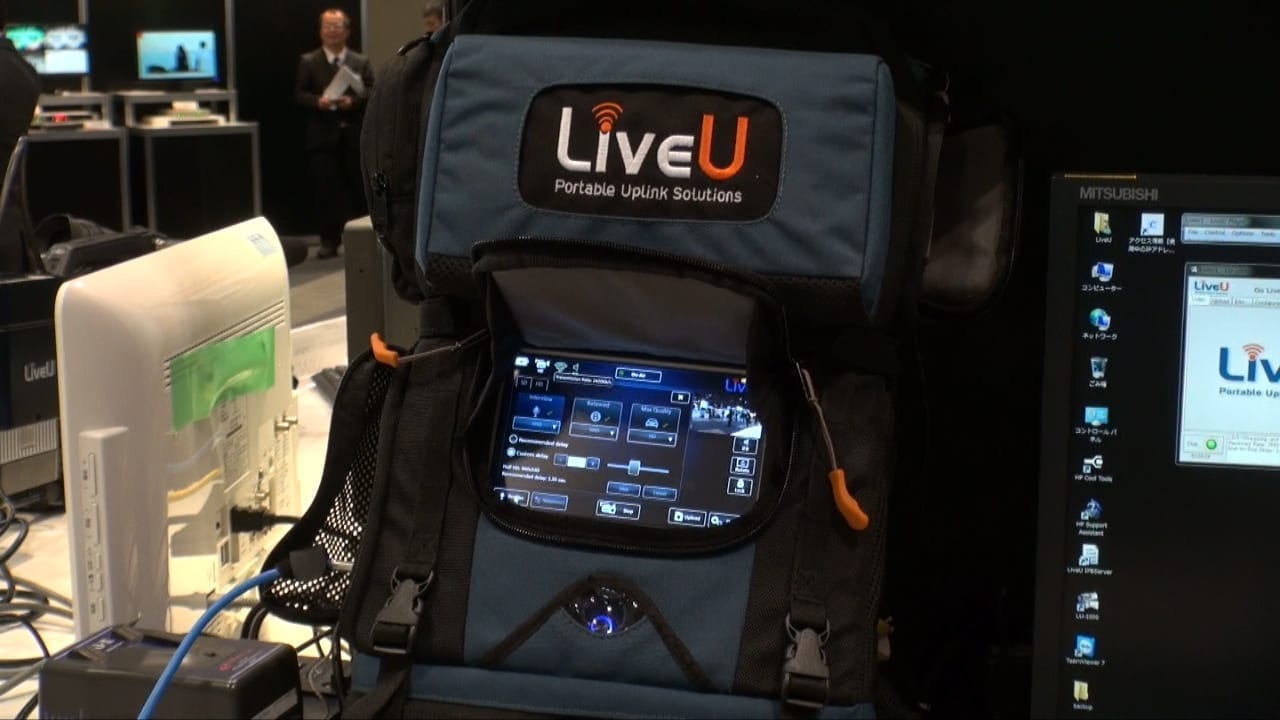
    Tencent is using LiveU’s portable transmission technology to stream live its new reality series called “See where you are going.”

    The live online program follows Olympic champions, movie stars and random guests in six cities around China (Suzhou, Hangzhou, Beijing, Tianjin, Qingdao and Shenzhen) as they perform various tasks.

    Tencent has deployed 10 LU200s, LiveU’s ultra-small transmission units, for the live production. Separate camera crews live stream the different stars in the different locations and viewers can choose one of six different video rooms to watch the video live on any device. At the end of each program, Tencent posts an edited version combining all the different clips online.

    The LiveU units and support are provided by LiveU’s local partner Guanhua Glory with additional support provided by Oneband Systems, an additional LiveU partner.

    Zhao Dongwei, Tencent transmission technology head, said that with the multi-camera chasing of stars, and multi-screen viewing, the show represents a new type of program in China.

    “Involving 6-10 hours per day of live streaming, it was important for us to choose a small, lightweight unit, which could deliver high quality and reliable live video over a long time in multiple locations,” said Zhao. “The LU200 surpassed our expectations, offering a highly cost-effective live transmission solution.”