Tag: rebranding

  • Gucci’s Rebranding Challenge: Kering CEO Maps Out Strategy for Sophisticated Chinese Luxury Market

    Gucci’s Rebranding Challenge: Kering CEO Maps Out Strategy for Sophisticated Chinese Luxury Market

    Kering’s flagship brand, Gucci, is focusing on rebuilding its market position in China following years of stagnation. The luxury company’s complacency resulted in an underwhelming retail experience and poorly situated stores, according to Kering CEO Luca de Meo.

    China: A Changed Landscape

    China has been a significant growth driver for the global luxury sector, worth approximately US$400 billion, for over a decade. Gucci, like many of its competitors, capitalized on this expanding market. However, the brand failed to take advantage of a brief shopping surge following the pandemic and couldn’t recover when Chinese consumer spending slowed.

    De Meo, speaking at Kering’s first investor day since he assumed his role in September, expressed that Gucci needs to reevaluate its strategy in China. He emphasized the necessity to cater to the discerning clientele with high-quality retail experiences and to move away from relying on off-price outlets offering goods at discounted rates.

    “Gucci needs a comeback,” de Meo asserted, criticizing the brand’s previous approach to China as an easy revenue source.

    The Evolving Chinese Consumer

    The retail landscape in China has transformed significantly over the years. De Meo noted that Chinese consumers are now motivated by quality, design, and experience rather than logo-driven purchases, a trend seen in markets like Japan, South Korea, and Europe.

    The CEO stressed the importance of a consistent brand message and an enhanced in-store experience to revive growth in China. Kering also revealed plans to acquire a minority stake in the Shanghai-based Icicle Fashion Group.

    Learning from the Auto Industry

    De Meo, who previously served as CEO of Renault, drew parallels between the luxury sector and the auto industry. He warned luxury brands not to underestimate domestic competition and acknowledged China’s innovative capabilities.

    Other brands in Kering’s luxury portfolio, such as Bottega Veneta and Saint Laurent, have already begun reaping the benefits of a more finely-tuned China strategy. However, he indicated that Gucci’s recovery would be a more prolonged process.

    “For Gucci, the verdict is still out. This transformation won’t be instantaneous, but we anticipate seeing measurable progress within the next few months to a year,” he stated.

    Questions & Answers

    What is Kering’s plan for Gucci in China?
    Kering plans to reinvent Gucci in China by focusing on higher quality retail experiences and catering to discerning clientele. The company is moving away from off-price outlets and is focusing on a consistent brand message and enhanced in-store experience.

    How has consumer behavior changed in China’s luxury market?
    Chinese consumers are now motivated by quality, design, and experience rather than logo-driven purchases. This shift mirrors trends seen in other markets such as Japan, South Korea, and Europe.

    How long will Gucci’s recovery take according to Kering’s CEO?
    Kering’s CEO, Luca de Meo, anticipates that Gucci’s recovery in China will be a prolonged process, with measurable progress expected within the next few months to a year.
  • AirAsia X plunges deeper into red amid ongoing grounding

    AirAsia X plunges deeper into red amid ongoing grounding

    Troubled long-haul, low-cost carrier AirAsia X widened its quarterly loss, as it remained grounded amid the coronavirus pandemic.

    For the quarter ended 30 September, the carrier, which recently unveiled a restructuring plan, reported an operating loss MYR498 million ($122 million), a staggering seven-fold increase year on year. It was also higher than the previous quarter’s MYR323 million operating loss.

    Revenue for the period plunged 94% year on year to about MYR60 million, as the carrier reported zero revenue from scheduled passenger operations. AirAsia X remains grounded amid international travel restrictions aimed at curbing the pandemic’s spread.

    Revenue from cargo operations and charter flights — amounting to some MYR8.5 million — were not enough to stave off any further revenue loss.

    Meanwhile, expenses for the period fell 53% to MYR487 million, due mainly to its ongoing grounding, which has reduced flying activity.

    AirAsia X widened its net loss to MYR308 million, compared to MYR230 million the same period last year.

    The carrier gave no operational statistics for the quarter, stating: “[The] company has suffered the full impact of the Covid-19 pandemic and, with the suspension of scheduled flight operations in April, and the parking of the majority of the aircraft fleet, the performance indicators for the business are not meaningful.”

    In early October, the embattled carrier rolled out plans to restructure its debts — of around MYR63.5 billion — and trim its network and fleet. It said then that the restructuring — subject to approvals — was essential to its future.

    Under its revised business plan, AirAsia X aims to emerge as a low-cost medium-haul operator. The airline adds that it hopes to restart operations with two aircraft in the first quarter of 2021.

    Cirium fleets data shows that Air Asia X has a fleet of 23 A330-300s, 21 of which are in storage. The carrier owns five A330s and leases the rest from various lessors. It also has orders with Airbus for 10 A350s, 76 A330neos and 30 A321XLRs.

    Among plans outlined to return to profitabilty, AirAsia X says in its latest financial results that it plans to “focus on core markets to improve yield”. These include “focusing on mature routes in core markets with historically proven demand”, as well as axing unprofitable routes. It also plans to operate a “leaner fleet size” in the future, which will necessitate the return of excess aircraft to lessors.

  • Thailand’s Supersports stores rebranded as fashion shops

    Thailand’s Supersports stores rebranded as fashion shops

    Thailand’s CRC Sports has rebranded its Supersports business as a sports fashion store in a move targeting millennials. Last month’s rebranding modernises the business’s image and transforms the performance store model into the fashion world. The logo has also been revised with green motifs to suggest environmental awareness.

    Three Supersports stores have already been updated with the new look, including the CentralWorld location, with 50 stores scheduled to follow early next year.

    President Tony Morton said: “Our new motto is ‘The new Supersports, where Sport is fashion’, in response to the trend of millennials being fashion-conscious, cool, healthy and cheerful.”

    The firm will also expand its online sales efforts in the coming year, with the total market size for sporting goods in Thailand expected to be worth THB30 billion (US$916.3 million) by the end of this year.

    Supersports drew in THB300 million ($9.163 million) in online sales last year – 3.5 per cent of Supersports’ THB8.5 billion ($259.78 million) total revenue – and expects online sales to reach THB500 million ($15.28 million) next year.

  • Remodeled M&M’S World Shanghai reopened

    Remodeled M&M’S World Shanghai reopened

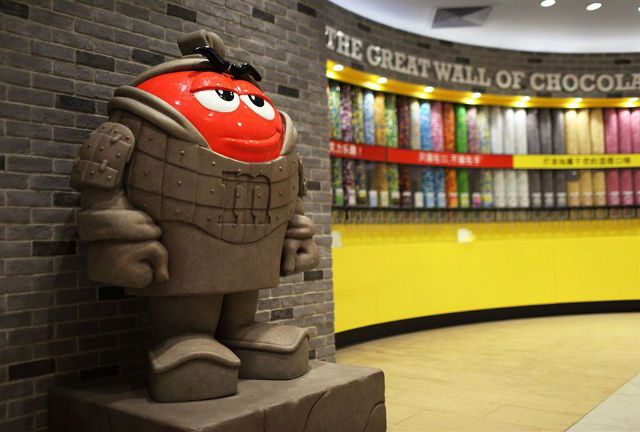
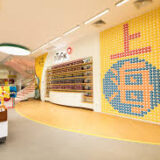
    M&Ms World Shanghai reopened yesterday in Shanghai Shimao International Plaza. The newly remodeled 1600sqm interactive store, which offers an immersive, personalised experience with the M&M brand to residents and tourists, remains the only one based in Asia.

    The store is part of the global M&Ms retail business, which includes My M&Ms’ e-commerce sites and a B2B channel in the US and Europe.

    The M&Ms World Shanghai experience store features a “Great Wall of Chocolate” made out of more than 1 million M&Ms, a personalised printer, and a device that scans customers to create a personalised M&Ms avatar. It also features an improved checkout experience that allows mobile payment options from Alipay, WeChat and Apple Pay.

  • LF Beauty rebrands as MEIYUME

    LF Beauty rebrands as MEIYUME

    LF Beauty, a one-stop shop partner and supplier of products and solutions for the beauty industry announced that it will now operate under the new brand name of MEIYUME. The rebranding comes to represent the evolution of the company and its response to the rapidly-changing beauty landscape and the changing face of today’s consumer.

    The new brand positioning is based on the idea of MEIYUME as the catalyst shaping opportunities and transforming visions into reality with the fusion of MEI (美), Chinese for beauty, and YUME (夢), Japanese for dream.

    As part of the rebrand, MEIYUME’s business has been restructured into three key divisions: Packaging & Turnkey Solutions, Retail Solutions, and Brands.

    The rebrand has also given the company an opportunity to renew focus on its business strategy of Empowering Beauty Solutions. In addition to empowering established brands by providing them with the right products and solutions, it is also about paving the way for new brands to make their mark by collaborating and translating their unique identities into reality.

    “With a new brand and structure, we are best-positioned to connect end consumers and the entire supply chain, and to create value for our customers like no other company in our industry.”said Gerard Raymond, President of MEIYUME.

    Fung Group’s Deputy Group Chairman, William Fung, added: “It is the right time to undergo a full rebrand and really focus on who we are and the value we deliver to our customers.”

    The rebrand comes after the completion of Li & Fung’s strategic divestment of its three product verticals (Furniture, Sweaters and Beauty) in April 2018 to form LH Pegasus, which is 45% owned by Hony Capital and 55% owned by the Fung Group.

  • Dunkin’ to be seen as coffee place in future

    Dunkin’ to be seen as coffee place in future

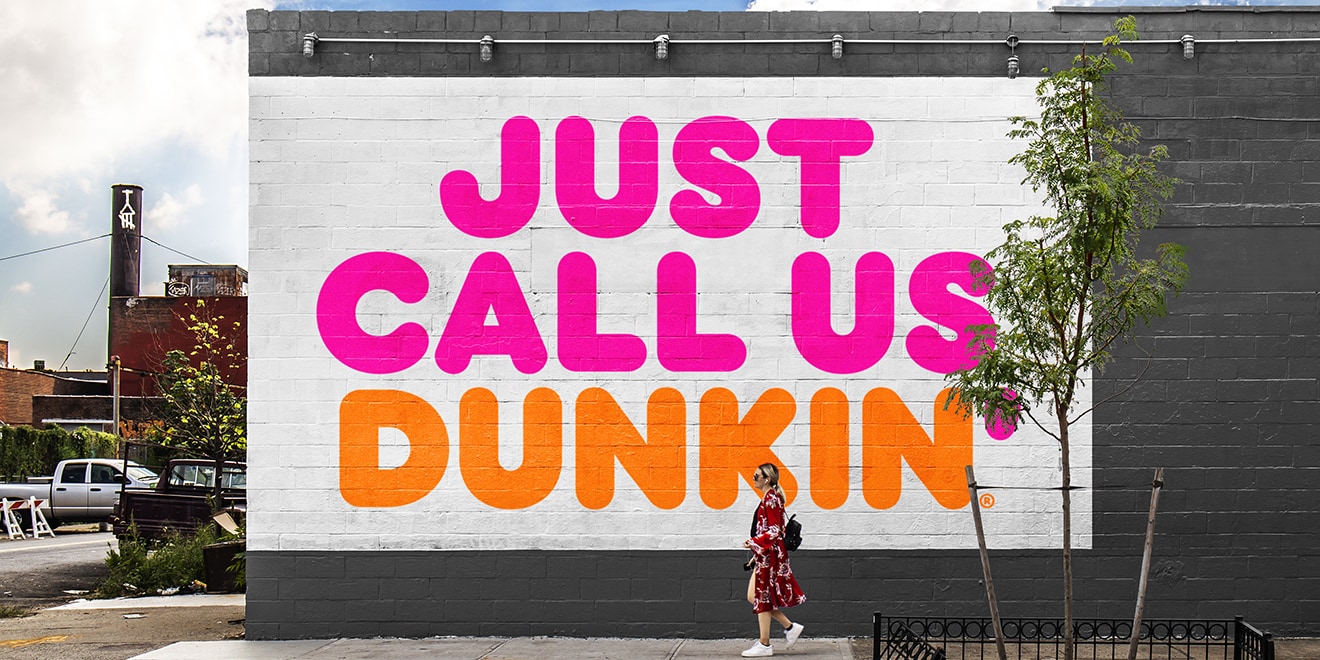
    Global fast-food chain Dunkin’ plans to reposition itself as a coffee chain – but it will still sell fresh donuts. Just a month after Dunkin’ Donuts unveiled rebranding, including dropping ‘Donuts’ from its name, the company has announced a strategy to put quality coffee at the core of its menu

    Dunkin’ has previously revealed a US$100 million budget to revive its market position in its core US home market. Now it says half of that investment will be spent on espresso machines and other restaurant equipment enabling it to accelerate its beverage-led strategy. The company says Dunkin’ franchisees are also making a substantial investment in the initiative, which is focused on growing its market share of the hot and iced espresso category.

    “Espresso is one of the fastest-growing coffee categories, particularly among younger consumers, and with our coffee credentials we believe we have a tremendous opportunity to improve our awareness and credibility among espresso drinkers,” said Tony Weisman, chief marketing officer at Dunkin’ US.

    The company is promising “an entirely new espresso experience for customers” in its US restaurants by the coming holiday season, featuring new state-of-the-art espresso equipment, a new espresso recipe, extensive restaurant training and new espresso cups.  Dunkin’ will serve “handcrafted hot and iced espresso beverages” – including lattes and cappuccinos – “featuring a rich, smooth, balanced taste that meets the profile preferred by espresso customers, and in particular younger espresso drinkers,” the company said in a statement.

    Dunkin’ will support the launch with a comprehensive marketing campaign. New espresso cups are bright orange and feature an exclamation point, a symbol the company says positions the espresso beverages as bold, new and exciting.

    “Relaunching espresso in our restaurants nationwide has been a tremendous undertaking, from installation of the new espresso machines, to the creation of the new, bolder taste profile, to the extensive employee training,” said Dunkin’ US COO Scott Murphy. “This is a transformative initiative, and it would never have happened without the total alignment and support of our franchisees.”

    All espresso beverages served at Dunkin’ US restaurants will continue to be made with 100-per-cent espresso beans sourced from Rainforest Alliance-certified farms.

  • Malaysia’s P1 rebrands as webe

    Malaysia’s P1 rebrands as webe

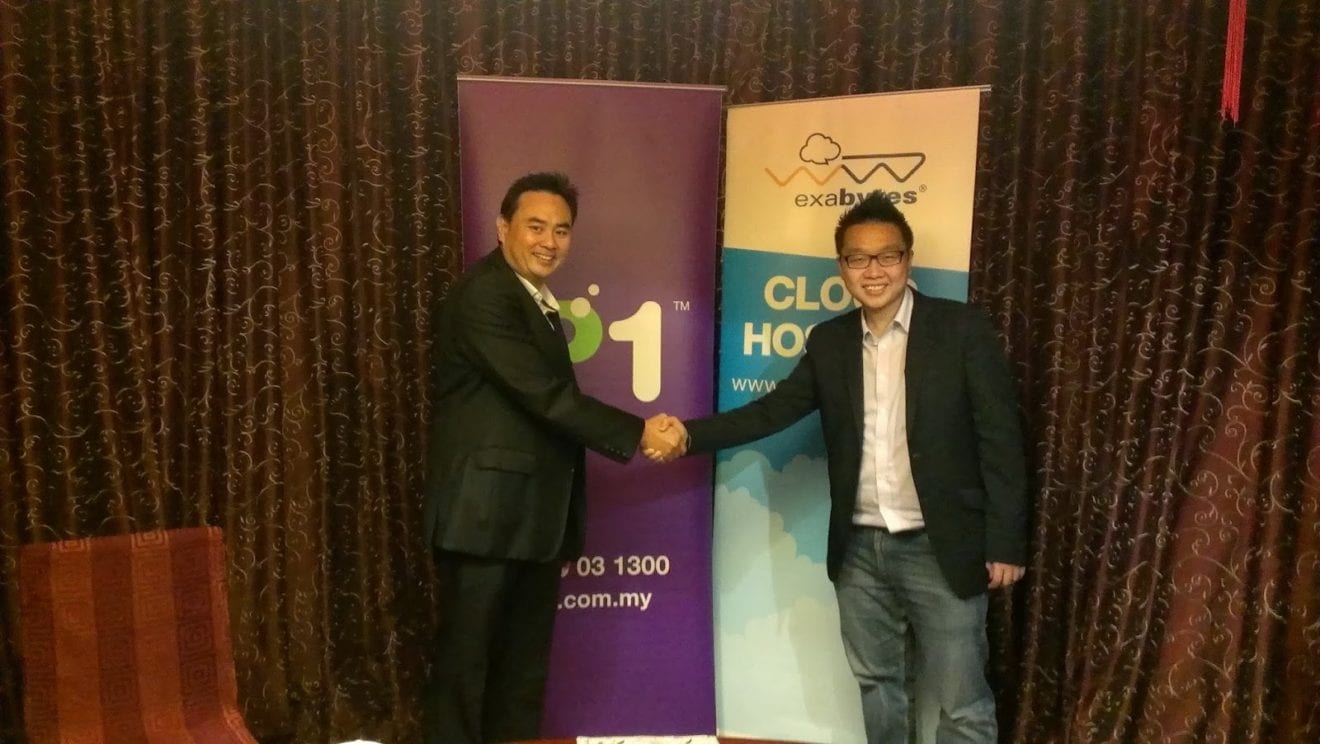
    Malaysia’s Packet One Networks (P1) has rebranded as webe as part of its transformation into a digital mobility service provider.

    But the operator has not yet announced when it plans to launch mobile services or provide details on any mobile plans.

    The operator, which was acquired by Telekom Malaysia in 2014, plans to differentiate from its established rivals in the mobile network services market with a focus on being a community-driven brand.

    To support these ambitions the company has launched a mobile app to promote community projects. The initial seven projects include an app to highlight and alert uses on dengue prone areas, a project to create additional ICT classrooms for disabled students and the first Malaysian-made feature length zombie movie.

    Announcing the rebranding, webe CEO Puan Chan Cheong said the operator is last to market in the mobile industry and therefore needs to stand out by being significantly different.

    “Being last to market means we are also able to learn from mistakes – some our own, and some from others we’ve seen in the marketplace,” he said.

    “The past two years have been hard work for us as we sought to understand how we could build a better company and a brand you could love. The answer we arrived at: by having a higher purpose and a deeper connection with our communities.”

    He said the decision not to provide details on plans or products at the launch of the new brand was intentional as part of these promotional efforts.

    The launch will mark Telekom Malaysia’s re-entry into the mobile market following the demerger of its mobile unit (now Axiata Group) in 2008.

  • Deadly virus could force Tata to rebrand new car

    Deadly virus could force Tata to rebrand new car

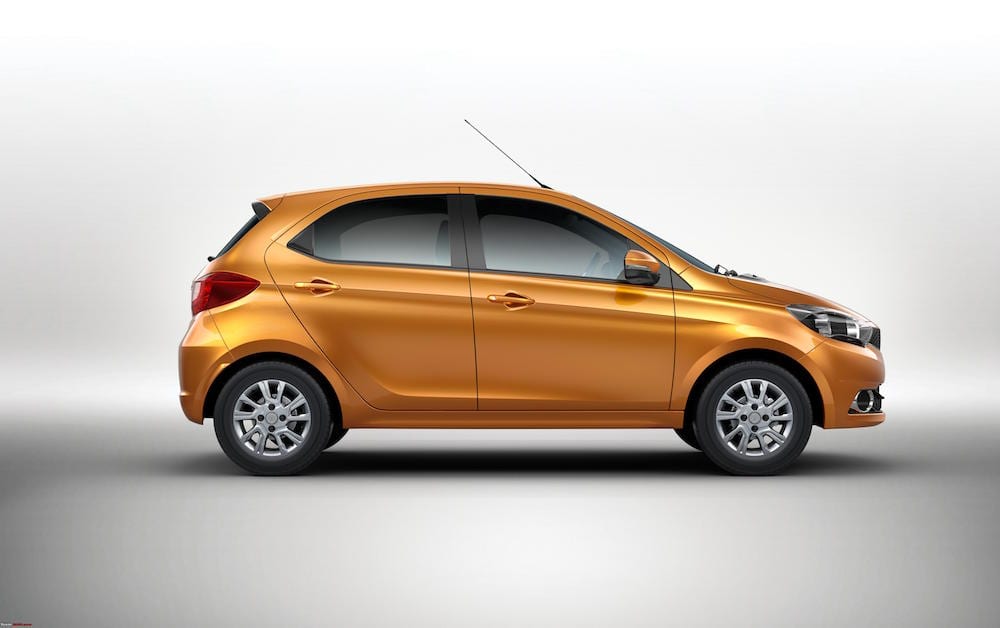
    It’s a bad time to be called Zica – even if it’s a car we are talking about and not the deadly virus that’s gone global. Zica is a new hatchback from Indian carmaker Tata’s stable, while the mosquito-borne virus that has gone global is called Zika. But who cares about spelling when they both sound the same?

    Such is the panic over the similarity that Tata is reviewing the name –  even though its origins are innocuous enough. Zica is short for “zippy car.” But no amount of shouting that from the rooftops can help now, it seems.

    “The decision to name our car happened many months back when we could not have foreseen any of the recent events. In view of the recent developments, we are now evaluating the situation,” Minari Shah, Tata’s head of corporate communications was quoted.

    Rebranding is often undertaken by corporates for better impact. For instance, Hutbitat, a big data real estate search engine for Australian properties, rebranded to Homekoala after realising that people had trouble understanding the original name and remembering it thereafter.

    Sometimes when a business expands into new markets or domains, a company’s original name may begin to feel ill-suited.

    Startups like Near and Inshorts were called AdNear and News in Shorts before they shed the first words in their names. Few may remember that real estate portal CommonFloor, which was recently acquired by online classifieds site Quikr, was once called Apna Ilaka (“Our Neighborhood” in Hindi). Rebranding obviously worked well in these cases and the new names stuck.

    But the Tata Zica seems to have been caught off guard by the virus.