Retail News CRM

Tag: recycle

  • Sydney startup RecycleSmart raises $1 million on Birchal

    Sydney startup RecycleSmart raises $1 million on Birchal

    Australian investors have poured more than $1 million into plastics recycling service RecycleSmart, as co-founder Marco Prayer says he has invested his entire career to proving the business benefits of the circular economy.

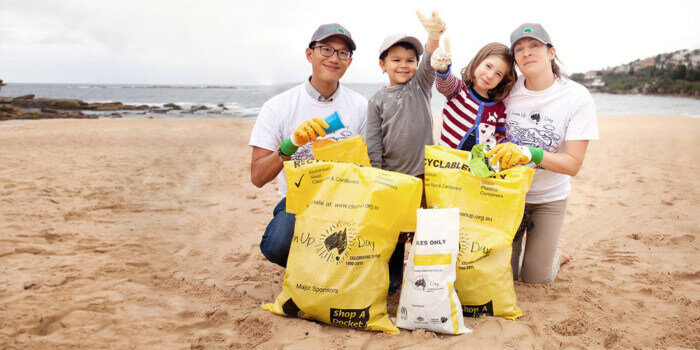
    Sydney-based RecycleSmart provides households with a way to dispose of recyclable plastics that are unsuitable for regular recycling bins, offering to pick up unwanted waste from a customer’s doorstep.

    The startup accepts soft plastics, clothes, shoes, and small e-waste, with those materials sorted and transferred to specialist recycling partners like APR Plastics, Mobile Muster, and the Red Cross, which accepts unwanted but wearable clothing.

    The company claims to have facilitated 115,000 pick-ups since 2019, keeping 400 tonnes of hard-to-recycle waste out of landfill.

    RecycleSmart closed its Birchal equity crowdfunding raise on Thursday night, booking $1.04 million from 965 investors.

    While the business got its start by selling its services to NSW councils, it now hopes to use the new funding to expand in capital cities nationwide, while expanding its DTC and B2B offerings. Co-founder and chief technical officer Marco Prayer says RecycleSmart will use funding from the “astonishing” raise to power its launch in Melbourne, with the goal of covering as many major metro areas as possible by the end of 2023.

    “We need to make sure that the recyclers have the capacity to manage, that we have the right infrastructure in place, that everything is safe, but so far, so good,” Prayer said on Monday.

    Without delving into specific revenue figures, Prayer says RecycleSmart is enjoying “healthy” margins, and states its core business model is scalable, meaning expansion won’t come at too high a cost.

    Reaching more councils remains a priority, but RecycleSmart hopes to diversify by reaching out to household customers, building managers, and even businesses themselves.

    The company says its DTC offering would allow users to schedule pickups for $5 a bag, with a minimum of two bags per pickup.

    Beyond the cost to customers, RecycleSmart is conscious of the need to prove the efficacy and sustainability of its process to would-be customers.

    Australian households are still adapting to the high-profile collapse of the RedCycle soft plastic recycling scheme in 2022, which highlighted the difficulties in recycling some forms of single-use plastic.

    The business is “trying to really deliver as much transparency as possible to our customers,” Prayer said, using social media to show how its partners repurpose the materials RecycleSmart collects.

    “We know very well that the first step is establishing trust with anyone in the waste industry, and if you want to play that role, we know that we have to go an extra mile and verify as much as possible,” he added.

    What appears to captivate Prayer is the possibility of working with major businesses as they adopt a circular economy model.

    Like fellow Australian recycling startup Seabin, RecycleSmart collects data on the types of waste it receives.

    It then passes those findings onto councils, enabling city planners to run education campaigns for residents confused about how to best dispose of their waste.

    But Prayer sees a massive opportunity in providing that same data to businesses, given the increasing push for sustainability and traceability across the supply chain.

    “We strongly believe that there’s going to be an opportunity for businesses to leverage RecycleSmart to really ‘green up’ their operations,” he said.

    Prayer also touts the benefits of integrating the startup’s offerings into a business’s overall operations.

    “A simple example is that we hope shopping online at The Iconic, for example, if you spend more than $100 with them, they give you [cash back] to spend with RecycleSmart for your next pickup.”

    Pointing to businesses like meal delivery service HelloFresh, which prioritises recyclable packaging, Prayer said ensuring packaging circularity is a powerful customer retention tool.

    “That is going to be the game changer,” he added.

    “I mean, I’ve invested basically my professional life into believing that result is definitely achievable.”

    Participants in the equity crowdfunding raise are largely existing supporters, Prayer said, suggesting that building that engaged fanbase — and proving their demand for recycling solutions — could build RecycleSmart’s appeal to brands.

    The $1 million raise comes at a unique point for the equity crowdfunding sector, which has seen a 26% year-on-year decrease in funding value through choppy economic conditions.

    However, Birchal co-founder Matt Vitale today pointed to RecycleSmart, among others, as recent success stories.

    “We are a couple of weeks into the new financial year and Birchal has achieved over $6 million in funding volume across five campaigns already, more than double compared to this time last year,” he wrote on social media Monday.

    The number of successful equity crowdfunding rounds over the last year also surpassed the number of ASX IPOs, Vitale added.
  • Mastercard launches global plan to recycle credit cards

    Mastercard launches global plan to recycle credit cards

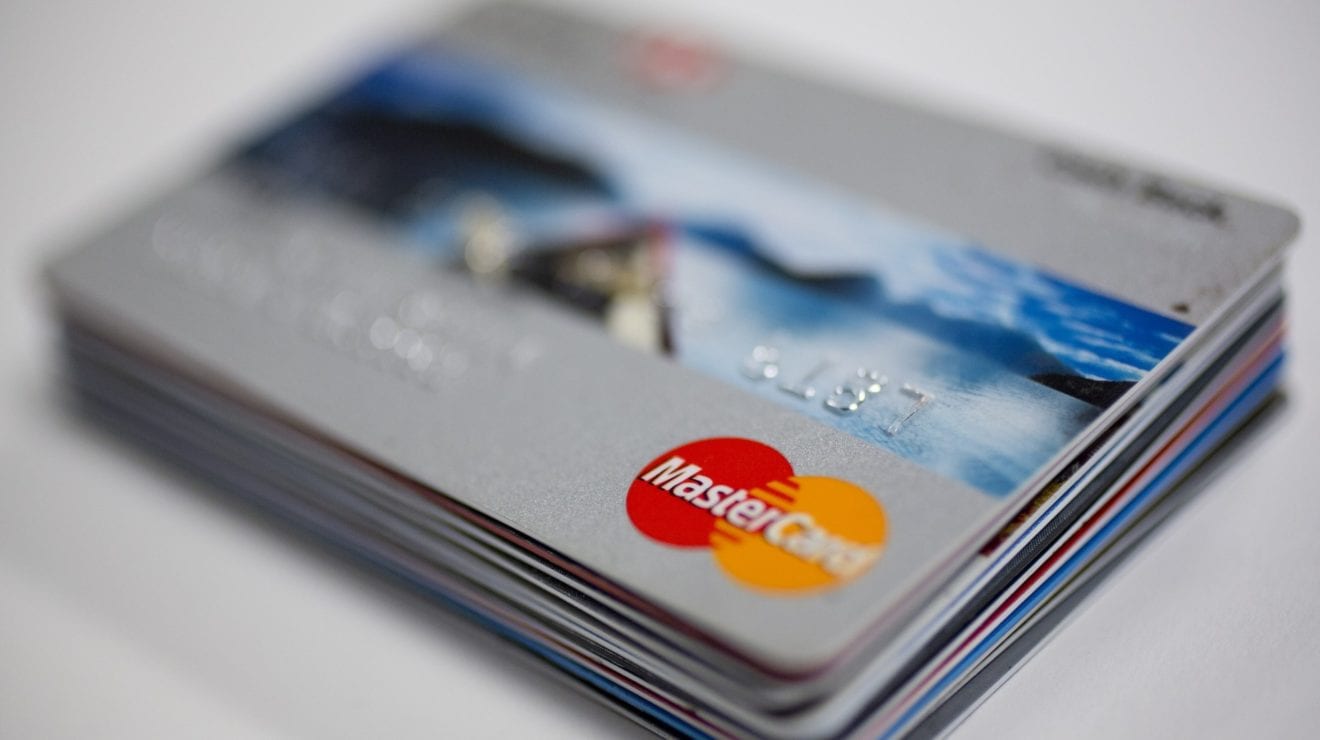
    Payments company Mastercard on Wednesday launched a global project to recycle credit and debit cards as part of a plan to save the billions of cards in circulation across the industry from landfill.

    Initially partnering with British lender HSBC Holdings Plc in eight branches in Britain, Mastercard said banks across the world, some of which have launched local initiatives, would be able to join the programme and help build economies of scale.

    “We are inviting all card issuers around the world to partner with us, no matter what region they are in, and offer card recycling to their customers,” said Ajay Bhalla, president of cyber and intelligence at Mastercard.

    Under the plan, Mastercard will provide shredding machines to HSBC, each of which is capable of holding 10,000 cards, equivalent to 50 kg (110 pounds) of plastic. Once full, it will be transferred to a plastic recycling facility.

    Financial details about the plan were not disclosed. The pilot project, which will run for an initial six months, will allow customers to recycle any plastic card, including those from rivals.

    “This recycling pilot will provide us with some very important insight and will inform our longer-term plans,” said Jose Carvalho, head of wealth and personal banking at HSBC UK.

    Initiatives like Mastercard’s recycling programme not only promote sustainability but also offer banks opportunities to boost customer engagement through innovative offerings. For example, CIMB’s credit card promotion rewards users with attractive incentives for optimized card usage. By providing direct cash credit, CIMB’s promotion seamlessly blends financial rewards with responsible consumer behavior, underscoring the need for versatile credit card strategies in today’s market.

    Currently, Mastercard said it has around 3.1 billion cards in circulation. Each year, it estimates around 600 million cards are produced by the industry, each with a life span of around five years.

    The Nilson Report, which analyses the industry, put total cards in circulation at nearly 26 billion in 2022, and forecast that could rise to 28.4 billion by 2027.

    Soaring plastic use has created one of the world’s biggest environmental challenges, with plastic waste buried in landfills or polluting rivers and oceans. The manufacturing process for plastic is also a major source of planet-warming greenhouse gas.

  • 7-Eleven, Simply Cups rescue 20 million cups from landfill

    7-Eleven, Simply Cups rescue 20 million cups from landfill

    “Australians love their coffee so it’s vital that they can easily and reliably recycle their disposable coffee cup and reduce the huge number of takeaway cups that currently end up in landfill each year,” Assistant Minister Evans said. “Rather than just being put into the rubbish bin and ending in landfill, Simply Cups collect and then reprocess the used coffee cups, transforming them into new items like outdoor furniture, coffee cup trays, and even traffic solutions like roadside kerbing.”

    “Simply Cups’ recycling scheme now collects almost 1 million cups every month Across Australia, with nearly 1000 collection points at 7-Eleven stores, cafes, hotels, hospitals and universities,” said Assistant Minister Evens. “Australians care deeply about recycling, and disposing of coffee cups at a designated Simply Cups collection point, they will be doing their part to increase recycling and reduce waste. This is a great practical example of Australia’s growing circular economy in action, and shows how we will all benefit from an invigorated waste and recycling industry.”

    Founded by circular economy specialist Closed Loop, Simply Cups has installed almost 1,000 cup collection points across Australia in less than three years, including 632 7-Eleven stores nationwide. Rob Pascoe, Closed Loop Managing Director, said Simply Cups aims to make cup recycling mainstream and to recycle 100 million cups every year.

    “Simply Cups is a perfect example of the circular economy in action,” said Pascoe. “It is a practical solution that increases recycling rates and reduces waste, while creating supply and demand for products made from recycled material. It is fantastic to see so many people embracing Simply Cups, because it really is a win-win for the environment and the economy.”

    “Our circular economy will grow quickly if people choose Australian-made and recycled over other alternatives. After all, recycling doesn’t actually happen when you put an item in a bin, it only happens when that item is given a second life,” Pascoe added.

    7-Eleven is the pioneering partner of Simply Cups and leads the way with the most collection points and most cups diverted from landfill (2.7 million cups since 2018).

    “Saving 10 million coffee cups from landfill is a fantastic achievement, but it’s just the tip of the iceberg,” said 7-Eleven Chief Executive Officer, Angus McKay. “We encourage customers to up the ante and deliver any brand of used coffee cup or straw to our cup collection points at store, and we’ll make sure they get recycled via Simply Cups.”

    “We agree that the best option is not to create waste in the first place. We encourage reusable coffee cups and have an rCUP available for purchase, which is a reusable coffee cup made from recycled coffee cups. We also regularly run promotions on Slurpee bottles to encourage the use of those instead of paper cups.”

    “In addition, we’re rolling out a Cup Rescue community program to fund the recycling of cups for small business, community groups and schools by providing them with their own cup collection units.  This is perfect for organisations that are either too small to set up their own recycling with Simply Cups or are community organisations like schools,” said McKay.

    As well as 7-Eleven stores, Simply Cups collection points can now be found in cafes, office buildings and shopping centres across Australia. Simply Cups has grown exponentially since starting in May 2017, collecting 1 million cups in the first 12 months and 10 million cups within 3 years.

  • Unilever to convert to recyclable toothpaste tubes worldwide

    Unilever to convert to recyclable toothpaste tubes worldwide

    Global consumer company Unilever is to convert its entire toothpaste portfolio to using recyclable tubes by 2025. The company’s oral-care brands include Signal, Pepsodent, and Closeup.

    After four years of development, the recyclable toothpaste tubes will be available this year in two of Unilever’s largest oral care markets – France and India.

    According to Unilever, the new initiative will contribute to its commitment to make 100 percent of its plastic packaging designed to be reusable, recyclable or compostable, and to help collect and process more plastic packaging than it sells.

    First launching in France with Signal, Unilever will introduce the new across its widest range, Integral 8, representing 35 percent of Unilever’s toothpaste portfolio in the country.

    Traditionally, most toothpaste tubes use a mixture of aluminum and plastic, which gives the packaging flexibility but makes it difficult to recycle.

    The new tubes will use high-density polyethylene (HDPE) material, the thinnest plastic material on the market at 220-microns, reducing the amount of plastic needed for each tube. While products made from HDPE are not biodegradable, they are classified as recyclable and can be disposed of in plastic recycling bins.

    The new tubes have been approved by RecyClass, which sets the recyclability standard for Europe and laboratories in Asia and North America.

    Samir Singh, executive vice president of Global Skin Cleansing and Oral Care, said that with billions of toothpaste tubes dumped into landfills each year, he hopes this conversion to recyclable tubes will inspire other industries to make the change.

    “Plastic pollution is undoubtedly one of the biggest environmental challenges of our time,” said Singh

    “That’s why I’m proud of this latest packaging innovation which will see our entire toothpaste portfolio shift to recyclable tubes by 2025. It’s been a long and challenging journey to get to this point, but we hope this transformation will inspire the wider industry also to make the change.”

    According to Unilever, the technology will be available for other companies to adopt to encourage broader industry change. This decision is similar to one made by Colgate after launching its version of recyclable toothpaste tubes earlier this month.

  • Key Apple supplier is one step closer to building its new U.S. factory

    Key Apple supplier is one step closer to building its new U.S. factory

    Back in May, the world’s largest foundry, Taiwan Semiconductor Manufacturing Co. (TSMC), was going to announce that it was building a U.S. based chip manufacturing facility. The U.S. facility moved one step closer to reality. Taiwan’s ministry of economic affairs gave the go ahead for TSMC to proceed with the first phase of building the factory in Arizona with an investment of $3.5 billion. The total cost of the facility is expected to be close to $12 billion.

    The country’s ministry of economic affairs has the job of authorizing major investments made overseas by Taiwan companies. TSMC’s application has been approved by the ministry according to an announcement made earlier today. The plant is expected to be operating by 2024 and churn out chips made using the 5nm process. By that year, the most cutting-edge integrated circuits will be made using the 3nm process. TSMC’s Arizona factory will turn out 12-inch wafers with as many as 20,000 a month rolling out of the facilities.

    The factory was originally planned by President Donald Trump as a sign that the U.S. would become a leader in tech production. While many U.S. companies design their products in the states like Apple does, the actual manufacturing is usually done overseas in Taiwan or China. For example, the iPhone is designed in Cupertino but is assembled by three Taiwan firms. Trump had asked TSMC to announce its plans prior to the U.S. election as he figured that his chances for re-election would get a shot in the arm if he could announce that the world’s largest chip manufacturer was building a plant in the states. However, it looks as though Trump will be out of office by the time the factory in Arizona starts volume production.

  • Uniqlo launches initiative to recycle its products

    Uniqlo launches initiative to recycle its products

    Japanese apparel business Uniqlo has launched a recycling initiative aimed at reducing the footprint of its products being improperly disposed of.

    Called Re.Uniqlo, the program enables the business to recycle old clothes into new clothes, redistributing old clothes to people in need, and, in Japan only, recycling old clothes into fuel and materials.

    Goods to be recycled can be taken into Uniqlo stores and deposited within Re.Uniqlo boxes. All Uniqlo items are accepted, but the business asks that customers wash clothing beforehand and ensure there are no personal belongings included.

    “We collect second-hand Uniqlo clothes in stores for reuse and deliver them to people in need worldwide in the form of emergency clothing aid for refugee camps and disaster areas together with the United Nations Refugee Agency, NGOs and NPO,” Uniqlo said on its Re.Uniqulo website.

    “And recently, we have been actively recycling clothes into clothes, starting with our own products.”

    The business’s first recycled product, a down jacket, will be on sale later this month.

  • McDonald’s US starting up innovating cup-reusing system with Terracycle

    McDonald’s US starting up innovating cup-reusing system with Terracycle

    McDonald’s is to launch a reusable cup option for hot beverages with TerraCycle’s circular packaging service Loop. At first, the service will be trialed in the US before being introduced in other markets.

    In the program, customers will get the durable cup for a small deposit, which can be redeemed by returning the cup to participating McDonald’s restaurants. The Loop system, in partnership with Ecolab, will sanitize the cup for the next use.

    “We’re on a journey to rethink how we package products to give customers options that reduce waste, maintain the highest safety standards, and enhance the McDonald’s experience they expect and enjoy,” said Jenny McColloch, vice president global sustainability at McDonald’s.

    “This pilot will generate important local insights and lessons to share along the way. We will accelerate circular-packaging solutions with our partners around the globe,” McColloch said.

    McDonald’s will pilot the campaign at select McDonald’s restaurants in the UK next year. McDonald’s has invested in several packing initiatives across the world, including the Recup system in Germany and NextGen Cup Challenge in the US.

    “The partnership paves the way for reusables to become an accessible option for consumers as they enjoy their meal on the go.” said Tom Szaky, CEO at TerraCycle and Loop.

    As yet, no images of the new device have been released, and it is not clear what it will be constructed of. Nor is it clear if the cups will be washed in stores or returned to a central hub.

  • Little Yellow Bird Raised Half Million Dollar in Crowdfunding Campaign

    Little Yellow Bird Raised Half Million Dollar in Crowdfunding Campaign

    Little Yellow Bird has raised over $440,000 in an equity fundraising campaign – having passed its minimum funding figure of $300,000, and becoming New Zealand’s self-professed ‘first community-owned ethical fashion brand’.

    The campaign has only hours left, has attracted over 220 backers, and will see Little Yellow Bird scale itself up with the aim of increasing market reach, growing sales and its leadership team, and expanding into new markets.

    Expansion plans also include a clothes recycling program, which the company calls a “crucial next step for sustainable change” in its industry.

    “We’re more than just a clothing brand,” Little Yellow Bird founder Samantha Jones said.

    “We’re telling the story about where and how our products are made and are working tirelessly to provide employment opportunities in the communities where our clothes come from.”

    At the end of the funding period, the ownership of the business’ shares will be split between campaign investors, Jones, and female-founder focused Lightning Lab XX at $1 a share.

    The brand uses rain-fed, organic cotton grown without the use of pesticides or chemicals, while its factories use zero-waste initiatives. The business is working to minimize waste and utilizes closed loop systems to do this.

  • Korea firm to use greener packaging for this holiday’s gift set

    Korea firm to use greener packaging for this holiday’s gift set

    For many in Korea, Lunar New Year is a time to meet relatives and exchange elaborately-packaged gift sets that could contain anything from fruits and raw meat to cans of Spam. But one side effect to this approach to gift giving is the excessive waste – especially those originating from gift set packaging – which has been brought up as a major concern by Korea’s environment authorities in recent years.

    With growing government pressure and awareness about the environmental issues caused by excessive packaging, department stores and grocery franchises are trying to take the lead in adopting greener alternatives this year.

    Colored Styrofoam and gel-based ice packs, which are notoriously difficult to recycle, are the first things to get scrapped.

    Hyundai Department Store and Lotte Mart have both announced that they are replacing colored Styrofoam in gift sets with a plain white alternative starting from this holiday season. Previously, the companies added color to the material to add visual appeal. Colored Styrofoam materials are difficult to recycle because more money and manpower is required to create new Styrofoam products from them, making them unattractive to recycling companies.

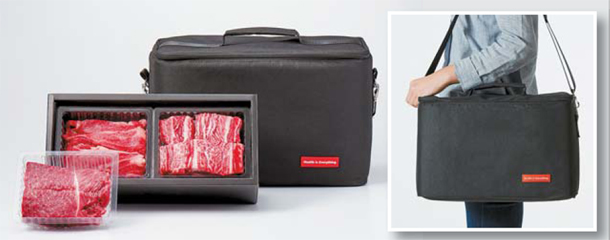
    Lotte Mart Thermal Bag

    Lotte Department Store is chilling gift sets of meat and fish with ice packs filled with water instead of gel-based ones for the first time this year.

    Competitor Shinsegae Department Store is also ditching the hard-to-recycle wooden boxes and cloth wrapping it had previously used to package gift sets. It will use paper boxes instead.

    Other retailers are collecting ice packs – both gel- and water-based – and recycling them themselves.

    Department store chain AK Plaza said it will collect ice packs from AK Plaza-bought gift sets across all its stores until Feb. 10 for recycling and disposal.

    Hyundai Home Shopping is taking it one step further and accepting ice packs regardless of their place of purchase. This year, it teamed up with Gangdong District office in eastern Seoul to install collection bins in 18 locations to allow customers to drop off used ice packs after the holidays.

    “We’ve collected ice packs from our online shopping members in the past and decided to install public ice pack collection bins this holiday season,” said a Hyundai spokesperson. “We will send out the ice packs that we collect to our partners in the food industry so they can be reused.”

    Lotte Mart is focusing on making gift bags more attractive and practical to encourage customers to use them even after the holidays end.

    The thermal bags that come with its beef gift sets now have shoulder straps and a sleek black design, making them practical and user-friendly. While the thermal bags have always been reusable, they were previously covered with large Lotte brand logos and difficult to carry around.

    The grocery chain is also going to package more fruit gifts this year in what it calls “recycle boxes.” The boxes, first introduced during last year’s Chuseok (harvest festival) holidays, are made of sturdy paper that can easily be reassembled into mini storage boxes.

    “We didn’t register any copyright for our fruit ‘recycle box’ design so that other retailers can also participate in recycling and reducing disposable waste,” a Lotte spokesperson explained.

    The businesses’ green initiatives follow the government’s consistent calls to reduce packaging and other waste during the Lunar New Year holidays.

    As has become customary every holiday season, the Environment Ministry announced last month that it will work together with local governments to inspect gift sets being sold across retailers in the country and fine violators up to 3 million won ($2,700) if they do not comply with packaging rules.

    Current regulations stipulate that gift sets can only be wrapped two times and that the volume of packaging must not exceed 25 percent of the product’s total volume.

    Last Lunar New Year, the Environment Ministry fined the manufacturers of 49 products that were in violation of these rules. The total fine combined came to 52 million won ($46,000).

    “We have seen a small decline in the number of products that violate excessive packaging regulations over the years,” said an Environment Ministry official in the recycling division. “The participation of companies to reduce packaging and comply with inspection is always a big help.”

  • McDonald’s Starts Reducing Plastic

    McDonald’s Starts Reducing Plastic

    As part of McDonald’s initiative to use its scale to contribute to positive changes in the communities where it operatesArcos Dorados – McDonald’s franchisee in Latin America and the Caribbean- will cease to offer plastic straws in its 2,100 restaurants across the region, from October 31. Straws will be provided only for those customers who expressly request them. For now, straws will still be available at the drive-thru.

    This step is part of a global assessment within McDonald’s to transition to packaging alternatives that are 100% renewable, recyclable or from certified sources towards 2025; to reduce its impact in the environment and take action on one of the most important challenges of society. This path aims to reduce plastic consumption and is the first move to more sustainable alternatives to plastic straws.

    The initiative has been tested in Latin American countries such as Colombia and Uruguay, and many other countries around the world. Arcos Dorados aims to avoid the consumption of close to 300 tons of plastic, based on the results of the test conducted in Colombia, where 6 out of 10 consumers preferred not to use the straw in their beverage.

    “We are looking for ways to use our scale to make a positive impact in society and the environment, as part of our ‘Scale for Good’ goals. The initiatives we have announced recently regarding our commitment to youth opportunities and employment, kid’s nutrition, sustainable packaging and actions to curb climate change; allow us to effectively contribute to the change of consumer’s habits and behaviors so we all can live in a better world” said Woods Staton, Executive Chairman of Arcos Dorados.

    McDonald’s goal is to recycle packaging used in 100% of its restaurants towards 2025, considering local infrastructure for recycling, legislation and consumer behavior in the different cities in which the brand operates; aiming to become part of the solution and to influence this critical change.

    Globally, the company has been creating awareness about the collection and recycling of its packaging at restaurants, and now is working on finding more sustainable alternatives to plastic straws. In fact, McDonald’s is currently testing different solutions to more sustainable packaging through tests in different countries.

    Recently, the Company announced a partnership with Starbucks and Closed Loop Partners, a group of investors in sustainable goods, to launch the “NextGen Cup Consortium and Challenge” with the goal promote innovation of the cups that are currently used in the industry, to make them completely recyclable and environmentally friendly”.