Tag: red wine

  • McGuigan expands into mid-strength wine

    McGuigan expands into mid-strength wine

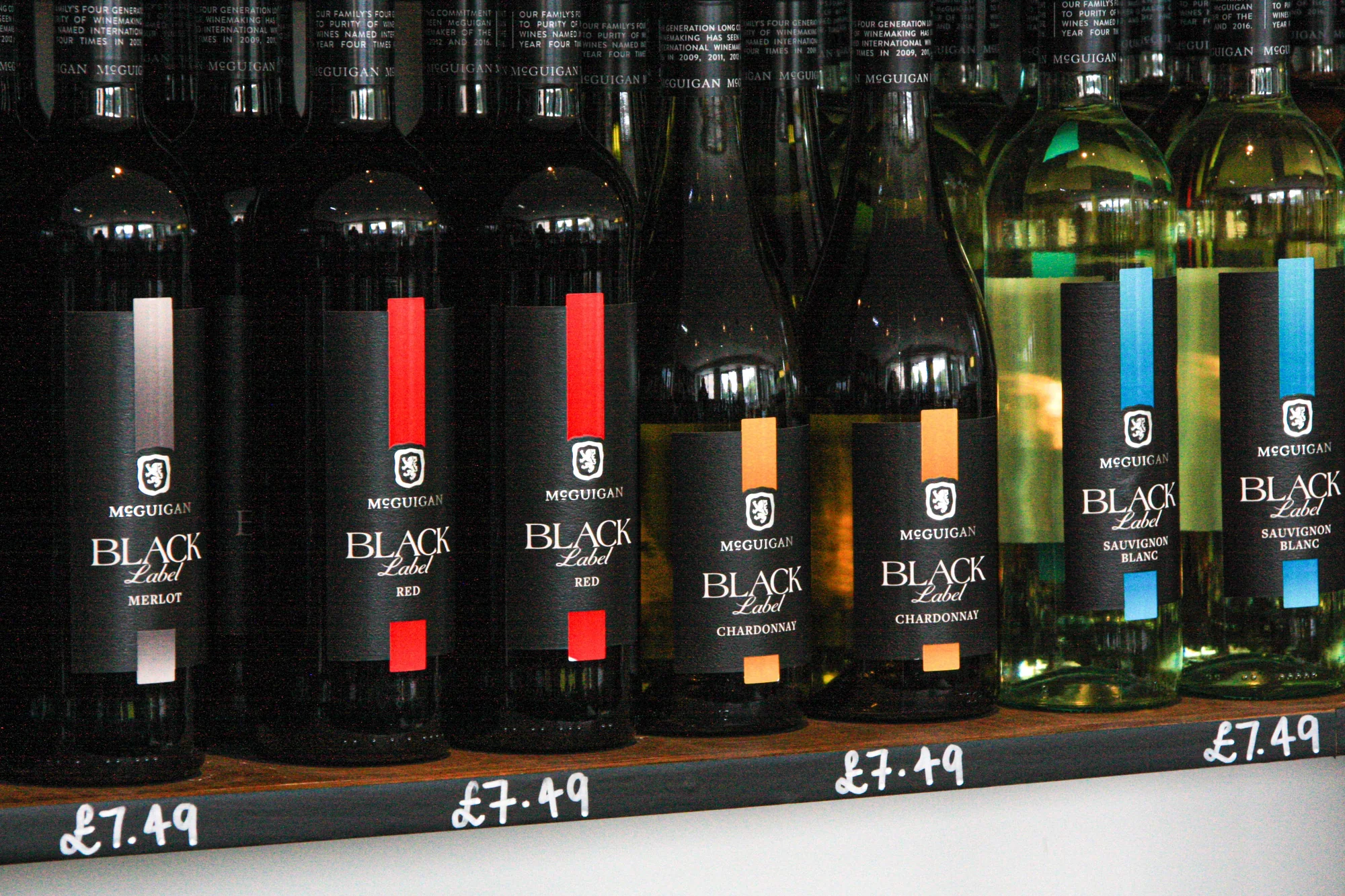
    The new McGuigan Black Label Mid is the first mid-strength wine launched under the Australian winemaker. Consumers call for quality and variety in the rapidly expanding mid and low-alcohol category.

    Promising the same full-bodied, fruity flavor of the iconic McGuigan Black Label Red, the new Mid is crafted to be 20 percent lighter in both calories and alcohol, using Australian Vintage’s unique spinning cone technology.

    In a recent blind taste testing1 of the new McGuigan Black Label Mid against the original, 80 percent of consumers were surprised at their preference for the new Mid over the classic full strength. Additionally, nine out of 10 said they’d consider buying the new McGuigan Black Label Mid for healthier consumption of alcohol1.

    With the new McGuigan Black Label Mid, the winemakers have reimagined the classic McGuigan Black Label Red, crafting a drop with 5.8 standard drinks and 9.8 percent alcohol for Australians to enjoy on any occasion.

    Tom Dusseldorp, chief marketing officer of Australian Vintage, the ASX-listed parent company behind McGuigan Wines, says consumers can feel confident choosing McGuigan Black Label Mid, trusting the brand to deliver on great quality and value.

    “McGuigan Black Label has been a staple in Australian households for nearly 30 years and McGuigan has a rich heritage of winemaking credentials. As cultural and societal attitudes shift towards a more conscious consumption of alcohol, we want our customers to still be able to enjoy the full-bodied flavors that Black Label offers, just tailored for mindful moderation,” said Dusseldorp.

    With consumer moderation driving category growth – mid-strength beer now accounts for 25 percent of the beer category – Australian Vintage anticipates wine to follow suit, with ‘lighter’ wine growing at 14 percent compared to total ‘wine’, which is growing at just 2 percent.

    Research commissioned by partner DrinkWise Australia also found a third of Australians (37 percent) who have reduced their alcohol consumption are using low and non-alcoholic options to cut back.

    “McGuigan has already seen great success adapting to the new societal norms, with McGuigan Zero fast becoming Australia and the UK’s number one selling no-alcohol wine range,” added Dusseldorp.

    McGuigan Black Label Mid is the natural choice for consumers looking for a modern drinking experience and for Boomers who are becoming more health conscious.”

    Promising the same great-tasting flavors of McGuigan Black Label Red, consumers of McGuigan Black Label Mid will enjoy:

    • A classic red with delicious fruit flavors of spicy plum, cherry and blackberry. This off-dry, deep wine boasts a hint of sweetness.

    • Well-balanced with a smooth finish, this versatile wine pairs brilliantly with tomato-based dishes.

    • 9.8 percent alcohol and 5.8 standard drinks, 20 percent less than Black Label Red

    • Only 103.5 calories per 150ml serve, 21.5% lighter in calories than Black Label Red McGuigan Black Label Mid will be ava
  • Treasury Wine Estates boosts profit despite being shut out of China

    Treasury Wine Estates boosts profit despite being shut out of China

    Treasury Wine Estates Ltd posted a 5.3% rise in annual profit on Thursday, as strong U.S. sales and price hikes more than offset a hit from hefty Chinese tariffs on Australian wine.

    The world’s biggest standalone winemaker has been re-directing supply of its prized Penfolds label wines to the United States, Europe and domestically since China imposed an anti-dumping duty on some Australian wines in late 2020.

    The company, which also owns Wolf Blass and Wynns brands among others, said net sales revenue at its Americas unit grew 2.5%, benefiting from efforts to expand its presence in the market, including collaboration with rapper Snoop Dogg.

    Demand for Penfolds label wines, the company’s most premium offering, stayed strong despite soaring inflation in the United States and Europe. While total net sales revenue for the segment fell 9.1%, sales in markets outside China more than doubled.

    The winemaker said it was raising prices across divisions to offset the impact of higher input costs and that it expected to improve its margins further in 2023.

    Treasury Wine’s global supply chain optimisation programme, which was rolled out in 2021, helped the firm save A$90 million ($62.47 million), more than an earlier estimate of A$75 million, and offset the impact from higher input costs.

    “We expect TWE will deliver strong earnings growth in FY23, reflecting a COVID recovery in its higher margin channels,” analysts at Morgans said.

    Treasury posted a profit attributable of A$263.2 million for the year ended June 30, higher than A$250.0 million reported a year ago but below an estimate of A$282 million from Morgan Stanley. Overall sales revenue fell 3.6%.

    Shares of Treasury Wine fell about 1.5% in early trading, while the broader marker was down 0.5%.

    The company said its long-term financial objective was still to deliver sustainable top-line growth, high single-digit average earnings growth, and a group operating earnings margin of more than 25%.

  • Red China – up-and-coming wineries gain recognition

    Red China – up-and-coming wineries gain recognition

    Chinese winemaker Legacy Peak, which started producing grapes more or less by accident in 1997, symbolizes the rapid growth of an industry that now wins accolades in global markets, but it once came close to giving up.

    “We wanted to pull out all the vines and call it quits,” said Liu Hai, its second-generation owner, recalling early struggles to cultivate a barren plot received from a local government in payment for construction work.

    His family knew nothing about farming when they got the land in the arid north-central region of Ningxia on condition that it be devoted only to grapes, but they started making wine a decade ago, after wineries that used their fruit won several awards.

    Since then, Liu says the winery has won awards and found export markets in France, Germany, and Southeast Asia, despite the annual output of fewer than 100,000 bottles.

    From the rolling hills of coastal Shandong province to the desert heights of Ningxia and the deep valleys of southwestern Yunnan, Chinese vineyards and wineries are winning recognition.

    “China is an up-and-coming fine wine producer, and its best wines can compete on the world stage,” said wine educator Edward Ragg, who is a reviewer for the influential Robert Parker Wine Advocate.

    The products of wineries such as Chateau Nine Peaks in Shandong, Silver Heights and Grace Vineyard in Ningxia, and Ao Yun in Yunnan, are rated as “outstanding wine of exceptional complexity and character” by Parker’s newsletter.

    Some, such as Nine Peaks and Legacy Peak, are finding export markets in Asia and Europe.

    China’s wine market is the sixth-largest in the world, with event organizer Vinexpo saying it consumed $14.8 billion worth of wine in 2018, and forecasting sales of $18 billion by 2023.

    But domestic wineries must battle an image problem, as consumers at home can be suspicious of their quality and often put off by high prices.

    “It was always easier to sell to foreigners because they are more open-minded, but it has been a tough sell with Chinese customers,” said Liu.

    Other problems are high production costs and erratic weather that can hamper efficiency and quality, while a slowing economy and the COVID-19 pandemic have hit China’s wine consumption since 2018.

    Modern winemaking in China dates fromg the 1980s, when French firms, such as the precursor of Remy Cointreau, began investing after the door was opened to foreign businesses by then-leader Deng Xiaoping.

    While the French influence persisted in a market dominated by reds and a glut of Bordeaux imitations, quality began improving in the early 2000s.

    That was a time when vineyards focused on growing healthier grapes just as incomes grew sharply, with more people traveling abroad and drinking more wine.

    Now home-grown wineries can allay the suspicions of some consumers, such as Yang Lu, who owns a restaurant in the Chinese capital.

    “I was amazed by how the aroma was full of nice fruits and flowers,” said Yang, describing her experience last year of first sampling the Mountain Wave label produced in Ningxia.

    “It had a nice color and was smooth with a long finish.”

    Until then, Yang, who is in her 30s, educated overseas, and widely traveled, had almost always ignored domestic wines, uncorking only imports such as New Zealand wines made from pinot noir.

    Some winemakers, such as Ian Dai, 33, who is behind the Ningxia brand Xiaopu, priced in the range from 168 yuan ($26) to 300 yuan ($47), are turning away from industrial methods in the search for a Chinese signature variety.

    Dai said he was looking to more natural methods, such as fermenting without commercial yeast or leaving acidity and tannin levels unadjusted to “let grapes express themselves”.

    An independent with no vineyards or winemaking equipment of his own, Dai is in his fifth year of winemaking after dropping out of college in Sydney and spending a decade in wine sales.

    Dai hopes to find grape varieties for a wine that represents China.

    “As a winemaker I should have the ego to make the best wine in this climate with grapes grown here,” said Dai, who expected it would take two decades to produce such a wine in China.

    Chinese wineries are also experimenting with alternative grape varieties, such as marselan, aglianico and saperavi. Marselan, a cross between cabernet sauvignon and grenache embraced years ago by Legacy Peak and others, offers high yields and a fruitiness much needed by Chinese reds, experts say.

    “Marselan could one day become China’s signature wine grape, like malbec is to Argentina,” added Ragg, a holder of the Master of Wine qualification

  • Fine wines languishing in China warehouses as demand cools

    Fine wines languishing in China warehouses as demand cools

    Importers of fine wines are cutting the prices of their products by as much as three-quarters amid a drop in demand.

    The fire sales are prompted by a huge oversupply of wine that had built up after a swarm of importers jumped at seemingly stellar growth from 2010.

    China wine consumption, which had been rising in double digits, dropped last year and is set to inch up just over 1 percent annually until 2020, Reuters reported.

    The striking slowdown is a headache for a global wine industry pinning hopes on fast China growth, and a further sign that Chinese consumers are reining in spending even as Beijing hopes they will pick up the slack from falling exports.

    “When we started there was huge demand so we could control prices, big margins no problem,” said Xavier Grangier, sales director at logistics firm Europasia, which runs a  4,000 square meter Shanghai warehouse storing 250,000 bottles of mostly European wine.

    Now, his firm has had to lower some prices and been stuck with some wine it is unlikely to sell.

    “In Shanghai alone, 2,000 firms in the wine business just vanished over the last couple of years,” he added.

    China’s retail wine market is worth around 78 billion yuan (US$12.36 billion), with imports making up around a third, according to a 2015 report from wine data analytics firm IWSR.

    While official retail sales figures have been a rare bright spot amid a stream of economic data showing China’s economy faltering, private sector surveys have shown consumer sentiment plumbing record lows in recent months.

    A crackdown on corruption now in its third year has also discouraged conspicuous consumption, hitting not just wine but also sellers of other luxury goods from LVMH and Burberry to global auto makers.

    “In 2010 everyone was screaming from the rooftops that China was the El Dorado for wine and you could become a millionaire by jumping into the business,” said Pierrick Fayoux, Shanghai-based marketing manager at French wine importer VGF China Ltd.

    “Now wine is being sold below cost, some is going bad sitting for long periods in poorly maintained warehouses and decent Bordeaux wines are going for 15 yuan a bottle.”

    To be sure, China’s wine industry has long-term potential: the market is already the world’s fifth largest, but with only 38 million wine drinkers — mostly in big cities such as Shanghai, Beijing and Tianjin — among a population of 1.4 billion, annual consumption per capita is only 5.8 liters, a fraction of the 50 liters consumed in France.

    For now though, the inventory overhang and the downward pressure on prices is making it hard to turn a profit.

    Even China’s biggest wine importer, ASC Fine Wines, has trimmed prices and taken a hit to its margins, a person with direct knowledge of the firm’s operations told Reuters.

    ASC, owned by Japan’s Suntory Beverage & Food Ltd., said the wine market was in a new slower stage of growth and that consumers were increasingly “price-conscious”.

    “We are expanding our entry-level wine selections to meet the changes in consumer demand,” said ASC’s chief executive officer Bruno Baudry in emailed comments to Reuters.

    The squeeze on prices could be better news for more affordable New World wines, with countries such as Chile and South Africa already taking more market share with wines under 100 yuan.

    “There is still demand for imported wine, but not the same wines,” said Guillaume Deglise, chief executive of Vinexpo, which organizes wine fairs to help introduce producers to China buyers.

    “Before it was mostly the luxury end of the business — up-market wines from Bordeaux. Now it’s the entry-level market.”