Retail News CRM

Tag: Redmart

  • RedMart Now: Shaking Up Singapore’s Grocery Scene with 30-Minute Deliveries

    RedMart Now: Shaking Up Singapore’s Grocery Scene with 30-Minute Deliveries

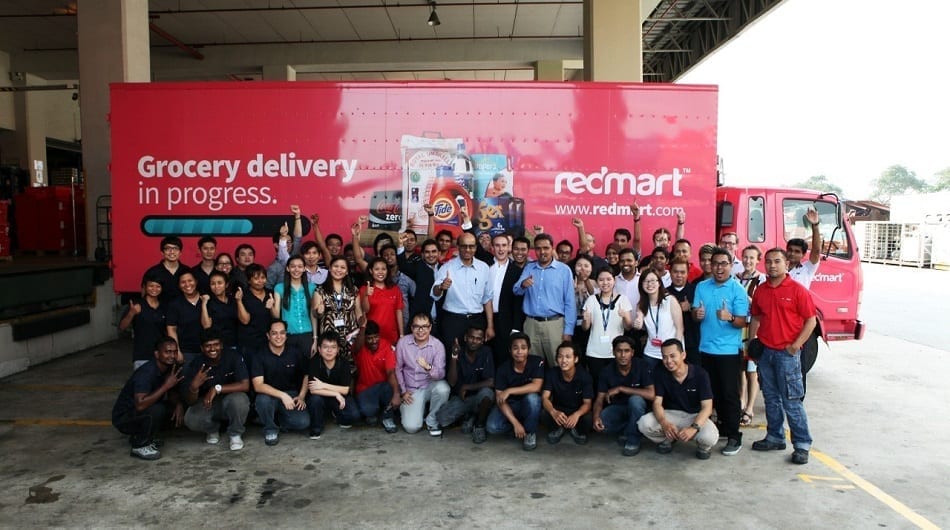
    Lazada’s RedMart has recently announced the launch of a new on-demand grocery delivery service in Singapore, RedMart Now, which guarantees to deliver orders within 30 minutes.

    Expanded Delivery Options

    The latest service supplements RedMart’s pre-existing same-day delivery offerings, including two-hour and six-hour delivery windows. RedMart Now will initially operate across selected southern and central neighborhoods such as Sentosa, Telok Blangah, Alexandra, Pasir Panjang, Clementi, Queenstown, Orchard, River Valley, Tanglin, and Bukit Timah. Plans are in place for a phased rollout across the rest of the island.

    Curated Product Range

    RedMart Now will feature a tailored selection of frequently used essentials such as fresh produce, snacks, beverages, festive goods, and household items. The delivery fee is set at S$3.99 for orders exceeding S$30.

    Martin Daney, SVP, Head of RedMart at Lazada, explained the rationale behind launching RedMart Now. He articulated that the aim of the service is to cater to urgent and unexpected shopping needs. He emphasized how the service was designed to allow customers to receive their needed items in as little as 30 minutes. The overall goal is to become the leading platform for both regular grocery shopping and urgent needs, thus allowing consumers to dedicate less time to running errands and more time to activities they enjoy.

    Entering the Quick Commerce Market

    The introduction of RedMart Now places the company in direct competition with other fast-delivery providers in Singapore’s dense and high-value grocery market. It also signifies a deeper penetration into the nation’s rapidly expanding quick commerce sector.

    Quick commerce presently constitutes about one-third of Singapore’s online grocery delivery revenue. Last year, according to Statista, the segment was projected to hit approximately US$371.75 million within a broader online grocery market estimated at US$1.04 billion.

    Questions & Answers

    What is RedMart Now?
    RedMart Now is a new on-demand grocery delivery service launched by Lazada-owned RedMart in Singapore, promising delivery within 30 minutes.

    Where will RedMart Now initially operate?
    RedMart Now will initially operate across selected southern and central neighborhoods in Singapore, with a phased rollout planned for the rest of the island.

    What does the launch of RedMart Now signify?
    The launch of RedMart Now signifies a deeper penetration into Singapore’s rapidly expanding quick commerce sector and places the company in direct competition with other fast-delivery providers in the country’s high-value grocery market.

  • Feeding a Nation – RedMart West Fulfilment Centre, Singapore

    Feeding a Nation – RedMart West Fulfilment Centre, Singapore

    Providing productivity, space efficiency, speed, and accuracy – with the bonus of increased safety and social distancing.

    An Advanced Grocery Online Fulfilment Centre – Scaling Up to Meet Growing Demand

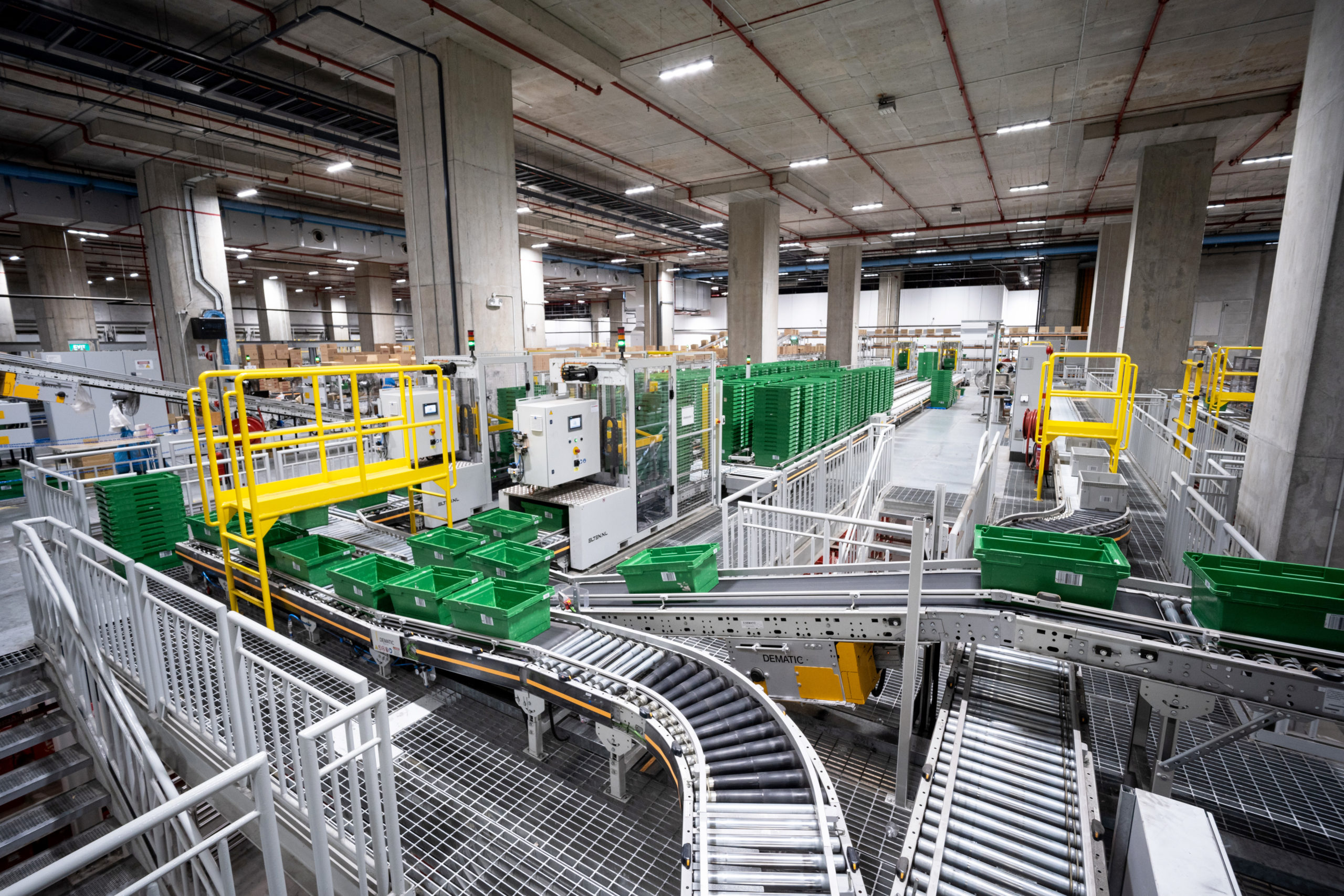
    Occupying 32,500 square metres (350,000 square feet), one of the largest logistics facilities in the country belongs to the biggest online grocery platform in Singapore –RedMart. RedMart is the online grocery service of e-commerce giant, Lazada, which serves all of Singapore. The RedMart West Fulfilment Centre has been able to build up its logistical prowess through automation, thanks to intelligent, innovative solutions from Dematic.

    “At RedMart, we offer over 100,000 assorted products to Singaporeans”, said Mr. Gerald Glauerdt, Co-Founder & Chief Logistics Officer at RedMart and Lazada. “This RedMart Fulfilment Centre is our main hub, seeing a lot of hustle and bustle as we are open 24/7, fulfilling orders for our customers as soon as they are placed.”  Mr. Glauerdt also went on to add that this advanced fulfilment centre for groceries is the first one of this scale and complexity in Singapore.

    RedMart’s West Fulfilment Centre is powered by market leading automation from Dematic to meet the increasing demand for online grocery shopping. The Dematic automated solution includes robotic shuttles, ergonomic high-speed pick stations, an intelligent conveying system, and a high-rate sortation system, all managed by a sophisticated software platform to make processes incredibly easy and efficient for pickers, packers, and management staff.

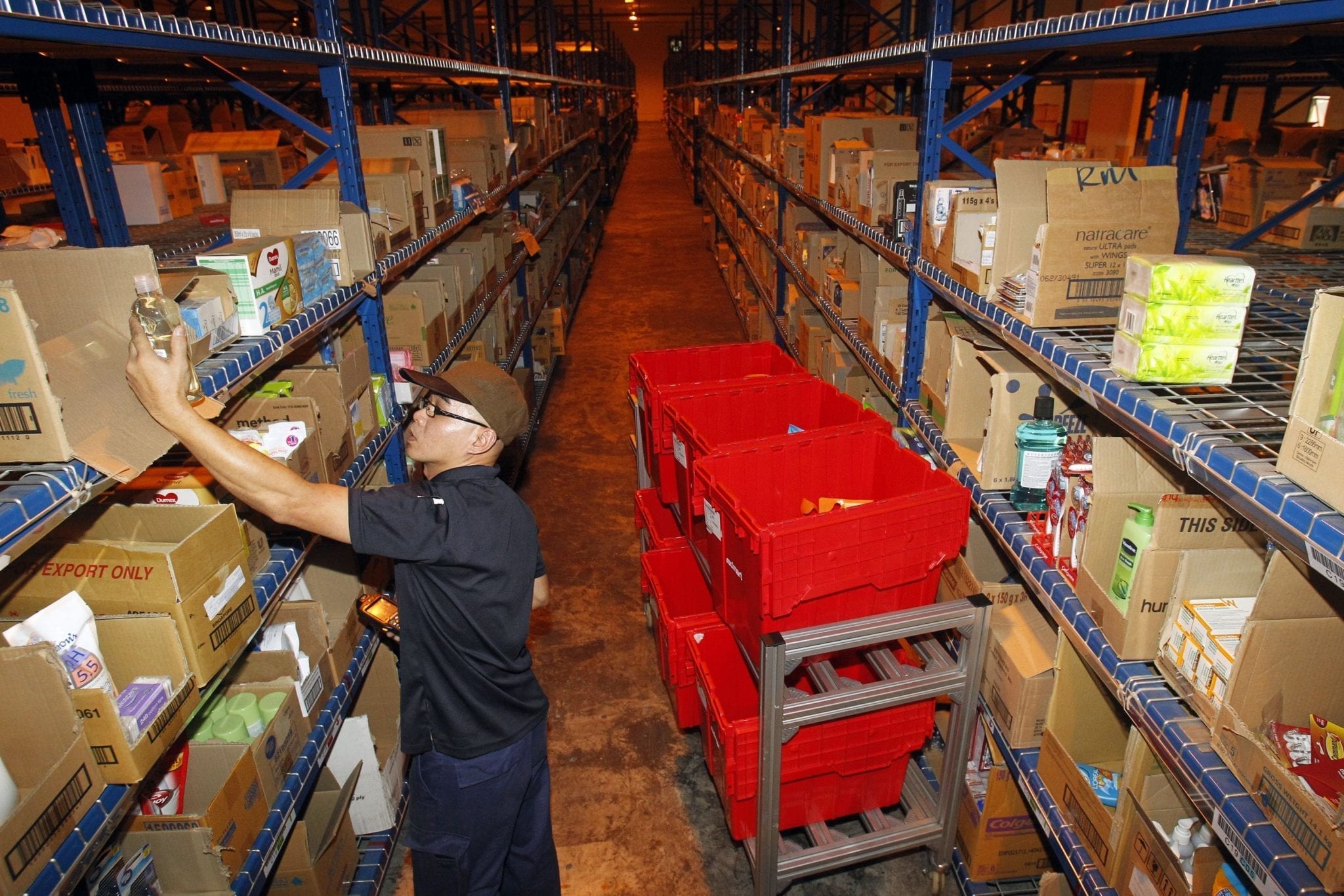
    In its previous setup, RedMart operators would have to manually travel around aisles and aisles of shelving to pick the items required for orders. In addition to spending a lot of time travelling, pickers would need additional time for receiving instructions, locating products, and loading and unloading trolleys, resulting in a highly inefficient process that was not only time-consuming, but prone to errors. Errors made by the pickers in such a manual process are difficult to detect, hard to prevent and extremely costly to resolve. With the automated solution provided by Dematic, RedMart’s productivity and accuracy have both improved significantly.

    Another key factor in developing the overall infrastructure for the RedMart West Fulfilment Centre was the building footprint. In Singapore, a big component for businesses is the cost of space. When RedMart first started talking to Dematic, they were receiving less than 2,000 orders per day, and had around 5,000 products in their range. However, the RedMart West Fulfilment Centre needed to be designed to handle a significantly greater number of orders and products on a daily basis. RedMart realised they would not be able to find the space or the workforce to meet their growth target using their current practices.

    The COVID-19 Pandemic – Providing Solutions to meet this Disruption

    Online grocery shopping had been experiencing strong growth in Singapore for several years but saw some explosive growth because of the pandemic.

    Mr. Glauerdt mentioned that the decision to install a high level of automation at this facility was made well before the onset of COVID-19, but the importance of the automated solution to RedMart’s business has been underscored by the pandemic, where the rate at which consumers have turned to online platforms to purchase their groceries has grown exponentially.

    According to RedMart, sales jumped by more than four times during the start of the pandemic, with unique visitors to the website rising by more than 11 times.

    “A lot of elements that we designed into these solutions put RedMart in a really good position to adapt and respond to the pandemic”, said Mr. Michael Bradshaw, Senior Regional Director, Sales & Solutions Development, Dematic. “They now have operators working at socially distanced workstations, rather than crossing paths, pushing a trolley around to pick an order. With the pandemic, we saw an incredible surge in demand for online grocery shopping, and the volume that Redmart had planned for several years in the future, was brought forward.  With the capacity they had available with the automated solution, Redmart were able to take on the increased demand and service their new customers.”

    Challenges faced by RedMart – Exponential Growth Required Scalable Infrastructure

    The online market for groceries had seen a growth rate of 300% since 2017, however with RedMart’s previous infrastructure and manual processes, it would not have been able to cost-effectively take advantage of this growth opportunity.

    “Our previous model was no longer working for us as we continued to grow. To meet the demand of consumers when it comes to online grocery shopping, the old method of manually hand-picking an order to pack and send to customers was too time-consuming, inefficient, and low in productivity,” said Mr. Glauerdt. “We knew we needed to scale our model of operations up, and we needed to find a solutions provider who was highly experienced in warehouse and logistics automation. Dematic was chosen as they were able to provide us with highly customisable solutions that would bring us the productivity increases that we were looking for.”

    One of the technologies Dematic has provided as part of the automated solution is the Dematic Multishuttle® system. Products are placed in totes, which are automatically stored in high-density racks by robotic shuttles. The Dematic Multishuttles automatically transport totes between storage locations and operator pick stations, eliminating the need for operators to travel and preventing them from picking the wrong product. These towering racks extend from floor to ceiling, maximising the storage density of the warehouse.

    “The automated solution uses robotic shuttles to store and retrieve products automatically and deliver them to goods-to-person (GTP) workstations where operators can work up to 5 times faster than they were previously”, said Mr. Bradshaw. “This part of the solution covers a huge product range in a small footprint, with an extremely effective picking method. The shuttles are also used to automatically replenish pick locations allocated for faster moving products where we use light picking technology to direct the operators, making the picking process as fast and accurate as possible.”

    Whenever there is an order to be fulfilled from the goods-to-person area, the Dematic Multishuttle system automatically retrieves totes containing the required items. Totes are retrieved in a specific sequence and conveyed to the GTP workstations where they are picked and placed into order containers. The operator stays in one place while items are delivered to their pick station automatically, increasing picking speeds and productivity by eliminating the need for the picker to walk around many aisles of shelving.

    “This example of the GTP brings a highly productive solution in terms of processes, where a picker could now pick and pack 500 items in the same time that it used to take us to pick and pack 100 items in the past using the manual process”, said Mr. Glauerdt. “Dematic was able to offer this customised solution to help reduce the burden on our pickers, whilst boosting productivity and efficiency, helping us to meet the growing demand of online grocery shopping.”

    Dematic’s system also includes order fulfilment of fresh produce in multiple temperature zones including a freezer pick area. Customer orders are transported through the various picking areas of the facility as required using an intelligent routing conveying system and consolidated at ergonomic packing stations in preparation for despatch. Once packed, orders are conveyed and automatically sorted to specific delivery vehicles using one of Dematic’s high rate sliding shoe sorter. The solution minimises customer orders touch points, maximising both productivity and hygiene.

    Challenges met with Challenges – Maintaining Customer Service Levels

    “To make sure that the system keeps running around the clock, Dematic provides service and support that’s available 24/7”, said Mr. Bradshaw. “We have technicians located on-site to help look after the equipment and attend to any issues faced by RedMart during their operations. The early warning system integrated into our software tells us about something that might cause us a problem before it actually does, ensuring that our system runs at the highest level of availability for RedMart and its customers.”

    The whole system is covered by support from the Dematic Software Centre, staffed by a dedicated team of specialist engineers available 24 hours a day, who can be dialled into the system in a matter of minutes to provide help whenever needed.

    RedMart Fulfilment Centre System Benefits

    • Increased productivity with intelligent order routing, paperless picking technology, automated replenishment and Goods to Person picking stations supported by the Dematic Multishuttle
    • Improved ergonomics and safety at operator workstations
    • Reduced order fulfilment times
    • Improved space efficiency and storage capacity, with high-density storage provided by the Dematic Multishuttle.
    • Improved inventory and order accuracy ensures customer orders are fulfilled correctly and reduces the cost of resolving errors and addressing returns
    • Products in multiple temperature zones handled by the one system streamlining the order fulfilment process and speed of delivery to customers.
    • Flexibility to handle a growing product range and diversity of order profiles.
    • Improved operational efficiency with real-time monitoring of inventory, orders, workload progress and system performance.
  • Swee!’s celebration of Singaporean culture through creative branding lands RedMart global brand award recognition

    Swee!’s celebration of Singaporean culture through creative branding lands RedMart global brand award recognition

    Swee!, a hyper-local brand under the Private Label umbrella of RedMart, Singapore’s leading online grocery retailer, has been awarded Gold in the New Brand category at the 2019 Vertex Awards. The annual Vertex Awards celebrates and recognises the best in private brand packaging design across the globe.

    Other Gold Award winners this year include renowned overseas retailers such as Woolworths Supermarkets in Australia, 7-Eleven in the US, Sobeys in Canada, Albert Heijn and SPAR in the Netherlands, El Corte Inglés in Spain, and German supermarket chain Aldi.

    Launched in February 2018, the Swee! brand is a celebration of Singaporean tastes and preferences, offering entry-level, everyday groceries and household items ranging from oyster sauce and sesame oil to sausages and scourers for Singapore shoppers. It is one of three brands under RedMart’s Private Label range, along with RedMart Label and World’s Cellar. Launched in May 2015, the three brands together house more than 320 products across 13 categories, all sold exclusively on RedMart.

    Richard Ruddy, Chief Retail Officer and Head of Grocery for Lazada Singapore, said, “We launched our RedMart Private Label range in May 2015 with the aim of delivering value for money to customers with no compromise on quality or innovation. Since then, the range has grown by leaps and bounds – we have experienced 80 percent year-on-year growth and more than tripled our Private Label revenue since June 2017, and almost 50 percent of RedMart shoppers now buy RedMart Private Label products.”

    Nupur Agrawal, Private Label Lead at RedMart, said, “We are thrilled to receive this award with Anthem Singapore for RedMart’s Swee! Label, which is under our Private Label umbrella. We will continue to expand our offerings to provide Singapore grocery shoppers with the best product range and quality regardless of price point, as well as look for ways to enhance the online-to-offline experience, such as through innovative and iconic packaging designs.”

    Anthem, the global creative agency responsible for Swee!’s packaging design, was challenged by RedMart to deliver a brand story with local relevance and ultimately attract more traditional shoppers who are more comfortable buying from their regular brick-and-mortar supermarket. RedMart and Anthem’s goal was to create a brand proposition that connects with the local consumer and answers their need for a range of simple, fit-for-purpose items.

    Spencer Ball, Creative Director of Anthem Singapore, said, “It is a proud moment seeing Swee!, a brand born out of Singapore’s heartland, being honoured on the world stage. This is a perfect example of the shared belief in a simple, strong idea, from a talented creative team and a bold client.”

    As a strictly online brand, packaging presentation and branding is paramount. RedMart and Anthem collaborated to create a brand with a ‘chirpy’ personality, but with a familiar simplicity. Drawing on inspiration from Singapore’s heartland, with a nod to the utilitarian aesthetics of high-rise public housing estates and the unpretentious language of the neighborhood wet market, Anthem landed with the brand name ‘Swee!’ – a Hokkien expression that roughly translates to ‘works perfectly’. Since its debut on RedMart, the line has continued to grow with a diverse range of products.

    Anthem is known for choosing to collaborate exclusively with retailers and brand owners who share their company values in ensuring the highest quality products. The brand development partnership with RedMart was a great fit, as RedMart’s Private Label is built on stringent quality guidelines with a deep commitment to supporting sustainably and responsibly sourced products.

    Anthem, part of SGK group, had previously won Vertex awards for other projects. This year, the group has also won Gold Vertex Awards for the work developed for Woolworths Supermarkets.

    The 2019 Vertex Awards received a record number of entries from 33 countries representing the absolute best in packaging design from across the globe.

    RedMart is fully owned by Lazada Group, Southeast Asia’s leading eCommerce and shoppertainment platform.

  • Lazada strengthens its position as Singapore’s top eCommerce platform with RedMart’s move to the Lazada app

    Lazada strengthens its position as Singapore’s top eCommerce platform with RedMart’s move to the Lazada app

    With RedMart officially completing its move to the Lazada platform on 15 March, customers can now enjoy a one-stop solution for all their shopping needs. Those who buy their groceries online via RedMart now have access to more than 400,000 retailers in Lazada’s ecosystem, all within the same app and at redmart.lazada.sg. The move also makes Lazada the top eCommerce platform in Singapore in terms of traffic and product range.

    RedMart’s move is part of Lazada’s plan to become Southeast Asia’s biggest eCommerce ecosystem and offer customers the best selection of products across all categories. Combined with RedMart, Lazada has more than 165,000 grocery and supermarket offerings, more than any other grocer (retail or otherwise) in Singapore and Southeast Asia.

    James Chang, CEO of Lazada Singapore, said: “Bringing Lazada and RedMart together is an ambitious project aimed at offering Singapore customers a platform to shop for all their needs more easily and conveniently. Customers can compare similar products across all the retailers in our ecosystem, shop for complementary offerings and benefit from having more payment options, such as the Lazada Wallet.”

    “Since making the move, order volume generated via the new RedMart store on Lazada has been encouraging, with customer orders submitted in the first five days after the move (15-19 March) growing at a similar rate as on the previous platform. This shows that we have been successful in bringing together general merchandise and groceries to create a truly one-stop shopping experience. Lazada is now the top eCommerce platform in Singapore, offering more products and attracting more shoppers than any other platform.”

    Lazada will be rolling out a series of app updates over the next few months to further enhance the shopping experience for customers.

    “We are constantly looking at ways to improve the platform. We take our customers’ feedback seriously and want to ensure that we not only offer them the best selection of products, but also the best user experience,” James added.

    Lazada will launch the following RedMart features and functionalities by end-June 2019:

    1. Order Amend – allowing customers to add more items to an existing placed order;
    2. Delivery Slot Incentives – incentivising customers to consolidate deliveries within the same area and timeframe to reduce our carbon footprint;
    3. My List Features – including managing lists and stock up reminders.

    Other improvements in the pipeline include:

    1. Search Functionality – additional sorting by relevance and/or savings;
    2. Delivery Slot Reservation – allowing customers to reserve their delivery slot before they add items to their shopping cart;
    3. Order Rescheduling – allowing customers to change their delivery timing post-checkout.

    Orders made on the new RedMart on Lazada will continue to be fulfilled according to customers’ chosen two-hour delivery slot between 7AM and 10PM, seven days a week including public holidays, while orders with other Lazada sellers will be fulfilled separately. LiveUp Loyalty Programme members will continue to enjoy free shipping on RedMart for orders over $40, and cashback benefits in the form of Lazada credits which can be used for any orders on Lazada, including for RedMart items.

  • Pomelo secures RedMart’s Jim Boland

    Pomelo secures RedMart’s Jim Boland

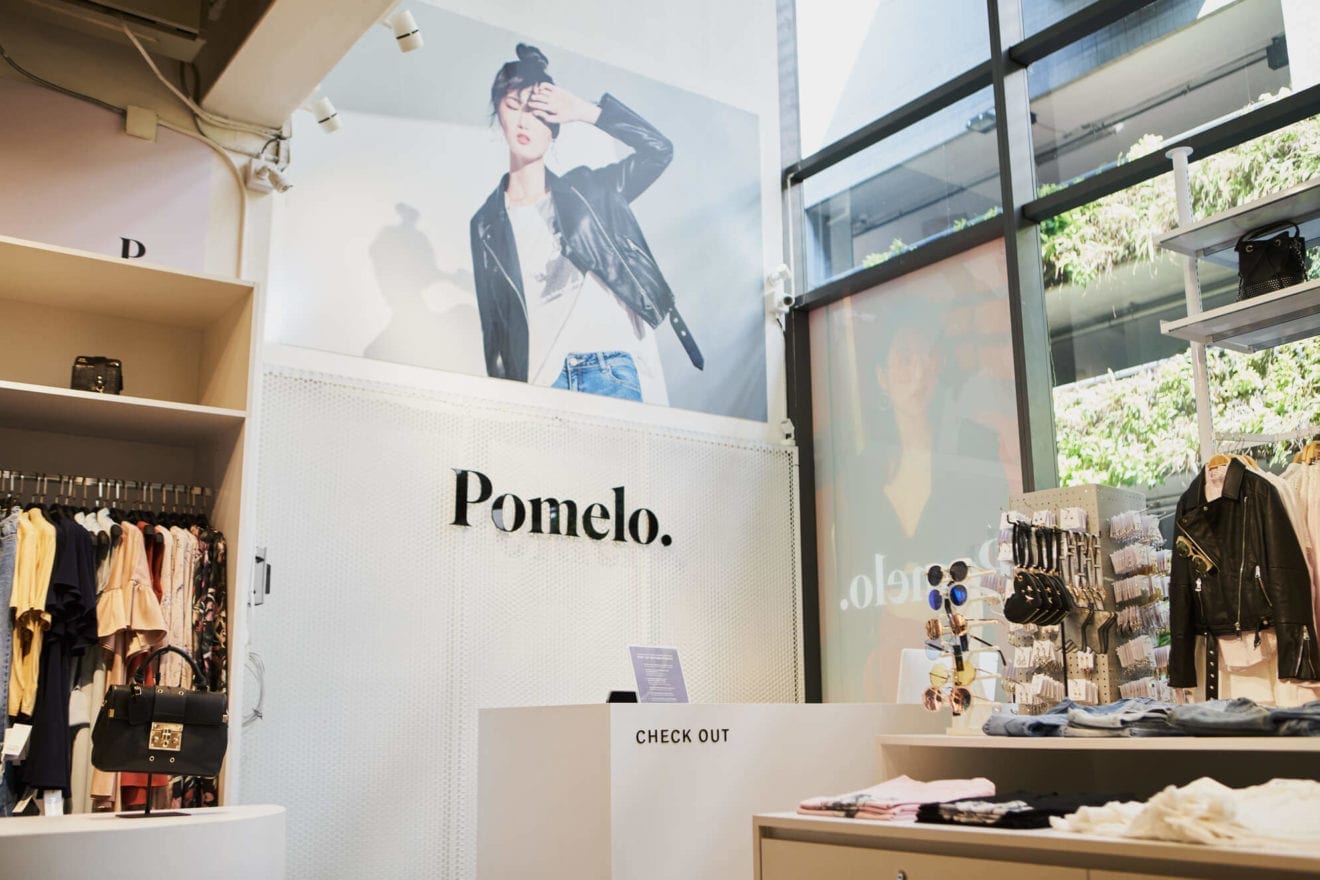
    Bangkok-headquartered omnichannel fashion company Pomelo has appointed Jim Boland, former RedMart CFO, as its new CFO.

    Boland has successfully led finance organisations in fast-growing e-commerce businesses for more than 19 years in leadership roles at Amazon, Dell and Alibaba-owned RedMart. His appointment will see him aiming to build up Pomelo’s financial infrastructure to drive profitability while enabling rapid growth across the region.

    “I am delighted to join this innovative company, which has designed a business model strategically suited to grow fast and profitably,” said Boland. “As a digitally native, vertically integrated omnichannel brand, Pomelo presents an exciting opportunity to leverage my past experience with vertical integration, retail, and e-commerce, especially during the critical scaling up phase.”

    With Boland’s new role as CFO, Pomelo’s co-founder and former CFO Casey Liang is transitioning to Pomelo’s growth team, which encompasses the performance-marketing and business-intelligence teams, a cross-functional unit that will work closely with other teams to accelerate customer acquisition and retention.

    “As we continue in this period of rapid expansion, I am excited to foster more coordination between our creative and technical teams to further accelerate our growth rate and help more customers to experience Pomelo’s unique value proposition,” said Liang.

    Pomelo’s CEO David Jou expressed excitement at the hire as the firm pursues building the “first global fast fashion brand out of Asia”.

  • Lazada to ramp up Southeast Asian grocery offering

    Lazada to ramp up Southeast Asian grocery offering

    Lazada Group has announced plans to ramp up its supermarket business in Southeast Asia as part of its strategy to become the region’s biggest e-commerce ecosystem. The supermarket transformation is being started off in Singapore, as homegrown online grocer RedMart is integrated into the Lazada platform on March 15 following its acquisition in 2016. Following the launch, shoppers will be able to buy groceries and fresh produce along with Lazada’s other product categories on the single platform, boosting the brand’s grocery and supermarket offering to more than 165,000 products.

    Elsewhere in the region, Lazada is looking to launch its grocery and supermarket business in at least one other city from the second half of 2019.

    The new moves are aimed at catering to the growing demand of supermarket shopping as consumers increasingly buy groceries online. The grocery market in Southeast Asia is expected to be worth US$309 billion by 2021, with shoppers filling their baskets online more than twice a month. In Singapore, seven in 10 people who buy their groceries online already do so on RedMart.

    “We want to drive the evolution of grocery shopping in the region by combining our unparalleled assortment of products and superior logistics network to transform the way customers get their daily essentials and fresh produce,” said Jing Yin, co-president of Lazada Group. “Most of us shop for groceries and other household items very frequently. This presents a unique opportunity for Lazada to be part of our daily lives.”

  • Japan’s Utena debuts in Singapore

    Japan’s Utena debuts in Singapore

    Japanese beauty brand Utena has launched in Singapore.

    The 91-year-old heritage brand, which is currently distributed throughout Greater China and Thailand, is now available at selected Watsons stores, Yue Hwa, Welcia-BHG, Tokyu Hands, Don Don Donki, Metro Singapore, and online via Shopee, Lazada, Redmart and Qoo10.

    Its key products are a high-level beauty serum mask called the Premium Puresa Golden Jelly Series, now selling in Singapore, and the Matomage Hair Styling series fortified with natural ingredients, arriving in stores next month.

  • New RedMart executive aims to boost tech talent pool

    New RedMart executive aims to boost tech talent pool

    Back home in Singapore to work for online supermarket RedMart, Silicon Valley veteran Patrick Teo says he has another job on his hands: attracting other talent back to boost the island city/state’s expanding tech hub.

    After gaining a PhD in Computer Science at Stanford University and holding senior positions at Amazon, Facebook and Shutterfly, he has been appointed chief product officer and executive VP for engineering at Lazada-owned RedMart.

    “As a Singaporean, I see the exciting developments taking place at home and want to contribute to building the tech ecosystem here,” he says. He is keen to work with the industry and government “to further cultivate the talented engineers coming out of Singapore’s universities and attract many living abroad to come back”.

    Teo started his Silicon Valley career at online retailer and manufacturer Shutterfly, where he led its engineering teams from start-up to its IPO.

    He then went on to build Amazon’s digital music technology as head of technology and site leader of the company’s San Francisco office. Most recently, he led multiple engineering teams at Facebook.

    Now he reports to RedMart president Vikram Rupani, who says Teo’s presence is “a stamp of validation for Singapore’s maturing tech ecosystem”.

    Teo says that with top e-commerce companies such as Alibaba and Lazada investing in Singapore, the nation “is on the path to become a truly world-class tech hub”.

  • Lazada opens Coca-Cola, Nestle, Redmart shop-in-shops

    Lazada opens Coca-Cola, Nestle, Redmart shop-in-shops

    Lazada Singapore has unveiled three new shops on its online marketplace, in a bid to bolster its e-tail offering and win consumers during its ‘birthday sale’.

    Lazada has launched ‘shop-in-shops’ for international heavyweights Coca-Cola, Nestle and Redmart, each of which allows the brands to keep their identity across online and offline channels, while giving shoppers a way to connect with them.

    Earlier this year, Lazada acquired RedMart, marking their move into the grocery category, specifically fresh and frozen products. The new addition will also see Singapore shoppers gain access grocery products from RedMart directly via Lazada Singapore, the first step towards a larger partnership between the two companies.

    “We are excited about working together with Lazada Singapore, especially at a time that marks their third year serving shoppers in the country. RedMart will be offering exclusive promotions on everything from Extra Virgin Olive Oil to Sauvignon Blanc, as special deals just for shoppers celebrating Lazada’s birthday,” said Penny Cox, VP Commercial and Marketing at RedMart.

    Both Coca Cola and Nestle will also stock a select range of food and beverages via Lazada Singapore.

    In the lead up to its third birthday and sale, the marketplace has also launched official shop-in-shops for bookstore MPH, SK Jewellery, Chow Tai Fook, South Korean and Mamonde, as well as fashion labels Esprit, Doc Martens and Bonia.

    “Setting up shop-in-shops in time for our birthday sale has really been part of a larger step towards bridging shoppers in Singapore with the brands they know and love. This, combined with a consistent free delivery and 14 days free returns policy, give shoppers best of everything — ease along with great deals and the widest range of products to choose from, be it electronics or groceries,” said Alexis Lanternier, CEO, Lazada Singapore.

    The Lazada birthday sale kicks of March 21 to 23 and will see discounts of up to 90% across its entire platform.

    Launched in 2012, as a part of Lazada Group, Lazada Singapore currently hosts over 300 official brand stores. Lazada also has an e-commerce presence in Thailand, Indonesia, Malaysia and Vietnam.

  • Lazada loyalty program link to other ecommerces

    Lazada loyalty program link to other ecommerces

    A Lazada loyalty program for Singapore shoppers looks set to be expanded to other Asian markets.

    Alibaba-owned Lazada has teamed up with Netflix and Uber Technologies – the first time the companies have jointly created an online rewards program, according to Lazada CEO Maximilian Bittner.

    The program is aimed at consumers who primarily go online for shopping, entertainment, transportation and food delivery.

    Alibaba acquired a controlling stake in Singapore-based Lazada for US$1 billion last year. The “LiveUp” program links their online services, from Netflix and UberEats to grocer RedMart and Taobao marketplace.

    Consumers pay S$28 (US$20) a year for such benefits as six months of Netflix streaming, discounts on Uber rides and free delivery on Lazada or Taobao purchases. A mobile app will be rolled out in the second half of the year.

    “Singapore is the market on the cutting edge of validating what we think consumers might want, so we will focus on Singapore first,” says Bittner, who expects to add more partners.

    E-commerce in Singapore, which accounted for 0.9 per cent of total retail there in 2003, has grown from 2.4 per cent in 2013 to 4.8 per cent last year, according to Euromonitor data.

    Bittner and RedMart co-founder Vikram Rupani hatched the loyalty program over breakfast on Christmas Eve before approaching Netflix and Uber. “Their decision to do it was very fast because they have the same goal,” says Bittner.

    Uber, which entered Singapore four years ago, will offer members benefits including free rides and promotions. “This is just the beginning,” says Uber Singapore GM Warren Tseng.

  • Singapore online grocery market to triple by 2020

    Singapore online grocery market to triple by 2020

    The Singapore online grocery market is set to more than triple in size over the next three years, according to research house IGD.

    The global organisation expects sales will rise from the current S$130 million (US$91 million) to S$500 million (US$350 million) by 2020.

    At the end of 2016, IGD valued online grocery to have a 1.2 per cent share of the Singaporean grocery market. Reflecting rapidly changing shopper habits in the region and increased investment in the online channel from retailers and suppliers, IGD is further forecasting online to take a 4 per cent share of Singapore’s grocery market by 2020, with a compound annual growth rate of 39 per cent.

    Revealing the figures at this week’s IGD RedMart Trade Briefing, Nick Miles, IGD’s head of Asia-Pacific, said Singapore is hailing a new era of digital grocery retailing, driven by the entry of RedMart in 2011, Giant and Sheng Siong launching online grocery in 2013 and plenty of smaller start-up businesses also looking to grab a slice of the action.

    “Shopper habits are changing rapidly in Southeast Asia and in a compact city such as Singapore, with its relatively affluent population, big expat community and high penetration of internet and smartphone usage, there are huge opportunities for online grocery to meet these evolving needs. To make the most of this opportunity, retailers and suppliers must work together to ensure they really understand online shoppers and can tailor experiences and products to suit their personal preferences.”

    Miles says retailers are already clearly looking to improve the overall online experience, by getting the basics of search functions, favourites, images and information right for shoppers.

    “At the same time, they’ll be aiming to make delivery options as convenient as possible, whether that’s through shorter timespan delivery slots or greater choice of click and collect points throughout the region. Our UK data shows that 80 per cent of shoppers cite convenience as their number-one reason for shopping online, and we would anticipate Singaporean shoppers to have a very similar mindset when heading online for their groceries.

    “We also expect online grocery retailers in the region to encourage shopper loyalty through personalised offers and products, plus subscription models and delivery saver passes,” said Miles.

    “On top of that, shoppers in the region are increasingly connected via mobile, so ensuring a seamless shopping experience no matter what device they are using will be critical. Coupled with an increased focus on using innovations such as voice-activated technology, virtual reality and robotics, we predict huge opportunities for those retailers and suppliers who really invest in making the online grocery channel work for them in Singapore.”

  • Alibaba-backed Lazada acquires online grocer RedMart

    Alibaba-backed Lazada acquires online grocer RedMart

    On Wednesday, Singapore-based e-commerce company Lazada announced that it will acquire Redmart, an online grocery retailer.

    Singapore startup Lazada, whose platforms sell goods from smartphones to baby products throughout the region of 600 million people, said in a statement it would buy Redmart to benefit from its operational and technological capabilities. It did not reveal financial details involved in the deal.

    Lazada said it expects the transaction to be completed in the fourth quarter of this year, adding that RedMart will be led by its current management and will “continue to operate independently” after the transaction. RedMart now operates in Singapore but it has long harbored expansion ambitions.

    Lazada Group CEO Maximilian Bittner said that RedMart’s strong management team and relentless focus on putting the customer first has resulted in customers loving them in Singapore. The capital flexibility provided through this deal will go towards innovating to delight our customers.

    The acquisition come months after Japanese e-commerce operator, Rakuten, shuttered its online stores in Singapore, Indonesia, and Malaysia.

    Amazon has plans to expand to South-east Asia, and there are signs the online retail giant is entering the region through Singapore, Techcrunch reported on Wednesday (Nov 2).

    More specifically, China, which can leverage its manufacturing hub and market size. The company said that this alignment will help it expand into new product categories faster.

    Amazon has also been preparing for the local launch by quietly acquiring new assets such as refrigerated trucks, and hiring new staff.

    According to reports, Amazon plans to roll-out selected services in Singapore within the first quarter of 2017. Chinese e-commerce leader Alibaba bought a controlling stake in Lazada in April this year in a US$1 billion deal.

    However, the research firm noted that while the region presented significant growth opportunities, market players would be challenged by low credit card ownership, which now stood at lower than 7 percent in all Southeast Asian markets except Singapore and Malaysia.

  • Lazada in talks to buy Redmart for rumored $30m to $40m

    Lazada in talks to buy Redmart for rumored $30m to $40m

    Southeast Asia ecommerce portal Lazada is reportedly in talks to buy online grocery provider RedmartThe acquisition amount is said to be around US$30 million to US$40 million, which if true, is in the low range given it raised US$26.7 million last year.

    Redmart had apparently held unsuccessful talks with supermarket chain NTUC and Singapore sovereign wealth fund GIC. It also received a “lowball” offer from Amazon.

    The startup had been in trouble for some time. While its revenue grew, its expenses increased at an even faster clip.

    Lazada is controlled by Chinese online shopping Alibaba, which in April took a commanding stake in the Rocket Internet-born startup for US$1 billion.

  • Why Singapore is deemed as the failure market for Decathlon

    Why Singapore is deemed as the failure market for Decathlon

    French sporting house Decathlon is a relatively young player in the local retail scene, opening up its store earlier this year. The brand entered the retail scene at a point many established players were pulling out.

    The launch came after it had already established an e-commerce practice for nearly two and a half years to “painstakingly” understand and collect consumer data from the market. It is safe to say when Decathlon started up in Southeast Asia, the public did not really know it was a sports retailer.

    This, admits Clarence Chew (pictured) , head of marketing and communications at Decathlon, was one of the biggest problems.

    “E-commerce is not easy and was a struggle when you are selling products that people don’t actually need. People didn’t care about us. If they saw online that the product was too cheap, they would think it isn’t of quality; too expensive, and they wouldn’t want to spend. So our problem was how do we tell customers we are here?” he said, at a recent event hosted by OgilvyOne called “Delivering consumer value in an era of Disruption”.

    The brand decided to be part of the discovery process using a multi-channel approach. It was wherever consumers were looking and ensured it was part of the consumer journey.

    What also helped Chew in this process was the senior management was able to see e-commerce as part of the customer journey and not as a separate entity from the retail function. As such the goal was more synergistic.

    He added, “It wasn’t a push but rather a pull factor for us that drew customers.”

    Another big sigh of relief for Chew was when he was able to successfully convince the senior management to make Singapore a “failure market” for the brand and  use it as a test bed for all things new and shiny in the digital landscape. After all, failure is vital to any great discovery and innovation. He said:

    “In Singapore, I can do whatever I want with any budget I want. And I will not be blamed if it fails.”

    Chew explained the country was chosen for its dense and diverse population. The city-state structure worked to the brands’ benefit and there was a healthy mix of old and young and locals and expatriates. This helped the brand see the contrast between old school marketing tactics and new shiny toys and figure out what really works.

    “Singapore  is a nice drawing board. Chances are if it works here, all the other countries like Malaysia and Indonesia will all eventually embrace it,” he added. But for every other country, clarified Chew, he would still need to meet the regular KPIs and carry out customised marketing.

    Bringing change internally

    Another challenge Chew faces, is getting people on board to try new ideas. He said:

    “Even if you have a CEO willing to adopt stuff, you have many other people in the organisation who don’t know and don’t care or won’t agree.”

    Agreeing with him was panelist Tony Menezes, VP of Cognitive Solutions at IBM, who also added that the country’s safe nature helped companies come up with creative solutions and ideas without as high a fear of intellectual theft. Ultimately even if technology is available, companies need to be willing to embrace it.

    “Companies need to recognise the disruptive idea will come from day to day interaction with customers and employees. Figure out how to tap into that source,” Menez said.

    For IBM, even today, the company is holding a new contest cognitive bill where employees came up with ideas to make the company a cognitive company across industries. IBM has 50 ideas from it which will come down to 10 to potentially explore.

    Ultimately if the culture of innovation has to be embraced across all levels from top to front-line in a company. When asked by the audience if building relationship is tough in a disruptive world, he said:

    “Brands that have an affiliation with consumers and communicate clearly how they plan to protect personal data, will earn the trust of consumers.”

    He explained that the commonalities amongst the many brand hacks and online breaches in recent years show that leading companies address the problems head on and share a direct strategy  with consumers rather than sit idle.

    “If consumers know that when they opt in they will get something in return from the brand and the brand is clear about it, they will get more trust.”

    And sometimes the best way to do this is to ask. As Todd Kurie, VP of marketing at RedMart, who was also on the panel said:

    “Even relatively old-school tactics like surveys can go a long way to show you are listening”

    He added the brand is a huge believer in simply asking consumers what they want.

  • $100m deal for RedMart?

    $100m deal for RedMart?

    A $100 million investment aimed at funding pan-Asian expansion is on the cards for Singapore’s online grocer RedMart.

    Discussions involving the Series C investment are said to be at an advanced stage, reportsTechCrunch, citing two sources. While closure is expected in this first quarter, the grocery company has not issued any public comment on the development.

    Launched in late 2011 by Vikram Lupani, Rajesh Lingappa and Roger Egan, the venture introduced online and on-demand shopping in Singapore. So far, the company has raised $55.1 million from 19 investors. These include, according to Crunchbase, gaming company Garena, SoftBank Ventures Korea, Visionnaire Ventures and Facebook co-founder Eduardo Saverin.

    In August, RedMart raised a $26.7 million bridging round from its investors.

    Potential targets for RedMart’s expansion include Hong Kong and Jakarta, reports DealStreetAsia. However, the firm wants to establish its market leadership in Singapore, where Egan estimates the grocery market to be worth $16 billion a year. The company’s strategy is to maintain its own logistics system and warehouses so as to have greater control of the customer service cycle and enable rapid expansion later into other verticals.

    RedMart’s Asian competitors, HonestBee and HappyFresh, have raised significant equity financing and have adopted a model relying on third-party logistics and delivery services while expanding across South-east Asia and establishing a presence in Hong Kong and Taiwan, says DealStreetAsia.