Retail News CRM

Tag: refinery

  • Fuel distributors seek foreign supply amid refinery production trim

    Fuel distributors seek foreign supply amid refinery production trim

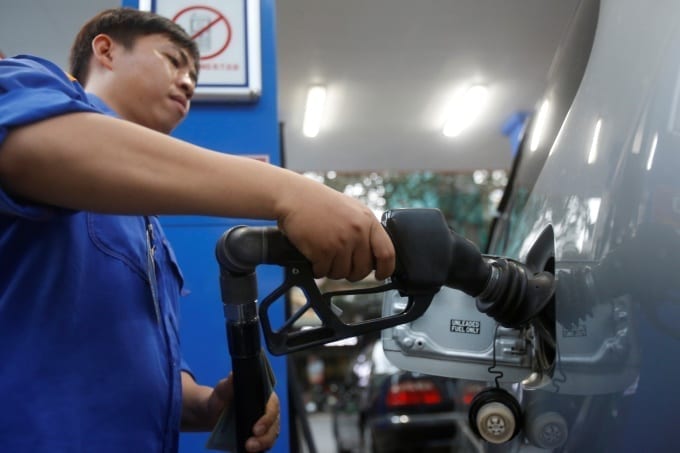
    Vietnamese fuel distributors are negotiating with foreign suppliers to ensure adequate inventory for the holiday after the country’s biggest refinery cease imports due to cash shortage.
    PVOil, the second-biggest fuel distributor in Vietnam behind Petrolimex, has secured a deal with a foreign supplier to import more gasoline amid the expected shortage.

    The supplier gave an acceptable price with reasonable delivery time, said Cao Hoai Duong, company chairman, without revealing details of the supplier and price.

    The fact that Nghi Son Oil Refinery has cut down its production from 105 percent to 80 percent due to insufficient funds is urging fuel distributors to scramble for solutions to have enough inventory for the upcoming nine-day Tet holiday, which begins Saturday.

    “The imports, together with our backup inventory, is enough for PVOil to cover the expected market shortage before, during and after Tet,” Duong said.

    An anonymous director of a central distributor said the company has finally been able to secure a deal with a supplier and will have enough inventory for the holiday.

    A media representative of leading distributor Petrolimex did not say whether it would import more as the company is still receiving the agreed amount of inventory from Nghi Son.

    “In whatever scenario we will strive to ensure there would be sufficient inventory to distribute to the market.”

    Nghi Son said that it had to cut production because state-owned energy giant Petrovietnam has not approved import contracts and therefore it has to cancel two crude oil imports this month.

    Therefore the factory might have to shut down in mid-February.

    However, Petrovietnam stated Wednesday that the factory canceled the two shipments and that it had nothing to do with the approval of import contracts.

    Matters concerning the contracts are part of Nghi Son’s restructuring plan, which is under negotiation, the statement read.

    Nghi Son Oil Refinery has a capacity of 200,000 crude oil barrels a day, or 10 million tons a year, twice that of Vietnam’s other refinery Dung Quat Oil Refinery in Quang Ngai Province.

    State-owned fuel company Petrovietnam has a 25.1 percent stake in the plant, while the rest are owned by three foreign firms: Kuwait Petroleum International (35.1 percent and Japanese companies Idemitsu Kosan (35.1 percent) and Mitsui Chemicals (4.7 percent).

  • SK Innovation net falls 21% in 2018 on oil price decline

    SK Innovation net falls 21% in 2018 on oil price decline

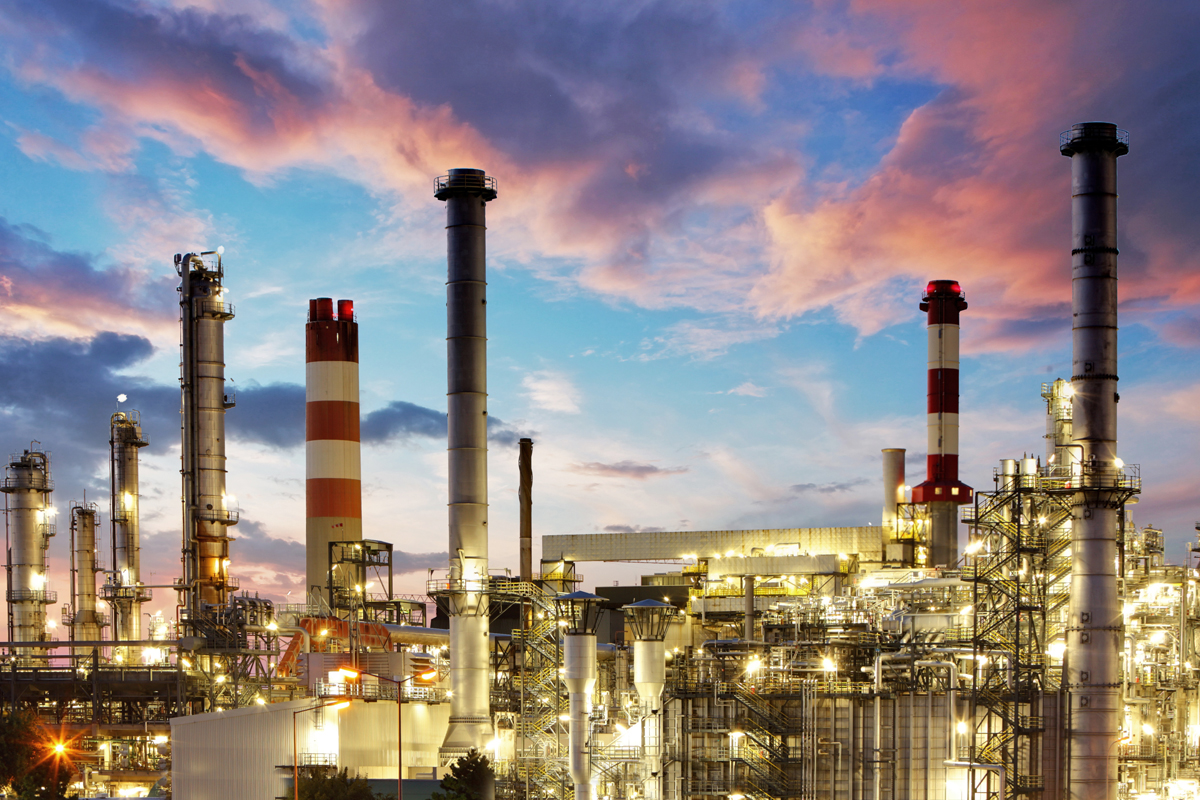
    SK Innovation, Korea’s largest oil refiner, said Thursday that its earnings sank 21 percent last year on lower oil prices and less demand for petrochemical goods. Net profit reached 1.69 trillion won last year, compared with a profit of 2.15 trillion won a year earlier, the company said in a regulatory filing.

    Operating income dropped 34.2 percent year-on-year to reach 2.12 trillion won, while sales spiked 18.1 percent to 54.5 trillion won over the cited period.

  • Vietnam’s new oil refineries to quadruple capacity by 2023

    Vietnam’s new oil refineries to quadruple capacity by 2023

    Vietnam’s total oil refining capacity will nearly quadruple by 2023 as two new refineries go on stream, market data provider Fitch Solutions reports. The Dung Quat refinery in the central province of Quang Ngai operated by the state-owned PetroVietnam’s subsidiary Binh Son Refinery Limited (BSR) remains the sole facility now, with a crude oil processing capacity of 148,000 barrels per day (b/d).

    Dung Quat will soon be joined by Nghi Son refinery in the central Thanh Hoa Province. Nghi Son is currently testing at full capacity and is scheduled to start commercial operations this month.

    The $9 billion Nghi Son project is owned by the Nghi Son Refinery and Petrochemical LLC (NSRP), a joint venture between PetroVietnam, Kuwait Petroleum, Japan’s Idemitsu Kosan and Mitsui Chemical. It will have a designed capacity of 200,000 b/d of crude oil.

    Meanwhile, the long-delayed construction of the Long Son refining and petrochemical complex in the southern province of Ba Ria-Vung Tau resumed in February this year, putting it on track to go on stream by the first half of 2023.

    Licensed in 2008 and initially slated to begin operations in 2014, Long Son hit a roadblock due to site clearance issues and disagreements over the development strategy between the project partners.

    This caused Qatar Petroleum to withdraw from the project in 2015. Thailand’s Siam Cement Group (SCG) increased its stake to 71 percent after it bought the 25 percent stake owned by Qatar Petroleum, while PetroVietnam held the remaining 29 percent.

    In May this year SCG agreed to acquire PetroVietnam’s 29 percent. The refinery is expected to cost $5-6 billion. Once completed it will be able to process 200,000 b/d of crude oil and produce 1.6 million tons of olefins annually.

    “The two new refineries would increase competition in the domestic fuel market, which could require refiners to upgrade, cut costs and move up the value chain to win market share,” Fitch Solutions said in a report released Monday.

    This also spells an end to Dung Quat’s status as the country’s sole refiner, which it has enjoyed since 2010.

    New oil refineries to quadruple Vietnam capacity 2023

    Competition from Nghi Son will be stiff as the government has granted a host of incentives to successfully commission its second standalone refinery, including tax concessions, tariff exemption on crude imports from primary feedstock provider Kuwait and an offtake guarantee from PetroVietnam for the first 15 years of operation.

    The Quang Ngai provincial government in early November sought the same incentives for the Dung Quat refinery to ensure “fair competition”.

    BSR is also planning to invest $1.8 billion over the next three years to expand Dung Quat’s capacity by 23,000 b/d and upgrade the quality of its fuels to Euro 5 from the current Euro 2.

    Fitch Solutions said the upgrade would enable Dung Quat to process higher-sulphur crudes, helping reduce its dependence on Vietnamese light, sweet crudes, mostly from the Bach Ho field, which is depleting and thus becoming more expensive.

    Besides the competition between themselves, the refineries also face significant pressure from imports, mostly from South Korea and Southeast Asian countries, which are of higher quality and priced competitively due to free trade agreements, the report noted.

    “Competition is likely to peak in 2024, when tariffs on fuel imports from ASEAN and South Korea are scheduled to be cut to zero. Concerns about mounting competition have also led both Dung Quat and Nghi Son to consider exports to countries like Laos, Cambodia and Indonesia.

    “Vietnam’s improving self-sufficiency in refined fuels would reduce its need for imports, reorienting trade flows from some of its major fuel suppliers to alternative markets.”

    While insufficient to entirely meet domestic demand, this nevertheless would weigh on the market positions of Singapore, Malaysia, South Korea, Thailand and China, which account for nearly 95 percent of Vietnam’s fuel imports, according to Fitch Solutions.

    Malaysia and Thailand have the highest exposure to Vietnam’s fuel market — 11 percent and 16 percent of imports.

    Major international fuel suppliers are also likely to find room for growth in the Vietnamese market increasingly hard to come by as their quality advantage over locally produced fuels dissipates with the ongoing upgrades, the firm added.