Tag: reflection ai

  • Nvidia Explores Buyout or Expanded Stake in Reflection AI

    Nvidia Explores Buyout or Expanded Stake in Reflection AI

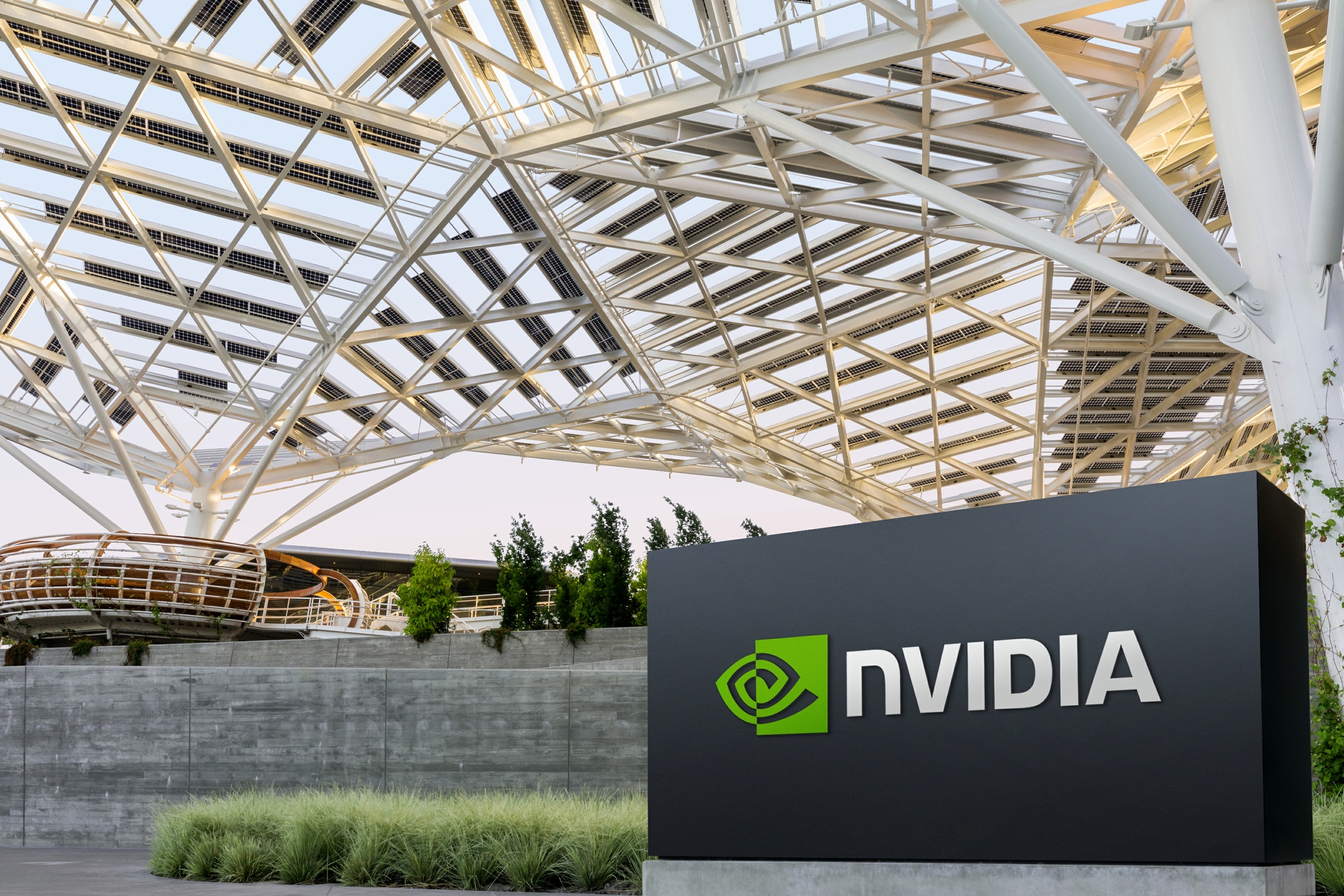
    Nvidia has entered early talks to buy software automation startup Reflection AI or increase its existing 800 million dollar stake in the company.

    An agreement would give the chipmaker direct control over an open-weight developer platform that was seeking new funding at a 25 billion dollar pre-money valuation in April.

    Discussions remain fluid and could collapse before any binding terms are signed. Negotiators are evaluating several transaction models, including an acqui-hire structure where Nvidia would absorb engineering talent and license Reflection AI’s core intellectual property rather than execute an outright merger. That mechanism is designed to reduce antitrust review across major regulatory jurisdictions.

    Targeting Chinese open models

    Former DeepMind researchers Misha Laskin and Ioannis Antonoglou founded Reflection AI in 2024 to build automated software engineering systems. The startup released its first open-weight model, Beam, aiming to match code generation capabilities with lower operating costs.

    The push directly targets low-cost Chinese architectures such as DeepSeek and Moonshot AI’s Kimi. Both Chinese platforms gained rapid adoption among developers and enterprises across the Asia-Pacific region by offering competitive inference performance at a fraction of Western proprietary pricing.

    Enterprise software shifts across Asia

    For enterprise developers and technology teams in Asia, Nvidia absorbing Reflection AI alters the economics of internal software development. Retailers and consumer platforms across Singapore, Japan and South Korea have tested open-weight code generation models to replace expensive commercial coding copilots.

    A direct Nvidia backing gives Reflection AI distribution scale, yet it ties open-source tooling closer to Nvidia’s hardware stack. Asian engineering teams balancing budget constraints against compute sovereignty will face a sharper choice between Western hardware-integrated models and cheaper Chinese open-source options.

    Funding and strategic steps

    Nvidia already established a position inside Reflection AI through its earlier 800 million dollar capital commitment. Reflection AI chief executive Misha Laskin disclosed the startup’s 25 billion dollar valuation target during an interview with CNBC in April.

    The current negotiations follow a broader effort by US technology groups to assemble open-source alternatives capable of preventing Chinese model architectures from dominating global developer standards.

    What comes next

    A final structure between Nvidia and Reflection AI is expected to take shape in the coming weeks. Whether the transaction proceeds as an equity expansion, a full purchase or a licensing arrangement will determine how quickly Beam’s coding tools integrate into Nvidia’s enterprise software suite.


  • Nvidia-Backed Reflection AI Launches Beam to Challenge Chinese Open Models

    Nvidia-Backed Reflection AI Launches Beam to Challenge Chinese Open Models

    Nvidia-backed artificial intelligence startup Reflection AI launched its first open-weight model named Beam on Monday, targeting lower-cost Chinese architectures in automated coding and software agent tasks. The system features 501 billion total parameters while activating 23 billion per query to reduce computing costs and latency.

    The architecture is designed to compete directly against Chinese open-weight releases that have undercut proprietary Western systems on enterprise pricing across Asia and global developer markets.

    Targeting Chinese Coding Benchmarks

    Reflection claims Beam matches the performance of Chinese startup Z.ai’s GLM-5.2 and is closing the capability gap with Alibaba’s Qwen3.8-Max on programming workloads. Z.ai’s GLM-5.2 operates with 744 billion total parameters and activates 40 billion during live inference.

    By routing queries through only a fraction of its total network, Beam aims to deliver enterprise coding automation at lower operational costs. Software development automation has become one of the primary commercial deployment categories for open-weight foundation models, particularly among engineering teams seeking customizable alternatives to hosted proprietary programming assistants.

    The Enterprise Battle for Open Weights

    American model developers face stiff competition from Chinese open-source ecosystems. Platforms built by DeepSeek, Moonshot AI’s Kimi, Z.ai, and Alibaba provide enterprise developers with low-cost, fine-tunable code generation that rivals proprietary outputs from OpenAI and Anthropic.

    For enterprise software operators and technology buyers in Asia, the rapid release cycle of competitive open-weight models lowers the barrier to hosting dedicated internal coding agents. Companies avoid vendor lock-in with closed application programming interfaces, shifting their expenditure from fixed per-token fees toward private cloud or on-premise compute capacity. The main risk for enterprise adopters rests on long-term maintainability and software patch reliability when deploying lighter active-parameter networks across complex legacy codebases.

    Infrastructure and Technical Roots

    Former DeepMind researchers Misha Laskin and Ioannis Antonoglou founded Reflection in 2024 to build specialized software development automation systems. The startup secured high-profile backing from Nvidia to support its distributed training workflows.

    Reflection expanded its hardware footprint earlier this year by signing an agreement with SpaceX to secure additional compute capacity hosted at the Colossus 2 data center facility. That infrastructure pipeline supported the training runs required to bring the 501-billion-parameter model to market.

    Next Steps for Enterprise Adoption

    Developer adoption across independent coding benchmarks will determine whether Beam can divert engineering workflows away from entrenched Chinese open-source options. Attention now turns to third-party benchmark evaluations against Qwen3.8-Max and the rollout of fine-tuned enterprise toolkits scheduled across commercial repositories in the coming quarters.

  • Shinsegae Chairman Joins US-Led AI Supply Chain Push

    Shinsegae Chairman Joins US-Led AI Supply Chain Push

    Shinsegae Group Chairman Chung Yong-jin met senior United States officials in Washington on Thursday, expanding the Korean retail group’s role in a US-led artificial intelligence supply chain initiative.

    The Korean retail giant partnered with US startup Reflection AI in March, and the two companies are currently working to establish a joint venture and select a site for a large-scale AI data center in Korea.

    Washington Backing for Korean Infrastructure

    Chung attended the launch of Foundry School at the Donald J. Trump Institute of Peace after an invitation from US Vice President JD Vance and the US Department of State. Run jointly by the State Department and Stanford University, the program trains technical talent and entrepreneurs for strategic industrial sectors.

    US Under Secretary of State for Economic Affairs Jacob Helberg called the Shinsegae alliance with Reflection AI a template for allied economic security under Washington’s Pax Silica framework. The initiative aligns supply chains across semiconductors, artificial intelligence, advanced manufacturing and power generation among allied nations.

    Attendees included US Secretary of State Marco Rubio and House Republican Majority Leader Steve Scalise. Corporate leaders present included Meta President Dina Powell McCormick, Micron Technology CEO Sanjay Mehrotra and Applied Materials CEO Gary Dickerson.

    “Successfully leading an advanced-industry supply chain alliance centered on the US is the task of our time,” Chung said during discussions in Washington.

    From Department Stores to Server Racks

    Shinsegae is pivoting from traditional store networks into digital infrastructure. Department store operators across Asia face margin pressure in physical formats. That pressure is driving conglomerates to seek revenue from digital services, logistics networks and cloud infrastructure.

    Securing backing from Washington gives Shinsegae diplomatic standing and potential hardware access that purely domestic competitors lack. Execution carries risk. Developing and powering high-density data centers requires heavy capital expenditure and massive grid capacity in an already constrained Korean energy market.

    Next Steps for Joint Venture

    Talks in Washington build on an initial agreement signed in March, when Shinsegae and Reflection AI agreed to pursue a dedicated data center project in South Korea. That deal was the first project designated under the State Department framework promoting allied AI expansion.

    Both companies are now finalizing terms for the joint venture entity. They are reviewing prospective sites across South Korea ahead of formal construction filings.