Tag: refund

  • Franchise Industry Jolted: Korean Supreme Court Orders Pizza Hut to Refund Billions Amid Unlawful Fee Controversy

    Franchise Industry Jolted: Korean Supreme Court Orders Pizza Hut to Refund Billions Amid Unlawful Fee Controversy

    The franchise industry in South Korea is preparing for potentially significant legal and financial repercussions following a recent Supreme Court of Korea mandate. The court has ordered Pizza Hut Korea to reimburse billions of won in illicitly charged fees to franchise owners. This verdict could potentially initiate a chain reaction of similar lawsuits across various sectors, including food, retail, and service chains.

    Reimbursement of ‘Margin Franchise Fees’

    Earlier this week, the court upheld previous rulings necessitating Pizza Hut to refund 21.5 billion won (approximately US$16 million), termed as “margin franchise fees”. These fees were amassed from 94 franchisees between 2016 and 2022.

    The controversial charges surrounded markups included in the prices of ingredients and supplies sold by the franchisor. The fees were declared unlawful because they were not explicitly agreed upon in the franchise contracts. This was in addition to separate royalties and advertising fees charged by Pizza Hut.

    Potential Implications of the Ruling

    Legal experts and industry officials have speculated that this ruling could have far-reaching effects. Around 20 brands, spanning major fried chicken, burger, and coffee chains, are presently facing lawsuits from franchisees demanding reimbursement of similar margin-based expenses. As store owners re-examine older contracts inked before the disclosure rules were strengthened, more cases are anticipated.

    The court discovered that Pizza Hut had been charging a fixed royalty of 6% of gross revenue in addition to advertising fees of around 5%. Moreover, the company was also making undisclosed profits on compulsory supplies. The franchise agreements did not explicitly authorize these margins, leading the court to conclude that the company had been unjustly enriched.

    Pizza Hut began disclosing margin rates in its information statements starting in 2020. However, the courts ruled that disclosure alone did not equate to consent. In the absence of clear disclosure for several years, judges accepted estimated rates derived from subsequent data. This was due to Pizza Hut’s failure to fully comply with the orders to produce documents.

    Concerns and Criticism

    Franchise operators have cautioned against universally applying the Pizza Hut precedent. Some have argued that different brands do not charge royalties or have varying contractual structures. Hence, the specific circumstances of each case should be evaluated independently.

    Moreover, South Korea had revised its franchise law in 2024 to mandate explicit disclosure of margin-based fees in contracts. This could potentially protect more recent agreements from challenges.

    Nevertheless, industry groups are apprehensive about a potential influx of retrospective claims targeting older contracts. Historically, many franchisors have relied on supply margins rather than transparent royalties for their profits. According to a government survey from last year, over 60% of franchisors either solely depended on margin fees or combined them with royalties.

    Critics argue that the ruling has brought to light the longstanding lack of transparency in the sector. Hwang Yong-sik, a business professor at Sejong University, has advocated for a gradual transition towards clearer, royalty-based models, which are more prevalent in the United States.

    At present, the verdict has increased uncertainty within South Korea’s franchise industry. Companies are assessing potential liabilities, and franchisees are contemplating whether the Pizza Hut verdict could provide a blueprint for recovering past payments.

    Questions & Answers

    What was the ruling of the Supreme Court of Korea in the Pizza Hut Korea case?
    The court ordered Pizza Hut Korea to reimburse billions of won in improperly charged ‘margin franchise fees’ to 94 franchisees, collected between 2016 and 2022.

    What are the potential implications of this ruling?
    The verdict could lead to similar lawsuits across various sectors, including food, retail, and service chains. Around 20 brands are currently facing similar lawsuits. More cases are expected as store owners reassess older contracts.

    What changes have been suggested for the franchise industry in South Korea?
    Some critics, including business professor Hwang Yong-sik, have called for a gradual shift towards clearer, royalty-based models. This would increase transparency in the franchise sector and align it more closely with practices common in the United States.


  • Samsung tax refund delayed for two years in HCMC

    Samsung tax refund delayed for two years in HCMC

    A Samsung subsidiary based in Ho Chi Minh City has not received a VAT refund of US$44 million for two years due to red tape.

    Samsung Electronics HCMC CE Complex (SEHC), which exports around 90% of its products, formally became an export-processing company in May 2021, making it eligible for value-added tax incentives.

    But the VAT refund for before and after the transition it was supposed to receive never arrived, Youn Chel Woon, its CEO, said at a meeting between South Korean companies and HCMC authorities Wednesday.

    Vietnam offers a number of tax incentives to foreign enterprises and exporters, including VAT breaks.

    SEHC became eligible for a refund of $24 million from the time before it became an export-processing enterprise, and $20 million from the period between June 2021 and December 2022.

    The city tax department has been examining the situation since July and recently submitted a report to the General Department of Taxation.

    Woon urged city authorities to be more proactive in refunding taxes, saying some of his company’s suppliers are also having difficulty getting tax refunds promised by the government.

    Another South Korean firm, CJ Foods Vietnam, has not received tax refunds for lacking the title deeds for the land on which its factory is built.

    It was supposed to receive the documents in 2019.

    Issues with tax refunds are among the main problems South Korean companies face in Vietnam, Choi Bundo, chairman of the Korea Chamber of Business in Vietnam, said.

    “Resolving tax refund problems is taking longer and longer. We seek a solution from the authorities.”

    Nguyen Tien Dung, deputy head of the city tax department, referring to the SEHC case, said the reason for the delay is that the Ministry of Finance is yet to decide whether the refund would be made by the tax or customs department.

    As for the CJ Foods delay, he said some changes are occurring at the Hiep Phuoc Industrial Park where the company has its factory, and once they are complete it would receive the title deeds.

    The city government has instructed relevant authorities to resolve this issue by September this year, he added.

    South Korea is the fourth biggest investor in HCMC with $5.5 billion in 2,135 projects.

  • Pandora asked to fix refund policies

    Pandora asked to fix refund policies

    Jewellery retailer Pandora has been told by the consumer watchdog to amend its refund and warranty policies in Australia following complaints from some of their customers.

    The Australian Competition and Consumer Commission said they have received complaints from customers who were told by Pandora sales staff that they do not offer refunds to faulty products and that its own warranty policy applies instead of the protections afforded to consumers under Australian Consumer Law (ACL).

    According to ACCC Commissioner Sarah Court, the jewellery retailer acknowledged they may have misled customers about their legal rights.

    “Pandora has acknowledged that it may have misled customers about their consumer guarantee rights to refunds when there was a major fault with their product,” Court said. “They also have admitted that by doing so they likely breached the Australian Consumer Law.”

    Court said consumer rights to a repair, replacement or refund cannot be excluded, restricted or modified by a business’ warranty policy.

    “If consumers have purchased a product that has a major fault, they can request a full refund from their place of purchase,” she said.

    The ACCC has accepted a court-enforceable undertaking from Pandora to review its consumer rights policies and staff training after Pandora acknowledged it is likely to have contravened the ACL by making misleading representations to consumers about their consumer guarantee rights.

    The ACCC’s investigation showed that Pandora’s website contained confusing or inaccurate information on consumer guarantee rights under the ACL.

    It also noted that information on Pandora’s website about its product warranty failed to include mandatory text that states that consumers are entitled to a replacement or repair, and in some cases a refund, if their goods are faulty.

    The ACCC said Pandora has undertaken to arrange for an external review of its policies and procedures relating to exchanges, repairs and refunds, to ensure customer claims for refunds and other remedies are dealt with appropriately and in accordance with the ACL.

    “Pandora will also conduct a review of its ACL compliance program and improve its staff training and complaints handling systems,” Court said.

  • Apple Criticized by Korean Game Developers for its App Store Refund Policy

    Apple Criticized by Korean Game Developers for its App Store Refund Policy

    It took me a while to figure out what the big deal was. It’s not that people buy a $1.99 game, then get a refund and keep playing.It’s that people buy $100 in in-game “currency” using an in-app purchase, then get a refund, and keep the $100 of in-game “currency”. Then do this again. And again. And again.

    Oh, you want to have the best fort in Clash of Clans? $100 in in-game gold, and you can do it quickly! Then get a refund on that in-game gold. Want to get good Pokemon faster? $100 in in-game gold and you can lure more Pokemon to you (for a long time.) Then get a refund on that in-game gold.

    It took me a while to figure out what the big deal was.

    It’s not that people buy a $1.99 game, then get a refund and keep playing.

    It’s that people buy $100 in in-game “currency” using an in-app purchase, then get a refund, and keep the $100 of in-game “currency”. Then do this again. And again. And again.

    Oh, you want to have the best fort in Clash of Clans? $100 in in-game gold, and you can do it quickly! Then get a refund on that in-game gold. Want to get good Pokemon faster? $100 in in-game gold and you can lure more Pokemon to you (for a long time.) Then get a refund on that in-game gold.

    Not quite true. In clash of clans, if you request a refund in $100 worth of gems, the game takes the gems spent from you and you end up with thousands of gems in debt. You can still earn gems the normal way but it goes to offset that negative gem count.

    Don’t know how clash of clans can do this but Koreans can’t figure out what the refund was for…

    So… Commenters, we don’t need to be specifying “Korean developers” or calling them out by their nationality. This is a problem to *ALL* nationality of developers, it just happens that this article was in a Korean newspaper, so the developers they interviewed are Korean. Saying things like “These Korean developers whining about…” or “I wish these Korean companies would…” is unnecessarily adding nationality (and by proxy race) in to a complaint. Would you have made the same comment if the developers had been from California? Or Texas? Would you have specified “These Californian developers…” or “I wish these Texan companies…”?If not, then leave “Korean” off the description you post. Their “Koreanness” has nothing to do with the issue.

    I hate in app purchases. I disable them from my settings.So pretty simple. Get rid of in app purchases. Than they wouldn’t have an issue tracking down people who ask for refund. One time fee payment for full game.

    A non issue really. The developer has access to the receipt for each purchase and can check if it is still valid at any point in time.
    They just need to keep track of the receipts, basic in-app programming ffs.
    To be consistent Apple should have the same policy for their stores – so I can buy an iPhone/MacBook then call to request a refund without returning it. I’m sure there’ll only be a “small” number of people abusing it 😉

    And what exactly are people “stealing” by “returning” 100 gold coins in an app – a couple bytes of database space?

    I operate my own small business, a small hardware device with an online system connected – getting in on the “smart home” craze. Manufacturing is outsourced, so we don’t have to deal with manufacturing shrink, we just pay a per-unit contracted cost. The online service, as with any of these games, is practically zero cost-per-unit. If someone cancels a service, or asks for a refund (which we always offer). Yes, hardware space and bandwidth cost money, but there is no “direct cost” per-user.

    Hardware-wise, in the past month, we’ve had $2388 which I’d classify as shrink at retail price, $912 at cost price. That includes:

    – 1 unit damaged in warehouse
    – 3 units lost by couriers shipping to customer
    – 4 “change of mind” hardware returns that couldn’t be re-sold
    – 1 unit that was bought via PayPal with a stolen credit card (we had to swallow the cost)
    – 3 units that were returned as being faulty, which we determined was fraudulent – 1 had a smashed screen which couldn’t have happened during qa/shipping (impact mark), one which was obviously dropped and cracked but otherwise seemed to work fine, and 1 which was returned because apparently only the accessories were in the box, not the unit itself (even though we could see the unit was online, and connected to our service – not for long though!)

    At cost price, for us that was around 0.9% shrink vs revenue, and around 1.4% vs per-item profit margins (not taking into account operating costs here). That’s something we have to budget for – we *know* it’s going to happen, and we take that into account. 100% of our shrink costs come from hardware, not software. Out of that, only a third of shrink was down to “fraud”.

    Saying shrink can’t happen with a digital product is silly. Of course it’s going to happen. If you’re dealing with people, at some point you’re going to deal with fraud. Fact of life. The only difference is the physical cost behind it doesn’t scale the same way as with physical products.

    Here’s two examples:

    1. Company A sells a video streaming service for $10/month. Someone purchases a subscription uses a stolen credit card, and watches 50 films. The credit card company (rightfully) does a chargeback 14 days later, and the company cancels the service. A movie averages at 1.5GB, using 75GB bandwidth. They pay AWS $0.06/GB for bandwidth, which equates to $4.50. They also have to pay the rights holders $0.10 per viewing as part of their agreement. That’s $5, meaning that the total cost of the fraud is $9.50 – that’s $9.50 worth of shrink.

    2. Company B offers a mobile video game for free on the App Store, and sells packs of “100 gold coins” for $5. When a user buys coins, they can use them to buy items in the store – the transaction is purely in the game, and the only result of buying the coins is a database entry to tell the game “hey, user X bought 100 coins”. Somebody buys 100 packs of coins for $500, buying all sorts of virtual items for their character, again, all database entries. The user claims their child accidentally bought the coins, and Apple refunds the $500. Company B hasn’t lost money, other than perhaps a couple of cent in bandwidth costs. Shrink is effectively 0.

    That’s why I don’t understand them chasing so much – unless there is a physical per-unit cost behind it, it’s really not worth it. So what if someone buys a game or coins and returns them, they’ve lost a sale, sure, but they haven’t lost money.

    you work for company A and i’m another customer. i don’t give a flying f*** if Fred next door can or can’t watch the latest Star Wars movie because of his fraudulent dealings with you. it literally has no material affect on the outside world.

    you work for company B and i’m a customer on the same server as Fred. While you haven’t lost money, what you’ve done is enabled Fred to gain an unfair advantage over me and many others who have not bought the coins and got the stuff for free. of course, we don’t know that he hasn’t paid for them – perhaps he’s just a mr moneybags. but word gets out, the big spenders get upset that people competing with them are doing so by fraud and a ********* goes down on the game’s message boards. shrink isn’t measurable in terms of lost sales – yet – but is high in terms of lost reputation and goodwill. it could well have a material effect an order of magnitude higher than company A’s issues going forward.

    comparing a video streaming service which serves one end user at a time, to a MMO game where the actions of one gamer affect the others is silly.

    But you can’t *not* have a refund policy. I have, myself, gotten a refund for a game, when the game stopped working after upgrading from iOS 6 to iOS 7. The app was still installed and could still run (well, as far as it ever did after upgrading), but couldn’t be updated or re-downloaded.IMO, the amount of money they’re going to spend chasing down and suing the small % of customers who abuse it isn’t worth it. All businesses have to deal with a small % of fraud – how many retail places have had TVs returned as faulty when a new one comes out, or people had “left” their laptop in the trunk of their stolen car, or had their iPhone suddenly develop an intermittent fault just after a small scratch appears on the screen.

    It’s a cost of doing business.

    But you can’t *not* have a refund policy.
    It’s a cost of doing business.

    Very true. I wish these Korean companies would get a life and wake up. They are probably losing far more money from employee theft and laziness than a few app users.

    Every business has shrink built into their monthly costs. Shrink is everything from stuff people return that they cannot get credit for, employee theft, customer theft, stuff that gets broken on the floor, etc. You have to expect these things to occur and build it into your costs.

    I always assumed that Apple was able to remotely delete refunded apps.

  • Global Blue collaborates on Chinese VAT refund scheme

    Global Blue collaborates on Chinese VAT refund scheme

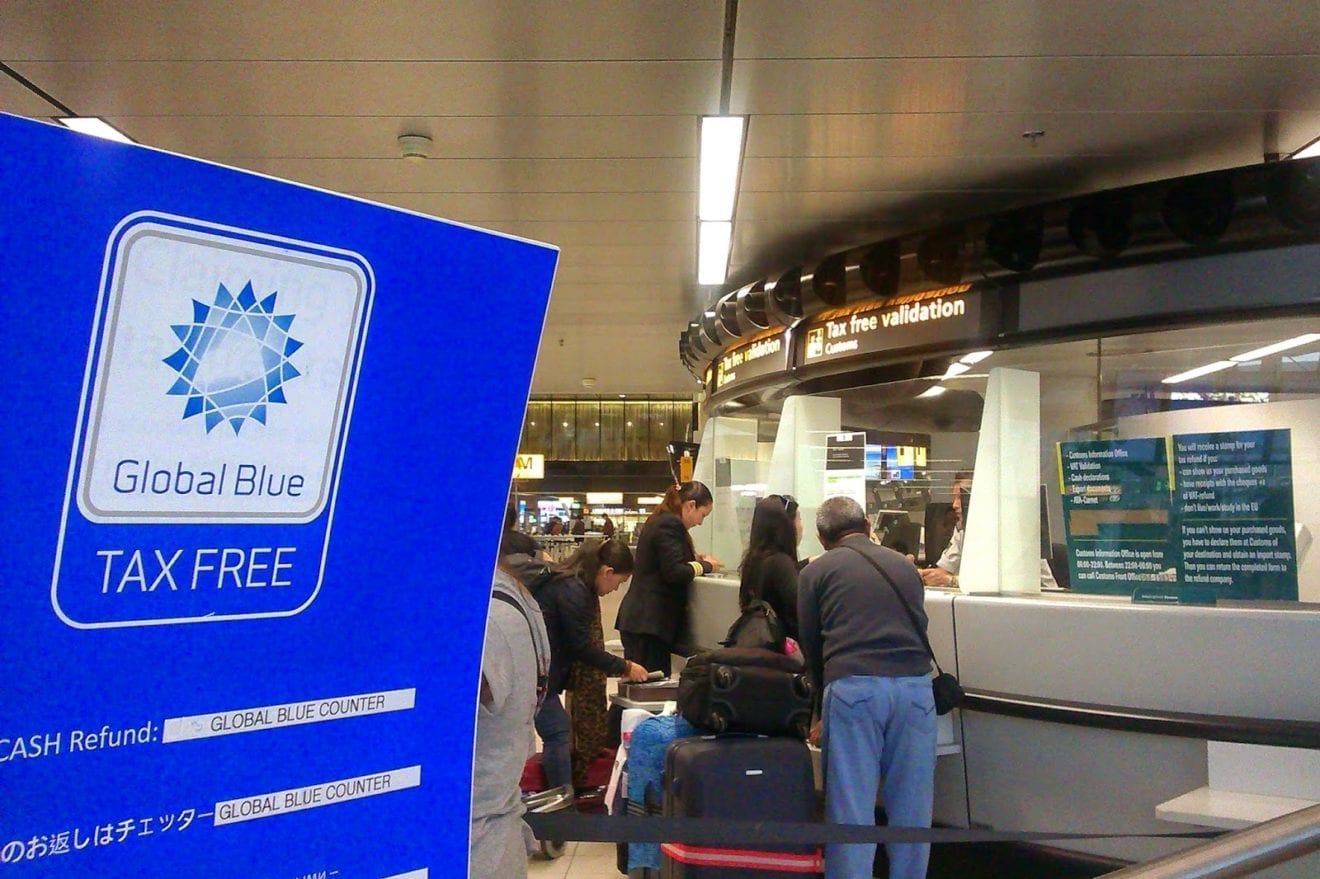
    Tax-free specialist Global Blue has partnered with the Bank of China to launch a VAT refund service to overseas tourists in Shanghai.

    Travellers in Shanghai are now able to save 9% on their purchases as China has introduced its first tax-free shopping scheme for foreign visitors. The scheme will be among the first of its kind in mainland China, allowing eligible travellers to reclaim the VAT imposed by the Chinese government, when making purchases within the country.

    For travellers, eligibility for VAT refunds will be based on a set of simple criteria. These include possession of a non-Chinese passport (or specified ID from Hong Kong, Macau and Taiwan), receipt of purchase showing spend of over RMB500 ($72) in one store on the same day, and proof that the traveller has remained in mainland China for no more than 183 consecutive days.

    If these eligibility criteria are met, merchants simply have to provide a VAT invoice, then issue the shopper with a Tax Refund Application form provided by the Chinese Government, which includes the description of purchased goods and the traveller’s details.

    Global Blue will work with Bank of China to encourage local retailers to sign up to the scheme. It will also provide licensed retailers with ongoing training to sales staff and consult on the processes surrounding the issuing and completion of VAT refunds.

    Already almost 200 stores in Shanghai have already signed up to the tax-free shopping scheme, including major department stores [e.g. Takashimaya, Pacific, Parkson and Bailian (Group) Department Stores], luxury brands (e.g. Chanel, Hermes, Tiffany and Louis Vuitton), high street names (e.g. Zara, Bershka and Marks & Spencer) and local retailers (e.g. Silk King, Lao Feng Xiang Jewellery and Chow Tai Fook Jewellery).

    Global Blue CEO Jacques Stern commented: “We are excited about launching this partnership with Bank of China, a true market leader in the international banking space. The VAT refund service represents a great opportunity for merchants in Shanghai to attract high-spending international travellers and encourage higher spend in-store. For visitors to the city, this scheme will bring obvious benefits, allowing them to shop and spend with leading Chinese merchants for less.”

    Bank of China vice president Mr. Wang added: “This is a very exciting period for Shanghai’s retail sector and we are confident the introduction of these services will be a powerful tool in helping businesses connect with valuable international shoppers. Global Blue’s experience of promoting and supporting Tax Free services around the world make it a valuable partner and we look forward to a long and happy working relationship.”

    In addition to merchant support, Global Blue will manage marketing activities inside and outside of China to increase traveller awareness of the VAT refund scheme. Promotional channels will include Global Blue’s website, app and a wide range of traveller focused collateral including SHOP Maps and point-of-sale materials. The partnership will also see Global Blue collaborating closely with local governments’ tourism departments.

    In addition to VAT refund services in Shanghai, Global Blue has also named Bank of China as a banking refund partner for returning Chinese shoppers across the country. Bank of China will operate refund counters from 10 branches throughout China, making it easier for Chinese consumers to claim overseas refunds back home.